How to Update Your Computer’s BIOS or UEFI (and When You Should)

If you’re wondering what your computer’s BIOS or UEFI is, and whether or not you need to update it, you’ve come to the right place. I’ll explain what these terms mean, what these pieces of software do, and why it might (or might not) be a good idea to install updates for them.

What does BIOS and UEFI mean?

The BIOS (Basic Input/Output System) or UEFI (Unified Extensible Firmware Interface) is something every computer has, though unless you’re running an ancient computer, you’ll have a UEFI installed rather than a BIOS.

And we’re dealing specifically with Windows computers here: Macs take their own custom approach to this, as Apple is in control of the operating system and the underlying motherboard and chipset in a way that Microsoft and PC makers aren’t. On Apple computers, all you need to do is make sure macOS is up to date.

What does BIOS and UEFI do?

Your PC’s BIOS or UEFI represents the lowest level of software, the most fundamental and foundational code running on your machine, often known as firmware. It runs from the motherboard, ensures all the various components of your computer are talking to each other, and makes the necessary preparations for Windows to boot up.

BIOS is the older technology; computers sold today use UEFI instead. In simple terms, UEFI improves on the basics of BIOS, adding support for more modern security standards and internal components. However, both BIOS and UEFI are essentially doing the same job.

Asus BIOS/UEFI
A UEFI screen on an Asus motherboard.
Credit: Asus

With the advent of UEFI, we got some helpful upgrades in terms of user interface, too: Nowadays you can access the firmware using a mouse, whereas before you were limited to keyboard operation. There’s now provision for accessing the internet too, before you get into the Windows operating system.

As often happens with computing terms, BIOS and UEFI can sometimes be used interchangeably. If you see talk about a BIOS with a modern computer, it’s almost certainly talking about the UEFI, reflecting that the latter has effectively replaced the former. There are some rather detailed technical differences, too, but most of us don’t need to know about them.

Should you update your BIOS or UEFI?

That’s the big question—and you’ll find a variety of answers online. A good general approach is to not worry too much about BIOS/UEFI updates unless you’re experiencing problems, or you’ve been told to run an update by your PC manufacturer. These updates aren’t quite as crucial as Windows updates for performance and security.

That said, BIOS/UEFI updates can absolutely bring security and performance improvements with them. As Dell puts it, updates can enhance “performance, stability, and compatibility with new software and hardware.” Meanwhile, HP recommends updates if you need to support new hardware or fix known bugs and issues.
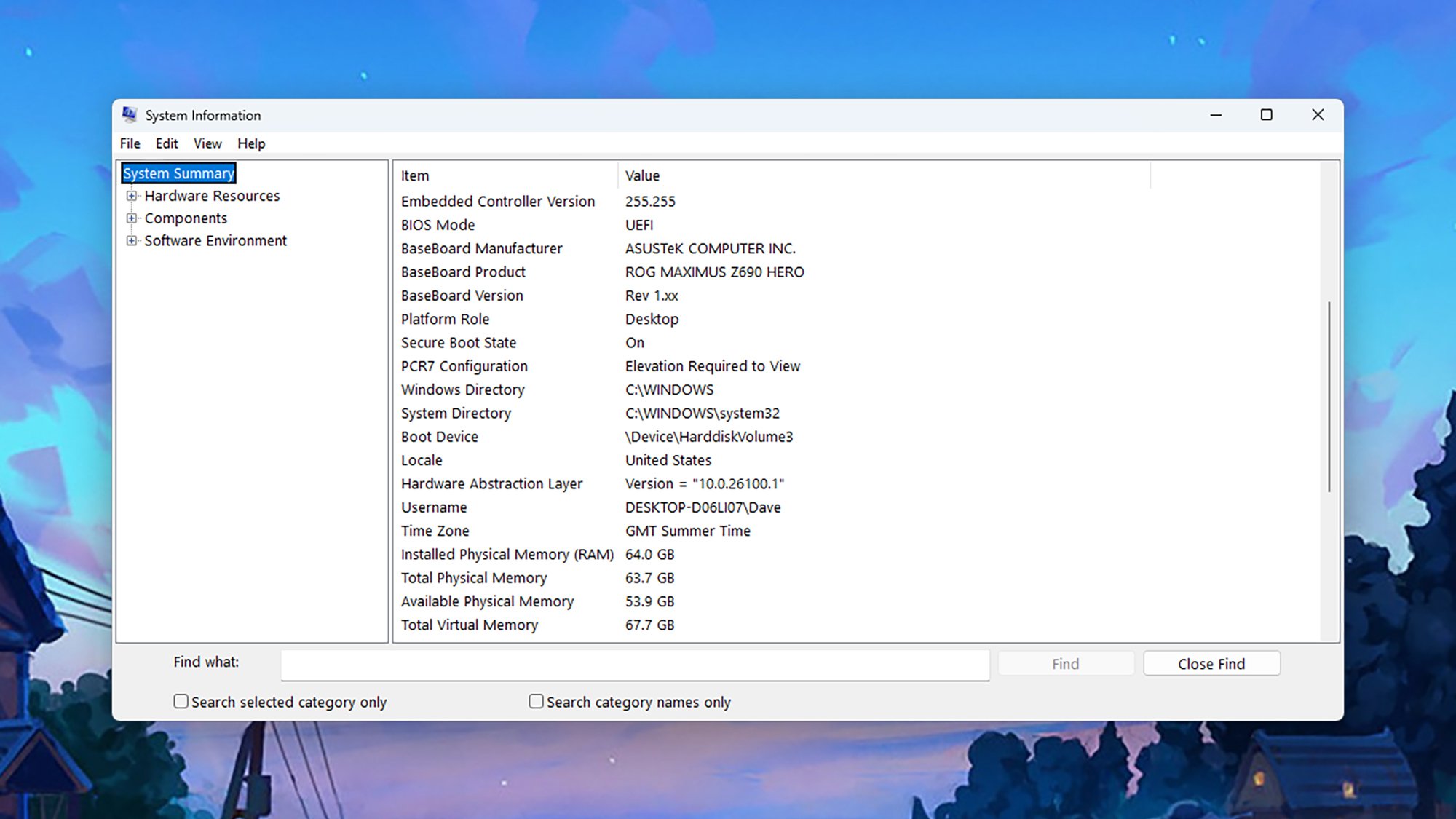
System Information
System Information will tell you what your motherboard is.
Credit: Lifehacker

There’s no doubt you can completely brick your computer with a firmware upgrade, but then that’s true of a Windows update or a hard drive upgrade. As long as you follow the instructions provided by the maker of your PC or your PC’s motherboard, you shouldn’t run into any problems—though maybe double-check all your backups are current.

I’d recommend keeping an eye open for updates from whichever company made your PC or manufactured the motherboard inside it (find and run System Information from the Start menu to identify your motherboard). If an urgent BIOS/UEFI upgrade is needed, or if an update will add some major new functionality, you should then hear about it.

How to update the BIOS or UEFI

The exact method for updating your PC’s BIOS or UEFI will depend on the make and model of motherboard you have installed. Traditionally, BIOS/UEFI updates have been done by running a utility from a USB drive and rebooting your PC, but nowadays you’ll most likely have a variety of options to pick from.

If you’ve got a Dell PC, for example, you’ve got no fewer than seven different update options to pick from. The easiest options are to use Dell’s SupportAssist utility or to look out for firmware patches in Windows Update: In both cases you can take care of everything through Windows, without any extra software.
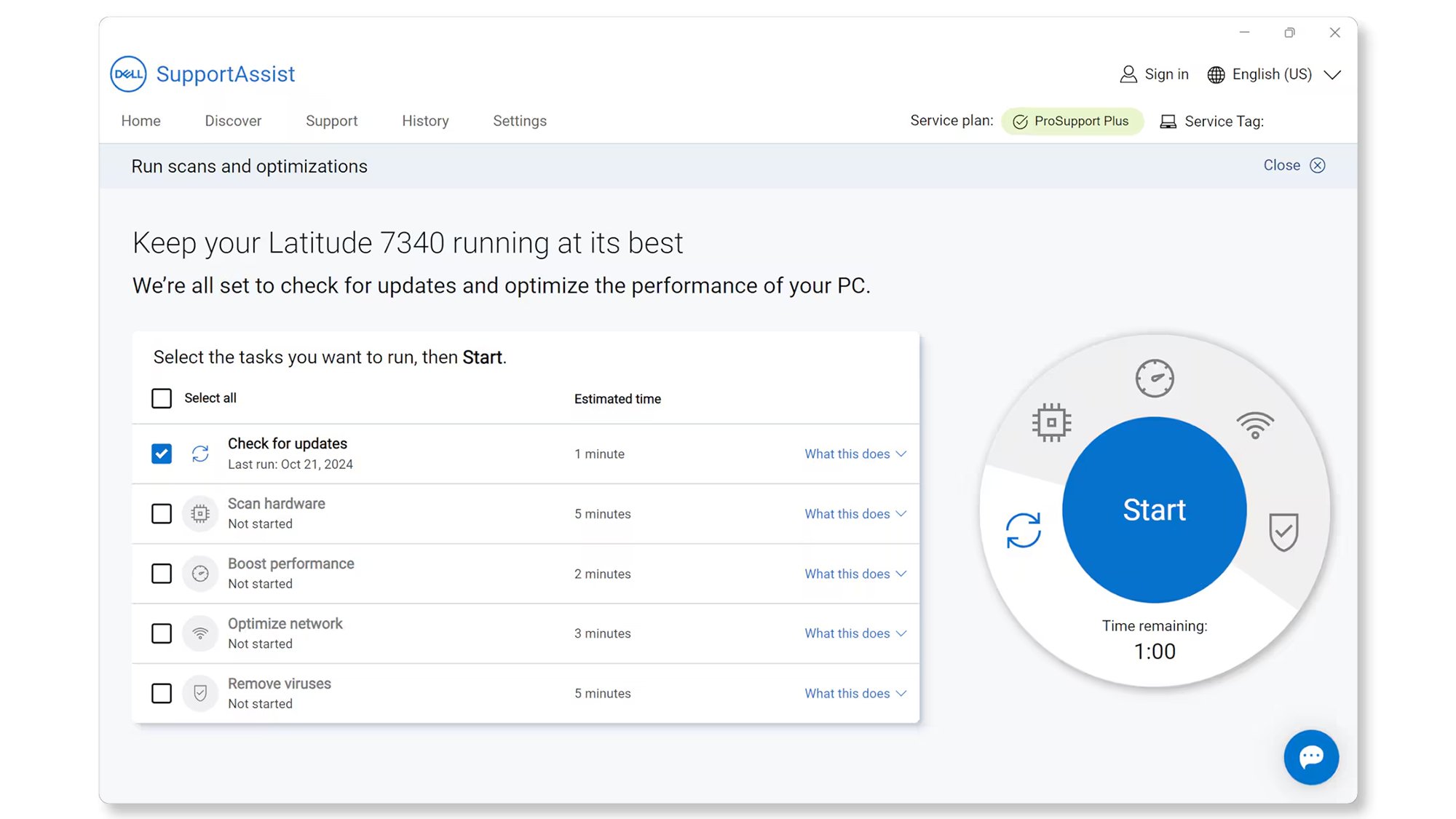
Dell SupportAssist
Dell PCs can be updated via the SupportAssist utility.
Credit: Dell

I’ve got an Asus motherboard, which means the MyAsus utility for updating the BIOS/UEFI and the latest updates themselves are available via the Asus Download Center. Other motherboard makers have similar portals, enabling you to search for the model you’ve got and find the most recent utilities for them.

As for getting to the BIOS/UEFI itself, the process for this varies by PC too: Typically, when your PC boots up, it’ll tell you the key you need to press to head to the BIOS/UEFI instead of Windows. From Windows itself, you can open Settings then choose System > Recovery and click Restart now next to Advanced startup. When your PC reboots, pick Troubleshoot > Advanced options > UEFI Firmware Settings.


Kingston’s New Fury Renegade G5 SSD Rips 14GB/s Speeds And It’s Out Now

Kingston's New Fury Renegade G5 SSD Rips 14GB/s Speeds And It's Out Now
Kingston just rolled out a new flagship solid state drive (SSD) and, at least on paper, it’s an absolute scorcher. Called the Fury Renegade G5, it’s a follow-up model to the original Fury Renegade, but with rated read and write speeds that are up to twice as fast (or more) thanks in big part to leveraging the PCI Express 5.0 bus (versus PCIe

The Out-of-Touch Adults’ Guide to Kid Culture: YouTube’s Animated Kitten Horror

It doesn’t mean much to anyone with a job, but summer’s coming in quick, and only grade-grubbers are still paying attention in school. The other kids are wasting their time exactly how you’d expect: watching kitten body horror videos, discovering 20-year-old RPGs, and throwing bowling balls into helicopter blades. Here’s what’s shaping (and warping) young minds this week.

The rise of terrifying AI kittens on YouTube

If you have younger kids, summer can mean more screen time, and I wanted to check out what kids are watching when their guardian hands them that tablet, so I spent some time on YouTube looking at animated videos that seem geared to children. The place is lousy with algorithmically generated kitten torture videos where little cats with big eyes are injured, operated upon, beset by monsters, and otherwise horribly abused in videos like “Cat’s Belly Contains Countless Worms!”

and “Kitten Abused by it [sic] own mother Cat“

and my personal favorite, “Kitten Belly has Spiders, Rats, Worms, Alien Parasites” (I’m a fan of Oxford commas.)

Countless YouTube (and Instagram, and TiktTok) channels with names like Kittens Kitten, and QQ Meow churn out these videos by combining frequently searched keywords like “cute cat” or “kitten” with scenarios that are shocking or scary to children, like going to the doctor or being abused by a parent. Videos that get views, like “The betrayal of the cat father and the revenge plan of the kitten” (this has been viewed 72 million times in the last three months) or “The kitten suddenly encountered a mutated big-eyed school bus“(63 million views) are ripped off endlessly, and AI hones and iterates them into a nightmare feedback loop that children stare at for hours.

It’s not art made for kids. It’s art made at kids.

But on the other hand—whenever things can be boiled down to “won’t someone, please, think of the children?” it’s time to look a little deeper. Adults tend to view children’s world through rose-colored glasses, but that’s how we want childhood to be. In reality, children are nearly powerless in a world they can’t understand or contextualize, so of course they’re going to deal with their fears through art; that’s why we have art.

Well-meaning adults have spent decades sanitizing children’s media, excising disturbing and horrific elements under the guise of protecting kids, but judging by the 19 million views of “Abusive Cat Father,” kids clearly want it and, more importantly, they’re getting something from it. Death, betrayal evil, horror, and abuse are time-honored staples of children’s literature. Is there any theme more classic than “evil mother (or stepmother) abuses innocent child?”

I only wish it wasn’t all so poorly made. Grimm’s fairy tales and their ilk were written by talented people, not the kind of real-life ghouls who use AI to game YouTube’s kids’ video algorithm. I never had a problem with my own kid watching movies society said were too mature for him, but only if they were good. I draw the line at bad art.

The Elder Scrolls IV: Oblivion: Young gamers play old game

As a greybeard from way back, I love when a new generation of nerds discovers something awesome from the past. On April 22, developer Bethesda surprised the video gaming world by stealth-releasing a 20-year-old role-playing game, Elder Scrolls IV: Oblivion. And the kids are into it; the nerdy ones, anyway. Some quality-of-life issues with the original game have been addressed, but the quirky, buggy, batshit Oblivion fun was left intact. They even left most of the glitches intact. I’ve been playing it since it was released, and it plays differently than modern games in the genre. There’s less handholding and funneling players toward a specific experience. There’s less of a feeling that a corporate board approved every decision and more of a feeling of freedom, and kids are into it. They’re making memes and posting videos of funny glitches. It’s like the old days. As RiceLife659 put it on Reddit, “Finally able to play Oblivion now and I’m in love. More in depth in terms of systems than Skyrim and the jank is hilarious. 20 hours in and every minute I wish I was born earlier.” .

I feel like saying, “gather ’round, young ‘uns, and let me tell you the story of the cursed Oblivion horse armor…”

What does “deriod” mean?

The slang term “deriod” combines “dick” and “period” and is used to refer to a man’s (hypothetical) period. Here’s even more Gen Z and Gen Alpha slang, if you’re interested.

What are “0.5 GPA Activities?”

“0.5 GPA Activities” (or “0.3 GPA Activities, or (WHATEVER) GPA Activities”) refers to videos that show what the kids who aren’t gunning for class salutatorian are doing in school. The genesis was a video called “4.0 GPA Activities” in which supposedly smart band-kids balance things precariously. In response, less, um, accomplished students started posting videos of themselves doing things like making sculptures from the cafeteria food:

stacking soda cans in lockers:

intentionally shorting out their school-issued Chromebooks:

and stealing fire extinquishers:

It’s the kind of trend that went from funny to a little harmful quickly, so check out these videos now, before TikTok bans the entire genre.

Viral video of the week: Bowling Ball Vs 700kmh Helicopter Blades! Who Wins

How can you not click a video called “Bowling Ball Vs 700kmh Helicopter Blades”? It’s the kind of content we all need as summer starts to roll in.

The bowling ball alone would have been enough, but the guys behind YouTube channel How Ridiculous also throw tomatoes, a hardhat, a phone, a baseball bat, a guy (a fake guy, anyway) and more through the spinning blades of a chopper. It’s all presented in super slow motion: exactly how you want to watch things get chopped apart by a helicopter propeller.

As for the video’s dramatic question, you might assume the answer is obvious: Blades win. But life is full of surprises. That’s why we do science.

This Apple Watch Series 10 Is at Its Lowest Price Right Now

We may earn a commission from links on this page. Deal pricing and availability subject to change after time of publication.

If you’ve been waiting for the right time to upgrade your Apple Watch, the Series 10 has quietly become one of the best-value picks around. It launched in September and has already dropped to $299 on Amazon—that’s $100 off the $399 sticker price.

This deal is for the 42mm GPS model with a Rose Gold Aluminum case and Plum Sport Loop, and according to price trackers, it’s the lowest price it’s hit so far. This is likely the Apple Watch sweet spot for most users, especially those still hanging onto an older SE model. And while it still shares some DNA with the Series 9, there are enough subtle upgrades to make it a solid step up. This Lifehacker review even called it the best Apple Watch for most people, which checks out considering how many core features it brings without fully diving into the Ultra pricing zone. Learn more about how it stacks up against other flagship smartwatches in our comparison post here.

You’re getting a thinner design and a slightly larger OLED display, which might not sound like a game changer—but does make everything feel roomier and more responsive. Apple also improved audio playback, so now you can actually listen to Spotify or podcasts straight from the watch’s speakers (no AirPods needed in a pinch). The updated sleep tracking also got smarter, with the watch nudging you if it notices signs of sleep apnea. That’s something you didn’t get before unless you were splurging on the Apple Watch Ultra. Same with the new depth and water temperature sensors—they now auto-activate underwater, a nice addition for swimmers or divers, notes this PCMag review. The Vitals app with Watch OS 11 gives you an energy score, too, which is basically a daily report card for your body based on multiple health metrics.

That said, it’s not perfect. The blood oxygen sensor still hasn’t made a return, which might be a letdown for folks who used it regularly on older models. Battery life stays in the 18–36 hour range, depending on how many features you have running. It’s good enough for a day or so, but it’s not exactly a multi-day performer. Still, the Series 10 earned PCMag’s Editor’s Choice and their Best Apple Smartwatch of the Year 2024 award, which says something. If you’re not chasing Ultra-level features but want something smarter, faster, and more capable than the SE, this is worth considering, especially now that it’s hit its lowest price.

Return of the thumb shifter? Why Campagnolo’s leaked 13-speed groupset puts the Italian brand back on the front foot 

A new Campagnolo wireless electronic groupset has broken cover at the 2025 Giro d’Italia.

Adorning the bikes of Stefano Oldani of Cofidis, and Alessandro Pinarello of VF Group – Bardiani CSF – Faizanè, the new groupset appears to make some significant changes compared to Campagnolo’s existing Super Record Wireless groupset.

As confirmed by Bikerumor, and a recent firmware update for the Garmin Edge 1050 bike computer, the new groupset will feature 2x 13-speeds – a first amongst the big three road bike groupset manufacturers.

It seems the legendary Italian brand also looks set to update the shifter button layout, moving away from its current configuration and potentially bringing back its beloved thumb shifter (though not in its classic form).

While Campagnolo is understandably tight-lipped on this development, let’s take a look at what we can glean from the race photos – and what this might mean for the historic brand.

Campagnolo goes 13-speed for road

Campagnolo 13-speed Super Record Wireless rear derailleur on Alessandro Pinarello's bike
Campagnolo’s new 13-speed Super Record Wireless rear derailleur looks like a weight-weenie’s dream.

In our electronic age, the rear derailleur is the beating heart of any modern groupset, and it’s here we see some of the most significant changes.

As usual with Campagnolo Super Record, there’s still plenty of carbon fibre, and a Super Record Wireless battery is still located at the rear of the main body, just above the lower pivots.

However, Campagnolo looks to have aggressively cut material (and therefore likely weight, too) from the new rear mech, with a hollow outer parallelogram plate and a new hollow section near the hanger bolt.

From the looks of things, Campagnolo looks keen to challenge SRAM Red AXS’s claim to be the lightest electronic groupset (with disc brakes) available.

Campagnolo 13-speed Super Record Wireless groupset on Stefano Oldani's bike
The new rear derailleur uses an updated pulley cage. Tim de Waele / Getty Images

The pulley cage has also seen significant reshaping, moving away from the smooth, curved design seen on the current Super Record Wireless rear derailleur, to a more angular design.

The two pulley wheels also appear to use taller teeth. Could this be designed to offer improved chain management when run in a 1x configuration? Oldani’s bike was set up with two chainrings up front, but with 1x on the rise in the WorldTour peloton, we wouldn’t be surprised if Campagnolo was considering this use case.

Campagnolo 13-speed Super Record Wireless crankset
The carbon fibre crankset appears unchanged.

The derailleur also uses a Shimano-style ‘direct mount’ design, which eliminates the additional plate between the upper knuckle of the derailleur and the hanger, for increased stiffness and improved shifting performance.

To be clear, this isn’t the same as SRAM’s Universal Derailleur Hanger (UDH) standard, as seen on the American brand’s Red XPLR AXS gravel groupset. SRAM’s design eliminates the need for a derailleur hanger entirely.

At a glance, the carbon fibre crankset looks identical to the existing one, though it’s notable Oldani appears to be using Look Keo Blade power meter pedals, rather than Campagnolo’s recently announced spider-based option (the Campagnolo HPPM power meter).

Return of the thumb shifter

Campagnolo 13-speed Super Record Wireless right shifter
Oldani’s shifters suggest Campagnolo is revising the shifter button layout.

Up on Oldani’s handlebars, we can see another notable change to the new groupset.

On the right-hand shifter, Campagnolo has moved to a single shifter button behind the brake lever, retiring the vertical two-button configuration used on the current Super Record Wireless and Super Record Wireless S groupsets.

Zooming in and enhancing the image – CSI-style – appears to show something suspiciously button-esque on the inside of the left shifter, while images captured by Cyclingnews confirm the Italian manufacturer is indeed bringing back its iconic thumb shifter.

Campagnolo 13-speed Super Record Wireless left shifter
The thumb shifter is back.

This is something we’ve been hoping for since uncovering a patent hinting at the return of the thumb shifter last year.

While it might seem a trivial detail, we suspect many Campagnolo fans will be delighted by this U-turn, as the thumb shifter played a key role in helping Campagnolo’s road groupsets stand apart from the crowd.

When asked whether he was excited about the potential return of this iconic control scheme, BikeRadar’s resident Campagnolo expert, Oscar Huckle, gave a firm “Yes.”

What does this mean for Campagnolo?

TIRANA, ALBANIA - MAY 09: Stefano Oldani of Italy and Team Cofidis competes during the 108th Giro d'Italia 2025, Stage 1 a 160km stage from Durres to Tirana / #UCIWT / on May 09, 2025 in Tirana, Albania. (Photo by Tim de Waele/Getty Images)
After some tough years, might Campagnolo finally be on the up again? Tim de Waele / Getty Images

Aside from the specific details of an extra cog, a little less weight and updated shifting layout, it’s also interesting to ponder what this could mean for the renowned Italian brand.

After it lost its place in the UCI WorldTour (road cycling’s elite racing series) for the 2024 season, many felt Campagnolo was diminishing in relevance in an area it once dominated.

However, with Campagnolo back in the elite ranks for this year (with Cofidis), and seemingly with something new and exciting to launch, that narrative is changing.

Excitingly, it looks as if Campagnolo could finally be getting back ahead of the development curve.

Firmware release notes for the Garmin Edge 1050
Recent firmware release notes for the Garmin Edge 1050 suggest more could be on the way.

While our first ride impressions of Super Record Wireless were broadly positive, it arguably represented Campagnolo catching up with what was already available (from SRAM, at least), and didn’t offer anything substantially new.

If Campagnolo can beat both SRAM and Shimano to the punch with a 13-speed, fully wireless 2x electronic road groupset, that could really be something to shout about – especially as Shimano appears to be working on just that, if patents are anything to go by.

Of course, as with all things carrying the hallowed ‘Super Record’ label, we’re sure this new groupset won’t come cheap.

However, with release notes for a recent Garmin Edge 1050 firmware update noting “Added presets for Campagnolo 13-speed groupsets”, could the plural suggest more – potentially cheaper – options are also on the way? We live in hope.

Why I Always Roast My Rhubarb

While apples and broccoli have become basic—constantly on the grocery store shelves year-round—rhubarb is a vegetable unicorn. It only appears for a very short and magical window. I’ll spot it in the market for maybe a month and before I know it, I’ve missed it. That’s why I buy bundles of it when I do happen to catch it, and I get right to work. Not cooking it down in a pot with a cup of sugar, no: My favorite way to prepare rhubarb for pies and cakes is roasting.  

Roasting keeps things from getting soggy

My first time working with rhubarb was right out of culinary school, making dozens of miniature strawberry and rhubarb tarts. It was actually my first time eating it too. We would roast the rhubarb together with strawberries to make these tarts; the filling tasted like nature’s sour candy. I was hooked on the stuff and I assumed all rhubarb desserts would have the same bright pink shade and puckering bite as those tarts. This was not the case.

I’ve eaten some soggy rhubarb cakes and mushy pies since then, and I’ve wondered why rhubarb could be giving everyone so much trouble. Upon talking to a friend recently, I realized that a lot of folks are cooking their precious spring crop in pots, essentially making compotes or jams, and then adding them to cakes and pies. While still delicious, cooking rhubarb this way leads to color loss (muted pinks and browns) and, because it doesn’t have much natural pectin, it turns a bit gloopy. But you can avoid that fate with a simple, and relatively quick, roast in the oven. 

How to roast rhubarb

There are a few different ways to do it depending on your preference. 

Open roasting

My favorite way, and the same way we did it in the bakery, is to chop up rhubarb into half-inch to full inch chunks, and add them to a bowl with cut strawberries. Add a couple tablespoons of sugar and toss it all together. (You can do this without the berries too.) Pour this mixture straight onto a baking pan and spread it out into a single layer. Bake this for 20 to 25 minutes at 350°F, or until the strawberries and rhubarb have little puddles of juice around them and slightly browned edges. Allow them to cool completely before scraping them off. 

A hand holding a small piece of roasted rhubarb.

Credit: Allie Chanthorn Reinmann

Covered roasting

Toss chopped rhubarb with sugar again, but this time, pour it all into a casserole dish or another type of deep baking dish. Cover the top with foil and bake for 20 minutes at 350°F. Allow the dish to cool with the foil in place.

Rhubarb cooked in a pie dish.
After removing the foil, the rhubarb is still bright pink and ready to use.
Credit: Allie Chanthorn Reinmann

I prefer the open roasting method because this allows some of the moisture to escape, and so the flavors become more concentrated. The lack of moisture also allows the bright pink color to stay true, and even deepen, rather than leech away into the moisture. Personally, I think the biggest boon of this method is that the chunks of rhubarb do not turn to absolute slush. The plant cooks and softens within but also dries out slightly on the edges, creating a bit of support. You can toss the bits into a pie or cake batter and still discern the pieces on the other side. 

Whether or not you decide to roast, rhubarb is in season right now, so make the most of this festive plant while you can. 

10 Podcasts for People Who Love (and Miss) ‘Heavyweight’

Jonathan Goldstein’s Heavyweight, where he helps people confront things from their past, is one of the most beloved podcasts of all time. In 2023 when Spotify was making huge cuts, it was one of them. But earlier this year, Malcolm Gladwell’s Pushkin Industries picked it back up, and episodes will be returning soon. If you want more Heavyweight-ish stuff now, this list of podcasts will keep you satisfied. They share Heavyweight’s ethos—curiosity, empathy, a sense of humor, and beautiful audio. 

Wiretap

Wiretap podcast art

Credit: Wiretap

Wiretap is Jonathan Goldstein’s earlier CBC show, and it’s the spiritual ancestor of Heavyweight—weird, warm, and moving. Each episode blends scripted monologue with real-life moments and absurd sketches, all wrapped in Goldstein’s signature self-deprecating wit. It’s looser and more surreal than Heavyweight, but the emotional core is the same: people trying to make sense of themselves and each other. You’ll hear stories that feel like confessions told late at night, or voicemails from someone who knows you better than you know yourself. Listening to Wiretap is like reading Jonathan’s diary—and discovering it’s somehow yours, too.

Proxy

Proxy podcast art

Credit: Proxy

Yowei Shaw is trying to help people. With her beautiful show Proxy, Yowei (who refers to herself as an emotional journalist) solves niche emotional conundrums, investigated by proxy—finding people with unresolved relationships and linking them up with a stranger who can help them better understand their problems. (Recently she connected a man whose wife left him for another woman with another woman who left her husband for a woman.) Yowei comes from the massively popular podcast NPR Invisibilia, so you can trust her to deliver a good story that is tender and professionally structured. There is nothing like Proxy, making it a space for unique conversations never heard before. 

Selected Shorts

Selected Shorts podcast art

Credit: Selected Shorts

Selected Shorts is like a mixed bag for audio lovers, a magazine and time capsule all in one. Every month, executive producer and host Mitra Kaboli releases curated audio documentaries, interviews, and discussions made by and with the best people in the business. This is the stuff from the past that has inspired some of the best things you’re listening to now. There is free content on the feed (I recommend “Call Now” by Sean Cole, a hilarious piece about lawyer ads) but you need a subscription to get all the goodies. 

Family Ghosts

Family Ghosts podcast art

Credit: Family Ghosts

In episodes of Family Ghosts, host Sam Dingman starts with a personal mystery—an old family rumor, a missing person—and digs until he finds gold. It’s the mystery that snags your attention, but it’s Sam’s thoughtful meditation on what it means that will keep you adding these episodes to your queue. These are stories about identity, legacy, and truth that often lack a tidy resolution, like so many of our relationships. It’s tender and comforting to hear about the complications that are happening in other people’s families. It’s why we peek into windows at night; it makes us feel less alone. 

This Is Love

This Is Love podcast art

Credit: This Is Love

Phoebe Judge’s This is Love has the same soulful curiosity and emotional depth that makes Heavyweight so beloved. It’s almost like Phoebe is painting a mural of the theme of love, and she is using human stories about love in all forms (friendship, romance, love for animals) to do it. Her voice is famously calm and steady, the kind that makes you want to sit still and really listen to what she has to say as she unspools stories of connection, devotion, and the unexpected ways love shows up in people’s lives. The show isn’t afraid of melancholy, but always offers a sense of awe rather than despair. 

Snap Judgment

Snap Judgment podcast art

Credit: Snap Judgment

On Snap Judgment, Glynn Washington is your emcee for a poetry slam of stories, starting out each episode with one of his own, told with such energy that you can feel it pulsing through your body. Then he hands the mic to his storyteller and you hear their story, expertly assembled with killer beats. The result? Movies for your ears. These stories—a foreign negotiator attempts to free an American journalist being held captive, someone experiences a glitch in the universe, an underwater photographer is saved by harp seals—will stick with you. Listen to just one story (I recommend starting with “The Border Hacker”) and join the huge community of Snappers who sit at the altar of storytelling master Glynn Washington, waiting for him to drop new beats.

Articles of Interest

Articles of Interest podcast art

Credit: Articles of Interest

Like Heavyweight, Articles of Interest is a meticulously crafted show that finds profound meaning in unexpected places. Host Avery Trufelman investigates the hidden histories behind clothing and fashion with the same mix of curiosity and narrative perfection that Jonathan Goldstein brings to his show. Both shows make the small feel big, unearthing emotional depth in things most of us overlook. There’s a gentle wit and generosity in the storytelling, making you feel smarter and more connected by the end of every episode. If Heavyweight is about people trying to understand their past, Articles of Interest is about understanding the past stitched into what we wear.

Beautiful / Anonymous

Beautiful / Anonymous podcast art

Credit: Beautiful / Anonymous

Episodes of Beautiful / Anonymous (short for Beautiful Stories from Anonymous People) take you to unexpected, human places. Every episode is a phone call to a stranger—host Chris Gethard sets his stop watch to 60 minutes and has a conversation with them, letting them take the conversation however they see fit. Chris Gethard brings a tender curiosity to every anonymous call, allowing space for the sometimes strange, sometimes funny, always heartfelt conversations that, like Heavyweight, often unlock a human mystery about someone. Chris has talked to a witch, a man whose wife is dying of cancer, a funeral director, someone who opens up about their heroin addiction, and many more. 

The Memory Palace

The Memory Palace podcast art

Credit: The Memory Palace

The Memory Palace and Heavyweight are kindred spirits, both obsessed with the weight of the past. But with The Memory Palace, the stories are quieter and a little bit more mysterious. Nate DiMeo tells true, often forgotten tales with the rhythm of a lullaby and the punch of a good short story, slipping history into your ears like a secret. Episodes don’t need resolutions or jokes to get you to feel all the feelings, but episodes will stick in your head for a while. “The House of Lowe” is an evocative story about a pioneering woman in fashion, “Below, from Above” is an account of the construction of the Brooklyn Bridge, and “I’m Still Alive” explores the history of premature burials.

Endless Thread

Endless Thread podcast art

Credit: Endless Thread

Most Endless Thread stories begin with something strange found on Reddit and evolve from there into a story about people IRL. Using storytelling, interviews, and discussions, hosts Ben Brock Johnson and Amory Sivertson find the people involved in the stories and bring their threads to life. What makes it like Heavyweight is the mixture of mysteries and personal experiences that will give you a glimpse into the lives of people around the world, both online and off.

The Top 10 Road Bikes in Zwift

Your choice of virtual bike frame influences your Zwift speed significantly. And Zwift’s Drop Shop gives us access to a pile of bikes: over 125 if you include the Tron, TT, Gravel, and mountain bikes!

At Zwift Insider, we’ve tested every Zwift frame and wheelset using an accurate, repeatable procedure to determine how it performs in game.

Browse our speed test posts >

Based on those speed tests, we’ve chosen the 10 best overall road bike frames in Zwift today. This isn’t just a stack rank of the most aero bikes in the game – we took into account how each frame performs across a variety of routes, and how they perform in their un-upgraded vs fully-upgraded states (read more about upgrades here).

Without further ado, let’s get to the list! Drumroll please…

The Best Road Bike Frames on Zwift

#1: Specialized S-Works Tarmac SL8

1,750,000 Drops, must be level 40+

The S-Works SL8 clearly earns the top slot, with aero performance within 1 second of the fastest bikes and climbing performance that puts it ahead of all others. (Only two bikes, the Aethos below and the Trek Emonda, outclimb the S-Works SL8 when comparing fully-upgraded versions of the frames.)

Why it’s a winner: top un-upgraded climbing frame coupled with very strong aero performance.

#2: Cannondale SuperSix Evo LAB71

1,750,000 Drops, must be level 40+

Coming in just a hair slower on the flats and a few seconds slower on the climbs, Cannondale’s top offering is ridden by the pros outdoors and many Zwifters indoors for good reason. It performs well, and looks sick!

Why it’s a winner: very strong all-around performance with a distinctive look.

3: Pinarello Dogma F 2024

1,750,000 Drops, must be level 40+

The 2024 version of Pinarello’s flagship race bike slightly outperforms the S-Works SL8 and SuperSix Evo LAB71 on the flats, but loses several seconds on the climbs. Still, it’s a strong “aero all-rounder” that deserves a spot on our podium.

Why it’s a winner: most slippery of the top all-arounders, plus an eye-catching colorway if you finished all the Pinarello Powered races in September 2024.

#4: Specialized Tarmac SL8

700,000 Drops, must be level 35+

The “standard” version of Specialized’s popular SL8 is more accessible than the S-Works version while remaining a very strong performer. It stays within 1 second of its S-Works brother while losing around 8 seconds on an hour-long climb.

Why it’s a winner: strong aero performance with a lower price and level unlock than the top three.

#5: Specialized Aethos S-Works

966,300 Drops, must be Level 30+

While not in the same aero performance league as the other bikes on this list, the S-Works Aethos earns its spot because it outclimbs every frame but the S-Works SL8 when not upgraded, and outclimbs every frame when fully upgraded. If you’re looking for a climbing weapon, this is it.

Why it’s a winner: best climbing bike in Zwift when fully upgraded.

#6: Giant TCR Advanced SL 2025

1,100,000 Drops, must be Level 25+

The new TCR Advanced SL from Giant is very comparable to the Aeroad 2024 (below). It just loses a bit on the flats, but performs a bit better on the climbs. It’s a strong all-arounder, but definitely on a second tier below the top all-arounder frames.

Why it’s a winner: strong all-arounder performance.

#7: Canyon Aeroad 2024

1,100,000 Drops, must be Level 10+

Canyon’s latest Aeroad is best classified as an “aero all-arounder” because it turns in blazing fast flat times (the fastest of any bike in our tests, in fact) while turning in climb times that beat the pure aero bikes. It can’t quite hold the wheel of the top all-arounders on the climbs, but given its amazingly low level unlock, many Zwifters will buy this as their first serious race bike and never look back.

Why it’s a winner: strong aero all-arounder performance with a surprisingly low level unlock.

#8: Liv Langma Advanced SL 2025

1,000,000 Drops, must be Level 8+

The only frame on this list from a women-specific brand, the new Langma is just a step behind the new TCR and Aeroad in our tests. Still, its all-around performance is surprisingly good considering its very low level requirement!

Why it’s a winner: a women-specific frame with strong all-arounder performance and the lowest level unlock on this list.

#9: Zwift Concept 1 (Tron)

Cannot be purchased, must be unlocked

The Tron bike is popular because of its distinctive look and strong aero performance. In fact, it’s faster than any road frame and wheelset on flat ground (but only by a second or two over an hour!) Just keep in mind that it’s not the best climber, so if your race includes longer climbs, an all-arounder may be the better choice.

Why it’s a winner: distinctive look (including multicolored lights), chart-topping aero performance.

#10: Specialized Venge S-Works 2019

1,200,000 Drops, must be level 37+

This frame has been hugely popular among Zwift racers for years, because until Zwift tweaked frame performance in 2025, the S-Works Venge was the most aero frame on Zwift! But it’s not 2019 anymore, and while the Venge still hangs with the best on flat ground, the top aero all-arounders on this list match its aero performance while climbing much faster. This battle-worn frame makes the top 10, but just barely.

Why it’s a winner: veteran racer favorite, strong aero performance.

Halo Bikes

Specialized Project ’74
Cannondale R4000 Roller Blade

We didn’t include the new Halo Bikes in the list above, for two reasons:

  1. They don’t perform well on climbs, meaning they’re really only useful in flatter races
  2. These bikes require a lot of work to acquire – more than any of the standard road frames

You can learn more about Halo Bikes, including their speed test results, here.

Dig Deeper

Want to dig deeper into the precise speeds of various frames and wheels? Check out our ranking charts and public test data. You may also like our Concept Z1 (Tron) Bike vs Top Performers chart which compares precise times of top frames and wheelsets with the Tron bike.

Share Your Thoughts

We hope all you riders/racers found this post useful. Think there’s a frame we should have included in the top 10 but didn’t? Got other questions or comments? Share below!

Important note: this post contains speed test results for Zwift frames or wheels. These results may change over time, and a bike’s performance relative to others may also change. We don’t always revise posts when performance rankings change, but we do keep current, master versions of our speed test results which are always available. See the frame charts, wheel charts, and Tron vs Top Performers for current performance data.

Is There Water on Mars?

Evidence is mounting for “a vast reservoir of liquid water” on Mars, according to a new article by Australian National University professor Hrvoje TkalÄiÄ and geophysics associate professor Weijia Sun from the Chinese Academy of Geological Sciences, announcing their recently published paper.
“Using seismic data from NASA’s InSight mission, we uncovered evidence that the seismic waves slow down in a layer between 5.4 and 8 kilometres below the surface, which could be because of the presence of liquid water at these depths.”

Mars is covered in traces of ancient bodies of water. But the puzzle of exactly where it all went when the planet turned cold and dry has long intrigued scientists… Billions of years ago, during the Noachian and Hesperian periods (4.1 billion to 3 billion years ago), rivers carved valleys and lakes shimmered. As Mars’ magnetic field faded and its atmosphere thinned, most surface water vanished. Some escaped to space, some froze in polar caps, and some was trapped in minerals, where it remains today. But evaporation, freezing and rocks can’t quite account for all the water that must have covered Mars in the distant past.

Calculations suggest the “missing” water is enough to cover the planet in an ocean at least 700 metres deep, and perhaps up to 900 metres deep. One hypothesis has been that the missing water seeped into the crust. Mars was heavily bombarded by meteorites during the Noachian period, which may have formed fractures that channelled water underground. Deep beneath the surface, warmer temperatures would keep the water in a liquid state — unlike the frozen layers nearer the surface.

In 2018, NASA’s InSight lander touched down on Mars to listen to the planet’s interior with a super-sensitive seismometer. By studying a particular kind of vibration called “shear waves”, we found a significant underground anomaly: a layer between 5.4 and 8 kilometres down where these vibrations move more slowly. This “low-velocity layer” is most likely highly porous rock filled with liquid water, like a saturated sponge. Something like Earth’s aquifers, where groundwater seeps into rock pores. We calculated the “aquifer layer” on Mars could hold enough water to cover the planet in a global ocean 520-780m deep.

InSight’s seismometer captured vibrations between the crust of Mars and its lower layers from two meteorite impacts in 2021 and a Marsquake in 2022. “These signatures let us pinpoint boundaries where rock changes, revealing the water-soaked layer 5.4 to 8 kilometres deep.”

It’s an exciting possibility. “Purified, it could provide drinking water, oxygen, or fuel for rockets.” And since microbes thrives on earth in deep rocks filled with water, “Could similar life, perhaps relics of ancient Martian ecosystems, persist in these reservoirs?”


Read more of this story at Slashdot.

The tinkerers who opened up a fancy coffee maker to AI brewing

It’s taken a while, but I’ve finally found the thing I want generative AI to do for me: program a damn fine cup of coffee.

Program, that is, but not make—that’s the job of the Fellow Aiden, a coffee maker that crafts automated, precision pour-overs in a countertop-ready cube. Thanks to other folks who love their Aidens, as well as API tweaking and large language model training, I can hand this mechanical robot a GPT-generated recipe and get impressive coffee out of it.

Strictly speaking, absolutely none of this is necessary. Humans can make great coffee with fresh beans, decent gear, time, patience, and experience. Experiments will reveal the differences in light and dark roasts, Ethiopian and Venezuelan, washed and honey-processed beans, or how often one agitates the grounds. But faced with something brand new, even an experienced brewer can be stumped and spend a good deal of time and none-too-cheap beans trying to get everything just right.

Read full article

Comments

Videogame’s Players Launch Boycott Over Bugs, Story Changes, Monetization

It’s been a mobile-only game for decades. Then a little more than a week ago Infinity Nikkireleased its 1.5 update (which introduced multiplayer and customization options) and launched the game on Steam.

But it “didn’t go over as planned,” writes the worker-owned gaming site Aftermath, citing some very negative reactions on Reddit. (Some players say that in response the game’s publisher is now even censoring the word “boycott” on its official forums and community spaces…)

Infinity Nikki players were immediately incensed by a bevy of bugs and general game instability, and made even more angry by several baffling changes to both the story and its monetization structure… Players globally are vowing to stay off the game until Infold Games addresses their concerns, including at least one Infinity Nikki creator who is part of the game’s partner program… [T]he Chinese Infinity Nikki community — as well as others — has been flooding Steam with negative reviews of the game… [T]he complaints are also impacting Infinity Nikki’s review score on the Google Play Store… The company said it’s working to fix the patch’s performance issues, which have caused game-breaking bugs for some players….

[T]he Infinity Nikki team also gave players some free currency, but there’s been problems there, too: Players say Infold had a bug in this distribution, which awarded players too much free currency. Instead of letting players keep that — it was Infold’s mistake, after all — they deducted the currency, some of which players had already spent, putting them in the negative. But the community is looking for more from the studio; it wants an acknowledgement of the “dumpster fire” of a situation, as one Infinity Nikki player told Aftermath, but also wants some of the biggest problems reversed… Beyond the problematic monetization strategy, players Aftermath spoke with said they’re also pissed off at a major change to the start of the game… Infold Games removed the game’s original start with the update; the new intro drops players into Infinity Nikki with little context and a new, unexplained character who is supposed to be a guide as Nikki is dropped into intergalactic limbo.
While the spend-to-upgrade-your-character model has always been inherently predatory, as one player put it, the new update pushed the system “much too far for a lot of players,” according to the article — “something made more egregious by the numerous bugs and strange gameplay changes.” The article now describes some players as “upset that the trust they’ve given Infold Games thus far has been broken.”

“Infold Games has not responded to a request for comment.”


Read more of this story at Slashdot.

AMD Ryzen AI Max+ PRO 395 Linux Benchmarks: Outright Incredible Performance

We finally have AMD’s Strix Halo in the lab for benchmarking! HP has kindly sent over their ZBook Ultra 14-inch G1a mobile workstation: it’s a beast being powered by the top-end AMD Ryzen AI Max+ PRO 395 SoC with 16 cores / 32 threads and powerful integrated Radeon 8060S graphics, 128GB of system memory, a nice 14-inch 2.8K display, and other top-end features to provide a dominating laptop powerhouse. In today’s article are the very initial benchmarks of the AMD Ryzen AI Max+ PRO 395 Strix Halo SoC under Linux with a focus on the CPU capabilities: a separate article also out today is looking at the AMD Radeon 8060S graphics on Linux.

AMD Radeon 8060S Linux Graphics Performance With Strix Halo

As shown in today’s article the AMD Ryzen AI Max+ PRO 395 Linux performance is incredible with its 16 Zen 5 cores delivering staggering laptop / mobile workstation performance with a 55 Watt default TDP. But that’s only half the magic of Strix Halo, with the other aspect being the very capable integrated RDNA 3.5 graphics with unified memory support. Given this being an equally interesting topic for Linux users considering a Strix Halo laptop or desktop, this article is centered around the integrated Radeon 8060S graphics support and performance under Linux.

US and China Agree To Temporarily Slash Tariffs

The United States and China said Monday they reached an agreement to temporarily reduce the tariffs [non-paywalled source] they have imposed on each other in an attempt to defuse the trade war threatening the world’s two largest economies. From a report: In a joint statement, the countries said they would suspend their respective tariffs for 90 days while they negotiate. Under the agreement, the United States would reduce the tariff on Chinese imports to 30 percent from its current 145 percent, while China would lower its import duty on American goods to 10 percent from 125 percent.

“We concluded that we have a shared interest,” said Treasury Secretary Scott Bessent at a news conference in Geneva where U.S. and Chinese officials met over the weekend. “The consensus from both delegations is that neither side wanted a decoupling,” he said. The agreement breaks an impasse that had brought trade between China and the United States to a halt. Many American businesses had suspended orders, holding out hope that the two countries could strike a deal to bring down the tariff rates while raising the spectre of price increases.


Read more of this story at Slashdot.

US Copyright Office to AI Companies: Fair Use Isn’t ‘Commercial Use of Vast Troves of Copyrighted Works’

Business Insider tells the story in three bullet points:
– Big Tech companies depend on content made by others to train their AI models.
– Some of those creators say using their work to train AI is copyright infringement.
– The U.S. Copyright Office just published a report that indicates it may agree.

The office released on Friday its latest in a series of reports exploring copyright laws and artificial intelligence. The report addresses whether the copyrighted content AI companies use to train their AI models qualifies under the fair use doctrine. AI companies are probably not going to like what they read…

AI execs argue they haven’t violated copyright laws because the training falls under fair use. According to the U.S. Copyright Office’s new report, however, it’s not that simple. “Although it is not possible to prejudge the result in any particular case, precedent supports the following general observations,” the office said. “Various uses of copyrighted works in AI training are likely to be transformative. The extent to which they are fair, however, will depend on what works were used, from what source, for what purpose, and with what controls on the outputs — all of which can affect the market.”

The office made a distinction between AI models for research and commercial AI models. “When a model is deployed for purposes such as analysis or research — the types of uses that are critical to international competitiveness — the outputs are unlikely to substitute for expressive works used in training,” the office said. “But making commercial use of vast troves of copyrighted works to produce expressive content that competes with them in existing markets, especially where this is accomplished through illegal access, goes beyond established fair use boundaries.”

The report says outputs “substantially similar to copyrighted works in the dataset” are less likely to be considered transformative than when the purpose “is to deploy it for research, or in a closed system that constrains it to a non-substitutive task.”

“A day after the office released the report, President Donald Trump fired its director, Shira Perlmutter, a spokesperson told Business Insider.”


Read more of this story at Slashdot.

Kernel prepatch 6.15-rc6

Linus has released 6.15-rc6 for testing.

Everything still looks fairly normal – we’ve got a bit more commits
than we did in rc5, which isn’t the trend I want to see as the
release progresses, but the difference isn’t all that big and it
feels more like just the normal noise in timing fluctuation in pull
requests of fixes than any real signal.

So I won’t worry about it. We’ve got another two weeks to go in the
normal release schedule, and it still feels like everything is on
track.