
AMD this evening announced ROCm-DS as a new toolkit for their ROCm compute stack to accelerate data processing workloads on Instinct accelerators…
Category Archives: Unfiltered RSS
KrebsOnSecurity Hit With Near-Record 6.3 Tbps DDoS
KrebsOnSecurity was hit with a near-record 6.3 Tbps DDoS attack, believed to be a test of the powerful new Aisuru IoT botnet. The attack, lasting under a minute, was the largest Google has ever mitigated and is linked to a DDoS-for-hire operation run by a 21-year-old Brazilian known as “Forky.” Brian Krebs writes: [Google Security Engineer Damian Menscher] said the attack on KrebsOnSecurity lasted less than a minute, hurling large UDP data packets at random ports at a rate of approximately 585 million data packets per second. “It was the type of attack normally designed to overwhelm network links,” Menscher said, referring to the throughput connections between and among various Internet service providers (ISPs). “For most companies, this size of attack would kill them.” […]
The 6.3 Tbps attack last week caused no visible disruption to this site, in part because it was so brief — lasting approximately 45 seconds. DDoS attacks of such magnitude and brevity typically are produced when botnet operators wish to test or demonstrate their firepower for the benefit of potential buyers. Indeed, Google’s Menscher said it is likely that both the May 12 attack and the slightly larger 6.5 Tbps attack against Cloudflare last month were simply tests of the same botnet’s capabilities. In many ways, the threat posed by the Aisuru/Airashi botnet is reminiscent of Mirai, an innovative IoT malware strain that emerged in the summer of 2016 and successfully out-competed virtually all other IoT malware strains in existence at the time.


Read more of this story at Slashdot.
Spain Blocks More Than 65,000 Airbnb Holiday Rental Listings
Spain has ordered Airbnb to remove over 65,000 listings that violate rental regulations, citing missing license numbers and unclear ownership details. The crackdown is part of a broader government effort to address the country’s housing crisis, which many blame on unregulated short-term rentals reducing long-term housing supply. Reuters reports: Most of the Airbnb listings to be blocked do not include their licence number, while others do not specify whether the owner was an individual or a corporation, the Consumer Rights Ministry said in a statement on Monday. Consumer Rights Minister Pablo Bustinduy said his goal was to end the general “lack of control” and “illegality” in the holiday rental business. “No more excuses. Enough with protecting those who make a business out of the right to housing in our country,” he told reporters.
Bustinduy said Madrid’s high court is backing the request to withdraw as many as 5,800 listings. Airbnb will appeal the decision, a spokesperson said on Monday. The company believes the ministry does not have the authority to make rulings over short-term rentals and failed to provide an evidence-based list of non-compliant accommodation. Some of the incriminated listings are non-touristic seasonal ones, the spokesperson said.


Read more of this story at Slashdot.
LastOS slaps neon paint on Linux Mint and dares you to run Photoshop
Another distro for Windows users – presumably ones who love blingLastOS is a tricked-out version of Linux Mint 22.1 with the Cinnamon desktop and some additional tools to make life easier for Windows folks.…
RHEL 10 Released at AI-Focused Red Hat Summit
Although we attended the event virtually, FOSS Force was able to get Red Hat CEO Matt Hicks to weigh-in on the open source AI controversy.
The post RHEL 10 Released at AI-Focused Red Hat Summit appeared first on FOSS Force.
Coinbase Data Breach Will ‘Lead To People Dying,’ TechCrunch Founder Says
An anonymous reader quotes a report from Decrypt: The founder of online news publication TechCrunch has claimed that Coinbase’s recent data breach “will lead to people dying,” amid a wave of kidnap attempts targeting high-net-worth crypto holders. TechCrunch founder and venture capitalist Michael Arrington added that this should be a point of reflection for regulators to re-think the importance of know-your-customer (KYC), a process that requires users to confirm their identity to a platform. He also called for prison time for executives that fail to “adequately protect” customer information.
“This hack — which includes home addresses and account balances — will lead to people dying. It probably has already,” he tweeted. “The human cost, denominated in misery, is much larger than the $400 million or so they think it will actually cost the company to reimburse people.” […] He believes that people are in immediate physical danger following the breach, which exposed data including names, addresses, phone numbers, emails, government-ID images, and more.
Arrington believes that in the wake of these attacks, crypto companies that handle user data need to be much more careful than they currently are. “Combining these KYC laws with corporate profit maximization and lax laws on penalties for hacks like these means these issues will continue to happen,” he tweeted. “Both governments and corporations need to step up to stop this. As I said, the cost can only be measured in human suffering.” Former Coinbase chief technology officer Balaji Srinivasan pushed back on Arrington’s position that executives should be punished, arguing that regulators are forcing KYC onto unwilling companies. “When enough people die, the laws may change,” Arrington hit back.


Read more of this story at Slashdot.
Fortnite is finally back in the US App Store
Fortnite is back in the US App Store. Epic CEO Tim Sweeney announced that he intended to relaunch the game in late April, following a court order that demanded Apple stop collecting a 27 percent fee on app transactions that happen outside of its in-app purchase system. The company finally amending its rules to remove that additional commission is why Epic moved forward with the relaunch.
The origins of this conflict can be traced all the way back to 2020, when Epic added its own method for collecting payments for in-game items in Fortnite and encouraged players to circumvent Apple’s system. Fortnite was removed from the App Store (and the Google Play Store for that matter), Epic sued and the rest is history.
Epic didn’t win its entire case against Apple, but it did secure a permanent injunction allowing developers to include in-app text that makes users aware of payment options other than the App Store. According to the latest court order, Apple allowed that text, but was still demanding developers pay it a fee for those non-App Store transactions. That prompted the judge overseeing the companies’ case to demand Apple stop and remove even more obstacles from the payment process.
Fortnite is BACK on the App Store in the U.S. on iPhones and iPads… and on the Epic Games Store and AltStore in the E.U! It’ll show up in Search soon!
Get Fortnite on the App Store in the U.S. ➡️ https://t.co/HQu3pYCXFm pic.twitter.com/w74QPFFkOS
— Fortnite (@Fortnite) May 20, 2025
It was anticipated that Fortnite would return far earlier than it actually did. Companies like Spotify swiftly updated their apps to take advantage of Apple’s rule change, with approved applications showing up in early May. In fact, Spotify managed to get a second update focused on Audiobooks approved before Epic was able to get Fortnite in the App Store. Today’s news comes in the wake of a Judge ordering Apple on May 19 to either resolve the matter or have the “Apple official who is personally responsible” show up in court next week to explain why.
Fortnite has technically been available on Apple devices in other ways for a while now, whether its through the Epic Game Store in the European Union, or game streaming services like Xbox Cloud Gaming and NVIDIA GeForce Now in the US. Returning to the App Store is a symbolic victory. The real prize are the court orders that came from Epic v. Apple.
Assuming they survive Apple’s appeal, they could dramatically reshape Apple’s business and the way apps work on the iPhone.
This article originally appeared on Engadget at https://www.engadget.com/mobile/fortnite-is-finally-back-in-the-us-app-store-222946133.html?src=rss
Google Launches Veo 3, an AI Video Generator That Incorporates Audio
Google on Tuesday unveiled Veo 3, an AI video generator that includes synchronized audio — such as dialogue and animal sounds — setting it apart from rivals like OpenAI’s Sora. The company also launched Imagen 4 for high-quality image generation, Flow for cinematic video creation, and made updates to its Veo 2 and Lyria 2 tools. CNBC reports: “Veo 3 excels from text and image prompting to real-world physics and accurate lip syncing,” Eli Collins, Google DeepMind product vice president, said in a blog Tuesday. The video-audio AI tool is available Tuesday to U.S. subscribers of Google’s new $249.99 per month Ultra subscription plan, which is geared toward hardcore AI enthusiasts. Veo 3 will also be available for users of Google’s Vertex AI enterprise platform.
Google also announced Imagen 4, its latest image-generation tool, which the company said produces higher-quality images through user prompts. Additionally, Google unveiled Flow, a new filmmaking tool that allows users to create cinematic videos by describing locations, shots and style preferences. Users can access the tool through Gemini, Whisk, Vertex AI and Workspace.


Read more of this story at Slashdot.
Solar trade association warns of ‘devastating energy shortages’ if incentives are cut
The Solar Energy Industries Association released an assessment of how the budget reconciliation bill currently under review in Congress would have a negative impact on the economy. The legislation cuts incentives around solar power investment and adoption, such as the Section 25D residential tax credit.
The group’s analysis found that the bill, as it stands, would lead to the loss of nearly 300,000 current and future jobs in the US. It also said removal of incentives could mean a loss of $220 billion in investment in the sector by 2030. It also pointed to a future energy shortage, claiming that solar was on course to be responsible for about 73 percent of the 206.5 GW of new energy capacity needed in the country by 2030.
“Passing this bill would create a catastrophic energy shortfall, cede AI and tech leadership to China, and damage some of the most vital sectors of the U.S. economy,” SEIA President and CEO Abigail Ross Hopper said.
It’s the type of reaction we expect to see when an industry is under threat from federal action. It’s also the type of researched data that doesn’t seem to have much influence on the current administration, particularly when it comes to the environment and sustainability.
This article originally appeared on Engadget at https://www.engadget.com/science/solar-trade-association-warns-of-devastating-energy-shortages-if-incentives-are-cut-214607526.html?src=rss
Torvalds’ typing taste test touches tactile tragedy
There’s something wrong with keyboard design, but we can’t put our finger on itOpinion Linus Torvalds is the global hero most of the world doesn’t even know exists. There are no big movies about him, no best-selling biographies, no ardent Torvaldian cultists with home altars and gilded icons. At least, we hope not.…
How 3D printing is personalizing health care
Three-dimensional printing is transforming medical care, letting the health care field shift from mass-produced solutions to customized treatments tailored to each patient’s needs. For instance, researchers are developing 3D-printed prosthetic hands specifically designed for children, made with lightweight materials and adaptable control systems.
These continuing advancements in 3D-printed prosthetics demonstrate their increasing affordability and accessibility. Success stories like this one in personalized prosthetics highlight the benefits of 3D printing, in which a model of an object produced with computer-aided design software is transferred to a 3D printer and constructed layer by layer.
We are a biomedical engineer and a chemist who work with 3D printing. We study how this rapidly evolving technology provides new options not just for prosthetics but for implants, surgical planning, drug manufacturing, and other health care needs. The ability of 3D printing to make precisely shaped objects in a wide range of materials has led to, for example, custom replacement joints and custom-dosage, multidrug pills.
Google XR glasses hands-on: Lightweight but with a limited field of view
One of the biggest reveals of Google I/O was that the company is officially back in the mixed reality game with its own prototype XR smart glasses. It’s been years since we’ve seen anything substantial from the search giant on the AR/VR/XR front, but with a swath of hardware partners to go with its XR platform it seems that’s finally changing.
Following the keynote, Google showed off a very short demo of the prototype device we saw onstage. I only got a few minutes with the device so my impressions are unfortunately very limited, but I was immediately impressed with how light the glasses were compared with Meta’s Orion prototype and Snap’s augmented reality Spectacles. While both of those are quite chunky, Google’s prototype device was lightweight and felt much more like a normal pair of glasses. The frames were a bit thicker than what I typically wear, but not by a whole lot.
Karissa Bell for Engadget
At the same time, there are some notable differences between Google’s XR glasses and what we’ve seen from Meta and Snap. Google’s device only has a display on one side — the right lens, you can see it in the image at the top of this article — so the visuals are more “glanceable” than fully immersive. I noted during Google’s demo onstage at I/O that the field of view looked narrow and I can confirm that it feels much more limited than even Snap’s 46-degree field of view (Google declined to share specifics on how wide the field of view is on its prototype.)
Instead, the display felt a bit similar to how you might use the front display of a foldable phone. You can get a quick look at the time and notifications and small snippets of info from your apps, like what music you’re listening to.
Obviously, Gemini is meant to play a major role in the Android XR ecosystem and Google walked me through a few demos of the assistant working on the smart glasses. I could look at a display of books or some art on the wall and ask Gemini questions about what I was looking at. It felt very similar to multimodal capabilities we’ve seen with Project Astra and elsewhere.
There were some bugs, though, even in the carefully orchestrated demo. Gemini started to tell me about what I was looking at before I had even finished my question to it, which was followed by an awkward moment where we both paused and interrupted each other.
One of the more interesting use cases Google was showing was Google Maps in the glasses. You can get a heads-up view of your next turn, much like Google augmented reality walking directions, and look down to see a little section of map on the floor. However, when I asked Gemini how long it would take to drive to San Francisco from my location it wasn’t able to provide an answer. (It actually said something like “tool output,” and my demo ended very quickly after.)
As with so many other mixed reality demos I’ve seen, it’s obviously still very early days. Google was careful to emphasize that this is prototype hardware meant to show off what Android XR is capable of, not a device it’s planning on selling anytime soon. So any eventual smart glasses we get from Google or the company’s hardware partners could look very different. What my few minutes with Android XR was able to show, though, was how Google is thinking about bringing AI and mixed reality together. It’s not so different from Meta, which sees smart glasses as key to long-term adoption of its AI assistant too. But now that Gemini is coming to just about every Google product that exists, the company has a very solid foundation to actually accomplish this.
Developing..
This article originally appeared on Engadget at https://www.engadget.com/ar-vr/google-xr-glasses-hands-on-lightweight-but-with-a-limited-field-of-view-213940554.html?src=rss
All the Biggest News and Features Announced During Google I/O 2025
It should have been obvious that Google I/O 2025 would be jammed-packed, considering the company felt the need to hold a separate event to cover all of its Android news. But color me shocked that Google pulled off a nearly two hour-long presentation, full of announcements and reveals, mostly about AI.
Not all AI announcements are equal, of course. Some of the news was geared towards enterprise users, and some towards developers. But many of the features discussed are on their way to consumers’ devices too, some as soon as today. These are the updates I’m going to focus on here—you can expect to try out these features today, in the coming weeks, or at some point in the near future.
Gemini Live is coming to the iPhone
Earlier this year, Google rolled out Gemini Live for all Android users via the Gemini app. The feature lets you share your camera feed or screen with Gemini, so it can help answer questions about what you’re seeing. As of today, Google is now bringing the feature out to iPhones with the Gemini app as well. As long as you have the app, you can share your camera and screen with the AI, no matter what platform you’re on.
AI Mode is the future of Google Search
Google has been testing AI Mode in Search since March. The feature essentially turns Google Search into more of a Gemini experience, allowing you to stack multiple questions into one complex request. According to Google, it’s AI can handle breaking down your query and searching the web for the most relevant sources. The result, in theory, is a complete report answering all aspects of your search, including links to sources and images.
AI Mode is rolling out for all users—not just testers—over the coming weeks. But it’s not just the AI Mode experience that Google has been testing. The company also announced new AI Mode features at I/O.
Cram multiple searches into one
First, there’s Deep Search, which multiplies the number of searches AI Mode typically would make for your query and generates an “expert-level fully-cited report” for you. I would still fact check it thoroughly, seeing as AI has a habit of hallucinating. AI Mode is also getting Gemini Live access, so you can share your screen or camera in Search.
Use “Agent Mode” as a real world personal assistant
Project Mariner is also coming to AI Mode. Google says you’ll have access to “agentic capabilities,” which basically means you can rely on the AI to complete tasks for you. For example, you’ll be able to ask AI Mode to find you “affordable tickets for this Saturday’s Reds game in the lower level,” and not only will the bot do the searching for you, it’ll fill out the necessary forms. Google says that functionality will apply to event tickets, restaurant reservations, and local appointments.
You can see that in action with Agent Mode, which will theoretically be able to execute complex tasks on your behalf. We don’t know a lot about how that will work yet, but we do have a clear example from the Google I/O stage. During the presentation, Alphabet CEO Sundar Pichai tasked Gemini’s Agent Mode with finding an apartment with in-unit laundry, keeping to a certain budget. Gemini then got to work, opening the browser, pulling up Zillow, searching for apartments, and booking a tour.
AI Mode will pull from your previous search history in order to deliver you more relevant results. That includes results that apply to your whereabouts—say, local recommendations for an upcoming trip—as well as preferences (if you tend to book outdoor dining spots, AI Mode may recommend outdoor dining when you ask to find dinner reservations).
New Gemini features coming to Workspace
Google announced a number of new Gemini features at I/O, some of which are coming to Workspace.
One of the features Google focused on most was Personalized smart replies in Gmail. While Gmail has an AI-powered smart reply feature already, this one goes a step further, and bases its responses on all of your Google data. The goal is to generate a reply that sounds like you wrote it, and includes all the questions or comments you might reasonably have for the email in question. In practice, I’m not sure why I’d want to let AI do all of my communicating for me, but the feature will be available later this year, and for paid subscribers first.
If you use Google Meet with a paid plan, expect to see live speech translation start to roll out today. The feature automatically dubs over speakers on a call in a target language, like an instant universal translator. Let’s say you speak English and your meeting partner speaks Spanish: You hear them begin to speak in Spanish, before an AI voice takes over with the English translation.
‘Try it on’
Google doesn’t want you returning the clothes you order online anymore. The company announced a new feature called “try it on” that uses AI to show you what you’d look like wearing whatever clothing item you’re thinking about buying.
This isn’t a mere concept, either: Google is rolling out “try it on” today to Google Search lab users. If you want to learn more about the feature and how to use it, check out our full guide.
Android XR
As the rumors suggested, Google talked a bit about Android XR, the company’s software experience for glasses and headsets. Most of the news it shared was previously announced, but we did see some interesting features in action.
For example when using one of the future glasses with Android XR built in, you’ll be able to access a subtle HUD that can show you everything from photos to messages to Google Maps. (Personally, the main draw here for me would be AR Google Maps while walking around a new city.) On stage, we also saw a live demo of speech translation, which Android XR overlaying an English translation on screen as two presenters spoke in different languages.
While there’s no true timeline on when you can try Android XR, Google’s big news is that it is working with both Warby Parker and Gentle Monster on making glasses with the service built in.
Veo 3, Imagen 4, and Flow
Google unveiled two new AI generation models at I/O this year: Imagen 4 (images) and Veo 3 (video).
Imagen 4 now generates higher-quality images with more detail than Imagen 3, Google’s previous image generation model. However, the company specifically noted Imagen 4’s improvements with text generation. If you ask the model to generate a poster, for example, Google says that the text will be both accurate to the request, as well as stylistic.
Google kicked off the show with videos generated by Veo 3, so it’s safe to say the company is quite proud of its video generation model. While the results are crisp, colorful, and occasionally jam-packed with elements, it definitely still suffers from the usual quirks and issues with AI-generated video. But the bigger story here is “Flow,” Google’s new AI video editor. Flow uses Veo 3 to generate videos, which you can then assemble like any oother non-linear editor. You can use Imagen 4 to generate an element you want in a shot, then ask Flow to add it to the next clip. In addition to the ability to cut or expand a shot, you can control the camera movement of each shot independently.
It’s the most “impressive” this tech has seemed to me, but outside of a high-tech story board, I can’t imagine the use for this. Maybe I’m in the minority, but I certainly don’t want to watch AI-generated videos, even if they are created via tools similar to the ones human video creators use.
Veo 3 is only available to Google AI Ultra subscribers, though Flow is available in limited capacity with Veo 2 to AI Pro subscribers.
Two new Chrome features
Chrome users can look forward to two new features following Google I/O. First, Google is bringing Gemini directly to the browser—no need to open the Gemini site. Second, Chrome can now update your old passwords on your behalf. This feature is launching later this year, though you’ll need to wait for the websites themselves to offer support.
A new way to pay for AI
Finally, Google is offering new subscriptions to access its AI features. Google AI Premium is now AI Pro, and remains largely the same, minus the new ability to access Flow and Gemini in Chrome. It still costs $20 per month.
The new subscription is Google AI Ultra, which costs a whopping $250 a month. For that price, you get everything in Google AI Pro, but with the highest limits for all of the AI models, including Gemini, Flow, Whisk, and NotebookLM. You get access to Gemini 2.5 Pro Deep Think (the company’s newest and most advanced reasoning model), Veo 3, Project Mariner, YouTube Premium, and 30TB of cloud storage. What a deal.
Self-hosting is having a moment. Ethan Sholly knows why.
Self-hosting is having a moment, even if it’s hard to define exactly what it is.
It’s a niche that goes beyond regular computing devices and networks but falls short of a full-on home lab. (Most home labs involve self-hosting, but not all self-hosting makes for a home lab.) It adds privacy, provides DRM-free alternatives, and reduces advertising. It’s often touted as a way to get more out of your network-attached storage (NAS), but it’s much more than just backup and media streaming.
Is self-hosting just running services on your network for which most people rely on cloud companies? Broadly, yes. But take a look at the selfh.st site/podcast/newsletter, the r/selfhosted subreddit, and all the GitHub project pages that link to one another, and you’ll also find things that no cloud provider offers.
Gemini 2.5 is leaving preview just in time for Google’s new $250 AI subscription
MOUNTAIN VIEW, Calif.—Google rolled out early versions of Gemini 2.5 earlier this year. Marking a significant improvement over the 2.0 branch. For the first time, Google’s chatbot felt competitive with the likes of ChatGPT, but it’s been “experimental” and later “preview” since then. At I/O 2025, Google announced general availability for Gemini 2.5, and these models will soon be integrated with Chrome. There’s also a fancy new subscription plan to get the most from Google’s AI. You probably won’t like the pricing, though.
Gemini 2.5 goes gold
Even though Gemini 2.5 was revealed a few months ago, the older 2.0 Flash has been the default model all this time. Now that 2.5 is finally ready, the 2.5 Flash model will be swapped in as the new default. This model has built-in simulated reasoning, so its outputs are much more reliable than 2.0 Flash.
Google says the release version of 2.5 Flash is better at reasoning, coding, and multimodality, but it uses 20–30 percent fewer tokens than the preview version. This edition is now live in Vertex AI, AI Studio, and the Gemini app. It will be made the default model in early June.
These Budget Earbuds and Headphones Are Even Cheaper for Memorial Day
We may earn a commission from links on this page. Deal pricing and availability subject to change after time of publication.
Amazon’s Memorial Day sale is in full swing, and you can find more than just the usual appliances and tools on sale. There are discounts on many tech products for audiophiles as well, from Beats headphones, to the Sonos Arc Soundbar, and the beloved Sony WH-1000XM5 headphones, which have dropped in price after the release of the WH-1000XM6.
If you’re looking for bargains on budget headphones and earbuds, I’ve rounded up the best ones that you can find under $100, whether you’re looking for earbuds, bone conduction headsets, or open-ear, in-ear, or over-the-ear headphones. Here are the best deals I found.
Bluetooth 5.3 Open-Ear, Mic, MP3 Mode Built-in 32GB, 10Hrs Playtime, IP68 Waterproof.
FEICO Bone Conduction Headphones
$49.99
at Amazon

$83.92
Save $33.93
Save $33.93

$49.99
at Amazon
$83.92
Save $33.93
Save $33.93
40H Play Bluetooth 5.4 Headphones with Smart Digital Display Design Fit Sports Running, Workout
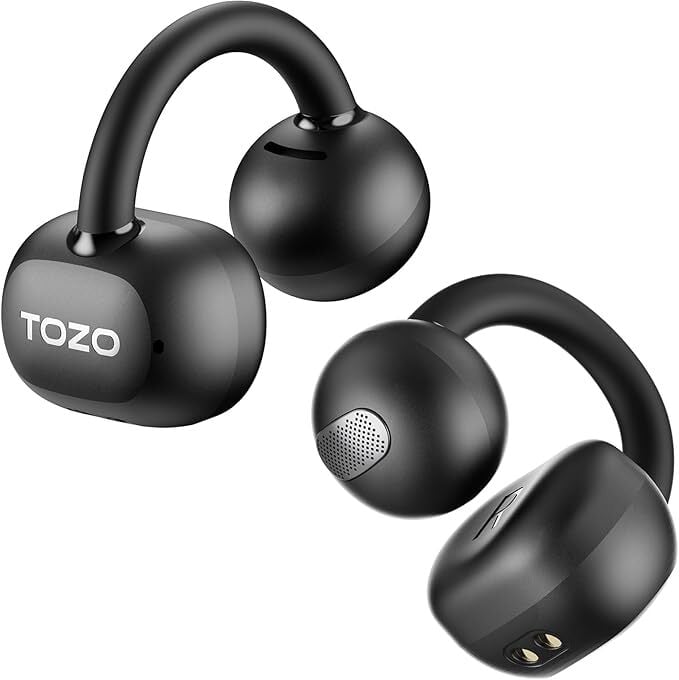
TOZO OpenEarRing Open Ear Headphones
$29.99
at Amazon
$59.99
Save $30.00
Save $30.00
$29.99
at Amazon
$59.99
Save $30.00
Save $30.00
45H Playtime, Wireless Charging Case, IPX8 Waterproof Stereo Headphones in Ear Built in Mic Headset
TOZO T10 Earbuds
$18.98
at Amazon
$38.99
Save $20.01
Save $20.01

$18.98
at Amazon
$38.99
Save $20.01
Save $20.01
48hrs Play Back Sport Earphones with LED Display Over-Ear Buds with Earhooks Built-in Mic Headset fo
bmanl Wireless Earbuds
$25.48
at Amazon
$49.99
Save $24.51
Save $24.51

$25.48
at Amazon
$49.99
Save $24.51
Save $24.51
253H Battery, ENC Mic, Bluetooth 5.4, USB-C Charging Case, IPX5 Waterproof, Noise Isolating
TREBLAB X4 Earbuds
$39.99
at Amazon
$59.97
Save $19.98
Save $19.98

$39.99
at Amazon
$59.97
Save $19.98
Save $19.98
Adjustable Active Noise Cancelling Wireless Earbuds, Reduce Noise by Up to 98%, 50H Playtime, Hi-Res
Soundcore by Anker Space A40
$44.98
at Amazon
$79.99
Save $35.01
Save $35.01

$44.98
at Amazon
$79.99
Save $35.01
Save $35.01
JBL Pure Bass Sound, Up to 30 hours of battery life, IP67 Waterproof and Dustproof, Ambient Aware &
JBL Endurance Race TWS
$49.95
at Amazon
$79.95
Save $30.00
Save $30.00

$49.95
at Amazon
$79.95
Save $30.00
Save $30.00
145H Battery, Waterproof & Sweatproof Bluetooth Earbuds, Mics for Calls
TREBLAB X3 Pro
$59.97
at Amazon
$99.97
Save $40.00
Save $40.00

$59.97
at Amazon
$99.97
Save $40.00
Save $40.00
60H Playtime, Hi-Res Audio Custom EQ via App Deep Bass Comfort Fit Ear Cups
TOZO HT2 Headphones
$33.99
at Amazon
$59.99
Save $26.00
Save $26.00

$33.99
at Amazon
$59.99
Save $26.00
Save $26.00
Signature-HD Sound, Deep Bass, 35H Battery, Comfortable, Foldable Over Ear.
TREBLAB Z2 Headphones
$89.92
at Amazon
$129.97
Save $40.05
Save $40.05

$89.92
at Amazon
$129.97
Save $40.05
Save $40.05
Try bone conduction and open ear headphones at up to 50% off
Not everyone can afford Shokz OpenRun Pro 2 headphones. If you’re curious to see how bone conduction headphones feel before committing to a premium model, try the Feico Bone Conduction Headphones, which are $49.99 right now, down from $83.92. A fun feature: You can save MP3 songs directly to the headphones so you can listen to music underwater (Bluetooth signals can’t penetrate water).
Open-ear headphones are great for hearing your surroundings while your out and about. The Tozo OpenEarRing are now just $29.99 (originally $59.99), offering a lightweight option with 40 hours of battery.
A range of earbuds at up to 51% off, including a pair with unheard of battery life
If you’re looking to spend the least possible on a decent set of earbuds, consider the Tozo T10s, which are $18.98 (originally $38.99). Impressively at this price point, they include an IPX8 waterproof rating, stereo sound, and EQ presets in their companion app.
Earhook earbuds are good if you prioritize a secure fit. The Bmanl Wireless Earbuds are $25.49 (originally $49.99) are comfortable to wear and can go 8 hours on a single charge (and up to 48 hours with the charging case).
Speaking of battery life, if that’s important to you, you will love the Trelab X4 earbuds, currently going for $39.99 (originally $59.97). I’ve never heard of any earbuds getting even close to 253 hours of juice, but somehow these IPX5 waterproof earbuds with noise isolation for calls pull that off, going for 11 hours between charges, plus another 242 hours from the charging case. Dang!
I can vouch for the Soundcore by Anker Space A40, which I’ve used for a year—they have the best ANC I’ve experienced among all of the budget earbuds I’ve tested. You can get them for $44.98 (originally $79.99).
JBL is a well-known brand for earbuds. Its sporty earbuds, the JBL Endurance Race TWS, are $49.95 (originally $79.95) and offer an IP67 waterproof rating, 30 hours of battery life, and an ambient aware feature so you can better hear your surroundings.
The Trelab X3 Pro offer a good balance of great battery life (totaling 145 hours, including the charging case), a sporty design with earhooks and a waterproof rating, and good microphones for calls. You can get them for $59.97 (originally $99.97).
These over-ear headphones are up to 43% off
It’s not every day you can get over-ear headphones with ANC, 60 hours of battery, high-resolution audio, and a companion app with EQ presets for $33.99 (originally $59.99). You can get exactly that with the Tozo HT2 Headphones.
If you want headphones from a more established brand, get the Trelab Z2 for $89.95 (originally $129.97). They’re ANC, have 35 hours of battery, are foldable and come with a case, and include a bass-boosting mode.
Google’s New AI Ultra Subscription Plan Is Really, Really Expensive
Google announced a lot of new stuff today at I/O, but few things were more eye-watering than the company’s new Google AI Ultra subscription. At $250 per month, it’s by far the most expensive subscription Google has yet launched. So it makes sense it comes with everything. And I mean everything.
For starters, subscribers at this tier get to use Gemini Ultra, which includes the new Veo 3 video generation model that can also generate sounds alongside video, to…some effect. This tier will also be the first to get access to the upcoming 2.5 Pro Deep Think reasoning model that Google says can “consider multiple hypotheses before responding.” It also brings access to tools like Flow and Whisk that provide editing tools on top of Veo and Imagen’s video and image-generating capabilities.
Technically, these plans are part of the Google One subscription family, so they’re not solely focused on AI features. On top of the above mentioned features, you’ll also get 30TB of storage across all the services attached to your Google account (like Gmail, Photos, and Drive).
Google has also thrown in a YouTube Premium individual subscription at this new, highest tier. This makes it the only Google One plan that includes ad-free YouTube (as well as YouTube Music). Sorry, folks who are only paying $150 for the Google One Premium subscription with 30TB of storage and only Gemini Pro access.
Google’s previous plan, Google AI Premium, is now Google AI Pro. It still costs $20 per month, and comes with the same perks it did before. Now, however, users have access to a limited version of Flow with Veo 2, as well as Gemini in Chrome.
An animated Clash of Clans series is coming to Netflix
The latest video game to be getting the TV show treatment is a pair of hugely popular mobile titles. Developer Supercell is partnering with Netflix for an animated series based on the world of its games Clash of Clans and Clash Royale. Fletcher Moules, who directed the original Clash of Clans animated videos on YouTube, will be the showrunner for the Netflix project and Ron Weiner, who has worked on Silicon Valley, 30 Rock, Futurama and Arrested Development, will be the head writer.
Clash of Clans debuted in 2012 and the casual strategy game got a deck battler sequel in Clash Royale, which launched in 2016. According to the show announcement, the pair of games have more than 4 billion downloads and more than 180 billion gameplay hours logged by players. The Netflix show will center on the Barbarian character from this game universe as he tries to “rally a band of misfits to defend their village and navigate the comically absurd politics of war.” The series is in pre-production, and no additional casting or release info has been shared at this stage.
Netflix has hosted several animated shows based on video games, from Arcane to Devil May Cry.
This article originally appeared on Engadget at https://www.engadget.com/entertainment/tv-movies/an-animated-clash-of-clans-series-is-coming-to-netflix-204104822.html?src=rss
Trump’s trade war risks splintering the Internet, experts warn
In sparking his global trade war, Donald Trump seems to have maintained a glaring blind spot when it comes to protecting one of America’s greatest trade advantages: the export of digital services.
Experts have warned that the consequences for Silicon Valley could be far-reaching.
In a report released Tuesday, an intelligence firm that tracks global trade risks, Allianz Trade, shared results of a survey of 4,500 firms worldwide, designed “to capture the impact of the escalation of trade tensions.” Amid other key findings, the group warned that the US’s fixation on the country’s trillion-dollar goods deficit risks rocking “the fastest-growing segment of global trade,” America’s “invisible exports” of financial and digital services.
How To Harness Google’s NotebookLM AI Research Tool That Just Arrived On Phones
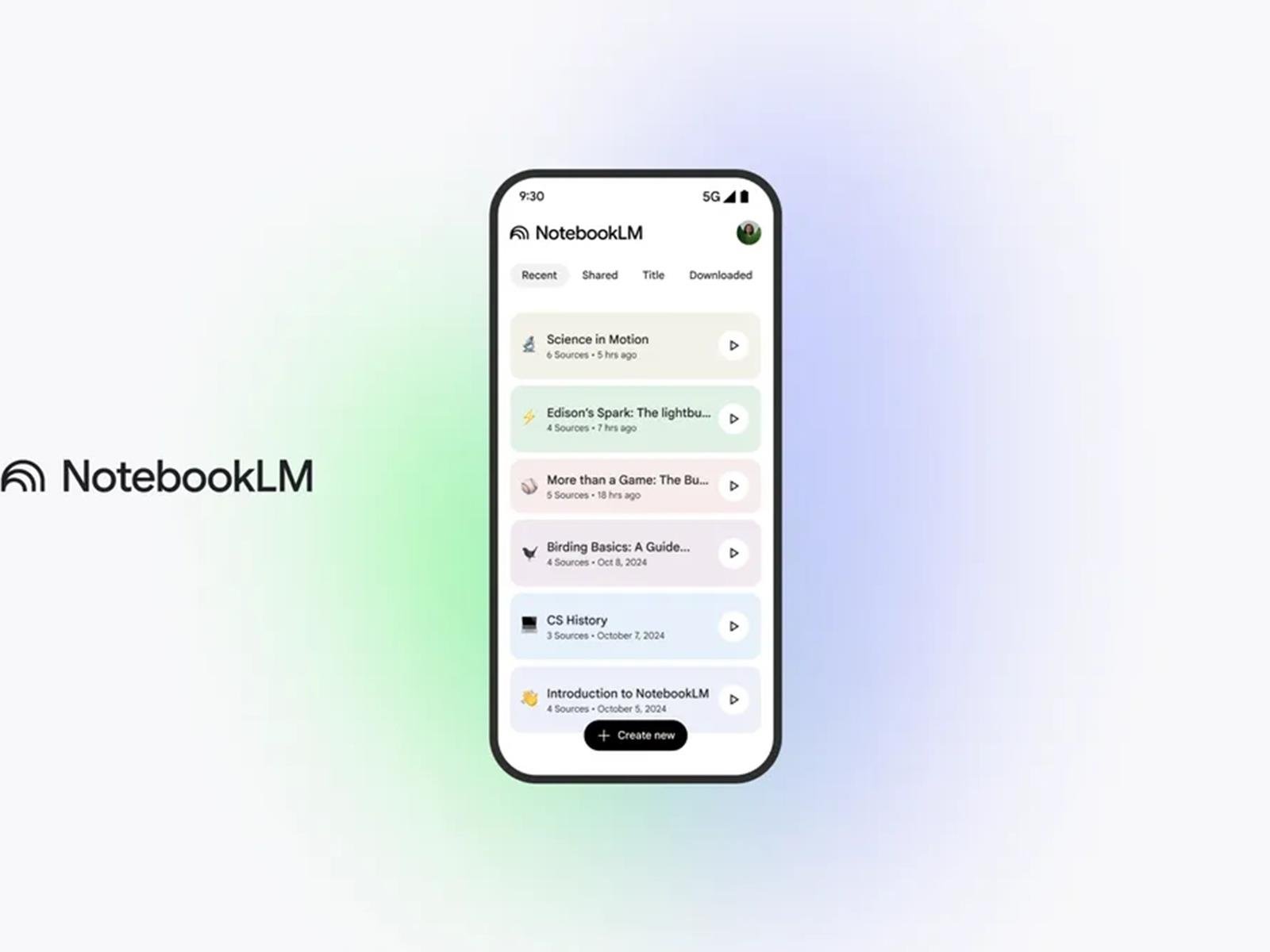
We’ve got good news for students, researchers, and learners worldwide: Google has announced that its AI tool for explaining complex topics, NotebookLM, is now available on mobile apps for iOS and Android smartphones and tablets.
If you are unfamiliar with NotebookLM, it’s a research tool for understanding and interacting with complex information.