
How to Pack for a Move so You Can Unpack Faster

We may earn a commission from links on this page.

When you’re packing to move, you have a lot to keep in mind. You may want to think of how to minimize costs and how to get rid of all your extra junk, but what about packing in a way that makes unpacking easier? Few things are more annoying than getting to your new home and needing a specific object—where the heck is that screwdriver?—only to find that your past self’s haphazard packing job made things difficult on your current self.

You want your transition into your new space to be smooth and even enjoyable, to the extent it can be. Here are some tips to make sure not just that the packing process is easy—but the unpacking process, too.

Start earlier than you think

Historically, when I’ve moved apartments, I’ve waited until the week of the big move to start gathering my things. This has never worked out for me. Don’t do that. You should actually start three or four weeks in advance. I know that sounds annoying, but you need that time buffer.

“Packing always takes longer than expected, so start early,” says Evan Hock, co-founder of MakeMyMove. “Especially with seasonal items or belongings you don’t use daily.”

The time isn’t just for packing, mind you: packing also includes decluttering, since you don’t want to spend money or energy moving items you don’t need or want in the new place. Next, and maybe most importantly, you need that time to make adjustments to your plans. If the boxes you’re using aren’t strong enough, if you didn’t budget enough for packing supplies, or if you find that you’re having a hard time categorizing everything, you’ll be grateful for an extra few days to get it all sorted.

Select the right supplies

A number of pros I spoke to recommended buying new boxes instead of trying to save money by using old ones. That will cost you money, but might also save you some headaches, as older boxes can lose their integrity—that, plus having boxes that are all (or mostly) the same size will making packing and moving much easier.

If you don’t want to buy boxes, consider reusable plastic crates, which also give you the uniformity in addition to even greater stability. A number of companies at the local and national levels will rent these crates out to you. U-Haul, RentalCrates.com, and Perfect Crates all offer this service, but check locally, too, and compare prices for your exact needs. If you’re moving nearby, a local company should do the trick. For long-distance moves, consider one of the bigger ones above just to make the return easier, as they drop off and pick up the supplies.

Another thing to keep in mind is high-quality tape. Rob Rimeris, owner of EverSafe Moving Co., says sturdy boxes and strong tape are “worth every penny.” Charles Chica, co-owner of CT Best Movers, also advises you never “go cheap” with your tape: “You’ll regret it when a box or bag breaks open mid-move.”

Go room by room

You need to be strategic while you pack. Again, historically, I’ve failed at this—likely because I waited too long and just ended up running around, shoving things into boxes wherever they’d fit and praying I’d be able to make sense of the mess when I got to my new place. Instead of panicking like that, approach your packing systematically. Go room by room.

“Pack one room at a time so that all the items are grouped together when unpacking,” says Stephanie Rees, assistant product manager of mailing and moving accessories for Duck Brand. Matt Graber, co-owner of Cool Hand Movers, says the same: “When you go room by room, filling moving boxes or bins, you ensure that the items to be unpacked will most likely be together in the same room on the other side. You don’t want to drag boxes around your new home finding places for scattered objects.”

Doing it this way is also going to help you stay organized in the new place, since it aligns with the rules of the Organizational Triangle: Everything must have a place and be stored with similar items. Grouping together similar categories makes it easier to organize and store them once you move.

Separate the essentials

While you’re packing room by room, you should also be packing in order of urgency. Charles Chica, co-owner of CT Best Movers, says you should have one box of immediate essentials that should include “stuff like meds, chargers, toiletries, documents, and even just a change of clothes” and you should pack it and bring it along with you yourself, even if you hire movers for everything else.

You should also have boxes of essentials for every single room in the house—stuff that might not be so important that you’ll put it in your take-with-you box, but stuff you know you’ll need soon. From your bathrooms, that might include things like spare toothbrushes, soap, and a towel. From the bedrooms, think pajamas, kids’ stuffed animals, and a few changes of clothes. The kitchen essentials might be some cookware and a coffee pot. With a box like this for each room, even if you’re too tired to unpack on the first (or second or third) night in the new place, you’ll have what you need to be comfortable so you don’t have to dig through all your other boxes just to find some toothpaste.

Shanaiqua D’Sa, content marketing lead at Attic Self Storage, suggests the same thing, but adds an important caveat: “The single most overlooked thing that makes unpacking easier is ensuring you keep a pair of scissors or penknife on hand,” she says, so add that to the things you’re keeping accessible, not packing away. “So many people move houses, are all set to unpack, and then can’t unpick the packaging tape on the boxes and don’t have a pair of scissors or knife on hand to do so. It’s just one added frustration that you really don’t need.”

While you’re separating out the essentials, “Don’t overlook your healthcare needs,” says Evan Hock, co-founder of MakeMyMove. “Before making the move, ensure you have access to your medical records and enough prescription medication to last until you find a new primary care provider. This small step can prevent unnecessary stress down the road.”

Don’t over-complicate the small stuff

We all have so much small stuff—batteries, screws, art supplies, etc. Why not keep some of it where it is? If you have a unit with drawers that contain a bunch of stuff, tape the units closed securely and transport them just like that, says Jordan Sakala of laborhutt.com. Other small items can and should be tossed into Ziploc bags, but you have to label them clearly, says Chica, and you should tape those bags where they belong. Bags of screws should be taped to the furniture they’re for, for instance, and bags of chargers should be taped to the container or furniture where they’re stored.

Clothes might seem like “big stuff,” but you can actually think of them like “small stuff” here. Gather your hanging clothes together and slip a garbage bag right over them, keeping them on their hangers and all, says Chica. I always cut a little hole in the top of the bag so the hangers can stick out, then hang them on their new rod when I move in and (carefully) cut the bag right off.

Some clothes, though, can be used to protect the “small stuff.” Multiple pros mentioned to me that scarves, socks, t-shirts, tablecloths, curtains, and more can and should be wrapped around valuables. This saves you money on packing supplies and keeps your goods safe. Rob Rimeris, owner of EverSafe Moving Co., even claims that “t-shirts cushion dishes better than bubble wrap ever did.”

Label carefully

As you pack, don’t forget to label your boxes. Multiple pros recommend color-coding your labels to align with the room the contents belong in, but how you do that is up to you. Shannon Beller, CEO and co-founder of Wall-Russ, says colored labels can help pro movers place boxes in the right room, but if you don’t have colorful labels, even color-coded stickers can work, according to Marshall Aikman, owner of Amazing Moves Moving and Storage.

On top of that, get really detailed. “Don’t just write ‘misc.’ because that’s a nightmare when you’re tired and trying to find your coffee maker on day one,” says Tiam Behdarvandan, CEO and Founder of Let’s Get Moving. Write the specific object names on the side of the box so you always know exactly what you’re dealing with. Label the urgent boxes, first-day boxes, and every other detail that will be relevant when you get there.

Pack (and load the truck) thoughtfully

Whether you’re filling your own U-haul or have hired pros to take care of this part, think strategically about the order everything gets loaded. If the kitchen of your new home is all the way in the back of house, put the kitchen boxes in last so they’re the first to come out and you can easily get them to the back of the house without tripping on other boxes. Ideally, furniture should be in a separate van or truck so it can come out first, since you’re not going to want to be shoving a credenza through a pile of cardboard boxes, either.

The same goes for the packing of the boxes themselves: Label them clearly and try to pack them in a way that has some kind of logical sense. A box full of kitchen appliances is more important to unpack first because you want the big stuff in place on your counter before you add in the decor. You want to unpack your sheets before your throw pillows so you can get them on the bed in the right order, so you might want those pillows on the bottom of the bedding box and the sheets on the top.

Finally, you’ll want to jot down on each box what its contents are. Don’t just label them by room. Instead, says Tiam Behdarvandan, CEO and founder of Let’s Get Moving, write the specific object names on the side of the box so you always know exactly what you’re dealing with. Label the urgent boxes, first-day boxes, and every other detail that will be relevant when you get there.

Here’s a bonus tip from Marshall Aikman, owner of Amazing Moves Moving and Storage: You probably already know that you should be packing as much as you can into your suitcases to avoid over-spending on boxes, but you should think a little more critically about what should be packed in them. Heavy items, like books, are a great option, since the wheels of a suitcase can help save your back. Items that have to travel a long way through the new home are also a good option, again because of the wheels. So, too, are things that come in many sub-categories, like toiletries, as long as the suitcase has interior pockets. One pocket can be for lotion, another can be for facial skincare, and another can be for perfume, and so on.

These are suggestions for an ideal scenario, of course. I know full well how much more stressful packing is in reality; sometimes, you just don’t have time to think through all of these little things. That’s why it’s best to start this process weeks in advance, if you can. You want time to make a plan so that the unpacking and moving-in aren’t as stressful as the packing and moving-out. Start your time in your new place off right.
A Guide to Pulling Off a (Mostly) Stress-Free Long-Distance Move

For the last 10 years, all of my moves have happened within about a 15-block radius. For personal reasons (a dislike of annoyance and paperwork), I may never leave this neighborhood in Manhattan. Then again, I may not have a choice. You never know when something—a great job opportunity or the sudden desire to experience something new—may come up. If and when you find yourself moving not just locally, but quite a distance, there are some unexpected hurdles you’ll need to keep in mind that differentiate this from your standard move.

Your budget has to be on point

Budgeting for any kind of move is a key to not going broke during the process, but your expenses for a longer move are going to be more, obviously, and are also going to include quite a few things that you may not immediately think of.

Monthly bills

If you’re undergoing a more significant move, chances are good that you’ll have a rent and utilities overlap, which should be part of your budget planning.

In addition to billing overlap, consider any fees you may incur for canceling utility accounts or opening new ones—be sure to check with your new city on how much all of that costs around there. The city you’re moving to might have higher taxes, for instance, which may make your monthly bills higher than you expect.

You should also think about your other monthly expenses that may change after your move. Your gym membership is a good example. Are you locked into one that is going to be hard to cancel? Many gyms require proof that you’re moving out of the region or a certified letter to cancel your membership.

On this topic, while it’s not quite related to budget, necessarily, check with your doctor, dentist, and other providers about getting referrals, having prescriptions moved to new pharmacies, and if there’s anything you should consider related to your healthcare in the new city while you find new providers. Do a quick scan of your checking account to identify any city-specific recurring charges, like public transit passes or bills.

Repairs on the new place

Repairs on the old or new home can also add up, especially if you’re moving to the new place sight-unseen or if you haven’t had a chance to truly assess it. One person I spoke to who moved cross-country, for instance, said the new house they moved to was great—but it had been unoccupied for a while before they moved in, which resulted in spending some time and money cleaning up that they hadn’t accounted for.

Food and lodging

The farther you move, the longer you’ll spend without a roof over your head and possibly even without a lot of your possessions, as they may still be in transit after you arrive. Don’t forget to budget in some money for takeout and even hotel stays, if necessary.

Building the budget will take time. Get quotes from a variety of moving companies, figure out your travel situation, add in money for food and bills in the new city, consider whether you need to make any repairs on your old place, and determine what, if anything, it will cost to update your identification and utilities. When you’re done ballparking all that, add 10 to 15% onto the number you end up with, advises Rob Rimeris, owner of EverSafe Moving Co. According to him, that “isn’t just practical,” but “gives people back a sense of agency when plans shift.” When you find yourself in a brand-new town, having a sense of agency will keep you feeling sane.

How to choose the right movers

Finding a good moving company is crucial for any move, but when your stuff is getting hauled across the state—or across the country—it’s even more important to do your research.

“Find a company that is licensed, insured, has good reviews, and has the proper checks and balances in place,” says Charles Chica, co-owner of CT Best Movers. You might be tempted to go with whatever company is the cheapest, but it’s important to weight price as just one of many factors.

Spend time looking for a company, get your estimates in writing, and provide as much detail as you can about whether you will need help with packing and furniture disassembly and reassembly, as well as what the parking situation is at both the pickup and drop-off locations. Communicate clearly and honestly and make sure all of the communication you receive is backed up in writing. The farther you move, the more complicated this might be, so use an honesty-first approach to avoid any surprise fees or issues.

What you might not realize about long-distance moves

Alex Girard, whom I interviewed for this story, has lived in four states and recently completed his farthest move. He said that the process for selecting a moving company was trickier than he anticipated, partly because moving works a little differently over long distances.

“I didn’t realize (though it makes sense) that basically the way it works is local movers on either end partner with some national trucking company to do the actual long-haul, so it was kind of hard to compare services,” he says.

Another difference is that the movers won’t load your stuff up and drive directly to your new place, which requires extra planning on your part.

“Since the moving companies are partnering with trucking lines,” Girard says, “they don’t do a special delivery straight to the new house from the old one. Your stuff sits at a warehouse on both sides for a while until they can be loaded onto the next truck out.”

To avoid the disastrous situation of having to live in a new home with absolutely nothing for two or three weeks, plan for this in advance. Most places Girard spoke to said the boxes and furniture would arrive within 10 to 20 days, so he shipped his most important necessities to his new house in advance, relying on the postal system to make sure he arrived to a new home that contained the essentials he needed to work and live. That was smart, since it actually took a few weeks for the moving companies to deliver everything else, but it was also “a bit expensive.”

Regardless of how far you’re moving, there are things you’ll need to keep with you, as movers may not want to (or may not be able to) move all of your belongings. These types of things include identification documents, medications, perishables, hazardous materials, pets (obviously), and even plants. Knowing in advance you’ll need to find a safe way to transport all of these and keep them on you is important to ensuring a smooth move.

Read online reviews, but don’t obsess over them

You’ll certainly spend time reading online reviews as you select your moving company—and that’s good, but read them with skepticism, too. Girard says he spent a lot of time researching moving companies and pointed out that he read a lot of nightmare-sounding online reviews, but didn’t experience anything as catastrophic as what they described.

That’s a good thing to keep in mind as you do your own research: In general, remember that online reviews only tell part of the story. Someone is more likely to write one when they’re super mad and more likely to forget to write one when they have a totally unremarkable experience. Your best bet is to call as many companies as you can, speak to them directly, and make sure they’re insured, knowledgeable, and reasonable. (And if you end up having a positive experience with them, consider writing a review just to help out the next person in this position.)

Get on the phone

This is a tip I learned from my mom and am always happy to share: Call people. You can get more done in a 15-minute phone call than a four-day email thread.

Whenever she and I go on a trip, she calls the chamber of commerce in that city to ask a local what, exactly, we should be sure not to miss, which has resulted in us having incredible experiences we would never have found if we’d just relied on TripAdvisor or Reddit. The same applies here. Contact your new local government to get a straightforward answer to what, exactly, you need to do to have a smooth move.

You’ll need a new driver’s license, for instance, and the process for obtaining it should be pretty simple, but that can vary by jurisdiction. Turning on your new utilities, updating your mailing address, learning about any new taxes or regulations—all of this should be explained to you by a knowledgeable local. It’s likely they’ll direct you to an online portal, yes, but you’ll know you’re working with the right information, which is half the battle.

Ask for help from a local

Finally, try to find a local who might be willing to answer some questions or tell you more about the town. When I moved from North Dakota to New York at 18, I was enrolled in a university where there were campus reps whose job it was to teach us about the city, but what I learned from them was nothing compared to what I ultimately learned from befriending kids who were born here. City employees can only get you so far.

If you don’t know anyone in the new place, post an inquiry on Reddit (most cities have their own subreddits—do some Googling to find the most active ones wherever you’re moving). In my experience, people love talking up their hometowns. From hidden gems in the culinary landscape to unexpected expenses (Girard notes that he was unpleasantly surprised by the higher taxes on alcohol in his new town), everyday people will be more likely to tell you about the everyday experiences of living there, which will help you acclimate a lot faster.

Five Key Steps to the Easiest Move Ever

Moving is famously one of the most stressful things you can do. Not only is it a ton of work and a major financial expense, but you’re dealing with the weight of leaving behind one home and starting fresh in another. It’s a burden on your calendar, your wallet, and your emotions.

Whether you are relocating for a new job, moving in with a partner (or moving away from one after a breakup), or just need a change of scenery, you should take the opportunity to appreciate (if not relish) the momentous event—and not be filled with dread, stress, and regret throughout the process. If you’re looking to pull off the smoothest, least painful move ever, follow these five essential steps, as outlined by experts in the moving business.

1. Start planning as early as possible

Long before you put a single possession into a cardboard box, you have to plan out your move. And I really mean it—every aspect. This is more involved than you think, so start early and set aside a chunk of time. Shanaiqua D’Sa, a content marketing lead at Attic Self Storage, notes that planning ahead is, “undoubtedly the first and most important step.” It should include budgeting, comparing moving companies, considering if you need a storage unit to temporarily house your stuff, acquiring packing materials, and more.

Set a budget

Budgeting should be your main focus. This can include: A truck rental or a moving company, insurance, fuel, labor costs, packing supplies, overlapping rent or mortgage payments, a storage unit, utility transfers, cleaning fees, repairs (on the old or new property), and paying food and/or shelter during the move. Costs for all of these will vary depending on your needs, so spend some time sketching out different scenarios.

Once you have a budget in mind, increase it by 10% to 15%, according to Rob Rimeris, owner of EverSafe Moving Co. “Build room for the unpredictable,” he says. “We see a lot of people plan for truck and labor, but forget about costs that compound.”

Be realistic, and you’ll avoid surprises. Nick Friedman, co-founder of College HUNKS Hauling Junk and Moving, advises, “The more labor you require, the higher your overall cost will be. For local moves, many companies offer flat rates based on time and labor, but it’s important to make sure those quotes match your actual needs. Opting for too many services can lead to overpaying, while too few may leave you scrambling on moving day.”

Start by figuring out what, if anything, you will handle yourself, and what you’ll outsource. Moving companies can help with everything from packing to furniture disassembly, but each likely comes with additional costs. Define what you want before you start calling companies to avoid getting upsold on something you don’t really need help with.

Find the right movers

That leads me to your next step, which is researching moving companies. Marshall Aikman, owner of Amazing Moves Moving and Storage, advises prioritizing reliability and reputation as highly as price: “Pay attention to how long the company has been in business because solid experience usually means smoother operations.”

Call a number of places and be upfront about everything from the scope of your move, to any special considerations like unusually heavy furniture, tight hallways, or lots of stairs. Get multiple estimates, and get everything in writing. Ask for detailed cost breakdowns to find out whether gas, stairs, furniture wrapping, furniture disassembly and reassembly, and more will increase your costs. Once you’ve narrowed down your list of possibilities, ask for proof of licensing and insurance, advises Friedman. If a company won’t be straightforward about answering your questions and providing you with paperwork, cross them off your list. Matt Graber, co-owner of Cool Hand Movers, cautions against being “drawn in by lowball pricing,” too. Any quote that seems “too good to be true” almost certainly is. Avoid companies with excessive upfront deposits—usually anything over 25% of the total cost—and read a ton of customer reviews before signing any contracts.

2. Declutter before you move (or pack)

Multiple pros I spoke to made the same point, and it’s worth repeating here: Declutter before your move so you don’t waste money moving things you don’t need or want to keep. (Here’s a more detailed breakdown of how and why to declutter before a move) In general, you should start this process a few weeks in advance of your move. Three or so weeks at least ensures that you have enough time to think about what you really need to keep, and to donate or sell what you don’t. If something is broken or rarely used, consider leaving it behind as you move into a new phase of your life. A few weeks will give you time to actually list and sell things to make money for your move, but set a deadline for when you’ll donate the remainder—you don’t want junk lying around when the movers show up.

This could come with additional expenses. D’Sa points out that if you’re downsizing significantly, you may have to budget for a small dumpster for everything you need to throw away. Still, it’s worth it: All of my experts agreed that decluttering is the single most effective way to save money and psychologically prepare for your move. You’ll also get a head start on packing simply by getting a clearer picture of everything you own.

3. Pack like a pro, even if you can’t pay for it

Like planning and decluttering, packing will start weeks before you move. I realize that’s not always possible, but do try to start as soon as you can. Waiting until a few days before—or worse, the day the movers show up—can lead to chaos. Movers can help you pack, but that’s typically expensive. Evan Hock, co-founder of MakeMyMove, cautions, “Packing always takes longer than expected, so start early, especially with seasonal items or belongings you don’t use daily.”

While you can likely score some free boxes from local businesses, it’s a good idea to just buy them (you can usually find the best prices at big box hardware stores). Rimeris suggests purchasing high-quality tape, “markers you can actually read,” and strong boxes, all of which are “worth every penny.” Mindy Godding, president of the National Association of Productivity and Organizing Professionals, advises buying all your boxes so they’re all similar shapes and sizes and will pack more easily. You can cut down your costs on protective supplies, Godding says, noting packing paper works just as well as bubble wrap or pre-made inserts when it comes to protecting your fragile items.

Renting crates can save you some effort, at a cost

If you don’t want to buy boxes, you can consider renting reusable plastic crates. A number of companies, both local and national, will deliver these crates to you before you move and pick them up when you’re done. They’re sturdier than cardboard boxes, stackable, uniform, and returnable, so they make packing easy. Uhaul, RentalCrates.com, and Perfect Crates all offer this service, so compare prices for your exact needs.

Get creative

Godding suggests placing plastic cups around delicate items like figurines, and clearly labeling any boxes with something breakable inside. Shannon Beller, CEO and co-founder of Wall-Russ, adds that you can use household materials like towels and linens to cushion delicate items as you pack, and Tiam Behdarvandan, founder of Let’s Get Moving, suggests packing heavier things, like books, into rolling suitcases, since the wheels make it easier to haul them around.

Photos are your friend during this porcess. Take photos of your boxes as you pack so you know what’s in each box if you should need something in an emergency. Also take pictures of things like cable configurations behind the TV, so setting everything back up will be easier.

Beller and Charles Chica, co-owners of CT Best Movers, recommend keeping your clothes on the hangers and tossing a garbage bag over them. When you get to the new house, cut a hole in the bag, thread the hangers through, slip them on the rod, then cut the bag off. (Here are more tips on how to pack in a way that makes it easier to unpack.)

Have a system

Pack room by room, and within each room, proceeding in terms of urgency, and designate one box of “essentials” from each. These boxes—which will contain things like toothbrushes, soap, pajamas, and coffee pots, plates and silverware, and anything else you might need in the first days at your new home—should be loaded into the moving van last, unloaded first, and opened on your first night there. Making sure your boxes of must-haves are easily accessible will make settling in a lot easier. (Keep a knife or scissors handy so you can actually open them.)

4. Do what you need to do online before you move

It’s eay to get so wrapped up in the physical process of moving your possessions from one place to another that you can forget about what comes next: Living somewhere new. Especially if you’re moving to a new town, you will have to check a bunch of boxes to get your new life up and running.

A lot of these things can be handled online, so do your research and accomplish as much as you can before your move. Start by making a list of all the different things to deal with at your current address. You may need to make some repairs to get your security deposit back if you’re a renter. Take stock of your bills and memberships: cancel your gym membership and any other local recurring charges, like public transit cards that auto-renew. Set up a mail forwarding so you will get any mail that comes to your old place. Cancel your utilities. Reach out to your doctor, dentist, optometrist, and other providers to find out if they can make referrals for you in your new area and provide copies of all your important records and documents. Forward your prescriptions to a new pharmacy.

Now, shift focus to your new location. Set up your utilities and the online accounts you’ll need to pay them, switch your driver’s license information if necessary, research the deadlines for re-registering your car, and contact your insurer (hopefully your new area will have lower rates). You can even start looking for local doctors, dentists, or any other professionals you’ll need to avail yourself of in the short term after you move.

5. Stay on top of things the day of

The last step is the big one: It’s time to move. Even this part still comes down to planning and budgeting. Jordan Sakala of laborhutt.com suggests moving during the week and mid-month, when demand is lower, and making sure you’re ready and packed before the movers arrive. If you’re not ready when they pull up, you could get charged an hourly fee while they either wait around for you or jump in to help speed things along. Make sure to tell movers about heavy furniture or tight squeezes in advance so they come with all the necessary tools, as if you don’t, you may end up waiting around (and being charged for it) while they run to get them—or, worse, be told they can’t move those things at all.

On moving day, even if you’ve hired a full-service moving team and outsourced pretty much everything, it’s a good idea to stick around and supervise so you can answer any last-minute questions. There are some things movers won’t touch, so it will be your responsibility to coordinate their transport. Get a written list of what your company won’t deal with in advance, but in general, expect to take care of your own jewelry, delicate valuables, identifying documents, medical papers and medications, hazardous materials, plants, and pets.

Before walking out your door for the last time, check the place over, and make sure you know exactly where the “essentials” boxes you packed are. Once they’re all accounted for, get on the road to your new home—hopefully feeling excited, instead of frazzled and exhausted.

Strava buys The Breakaway, bringing in-depth training to cyclists in period of ‘accelerated growth’ 

Strava has acquired The Breakaway, a cycling training app that offers personalised training, gamification and progress tracking.

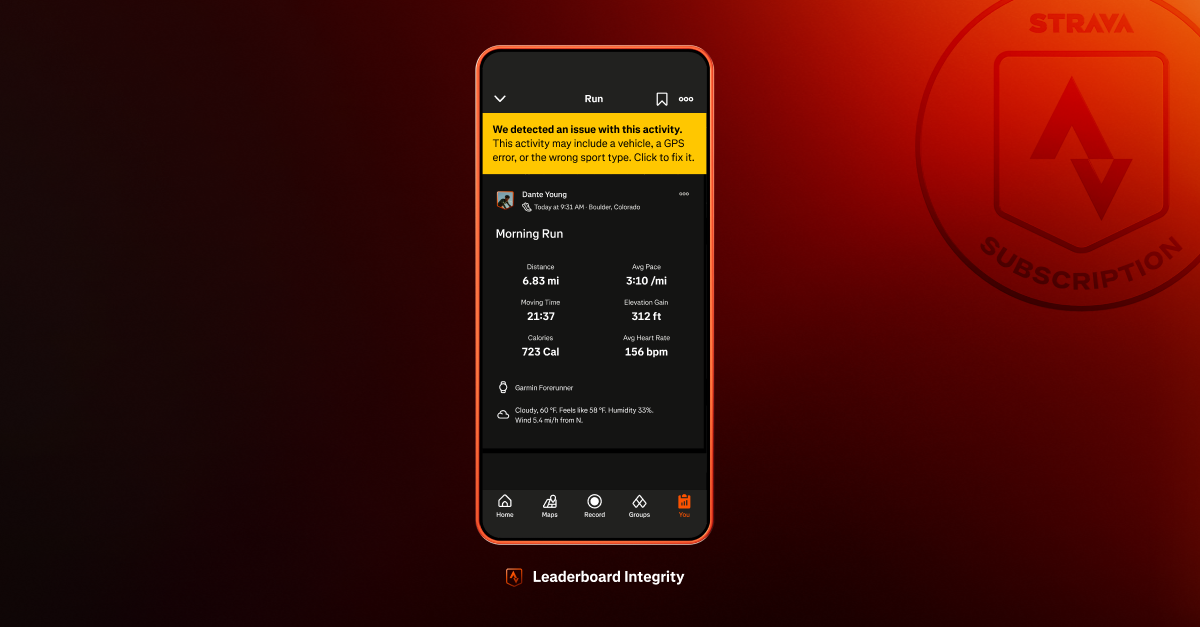
The deal follows a period of “accelerated growth” for Strava. Last month, the app acquired Runna, a UK tech company that develops training plans and provides coaching for runners. Yesterday, we learnt of Strava’s huge AI-powered update, which included cracking down on leaderboard cheats.

Strava says The Breakaway aligns closely with its “mission of motivating people to lead an active life”.

It says The Breakaway users who are already connected to Strava upload twice as many activities compared to other Strava cyclists, thanks to its “personalised cycling training, innovative ride analysis, and achievement tracking tools”. 

The training features will be available to Strava subscribers. 

Strava leaderboard update
Strava announced a crackdown on leaderboard cheats yesterday. Strava

“Jordan Kobert, Kyle Yugawa and team have built a brilliant app for cyclists who want to improve and achieve their cycling targets, making it a perfect fit for the Strava subscription, which helps users accomplish their goals,” says Michael Martin, chief executive officer at Strava. 

“When Strava was founded more than 16 years ago, it was created initially for cyclists – these users remain important members of our global community, and we are excited to enhance their experience through this acquisition.”

Strava says this announcement is another signal of the app’s growth, commitment to innovation and its “continued investment in its developer community and open API, which enables third parties to connect and build new experiences for athletes”. 

The Breakaway was ‘incubated’ by Y Combinator, a US startup accelerator and venture capital firm, which has been used to launch more than 5,000 companies. 

What I learned from my first few months with a Bambu Lab A1 3D printer, part 1

For a couple of years now, I’ve been trying to find an excuse to buy a decent 3D printer.

Friends and fellow Ars staffers who had them would gush about them at every opportunity, talking about how useful they can be and how much can be printed once you get used to the idea of being able to create real, tangible objects with a little time and a few bucks’ worth of plastic filament.

But I could never quite imagine myself using one consistently enough to buy one. Then, this past Christmas, my wife forced the issue by getting me a Bambu Lab A1 as a present.

Read full article

Comments

Prime OS on EndeavourOS: Can it Run?

Prime OS can be installed side by side with the Linux system. In the previous post on this blog, I discussed how to install Prime OS. At that time I tried it on Ubuntu, and the results were smooth. But in the comments column of my YouTube channel, there were some who complained about booting

Wisk Aero, NASA Sign 5-Year Partnership To Advance Sustainable Autonomous Flights

Wisk Aero and NASA have signed a new five-year partnership to advance the safe integration of autonomous, all-electric aircraft into U.S. airspace, focusing on urban air mobility and regulated eVTOL flight. Electrek reports: Wisk Aero shared details of its refreshed partnership with NASA this week. The autonomous aviation specialist has signed a new five-year Non-Reimbursable Space Act Agreement (NRSAA) with the renowned space administration. Per Wisk, this new agreement focuses on critical research led by NASA’s Air Traffic Management Exploration (ATM-X) project, which is centered around the advancement of commercialized autonomous aircraft travel under Instrument Flight Rules (IFR) in the National Airspace System (NAS).

As a specialist in autonomous, zero-emission aircraft, Wisk intends to continue its research alongside NASA to help regulators determine future eVTOL flight procedures and capabilities in the US. Regulatory developments on the to-do list for the latest NRSAA include optimizing airspace and route designs for highly automated UAM operations, establishing critical aircraft and ground-based safety system requirements for autonomous flight in urban environments, and establishing Air Traffic Control (ATC) communication protocols and procedures for seamless integration of future UAM aircraft. To achieve these goals, Wisk said its research with NASA will more specifically focus on utilizing advanced simulation and Live Virtual Constructive (LVC) flight environments, which combine live flights with a simulated airspace to enable researchers to assess future operations.

The teams from Wisk and NASA already met last month, continuing their research while beginning to determine how instrument flight procedures and advanced technologies can work together to enable safe autonomous passenger flights by 2030. Wisk Aero is a wholly owned subsidiary of Boeing based in California. The aerospace manufacturer said last year that it expects its pilotless air-taxi to begin carrying passengers “later in the decade.”


Read more of this story at Slashdot.

Unbound Gravel to be streamed live for first time – here’s how to watch it 

Unbound Gravel will be streamed live on YouTube for free this year, with the seven-hour show covering the men’s and women’s 200-mile races in full, according to event organisers Life Time Grand Prix.

Coverage of the world’s premier gravel race was limited to social media after FloSports stopped its coverage in 2022. But now Unbound Gravel will be broadcast around the world for free for the first time on 31 May, with the action sandwiched between pre-race analysis and post-race interviews. 

Kimo Seymour, Life Time senior vice president of media and events, says it represents a “major step” in the company’s mission to elevate cycling.

“With real-time storytelling, expert commentary, and a global audience tuning in, we are committed to making this iconic race more accessible and engaging,” Seymour adds. 

Now in its 19th year, Unbound Gravel offers five race distances from 25 to 350 miles and brings more than 4,000 athletes to Kansas’ Flint Hills, including pro gravel racers and WorldTour riders. 

The 200-mile event is the flagship event and the most hotly contested. Last year, the men’s event was won by Lachlan Morton and the women’s event by Rosa Klöser. 

Lachlan Morton at the Unbound 200 gravel race
Lachlan Morton won the men’s 200-mile race in 2024. Wil Matthews / Life Time

Morton plans to race the longer 350-mile event this year, while Grand Tour stage winner Thomas De Gendt will take on the men’s 200-mile event for the first time. Klöser will return to defend her title. 

Commentary will be provided by injured gravel racer Payson McElveen, US cycling legend Meredith Miller and former professional Bill Elliston.

Mountain Bike Hall of Fame rider Nat Ross and former pro Lauren Hall will provide live updates from the course. 

The show will be broadcast from 10am CT (4pm BST) on Saturday 31 May, on Life Time Grand Prix’s YouTube channel.

Extended highlights of the men’s and women’s races will be published on the YouTube channel within days of the event concluding.

Radxa ROCK 4D with RK3576 SoC, PCIe Gen2 x1, Gigabit Ethernet, and PoE Support Starts at $30

Radxa has introduced a single-board computer with a form factor similar to the Raspberry Pi 3, powered by the octa-core Rockchip RK3576 system-on-chip. Key features of the new ROCK 4D include PCIe Gen2 expansion, Gigabit Ethernet with PoE support, and broad I/O compatibility. The board is built around the Rockchip RK3576 SoC, which integrates four […]

New Bacteria Have Been Discovered on a Chinese Space Station

Scientists have discovered a previously unknown bacterium aboard China’s Tiangong space station. “It has been named Niallia tiangongensis, and it inhabited the cockpit controls on the station, living in microgravity conditions,” reports Wired. From the report: According to China Central Television, the country’s national broadcaster, taikonauts (Chinese astronauts) collected swab samples from the space station in May 2023, which were then frozen and sent back to Earth for study. The aim of this work was to investigate the behavior of microorganisms, gathered from a completely sealed environment with a human crew, during space travel, as part of the China Space Station Habitation Area Microbiome Program (CHAMP). A paper published in the Journal of Systematic and Evolutionary Microbiology describes how analysis of samples from the space station revealed this previously unseen bacterial species, which belongs to the genus Niallia. Genomic sequencing showed that its closest terrestrial relative is the bacterium Niallia circulans, although the Tiangong species has substantial genetic differences. […]

It is unclear whether the newly discovered microbe evolved on the space station or whether it is part of the vast sea of as yet unidentified microorganisms on Earth. To date, tens of thousands of bacterial species have been cataloged, although there are estimated to be billions more unclassified species on Earth. The discovery of Niallia tiangongensis will provide a better understanding of the microscopic hazards that the next generation of space travelers will face and help design sanitation protocols for extended missions. It is still too early to determine whether the space bacterium poses any danger to taikonauts aboard Tiangong, although it is known that its terrestrial relative, Niallia circulans, can cause sepsis, especially in immunocompromised people.


Read more of this story at Slashdot.

Denver Detectives Crack Deadly Arson Case Using Teens’ Google Search Histories

Three teenagers nearly escaped prosecution for a 2020 house fire that killed five people until Denver police discovered a novel investigative technique: requesting Google search histories for specific terms. Kevin Bui, Gavin Seymour, and Dillon Siebert had burned down a house in Green Valley Ranch, mistakenly targeting innocent Senegalese immigrants after Bui used Apple’s Find My feature to track his stolen phone to the wrong address.

The August 2020 arson killed a family of five, including a toddler and infant. For months, detectives Neil Baker and Ernest Sandoval had no viable leads despite security footage showing three masked figures. Traditional methods — cell tower data, geofence warrants, and hundreds of tips — yielded nothing concrete. The breakthrough came when another detective suggested Google might have records of anyone searching the address beforehand.

Police obtained a reverse keyword search warrant requesting all users who had searched variations of “5312 Truckee Street” in the 15 days before the fire. Google provided 61 matching devices. Cross-referencing with earlier cell tower data revealed the three suspects, who had collectively searched the address dozens of times, including floor plans on Zillow.


Read more of this story at Slashdot.