“We’ve never seen them like we are now.”

“We’ve never seen them like we are now.”
Max still goes by Max for now, but the return to the original HBO Max branding is expected sometime this summer. In the meantime, the third season of HBO Original series The Gilded Age is set to drop in weekly installments starting June 22. The period drama, set in 1880s New York, stars Carrie Coon, Christine Baranski, and Cynthia Nixon, among others.
On the movie slate, there’s A24’s Parthenope (June 6), a Paolo Sorrentino coming-of-age film set in Naples and starring Celeste Dalla Porta and Gary Oldman, and Cleaner (June 13), about radical activists in present-day London who take hostages at an energy company’s annual gala in an attempt to expose corruption.
Max is also getting The Day The Earth Blew Up: A Looney Tunes Movie (June 27) and the much-hyped A Minecraft Movie, a fantasy comedy film based on the video game and starring Jason Momoa, Jack Black, Danielle Brooks, Emma Myers, and Jennifer Coolidge. The movie debuted in theaters this spring and is listed as “coming soon” to Max.
HBO Original documentaries coming in June include The Mortician, which will debut June 1—the three-episode run will dive deep into the family behind California’s Lamb Funeral Home and its morally questionable practices. Zackary Drucker’s Enigma (June 24) explores transgender legacy and identity through the stories of April Ashley and Amanda Lear, among others, while My Mom Jayne (June 27) follows actress Mariska Hargitay in her journey to learn more about her mom, who died when Hargitay was three.
Max subscribers will also get a variety of live sports, including NHL playoff games as well as a handful of MLB and U.S. soccer matchups.
Here’s everything else coming to Max in June.
A Hologram for the King (2016)
A Nightmare on Elm Street (2010)
A Perfect Getaway (2009)
Backtrack (2016)
Batman and Superman: Battle of the Super Sons (2022)
Black Patch (1957)
Blues in the Night (1941)
Casino (1995)
Fight Club (1999)
Gentleman Jim (1942)
Hellboy (2004)
I Am Not Your Negro (2017)
Igor (2008)
Illegal (1955)
In the Good Old Summertime (1949)
Invasion of the Body Snatchers (1978)
Kid Glove Killer (1942)
Meet Me in St. Louis (1944)
My Scientology Movie (2017)
Numbered Men (1930)
One Foot in Heaven (1941)
Parasite (2019)
Presenting Lily Mars (1943)
Pride & Prejudice (2005)
Public Enemies (2009)
Reign of the Supermen (2019)
Serenade (1956)
Silver River (1948)
Spaceballs (1987)
Split (2017)
Strike Up the Band (1940)
Summer Stock (1950)
Superman: Man of Tomorrow (2020)
Superman: Red Son (2020)
Superman: Unbound (2013)
Superman/Batman: Public Enemies (2009)
Thank Your Lucky Stars (1943)
The Death of Superman (2018)
The Fighting 69th (1940)
The Harvey Girls (1946)
The Hunger Games (2012)
The Hunger Games: Catching Fire (2013)
The Hunger Games: Mockingjay Part 1 (2014)
The Hunger Games: Mockingjay Part 2 (2015)
The Man Who Invented Christmas (2017)
The Match King (1932)
The Mayor of Hell (1933)
The Mortician (HBO Original)
The Nitwits (1935)
The Prince and the Pauper (1937)
The Sea Chase (1955)
The Sea Hawk (1940)
The Sunlit Night (2019)
The Verdict (1946)
They Made Me a Criminal (1939)
This Side of the Law (1950)
Three Faces East (1930)
Three Strangers (1946)
Total Drama Island, Season 2 (Cartoon Network)
Wagons West (1952)
Words and Music (1948)
You’ll Find Out (1940)
Ziegfeld Follies (1946)
BBQ Brawl, Season 6 (Food Network)
Bullet Train (2022)
Ugliest House in America, Season 6 (HGTV)
1000-lb Roomies, Season 1 (TLC)
Fatal Destination, Season 1 (ID)
Bea’s Block, Season 1C (Max Original)
Chespirito: Not Really on Purpose, Season 1 (Max Original)
House Hunters International: Volume 9, Season 201 (HGTV)
Parthenope (A24)
Virgins, Season 1 (TLC)
Guy’s Grocery Games, Season 38 (Food Network)
Bitchin’ Rides, Season 11
Mini Beat Power Rockers: A Superheroic Night (Discovery International)
Cleaner (2025)
House Hunters: Volume 10, Season 240 (HGTV)
Maine Cabin Masters, Season 10 (Magnolia Network)
Super Sara (Max Original)
Toad & Friends, Season 1B
Hero Ball, Season 3B
Dr. Sanjay Gupta Reports: Animal Pharm (CNN Originals, 2025)
Super Mega Cakes, Season 1 (Food Network)
Expedition Unknown, Season 15 (Discovery)
Mystery At Blind Frog Ranch, Season 5 (Discovery)
House Hunters: Volume 10, Season 241 (HGTV)
Lu & The Bally Bunch, Season 1C (Cartoon Network)
Now or Never: FC Montfermeil (Max Original)
Teen Titans Go!, Season 9B (Cartoon Network)
The Kitchen, Season 38 (Food Network)
The Never Ever Mets, Season 2 (OWN)
The Gilded Age, Season 3 (HBO Original)
Match Me Abroad, Season 2 (TLC)
Enigma (HBO Original)
Mean Girl Murders, Season 3 (ID)
The Invitation (2022)
Rehab Addict, Season 10 (HGTV)
House Hunters: Volume 10, Season 242 (HGTV)
My Mom Jayne (HBO Original)
Pati, Seasons 1&2 (Max Original)
The Day the Earth Blew Up: A Looney Tunes Movie (2025)
#Somebody’s Son, Season 1 (OWN)
Family or Fiancé, Season 4 (OWN)
90 Day Fiancé: Pillow Talk, Season 11 (TLC)
Truck U, Season 21
Zipp’s latest collaboration with Goodyear sees the introduction of a pair of new models, including a 40mm slick road tyre in line with the recent trend for wider rubber.
The Indiana-based wheel specialist has announced the new tyres alongside the arrival of Zipp’s new 353 NSW and 303 SW wheels.
The Goodyear Vector R XPLR is a new wide road option, while the Eagle F1 Z29 Aero is an aerodynamic racing tyre. There are also more size options for Goodyear’s existing gravel tyres.

The new Vector R XPLR is aerodynamically optimised for Zipp’s super-wide 303 XPLR wheels with their 32mm internal rim width. However, Zipp says the Vector R XPLR is compatible with the 25mm internal width.

It’s a lightly textured slick race tyre based on the Vector R but expanded to a 40mm width. The tyre uses a supple 120 TPI casing, and lightweight R: Shield and M: Wall protection layers, with the surface made using Goodyear’s Dynamic: UHP compound.
The Vector R XPLR has a claimed weight of 440g and a price of $90 / $90 / €100 / AU$155.

Zipp says it’s the ideal fast tyre for cobbles and demanding road surfaces. Could Zipp athletes choose this option over standard road tyres in next year’s classics?

The all-new F1 R Z29 Aero, as the name suggests, is 29mm wide and aerodynamically designed. The tyre has been produced exclusively for the 23mm internal-width TSS rim, as found on the 404 Firecrest and 454 NSW wheelsets.
The tyre is designed to integrate seamlessly with this rim profile. It features a first for Goodyear and Zipp’s tyre ranges, with an aerodynamically optimised shape where the tyre meets the rim.

Zipp claims this smoothed-out shape eliminates the depression usually found on the tyre and rim interface, greatly reducing aero-drag. It’s an idea we saw on Mavic’s CXR 80 in 2012, although Zipp and Goodyear’s design is an integral part of the tyre design rather than a clip-in insert.
Zipp claims the Aero Lip technology not only improves the aerodynamics, it also enhances the durability, providing a buffer to protect the supple sidewalls from pinch punctures.
Like all of Zipp’s tubeless tyres, the Eagle F1 R Z29 Aero also features the dual-angle bead to make tubeless setup easier and improve pressure retention.
The tyre construction includes a new short-ply 180 TPI (threads per inch) casing that’s claimed to make for a much more compliant tyre. The tyre is protected by an R: Shield anti-puncture belt and uses the Dynamic: UHP compound for a tyre that weighs 270g and measures up exactly 29mm wide on the 404/454 wheelset.
Zipp claims that under its testing with the 454 wheels, the Eagle F1 R Z29 Aero measured lower rolling resistance than a 28mm Schwalbe Pro One, Pirelli P Zero and Vittoria Corsa R between 60 and 70psi.
The tyres are available in 29mm only and priced at £90 / $90 / €100 / AU$155 each.

In response to the trend towards wider tyres for gravel racing, Zipp has added more sizes to the XPLR range. The Zipp Goodyear XPLR Slick now comes in 40 and 45mm options, with the more all-rounder focused XPLR Inter gaining 45mm and 50mm options.

Zipp’s new 303 SW and 353 NSW wheels blend aero technology, redesigned rims and an electronic tyre pressure sensor, making them the brand’s fastest all-round wheelsets to date.
The 303 SW and 353 NSW replace Zipp’s renowned 303 Firecrest and 353 NSW wheelsets.
With revamped rims that have been made tougher and lighter, plus the new integrated wireless electronic tyre pressure sensor system, are Zipp’s new wheels the sign of tech to come or a step too far in data-driven riding?
That’s something I aim to find out as soon as my test set of the new 303 SWs arrives.

The new 353 NSW comes with an evolution of the undulating ‘sawtooth’ rim shape. It’s the latest iteration of Zipp’s waved inside edge, inspired by the tubercles of a Humpback Whale fin.
Zipp says the rim, which changes from 35mm to 40mm deep, is a shape that brings the aerodynamic benefits of a deeper rim. The effect is increased control in crosswinds, associated with a smaller rim sidewall.

The design follows the previous-generation wheels, with a varied dimple surface. Zipp claims these patterned dimples improve performance in crosswinds and straight-line speed.
So far, so similar. It is, however, what’s under the skin that brings the performance improvements, according to Zipp. The 353 NSW comes with a revised carbon layup and design. Zipp claims it has been able to improve the rim impact strength by 16%.
The rim is a hookless, flat-sided shape with a 25mm internal width. Zipp says this is optimised for 30mm road tyres. The 353 NSW has a claimed 1,310g complete weight (including rim tape, sensor unit/valves and lockrings).
The 353 NSWs also get a new ZR1 SL hubset, which is 30g lighter than its predecessor’s hubs, with stainless steel bearings as standard (ceramic is an option).
The wheelset sports a 66-point engagement freehub, along with a new, lighter hub body.

For the first time, Zipp is making the ZR1 SL hubset available aftermarket with the ceramic bearing option. Zipp has stuck with J-bend spokes rather than shifting to straight-pull, a decision that should appeal to wheel builders.
The ZR1 hubs are approved for use with light-assist electric bikes for road or gravel, if the motor’s torque does not exceed 60Nm.
The hubs are available with SRAM XDR, Shimano HG11, Shimano Microspline and Campagnolo N3W freehubs, with 20-, 24- and 28-hole options.
Prices are £250 / $250 / €280 / AU$380 for the front hub and £450 / $450 / €500 / AU$680 for the rear hub.

The 303 SW comes with a new rim profile that follows on from the massively wide 303 XPLR design.
The new rim remains 40mm deep with a broad 25mm internal width. Zipp says this is optimised for 30-35mm road tyres.
Utilising a wide rim design results in high aero efficiency and low rolling resistance on a wider tyre, according to Zipp. It’s designed for modern road riding at lower tyre pressures.
The rim’s profile provides low drag and an improved transition between rim and tyre. Zipp also claims a wide-rim stance means less tyre deflection, helping to reduce rolling resistance.
Zipp tells us the benefits are increased volume and lower pressures to smooth out the ride. That means they absorb the shakes and bumps rather than transmitting them to the rider, resulting in less fatigue.
The 303 SW has also seen improvements to the carbon layup and rim design. Here, it results in a 10 per cent improvement in impact strength. The wheels also have a refined sidewall shape that Zipp claims helps to shield the tyre from impacts that would otherwise cause a pinch flat.
The 303 SW has an updated ZR1 hubset with an all-new stainless steel bearing set for improved durability. The claimed weight for the 303SW, including tubeless tape, sensors and valves, is 1,440g.

Both the road-specific rim of the 353 NSW and the all-road-ready 303 SW are equipped with a Zipp AXS wheel sensor, a development from the original Quarq TyreWiz.
Rather than the sensor being attached to the valve, however, here it’s housed in the rim itself via a pocket. As the name suggests, the Zipp AXS sensor integrates seamlessly into the AXS ecosystem.
However, because it has a Bluetooth transmitter, it can transmit to any Garmin, Wahoo or Hammerhead head unit. Hammerhead, like Zipp, also comes under the SRAM umbrella, which means the Hammerhead Karoo gets a native-specific screen. This shows independent tyre pressures, with graphic depictions alongside the key data.
This system enables you to both monitor and record tyre pressures over a ride. This means you’ll get fair warning if something isn’t right, a slow puncture, for instance. Or, if you hit a pothole hard, you’ll be able to tell instantly whether you’ve lost pressure.
It will also enable riders to experiment with and fine-tune pressures on their setup, with post-ride analysis comparing speeds and pressures, for instance. It will be great for cobbled courses and gravel routes.
The sensor unit also has an LED light built in, so you can tell the status of your tyres in an instant. If the LED is green, it’s at the pressure you set, and you’re good to go. If it lights up red, you’re too low. It also means you don’t need a pump with a gauge. The sensor light will simply turn green when it gets to your optimal pressure.
The sensor is powered by a CR2032 coin cell, the same as AXS shifters. The battery has a larger capacity than the original TyreWiz. Zipp claims more than 400 days of use thanks to a larger battery size and firmware upgrades to the original TyreWiz program.
The valve is specific to the sensor because it features a small cross-drilled port from which the sensor takes its readings.

Although the wheels come set up for tubeless with these valves, if you aren’t a tubeless fan, both the 353 NSWs and 303 SWs can be run with tubes.
You will need Zipp’s TPU smart tube, which comes with the same cross-drilled valve. A single tube is included with the wheels, plus a sealant syringe with a needle adaptor that helps the sealant bypass the valve and go straight into the tyre.
Zipp says the valve won’t get blocked up and doesn’t need cleaning because of the Venturi effect created by the valve design.
The 353 NSW comes with a 114kg/250lb maximum system weight (rider and bicycle). The 303 SW has a 120kg/265lb maximum system weight.
The wheels are available with XDR or Shimano freehubs as standard, with a Campagnolo driver body sold separately.
The 353 NSW wheels are priced at:
The 303 SW wheels are priced at:

Zipp’s aero-optimised deep-section wheelsets, the sawtooth-profile 454 NSW and 858 NSW, have both received upgrades to the new ZR1 SL hubset with ceramic bearings as standard.
The remaining specification and pricing remain the same, while the upgrade to the wheelsets sees a 30g reduction in overall weight across both models.

Zipp’s lifetime warranty covers you against impact damage under normal use. So, the 353 NSWs, as purely road wheels, are fully covered – provided you don’t head for your local trail centre or skatepark and start launching them skywards.
The 303 SW is classified as a road/all-round/gravel wheelset, so in theory it’s covered for more rugged riding.

The extent of Tesla’s meteoric decline in popularity is on vivid display in the latest new car registration numbers coming out of Europe. New car sales were essentially flat in the region last month, with just under 1,400 more cars sold this year than last. But the market is far from static; plug-in sales are booming, with battery electric vehicle registrations up by 28 percent according to the analysts at JATO Dynamics, and plug-in hybrid EV sales increased by 31 percent. Almost every automaker has capitalized on this growth, with a few exceptions—Tesla being the most significant.
As the first mainstream BEV-only brand, Tesla led the way in European EV sales and made much of the fact that its Model Y crossover was the best-selling car in Europe for some time. Those days are long gone. Model Y registrations fell by 53 percent last month to just 4,495 units, dropping it to 9th on the list of most-registered BEVs. First place went to the Skoda Elroq, followed by VW’s ID.3, ID.7, ID.4, and the new Kia EV3.
When you look at sales at the brand level, things get a little worse for the American automaker. Volkswagen sold more EVs than anyone else in Europe last month, increasing by 61 percent to 23,514 units. As for Tesla? It fell to 11th place, with just 7,165 sales in total, a 49 percent decrease year on year.
At I/O 2025, nothing Google showed off felt new. Instead, we got a retread of the company’s familiar obsession with its own AI prowess. For the better part of two hours, Google spent playing up products like AI Mode, generative AI apps like Jules and Flow, and a bewildering new $250 per month AI Ultra plan.
During Tuesday’s keynote, I thought a lot about my first visit to Mountain View in 2018. I/O 2018 was different. Between Digital Wellbeing for Android, an entirely redesigned Maps app and even Duplex, Google felt like a company that had its pulse on what people wanted from technology. In fact, later that same year, my co-worker Cherlynn Low penned a story titled How Google won software in 2018. “Companies don’t often make features that are truly helpful, but in 2018, Google proved its software can change your life,” she wrote at the time, referencing the Pixel 3’s Call Screening and “magical” Night Sight features.
What announcement from Google I/O 2025 comes even close to Night Sight, Google Photos, or, if you’re being more generous to the company, Call Screening or Duplex? The only one that comes to my mind is the fact that Google is bringing live language translation to Google Meet. That’s a feature that many will find useful, and Google spent all of approximately a minute talking about it.
I’m sure there are people who are excited to use Jules to vibe code or Veo 3 to generate video clips, but are either of those products truly transformational? Some “AI filmmakers” may argue otherwise, but when’s the last time you thought your life would be dramatically better if you could only get a computer to make you a silly, 30-second clip.
By contrast, consider the impact Night Sight has had. With one feature, Google revolutionized phones by showing that software, with the help of AI, could overcome the physical limits of minuscule camera hardware. More importantly, Night Sight was a response to a real problem people had in the real world. It spurred companies like Samsung and Apple to catch up, and now any smartphone worth buying has serious low light capabilities. Night Sight changed the industry, for the better.
The fact you have to pay $250 per month to use Veo 3 and Google’s other frontier models as much as you want should tell everything you need to know about who the company thinks these tools are for: they’re not for you and I. I/O is primarily an event for developers, but the past several I/O conferences have felt like Google flexing its AI muscles rather than using those muscles to do something useful. In the past, the company had a knack for contextualizing what it was showing off in a way that would resonate with the broader public.
By 2018, machine learning was already at the forefront of nearly everything Google was doing, and, more so than any other big tech company at the time, Google was on the bleeding edge of that revolution. And yet the difference between now and then was that in 2018 it felt like much of Google’s AI might was directed in the service of tools and features that would actually be useful to people. Since then, for Google, AI has gone from a means to an end to an end in and of itself, and we’re all the worse for it.
Even less dubious features like AI Mode offer questionable usefulness. Google debuted the chatbot earlier this year, and has since then has been making it available to more and more people. The problem with AI Mode is that it’s designed to solve a problem of the company’s own making. We all know the quality of Google Search results has declined dramatically over the last few years. Rather than fixing what’s broken and making its system harder to game by SEO farms, Google tells us AI Mode represents the future of its search engine.
The thing is, a chat bot is not a replacement for a proper search engine. I frequently use ChatGPT Search to research things I’m interested in. However, as great as it is to get a detailed and articulate response to a question, ChatGPT can and will often get things wrong. We’re all familiar with the errors AI Overviews produced when Google first started rolling out the feature. AI Overviews might not be in the news anymore, but they’re still prone to producing embarrassing mistakes. Just take a look at the screenshot my co-worker Kris Holt sent to me recently.
I don’t think it’s an accident I/O 2025 ended with a showcase of Android XR, a platform that sees the company revisiting a failed concept. Let’s also not forget that Android, an operating system billions of people interact with every day, was relegated to a pre-taped livestream the week before. Right now, Google feels like it’s a company eager to repeat the mistakes of Google Glass. Rather than trying to meet people where they need it, Google is creating products few are actually asking for. I don’t know about you, but that doesn’t make me excited for the company’s future.
This article originally appeared on Engadget at https://www.engadget.com/ai/googles-most-powerful-ai-tools-arent-for-us-134657007.html?src=rss

We may earn a commission from links on this page.
Welcome to “Cookbook of the Week.” This is a series where I highlight cookbooks that are unique, easy to use, or just special to me. While finding a particular recipe online serves a quick purpose, flipping through a truly excellent cookbook has a magic all its own.
I’m nearly positive the first biscuit iteration I ever ate was a Bisquick drop biscuit. While my mom was a well-practiced savory cook, she usually baked from boxes. That was just fine by me and my brothers. But as I grew fond of baking myself, I was pretty surprised when I learned that baking biscuits from scratch was not quite like Bisquick. Simple? Sure. But only where the ingredient list is concerned. In fact, the simpler the ingredient list, the more difficult some types of foods are to make. Biscuits are a great example of the illusion of ease in baking.
There’s a balance to strike between shortening gluten and strengthening gluten, adding richness and maximizing lift, and then there’s the question of what to eat it with. This week’s cookbook spotlight shines onto Still We Rise, a cookbook that contains every type of biscuit—from those that can suffice as a butter-slathered side dish to others that are a vital source of comfort.
Still We Rise dropped in 2023 from the owner and chef of Bomb Biscuit Company, Erika Council. You might think to yourself: How many recipes for biscuits could there possibly be? A lot, in fact. There are over 70 recipes in this book—yes, for different types of biscuits, but also for jams and spreads, as well as recipes for savory, stacked biscuit sandwiches.
Aside from serving as a collection of easy-to-follow biscuit recipes for you to enjoy, you’ll find anecdotes and one-page personal stories related to the recipes that follow. Council uses this cookbook as a place to tell the stories of accomplished female chefs, of her family, their experiences as Black people living in America in the 1940s and onward, and how the food cooked and shared by Council’s family members has played a crucial role in how she connects to her past and present.
When I first chose the recipe I wanted to make this week, I was expecting a routine biscuit preparation. I chose the Sour Cream and Onion Biscuits, so I made sure to have flour ready, sour cream, green onions, and plenty of cold butter. I stretched my hands and prepared myself for several minutes of “cutting in” butter. That’s a process where you break cold butter into tiny pieces to eventually flatten them so they bake into flaky layers. You’ll see it often in pie crusts too. It’s like a hyper-lazy version of laminating dough, which you see in croissants and puff pastry. To put it bluntly, it’s pretty annoying, but biscuits taste good, so it’s worth it.

I started mixing the dry ingredients in a bowl and scanned the page for the butter sequence. I scanned again. Where was the butter? Oh, there’s no butter—there’s no butter? (Well there was, but only a couple tablespoons for brushing on at the end.) This recipe uses sour cream and a splash of full-fat buttermilk to lend richness to the dough, and that’s it. No breaking up butter or shredding it with a grater? For those who don’t know off-hand what this news means in a practical sense, this recipe would potentially only take about 10 minutes to prepare.
And it did. It was so easy to make. Too easy to make? I was suspicious at first, but the smell wafting from the oven dispelled my fears. The first thing I noticed when I bit into one was the hydration. This biscuit wasn’t your typical towering, flaky specimen, but instead a fluffed and tender oniony morsel. It wasn’t wet or cake-y by any means, but it was nowhere near in danger of being a dry biscuit. I should have made a double batch because the sour cream prevented the biscuits from becoming hard or stale even after they had been sitting out for a day.
It’s obvious that this is a biscuit cookbook; don’t come here looking for a pizza recipe (though there are pancakes in here). What’s special about this book is that there seems to be a biscuit for every possible need, limitation, or random craving. It speaks to more than simply a variety of toppings or mix-ins.
There are recipes that don’t have butter in them, ones that use alternative fats like duck fat, biscuits with regular milk and some with buttermilk, recipes for sweet occasions, savory needs, quick and low-lift recipes, and more complex ones. I can easily see myself thinking, today I don’t have buttermilk and I need savory biscuits ready in 1 hour, so what can I make?—and finding a biscuit that matches my current pantry inventory and time needs.
I always recommend a jaunt to the local bookstore, but seeing as I couldn’t do it this week, I can’t blame you for ordering online either. I selected the hardcover this week, but if your cookbook bookshelf is getting tight, you can download the ebook for a steal. I’ll be keeping my copy right in the kitchen for strawberry and peach season. (There’s a Honey Roasted Peach Biscuit recipe in here that I have my eye on.)

The first device OpenAI is putting out with Jony Ive won’t be a phone or a wearable and may not even have a screen at all, according to The Wall Street Journal. OpenAI chief Sam Altman reportedly talked about the company’s plans to employees after announcing that it has purchased Ive’s startup called io. The Journal said Altman told employees that they have “the chance to do the biggest thing [they’ve] ever done as a company.”
Altman and Ive gave out clues for what the company’s first device could be: They said it will be fully aware of its environment and the user’s activities, that it will unobtrusive and could either be carried around in one’s pocket or placed on a desk. The executives also believe that it’s bound to become one of people’s “core” devices after a laptop and a phone. According to the Journal, it won’t be a phone and that one of Ive’s and Altman’s goals is to wean people off screens, which means it most likely wouldn’t come with a display. Altman reportedly said that it won’t be a pair of glasses, and Ive wasn’t keen on building a product users can wear in the first place.
Whatever the device is, they intend on guarding specifics until it’s time to release it in order to prevent their competitors from copying it. They’re hoping to launch their new AI device late next year and are hoping to ship 100 million units “faster than any company has ever shipped 100 million of something new before.” Ive’s team, the Journal said, has been talking to vendors that can mass produce the device over the past four months.
OpenAI apparently started working with Ive’s startup a year-and-a-half ago. The original plan was to have Ive’s company build a product that uses OpenAI’s technology, but they realized that it could become the primary way users will interact with OpenAI’s generative AI models. And that is why OpenAI ended up acquiring the startup founded by Apple’s former chief design officer for $6.5 billion. We’ll have to wait and see whether the combination of Ive’s design and OpenAI’s tech is compelling enough to convince people to buy yet another device from a new category. A company called Humane, for instance, tried and failed to get people to purchase the Ai Pin, which it marketed “as a tiny replacement for smartphones.” In February, the company disconnected all the Pins it had sold, leaving customers without access to all of its features.
This article originally appeared on Engadget at https://www.engadget.com/ai/openais-first-device-with-jony-ive-reportedly-wont-be-a-phone-or-a-wearable-130024787.html?src=rss
An anonymous reader quotes a report from The Guardian: “Do not use semicolons,” wrote Kurt Vonnegut, who averaged fewer than 30 a novel (about one every 10 pages). “All they do is show you’ve been to college.” A study suggests UK authors are taking Vonnegut’s advice to heart; the semicolon seems to be in terminal decline, with its usage in English books plummeting by almost half in two decades — from one appearing in every 205 words in 2000 to one use in every 390 words today. Further research by Lisa McLendon, author of The Perfect English Grammar Workbook, found 67% of British students never or rarely use the semicolon. Just 11% of respondents described themselves as frequent users.
Linguistic experts at the language learning software Babbel, which commissioned the original research, were so struck by their findings that they asked McLendon to give the 500,000-strong London Student Network a 10-question multiple-choice quiz on the semicolon. She found more than half of respondents did not know or understand how to use it. As defined by the Oxford Dictionary of English, the semicolon is “a punctuation mark indicating a pause, typically between two main clauses, that is more pronounced than that indicated by a comma.” It is commonly used to link together two independent but related clauses, and is particularly useful for juxtaposition or replacing confusing extra commas in lists where commas already exist — or where a comma would create a splice. The Guardian has a semicolon quiz at the end of the article where you can test your semicolon knowledge.


Read more of this story at Slashdot.
We may earn a commission from links on this page.
For a property owner, paint is an incredibly powerful tool. It’s a cheap and effective renovation in a can, a fun way to add some personality to your home, and a project that can be wrapped up in a weekend. Best of all, if you mess up your paint job, you can just paint over your mistakes.
But the power of paint goes way beyond aesthetics. Paint can be formulated in different ways, with different effects, making it an easy, low-cost solution to a host of problems you might experience in your home—and I’m not talking about covering them up to pretend they aren’t there. Choosing the right kind of paint can often be the most affordable solution, and is worth considering before you start taking out home equity loans to pay for a more invasive, disruptive fix. Here are eight problems that you might be able to take care of with the right paint.
When I first moved into my current home, I slipped on our narrow, steep old stairs. I didn’t get seriously hurt, unless humiliation and emotional damage counts—but I could easily imagine a different outcome. Since changing the rise of the stairs was out of the question and my wife and I weren’t into carpeting, we decided to paint them with anti-slip paint.
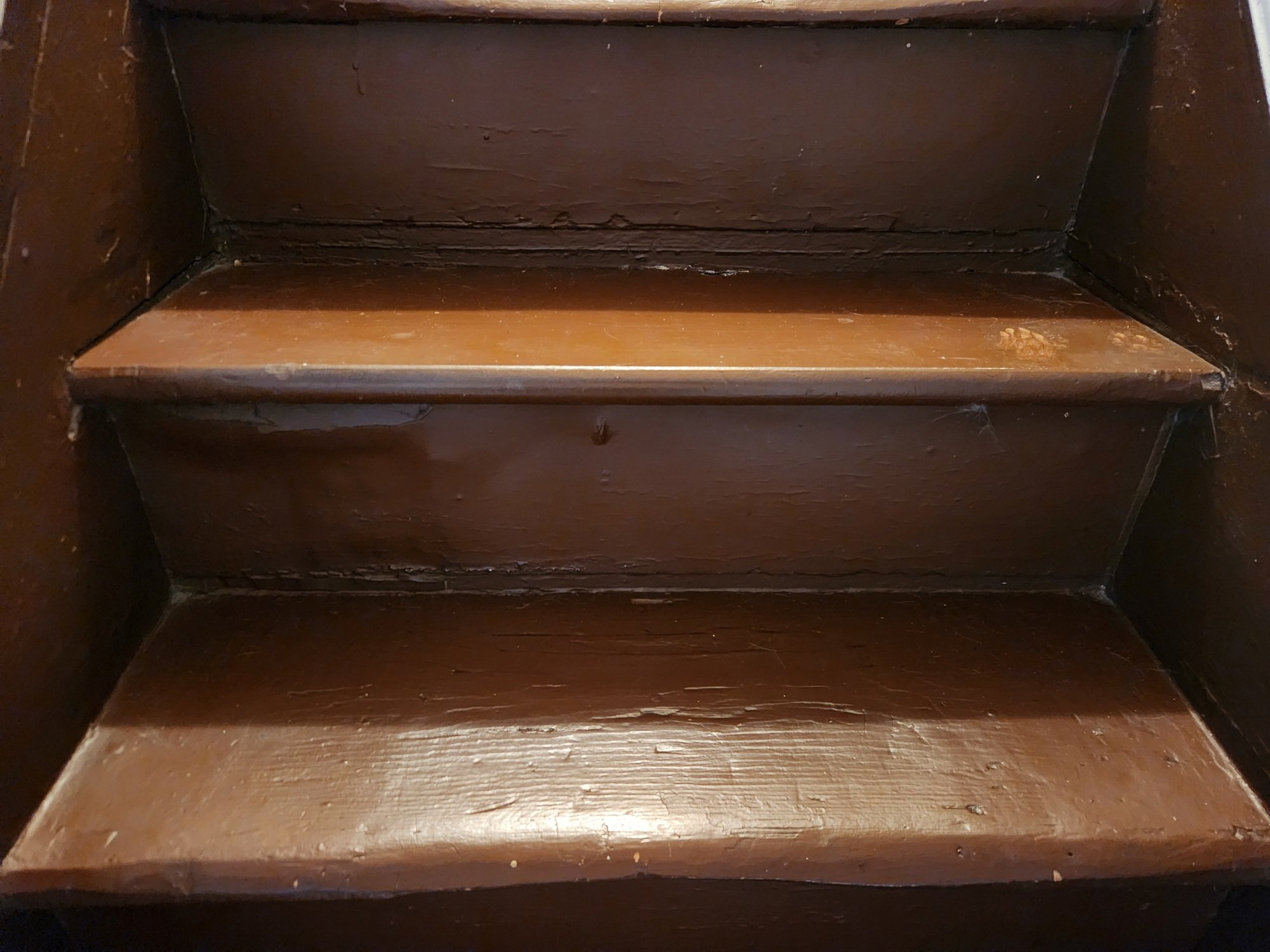
It worked perfectly. Not only did the paint job turn out great, making the stairs look new, the slight grit the paint added to the surface means I haven’t slipped on those stairs in years. Anti-slip paint can be used indoors or outdoors (on slippery deck planks, for example), and on just about any surface—companies even make additives you can mix into any exterior or interior paint to transform it into anti-slip paint. If there are places in your home where you constantly worry about slipping and falling, a coat of anti-slip paint can take care of them.
You might think that covering imperfections like minor scratches, stains, or that hideous green color the previous owner used is the whole point of paint, and you would be right. But if the wall in question is especially problematic and you want to avoid re-doing the drywall or plaster or the tedious work of adding a skim coat, you might be able to hide those imperfections with a high-opacity trade paint. A trade paint is a professional formulation of paint that’s designed to be thicker and more opaque while offering better coverage and durability (you might see this referred to as “obliterating paint,” especially outside the U.S.). The paint you buy in the store is retail paint, and it’s usually formulated to keep costs down. Trade paint is for the professionals, and it costs more, but will do a much better job of covering up the sins on your walls because of its thickness, matte finish, and opacity.
If the problem in your house is noise—whether from inconsiderate neighbors or roommates from hell—a sound-deadening acoustic paint will definitely help. These paints are formulated to be thick and spongy when they cure, absorbing sound and reducing echo—no need to attach all kinds of foam baffles to every surface.
Sound deadening paint won’t block all sound, especially if it’s only applied on one side of a wall. But it will reduce the level of noise that makes it through, and if you apply it to both sides of shared walls in sufficient thickness (you usually need at least three coats for maximum effectiveness) it will make an audible difference.
Your house burning down would definitely fall under the category of a “house problem.” Believe it or not, paint can help with that. Choosing a fire-retardant paint for your next interior paint project can turn your walls into firebreaks that will slow down a house fire. When these paints encounter fire, they quickly char over, forming a protective layer that resists the flames. It won’t completely stop the spread of a fire in your house, but it will buy you time to get your family to safety and call in the firefighters—and in a house fire, time is the most important factor.
If your house is crazy expensive to heat or cool (or, if you’re really lucky, crazy expensive to heat and cool), you can make the situation a little better with paint in two ways:
Paint your roof. Painting your flat roof with an appropriate roof coating can not only extend the lifespan of your roof, it can help bounce the sun’s rays away, lowering the temperature of your roof and reducing the heat that’s transferred to your home as a result. (Choosing a white paint for this job will be the most effective in cooling things down.)
Use an insulating interior paint. Insulating paint is designed to augment existing insulation in your home—you can’t just slap a coat of it on an uninsulated wall or ceiling and get results. But it can help reduce temperature transfer and fluctuation inside your home if it’s applied correctly and in multiple coats (the more coats, the better it will work). If you’ve tried everything else to get your utility bills under control, throwing some insulating paint on the walls might help.
It happens: You buy a house with loads of charm, and once you’re living in it you realize that the rooms are actually small and dark, because the people who built it were short and afraid of the Sun. Or something. If that’s your problem, you can try a bunch of different strategies to get more natural light into a room (or fake it), and one of the tricks you can try is paint: By choosing the right color intensity, saturation, and finish for your walls and ceilings, you can turn a small, dark space into a brighter one that at least seems larger. No, paint won’t suddenly make that huge armoire fit into your tiny bedroom, but it will at least make it feel possible.
If you’re worried about a damp room and mold, or have a bathroom that isn’t well-ventilated and is thus susceptible to mold infestations, paint can help you out in two ways:
Waterproofing paint or primer can help block moisture from seeping into the room in the first place. This isn’t magic—it’s not going to stop flowing water, and if you don’t take steps to mitigate flooding or poor drainage in or around your house no amount of waterproofing paint is going to help. But it can be very effective at reducing moisture in a room if applied correctly.
Mold-resistant paint in damp areas like bathrooms, basements, or any room where the humidity is a concern can then help prevent mold from taking root. These paints have antimicrobial properties, so if you start off with a mold-free room and take steps to reduce moisture, using a mold-resistant paint will make a huge difference going forward.
Fujifilm has already released one unusual camera this year in the GFX100 RF medium format compact, but it’s latest model may be the most offbeat yet. The $850 X Half is an 18-megapixel digital compact camera, but it uses half of a 1-inch sensor to shoot 3:4 vertical photos. To drive home the retro vibe, it has a rear screen dedicated to displaying the camera’s 13 film simulation modes and can only shoot JPEG and not RAW images.
The name comes from “half-frame” cameras popular in the ’60s, like the famous Olympus Pen F, that use a 35mm film frame sawed in half (18mm x 24mm in size). The backside-illuminated sensor on Fujifilm’s X Half is, well, half that size in both dimensions (8.8mm x 13.3mm) or a quarter the area. It’s also the smallest sensor on any recent Fujifilm digital camera, as the X-series uses the APS-C format and GFX models medium format. In fact, the X Half has the same 3:4 vertical ratio as Fuji’s Instax Mini instant cameras — so you can make prints using an Instax Mini printer via the new dedicated X Half smartphone app.
The X Half naturally uses Fujifilm’s film simulation and grain effect modes. Among the new ones are “light leak” for a blown-out quality that happens when film get exposed to light inadvertently, “expired film” and “halation,” an effect caused by light bouncing off film emulsion layers. To really get you into that analog film mood, you can switch to the new Film Camera Mode that limits your view to the optical viewfinder, makes you pull a frame advance lever for each new shot and only lets you see the photos once they’re “developed” through the X Half app. It even produces a “contact sheet” layout for 36, 54 or 72 images.
Another feature is 2-in-1 images that let you combine two still images or movies into one composition in-camera for extra artistic possibilities (using the film advance lever again). That also means the X Half can shoot video as well as photos, with a vertical or square size (up to 2,160 x 2,160) that looks ideal for social media — especially with film simulations applied. Also exuding nostalgic vibes is the “Date Stamp” function that lets you imprint dates in the bottom right of images, just like on old-school Kodak-style film camera.
On top of the main rear 2.40inch LCD 3:4 monitor, the X Half has an optical rather than an electronic viewfinder, adding another analog touch (and the accompanying parallax distortion errors). The camera itself is small enough to slide into a pocket and weighs just 210 grams (7.4 ounces). Other features include a built-in flash, massive 880 frame battery life and SD UHS-I card slot.
The X Half looks like it could be coveted by social media users or anyone looking for a fun party or vacation camera. However, it’s expensive considering that you can just get an Instax (or regular film camera and a lot of film) for a lot less. Fujifilm has definitely captured the photography zeitgeist before with models like the X100 VI, though, so I wouldn’t be surprised if it becomes a hit. The X Half is now on preorder for $850 (in black, charcoal silver and silver) with shipping set to start on June 12.
This article originally appeared on Engadget at https://www.engadget.com/cameras/fujifilms-x-half-is-an-850-digital-camera-with-an-analog-film-aesthetic-120013873.html?src=rss
FFmpeg developers have been working on Vulkan-accelerated FFV1 video encode/decode for that two decade old lossless video coding format. Merged this week to FFmpeg Git were more enhancements to their Vulkan-based FFV1 encoder and yielding big performance improvements for both AMD and NVIDIA graphics processors…
We’re coming up on 2 years since Zwift launched the popular Climb Portal feature at the end of June 2023. Since that time, the library of climbs has grown to 45, with 1-2 typically being added each month.
Riders enjoy the Climb Portal for various reasons: it’s fun to ride GPS-accurate versions of famous climbs, it’s a great way to earn extra XP, and the built-in percentile ranking gives us endless carrots to chase.
But what else could Zwift do with the Climb Portal? How could they make it more compelling? I have some ideas…
I’ll be the first to admit that some of the suggestions below are minor niggles – small improvements that may not move the needle on Climb Portal engagement.
But there’s one common request from Zwifters that would certainly increase engagement, and that is Climb Portal choice. Just as Zwifters have asked for years for an easy way to access “off-schedule” maps/routes, they’ve been asking for ways to access off-schedule climbs.
It’s good that Zwift features just two climbs, because you always know you’ll have company on those climbs. But climbing is a more solitary event than flattish group rides, and many riders are more interested in completing particular climbs than they are looking for a social experience. We should be able to choose any climb we’d like, from the entire growing library.
This is related to the suggestion above, and possibly even the easiest way for Zwift to give us Climb Portal choice. Let us create Club events or Meetups for any climb in the library!
Just as we can create Meetups and events for off-schedule maps today, I believe we should be able to create Meetups or events for any Climb Portal.

If you ride a 50% or 75% scaled version of a Portal climb, your entire activity will be tagged as “gamified” on Strava, and all Strava segment matching will be excluded. That means all Strava segments for your entire activity, not just the Climb Portal portion.
It’s good that the scaled-down efforts aren’t being added to the main Strava leaderboards for each climb, but gamifying the whole activity is rather unintuitive. While this is a Strava limitation and not something Zwift can fix, perhaps the popup text could be changed to something like “If you enter the Portal at the selected difficulty, your entire activity will be hidden from Strava Leaderboards.”
So if you want your activity to match with Strava segments, don’t mix in a scaled climb portal effort!
The details that pop up when you select a climb on the homescreen include a time estimate that says it’s the “duration for most riders”:
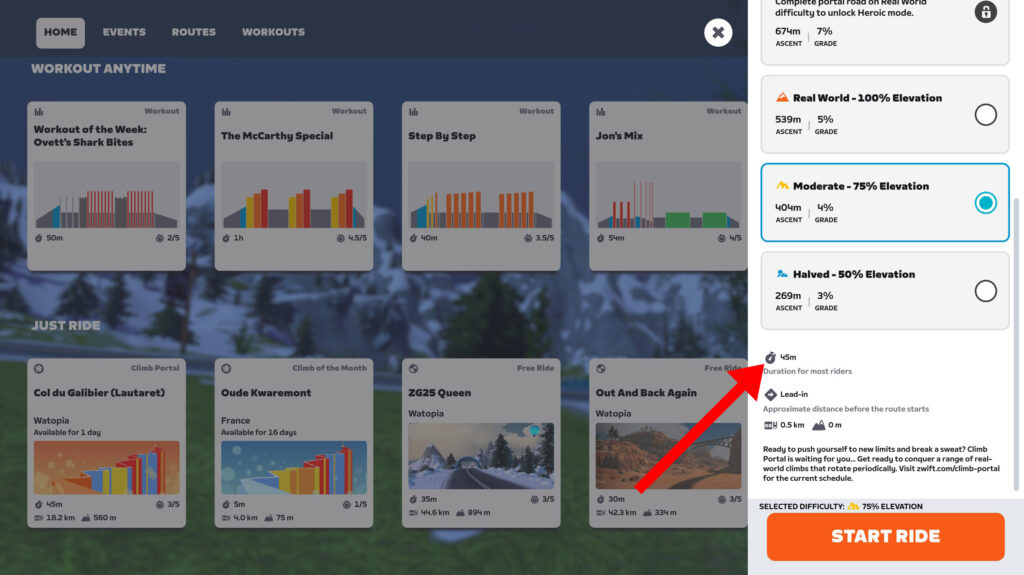
I see two issues with this estimate:
With Zwift now computing personalized route time estimates, applying the same algorithms to this screen seems like a quick and easy upgrade.
Zwift unveiled the Power to the Portal route in December 2024, but it seems like every event held on this route has been confusing and buggy.
The idea is a good one: an actual event route that can include whatever Climb Portal you’d like, opening up the possibility to host races on any of the Portal climbs. But in its current state you can’t see which climb is set up for the route for a given event, so you don’t really know what to expect. It’s also unclear where the finish line will be (atop the climb, or at the end of Power to the Portal, which ends in downtown Watopia?) Lastly, Zwifters report being routed to the wrong climb in some events.
Yes, Holoreplay works in the Climb Portal. But that only gives me a ghost of my previous efforts or the current leaderboard leader.
It would be handy if I could click a button to enable a Robopacer who rides at a steady W/kg for the duration of the climb, giving me a carrot to chase. Bonus points to Zwift if they could make the bot post motivating messages like a coach riding with me during a workout:
This one bit Zwift in the butt when they recently featured the Cauberg climb, which at only 800 meters long is the shortest Portal in the game. Riders were spawning in Watopia, which means you’ll reach the top of the climb in under 2km. And as any Zwift nerd knows, the minimum activity length in Zwift is 2km. If you save your ride there at less than 2km, it disappears into the ether!
I think there’s an easy fix for this: just disable the “Save” button and show a warning when you try to save an activity that is less than 2km long. Something like: “Warning: your ride is less than 2km long, and cannot be saved. Please go a bit further if you want to save your activity.”
(It’s a bit baffling, actually, that we’re 10+ years into Zwift’s existence and still able to hit “Save” on a ride that is under 2km and won’t be saved.)
The climb profile and overhead views only show nearby portions of the climb – basically about as much road as you can see on the main screen:

This really isn’t terribly useful. In fact, if you look closely, you’ll see that half of what is shown is the portion of the climb I’ve already ridden!
I’d like to see the full climb profile (much like we now have full route profiles) in the minimap, and perhaps a clickable/zoomable overhead map view so I can zoom out if I’d like.
Climb Portal scaling is a cool feature, allowing you to ride the climbs at 50%, 75%, 100%, or 125% of the actual gradient. It’s a handy way to modify the difficulty of a climb to suit your needs or schedule.
The 125% version is locked until you complete the 100% version. There’s one niggle, though, which really only matters on shorter climbs: after completing a Portal climb at 100% difficulty, Zwift won’t let you ride the heroic 125% level unless you quit/save your activity and start a new ride.
As one Zwifter recently told me, “Not a big deal, but a bit annoying if you’re trying to knock out multiple difficulties of a shorter climb in the same ride.”
This one is, admittedly, a bit picky. But I find the ambient background sounds in the Portal too somber, too heavy, for my taste. Listen in below:
That said, I usually ride with Zwift sounds turned off and music or a podcast in my ears, so this isn’t a big deal.



There are three achievement badges for Portal climbs (shown above), but why not give people a badge and even a small XP bonus the first time they complete a particular climb, like we get for completing routes?
(Taking it one step further, I’d love to see smart badges that count how many times I’ve finished each climb. Wouldn’t mind this for routes, too!)
The Companion app shows your historic times for each leaderboard segment in Zwift. Why not add Portal climb times, so you can see your historic performance on each climb, and your percentile rank?
(Note: Zwift Insider collaborated with Veloviewer to create leaderboards for the Climb Portal.)
You can’t fan view or teleport to a rider who is on a Portal climb, which seems a bit silly. I can only assume this was disabled because of how the Portals were designed, but surely there’s a way to make it happen so Portals work like the rest of Zwift, letting riders find each other and ride together.
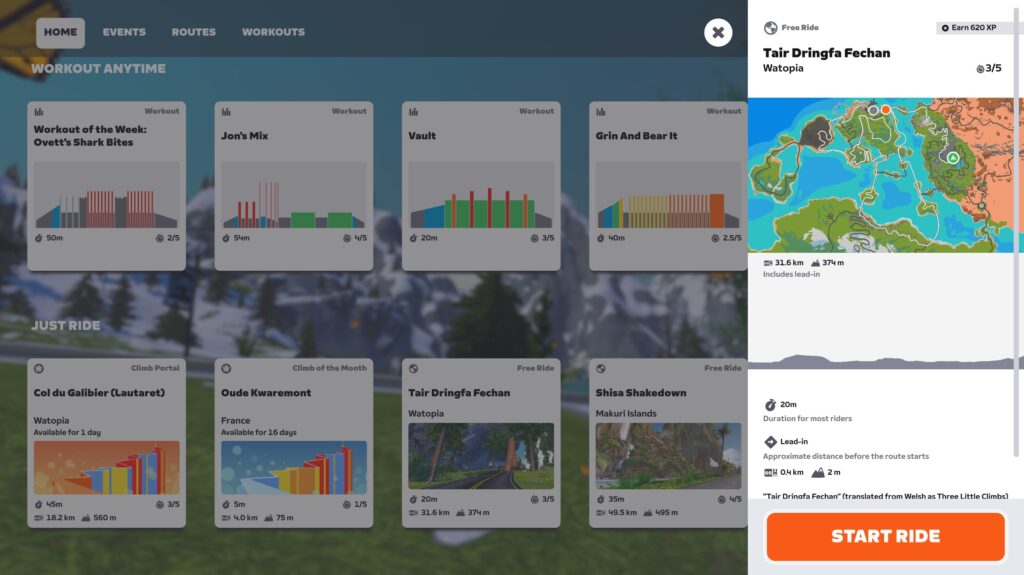
The homescreen’s cards for the climb of the day and month are the same image with different colors. Clicking one of the cards brings up the same generic image:
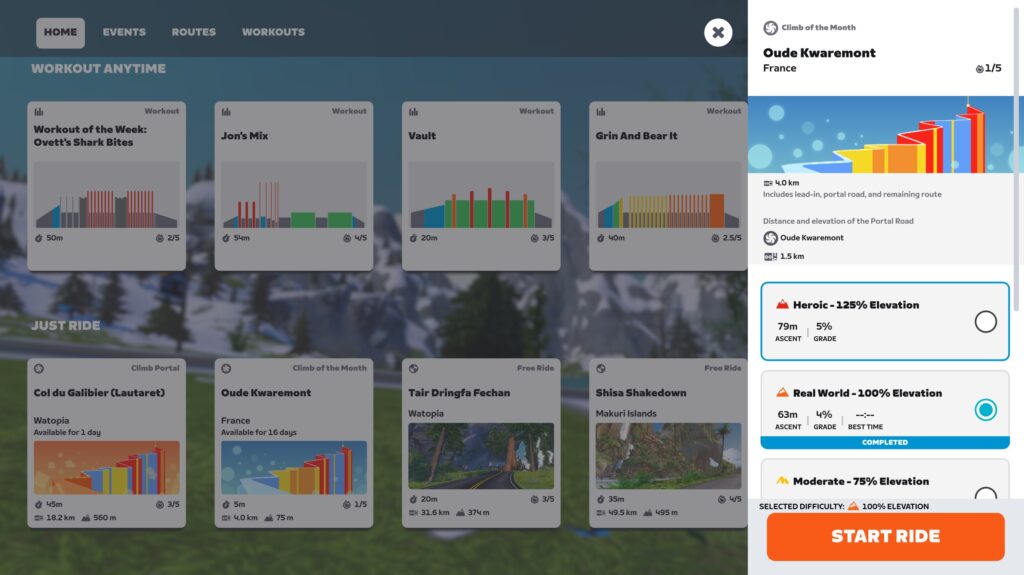
It would be nice if the climbs were graphically represented individually, perhaps with a full climb profile and overhead map like you see for routes:
These are all the good Climb Portal ideas I’ve come up with, or seen from other Zwifters. What about you? Which ideas are your favorite, and do you have other good ideas? Comment below!
We may earn a commission from links on this page.
There is a moment during every big move where it hits you: Moving is really freaking expensive. The expenses—from packing supplies and the truck itself to the costs related to cleaning, painting, and utility deposits—will pile up. And I’m not even including the costs of furniture that better fits your new space.
I spoke to a number of moving experts—especially people who work at moving companies and have been in the business for years—and most of them emphasized budget before your move—and overestimating what you think you’ll spend. Both Shannon Beller, CEO and co-founder of Wall-Russ, and Rob Rimeris, owner of EverSafe Moving Co., say you should add 10 to 15% to your final budget as a cushion. Rimeris says that “isn’t just practical,” but “gives people back a sense of agency when plans shift.”
A few often-overlooked expenses that came up included these: tips for your movers (as well as insurance) fuel for the truck or car if you are moving some or all of your possessions, cleaning fees for the place you move into or out of, repairs for your old home, unforeseen extra charges from the movers, and furniture assembly.
But wait, there’s more: “It may not seem critical at first, but planning for food and takeaway expenses is also important,” says Shanaiqua D’sa, content marketing lead at Attic Self Storage. “You’re unlikely to cook on moving day or even in the days immediately following, especially if your kitchen isn’t fully set up yet or you’re simply too tired.” Kids and pets, too, “slow down the moving process,” she says, so you might want to arrange for someone to look after them.
You’re already overwhelmed by how much you have to do and I totally get that, but this is a perfect opportunity to declutter your stuff. In fact, decluttering was cited as a top money-saving tip by many pros: “The biggest mistake we see people make time and time again is underestimating how much stuff they have,” says Charles Chica, co-owner of CT Best Moving.
“Get rid of anything you do not need because the less stuff you have, the cheaper the move will be,” adds Marshall Aikman, owner of Amazing Moves Moving & Storage.
Consider selling some of what you’re getting rid of, as long as you start with enough lead time before your moving day. D’sa points out that you can generate money for the move by offloading old stuff to buyers. If you have enough time between decluttering and moving, list furniture and clothes on sites like Poshmark and Mercari. If you don’t have much time, keep it local and stick with Facebook Marketplace, where buyers can come pick up furniture and other objects directly from you and hand over cash. The last time I moved, I listed furniture on Facebook Marketplace and promised myself that if it didn’t sell before I left my old place, I had to take it as a loss and donate it, but as Evan Hock, co-founder of MakeMyMove points out, you can also list it in Buy Nothing groups as a free pickup. Whatever it takes to get it out of your space!
If you really have enough lead time, organize a rummage sale. It’s not as easy to coordinate if you live in a larger city, although I’ve certainly seen it done, but I grew up in a rural place where this was the norm. As long as you’re doing it on private property, most jurisdictions don’t require a permit for a short-term yard sale, but please check. Put up a few signs, post some ads on Craigslist, and haul all your for-sale wares to your garage or front lawn. Be prepared to take lowball offers and haggle a little, but you’ll be surprised by how much actually sells. You can (and should) list it all on the aforementioned apps and digital marketplaces, too, then donate whatever is left over before the move.
If you’re moving to a bigger home, online resale and yard sales are also how I recommend filling it—at least at first. Moving is a massive expense, and it might not be feasible to buy or finance big furniture sets from retail stores at first. On the other hand, occupying a near-empty house is a bummer. Buy used essentials to save money and get your home in order. You can re-list it and sell it if and when you’re more settled in and financially prepared for better furniture—or you may even fall in love with your eclectic decor collection and keep it.
There is another, even less-expensive option if you need furniture fast. If you live in a big city, you’re familiar with the classic practice of picking up free furniture from the sides of the street. If you live in New York and spend time on Instagram, you’re also probably familiar with the account that makes doing that even easier.
@StoopingNYC has 479,000 followers who dutifully snap pics of discarded furniture throughout the five boroughs and DM it to the account owners, along with location details. The owners, in turn, post the photos and relevant information on the account’s story as well as on the grid, encouraging New Yorkers to have at it.
“Stooping is the act of hunting down discarded street freebies that has the added benefit of being both an activity you can do outdoors and one that ultimately enriches the space where you’re most likely spending all of your time: your apartment or house!” the couple behind @StoopingNYC tells me.
If, instead, you don’t live in a big city where stooping is regularly practiced, snag some stuff on the cheap by mapping out the weekend’s best local yard sales or head to all the online marketplaces where you’re actively ditching your old stuff to make room for the new (to you) stuff your new place will need. (Craigslist also has a “free” section where people frequently give away items.)
One word of caution in either case: Make sure you clean the products well and proceed with caution when picking out anything made with fabric, like couches or armchairs. You know what’s not inexpensive? Exterminators.
Your budget will include packing supplies like boxes, bubble wrap, and tape, but you should also remember that what you have available can work well to help you pack. You have to move your blankets, towels, clothing, socks, and scarves already, so wrap them around valuables to save some money and space. Per Rimeris, “T-shirts cushion dishes better than bubble wrap ever did.”
Think about nesting, too. Chica says, “Suitcases, laundry baskets, and grocery totes are all great for packing general items.” Again, you’re already taking them with you. Make them help you and save some money on boxes. Many pros also suggested diversifying how you look for boxes. Buying new boxes can be pricy and wasteful, since you’re not going to keep them when you’re done with all this. Instead, ask local shops if you can have some of their boxes. Grocery and liquor stores, for instance, always have a bunch. Just make sure they’re strong and clean.
One thing you can’t finagle a workaround on: tape. Chica cautions against buying cheap tape, as “you’ll regret it when a box or bag breaks open mid-move.” Rimeris agrees: “Heavy-duty tape, a marker you can actually read, and clean, strong boxes are worth every penny.” That said, he assures me you don’t need “pre-made kits or expensive wardrobe boxes,” so feel free to ignore expensive moving-supply marketing tactics.
Movers are great, especially if you have particularly valuable items, a lot of furniture, or a big journey ahead of you. There are other ways to transport your items, however.
Consider enlisting some pals for the big move. Promise pizza and beer or straight-up cash if your friends will help you haul your stuff. They care about you and probably charge less than real movers—but you should also keep in mind that you might also get what you pay for, here.
“Honestly, if you can afford movers, get movers,” said Shannon Palus, a Brooklyn-based writer and editor who has moved more than a dozen times in her life and managed her most recent move for less than $60. “It is really, really nice to have people move your things. I think if you are going the U-Haul-and-friends route, hire someone from a service like Task Rabbit to help with the heavier stuff. I think any money you can spend on moving, you should. They say that you’re supposed to spend money on experiences to be happy, right? Spending your day doing something other than lifting boxes is the ultimate good experience.”
There are ways to compromise here, though. You can hire movers for the big, expensive stuff and hoof it with your friends for the small, cheap stuff. Palus pointed out, too, that her most recent move cost less than $60 because she used ride-sharing apps to hail cars and only had small items to move.
“Be communicative about it, allow [the driver] to decline, and tip really well,” she said. “I also don’t move everything via Lyft; I do some trips on the subway.
If you decide to go for movers, get a written estimate from a few different places. These should outline services, fees, and timing, says Beller. You can even request an itemized estimate upfront to avoid surprise fees. Just be sure you’re being honest when you share your half of the details. Don’t hide that you live in a walk-up, for instance, or own heavy antique furniture. You’re only setting yourself up for surprise fees that way.
You don’t always get to pick when we move, especially if you’re moving from rental to rental. That said, if you can, try to schedule your move for off-peak times. Kris Kay, director of operations at UNITS Moving and Portable Storage, says you can usually get lower rates by moving mid-week or mid-month. The summer is the most expensive month for moving because it’s the most common time, too, so if you have any wiggle room there, aim for spring or fall.
There are a few benefits to packing and moving a little on your own before movers show up. Not only do you save money by doing some of your own labor, but you have a chance to scope out your place as you disassemble furniture and box up your stuff. If you’re a renter, you’ll want to try and get your security deposit back, which means cleaning the inside and outside of appliances, wiping down bathroom fixtures and floors, and, of course, fixing any damage. If the damage is minor, try to do it on your own: Patch small holes from picture frames and wall mounts, remove scuffs from walls and floors, and tighten any loose screws. As Chica says, “A minor fix can end up pitting a pretty decent dent in your security deposit.”
When you’re moving, take care not to cause damage, too. Chica says you should never drag furniture. That’s only asking for trouble. When everything is removed from the space, document the condition of the unit with photographs.
If you’re preparing for a move, you have a lot to think about and most of it revolves, in some way, around your new place: Finding it, buying or leasing it, and moving all your stuff to it in a way that is fast, efficient, and as inexpensive as possible. There’s a lot on your plate and I get that, but you also need to spare a thought or two for the spot you’re vacating, especially if you rent. Remember that security deposit you put down when you moved in? You want that back—and your landlord doesn’t want to give it to you. Here’s how to get it back, or at least try.
First, think like a landlord or building manager. After all your stuff is boxed up and you’re standing in the ghostly echo chamber that was once your home, take a look around and pay attention for the little issues the landlord might spot when they do their walk-through. Marshall Aikman, owner of Amazing Moves Moving and Storage in Denver, CO, says landlords can hold back deposits over anything from furniture marks on the wall to nail holes to dirty fixtures. After all, cleaning is labor, too, and the management company will need to pay someone to do it, which is what they’re going to use the deposit money for. Better to do it yourself.
Aikman says the easiest thing to do is clean everything before you leave. The good news is that once all your stuff is boxed up or gone, you’ll see pretty clearly what needs to be cleaned and you won’t have any obstacles to deal with, like shelving units. The same heavy furniture that once prevented you from doing a thorough cleaning will be gone. Make the most of it.
Shannon Beller, CEO and co-founder of Wall-Russ, says that it’s pretty common for movers to overlook cleaning appliances, bathrooms, and floors. Remember you’re not only mopping and cleaning scuffs off the wall, but should be cleaning the toilet, fridge, sinks, and other appliances and fixtures. It’s annoying and will take some time—plus feel almost insulting to clean a space you won’t be enjoying anymore—but it can save you money.
It might even be worth it to consider a professional cleaning company, says Shanaiqua D’Sa, content marketing lead at Attic Self Storage. Call a few cleaning companies and get written price quotes, then compare the cost to the amount of your security deposit. If the cost of having it cleaned is significantly lower and if you’re feeling overwhelmed by all you have to do, outsourcing could be an economical and time-saving option.
Beller says that renters tend to overlook small damages and focus on bigger ones, but those small ones add up. One or two nail holes aren’t a huge deal, sure, but if you have them in every single wall, your landlord might start to object.
Charles Chica, co-owner of CT Best Movers, agrees that renters often forget to patch those small holes and fix those minor damages. As a general rule, fix even the most minor issues. You don’t want to give the building company any reason to withhold even a cent of that deposit. Scuffs, holes, peeling plaster, scratches, loose screws—one trip to the hardware store can help you a lot here.
In my experience, fixing up the old place also helps prepare you to get to work in the new one. For me, doing a little manual labor gets me back into the groove of working with my hands so when I arrive at my new home, I feel readier to get my hands dirty there. It’s unfortunate but true that every time I’ve moved, I’ve left my old place perfect and moved into a spot that is, inexplicably, a little dirty and/or malfunctioning. That’s the nature of renting in a big city! The prior renters probably didn’t get their security deposit back, which became my problem. Always be prepared for something like that. You can certainly fight with the rental company and demand someone come in and clean it, but after all the stress of moving, I’ve always found I don’t have the energy to kick off my time in a new place by aggravating my new landlord.
Addressing the mess and damage left from your existence in the space is one thing. Avoiding further damage when you leave is another. If you’re moving your furniture and boxes out on your own, do not bang them into the wall or allow them to hit door frames. And whatever you do, don’t drag.
“Dragging furniture out without proper protection can damage door frames or walls. Use blankets, sliders or even flattened cardboard to protect surfaces on your way out,” says Jordan Sakala of laborhutt.com. “Little details can save a lot.”
This was a point touched on by a number of pros I talked to, actually. Aikman and Chica also took care to mention that movers frequently overlook how much damage they can cause by moving larger pieces of furniture, especially. Chia says renters are prone to underestimating how tight corners or staircases are, too. Take some measurements of your furniture as well as the path you’re going to take it through before you start. When in doubt, it might be time to call professional movers—but make sure you communicate clearly with them about the importance of not causing any damage.
Use a few supplies to make this easier. Painter’s tape can be affixed to walls and door frames to protect against scratches, for instance, and it peels of easily when you’re finished. Matt Graber, co-owner of Cool Hand Movers in Brooklyn, says you should wrap all your furniture in blankets, which not only protects the walls and doorways as you move it, but protects the furniture itself in transit.
When the cleaning and fixing-up are finished, take a lot of photos and videos. Once again, this tip was highlighted by a few different pros. Aikman, Beller, and D’sa all brought it up, pointing out that in the event the landlord tries to dispute giving you back your deposit, you want evidence that shows that you left the place damage-free and clean.
Taking pictures and videos can also help you spot any last-minute issues you need to fix. When I need to clean or declutter, I sometimes take a picture of my space instead of trying to assess it visually. I’m just used to how my rooms look in real life, so seeing them more impersonally through a photo helps me recognize what’s out of place, what is taking up too much space, and what needs some attention a little better. While you’re taking pictures and videos, look at them like the landlord might and pay attention for anything that looks off.
Moving is something that drains you of time, energy, and money, and you probably don’t want to do any extra work if you don’t have to. But hear me out: You should still use a big move as an opportunity to declutter. Here is your chance to assess every item you own and make decisions about what you really need. Who knows the next time you’ll be able to handle every single possession, categorize everything, and make a truly meaningful dent in your clutter?
First of all, decluttering before a move can actually save you money.
“The biggest mistake we see people make time and time again is underestimating how much stuff they have and overestimating how easy it is to move,” says Charles Chica, co-owner of CT Best Movers. “It’s best to start by decluttering and getting rid of anything you don’t use or need. This works wonders, saving time, space, and especially money.”
Mindy Godding, President of the National Association of Productivity and Organizing Professionals, and Shannon Beller, CEO and co-founder of Wall-Russ, agree, pointing out that if you don’t pare down what you own before moving, you’ll end up paying for the labor and transportation costs associated with moving stuff you don’t need or use.
It also makes packing and unpacking easier. Adam Hamilton, CEO of REI Hub, says that the last time he moved, decluttering in the weeks leading up to the big day “really helped” because it got him organized, which made it much simpler to pack. Beyond that, with better organization and less stuff to unpack, the process of settling into the new place was more seamless, too.
A few weeks before your move, start to get into a decluttering mindset. Godding suggests scheduling time to declutter your space before you even start to pack. Evan Hock, co-founder of MakeMyMove, says that packing always takes longer than expected, so the earlier you start with the pre-packing, the easier it’s all going to go. He recommends paying special attention to seasonal items and things you don’t use daily.
Obviously, this is a little tricky, especially if you aren’t familiar with decluttering. Here is a list of my favorite decluttering methods—any of these would work well as a template to follow. Some of the techniques do work better as you’re boxing things up, though. For instance, the “packing party” is a decluttering method that involves putting everything from a room into boxes, then only pulling out what you immediately need as you need it for 21 days. After those three weeks, you’re supposed to get rid of everything you didn’t reach for. It could be worth it to pack everything up three weeks before your move, use the packing party guidelines until that time, and then donate everything you didn’t touch before re-boxing up what you did use and bringing that to the new place.
Many decluttering methods also rely on containers more generally. When decluttering and organizing, there are a few rules to keep in mind: Everything you own must have a place and it must be stored with similar items, ideally in containers. Starting this process a few weeks before the move can actually help you when it’s time to relocate, as your stuff will already be categorized and in boxes.
Hock says he finds it helpful to keep decluttering even after packing has begun. Your first decluttering sweep should take place a few weeks before you pack and leave, yes, but the job isn’t fully done then. Before packing, borrow some ideas from organizing guru Peter Walsh: Envision your new home and what you want every room to look and feel like. Set intentions for each room. Do you want the dining room to feel airy and spacious? Do you want the office to be sleek and minimalistic so you can focus? As you’re packing the boxes of items that belong in each room, consider each one and ask yourself if that item contributes to the vibe and function you envision for the space. If it doesn’t, get rid of it.
If you’re struggling to decide what stays and what goes, I put together a list of questions to ask yourself when assessing a tricky possession. These focus on how often you use something, the condition it’s in, and whether you could conceivably and economically replace it if you found yourself in a position of actually needing it.
“If you haven’t used it or worn it in the last year, you likely don’t need it,” says Chica.
Another advantage of starting this process early is that you give yourself some wiggle room if you want to try to sell things—which can actually give you a little extra cash for moving expenses. Online marketplaces like Poshmark and Mercari are great for offloading housewares, clothing, decor, and even some furniture, but they do have the potential to make you wait a while. I am an active online reseller and I can tell you that it’s rare to make a sale immediately after listing something, so if you want to make some money off your goods, list them weeks before your move. For bigger furniture or, in my experience, faster sales, list on Facebook Marketplace to keep your sales local.
Whatever doesn’t sell should be donated, says Hamilton. Use the day before move-out day as a hard deadline. Many local thrift shops will pick up heavy items, like furniture, if you coordinate with them and you can bring boxes of smaller goods in yourself. You can also post these things on Craigslist’s “free” section or “Buy Nothing” groups on Facebook, then set them on a curb with clear instructions in your post for how to find them.
In the event you opt to just throw stuff out, make sure you’re prepared to deal with the volume and associated costs. Shanaiqua D’sa, content marketing lead at Attic Self Storage, warns you may need to hire a small skip or dumpster if you have a lot to toss out and you can’t forget to budget for trash bags and disposal containers.
Ultimately, this is going to improve your move, even if it takes a lot of time first. You don’t want to spend money moving junk, nor do you want to fill your new home with useless things. Moving is an opportunity to start fresh in a lot of ways, so carving out time to declutter is going to give you a jump start on your new life.
We may earn a commission from links on this page.
As you’re planning your big move, you’ll likely find yourself talking to a number of moving companies to figure out which one has policies, prices, and availability that work best for your needs. Through that process, you might be surprised to learn that there are things movers won’t touch, though the exact types of objects they won’t move do vary from company to company.
This isn’t their way of getting one over on you during a vulnerable time, though you might feel like it is. Rather, according to Rob Rimeris, owner of EverSafe Moving Co., “it’s about respect and risk.”
Rimeris says his company won’t move weapons, open liquids, or valuables like personal identification or heirlooms. That aligned with what I heard from a number of other pros, who also mentioned jewelry, cash, paperwork, passports, medication, anything “irreplaceable,” anything flammable, cleaning products, fire extinguishers, paint, and fireworks. Some companies won’t even transport your plants or perishable food. And, of course, they’re not transporting your dog or other pets.
Many pros told me that you should contact your moving company with an itemized list of what you want moved in advance. Your company might be fine moving some of these things and they’ll let you know. Get that in writing.
First, ask moving companies for a written list of what they will not transport, just so you have an idea of what is going to fall under your responsibility and so you can avoid surprise refusals or fees when they get there.
Keep your valuables on you during the move, especially things like identification documents, prescriptions, and your birth certificate and social security card. It’s a good idea to move those things yourself in your personal vehicle from one home to the next.
Because these things are so important, consider a portable lockbox (around $30 or so). It’s small enough to move around with you but can keep everything organized and untouchable.
As for any hazardous materials, don’t transport those yourself—for the same reasons the movers don’t want to. Kris Kay, director of operations at UNITS Moving and Portable Storage, cautions that you should contact local disposal centers for proper handling of anything like gasoline or propane tanks. Tiam Behdarvandan, CEO and founder of Let’s Get Moving, says that even a small leak can cause a dangerous situation. Anything old or half-used can be disposed of at a local hazardous waste facility. If you have full canisters of gas or other hazardous materials and don’t want to dispose of them, ask your local disposal center for specific recommendations on transport.
If you’re moving locally, Shainaiqua D’Sa, content marketing lead at Attic Self Storage, advises that “children and pets can unintentionally slow down the moving process,” so you should arrange for someone to look after them on the day of the move.
You should also flag your vet about the move well in advance. Alex Girard, who recently moved across the country, was surprised to find that his cat needed to be given a “certificate of health” before she was able to fly on a commercial airline to their new city, for instance. Your vet may also prescribe medication to calm your animal down if you have to fly or travel a long distance with them. Seek specific advice on all things travel-related from the vet, like how big your carrying case should be, and contact your airline if you’re flying to get information on their policies around animal travel.
Like your valuables, you need to keep pet supplies on you. From food to poop bags, these will need to travel with you personally—and you should pack more than you think you’ll need in case of any hiccups. Pet identification, medications, accessories, and a favorite item that smells like you should also be included.
Plants are tricky. Start by watering them well a few days before the move and then find a box slightly bigger than the pot, stuffing packing materials around it to keep it cushioned inside. (As with valuables and delicate objects, you can use t-shirts, towels, or other soft goods for this.) Then, cover the plant itself with a large plastic bag, like a trash bag. You should move the plant in a sturdy, temperature-controlled environment, like in your personal vehicle.
If you have to fly, it’ll be a little more complicated. The TSA allows plants in both carry-on and checked luggage, but you need to contact your airline directly to find out about their policies.
A few weeks in advance, obviously, try to eat these if you can. Decluttering is the best way to save time, space, and money ahead of a move. Consider donating to a food kitchen, especially if you’re moving a long distance. Otherwise, these, too, need to be boxed up and taken with you, whether in your personal vehicle or on a plane. Depending on how far you have to travel, consider picking up a cooler. Travel-safe versions with carry straps can be as low as $15.
There are some items that movers will move (or could refuse on a case-by-case basis) but they, too, are important to mention in advance.
“Like most movers, we do not handle hazardous or prohibited materials like gas canisters, explosives, or chemicals,” says Marshall Aikman, owner of Amazing Moves Moving and Storage. “If you need to move something unusual like a piano, a safe, or antiques, make sure to tell us ahead of time because these require special handling and planning.”
A few different pros I spoke to mentioned things like pianos and aquariums, actually, and while they will generally move them, they do need to know about them in advance. You might have to pay extra fees for certain objects, depending on what they are and which company you’re going with, so get that information in advance to avoid budgetary surprises on the day of the move. If possible, try to move those yourself, but keep in mind that a fee might be worth paying if the other option is literally moving a piano on your own.
If you don’t declare these things in advance, fees won’t be your only problem. Without advance knowledge of tricky, heavy objects, movers may not show up with the right tools and materials, meaning they can’t move those and there’s nothing you or they can do about it. In the best-case scenario, they have to take extra time to go get the right tools, which can cost you hourly fees and precious time. In the worst-case scenario, they can’t do that and you’re stuck there with some huge thing you also don’t have the tools to move.
In the event you find yourself in a situation where you have to move a piano, safe, aquarium, or other unwieldy object, you need moving blankets. Matt Graber, co-owner of Cool Hand Movers, says, “If you’re doing your own move, don’t skip blanket wrapping furniture pieces. It will protect the pieces themselves in transit, but also reduce the chance of nicking walls and doorways with the edges of bulky items.” A 12-pack is about $60. Secure them around the object with heavy-duty tape and place sliders under the legs or corners.
Even if you are doing the move yourself, it would be beneficial to contact moving companies for quotes on what it would cost for them to simply help you get these bulky items out of your space and into your U-Haul. Again, movers will move heavier items in most cases, but you have to tell them in advance.