Valve Adds SteamOS Support For Its Steam Deck Rivals

Valve’s SteamOS 3.7.8 update brings official support for AMD-powered handhelds like Lenovo’s Legion Go and Asus’ ROG Ally, along with a new “Steam OS Compatible” library tab and key bug fixes. Other features include a battery charge limit, updated graphics drivers, and a shift to Plasma 6.2.5. Polygon reports: Valve outlines two requirements for the third-party devices not explicitly named in the update to run SteamOS on the handheld: they must be AMD-powered and have an NVMe SSD. Specific instructions for installing the operating system have been updated and listed here.

Before this huge update, players had to use an alternative like Bazzite to achieve a similar SteamOS experience on their devices. The new update also piggybacks off of Valve expanding the Steam Deck Verified categorization system to “any device running SteamOS that’s not a Steam Deck” in mid-May. To make matters sweeter, a SteamOS-powered version of the Lenovo Legion Go S is scheduled to release on May 25. You can learn more about SteamOS 3.7.8 here.


Read more of this story at Slashdot.

Cloud Hypervisor 46 Deprecates SGX Support, Google To Take Over TDX Maintenance

While the open-source, Rust-based Cloud Hypervisor project was started by Intel as a modern VMM for cloud workloads and focused on security, some Intel CPU features are now bit-rotting. In turn the new Cloud Hypervisor 46 release has deprecated support for Intel Software Guard Extensions (SGX) while even their modern Trust Domain Extensions (TDX) feature is in jeopardy but now with Google engineers set to takeover that code…

Google’s New AI Video Tool Floods Internet With Real-Looking Clips

Google’s new AI video tool, Veo 3, is being used to create hyperrealistic videos that are now flooding the internet, terrifying viewers “with a sense that real and fake have become hopelessly blurred,” reports Axios. From the report: Unlike OpenAI’s video generator Sora, released more widely last December, Google DeepMind’s Veo 3 can include dialogue, soundtracks and sound effects. The model excels at following complex prompts and translating detailed descriptions into realistic videos. The AI engine abides by real-world physics, offers accurate lip-syncing, rarely breaks continuity and generates people with lifelike human features, including five fingers per hand.
According to examples shared by Google and from users online, the telltale signs of synthetic content are mostly absent.

In one viral example posted on X, filmmaker and molecular biologist Hashem Al-Ghaili shows a series of short films of AI-generated actors railing against their AI creators and prompts. Special effects technology, video-editing apps and camera tech advances have been changing Hollywood for many decades, but artificially generated films pose a novel challenge to human creators. In a promo video for Flow, Google’s new video tool that includes Veo 3, filmmakers say the AI engine gives them a new sense of freedom with a hint of eerie autonomy. “It feels like it’s almost building upon itself,” filmmaker Dave Clark says.


Read more of this story at Slashdot.

Benchmarks: OpenCL Kernel Latency ~76x Lower For Intel Lunar Lake With Updated Compute Runtime

This week Intel released the Compute Runtime 25.18.33578.6 release for Windows and Linux. This updated open-source GPU compute stack for OpenCL and Level Zero brings the latest work on Ultra Low Latency Scheduling (ULLS) for Xe2 Lunar Lake graphics and other ongoing Xe2 improvements along with further preparations for next-gen Xe3 hardware. This new Intel Compute Runtime release is clocking in around 76x lower OpenCL kernel latency and other nice wins for those with current-generation Intel Lunar Lake hardware.

Microsoft Says Its Aurora AI Can Accurately Predict Air Quality, Typhoons

An anonymous reader quotes a report from TechCrunch: One of Microsoft’s latest AI models can accurately predict air quality, hurricanes, typhoons, and other weather-related phenomena, the company claims. In a paper published in the journal Nature and an accompanying blog post this week, Microsoft detailed Aurora, which the tech giant says can forecast atmospheric events with greater precision and speed than traditional meteorological approaches. Aurora, which has been trained on more than a million hours of data from satellites, radar and weather stations, simulations, and forecasts, can be fine-tuned with additional data to make predictions for particular weather events.

AI weather models are nothing new. Google DeepMind has released a handful over the past several years, including WeatherNext, which the lab claims beats some of the world’s best forecasting systems. Microsoft is positioning Aurora as one of the field’s top performers — and a potential boon for labs studying weather science. In experiments, Aurora predicted Typhoon Doksuri’s landfall in the Philippines four days in advance of the actual event, beating some expert predictions, Microsoft says. The model also bested the National Hurricane Center in forecasting five-day tropical cyclone tracks for the 2022-2023 season, and successfully predicted the 2022 Iraq sandstorm.

While Aurora required substantial computing infrastructure to train, Microsoft says the model is highly efficient to run. It generates forecasts in seconds compared to the hours traditional systems take using supercomputer hardware. Microsoft, which has made the source code and model weights publicly available, says that it’s incorporating Aurora’s AI modeling into its MSN Weather app via a specialized version of the model that produces hourly forecasts, including for clouds.


Read more of this story at Slashdot.

Trump Launches Reform of Nuclear Industry, Slashes Regulation

Longtime Slashdot reader sinij shares a press release from the White House, outlining a series of executive orders that overhaul the Nuclear Regulatory Commission and speed up deployment of new nuclear power reactions in the U.S.. From a report: The NRC is a 50-year-old, independent agency that regulates the nation’s fleet of nuclear reactors. Trump’s orders call for a “total and complete reform” of the agency, a senior White House official told reporters in a briefing. Under the new rules, the commission will be forced to decide on nuclear reactor licenses within 18 months. Trump said Friday the orders focus on small, advanced reactors that are viewed by many in the industry as the future. But the president also said his administration supports building large plants. “We’re also talking about the big plants — the very, very big, the biggest,” Trump said. “We’re going to be doing them also.”

When asked whether NRC reform will result in staff reductions, the White House official said “there will be turnover and changes in roles.” “Total reduction in staff is undetermined at this point, but the executive orders do call for a substantial reorganization” of the agency, the official said. The orders, however, will not remove or replace any of the five commissioners who lead the body, according to the White House. Any reduction in staff at the NRC would come at time when the commission faces a heavy workload. The agency is currently reviewing whether two mothballed nuclear plants, Palisades in Michigan and Three Mile Island in Pennsylvania, should restart operations, a historic and unprecedented process. […]

Trump’s orders also create a regulatory framework for the Departments of Energy and Defense to build nuclear reactors on federal land, the administration official said. “This allows for safe and reliable nuclear energy to power and operate critical defense facilities and AI data centers,” the official told reporters. The NRC will not have a direct role, as the departments will use separate authorities under their control to authorize reactor construction for national security purposes, the official said. The president’s orders also aim to jump start the mining of uranium in the U.S. and expand domestic uranium enrichment capacity, the official said. Trump’s actions also aim to speed up reactor testing at the Department of Energy’s national laboratories.


Read more of this story at Slashdot.

Lidar Can Permanently Damage Your Phone’s Camera

An anonymous reader quotes a report from Jalopnik: With the gradual rise of semi-autonomous vehicles, there will likely be multiple cameras pointing back when you pull out a phone to take a photo or record video of a car. One reddit user found out earlier this month that car-mounted lidar sensors can damage a phone camera under certain circumstances. It was the technological equivalent of staring directly into the Sun. Their phone’s camera was toast, but only because it was close-up and pointed directly at the lidar sensor.

Reddit user u/Jeguetelli posted worrying footage of a brand new Volvo EX90 from his iPhone 16 Pro Max. Nothing was wrong with the crossover SUV. That was the problem. The lidar sensor mounted in a pod above the windshield shot out a laser barrage of near-infrared light into the camera. The damage was immediate and obvious, leaving behind a red, pink and purple constellation of fried pixels. You can tell the permanent damage was to that specific lens because the image returned to normal after zooming out to a different lens. Jeguetelli didn’t seem too concerned about the incident because he had Apple Care. In a statement to The Drive, Volvo confirmed that bad things can happen. “It’s generally advised to avoid pointing a camera directly at a lidar sensor,” the Swedish manufacturer said. “The laser light emitted by the lidar can potentially damage the camera’s sensor or affect its performance.”

“Using filters or protective covers on the camera lens can help reduce the impact of lidar exposure. Some cameras are designed with built-in protections against high-intensity light sources.”


Read more of this story at Slashdot.

Banana Pi BPI-Forge1 Is a Low-Cost RK3506J-Based SBC Compatible with RT-Thread

Banana Pi’s BPI-Forge1 is a compact single-board computer based on the Rockchip RK3506J SoC, designed for digital multimedia processing, intelligent voice interaction, and real-time audio applications. The board supports a range of embedded use cases through its integrated audio and display subsystems, peripheral connectivity, and small form factor. The RK3506J features a triple-core Arm Cortex-A7 […]

Java Turns 30

Richard Speed writes via The Register: It was 30 years ago when the first public release of the Java programming language introduced the world to Write Once, Run Anywhere — and showed devs something cuddlier than C and C++. Originally called “Oak,” Java was designed in the early 1990s by James Gosling at Sun Microsystems. Initially aimed at digital devices, its focus soon shifted to another platform that was pretty new at the time — the World Wide Web.

The language, which has some similarities to C and C++, usually compiles to a bytecode that can, in theory, run on any Java Virtual Machine (JVM). The intention was to allow programmers to Write Once Run Anywhere (WORA) although subtle differences in JVM implementations meant that dream didn’t always play out in reality. This reporter once worked with a witty colleague who described the system as Write Once Test Everywhere, as yet another unexpected wrinkle in a JVM caused their application to behave unpredictably. However, the language soon became wildly popular, rapidly becoming the backbone of many enterprises. […]

However, the platform’s ubiquity has meant that alternatives exist to Oracle Java, and the language’s popularity is undiminished by so-called “predatory licensing tactics.” Over 30 years, Java has moved from an upstart new language to something enterprises have come to depend on. Yes, it may not have the shiny baubles demanded by the AI applications of today, but it continues to be the foundation for much of today’s modern software development. A thriving ecosystem and a vast community of enthusiasts mean that Java remains more than relevant as it heads into its fourth decade.


Read more of this story at Slashdot.

Google’s AI Mode Is ‘the Definition of Theft,’ Publishers Say

Google’s new AI Mode for Search, which is rolling out to everyone in the U.S., has sparked outrage among publishers, who call it “the definition of theft” for using content without fair compensation and without offering a true opt-out option. Internal documents revealed by Bloomberg earlier this week suggest that Google considered giving publishers more control over how their content is used in AI-generated results but ultimately decided against it, prioritizing product functionality over publisher protections.

News/Media Alliance slammed Google for “further depriving publishers of original content both traffic and revenue.” Their full statement reads: “Links were the last redeeming quality of search that gave publishers traffic and revenue. Now Google just takes content by force and uses it with no return, the definition of theft. The DOJ remedies must address this to prevent continued domination of the internet by one company.” 9to5Google’s take: It’s not hard to see why Google went the route that it did here. Giving publishers the ability to opt out of AI products while still benefiting from Search would ultimately make Google’s flashy new tools useless if enough sites made the switch. It was very much a move in the interest of building a better product.

Does that change anything regarding how Google’s AI products in Search cause potential harm to the publishing industry? Nope.

Google’s tools continue to serve the company and its users (mostly) well, but as they continue to bleed publishers dry, those publishers are on the verge of vanishing or, arguably worse, turning to cheap and poorly produced content just to get enough views to survive. This is a problem Google needs to address, as it’s making the internet as a whole worse for everyone.


Read more of this story at Slashdot.

I’m a Deals Writer, and These are the Top 10 Tech Sales This Week

We may earn a commission from links on this page. Deal pricing and availability subject to change after time of publication.

You’ve been hard at work all week, as have I—as Lifehacker’s tech deals writer, I’ve been hunting down the best deals on TVs, speakers, laptops, and other tech all week. Now sit back, relax, and enjoy this week’s highlights, all of which I’ve vetted using my favorite price tracking tools.

This week was the start of retailers launching their Memorial Day sales. You can find deals on Pixel phones, Sonos speakers, Sleep Number beds, OLED TVs, smart watches, and much more.

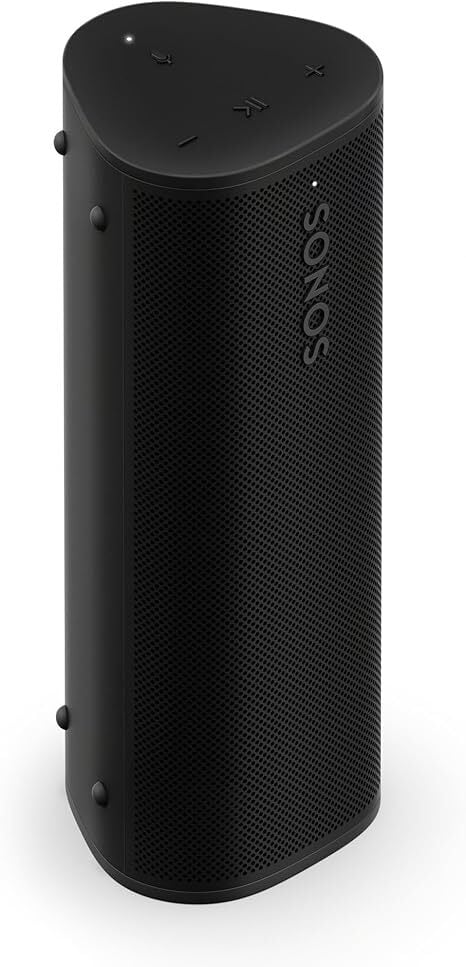
Portable Waterproof Bluetooth Speaker
Roam 2


$134.00
at Amazon

Amazon Prime
$179.00
Save $45.00

Roam 2


$134.00
at Amazon

Amazon Prime
$179.00
Save $45.00

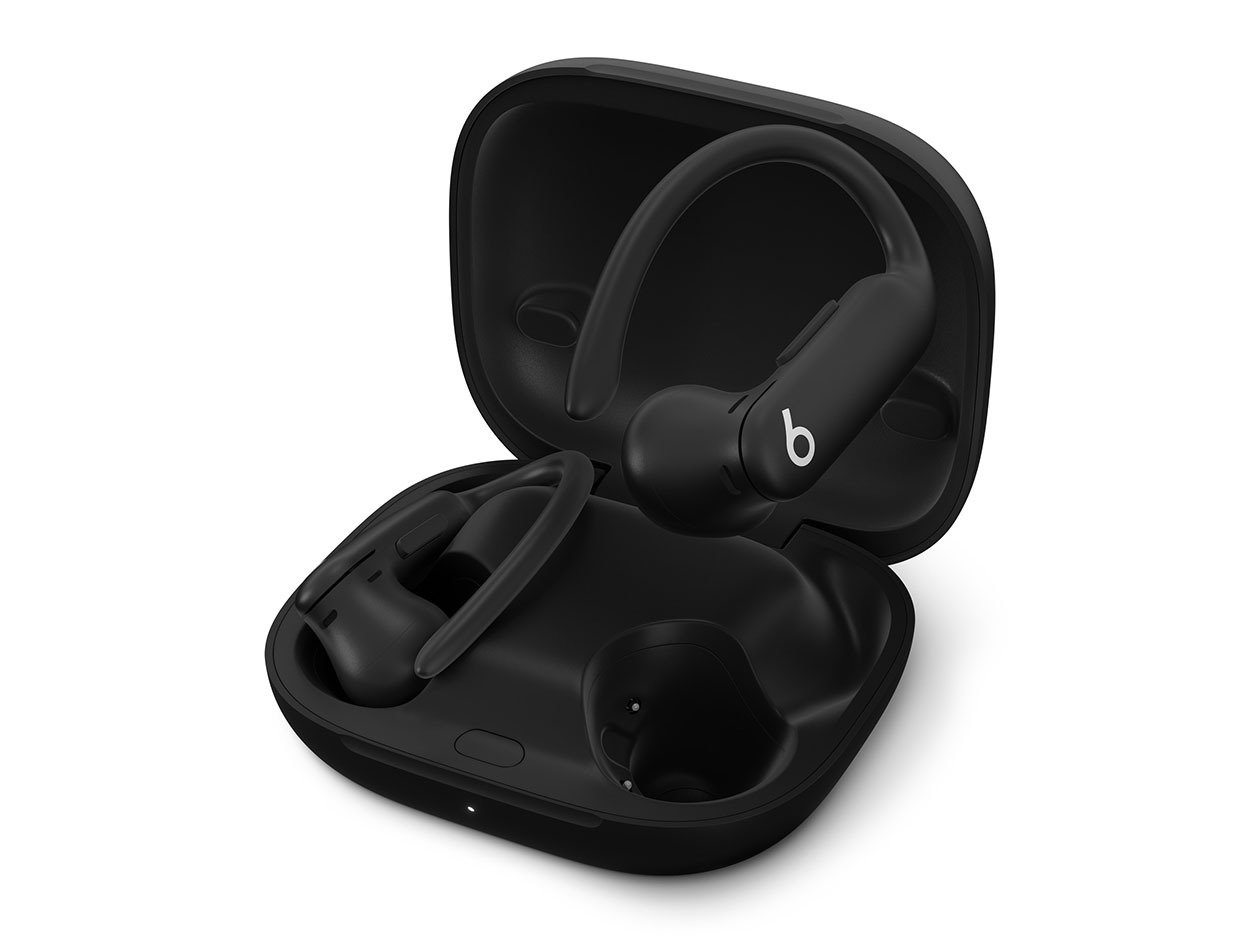
Wireless Bluetooth Earbuds (Refurbished)
Beats Powerbeats Pro 2 (refurbished)


$169.99
at Stack Social
$249.99
Save $80.00

Beats Powerbeats Pro 2 (refurbished)


$169.99
at Stack Social
$249.99
Save $80.00

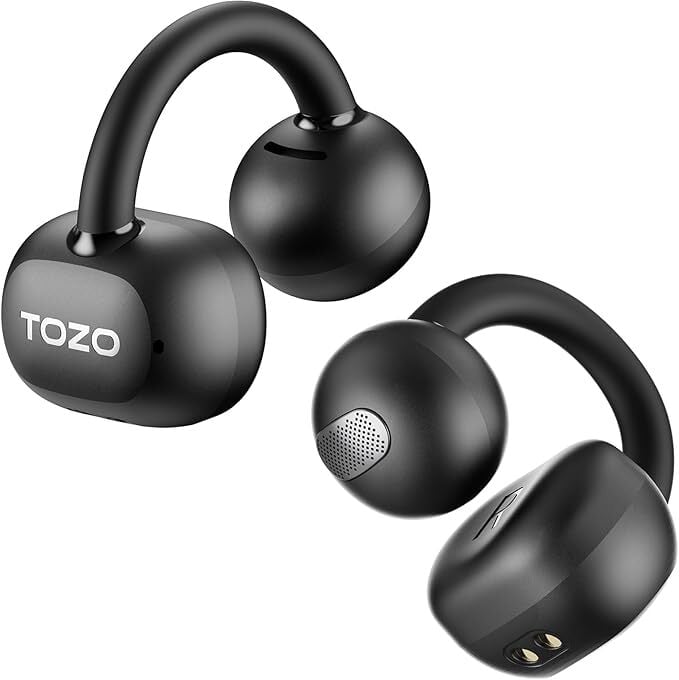
Tozo OpenEarRing


$29.99
at Amazon
$59.99
Save $30.00

Tozo OpenEarRing


$29.99
at Amazon
$59.99
Save $30.00

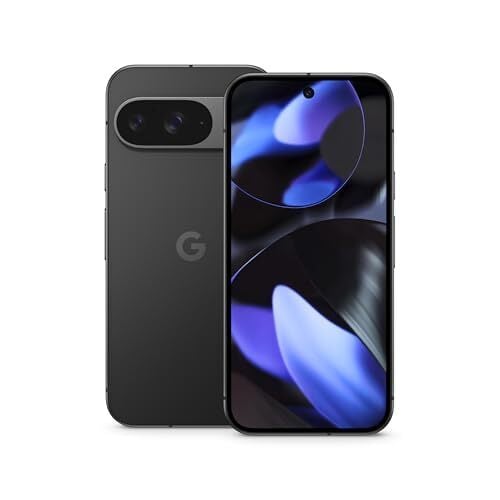
Google Pixel 9 128GB Unlocked 6.9″ OLED Smartphone (Obsidian)


$599.00
at Amazon

Amazon Prime
$799.00
Save $200.00

Google Pixel 9 128GB Unlocked  6.9" OLED Smartphone (Obsidian)


$599.00
at Amazon

Amazon Prime
$799.00
Save $200.00

Google Pixel Watch 2


$149.99
at Amazon

Amazon Prime
$249.99
Save $100.00

Google Pixel Watch 2 with the Best of Fitbit and Google - Heart Rate Tracking, Stress Management, Safety Features - Android Smartwatch - Polished Silver Aluminum Case - Bay Active Band - Wi-Fi


$149.99
at Amazon

Amazon Prime
$249.99
Save $100.00

BOGO with Free TV – KD-50X77L
BRAVIA 8 II 55” Class QD-OLED 4K HDR Google TV (2025)


$3,499.99
at Sony

BRAVIA 8 II 55” Class QD-OLED 4K HDR Google TV (2025)


$3,499.99
at Sony

i8 Sleep Number mattress


$3,289.30
at Sleep Number
$4,699.00
Save $1,409.70

i8 Sleep Number mattress


$3,289.30
at Sleep Number
$4,699.00
Save $1,409.70

16GB Unified Memory, 256GB SSD Storage
Apple 2025 MacBook Air


$899.00
at Amazon

Amazon Prime
$999.00
Save $100.00

Apple - 13-inch MacBook Air: Apple M4 chip Built for Apple Intelligence - 16GB Memory - 256GB SSD - Midnight


$899.00
at Amazon

Amazon Prime
$999.00
Save $100.00

Craftsman VERSASTACK Mechanics Tool Set


$99.00
at Amazon

Amazon Prime
$199.00
Save $100.00

CRAFTSMAN VERSASTACK Mechanics Tool Set, 1/4 in, 3/8 in, and 1/2 in Drive, 230 Piece (CMMT45306)


$99.00
at Amazon

Amazon Prime
$199.00
Save $100.00

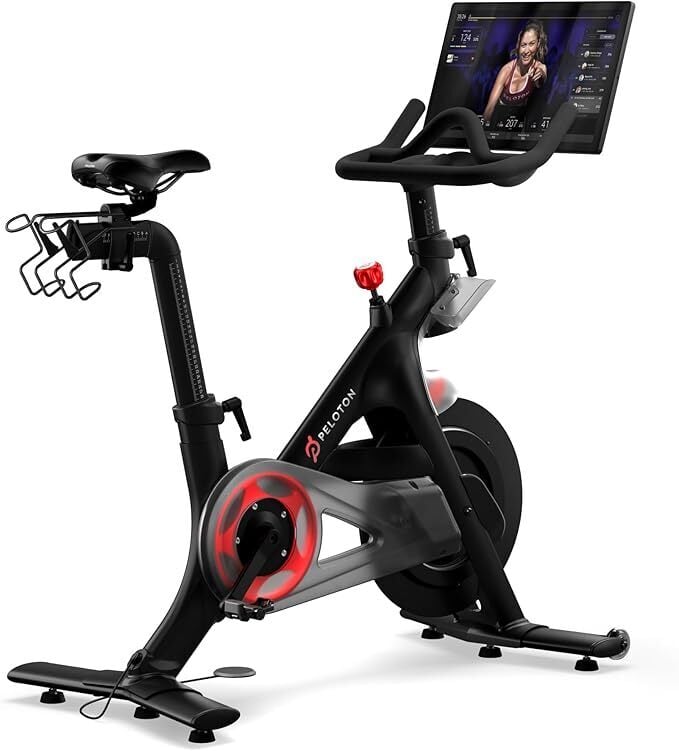
Peloton Bike


$1,145.00
at Amazon

Amazon Prime
$1,445.00
Save $300.00

Peloton Bike


$1,145.00
at Amazon

Amazon Prime
$1,445.00
Save $300.00

The Sonos Roam 2 is Sonos’s least expensive speaker, and it’s at its lowest price ever. It is a waterproof device on sale for $134 (originally $179) at Amazon, part of a small Sonos sale that also includes a discount on the larger Sonos Move 2 (also currently at its lowest price ever).

The Powerbeats Pro 2 are Beats’ latest headphones, and you won’t find them at their current $169.99 (originally $249.99) price point for a while. These are refurbished from Stack Social, and you can read more about them in this review. They’re great for the gym, but if you’re not a gym rat, there are other Beats on sale as well.

There are some great budget headphones and earbuds on sale during Amazon’s Memorial Day sale, but the Tozo OpenEarRing stand out as budget open ear headphones currently going for just $29.99 (originally $59.99).

If you’re looking for a solid phone at a good price for Memorial Day, consider the Google Pixel 9, currently $599 (originally $799). It’s the best standard Pixel model so far, and it’s at its lowest price right now. For those who want the latest phones, the Galaxy S25 Edge preorder deals with a $50 Amazon gift card are still live.

The Original Peloton is $1,145 (originally $1,445), the cheapest it has dropped to this year. And if you’re looking for more fitness equipment deals for Memorial Day, check out these from Amazon.

Speaking of fitness, smartwatches and fitness trackers are also on sale, including Garmin smartwatches. The highlight is the Google Pixel Watch 2, which dropped in price to $149.99 (originally $249.99) after the release of the Pixel Watch 3.

One of my favorite deals this week has been the BOGO sale from Sony. You can buy the new Bravia 8 II OLED Google TV starting at $3,499 and get a free a X77L LED Google TV, valued at $589.99.

Memorial Day also means getting deals on tools, and Amazon has them going up to 60% off right now. This Craftsman 230-piece mechanics tool set is on sale for $99, 50% off its regular price. It comes with ratchets, wrenches, a hand-held screwdriver, and several specialty bits.

As usual with most Memorial Day deals, you can find mattresses on sale, but the i8 Smart Bed is not a regular mattress. You can read about my experience with this smart bed with adjustable firmness and a companion app that tracks your sleep. It is currently 30% off during the Memorial Day sale.

It’s crazy to think you can get Apple’s latest MacBook Air with an M4 chip for $899 (originally $999). A couple of months ago, that money got you the M2, but now you can get the best MacBook for most people at the same price.

Nintendo Switch 2 will support regular USB mice in at least one game

The Switch 2’s Joy-Con “mouse” has some competition. At least one launch game for Nintendo’s new console includes USB mouse support. Nobunga’s Ambition: Awakening CE lets you plug in a traditional pointing device and get down to business. According to developer Koei Tecmo America, the mouse will “work seamlessly.”

Nobunga’s Ambition will let you switch between controller and USB mouse on the fly. “Once you connect the USB mouse, a message will appear in the top left indicating that the mouse is connected,” Michi Ryu said in a video (translated from Japanese). “When the USB mouse is connected, it takes priority over the Joy-Con 2. As you can see, you can switch instantly. It’s very smooth.”

So, what does that mean for other mouse-friendly Switch 2 games? Civilization VII, another launch title, comes to mind. We emailed 2K Games to ask and will update this story if we hear back.

To be fair, the Switch 2’s Joy-Con mouse support is solid. Engadget’s Sam Rutherford was pleasantly surprised with it in his hands-on. Still, it’s nice to have options. (And let’s be honest, a real mouse will be hard to beat.)

Although it wasn’t a well-known fact, the original Switch also supported USB mice. For example, Nintendo’s visual programming tool Game Builder Garage worked with them. But the number of games supporting the Joy-Con mouse makes it a bigger deal on the Switch 2.

This article originally appeared on Engadget at https://www.engadget.com/gaming/nintendo/nintendo-switch-2-will-support-regular-usb-mice-in-at-least-one-game-205725720.html?src=rss