Sony’s upgraded PlayStation Spectral Super Resolution (PSSR) tech is rolling out as part of the PlayStation 5 Pro system update that’s available today. The company had teased last month that this update was in the works. These improvements should be a better reflection of why you might pay a premium price for the more powerful console if you value peak image quality in gaming.
For a very surface-level definition, PSSR is Sony’s upscaling tech. It uses an AI library for a pixel-by-pixel analysis to display a game with better visuals even while running at a lower resolution. Today’s update revamped the algorithm and neural networked in use, which in practice means that “image reconstruction is more precise, motion stability is improved, and developers have greater flexibility to balance performance and fidelity on PS5 Pro,” according to the latest blog post from the company. For those who want more technical definition, you’ll likely be familiar with the folks at Digital Foundry, who have a more detailed analysis with comparisons between the old and new upscaling on four titles.
The improved PSSR is only available for supported games, but several familiar Sony partners are already on board. PS5 Pro owners can enable the enhanced PSSR image quality for all supported titles via a toggle in the Screen and Video settings menu. The following games are joining Resident Evil Requiem in offering the better upscaling experience:
Silent Hill 2
Silent Hill f
Dragon Age: The Veilguard
Control
Alan Wake 2
Senua’s Saga: Hellblade II
Final Fantasy VII Rebirth
Nioh 3
Rise of the Ronin
Monster Hunter Wilds
Dragon’s Dogma 2
This article originally appeared on Engadget at https://www.engadget.com/gaming/playstation/sonys-enhanced-pssr-upscaling-arrives-on-ps5-pro-today-201020423.html?src=rss
NVIDIA is officially announcing its new Vera Rubin platform at GTC today, positioning the release as the next frontier for “agentic AI”. The sprawling announcements (NVIDIA put out a fully twenty press releases, in addition to multiple blogs) include seven new chips that are apparently in full production, aimed at scaling massive, gigawatt-scale
A day after that project went public, though, Hubbard was issuing an apology to many members of the Gaming Alexandria community who loudly objected to the use of Patreon funds for an error-prone AI-powered translation effort. The hubbub highlights just how controversial AI tools remain for many online communities, even as many see them as ways to maximize limited funds and man-hours.
“I sincerely apologize,” Hubbard wrote in his apology post. “My entire preservation philosophy has been to get people access to things we’ve never had access to before. I felt this project was a good step towards that, but I should have taken more into consideration the issues with AI.”
xAI, which is already facing multiple investigations around the world over widespread reports that Grok repeatedly created sexualized images of children, is now facing a class action lawsuit. Three teenagers, who allege that photos of them were used by Grok to generate child exploitation material, have filed a class action lawsuit against xAI in California.
According to the lawsuit, one of the teens was alerted last December that someone was sharing AI-generated images and videos of her and other minors “in settings with which she was familiar, but morphed into sexually explicit poses.” The images and videos were allegedly shared on Discord, Telegram and other platforms and used “as a bartering tool” for other CSAM imagery. Law enforcement officials who investigated the images told the girls’ parents they were created with xAi’s Grok, the lawsuit says.
The three teens, all of whom live in Tennessee and are identified as Jane Doe 1, Jane Doe 2 and Jane Doe 3, have “suffered severe emotional distress,” the filing says. “Their lives have been shattered by the devastating loss of privacy, dignity, and personal safety that the production and dissemination of this CSAM have caused,” lawyers for the teens write in the complaint, which was provided to Engadget. “xAI’s financial gain through the increased use of its image- and video-making product came at their expense and wellbeing. Plaintiffs will have to spend the rest of their lives knowing that their CSAM images and videos may continue to be trafficked and traded online by child sex predators.”
Though the lawsuit currently names three individuals, the complaint says that it could cover “at least thousands of minors” who have also had their photos manipulated by Grok into sexualized images. The lawsuit claims xAI has violated multiple laws, including laws barring the production and distribution of child abuse material.
xAI didn’t immediately respond to a request for comment on the lawsuit. The company is also facing multiple investigations in the US and Europe over Grok’s alleged generation of nonconsensual nudity. Researchers at the Center for Countering Digital Hate estimated in January that Grok had produced millions of sexualized images, including 23,000 that appeared to show children.
xAI CEO Elon Musk, who previously promoted Grok’s “spicy” abilities, has claimed that he was “not aware of any naked underage images generated by Grok.” xAI announced in January it would stop allowing people to use Grok to edit images of real people into bikinis and limit Grok’s image-generation feature to paid subscribers.
This article originally appeared on Engadget at https://www.engadget.com/social-media/xai-is-being-sued-by-teens-who-say-grok-created-csam-using-their-photos-200102733.html?src=rss
Encyclopedia Britannica has sued OpenAI, alleging its AI models were trained on nearly 100,000 copyrighted articles and sometimes reproduce or misattribute passages to the encyclopedia. The lawsuit also claims trademark infringement and argues tools like ChatGPT divert traffic away from Britannica and Merriam-Webster sites. Engadget reports: More specifically, Britannica alleged that OpenAI illegally used its “copyrighted content at a massive scale” when training its AI models. Not just with training, the encyclopedia company claimed that ChatGPT’s responses to user queries sometimes contain “full or partial verbatim reproductions of [Britannica’s] copyright articles.”
Along with claims of copyright violations, Britannica argued that OpenAI was also responsible for trademark infringement. According to the lawsuit, ChatGPT generates “made-up content or ‘hallucinations’ and falsely attributes them” to Encyclopedia Britannica. The lawsuit doesn’t specify an amount for monetary damages, but Britannica is also seeking an injunction to prevent OpenAI from repeating these accusations.
Once you’ve lived in a place for a while, one fact becomes clear: Your home isn’t getting any bigger, at least not without time and effort (and a truckload of cash). We all tend to grow into our homes, filling it with stuff over time, and that can lead to a storage crisis.
But your house can probably offer you extra storage with the right purchases and approach. There are all kinds of clever ways to increase the storage around your house. If you’re ready to get all that stuff off the floors and furniture and nearly tucked away, here are some ideas to explore.
17″ x 21″ – Brown Frame
Brown Secret Storage Wall Art
$79.95 at Wayfair
$99.95 Save $20.00
$79.95 at Wayfair
$99.95 Save $20.00
28 x 12 x 6.5 inches, Rustic Brown, Chic Floating Storage Console Table or Desk for Wall
Kate and Laurel Kitt Modern Floating Shelf with Drawers
$163.99 at Amazon
$179.99 Save $16.00
$163.99 at Amazon
$179.99 Save $16.00
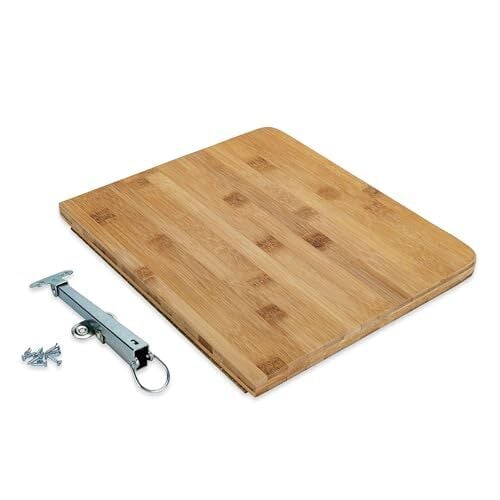
12″ x 13.5″ x .75″ Metal Drop-Leaf Table Brace Mounted Counter Extension
Camco Bamboo Accents RV Counter Extension
$47.80 at Amazon
$47.80 at Amazon
4-pack Heavy Duty Stackable Furniture Risers Supports 1,300 lbs, Black
White, 22.5 inch Rustic Wood Wall Mounted Shelves 22 lbs Capacity, Set of 2
BAYKA Floating Shelves
$34.19 at Amazon
$49.99 Save $15.80
$34.19 at Amazon
$49.99 Save $15.80
Queen Headboard with 2 Drawers, Charging Station and LED Lights
Maupvit Wueen Size Headboard with Storage
$159.99 at Amazon
$159.99 at Amazon
4-Tier Slim Kitchen Cart with Wheels
KLM Rolling Storage Cart
$69.99 at Amazon
$69.99 at Amazon
10-Pack Space Saving Cascading Hanger
Wonder Hanger
$22.90 at Amazon
$22.90 at Amazon
Use wall art that doubles as storage cabinetry
If every room in your house is littered with small items that don’t have a permanent home and you don’t have any space for extra storage units or bulky open shelving, your walls might still offer a solution: wall art that also serves as shallow cabinetry. You can find framed art like this that doubles as a cabinet for storing jewelry, keys, documents, or any other small items that can clutter your home.
Add some shelves that have drawers
Adding some floating shelves to your walls is an obvious answer to your storage problems, sure, but if they’re just shelves, you’re missing a double-whammy opportunity. Choosing floating shelves that also offer drawers means you get twice the storage power in a single unit.
Transform a bookcase into a closet
Closet space is a crucial part of every home’s storage system. If you need closet space but are out of luck, you can create a shallow closet from a bookcase. All you need is a bookcase that fits your space, closet rod hardware, and some reinforcing lumber if necessary (this depends on how sturdy your bookcase is. Remove the shelves you don’t want from the upper or lower part of the bookcase, install your hanging rod, and move all those extra clothes, shoes, and other items into place.
Add a hinged countertop extension as a prep or dining area in the kitchen
An indirect way to increase your kitchen storage is to add a hinged countertop extension like this. The extension can be used as extra prep space or as a quick dining area, and having it will allow you to keep more appliances and storage jars or baskets on the rest of your countertops without having to constantly move them out of the way when you work or eat.
Use bed risers and under-bed storage containers to reclaim lost storage space
If you’ve run out of ideas for where to stash all your stuff, sometimes the trick is to create some extra vertical space by lifting your bed. A set of simple bed risers combined with easy-access rolling containers like these will give you a huge amount of storage.
Install a shelf over doorways and windows
One of the most overlooked places for storage is over doorways and windows, areas that are usually just dead space. If you’ve got enough vertical wall space over a door, a simple floating shelf can create a spot for books or other items.
Replace your bed’s headboard with one that offers storage
A headboard on your bed doesn’t have to be purely decorative, and the wall your bed is pushed up against doesn’t have to be wasted space. Buy a headboard with storage built in and you can stash away all the stuff that’s sitting on top of your tables, dressers, and the floor. As a bonus, you can find these with charging ports, so you’ll never have to worry about missing an alarm again.
Add a rolling pantry to your kitchen
No matter how big your kitchen is, you’ll always wind up with stuff cluttering your countertops, or jammed up on top of your wall cabinets. But you can take advantage of another quirk found in many kitchens: that narrow gap between your lower cabinets and the appliances that seems to exist only to collect dust and crumbs. A narrow rolling pantry cart can get you the extra storage you need while eliminating that weird gap, a twofer win.
Use space-saving hangers in your closets
You can get a lot more out of your closets with space-saving hangers like these, which allow you to hang five garments on one hanger—basically making every closet five times larger.
Add pedestal storage under your washer and dryer
The key to finding more storage in your house is looking for the hidden dead space you’re overlooking. One of the most common spots we miss is under the washer and dryer in our laundry area. Adding a pedestal with a drawer under each appliance turns a slice of vertical space into valuable storage.
President Trump and the Federal Communications Commission chairman are demanding more positive media coverage of the Iran war. On Saturday, FCC Chairman Brendan Carr issued yet another threat to revoke licenses from news broadcasters, claiming without evidence that they are running “hoaxes and news distortions” related to the war in Iran.
In an X post, Carr shared a complaint about an Iran war headline that Trump had made on Truth Social and added his own commentary. “Broadcasters that are running hoaxes and news distortions—also known as the fake news—have a chance now to correct course before their license renewals come up,” Carr wrote. “The law is clear. Broadcasters must operate in the public interest, and they will lose their licenses if they do not.”
Carr making vague threats about enforcing rules against hoaxes and news distortion is nothing new. Given how difficult it is to actually revoke a broadcast license, and the fact that no TV station licenses are up for renewal until 2028, the threats so far have been attempts to intimidate news organizations without any concrete punishment.
Just months after announcing DLSS 4.5 at CES, NVIDIA has unveiled its next major upscaling technology, DLSS 5. The company is doubling-down on AI for this next iteration, claiming DLSS 5 “infuses pixels with photoreal lighting and materials” using a real-time neural rendering model when it arrives this fall.
So what does this mean in practice? In an on-stage demo at NVIDIA’s GTC 2026 keynote, CEO Jensen Huang showed off the technology with Resident Evil: Requiem, Hogwarts Legacy and Starfield. DLSS 5 adds a noticeable amount of detail to character’s hair and skin tone, but it also appears it’s being compared to those games without any DLSS features turned on. It’s unclear how much of a difference it makes compared to DLSS 4.5 with path tracing and all of its features turned on.
“DLSS 5 takes a game’s color and motion vectors for each frame as input, and uses an AI model to infuse the scene with photoreal lighting and materials that are anchored to source 3D content and consistent from frame to frame,” NVIDIA said in a blog post. The company also notes that the technology runs in real time, and it works at up to 4K.
Huang showed off DLSS 5 while running a system with two RTX 5090 GPUs. Eventually, it will be able to run on a single video card (though I’d imagine it would have to be almost as powerful as two 5090s). Huang also paints DLSS 5 as a step towards offering Hollywood-like quality for real-time rendering, without the need for the GPU horsepower required by studios. It sounds a bit like a generative AI video model that can be directly controlled by developers, instead of just AI prompts.
NVIDIA, never shy from self-aggrandizing, claims DLSS 5 is also the “biggest breakthrough in computer graphics” since real-time ray tracing arrived in 2018. But given that ray tracing itself hasn’t being mainstream for many gamers, it’ll be interesting to see if there’s any interest in NVIDIA’s AI-produced pixels.
This article originally appeared on Engadget at https://www.engadget.com/gaming/pc/nvidia-claims-dlss-5-will-deliver-photoreal-image-quality-with-ai-this-fall-193452088.html?src=rss
Mario Kart World is getting a set of two officially-licensed racing wheels from Hori, nine months after the game’s June 2025 release. This set of racing wheels (Pro Deluxe and Pro Mini) are similar to the original Hori Racing Wheels released for Mario Kart 8 Deluxe on Switch, but provide one key upgrade: the addition of a C button for Nintendo
Apple has quietly announced the AirPods Max 2, featuring improved active noise cancellation, an H2 chip, and new features like adaptive audio and AI-powered real-time translation. Like the original model, these headphones start at $549. The Verge reports: As noted by Apple, the AirPods Max 2 offer active noise-cancellation that’s 1.5 times more effective when compared to its predecessor. Transparency mode, which allows you to hear your surroundings while wearing the headphones, also sounds “more natural” with the AirPods Max 2, according to Apple.
The AirPods Max 2 support 24-bit, 48kHz lossless audio when connected with a USB-C cable, as well as offer up to 20 hours of listening time on a single charge. Other capabilities include loud sound reduction, a camera remote feature that works by pressing the digital crown to take a photo or start a recording, as well as a personalized volume feature that “automatically fine-tunes the listening experience” based on your preferences over time.
Two of Apple’s most important initiatives, a complete overhaul of its operating systems’ user interface design, and its efforts to become a significant player in the AI space, haven’t been home runs. Siri isn’t even close to being what the company promised at WWDC 2024, and users haven’t been particularly taken with the Liquid Glass UI overhaul.
The Delaware judge said Krafton had violated the terms of its contract with Unknown Worlds when it fired the executives. “To remedy these breaches, Gill is reinstated as CEO of Unknown Worlds with full operational authority over the studio,” wrote judge Lori W. Will.
A Krafton spokesperson said in a statement that “we respectfully disagree with today’s ruling” and that “we are evaluating our options as we determine our path forward.” Further litigation over potential damages is still pending.
This legal battle has been brewing for a while. Krafton bought Unknown Worlds back in 2021 and the contract stipulated that executives and staff would get to share in a $250 million bonus if they hit certain revenue targets by 2025. Those targets were not reached, and could not be reached, because Krafton delayed Subnautica 2.
According to the pre-trial brief, Krafton CEO Changham Kim allegedly nixed the payout because it would be a “professional embarrassment” and make him look like a “pushover.” He reportedly consulted ChatGPT to ask about ways to avoid paying the bonus and, oddly, seemed to consider a hostile takeover by a newly-formed entity.
Judge Will dinged the CEO on both counts, saying that Kim regretted committing to the payout and “consulted an artificial intelligence chatbot to contrive a corporate ‘takeover’ strategy.” Engadget reached out to Krafton and the company re-emphasized it was displeased with the ruling but said that it doesn’t resolve the ongoing litigation.
As for the game, Krafton says Subnautica 2 is coming sooner rather than later. We’ve heard that one before.
This article originally appeared on Engadget at https://www.engadget.com/gaming/judge-rules-that-krafton-must-rehire-fired-subnautica-director-184702823.html?src=rss
The Linux kernel’s extensible scheduler class “sched_ext” to allow for custom CPU scheduling policies as BPF programs continues enabling new functionality. Queued up in the sched_ext development code ahead of next month’s Linux 7.1 cycle is the new SCX_ENQ_IMMED capability for enabling tighter control over when tasks land on a CPU…
OpenAI cannot escape the doom cloud swirling around its rollout of a text-based “adult mode” in ChatGPT.
Late Sunday, The Wall Street Journal reported that insiders confirmed that OpenAI’s “handpicked council of advisers on well-being and AI” were “freaking out” over the company’s plans to move ahead with “adult mode,” despite their urgent warnings.
Back in January, council members unanimously warned OpenAI that “AI-powered erotica could foster unhealthy emotional dependence on ChatGPT for users and that minors could find ways to access sex chats,” sources told the WSJ. One expert suggested that without major updates to ChatGPT, OpenAI risked creating a “sexy suicide coach” for vulnerable users prone to form intense bonds with their companion bots.
Samsung will reportedly end Galaxy Z TriFold sales in South Korea on March 17, three months after the device went on sale, according to South Korean newspaper Dong-A Ilbo. Samsung has not yet confirmed the report, but Engadget has reached out for comment. In the US, where the TriFold arrived in January, the phone will remain available until existing inventory runs out. A unit at retail (if you can find it) will run you almost $3,000.
Samsung seemingly never intended the model for mass production. It sold the device in small batches through its website, with each selling out within minutes. Samsung reportedly moved roughly 3,000 units across the first two allotments and did not send review units to the media.
Industry sources told Dong-A Ilbo that the TriFold was a technology showcase rather than a revenue-generating product. Rising costs of components like DRAM and NAND flash have left virtually no profit margin on the device. In South Korea, the phone briefly traded for nearly three times its retail price on the secondary market.
In Engadget’s limited time with the TriFold, the device felt solid, despite not having been built for a true production run. The original Galaxy Fold had to be delayed in 2019 after multiple review units sent to the press broke within days.
This article originally appeared on Engadget at https://www.engadget.com/mobile/smartphones/samsung-ends-galaxy-z-trifold-sales-three-months-after-launch-182903503.html?src=rss
Video game launches for new cars are increasingly common these days—Gran Turismo alone has hosted dozens of “Vision” concepts—but Porsche decided to go a little more serious for the digital debut of its latest model. iRacing, the online driving sim that has been punishing people’s digital driving indiscretions since 2008, was not only the first place anyone could drive the new 911 Cup, but also serves as a sort of digital feeder series to Porsche’s one-make Porsche Carrera Cup.
That sim makes a great venue because the 911 Cup is as hardcore a racer as iRacing is a hardcore racing game. When I was invited to drive that new car for real, I knew exactly where to start.
The hardest part of riding a bike, Timia Porter says, isn’t the effort. It’s the beginning. Before a wheel turns, before the pedals move, there is a sequence — clothing, route planning, tire and battery checks, timing, weather, traffic, family logistics. Each decision is small on its own, but together they can become overwhelming.
“One of the biggest things is executive functioning,” Porter explained. “You have to be able to see the steps in your head and not feel overwhelmed by them.” Porter lives with ADHD, and for her, those “steps” aren’t casual considerations. They are potential roadblocks. The difference between twenty steps and eight can determine whether she rides at all. “When I think about going outside, there can be twenty different steps involved,” she said. “On Zwift, it’s maybe eight. I’m going to choose the eight.”
That choice has changed her life.
Porter, a U.S. Air Force veteran and mother of a pre-teen daughter, came to cycling during the COVID shutdown. Access to soccer, her longtime sport, disappeared overnight. At the same time, she was navigating a difficult and abusive relationship. Cycling became both movement and refuge. “It gave me an escape,” she said. She began outdoors, but Zwift entered her world the way it does for many riders: weather, convenience, practicality. What she didn’t expect was how quickly the platform would become something deeper. “Little did I know Zwift was going to come in handy on days that were mentally and emotionally challenging as well,” she said. “That has been the saving grace.”
The saving grace, she explains, is friction removal. Outside riding carries invisible stressors: traffic, flats, detours, timing pressure. As a mom, that last one matters. A ride isn’t just miles; it’s a calculation. How far can she go? Will she be back in time? What if something delays her? “Sometimes I find myself rushing back home,” she said. “With riding inside, it gives me more flexibility.” Inside, the uncertainty shrinks. There are no stoplights interrupting intervals, no wind gusts disrupting cadence targets, no animals darting across the road mid-sprint. Training becomes precise. “When you’re outside, something always interrupts the workout,” she said with a laugh. “On Zwift, I have complete control. I can check every box my coach gives me.”
Porter races criteriums — fast, technical, aggressive events she compares to NASCAR. The margins are thin and the stakes high. For that kind of racing, training specificity matters. Zwift allows her to hit power numbers, cadence assignments, and sprint targets without compromise. Yet the numbers, she insists, are only part of the story. The emotional impact is harder to quantify.
There have been days when depression pressed so heavily that leaving the house felt impossible. On those days, the bike a few feet away becomes a negotiation. “If I could just get on Zwift,” she tells herself. “Just get on.” She describes it like crawling through a desert, desperate for a drop of water. Instead of calling out “water,” she calls out something else. “Zwift, Zwift, Zwift.” Sometimes the ride lasts thirty minutes. Sometimes longer. More than once, she has recorded herself afterward — overwhelmed, crying, a cathartic experience. “I didn’t realize how much I needed that,” she said. “It’s like therapy. Except I didn’t have to talk to anyone.” She shares that with honesty and vulnerability.
Physical movement provides dopamine. The sense of accomplishment that comes by checking off a workout provides dopamine. Combined, they create momentum. “When I ride in the morning, I feel like I’ve already won the day,” she said. “I get two hits of dopamine — one from the workout and one from checking it off my list. And that momentum transfers into everything else.” For someone navigating ADHD, that transfer matters. It means the energy doesn’t dissipate. It compounds.
Zwift also does something more subtle: it offers community without performance pressure. “Human beings need community,” Porter said. “If you’ve ever seen Cast Away, he makes a friend out of a volleyball. We need connection.” For her, in-person social settings can sometimes bring anxiety — overthinking conversations, worrying about saying the wrong thing, replaying interactions afterward. Zwift removes that layer. “We’re just here riding a bike in virtual reality,” she said. “How can I offend you?” It’s a simple observation, but a profound one. On Zwift, connection doesn’t require small talk mastery or perfect social timing. It requires showing up and pedaling.
Relationships form both ways. Some begin outdoors and continue virtually. Others start through Instagram, Strava, or Zwift meetups and grow into real friendships. Accountability partners encourage each other. Group rides provide structure during dark winter months when seasonal depression hits hardest. “It’s so good for maintaining connections,” she said, “and we can build a strong bond and connection, whether we meet in person in the future or we never meet in person.” She also appreciates the way the platform makes metrics engaging rather than intimidating. The graphs are clear. The feedback immediate. Achievements visible. “With my ADHD, things need to be clear as a fifth grader,” she said. “Flashcard simple. It needs to be super clean cut and easy to decipher. If it’s too much, my brain just goes blind.” Zwift, for her, strikes that balance. The science and analytics are there, but they’re digestible and progress feels tangible.
At the same time, the platform accommodates different levels of seriousness. It serves the competitive racer chasing performance gains and the casual rider just looking for a fun way to move with friends. “It provides something for the serious and the not-so-serious cyclist,” she said. Her online identity — @theecarbonqueen — captures that blend of strength and playfulness. The name came after a particularly strong outdoor ride when her fiancé jokingly called her a “carbon princess.” “Princess? I’m too grown for that,” she recalled telling him. “I’m a queen.” The name stuck, not as a branding strategy, but as a declaration. She knows what she’s capable of.
What Porter wishes more people understood about ADHD extends beyond cycling. It comes down to expectations. “Our expectations of people come from what we’re good at,” she said. If something takes another person five minutes, it might take her an hour, or more, depending on distractions and mental bandwidth. “Don’t take the things that I drop as a personal thing,” she said. “It’s not you.” Her advice is simple and radical at once: get curious. Lead with compassion. Release rigid expectations. It’s advice that applies on and off the bike.
To outsiders, Zwift can look like a game. For Porter, it is access — to movement, to precision training, to community, to emotional reset. It is structure when her thoughts feel scattered. It is control when life feels unpredictable. It is connection without pressure. Most of all, it is eight steps instead of twenty — and sometimes, eight steps are enough.
AI infrastructure company Nebius signed a deal to provide up to $27 billion in AI computing capacity to Meta over the next five years, including a guaranteed $12 billion purchase by 2027. Reuters reports: Under the agreement, Meta will also buy an additional $15 billion worth of capacity planned by Nebius over the coming five years if it is not sold to other customers, giving the contract a total value of up to $27 billion, Nebius said. The deal is the latest example of U.S. tech giants’ efforts to supplement their own AI data-centre build-outs by locking in scarce GPU and power capacity from “neocloud” providers like Nebius. Nebius CEO Arkady Volozh said the latest Meta deal would help “accelerate the build-out and growth of our core AI cloud business.” Further reading: Data Centers Overtake Offices In US Construction-Spending Shift
Apple’s latest acquisition could be a hint towards improvements for Final Cut Pro. The tech giant acquired MotionVFX, as seen on the company’s website and first reported by MacRumors, which is known for providing plugins, templates, visual effects and more to video editors. MotionVFX currently offers its software for a handful of video-editing apps, like DaVinci Resolve and Adobe Premiere, but is also listed as a trusted Apple partner and found in the Final Cut Pro ecosystem of third-party products.
Apple hasn’t revealed an acquisition price nor details of the deal. On its website announcement, MotionVFX wrote that it’s “thrilled to embrace” similar values seen with Apple products and that it’s the “beginning of something wonderful.”
Considering a lot of MotionVFX’s tools are designed for Final Cut Pro and Apple’s Motion app, we could see native integration of popular visual effects and templates into Apple’s app interfaces. It’s worth noting that MotionVFX already offers an extension that creates a panel directly in Final Cut Pro for users to browse, download and apply visual effects from its repository. The acquisition could also hint at Apple trying to make its Creator Studio more enticing in the future, since it includes both Final Cut Pro and Motion. However, there hasn’t been any clarity on what will happen to MotionVFX’s monthly or annual subscription plans, nor its support for competing products.
This article originally appeared on Engadget at https://www.engadget.com/apps/apple-acquires-popular-video-editing-software-company-motionvfx-175429480.html?src=rss