Remembering John Young, Co-founder of Web Archive Cryptome

New submitter zuki shares an obit published at The Register: John Young, the co-founder of the legendary internet archive Cryptome, died at the age of 89 on March 28. The Register talked to friends and peers who gave tribute to a bright, pugnacious man who was devoted to the public’s right to know.

Before WikiLeaks, OpenLeaks, BayFiles, or Transparency Toolkit, there was Cryptome – an open internet archive that inspired them all, helped ignite the first digital crypto war, and even gave Julian Assange his start before falling out with him on principle.


Read more of this story at Slashdot.

Nick Clegg Says Asking Artists For Use Permission Would ‘Kill’ the AI Industry

As policy makers in the UK weigh how to regulate the AI industry, Nick Clegg, former UK deputy prime minister and former Meta executive, claimed a push for artist consent would “basically kill” the AI industry. From a report: Speaking at an event promoting his new book, Clegg said the creative community should have the right to opt out of having their work used to train AI models. But he claimed it wasn’t feasible to ask for consent before ingesting their work first.

“I think the creative community wants to go a step further,” Clegg said according to The Times. “Quite a lot of voices say, ‘You can only train on my content, [if you] first ask.’ And I have to say that strikes me as somewhat implausible because these systems train on vast amounts of data.”

“I just don’t know how you go around, asking everyone first. I just don’t see how that would work,” Clegg said. “And by the way if you did it in Britain and no one else did it, you would basically kill the AI industry in this country overnight.”


Read more of this story at Slashdot.

The Newark Airport Crisis is About To Become Everyone’s Problem

Newark Liberty International Airport has suffered six radar and radio outages in nine months, with the most recent occurring May 9th when controllers told pilots “our scopes just went black again” before handing off flights to other facilities. The outages have forced flight cancellations, diversions, and delays lasting over a week as airlines repositioned aircraft and crews.

The Federal Aviation Administration created the problem by relocating Newark’s air traffic control operations from the understaffed N90 facility on Long Island to Philadelphia in 2024. Only 17 of 33 controllers accepted the move despite $100,000 relocation bonuses, leaving operations short-staffed. Rather than build new STARS servers in Philadelphia, the FAA opted to send radar data over 130 miles of commercial copper telephone lines.

The remote feeds have experienced approximately 10 minutes of downtime over 10 months — exceeding the agency’s reliability standards and occurring 200 times more frequently than the FAA’s internal analysis predicted. The agency simultaneously laid off over 100 maintenance technicians and telecommunications specialists in February, further straining an air traffic control system that suffers around 700 outages weekly nationwide while managing 16.8 million annual flights with 1990s-era technology.


Read more of this story at Slashdot.

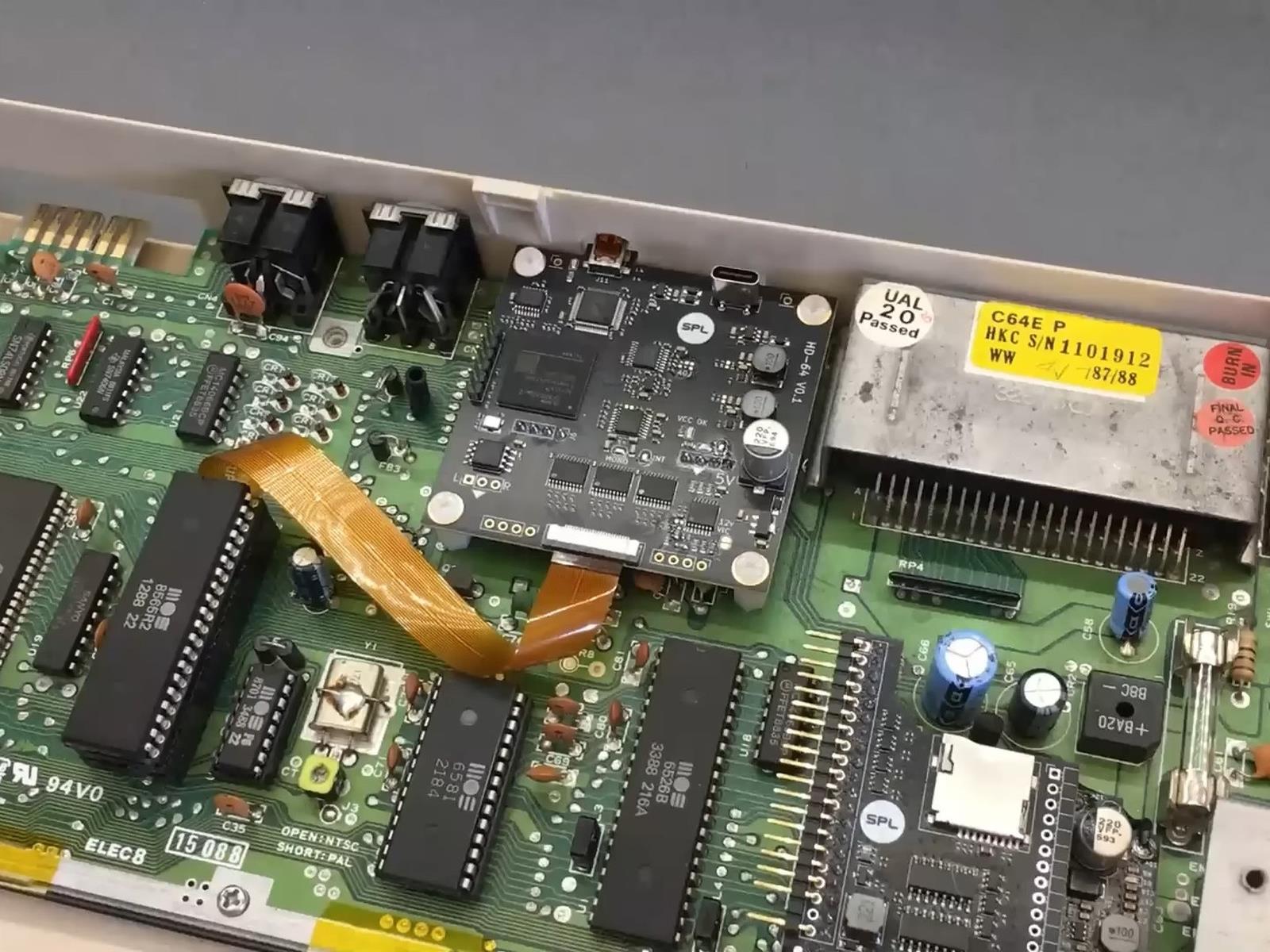
Legendary Commodore 64 Gets A True Full HD HDMI Upgrade For A Retro Reboot

Legendary Commodore 64 Gets A True Full HD HDMI Upgrade For A Retro Reboot
If you’ve ever played with an original 8-bit computer—a Commodore, an Atari 400/800, or anything else of that vintage—you already know that getting clean video output can be a terrific struggle. These systems were primarily built to output a video signal using radio frequency (RF) output, not unlike a regular TV antenna, and require mods to

MSI’s Yellow Power Connector Has Another GeForce RTX 5090 Induced Meltdown

MSI's Yellow Power Connector Has Another GeForce RTX 5090 Induced Meltdown
In the words of Queen, Another One Bites The Dust. There’s a user report of one more GeForce RTX 5090 power cable suffering a nasty case of heatstroke, this time around an MSI yelllow-tipped connector.

The original report came from Reddit user VersauteGurke, who’s running a chonky MSI GeForce RTX 5090 in his machine, powered by a Corsair

Zwift Speed Tests: Wheel Ranking Charts

Your chosen bike frame and wheelset both affect speed in Zwift, so it makes sense for racers to do a little research and choose the best tool for the job.

While Zwift’s 4-star rating system for weight and aero is simple and easy to understand, performance varies even among wheels with the same star ratings, because the stars are just an approximation. Therefore, we’ve created several charts ranking all the wheelsets against each other based on their actual performance on flat roads and climbs.

If you’re just looking for recommendations on what to buy, here are some helpful posts:


Charts last updated May 22, 2025


Time Savings Over 1 Hour (300W)

We begin with a simple chart showing how much time a particular wheelset will save you across 1 hour of riding a road bike at 300W (4 W/kg) compared to the stock Zwift 32mm Carbon wheels.

The chart is sorted from the best-performing wheels to the worst, and you can sort based on flat performance or climb performance.

Sort Chart By:

Flat Performance
Climb Performance

Time Savings Over 1 Hour (150W)

This chart is just like the one above, except the test was run at just 150W (2 W/kg). We would expect to see the flat performance rankings stay the same, while climb rankings may show lighter wheels moving up vs the 300W chart above.

Read all about Bike Upgrades here >

Use the toggle to sort based on flat performance or climb performance.

Sort Chart By:

Flat Performance
Climb Performance

Takeaways

We don’t see any major rankings changes vs the 300W tests when it comes to flat performance, but that’s no surprise. At both power levels, on flat ground, aero performance is still the driving factor.

When you compare the climb rankings for 300W vs 150W, though, you’ll see quite a few changes. And this is what we expected: at 150W (2 W/kg) up Alpe du Zwift, a wheel’s aero performance doesn’t really matter, since you’re traveling so slowly (~7.7 kph). But at 300W your speed almost doubles (~14.8 kph), so aero performance is more of a factor.

With that said, it’s worth mentioning that wheel choice matters more on the flats than the climbs. The difference in time savings of the top 10 climbing wheels is very small (5.1 seconds at 150W) vs a flat performance gap of 13.6 seconds at 150W.

Time Savings, Stacked (150W vs 300W)

Next, we have one of our favorite charts, ranking wheels based on total time savings across our flat and climbing tests on road bikes. This chart lets you easily see the best all-around performers, and whether their performance leans to the aero or climbing side.

Use the toggle to see data at 150W vs 300W.

Show Chart For:

150W
300W

Takeaways

As you toggle between 150W and 300W, what you see is the more “aero all-arounders” moving up the list a bit, while the lighter, less aero all-arounders get bumped down.

Notice how the disc wheels’ heavy weight and poor climbing performance pushes them well down this list. This is why, if your road race includes any significant climbing, you’re probably better off going with a lighter non-disc wheelset.

Time Savings at 300W (TT vs Road)

So far, all of the charts you’ve seen have been based on results using a road bike frame. But Zwift’s March 2025 performance adjustments included something we’ve never seen before: Zwift made disc wheels perform better on TT frames than road frames. Specifically, the wheels have a lower CdA on TT frames than on road frames.

So if you’re picking a wheelset for a TT or TTT race, you’ll want to pay attention to this chart, as it shows the boosted performance of the disc wheels. Wheelsets are ranked by their flat (aero) performance, since that’s where we see the variation caused by the CdA changes.

Show Chart For:

TT
Road

Takeaways

The big takeaway here is that disc wheels make sense for flat and rolling TT races, while they probably don’t provide enough of an advantage on road frames to be used in anything except the flattest races.

Compared to the fastest non-disc wheels (ENVE 8.9), the fastest disc wheels (Zipp 858/Super9) are 13.9 seconds faster across an hour of flat riding on a TT frame. That’s a big time gap. But on a road frame, the disc wheels are only 1.8 seconds faster, a difference which is easily overshadowed by the ENVE 8.9 wheels being almost 11 seconds faster across an hour of climbing.

Testing Methodology

The data above was generated using our standard bot testing procedure. Our bot rides alone on Zwift, set to 75kg weight, 183cm height, using the Zwift Carbon frame for road bike tests and the Zwift TT frame for TT tests.

The aero (flat) test route is Tempus Fugit, the flattest course on Zwift, while the weight (climbing) test is done on Alpe du Zwift since it’s a long, steep, and fairly steady climb.

All of the data used by these charts comes from our public Google sheet of test data.

Questions or Comments?

We’d love to know what you think of these charts, including suggestions for improvements. Share your comments below.

Apple’s AirPods 4 with ANC drop to $149 for Memorial Day

Apple‘s AirPods 4 with active noise cancellation (ANC) just became an even more enticing proposition for those who have been on the fence about picking up a pair. They have dropped to $149, which is $30 off the regular price. That’s only about $10 more than the record low and the lowest price we’ve seen for the AirPods 4 with ANC so far this year.

If ANC isn’t such a big deal for you (perhaps, like me, you tend to only wear one earbud at a time), you can snap up a set of AirPods 4 without ANC instead. Those will currently run you $119, a discount of $10.

We gave the AirPods 4 with ANC a score of 86 in our review. Apple improved the audio quality compared with the previous version, and the earbuds have a better fit than the AirPods 3. We felt that the ANC was pretty effective too. However, the lack of onboard volume controls remains a disappointment.

The AirPods 4 use the same H2 chip as the AirPods Pro 2, meaning they share some features with the higher-end model. They support Voice Isolation, Personalized Spatial Audio with dynamic head tracking, Personalized Volume and Adaptive EQ. The ANC-enabled model also has Conversation Awareness, Adaptive Audio and Transparency mode. In addition, the charging case that comes with the ANC version has Qi-compatible wireless charging, as well as a built-in speaker for Find My. However, the AirPods Pro 2’s advanced hearing health features aren’t present here.

Check out our coverage of the best Apple deals for more discounts, and follow @EngadgetDeals on X for the latest tech deals and buying advice.

This article originally appeared on Engadget at https://www.engadget.com/deals/apples-airpods-4-with-anc-drop-to-149-for-memorial-day-161120128.html?src=rss

[$] Development statistics for the 6.15 kernel

The 6.14 kernel development cycle only brought in 11,003 non-merge
changesets, making it the slowest cycle since 4.0, which was released in
2015. The 6.15 kernel, instead, brought in 14,612 changesets, making it
the busiest release since 6.7, released at the beginning of 2024. The
kernel development process, in other words, is back up to full speed. The
6.15
release
happened on May 25, so the time has come for the
obligatory look at where the changes in this release came from.

At Amazon, Some Coders Say Their Jobs Have Begun To Resemble Warehouse Work

Amazon software engineers are reporting that AI tools are transforming their jobs into something resembling the company’s warehouse work, with managers pushing faster output and tighter deadlines while teams shrink in size, according to the New York Times.

Three Amazon engineers told the New York Times that the company has raised productivity goals over the past year and expects developers to use AI assistants that suggest code snippets or generate entire program sections. One engineer said his team was cut roughly in half but still expected to produce the same amount of code by relying on AI tools.

The shift mirrors historical workplace changes during industrialization, the Times argues, where technology didn’t eliminate jobs but made them more routine and fast-paced. Engineers describe feeling like “bystanders in their own jobs” as they spend more time reviewing AI-generated code rather than writing it themselves. Tasks that once took weeks now must be completed in days, with less time for meetings and collaborative problem-solving, according to the engineers.


Read more of this story at Slashdot.

The key to a successful egg drop experiment? Drop it on its side

Egg drop competitions are a staple of high school and college physics classes. The goal is for students to build a device using bubble wrap, straws, or various other materials designed to hold an egg and keep it intact after being dropped from a substantial height—say, ten meters (nearly 33 feet). There’s even a “naked egg” version in which a raw egg is dropped into a container below.  The competition is intended to teach students about structural mechanics and impact physics, and it is not an easy feat; most of the dropped eggs break.

MIT engineering professor Tal Cohen decided to investigate why the failure rate was so high and reported her team’s findings in a paper published in the journal Communications Physics. “The universal convention is that the egg should be in a vertical orientation when it hits the ground,” Cohen told Physics Magazine. But their results from controlled trials simulating the egg drop challenge in the lab calls this conventional wisdom into question.

It is not an unreasonable assumption to make. Another popular physics party trick is to walk on several cartons of eggs without breaking them. Typically it only takes about five and a half pounds of force to crack a single eggshell, much less than the average adult human. As I wrote for Slate back in 2012, “The key is to align the eggs so that the narrow pole is pointing upward, and step in such a way to distribute your weight over the entire surface area, to avoid overloading any one eggshell.” (Being barefoot also helps.)

Read full article

Comments