President Trump’s threat of a 25% tariff on smartphone imports including iPhones would not provide enough economic incentive for Apple to relocate US-bound iPhone production to domestic facilities, according to a new Morgan Stanley note viewed by Slashdot. The tariff threat, announced Friday via social media, appeared to target Apple’s recent shift of iPhone production from China to India through its contract manufacturing partners.
Morgan Stanley analysts estimate that establishing US iPhone production would require a minimum of two years and several billion dollars to build multiple greenfield assembly facilities, with a trained workforce exceeding 100,000 workers during peak seasons. More significantly, the firm calculates that a US-produced iPhone would cost 35% more than current China or India production, primarily due to higher labor costs and the need to import 25% of iPhone components from China under existing 30% tariffs. By contrast, Apple could offset a 25% import tariff by raising global iPhone prices just 4-6%, making domestic production economically unviable.
Nikon has announced that it will increase prices on its photography products in the US due to tariffs, joining other camera manufacturers including Canon, Blackmagic Design and Leica in doing so. It hasn’t yet shared which products will be affected, but severaloutlets have received word from dealers that the changes will mostly affect lenses and accessories manufactured in China.
“Due to the recent tariffs, a necessary price adjustment for products will take effect on June 23, 2025,” the company wrote last week. “We will be carefully monitoring any tariff developments and may adjust pricing as necessary to reflect the evolving market conditions. We wish to thank our customers for their understanding and know that we are taking every possible step to minimize the impact on our community.”
The development comes from Trump‘s recent tariffs affecting electronic goods, with Nikon noting that the increase could cut its operating profit by around $68 million. Canon, the worldwide leader in camera sales, said in its earnings report last month that it would raise prices soon. Fujifilm recently paused US preorders for several models including the X-M5 and X100 VI.
Other electronics companies, including Acer and DJI, also recently announced US-only price hikes. In its latest earnings report, Sony said it expects to seller fewer PS5s and expects a $700 million tariff-related revenue hit.
These increases could just be the beginning. Nikon builds its products in multiple countries affected by US tariffs, including China, Thailand and its home country, Japan. Unless those nations can negotiate new tariff terms before the end of Trump’s 90-day pause, they could be subject to drastically higher rates by July — which would in turn prices for Nikon and many other camera manufacturers.
This article originally appeared on Engadget at https://www.engadget.com/cameras/nikon-joins-other-camera-manufacturers-in-raising-prices-due-to-tariffs-120011854.html?src=rss
Zwift debuted new web-based leaderboards at zwift.com for tracking the Zwift Games 2025 GC, and an upgraded version of those leaderboards is now being put to work for use in the monthly ZRacing series.
Your GC ranking is based on your best finishing time for each stage, and you can race each stage more than once to try for a better time.
Choose Your Category
Zwift schedules three different flavors of ZRacing events in order to encourage “Fairer, more competitive racing for everyone.” They each use different racing score ranges for categorization and are titled Advanced, Range 1, and Range 2. Click banners below to see upcoming events for each:
Get the Badge
Each month’s ZRacing series has a unique achievement badge, which you can unlock by finishing every stage for the month. There are no makeup events, so if you miss a stage, you miss out on the badge and competing in the GC.
One and Done
Zwift has planned these events to deliver a solid 1-hour workout, so each race should only take around 1 hour to complete, including your warmup and cooldown.
Building off the atomic write preparations that landed in prior Linux kernel versions, merged for the Linux 6.16 cycle is atomic write support for the XFS file-system…
When I got an early look at Samsung’s Galaxy S25 Edge, the first of a new supposed wave of thinner smartphones, it was easy to spot what I’d take issue with. But you know what? Those issues may not matter as much as I thought.
Engadget’s Sam Rutherford has put the device through its paces, and thankfully, the impressive battery life of the S25 series continues. Our rundown test lasted a minute shy of 26 hours. That’s less than other S25 phones with bigger batteries but roughly equal to Google’s Pixel 9 Pro.
Engadget
And while there’s no optical zoom, the substantial 200-megapixel main camera sensor can crop in a lot, offering some kind of zoom, even if image quality doesn’t match true telephoto cameras.
I’ve got the S25 Edge with me, and these compromises are fine. I also like it thinner. And lighter. I’ve suffered enough with Ultras and Pro Max phones. If anything, I wish the S25 Edge had a smaller screen, closer to the base S25, Pixel 9 Pro or iPhone 16 Pro.
The biggest weakness I didn’t note with the S25 Edge? The perennial curse of measuring devices in millimeters and fractions of an inch means your protective case will almost certainly add those millimeters back on.
What to expect and how to watch game reveals live.
SGF 2025
Sure, the Nintendo Switch 2 is almost here, but early June also means a whole host of gaming showcases as part of Summer Game Fest. Along with the two big events — Summer Game Fest Live and the Xbox Games Showcase — there are many others in store, including the always-delightful Day of the Devs. We’ll be there in person, and I’ll be flying out on Switch 2 launch day. So I won’t get to touch my Switch 2 until a week later. Bah.
We’ve pulled together all the livestream details revealed so far.
A bill banning social media for anyone under 18 recently moved past the Senate committee and is due for a vote in the Texas State Senate. If made into law, the bill would force social media platforms to verify the age of anyone setting up an account, like how Texas passed legislation requiring porn websites to implement an age verification system.
Texas’ social media ban also proposes letting parents delete their child’s social media account, which definitely won’t start blazing arguments in households across the state.
On June 9, the Worldwide Developers Conference (WWDC) keynote will showcase the changes coming with its 2025 software. What can we expect besides new numbers after every flavor of Apple software? Apparently, a platform-wide visual overhaul. The revamp is said to be a dramatic change, drawing inspiration from Apple’s mixed reality headset. The aim is to integrate all the OSes to a singular design, so jumping from iPhone to iPad to Mac feels like different screens showing the same thing.
We could also see the iPad get even more Mac-like (thanks to those powerful M-series chips), Apple Intelligence delivering on those promises (Siri?) and more health coaching.
The Armbian team has released version 25.5, bringing expanded hardware compatibility, improved system tools, and a growing library of post-install application modules. The update also coincides with Armbian being recognized by NetBox Labs with a 2025 NetBox Hero Award for its role in open infrastructure innovation. New in Armbian v25.5 The latest release includes dozens […]
Amidst heated discussion of smartphones and their impacts on young people’s lives, it’s become a frequent recommendation to ban phones in schools. Below I summarise the research evidence on smartphone bans (it’s mixed) and share tips for computing educators on how to constructively address the topic with their learners and empower them to think critically about technology design.
A turning tide
2024 was the year the tide turned against smartphones. Across the world, parents, teachers, and governments highlighted the risks of excessive phone use among young people. In the UK, the ‘Smartphone Free Childhood’ movement emerged, quickly growing to 100,000 members who advocate for keeping smartphones away from children due to concerns about addiction, harmful content, and mental health. Jonathan Haidt’s global bestseller The Anxious Generation has further fuelled the movement, linking smartphone use to adolescent mental health issues and recommending phonefree schools. Meanwhile, countries including England, France, and Finland have urged schools to adopt strict phone bans, hoping to reduce classroom distractions and enhance student safety.
Despite widespread support, academic research on phone bans remains limited and inconclusive. Given this situation, computing educators are uniquely positioned to offer an alternative approach.
Evaluating evidence on phone bans
The rapid spread of school smartphone bans is a straightforward response to complex issues around personal technology use in education. Teachers and parents frequently view phones as inherently disruptive, a perspective supported by studies that show phones can impair students’ focus and engagement in lessons. Concerns about cyberbullying and addiction contribute to this view, with many educators seeing bans as a practical solution to mitigate risks. Surveys in England reveal that nearly half of all secondary schools now enforce all-day bans. This trend was supported by teachers participating in my master’s degree research, who see these policies as necessary to reduce distractions and maintain control in the classroom.
“Calls for outright bans may oversimplify the conversation.”
Yet calls for outright bans may oversimplify the conversation, limiting opportunities to examine both the benefits and the risks of smartphone use in schools. Evidence on the impact of phone restrictions is mixed: while some studies suggest restrictions may benefit learning, especially for students who struggle the most, others indicate no significant impact on academic outcomes. Additionally, recent findings show that cyberbullying is not directly linked to time spent online, with traditional bullying still more prevalent in schools. Even the narrative around smartphone addiction is contested, with some researchers suggesting that concerns about addiction may be overstated. And some places schools do not have access to digital devices for learners and then smartphones may play a crucial role in teaching and learning digital literacy skills.
As the debate over smartphone bans continues, educators have an opportunity to move beyond restrictions and engage students in understanding the technology that shapes their lives. This is where computing educators can really make a difference. How can they guide students to understand why technology is designed to capture attention and what lies behind these design choices?
Understanding and questioning the design of technology
School smartphone bans can feel like a hopeless act that suggests phones and social media are inherently incompatible with learning and student well-being. This approach assumes the only solution is to remove them, rather than considering how these technologies might be better managed or reimagined to support young people. What if, instead of banning phones, educators worked with students to explore why they are so captivating and how they could be designed differently? Computing educators can lead this exploration. With digital literacy as part of their curriculum, computing teachers can help students question the motives behind their devices, fostering a critical understanding of the forces shaping their digital world.
“With digital literacy as part of their curriculum, computing teachers can help students question the motives behind their devices, fostering a critical understanding of the forces shaping their digital world.”
At the heart of how social media platforms are designed is their business models. Tech companies rely on features such as notifications, autoplay, and infinite scrolling to maximise user engagement and revenue. This is part of what the writer Shoshana Zuboff calls “surveillance capitalism”, where companies gather vast amounts of behavioural data by keeping users engaged on their platforms for as long as possible.
In the classroom, educators can open discussions with students on the motives behind technology design, exploring questions such as why platforms want users to stay engaged, and what data they are collecting. Activities might include analysing popular apps to identify which features encourage prolonged use, or debating how social media could be designed to prioritise user wellbeing. By critically examining these design choices, students can better understand the forces driving their digital interactions and consider ways in which technology could be reimagined to serve them, rather than just profiting from them.
Collaborative policymaking
Once young people understand why phones and social media are designed the way they are, educators can work with students to create phone policies that reflect shared values and goals. This collaborative approach encourages students to take ownership of their technology use, and computing teachers, drawing on their knowledge of technology design and digital literacy, are ideally positioned to facilitate these discussions.
Research suggests that policies developed with student input are more effective, as they foster responsibility and engagement. By involving students in policymaking, educators can encourage them to consider how phones could support rather than hinder learning. For example, students might agree that phones should stay off during certain times, or in certain spaces, but that they might be useful in other scenarios where access benefits learning. This kind of flexibility ensures that phones are used thoughtfully, allowing for both practical boundaries and opportunities for educational use.
Critical skills for navigating the digital world
As debate around smartphone use in schools continues, academic research remains inconclusive on the effectiveness of phone bans. This uncertainty presents computing educators with an opportunity to move beyond restrictive policies and foster deeper understanding. By guiding students to explore why phones and social media are designed to capture attention, we can help to equip them with the critical skills needed to navigate their digital world thoughtfully. Involving students in crafting flexible, meaningful phone policies reinforces this understanding, giving them a sense of agency in shaping technology’s role in their lives.
Computing educators are uniquely positioned to empower students, not just as users, but as active challengers of technology design norms. Embracing a collaborative approach allows computing educators to inspire students to envision a future where technology genuinely serves their growth and their learning, rather than commercial interests.
More on digital literacy for young people
A version of this article appears in the newest issue of Hello World magazine, which is all about teaching digital literacy. Explore issue 26 and download your free PDF copy today.
The X86_NATIVE_CPU Kconfig build time option has been merged for the Linux 6.16 merge window as an easy means of enforcing “-march=native” compiler behavior on AMD and Intel processors to optimize your kernel build for the local CPU architecture/family of your system…
The open-source Qt toolkit is deeply rooted in C++ code but over the past decade also has enjoyed Python language bindings. Now thanks to new work by the Qt Group on what they are calling Qt Bridging Technology, the toolkit will be enjoying more robust support across different programming languages…
Abstract of a paper on NBER: We elicited over a million stated preference choices over 126 dimensions or “aspects” of well-being from a sample of 3,358 respondents on Amazon’s Mechanical Turk (MTurk). Our surveys also collected self-reported well-being (SWB) questions about respondents’ current levels of the aspects of well-being. From the stated preference data, we estimate relative log marginal utilities per point on our 0-100 response scale for each aspect. We validate these estimates by comparing them to alternative methods for estimating preferences. Our findings provide empirical evidence that both complements and challenges philosophical perspectives on human desires and values. Our results support Aristotelian notions of eudaimonia through family relationships and Maslow’s emphasis on basic security needs, yet also suggest that contemporary theories of well-being may overemphasize abstract concepts such as happiness and life satisfaction, while undervaluing concrete aspects such as family well-being, financial security, and health, that respondents place the highest marginal utilities on. We document substantial heterogeneity in preferences across respondents within (but not between) demographic groups, with current SWB levels explaining a significant portion of the variation.
The Linux kernel Performance Events changes were merged for the newly-opened Linux 6.16 cycle. Most notable are some new additions on the Intel side while AMD also saw a few changes too…
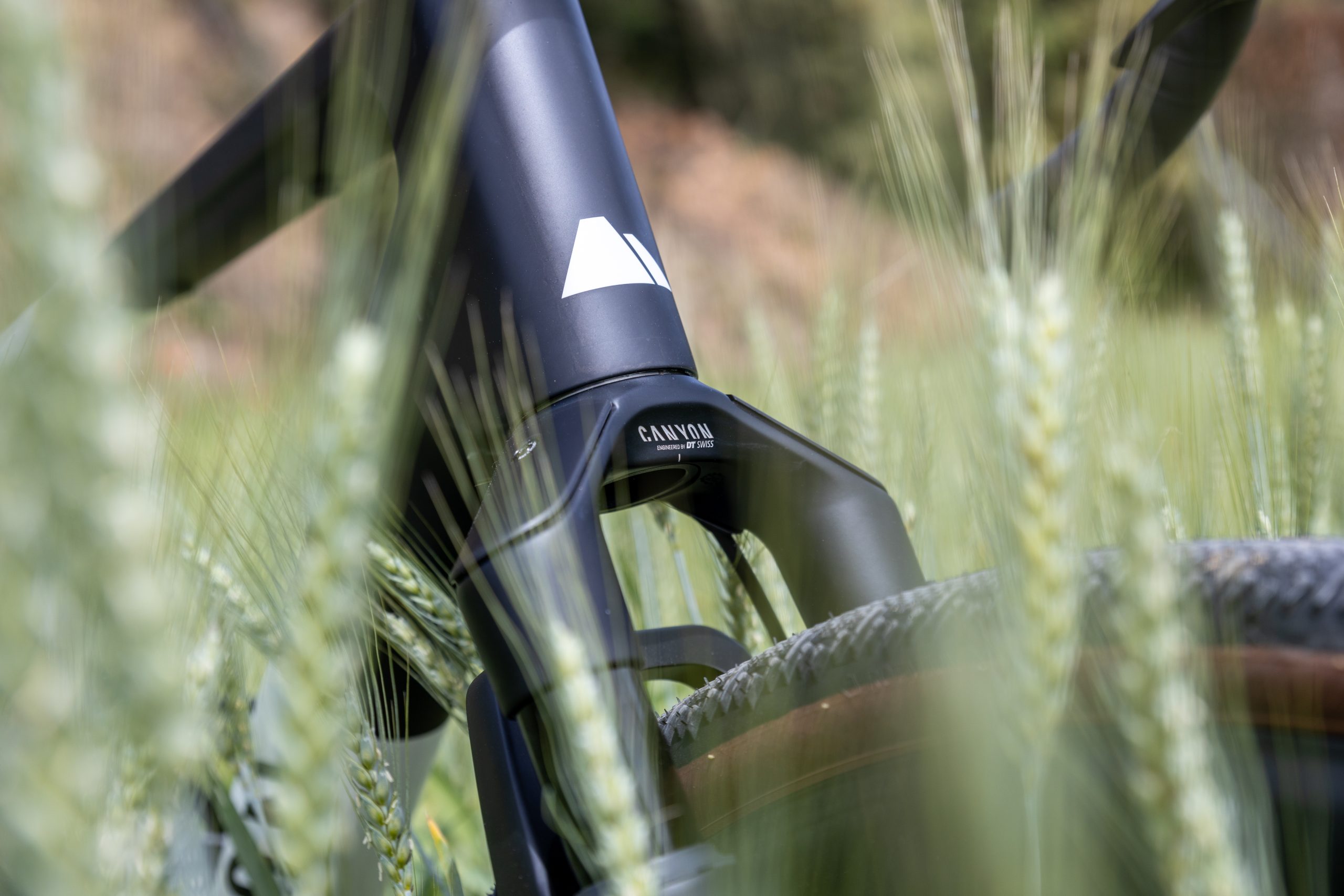
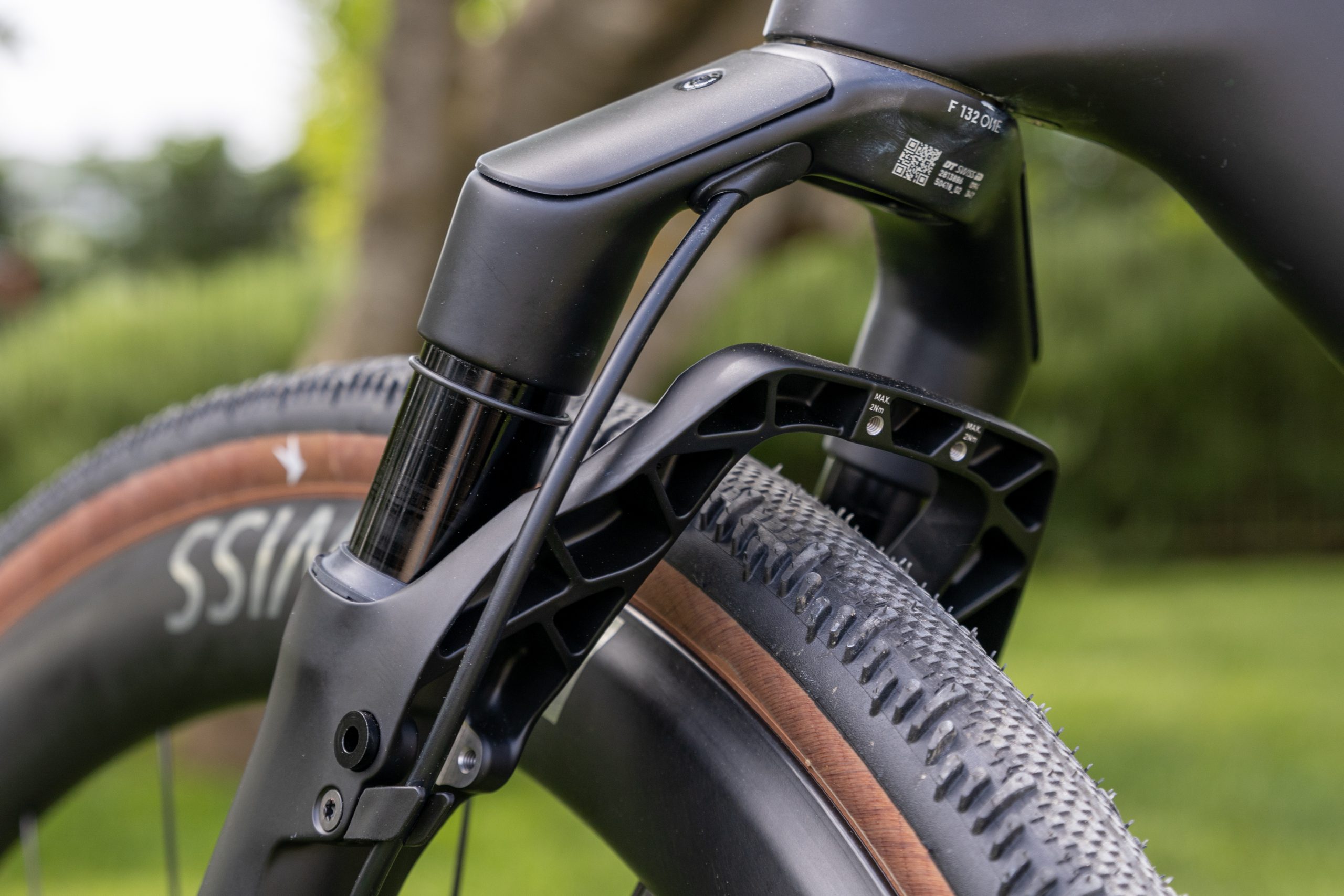
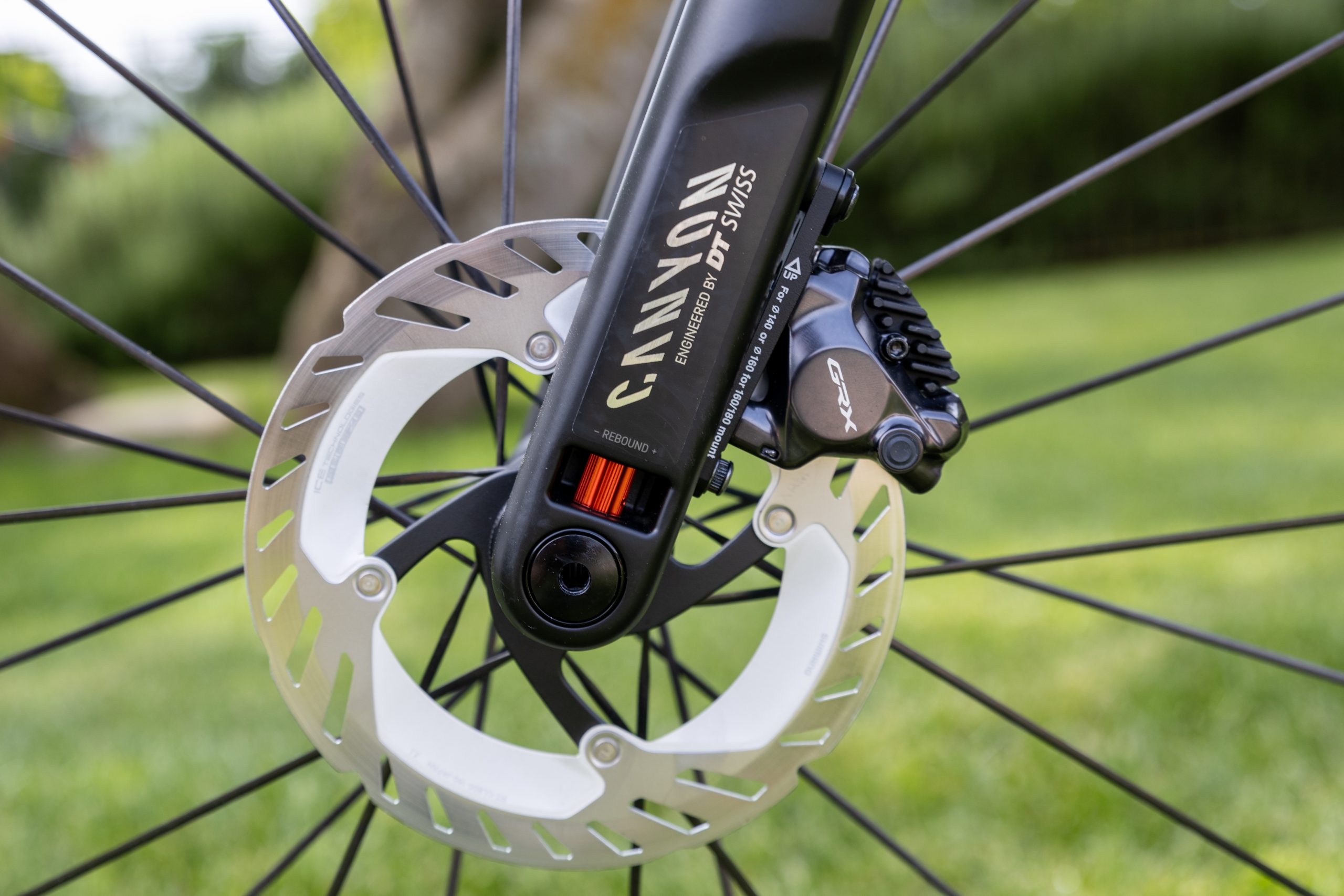
Canyon has partnered with DT Swiss to create a new gravel suspension fork. The F 132 boasts 40mm of travel with nine rebound settings, positive and negative chambers and cable-actuated lockout with a remote lever.
To test the new design, I rode the Traka 100km gravel race. In five hours of gravel goodness, I rode the F 132 over questionably technical rock gardens, down flowing descents and up steep climbs.
The thunderstorm count measured three, waist-deep rivers crossed stood at one, and my finishing position mattered not. Here’s what I learned.
Climbing with the DT Swiss F 132 – worth the weight?
A suspension fork adds little on such smooth gravel, but the F 132 impressed me up and down technical terrain. The Traka
Climbing with a gravel suspension fork when the lockout is open feels somewhat like a halfway house between a mountain bike and a rigid gravel bike.
On the MTB, such a gravel climb would be a simple act of pointing the bike up and pedalling.
On a rigid gravel bike, you have to pay attention to your line choice in an effort to maintain your momentum.
While the F 132 soaks up smaller roots and rocks, I still had to avoid some of the larger obstacles.
The fork’s 1,340g is quite a significant increase over the Grail’s standard 380g rigid fork, and it would be remiss of me to claim this weight wasn’t noticeable when climbing.
The fork is exclusive to Canyon until 2026. Liam Cahill / Our Media
Girona’s gravel climbs are particularly steep in places. If you’re aiming to get up them as quickly as possible, a suspension fork might cost you a little time.
But with the F 132 in the open setting, climbing wasn’t noticeably slower than with the fork locked out.
The latter certainly feels more solid under me, especially out of the saddle, but I’d be very interested to see comparative climbing times for locked vs open and the energy cost of both.
While we’re on the subject of weight, you can add even more to your front end via the mounts for bikepacking bags. This is a first, Canyon claims, for a gravel suspension fork and each side will take a 3kg load.
Descending –
This is the neatest brake hose routing I’ve seen on a suspension fork. Liam Cahill / Our Media
The F 132, and gravel suspension in general, starts making a lot of sense when descending.
I don’t claim to be the best off-road bike handler, but over Girona’s technical terrain with plenty of rocky sections, I felt fully in control.
While lightweight MTB forks often suffered fore/aft flutter, especially under braking, there was no sign of this on the DT Swiss fork. It’s impressive that the engineers have worked such good stiffness levels into the design.
I wasn’t suddenly shredding, but the confidence the fork gave allowed me to push my speeds and line choices beyond where I would usually ride. That is a tangible performance benefit, though more of this could have been exploited.
Two key parts of the fork’s build will influence this.
PlainGain is DT Swiss’ gravel adapted damping cartridge. The LineAir SL spring cartridge features a positive and negative air chamber.
There are 9 rebound clicks in the tool-free dial, allowing you to fettle while on a ride. Liam Cahill / Our Media
With my fork pumped up to 106psi and the rebound set 6 clicks from open, the F 132 fork delivered just what I wanted on fast, flowing descents and slower technical sections.
The front tyre felt well planted when I found bumpy ground mid-corner. With a rigid fork, I would probably have been knocked off line, which does nothing for my confidence.
When I found some bigger roots to hit, I felt the travel ramped up with a very nice progression and despite charging a little too quickly into some rocky sections, I never bottomed out.
In fact, the assured feeling that the F 132 brought improved my experience of the Traka 100 immeasurably.
The Grail CFR Rift is the only bike to benefit from the new F 132 suspension fork. Liam Cahill / Our Media
My Canyon Grail test bike was set up in consumer-ready spec with 40mm Schwalbe G One RS tyres. Anyone with a weather app knew that a slick tyre was not the choice for such wet conditions, and I had some rather scary moments when hitting slick mud.
The fork enabled me to reduce my tyre pressure just a little more to squeeze out every last drop of grip. That said, I would have loved a wider front tyre.
The fork is also officially rated for 50mm tyres, though I saw pro setups with a 57mm tyre squeezed between the stanchions.
Safe to say, I would have benefited greatly from a wider front tyre with a wet weather tread pattern.
Pushcontrol lockout – work to be done
Such awful conditions were a serious test for the system’s reliability, but ultimately, it is one that the Pushcontrol lever failed. Simon Gehr / Canyon Bicycles
The only fault that I could find with the fork came at the lockout, which simply didn’t function well as the ride progressed.
Granted, the Traka 100km race took place in some of the grottiest conditions imaginable. Torrential rain began in the opening 10 minutes, turning Girona’s gravel roads into a sandy sludge.
It didn’t take many kilometres for the Pushcontrol lever to feel vague. Five hours and two thunderstorms later, and the remote lever had ceased to work at all.
DT Swiss needs to find a away to make this design more resistant to adverse conditions. Liam Cahill / Our Media
Speaking to the other journalists on Canyon’s Traka press trip, this was a common issue which I hope DT Swiss addresses immediately.
While you may think me harsh for critiquing a component that failed in such conditions, gravel is often raced and ridden in adverse weather, so parts designed for the discipline must be up to scratch.
DT Swiss, however, may already have an answer. The brand suggested that integration into electronic shifters may be possible in the future. But until then, I hope a more robust mechanical system is developed.
Worth the price?
Felix and I will take two each please. The Traka
The DT Swiss F 132 is currently a Canyon-only product, though it will become a standalone DT Swiss product in 2026. It is also only available on the Grail CFR Rift at €8,999 (UK and USD pricing TBC). An equivalent rigid Grail CFR, with 2×12 GRX 825 Di2, costs £6,999 / $7,499 / €7,499.
This €1,500 price increase is significant, though I’m not sure how much it factors into the buying decisions of those with such deep pockets.
And given the proprietary design of Canyon’s steerer tube, you’ve no other option to add suspension to an existing Grail CFR.
The fork makes a clear improvement to my technical abilities on a gravel bike. That is worth a lot when it comes to the general enjoyment of a gravel ride.
I also like the sleek aesthetics, which look less jarring on a drop bar bike than most gravel suspension.
Cane Creek has done something similar with its Invert CS fork, but this still has an externally routed brake hose, which doesn’t look as good to my eye.
However, due to the current teething issues with the lockout lever, along with the significant price jump from the rigid Grail CFR, I would struggle to see myself buying the Grizl CFR Rift.
That said, I’ll be keeping a close eye on the 2026 aftermarket prices.
California’s population grew 0.6% in 2024, adding nearly 250,000 residents to reach 39.43 million, according to Census Bureau estimates. The growth came entirely from a rebound in international immigration, which surged to over 300,000 people after plunging to 44,000 during the pandemic’s worst year.
Without immigration, the state would have shrunk significantly as domestic migration remained negative. The H-1B visa program alone brought nearly 79,000 skilled workers to California in 2024. Since 2010, California has added 2.7 million immigrants, with half coming from Asia and slightly more than a third from Latin America. The immigration-dependent growth model puts California at particular risk from potential federal policy changes, as more than a quarter of its population is foreign-born — the highest share nationwide.
Nikon will raise prices on its cameras and imaging products in the United States starting June 23, citing President Donald Trump’s tariffs on Chinese-made goods as the reason for what the company calls a “necessary price adjustment.” The Japanese camera maker joins a growing list of photography equipment manufacturers implementing price increases, including Canon, Sony, Leica, and lens maker Sigma. Nikon told investors the tariffs could slash its profits by 10 billion yen ($70 million) in the upcoming fiscal year, though the company has not disclosed which specific products will see increases or by how much prices will rise.
The latest DietPi release (v9.13) focuses on improving security defaults, enhancing support for specific SBCs, and removing outdated software options. The update also brings kernel upgrades, interface refinements, and dozens of bug fixes for improved stability across platforms. DietPi: DietPi is a lightweight, Debian-based operating system optimized for single-board computers and embedded systems. It emphasizes […]