NVIDIA continues to reap the benefits of skyrocketing demand for its data center solutions, and it also achieved record first quarter revenue from its gaming division. Combined with mostly steady performance from its other segments, the AI chip juggernaut reported $44.1 billion in revenue for its first quarter of fiscal 2026, which represents
Here in Bend, Oregon, where the rapid currents of technological change are a constant topic of conversation, Microsoft finds itself at a critical juncture in the burgeoning AI revolution. The company, a titan of the computing age, faces a leadership challenge in navigating this transformative landscape, a situation that bears an intriguing, if somewhat concerning, resemblance to its early stumbles in the nascent days of the internet.
Deja Vu: The Ghost of Internet Explorer Past?
Decades ago, Microsoft was initially slow to recognize the seismic shift of the World Wide Web and found itself playing catch-up. It wasn’t until Bill Gates’ now-legendary “Internet Tidal Wave” memo that the entire company executed a swift and decisive pivot, ultimately leveraging its dominant position in operating systems to propel Internet Explorer to ubiquity. Today, AI promises a similar, if not greater, reshaping of technology, and Microsoft’s response feels… different. While its investment in and partnership with OpenAI has positioned it as a visible player, the internal mobilization and overarching strategic clarity seem less akin to a unified charge and more like a cautious dipping of toes.
The Complexity Conundrum: A Bigger Ship to Turn
In 2025, the reality is that Microsoft is a vastly more complex and sprawling entity than the Microsoft of the mid-1990s. Its tentacles reach into cloud computing (Azure, a clear leader), enterprise software, gaming (Xbox), and a vast array of productivity tools. This complexity, while a strength in many ways, can also breed inertia and siloed priorities. While Azure has undeniably embraced and integrated AI with impressive speed and efficacy, the same level of AI-driven transformation doesn’t yet feel pervasive across the company’s other core offerings.
The elephant in the digital living room is the potential for AI to fundamentally alter the very foundations upon which Microsoft built its empire. If truly intelligent AI assistants become the primary interface for interacting with technology, the traditional operating system paradigm, the very essence of Windows, could face an existential challenge. Similarly, while Microsoft Office now sprinkles in some AI-powered features, its core document-centric model might feel increasingly antiquated in a world where AI can generate, summarize and analyze information with unprecedented speed and natural language understanding. On the desktop, the rollout of Microsoft’s “AI PC” initiative, while promising, appears to be lagging in terms of truly compelling, AI-native applications (few use Co-Creator and Recall is still unreleased nearly a year after launch). The lack of a killer “Copilot +” app ecosystem to truly showcase the potential of these AI-infused machines raises questions about the company’s immediate vision for the AI-powered personal computing experience.
The Ive/OpenAI Wildcard: A Potential Eclipse?
Adding another layer of uncertainty is the recent merger of Jony Ive’s design powerhouse, IO, with OpenAI. Ive’s track record of creating paradigm-shifting hardware at Apple, when coupled with OpenAI’s cutting-edge AI research, presents a potentially seismic threat to the established tech order. Imagine a completely reimagined personal device, designed from the ground up with AI as its core, unburdened by the legacy constraints of the PC and smartphone eras. Such a device could potentially eclipse not just the existing PC market but even the smartphone, offering a truly seamless and intuitive AI-driven experience that renders traditional operating systems and application-based interactions obsolete. For Microsoft, whose dominance has long rested on these very pillars, this is a competitive wildcard that cannot be ignored.
The AI Power Rankings: Where Does Microsoft Truly Stand?
So, in this rapidly evolving landscape, where does Microsoft truly rank among the top AI companies? While definitive rankings are fluid and depend on the metrics used, a current assessment might look something like this (I’m excluding China at the moment due to the related tech restrictions, but they are moving fast on AI and could easily dominate this segment in a few short years):
OpenAI: As the creators of GPT models, it holds a significant lead in foundational AI research and public awareness.
Google (Google DeepMind): Possessing immense research capabilities, a vast data ecosystem and increasingly impressive multimodal models like Gemini, Google is a formidable AI force.
NVIDIA: The undisputed king of AI hardware; its GPUs power the vast majority of AI training and inference workloads.
Meta AI: With significant open-source contributions (like Llama) and a deep investment in AI research for its metaverse and social platforms, Meta is a major player.
Microsoft: While possessing significant cloud infrastructure (Azure AI) and a crucial partnership with OpenAI, Microsoft’s own foundational AI research and its pervasive integration of AI across its core product lines still feels like it’s playing catch-up in certain areas.
Wrapping Up:
While Microsoft is undoubtedly a major investor and enabler of AI, whether it is currently leading the charge in terms of fundamental AI innovation and its seamless integration into its core user experiences remains an open question. The ghost of Internet Explorer’s start serves as a cautionary tale. The complexity of Microsoft’s current empire demands a unified and decisive AI strategy that permeates every facet of the company, not just its cloud division. The potential disruption from the Ive/OpenAI alliance further underscores the urgency. Microsoft needs to ensure it’s riding the AI tidal wave, not merely caught in its undertow, lest it find itself once again playing catch-up in a future it helped to envision.
Tesla‘s robotaxi service has started testing in Austin without drivers in advance of its promised June launch, according to the company. “For the past several days, Tesla has been testing self-driving Model Y cars (no on in driver’s seat) on Austin public streets with no incidents,” CEO Elon Muskposted on X. “A month ahead of schedule.”
Earlier this year, Tesla promised to launch its robotaxi service sometime in June, using an internal fleet of 10 to 20 Model Ys operating in a limited, geo-fenced part of Austin with remote human assistance. The level of human assistance (teleoperation) isn’t clear, but there are fears based on Tesla’s recent history that human operators may be used to cover up any technical deficiencies in Tesla‘s self-driving vehicles.
A recent Bloomberg report was more specific about the launch date with paid customers, putting it at June 12. However, reports earlier this month indicated that Tesla had yet to even start testing without drivers as of mid-May, so it would only have a few weeks of testing before a commercial launch.
On top of that, the National Highway Traffic Safety Administration (NHTSA) is still in the dark about many details around the service. “The agency would like to gather additional information about Tesla‘s development of technologies for use in ‘robotaxi’ vehicles to understand how Tesla plans to evaluate its vehicles and driving automation technologies for use on public roads,” the NHTSA wrote in a May 8 letter to Tesla.
That information is key for public safety, because Tesla will only be using camera-based systems and not LiDAR and radar sensors like Waymo and other robotaxi operators. In a recent analyst call, Elon Musk said that the Model Y robotaxi vehicles would be the same as Model Y vehicles sold to the public. “There’s no change to it,” Musk said (before being contradicted by Tesla‘s Autopilot software director).
No other details were released, but the upcoming service is certainly of critical importance to the automaker given flagging Tesla EV sales, particularly in Europe. CEO Elon Musk famously staked the future of Tesla on robotaxis, reportedly even canceling a budget EV to focus on that service.
This article originally appeared on Engadget at https://www.engadget.com/transportation/evs/tesla-says-it-has-been-testing-driverless-model-ys-in-austin-for-several-days-123037251.html?src=rss
Data broker LexisNexis Risk Solutions (LNRS) has just disclosed a data breach that occurred at the end of last year, and while it doesn’t affect as many individuals as other recent high profile incidents—such as the DISA hack that included 3.3 million people’s information—it underscores the ever-present concerns with companies collecting (and profiting off of) user data.
As TechCrunch reports, LexisNexis Risk Solutions uses consumers’ personal and financial information to help corporations conduct risk assessments on prospective customers and detect fraudulent transactions. For example, LexisNexis sold data on vehicle driving habits collected by car manufacturers to insurance companies to set premiums, while law enforcement agencies pull data from LexisNexis about suspects. (LexisNexis Risk Solutions is a subsidiary of the same corporation that owns data analytics and research firm LexisNexis.)
The LexisNexis hack compromised data collected on 364,333 individuals, and there’s a potential class action lawsuit brewing over the incident. Here’s what you need to know.
What happened with LexisNexis?
According to the company’s filing with the Maine attorney general’s office, a data breach took place on December 25, 2024 but wasn’t discovered until May 14, 2025. A third-party platform used by LexisNexis was hacked, compromising information that may include the following:
Name
Phone number
Mailing address
Email address
Social Security number
Driver’s license number
Date of birth
In a letter to affected individuals, LexisNexis states that no financial or credit card information was included in the breach, nor has any data been obviously misused (so far). Few additional details about the incident have been disclosed, other than that none of the company’s own networks or systems were hacked.
What consumers need to do
LexisNexis sent a notice dated May 24 to consumers whose data may have been compromised, so if you receive a letter from LexisNexis Risk Solutions, don’t throw it out. The company is offering 24 months of identity protection and credit monitoring services through Experian IdentityWorks, and you must enroll online by August 31, 2025 using the activation code provided in your notice.
Affected individuals can also indicate their interest in joining a class action lawsuit against LexisNexis through Oklahoma-based firm Abington Cole + Ellery. If you want to volunteer to be considered as a class representative, fill out the online form with your name, contact information, and connection to the breach.
Finally, even if you don’t plan to join the class action suit, you should keep an eye out for signs of identity theft. Check your credit report—which you can request for free on a weekly basis—and monitor your accounts for any unauthorized activity. You can also freeze your credit, place a fraud alert, and take other steps to secure your Social Security number so no one can open accounts or take out debt in your name.
The Linux Foundation, in collaboration with OpenSSF and Linux Foundation Education, has released the Cybersecurity Skills Framework, a global reference guide that helps organizations identify and address critical cybersecurity competencies across a broad range of IT job families.
While OpenH264 support coming to Fedora was widely celebrated as part of offering a better codec experience on Fedora Linux, an increasing number of Fedora users have grown frustrated with the OpenH264 packaging in that it’s been out-of-date for several months with a high severity security vulnerability…
Mark Zuckerberg told the company’s shareholders that Meta’s artificial intelligence now has 1 billion monthly active users across all its apps, according to CNBC. He also said during the annual shareholders meeting that the company will be focusing on “deepening the experience and making Meta AI the leading personal AI with an emphasis on personalization, voice conversations and entertainment” this year. Meta will keep growing the product until opportunities to earn money from it appear, such as inserting paid recommendations and offering a subscription service for users who want more computing power.
Shortly after Meta launched a standalone app for its generative artificial intelligence this April, Zuckerberg already talked about how it could one day show ads and product recommendations. He also hinted at introducing subscriptions for a more “premium” version of the assistant.
All of Meta’s apps, namely Facebook, Instagram, WhatsApp and Messenger, have the assistant baked in. It’s also available on the Ray-Ban Meta glasses and the company’s Quest headsets. It’s very easy to accidentally interact with it if you’re using any of the company’s applications, and as NDTV has noted, Zuckerberg didn’t say whether those monthly active users specifically sought out the AI for use and engaged with it in meaningful ways. But Susan Li, the company’s chief financial officer, reportedly said that AI use has been growing fastest on WhatsApp, where users can chat with it, ask it questions and use it to generate images.
This article originally appeared on Engadget at https://www.engadget.com/ai/meta-ai-already-has-1-billion-active-users-120023875.html?src=rss
Easy, medium, and the sledgehammer approach – or any combination you fancyhands on If you’re thinking about switching to Linux but there are a few Windows apps you just can’t do without, you do have options… and some of them are free.…
From smart devices to workplace tools, AI is becoming part of everyday life and a major part of how people are thinking about the future — raising big questions about access, skills, and readiness.
As governments around the world create AI strategies for the decade ahead, many are seeing an urgent need to address the large gap between how AI tools are already impacting jobs and people’s lives, and making sure young people have the chance to gain the skills and knowledge to keep up with this rapid pace of technological change. This gap is larger still when it comes to opportunities for educationally underserved communities.
That’s why we’re excited to share how Experience AI, our AI literacy programme, is helping organisations around the world create these much-needed opportunities for young people.
The value of a global network
Experience AI was co-developed in 2022 by us and industry experts at Google DeepMind with a clear mission: to equip teachers with free, accessible, easy-to-use classroom resources that build AI literacy from the ground up. The programme offers a suite of materials to help students understand real-world applications of AI, the basics of machine learning, and the ethical considerations around these technologies.
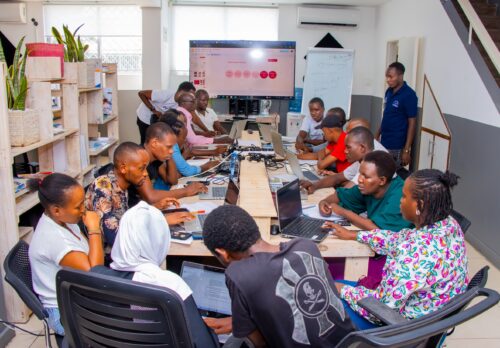
In 2023, we started building an international Experience AI network by collaborating with a group of our existing educational partners. We saw a huge amount of interest and received very positive feedback, and through our partnerships we reached an estimated one million young people. In late 2024, with support from Google.org, we tripled the size of our Experience AI partner network to 21, with new organisations joining from across Europe, the Middle East, and Africa. In this way, we aim to reach an additional 2.3 million young people by December 2026, helping them to gain the knowledge and skills to confidently engage with AI in an ever-changing world.
Each partner in the Experience AI network is a unique educational organisation looking to create lasting social change. Through their local knowledge and networks, we can present Experience AI to educators and students in a way that is engaging and relevant for local communities.
Partners help us to adapt and translate our resources, all while making sure that the core pedagogy and design principles of Experience AI are preserved. Just as importantly, these organisations train thousands of teachers on how to use the materials, providing educators with free support. With their work, they reach communities that otherwise may have never had the opportunity to learn about AI.
We asked some of our partners to share their insights on the impact Experience AI is having on the teachers and young people in their communities.
Building communities
The Latvian Safer Internet Centre (LSIC), an initiative of our partner, the Latvian Internet Association (LIA), is dedicated to helping young people protect themselves online, and to preparing them for a fast-changing digital economy. As an Experience AI partner, they aim to train 850 teachers and support 43,000 students to build a strong foundation in AI literacy through the programme.
“We hope to spark a cultural shift in how AI is […] taught in Latvian schools. Our goal is for AI literacy to become a natural part of digital competence education, not an optional extra.”
Based in Riga, the team is travelling to 18 different regions across Latvia to bring in-person professional development to teachers, including those in rural communities far from major cities. By meeting teachers where they are, the LIA are creating invaluable networks for learning and support between communities. Through hands-on training, they are also supporting teachers to bring Experience AI into their own classroom, creating examples which are suited for their learners.
“We chose an in-person training model because it fosters a more collaborative and engaging environment, especially for teachers who are new to AI. Many educators, particularly those who are less confident with digital tools, benefit from direct interaction, real-time discussions, and the chance to ask questions in a supportive setting.”
As an Experience AI partner, the Latvian Internet Association is not just delivering content but working to strengthen digital competency across the country and ensure that no teacher or student is left behind in Latvia’s AI journey.
One teacher shares: “The classroom training was truly valuable: it gave us the chance to exchange ideas and reflect on our diverse experiences. Hearing different perspectives was enriching, and I’m glad we’re shaping the future of our schools together.”
“AI is for everyone”
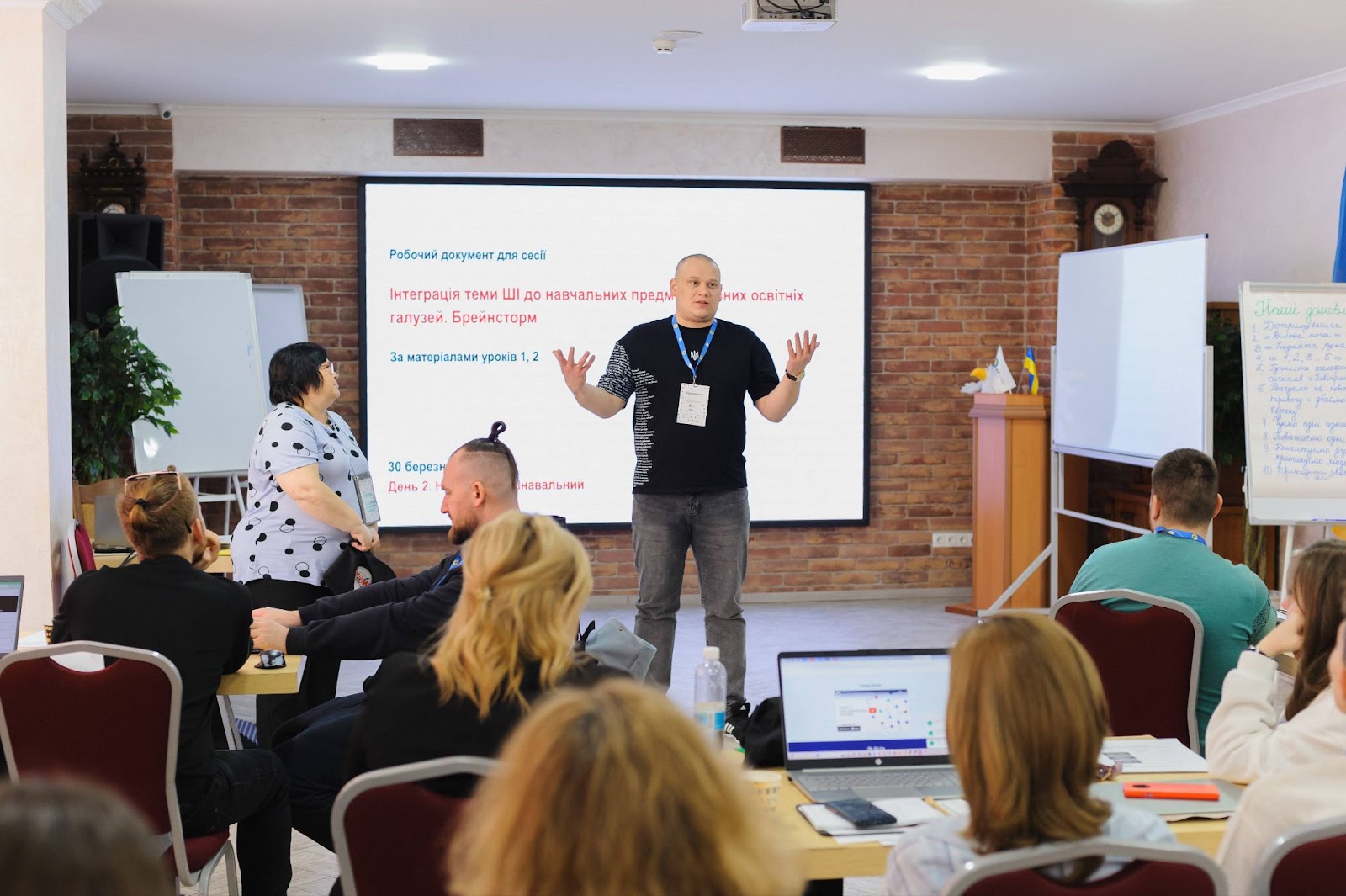
EdCamp Ukraine’s mission is to unite educators and help them to grow. Operating from their main base in Kharkiv, near the Eastern border and the frontline of the ongoing war in Ukraine, they see AI as both a tool for new technological breakthroughs and as something that can help build a fairer, more efficient, and resilient society.
“We firmly believe AI should not only be an object of study — it must become a tool for amplifying human potential. AI should also not be a privilege, but a resource for everyone. We believe the Experience AI programme can truly transform education from the bottom up.”
Within their community of 50,000 teachers, EdCamp Ukraine ensures that every educator, regardless of their living conditions or where they work, can access high-quality, relevant, and accessible support. For the organisation, the ongoing situation in Ukraine means being flexible with planning, preparing for a range of different outcomes, and being ready to pivot delivery to different locations or to an online setting when needed. These same considerations apply to EdCamp Ukraine’s teacher community, who need to be ready to adapt their lessons for any scenario.
“Recognising these war-related challenges helps us see the bigger picture and always have contingency plans in place. We think ahead and develop flexible scenarios.”
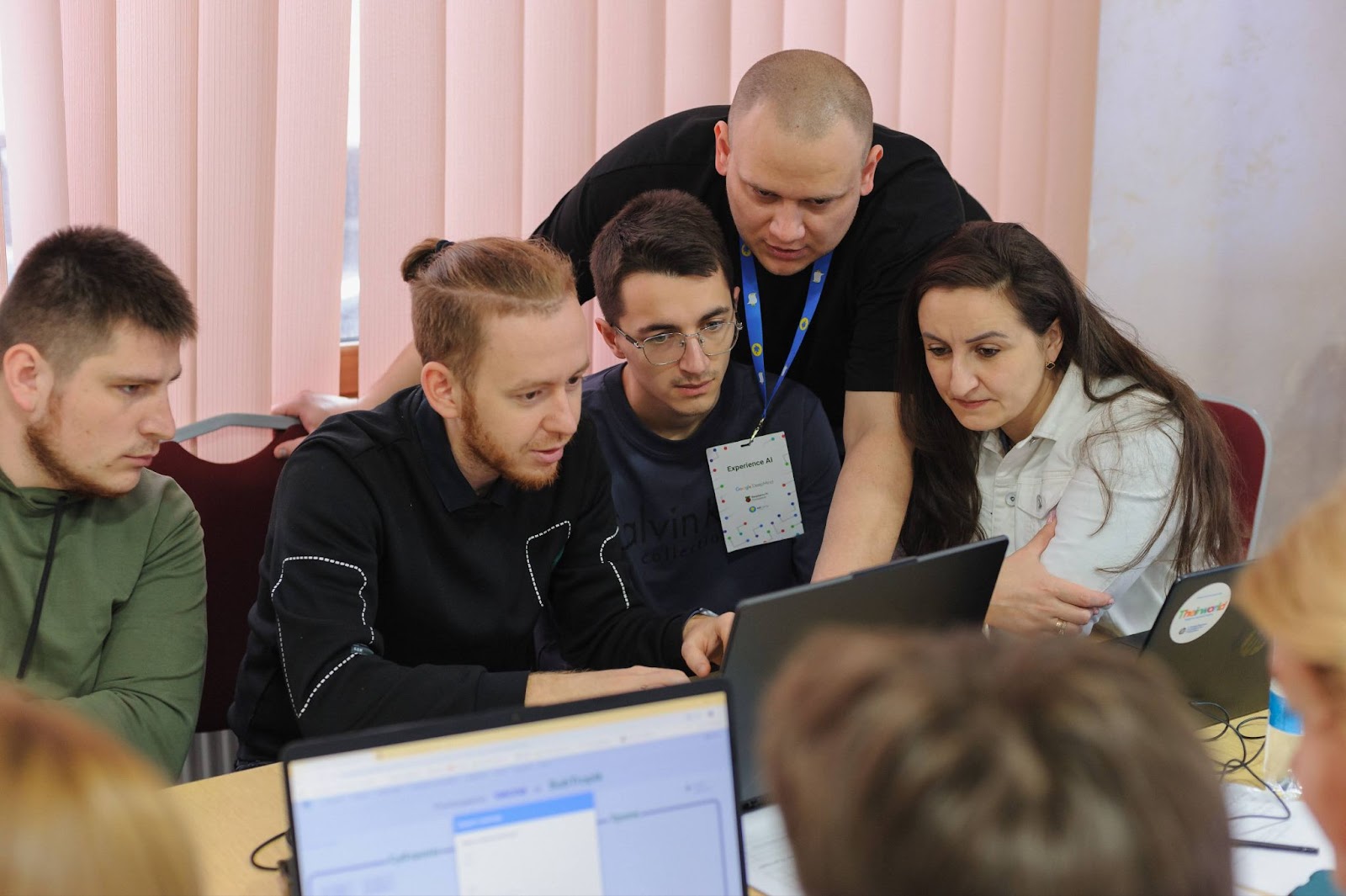
This year, the team piloted Experience AI through their community of trainers, who, when they’re not training, are busy teaching in the classroom. Teacher Yuliia shared how her students valued the opportunity to be creators, rather than just users of technology:
“One student, who is an active AI user, kept silent during the lesson. I thought he wasn’t interested, but during the reflection he shared a lot of positive feedback and expressed his gratitude. Other students said it was important that they weren’t just told about AI — they were using it, creating images, and working with apps.”
EdCamp Ukraine plans to roll out training for Ukrainian teachers this autumn, reaching 2,000 teachers and 40,000 young people by the end of next year.
More countries, more classrooms
Two new partners in Nigeria are about to join the Experience AI network, and there are many more organisations in more countries coming soon. As our partner network continues to grow, we are excited to reach more communities and give more young people around the world the chance to build AI literacy skills and knowledge.
You can find out more about Experience AI on the website. If your organisation is interested in partnering with us to deliver Experience AI, please register your interest and we will let you know about opportunities to work with us.
There is a lot of exciting file-system changes landing for the Linux 6.16 kernel… EXT4 brings a “really stupendous performance” change, Btrfs also brings some performance improvements, XFS landed atomic writes, and Bcachefs continues stabilizing. For the EROFS read-only file-system its changes have been merged and includes support for Intel QAT acceleration…
Canonical is sticking to Ubuntu Linux releases every six months and a Long Term Support (LTS) release every two years, but a new change to their development process is that they are now working to release monthly Ubuntu snapshots of their testing stream…
Intel engineers have added yet more PCI graphics device IDs for Battlemage to their open-source driver code within Mesa for Iris OpenGL and ANV Vulkan driver support…
With the Error Detection And Correction (EDAC) subsystem updates sent out this week for the Linux 6.16 kernel there is support for a number of newer Intel hardware platforms…
The world is facing a new form of climate denial — not the dismissal of climate science, but a concerted attack on the idea that the economy can be reorganised to fight the crisis, the president of global climate talks has warned. The Guardian reports: Andre Correa do Lago, the veteran Brazilian diplomat who will direct this year’s UN summit, Cop30, believes his biggest job will be to counter the attempt from some vested interests to prevent climate policies aimed at shifting the global economy to a low-carbon footing.
“There is a new kind of opposition to climate action. We are facing a discredit of climate policies. I don’t think we are facing climate denial,” he said, referring to the increasingly desperate attempts to pretend there is no consensus on climate science that have plagued climate action for the past 30 years. “It’s not a scientific denial, it’s an economic denial.” This economic denial could be just as dangerous and cause as much delay as repeated attempts to deny climate science in previous years, he warned in an exclusive interview with the Guardian.
Today, the AlmaLinux OS Foundation announced the release and general availability of AlmaLinux OS 9.6 (codename Sage Margay) as the latest stable version of this free Red Hat Enterprise Linux (RHEL) fork.
Open source in-process OLAP system launches rival to Iceberg and Delta Lake table format, and moreWith a combined market value of around $150 billion, Snowflake and Databricks have divergent visions on how to get customers’ analytics and machine learning tools to their data, which is often spread across different systems.…
Astronomers have discovered a mysterious cosmic object, ASKAP J1832-0911, that emits both radio waves and X-rays in precise 44-minute cycles, making it unlike anything observed before. Space.com reports: This is the first time an object like this, a so-called “long-period transient” or “LPT,” has been seen in high-energy X-ray light as well as low-energy radio wave light. The team behind this discovery hopes the finding could help reveal what these flashing objects actually are and how they launch their mystery signals. However, not only is there no explanation for how the signals from LPTs are generated yet, but astronomers also don’t know why these signals “switch on” and “switch off” at long, regular and unusual intervals. “This object is unlike anything we have seen before,” team leader and Curtin University researcher Zieng (Andy) Wang said in a statement. […]
The team believes the true nature of ASKAP J1832-0911 is a dead star, they just don’t quite know what form that star takes. A highly magnetic neutron star, or “magnetar,” is one option, and a a white dwarf — the kind of stellar remnant the sun will leave behind when it dies in over 5 billion years — is another. “ASKAP J1831- 0911 could be a magnetar, the core of a dead star with powerful magnetic fields, or it could be a pair of stars in a binary system where one of the two is a highly magnetized white dwarf, a low-mass star at the end of its evolution,” Wang said. “However, even those theories do not fully explain what we are observing. “This discovery could indicate a new type of physics or new models of stellar evolution.” The research has been published in the journal Nature.
DJI’s latest firmware update brings 1,000W of peak power to the Auto, Trail and Turbo modes of its Avinox motor, plus boost mode adjustments and other customisations.
The headline change was the 150W increase in peak power in Turbo mode, enabling the Avinox to unleash its full 1000W, which had previously been restricted to its 30-second Boost feature.
Now, this official firmware update takes it one step further, bringing the motor’s full power to even more assistance modes.
The 17.6% increase in power makes the most powerful motor on the market even more powerful. While users can adjust performance limits, few riders will say no to the extra watts.
Customisable Boost and Quick Start mode
As well as a customisable Boost mode, the update has more display options too. Andy Lloyd / Our Media
Another feature trialled in April’s update that’s now here for good is the extended Boost mode.
Boost mode – which was the only way to access the Avinox’s 1000W max power before the April update – can now be configured to kick in for 10 to 60 seconds/
A new feature in this firmware update is Quick Start.
DJI claims the motor will now be quicker to respond to pedalling inputs, starting up faster and delivering power sooner.
How this performs on the trails remains to be tested, but it could make the Avinox even better on technical climbs where responsive and timely motor performance is crucial.
SmoothShift for SRAM X0 Eagle Transmission
If you’re lucky enough to run SRAM’s X0 Eagle Transmission on your Avinox-equipped bike, you’ll now be able to shift while coasting with the new SmoothShift feature. Andy Lloyd / Our Media
The new Avinox firmware also includes a bonus feature for riders with SRAM X0 Eagle Transmission drivetrains.
If your bike runs the wireless drivetrain, you can now shift gears while coasting using your AXS shifter.
When a gear shift is detected, the motor kicks in, engaging the drivetrain and shifting without the rider needing to spin the cranks. DJI claims motor torque will be reduced during coasting shifts to prevent excessive wear and tear to the chain.