Data Center Developer Offers $10,000 Checks To Nearby Households

An anonymous reader quotes a report from Tom’s Hardware: NorthPoint Development wants to build a data center on 1,300 acres in the Pocono foothills, near Hazle Township, Pennsylvania. As well as seeking to charm the local government with various funding packages, it has proposed paying checks of $10,000 per household. Despite the Pennsylvania town’s median income of $60,000, the offer isn’t being warmly welcomed by locals, reports the Wall Street Journal. Those interviewed were widely against the data center development plans and cited several reasons for being averse to accepting the payout. The major concerns regarded potential impacts on property values, the specter of noise pollution, and a distrust of both the AI moguls and local government representatives.

Offer letters began to be received by Hazle Township back in June. The WSJ recently talked to several residents about NorthPoint’s $10,000 offer. While some say the $10,000 would be handy, it couldn’t find many residents who were “eager to welcome the data center for the payout,” in the journal’s words. […] Traditionally, developers have offered towns and cities packages worth tens of millions, including funding for local services. But direct cash payments to residents represent a new phase of their charm offensive, the WSJ indicates. Perhaps the idea for the direct payments to residents came after “a raucous public meeting last year, where angry locals asked what they had to gain by supporting the data center,” ponders the source.

The locals won’t just get the direct payout, though. Other funds up to $120 million over the next 15 years have been dangled like a carrot for community and local services investments — improved schools, emergency services, and so on. Meanwhile, Hazle Township’s government already rejected the data center project on zoning grounds last year, and it has enacted a temporary moratorium on data center construction. Finally, the $10,000 offer to households is simply not enough in many interviewed folks’ opinions. Residents could feel insulted by it, regarding the offer as a bribe, concludes the WSJ report.


Read more of this story at Slashdot.

Trump cuts fuel economy standards back to 2014 levels

The federal government’s war on fuel efficiency claimed another victim today. The Department of Transportation released a new rule for the country’s Corporate Average Fuel Economy standards, which, as expected, discourage the very idea of economical vehicles. Among the changes is a rollback to fuel economy numbers not seen in more than a decade, below even the low standards implemented in 2020, the last time President Trump was in power. The new goal is just 34.9 mpg by model year 2031.

This is nothing if not expected. When Sean Duffy was installed as Transportation secretary last January, he immediately announced that any fuel efficiency standards put in place under the Biden administration were dead and buried. Those rules had a slower ramp up than some might have liked but would have required automakers to sell many more electric vehicles and plug-in hybrids.

Now, we may have the possibility of some OEMs dropping their EVs and PHEVs entirely. The notice of final rulemaking criticizes the idea of emissions credits and blames them for automakers not investing in cleaner engine technology, and from model year 2028, such credits are a thing of the past. And plug-in vehicles will now no longer be included in an automaker’s fleet average; under previous rules an EV or PHEV could have a CAFE rating of hundreds of mpg.

Read full article

Comments

To keep drug prices high, pharma has been piling up the patents

The cost of healthcare in general is a debilitating, pre-existing condition for Americans. But the high prices of prescription drugs usually stand out as a pain point. While there are many insidious reasons why Americans pay more—often far more—for their medicines than people in peer countries, exploitation of the US patent system is an obvious one.

A study published Monday in JAMA highlights just how much patent exploitation has grown since 1990. In that time, researchers found that the number of patents on small-molecule drugs has more than tripled, going from an average of 2.1 patents per drug approved in 1990 to 6.9 for those approved in 2019.

Most of the growth was in “nonprimary” patents—patents that generally aren’t related to a drug’s active ingredient, but are instead for things like minor tweaks to a drug’s nonactive ingredients, updates to the way the drug is used, or the design of specialty delivery devices, such as auto-injectors. Together, those extra patents on an individual drug can create what’s called a “patent thicket,” which delays the release of affordable generics on the market, keeping drug prices higher for longer without actual clinical advancements.

Read full article

Comments

To keep drug prices high, pharma has been piling up the patents

The cost of healthcare in general is a debilitating, pre-existing condition for Americans. But the high prices of prescription drugs usually stand out as a pain point. While there are many insidious reasons why Americans pay more—often far more—for their medicines than people in peer countries, exploitation of the US patent system is an obvious one.

A study published Monday in JAMA highlights just how much patent exploitation has grown since 1990. In that time, researchers found that the number of patents on small-molecule drugs has more than tripled, going from an average of 2.1 patents per drug approved in 1990 to 6.9 for those approved in 2019.

Most of the growth was in “nonprimary” patents—patents that generally aren’t related to a drug’s active ingredient, but are instead for things like minor tweaks to a drug’s nonactive ingredients, updates to the way the drug is used, or the design of specialty delivery devices, such as auto-injectors. Together, those extra patents on an individual drug can create what’s called a “patent thicket,” which delays the release of affordable generics on the market, keeping drug prices higher for longer without actual clinical advancements.

Read full article

Comments

Kalshi loses again as judges rule prediction markets must obey gambling laws

Another federal appeals court has ruled that states can enforce their gambling laws against the prediction market Kalshi, which asserts that it can only be regulated by the US government. On Friday, a three-judge panel in the US Court of Appeals for the Sixth Circuit ruled unanimously against Kalshi and in favor of Ohio and Tennessee.

While the US Commodity Futures Trading Commission has exclusive jurisdiction over “swaps,” the judges found that sports wagers offered on Kalshi do not meet the legal definition of swaps. Moreover, the court found that even if Kalshi wagers were swaps, the regulatory scheme created by Congress would not prohibit states from enforcing gambling laws on prediction markets.

“We hold that Kalshi has not shown that its sports-event contracts satisfy the statutory definition of a ‘swap’ so as to fall within the scope of the CFTC’s ‘exclusive jurisdiction,'” said the ruling written by Judge Julia Smith Gibbons, a George W. Bush appointee. “And, even assuming that Kalshi’s sports-event contracts are swaps, we alternatively hold that the CEA [Commodity Exchange Act] neither expressly nor impliedly preempts Ohio’s or Tennessee’s gambling laws.”

Read full article

Comments

Trump cuts fuel economy standards back to 2014 levels

The federal government’s war on fuel efficiency claimed another victim today. The Department of Transportation released a new rule for the country’s Corporate Average Fuel Economy standards, which, as expected, discourage the very idea of economical vehicles. Among the changes is a rollback to fuel economy numbers not seen in more than a decade, below even the low standards implemented in 2020, the last time President Trump was in power. The new goal is just 34.9 mpg by model year 2031.

This is nothing if not expected. When Sean Duffy was installed as Transportation secretary last January, he immediately announced that any fuel efficiency standards put in place under the Biden administration were dead and buried. Those rules had a slower ramp up than some might have liked but would have required automakers to sell many more electric vehicles and plug-in hybrids.

Now, we may have the possibility of some OEMs dropping their EVs and PHEVs entirely. The notice of final rulemaking criticizes the idea of emissions credits and blames them for automakers not investing in cleaner engine technology, and from model year 2028, such credits are a thing of the past. And plug-in vehicles will now no longer be included in an automaker’s fleet average; under previous rules an EV or PHEV could have a CAFE rating of hundreds of mpg.

Read full article

Comments

Trump cuts fuel economy standards back to 2014 levels

The federal government’s war on fuel efficiency claimed another victim today. The Department of Transportation released a new rule for the country’s Corporate Average Fuel Economy standards, which, as expected, discourage the very idea of economical vehicles. Among the changes is a rollback to fuel economy numbers not seen in more than a decade, below even the low standards implemented in 2020, the last time President Trump was in power. The new goal is just 34.9 mpg by model year 2031.

This is nothing if not expected. When Sean Duffy was installed as Transportation secretary last January, he immediately announced that any fuel efficiency standards put in place under the Biden administration were dead and buried. Those rules had a slower ramp up than some might have liked but would have required automakers to sell many more electric vehicles and plug-in hybrids.

Now, we may have the possibility of some OEMs dropping their EVs and PHEVs entirely. The notice of final rulemaking criticizes the idea of emissions credits and blames them for automakers not investing in cleaner engine technology, and from model year 2028, such credits are a thing of the past. And plug-in vehicles will now no longer be included in an automaker’s fleet average; under previous rules an EV or PHEV could have a CAFE rating of hundreds of mpg.

Read full article

Comments

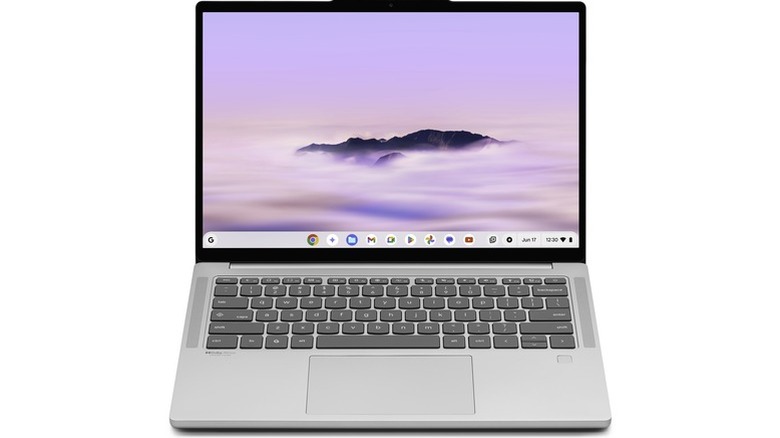
Google seemingly confirms plans to kill ChromeOS in 2034

We are mere days away from the launch of Googlebooks, the long-awaited Android laptops that Google hopes will compete with macOS and Windows. But what of Chromebooks? There have been hints that Google plans to sunset its web-first ChromeOS platform, and a new support page lays out some of the specifics.

The support page, spotted by 9to5Google, aims to explain the role of Googlebooks to Chrome Enterprise and Education customers. The page starts off by noting that Googlebook OS, which is Android even if Google doesn’t like to say that, will offer an enhanced experience with deeper system capabilities and lots of AI.

Like Chromebooks, Googlebooks are guaranteed 10 years of software support. However, the latest Chromebook models won’t get that in the traditional way. Google’s support page says that it plans to continue ChromeOS support through “mid-2034,” so there are already devices with support windows beyond that.

Read full article

Comments

Kalshi loses again as judges rule prediction markets must obey gambling laws

Another federal appeals court has ruled that states can enforce their gambling laws against the prediction market Kalshi, which asserts that it can only be regulated by the US government. On Friday, a three-judge panel in the US Court of Appeals for the Sixth Circuit ruled unanimously against Kalshi and in favor of Ohio and Tennessee.

While the US Commodity Futures Trading Commission has exclusive jurisdiction over “swaps,” the judges found that sports wagers offered on Kalshi do not meet the legal definition of swaps. Moreover, the court found that even if Kalshi wagers were swaps, the regulatory scheme created by Congress would not prohibit states from enforcing gambling laws on prediction markets.

“We hold that Kalshi has not shown that its sports-event contracts satisfy the statutory definition of a ‘swap’ so as to fall within the scope of the CFTC’s ‘exclusive jurisdiction,'” said the ruling written by Judge Julia Smith Gibbons, a George W. Bush appointee. “And, even assuming that Kalshi’s sports-event contracts are swaps, we alternatively hold that the CEA [Commodity Exchange Act] neither expressly nor impliedly preempts Ohio’s or Tennessee’s gambling laws.”

Read full article

Comments

Kalshi loses again as judges rule prediction markets must obey gambling laws

Another federal appeals court has ruled that states can enforce their gambling laws against the prediction market Kalshi, which asserts that it can only be regulated by the US government. On Friday, a three-judge panel in the US Court of Appeals for the Sixth Circuit ruled unanimously against Kalshi and in favor of Ohio and Tennessee.

While the US Commodity Futures Trading Commission has exclusive jurisdiction over “swaps,” the judges found that sports wagers offered on Kalshi do not meet the legal definition of swaps. Moreover, the court found that even if Kalshi wagers were swaps, the regulatory scheme created by Congress would not prohibit states from enforcing gambling laws on prediction markets.

“We hold that Kalshi has not shown that its sports-event contracts satisfy the statutory definition of a ‘swap’ so as to fall within the scope of the CFTC’s ‘exclusive jurisdiction,'” said the ruling written by Judge Julia Smith Gibbons, a George W. Bush appointee. “And, even assuming that Kalshi’s sports-event contracts are swaps, we alternatively hold that the CEA [Commodity Exchange Act] neither expressly nor impliedly preempts Ohio’s or Tennessee’s gambling laws.”

Read full article

Comments

Scientists solve 1840s space weather mystery

The infamous Carrington Event of 1859 has long been considered the first extreme space weather event, but there have been reports of minor disturbances to telegraph equipment during geomagnetic storms since the late 1840s. In 2013, scholars discovered an anonymous report published in 1871 in Nature describing how a “very intense magnetic disturbance” disrupted rail travel in Exeter on the southern coast of England in October 1841. If accurate, this would be the earliest such account. However, according to a paper published in the journal Space Weather, that 1841 date is most likely a typo, with the real railway disruption occurring several years later.

“Space weather is often discussed as a modern challenge because of our dependence on technologies such as satellites, communications systems and electricity networks,” said co-author Jim Wild of Lancaster University. “What this study shows is that society has been experiencing the effects of space weather on technology for almost as long as electrical technologies have existed. The Exeter train delay is a fascinating story because it sits right at the point where emerging technologies first began to encounter the realities of the space environment.”

The Carrington Event remains the most powerful geomagnetic storm in the scientific record, with strong auroral displays occurring all over the world, causing sparking and even a few fires in telegraph stations. Some of the auroras were so bright that people reported being able to read the newspaper by their light. The telegraph was a relatively new technology at the time, having first emerged in the 1830s, and the geomagnetically induced current—from a likely coronal mass injection from the Sun—knocked out telegraph systems. Some operators found they were still able to transmit and receive messages even after disconnecting the power supply, relying just on the powerful auroral current.

Read full article

Comments

Google seemingly confirms plans to kill ChromeOS in 2034

We are mere days away from the launch of Googlebooks, the long-awaited Android laptops that Google hopes will compete with macOS and Windows. But what of Chromebooks? There have been hints that Google plans to sunset its web-first ChromeOS platform, and a new support page lays out some of the specifics.

The support page, spotted by 9to5Google, aims to explain the role of Googlebooks to Chrome Enterprise and Education customers. The page starts off by noting that Googlebook OS, which is Android even if Google doesn’t like to say that, will offer an enhanced experience with deeper system capabilities and lots of AI.

Like Chromebooks, Googlebooks are guaranteed 10 years of software support. However, the latest Chromebook models won’t get that in the traditional way. Google’s support page says that it plans to continue ChromeOS support through “mid-2034,” so there are already devices with support windows beyond that.

Read full article

Comments

Google seemingly confirms plans to kill ChromeOS in 2034

We are mere days away from the launch of Googlebooks, the long-awaited Android laptops that Google hopes will compete with macOS and Windows. But what of Chromebooks? There have been hints that Google plans to sunset its web-first ChromeOS platform, and a new support page lays out some of the specifics.

The support page, spotted by 9to5Google, aims to explain the role of Googlebooks to Chrome Enterprise and Education customers. The page starts off by noting that Googlebook OS, which is Android even if Google doesn’t like to say that, will offer an enhanced experience with deeper system capabilities and lots of AI.

Like Chromebooks, Googlebooks are guaranteed 10 years of software support. However, the latest Chromebook models won’t get that in the traditional way. Google’s support page says that it plans to continue ChromeOS support through “mid-2034,” so there are already devices with support windows beyond that.

Read full article

Comments

Scientists solve 1840s space weather mystery

The infamous Carrington Event of 1859 has long been considered the first extreme space weather event, but there have been reports of minor disturbances to telegraph equipment during geomagnetic storms since the late 1840s. In 2013, scholars discovered an anonymous report published in 1871 in Nature describing how a “very intense magnetic disturbance” disrupted rail travel in Exeter on the southern coast of England in October 1841. If accurate, this would be the earliest such account. However, according to a paper published in the journal Space Weather, that 1841 date is most likely a typo, with the real railway disruption occurring several years later.

“Space weather is often discussed as a modern challenge because of our dependence on technologies such as satellites, communications systems and electricity networks,” said co-author Jim Wild of Lancaster University. “What this study shows is that society has been experiencing the effects of space weather on technology for almost as long as electrical technologies have existed. The Exeter train delay is a fascinating story because it sits right at the point where emerging technologies first began to encounter the realities of the space environment.”

The Carrington Event remains the most powerful geomagnetic storm in the scientific record, with strong auroral displays occurring all over the world, causing sparking and even a few fires in telegraph stations. Some of the auroras were so bright that people reported being able to read the newspaper by their light. The telegraph was a relatively new technology at the time, having first emerged in the 1830s, and the geomagnetically induced current—from a likely coronal mass injection from the Sun—knocked out telegraph systems. Some operators found they were still able to transmit and receive messages even after disconnecting the power supply, relying just on the powerful auroral current.

Read full article

Comments

Scientists solve 1840s space weather mystery

The infamous Carrington Event of 1859 has long been considered the first extreme space weather event, but there have been reports of minor disturbances to telegraph equipment during geomagnetic storms since the late 1840s. In 2013, scholars discovered an anonymous report published in 1871 in Nature describing how a “very intense magnetic disturbance” disrupted rail travel in Exeter on the southern coast of England in October 1841. If accurate, this would be the earliest such account. However, according to a paper published in the journal Space Weather, that 1841 date is most likely a typo, with the real railway disruption occurring several years later.

“Space weather is often discussed as a modern challenge because of our dependence on technologies such as satellites, communications systems and electricity networks,” said co-author Jim Wild of Lancaster University. “What this study shows is that society has been experiencing the effects of space weather on technology for almost as long as electrical technologies have existed. The Exeter train delay is a fascinating story because it sits right at the point where emerging technologies first began to encounter the realities of the space environment.”

The Carrington Event remains the most powerful geomagnetic storm in the scientific record, with strong auroral displays occurring all over the world, causing sparking and even a few fires in telegraph stations. Some of the auroras were so bright that people reported being able to read the newspaper by their light. The telegraph was a relatively new technology at the time, having first emerged in the 1830s, and the geomagnetically induced current—from a likely coronal mass injection from the Sun—knocked out telegraph systems. Some operators found they were still able to transmit and receive messages even after disconnecting the power supply, relying just on the powerful auroral current.

Read full article

Comments

Meta Taps MongoDB CEO Desai to Drive Enterprise AI Push

Meta has hired MongoDB CEO Chirantan “CJ” Desai to lead a new enterprise AI business aimed at turning Meta’s models, agents and tools into products companies can deploy themselves. Reuters reports: Desai, a veteran technology executive, took over the role from Dev Ittycheria. MongoDB has appointed Ittycheria as interim CEO as it searches for a permanent replacement. “While the departure is disappointing, we believe MongoDB remains well-positioned strategically and view the share-price reaction as overdone,” brokerage Piper Sandler said in a note.

[…] Desai will directly report to Meta CEO Mark Zuckerberg in the newly created role of chief enterprise platform officer and will focus on turning the company’s AI stack into products and services that companies can deploy for their own businesses. Before joining MongoDB, Desai led product and engineering at Cloudflare and spent nearly eight years at ServiceNow, including as president and chief operating officer.


Read more of this story at Slashdot.