The Google Pixel Tablet Is $140 Off Right Now

We may earn a commission from links on this page. Deal pricing and availability subject to change after time of publication.

The Google Pixel Tablet is down to $359 right now for the 256GB version, the lowest price it’s been so far, according to price trackers. Originally priced at $499, this $140 discount puts it in a good spot for anyone who wants a tablet that pulls double duty.

The Pixel Tablet is designed to be a solid Android tablet first, but it also works as a smart display when you’re not using it. If you grab the speaker dock, you get a stand that charges the tablet and gives it a serious upgrade in sound quality.

The tablet itself is clean and straightforward. It has an 11-inch display with 2,560 by 1,600 resolution, a 60Hz refresh rate, and can hit 500 nits of peak brightness—plenty for reading, streaming, or casual browsing even in brighter rooms. Battery life is reasonable for the price range. In PCMag’s tests, it ran about five hours and 25 minutes of HD video playback at full brightness, which could stretch longer under less demanding use. The cameras—both front and rear—are 8MP with a wide 84-degree field of view and can shoot 1080p video at 30fps: fine for video calls and casual snaps, but nothing you’d replace your phone camera with.

The Pixel Tablet runs Android well, with many popular apps optimized for the larger screen. And like other Pixel devices, Google promises at least five years of security updates, which isn’t something every mid-range tablet can guarantee. If you want a tablet that doesn’t gather dust when you’re not actively using it, the Pixel Tablet’s ability to turn into a smart display gives it more reason to stay in sight—and the current price makes it a lot easier to justify.

Waymo Set To Double To 20 Million Rides As Self-Driving Reaches Tipping Point

Google’s self-driving taxi service Waymo has surpassed 10 million total paid rides, marking a significant milestone in the transition of autonomous vehicles from novelty to mainstream transportation option. The company’s growth trajectory, WSJ argues, shows clear signs of exponential scaling, with weekly rides jumping from 10,000 in August 2023 to over 250,000 currently. Waymo is on track to hit 20 million rides by the end of 2025. The story adds: This is not just because Waymo is expanding into new markets. It’s because of the way existing markets have come to embrace self-driving cars.

In California, the most recent batch of quarterly data reported by the company was the most encouraging yet. It showed that Waymo’s number of paid rides inched higher by roughly 2% in both January and February — and then increased 27% in March. In the nearly two years that people in San Francisco have been paying for robot chauffeurs, it was the first time that Waymo’s growth slowed down for several months only to dramatically speed up again. Waymo currently operates in Phoenix, Los Angeles, and San Francisco, with expansion planned for Austin, Atlanta, Miami, and Washington D.C. The service faces incoming competition from Tesla, which plans to launch its own robotaxi service in Austin this month. Waymo remains unprofitable despite raising $5.6 billion in funding last year.


Read more of this story at Slashdot.

AMD’s AI Ascendancy: Why the ML300 and ML325 are Shaking NVIDIA’s H100 Throne

For too long, the AI hardware landscape has felt like a one-horse race, with NVIDIA’s H100 GPUs dominating the field. But here in Bend, Oregon, where a healthy dose of competition keeps everyone sharp, AMD is increasingly proving that not only are they in the race, but they’re making a strong bid for the lead. Their recent MLPerf Training submission, highlighting the prowess of the AMD Instinct MI300 and the upcoming MI325X GPUs, signals a significant shift in the AI training arena. In an era of hardware availability constraints, all AMD has to be is “good enough” – and they are clearly outperforming that bar, pushing the boundaries and offering compelling alternatives.

A Major Milestone: AMD’s MLPerf Training Debut

AMD’s recent entry into the MLPerf Training v5.0 benchmarks marks a pivotal moment. This wasn’t just a quiet submission; it was a loud declaration of intent, showcasing the strength of their platform with competitive performance on both the Instinct MI300X and the Instinct MI325X GPUs. The chosen workload, fine-tuning the Llama 2-70B-LoRA model, is no lightweight; it’s a widely adopted and critical task for customizing large language models in today’s generative AI landscape. This highlights AMD’s focus on real-world, highly relevant AI workloads rather than abstract benchmarks.

The debut results are particularly impressive: the Instinct MI325X platform actually outperformed an average of six OEM submissions using NVIDIA’s H200 platform by up to 8% when fine-tuning Llama 2-70B-LoRA, a widely adopted workload for customizing large language models. This isn’t just “good enough”; this is superior performance in a crucial segment. The Instinct MI300X platforms also delivered competitive performance against NVIDIA H100 on the same workload, validating both GPU platforms in the Instinct MI300 Series as strong contenders across a broad range of training needs, from enterprise applications to cloud-scale environments.

Industry-Wide Validation and Ecosystem Strength

What truly amplifies AMD’s MLPerf debut is the industry-wide validation from its ecosystem partners. In addition to AMD’s own submission, six OEM partners submitted MLPerf Training results using AMD Instinct MI300 Series GPUs. This demonstrates that AMD Instinct performance is not just a lab benchmark; it’s reproducible and robust across a wide range of diverse platforms and configurations. These partner results reinforce the consistent performance of the MI300X and MI325X across various infrastructure environments, even setting new industry milestones in several cases.

A standout example comes from Supermicro, which became the first company ever to submit training results to MLPerf using a liquid-cooled AMD Instinct solution (Supermicro liquid-cooled MI325X MLPerf). Their liquid-cooled Instinct MI325X platform achieved an impressive time-to-train score of 21.75 minutes, not only showcasing top-tier performance but also highlighting the thermal efficiency and scaling potential of advanced cooling solutions in dense AI deployments. MangoBoost further raised the bar with groundbreaking multi-node submissions, demonstrating the scalability of the MI300X platform in distributed AI infrastructure. Dell, Oracle, Gigabyte, and QCT also contributed strong results, collectively proving the power, flexibility, and openness of AMD Instinct GPUs, which are clearly being embraced and pushed to new heights by innovators across the ecosystem.

ROCm Software: The Open-Source Secret Sauce

The remarkable performance gains showcased by AMD are significantly powered by the rapid evolution of AMD ROCm™ v6.5 software, AMD’s open software stack. Over the past year, ROCm has matured into a robust training platform. In the Llama 2-70B-LoRA fine-tuning task, ROCm was key to unlocking top-tier performance on Instinct MI325X and MI300X GPUs, with critical improvements like Flash Attention, Transformer Engine support, and optimizer-level tuning. AMD has even released optimized docker containers used in this work, along with easy-to-use reproduction instructions, empowering developers. These results provide strong evidence that an open software stack, backed by deep engineering optimizations, can indeed rival and, in some cases, outperform proprietary ecosystems. For customers scaling generative AI, ROCm software delivers the performance, flexibility, and developer support needed to move fast and efficiently.

A Significant Generational Leap

In AI infrastructure, staying current is essential. Organizations investing in AI expect meaningful performance gains with each new platform. The AMD Instinct MI325X GPU sets a new standard for what a generational leap can deliver. In platform (8-GPU) fine-tuning workloads like Llama 2-70B-LoRA, the Instinct MI325X offers up to a 30% performance uplift compared to the Instinct MI300X, a significant generational advancement that dramatically accelerates large-scale AI development and shortens training timelines.

Wrapping Up: The Future is Open and Accelerated with AMD

AMD’s debut MLPerf training submission marks a major milestone, signaling that their Instinct MI300 Series GPUs provide customers with compelling new options for scaling AI innovation. With competitive, and in some cases, superior performance on key AI workloads, and a robust, open ROCm software stack, AMD is rapidly closing the gap on NVIDIA’s long-standing dominance. In a market where hardware availability can often be a constraint, AMD’s ability to be “good enough” has now evolved into being a genuine leader in crucial AI training workloads. As models grow larger and AI use cases expand, AMD’s commitment to open, high-performance solutions promises to empower customers to train, fine-tune, and deploy AI faster and more flexibly than ever before. The momentum behind AMD Instinct is real, and it’s just getting started

Astro Bot is getting five new (and free) levels this July

Team Asobi is releasing five new levels for Astro Bot, and you can get all of them for free. The developer has announced that the brand new levels will drop on July 10 at 9AM Eastern time. Like the speedrun levels and the previous levels the developer released at no cost, the new ones will be part of the Vicious Void Galaxy. Four of the new levels are called Twin-Frog Trouble, Suck It Up, Handhold Havoc and High Inflation, but Team Asobi is keeping the last one a secret. Each one will come with its own Special Bot, including a “revengeful newcomer.” The developer also hinted that finishing all five levels will lead to “something really cool.”

Astro Bot is a 3D platformer, wherein you control a small robot named Astro across levels set in different galaxies and planets. It features unique and creative uses of the DualSense controller, such as having to hold down the analog triggers and physically tilting the device in order to move Astro’s spaceship. Team Asobi has released several free levels before these new ones since the game launched in late 2024, and so far, Astro Bot has over 90 levels that you can play. 

In addition to announcing the freebies at PlayStation State of Play, Team Asobi has also revealed that it’s launching an updated version of the Astro Bot Limited Edition DualSense wireless controller later this year. The developer promised more details in the future, but for now, you can see that the controller will come with Astro’s smiling eyes on its touchpad. 

Astro Bot controller.
Team Asobi / Sony

This article originally appeared on Engadget at https://www.engadget.com/gaming/playstation/astro-bot-is-getting-five-new-and-free-levels-this-july-123008291.html?src=rss

This Tool for Runners Quickly Measures the Incline of Any Hill

I’ve written before about why hill repeats are an excellent thing to add to your run training, and how to get started. But one of the trickier aspects is finding the perfect hill, or even knowing how steep the incline of that hill is. A tool I recently started using makes this super easy. 

The tool is officially called On the Go Map, but you can easily search for it by its nickname, “How Far Did I Run?” To use it, click the start and end points of your hill. (I use the walking icon, which snaps the path to walkable roads and paths, but you can also draw straight lines if you prefer.) 

You can use this tool to measure the distance and elevation of any running route—like a free version of MapMyRun—but when it comes to your favorite hill, all you have to do is create that mini route that goes up your hill, and then click the elevation icon in the bottom left corner of the screen. (It looks like a mountain.) Then a pane opens up at the bottom of the screen, showing the overall grade of the hill as a percentage. 

This percentage is the same as what you’ll see when you select the incline on a treadmill. 1% or 2% would be a very mild hill, a gentle rolling grade. My favorite “I would like to die doing hill repeats today” hill is 8%, and anybody going over 10% on a regular basis is a certified maniac. Most gym treadmills top out around 12%. 

In the example picture at the top of this article, I’ve selected a portion of hill in a local park. On the Go Map helpfully tells me how long that segment is (0.17 miles, so a little less than a lap of a quarter-mile track) and how much elevation I’ll gain going up it (85 feet). To find the percent grade, look in the upper right hand corner of the elevation pane. This hill is a 9.5% grade. 

If you haven’t found the perfect hill to measure yet, tap the menu icon and choose “terrain” as your map style. Any road that crosses multiple contour lines is going to be a steep one. Pan around until you find a promising looking hill, and then measure it. 

Sword of the Sea launches August 19

Giant Squid has announced that it’s latest game, Sword of the Sea, will come to PlayStation 5 and PC on August 19. It’ll also appear on PlayStation Plus from day one for Extra and Premium Subscribers. The fantasy adventure game marries surfing mechanics with the atmospherics of the developer’s previous games like Abzû and Journey. 

Giant Squid showed off more gameplay in a new trailer as part of PlayStation’s June 4 State of Play. “At its core, Sword of the Sea is all about surfing,” the developer wrote. “You’ll be carving your way across mysterious moving waves of sand on the ancient and powerful hoversword.” Other scenarios include dreamy ice-scapes and oceans full of flying dolphins. 

Giant Squid again teamed with creative director Matt Nava and composer Austin Wintory, who also worked on Abzû and Pathless. “As a surfer and snowboarder myself, I have felt the rush of movement and seen the beauty of nature in a way that only these extreme sports can deliver,” Nava wrote about Sword of the Sea. 

This article originally appeared on Engadget at https://www.engadget.com/gaming/sword-of-the-sea-launches-august-19-120037636.html?src=rss

Speed Tests: Gravel, MTB, and Road Frames on Zwift Dirt

In March, Zwift adjusted the performance of bike frames and wheels in the game, aligning them more closely with real-world performance differences between various bikes and wheel types. At the same time, they released the bike upgrade feature, allowing riders to put in work to make their bikes marginally faster.

Learn more about the performance changes >
Learn more about bike upgrades >

While I’ve spent a lot of time unpacking these changes on the road bike/tarmac side of things, I really hadn’t tested bikes on Zwift’s dirt surfaces until recent days. And the results surprised me! Let’s dig into how various bike types perform on Zwift dirt today.

First, a Wheel Important Note

The 1-hour time gap data below is based on the speeds of our baseline bike, which is the Zwift Carbon with 32mm Carbon wheels.

In Zwift, you can’t put the 32mm Carbon wheels on a gravel bike. Instead, you must choose between several gravel-specific wheelsets. The nice thing is, Zwift keeps it simple: all the gravel wheels currently perform the same.

When it comes to mountain bikes, there is just one wheelset you can use, named “Zwift Mountain”.

Because of how wheels work, for the data below, we paired each frame type with a specific wheelset so the comparisons would be useful:

  • Gravel Bikes all used the Zwift Gravel wheels
  • MTB all used the Zwift Mountain wheels
  • Road bikes all used the ENVE 8.9 wheels (we tested a few top-performing wheelsets, and these turned in the fastest lap times)
  • Zwift Concept Z1 (Tron bike) used the Zwift Concept wheels

Time Savings Over 1 Hour at 300W (Stage 0 vs Stage 5 Frames)

Let’s begin with a simple chart that clearly illustrates the performance delta between gravel, mountain, and road bikes on Zwift dirt. This chart illustrates the time difference between each bike and our baseline bike (Zwift Carbon with 32mm Carbon wheels) over 1 hour of riding on the Jungle Circuit at 300W (4 W/kg).

Use the toggle to switch between viewing the un-upgraded versions of each bike and the full-upgraded (stage 5) version.

Show Chart For:

Stage 0
Stage 5

Takeaways

First things first: there is a big performance gap between gravel bikes and MTB+road bikes on the dirt. This gap is bigger than it’s ever been, thanks to changes Zwift made in their March update.

In fact, the gap between gravel and road bike performance in the dirt is approximately twice what it used to be. (After Zwift made road bikes roll faster in the dirt in November 2023, road bikes were around 1 minute slower than gravel bikes across an hour of riding. Now that gap is more like 2 minutes.)

The performance gap between the fastest and slowest gravel bikes has also widened. Formerly, the difference between the fastest and slowest bikes was ~20 seconds. Now it is ~38 seconds. (This lines up with the changes Zwift made to road bikes, where they stretched out the bell curve of performance so there was a larger delta between the fastest and slowest bikes.)

Toggling between stage 0 and stage 5, we can see that fully upgrading a frame doesn’t change its performance relative to other frames of the same type (the fastest gravel bike remains the fastest gravel bike, etc.). But a few of the road bikes do overtake some mountain bikes, as the delta between MTB and road shrinks at stage 5.

Lastly, this data shows that mountain bikes are never the smart choice if you’re looking for the fastest setup in a Zwift ride. In the Jungle, mountain bikes are just barely faster than the road bikes (at stage 0 at least). But mountain bikes are significantly slower than road bikes on all other surfaces, and gravel bikes clearly outperform them on dirt. So the mountain bike has no home in Zwift currently, unless you’re looking to ride with a group and make the effort more challenging.

Time Savings Over 1 Hour at 150W (Stage 0 vs Stage 5 Frames)

This chart uses the same bikes as the first chart, but the tests were run at just 150W (2 W/kg) to see how performance deltas change at lower speeds.

Use the toggle to switch between viewing the un-upgraded versions of each bike and the full-upgraded (stage 5) version.

Show Chart For:

Stage 0
Stage 5

Takeaways

Wow! The performance deltas between each type of frame are much larger at 150W vs 300W. ~249 seconds separate the Cervelo Aspero from the S-Works Tarmac, almost twice the gap (~128 seconds) we saw at 300W.

The mountain bikes clearly outperform the road bikes at this power level as well, with the Scott Spark RC World Cup besting the S-Works Tarmac by ~83 seconds at 150W vs ~10 seconds at 300W.

If you weren’t sure about the advantage of a gravel setup on Zwift dirt, this chart makes it clear.

Overall Conclusions

The changes Zwift made to bike performance on dirt surfaces are quite substantial. And I think they’re good changes:

  • Road bikes didn’t really get slower on the Jungle dirt, and that’s good – because nobody likes going slow on Zwift
  • Gravel bikes got faster, making them a viable option in more scenarios. This adds a strategic bike choice element to certain Zwift races/rides.

Racers will want to consider the implications of Zwift’s updated dirt performance and polish up their mid-race bike swapping technique for courses that include significant dirt stretches.

What’s Next

Given the impressive performance of gravel bikes on dirt, I will conduct additional tests on key dirt sections to determine where using a gravel bike (or swapping mid-ride) makes sense. We’ll especially take a look at Makuri Island’s Temple KOM, which is a mostly dirt climb that forces key selections in races on that map.

I’ll also test how gravel bikes now perform on the gravel surface type, which currently only exists on the Sgurr Summit North in Scotland.

Stay tuned for results…

Your Thoughts

Do you have comments or questions about how Zwift bikes perform on dirt? Share below!

‘Saucy’ Is the Perfect Cookbook to Elevate an Underwhelming Meal

We may earn a commission from links on this page.

Welcome to “Cookbook of the Week.” This is a series where I highlight cookbooks that are unique, easy to use, or just special to me. While finding a particular recipe online serves a quick purpose, flipping through a truly excellent cookbook has a magic all its own. 

You’ve mastered roast chicken, crushed barbecue pork, perfected your homemade biscuits, and your grandma’s recipe for tortellini is immaculate. Some folks think a good main dish is the ticket to a perfect meal, but they’re not seeing the big picture. One of the most crucial components to a stellar meal is none other than using the right sauce—but sauce from scratch is a skill set unto itself. 

Sauce making takes a keen palate for balancing flavor, consideration for texture, sometimes careful emulsification, and awareness for proportions. It’s no wonder we often reach into the condiment shelf of our fridge door, no one wants to screw up a sauce. I think having a helpful sidekick with reliable sauce recipes might be just what we need. That’s why I chose Saucy for cookbook of the week. 

A bit about the book

Written by Ashley Boyd, Saucy is a tantalizing book of a wide variety of sauce recipes—herby, tangy, sweet, and umami. This cookbook is made to complement, not take over your diet. Even the petite dimensions of the book signal that it’s a team player; the backup dancer that elevates your main book of recipes.

The chapters are organized by flavor profile, texture, and sometimes by ingredient, like creamy or tomato-based. One of my favorite features of this cookbook is the section in the front that gives you sauce pairings based on what your main dish is. When I set out to make lunch or cook dinner, I’m thinking of my main meal first. Am I eating dumplings tonight or salad? How should I finish off that roast chicken? Once I have that all figured out, I can flip through this cookbook and mosey over to the Chicken and Fish section of pairings and decide which of the 15 suggested sauces sounds good to me.

After you get through the multiple chapters of flavor-packed sauces and drizzles, Boyd goes a step further and supplies you with a few classic recipes in case you don’t actually have that main dish part figured out. There are recipes for pancakes, bread pudding, roast chicken, steak, and a few others. 

The sauce (and dish) I made this week

I fully believe a well-matched sauce can take a meal to the next level. However, I rarely make them from scratch. (Unless it’s gravy for mashed potatoes, obviously.) So that leaves me chronically buying sauces and tending to my library of condiments in the fridge. I’ll be honest, homemade sauce always tastes better but I settle for the bottled stuff for ease. 

I took this cookbook review as an opportunity to break out of my comfort zone and make myself some fresh sauce. It wasn’t easy to start; I was interested in almost every sauce I saw in this book. I had leftover rotisserie chicken to eat so I decided a sandwich would be nice. I landed on the Lebanese Garlic Sauce, and thought of all the delicious wraps and pitas I’ve had with that sort of punchy garlic sauce. Lunch was decided.

Part of the deciding factor was that this garlic sauce only required four ingredients—garlic cloves, salt, canola oil, and lemon juice—and I already had them all. To make life even easier, I used my Vitamix Ascent X5 to take care of all that finicky emulsification business. This sauce is a true aioli and meant to be bright white, thick, and spreadable like mayo, but a vampire’s nightmare. An aioli can take patience lest it break, like all emulsions. If you don’t have a high-powered blender, I recommend using an immersion blender to make life easier.

White aioli sauce in a blender.

Credit: Allie Chanthorn Reinmann

I tossed all of the garlic cloves into the blender along with the salt and pulsed it together until it was finely minced. Then I started the process of drizzling in oil and alternating with lemon juice, scraping the sides, and repeating as the cookbook directions indicated. 

I may not have picked the funnest nor the fastest sauce, but I do believe I picked the most complementary sauce for my rotisserie chicken wrap. Alone, this garlic sauce is way too strong. It’s almost harsh with raw garlic. A bad recipe? No, friends. This is exactly why sauce-making is an art. Sauce is meant to support the main dish. It needs to be strong in small doses. You wouldn’t eat hot sauce as a bowl of soup. I hope.

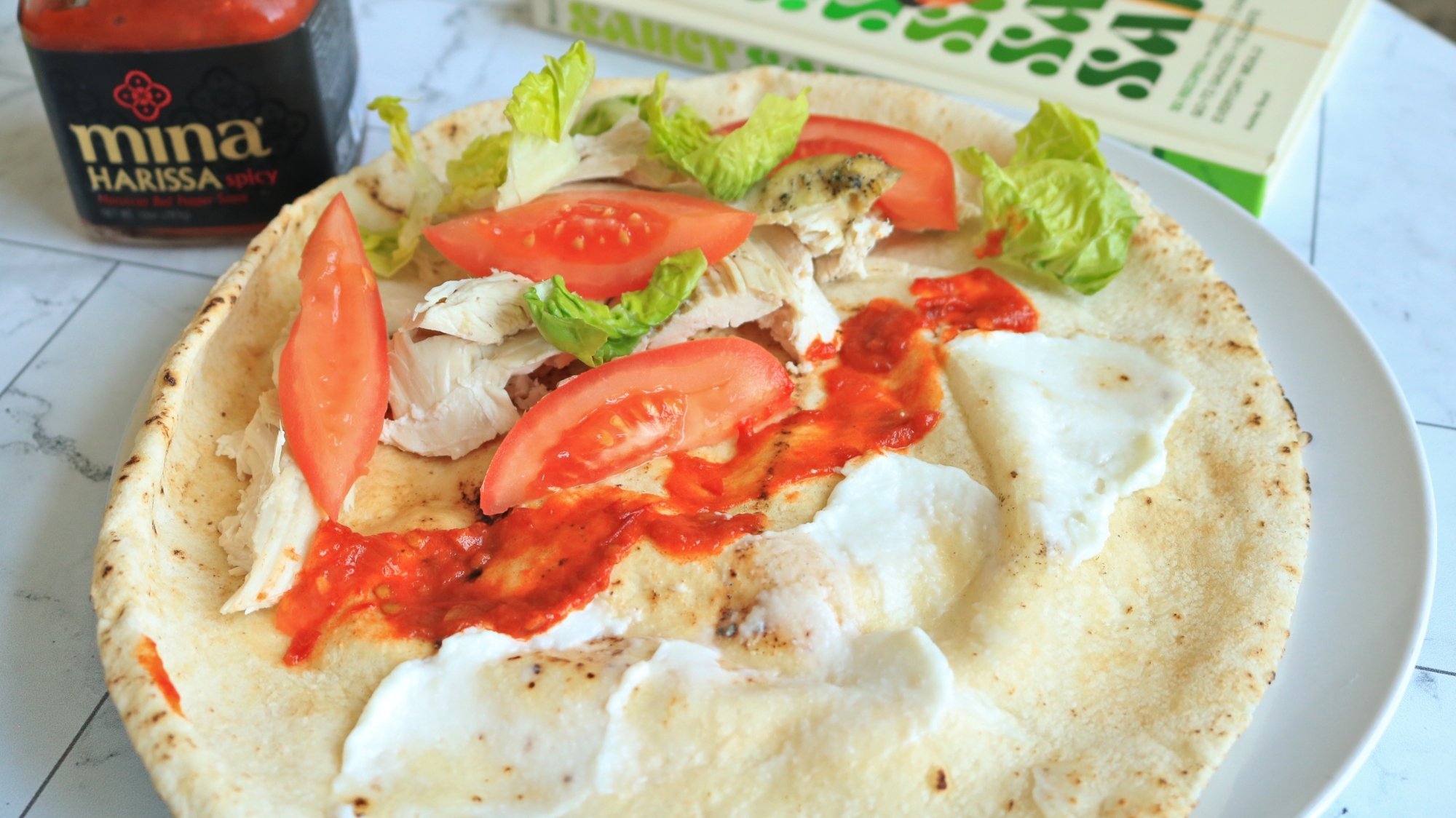
An open pita with garlic sauce, hot sauce, lettuce, and chicken.

Credit: Allie Chanthorn Reinmann

I smeared thin swipes of the creamy garlic sauce along one side of my Lebanese pita bread and piled chicken, tomato, lettuce, pickles, yogurt, and harissa onto the other. I was a little worried the garlic would be too sharp, too raw, and ruin my lunch, but instead every bite was a victory lap. It’s the best version of that pita that I could have made. The Lebanese Garlic Sauce saved my lunch from being just OK. The only reason I don’t have post-lunch-sadness right now is because that recipe made about 12 ounces of sauce and I can’t wait to use it again.

A great cookbook to elevate everything you make

Saucy is a great cookbook for any home cook that’s ever had the feeling like something’s missing. That feeling that your burger, chicken wing, or salad is on the brink of perfection but it’s falling flat for indescribable reasons. You need a sauce. 

The recipes in this book are largely straightforward with four to 10 ingredients and most of them are easy to find in major grocery stores. Each one gives you short procedural steps, followed by instructions on how to store that particular sauce. Sauces are powerful, so you often only need a little bit. The rest of the recipe can be sealed up in a jar to live in the fridge for at least five days and some for up to three months. 

If you see yourself becoming a sauce maven, I suggest saving some jam jars so you can keep your collection organized in the fridge. Actually, a nice jarred sauce might make a great gift for Father’s Day. And why not throw in a copy of Saucy too?

How to buy it

Saucy is available as an ebook, but I insist on grabbing the hardcover if you can. It’s wonderfully compact with some really mesmerizing photography. If you have a bookstore nearby, leave the computer behind and see if they have Saucy in the cookbook section. If not, maybe they can order it for you.

New Spying Claims Emerge in Silicon Valley Corporate Espionage Scandal

A bitter fight over alleged corporate espionage involving two of Silicon Valley’s hottest startups took a new twist on Tuesday, after $12 billion HR software company Deel claimed arch-rival Rippling had directed one of its employees to “pilfer” the company’s assets by posing as a customer. From a report: The latest claim comes after Rippling alleged earlier this year that a staff member had been spying on behalf of Deel. The employee locked themselves into a bathroom and smashed their phone with an axe when confronted with allegations, according to their own testimony.

In new legal filings seen by the Financial Times, Deel has countered by arguing that: “Rippling has been actively engaged in a carefully co-ordinated espionage campaign, through which it infiltrated Deel’s customer platform by fraudulent means and pilfered the company’s most valuable proprietary assets.”


Read more of this story at Slashdot.

PanVK Open-Source Vulkan Driver for ARM Mali GPUs Is Now Vulkan 1.2 Conformant

Only six months after reaching Vulkan 1.1 conformance, the PanVK open-source graphics driver for ARM Mali GPUs is now officially conformant with the Vulkan 1.2 specification on Mali-G610 GPUs. With that crossed from the list, Collabora is now working on updating PanVK’s Vulkan specification to Vulkan 1.3 and 1.4.

The post PanVK Open-Source Vulkan Driver for ARM Mali GPUs Is Now Vulkan 1.2 Conformant appeared first on Linux Today.

Project Defiant is Sony’s first wireless fight stick for PS5 and PC

Sony has just unveiled the first wireless fight stick designed by the company itself. It doesn’t have an official product name yet, but it’s currently codenamed Project Defiant. The arcade-style controller uses the PlayStation Link wireless technology to connect to the PS5 and the PC. Sony says the technology provides an ultra-low latency connection that enables “precise in-game response” to every press on its buttons and every movement on its joystick. Players can also plug the device into their PC or their console via a USB-C connection if they want to ensure that there’s no lag 

The company said it custom designed its controls and used “toolless interchangeable restrictor gates (square, circle, and octagon),” as well as mechanical switches for its buttons. Sony also used the same touch pad on the fight stick as the one found on the DualSense wireless controller. In addition to being able to control the action on screen, the stick has the ability to wirelessly wake up the PS5 by pressing the PS button in the same way a DualSense controller can. 

The fight stick has a storage compartment for its restrictor gates and the PS Link USB adapter. It also sounds like the device will ship with a sturdy carrying case, so you can take it safely with you when needed. Sony has yet to announce Project Defiant’s pricing and release date, but it’s planning to make the fight stick available for purchase sometime in 2026, perhaps in time for players to be able to use it to play Marvel Tōkon: Fighting Souls. The tag fighting game, which is also coming out next year, was developed by the studio behind the Guilty Gear franchise.

This article originally appeared on Engadget at https://www.engadget.com/gaming/playstation/project-defiant-is-sonys-first-wireless-fight-stick-for-ps5-and-pc-113009444.html?src=rss

FDA rushed out agency-wide AI tool—it’s not going well

Under the Trump administration, the Food and Drug Administration is eagerly embracing artificial intelligence tools that staff members are reportedly calling rushed, buggy, overhyped, and inaccurate.

On Monday, the FDA publicly announced the agency-wide rollout of a large language model (LLM) called Elsa, which is intended to help FDA employees—”from scientific reviewers to investigators.” The FDA said the generative AI is already being used to “accelerate clinical protocol reviews, shorten the time needed for scientific evaluations, and identify high-priority inspection targets.”

“It can summarize adverse events to support safety profile assessments, perform faster label comparisons, and generate code to help develop databases for nonclinical applications,” the announcement promised.

Read full article

Comments

Avalue Introduces ACP-PI Boards as Raspberry Pi Alternatives

Avalue Technology has introduced two industrial single-board computers designed to match the Raspberry Pi form factor while addressing the requirements of edge computing and IoT integration. The new models, ACP-3566-PI and ACP-IMX8-PI, offer ARM-based platforms for different embedded applications and performance demands. The ACP-3566-PI is based on the Rockchip RK3566 quad-core Cortex-A55 processor operating at […]

New Condor Italia RC Ltd brings integrated cable routing to the alloy racer 

Condor’s Italia RC Disc sees cables and hoses sprout from the handlebar before disappearing into the frame. 

But the new Italia RC Ltd, a limited-edition version of the aluminium race bike, features fully integrated cable routing.

The Italia RC Ltd comes in a striking lilac paintjob and features a new seatstay design. 

“Clean and uncluttered”

Condor Italia Rc Ltd front end showing lack of cables or hoses.
This limited-edition bike is fully integrated for a clean look and improved aerodynamics. Joe McGorty / Condor Cycles

While integrated cable routing can be divisive, Condor says it gives the Italia RC Ltd a “clean and uncluttered aesthetic” and contributes to “improved aerodynamics by reducing drag”. 

The aluminium road bike is available with a two-piece bar and stem combination from Deda, ENVE, Condor or Pro. It will also be available with a colour-matched one-piece carbon handlebar. 

Condor has increased the size of the head tube on the Italia RC Ltd to accommodate the internal routing. 

“This ensures that brake hoses run smoothly without kinking or bending, an issue we’ve often observed on bicycles serviced in our store workshop,” it says.

But Condor also says the new 1.5in head tube provides front-end stiffness that “translates into razor-sharp steering precision”. 

Semi-dropped seatstays 

Semi-dropped seatstays on Condor Italia RC Ltd.
The semi-dropped seatstays are said to aid compliance. Joe McGorty / Condor Cycles

Another difference between the fully integrated Italia RC Ltd and the standard version is the seatstays.

These are “semi-dropped” rather than meeting the down tube at the same point as the top tube. 

“Unlike fully dropped designs, our seat stays are positioned to retain some of the bicycle’s traditional, elegant lines, ensuring a familiar and pleasing aesthetic,” Condor says.

“Yet, this subtle drop isn’t just for looks. By lowering the attachment point on the seat tube, we achieve enhanced vertical compliance, allowing the seat post and seat tube to flex more effectively.” 

Condor has also “custom-forged” the seatstays by flattening the tubes to create a wider horizontal profile. It says this increases lateral stiffness compared to a round tube of the same weight. 

Custom-drawn aluminium

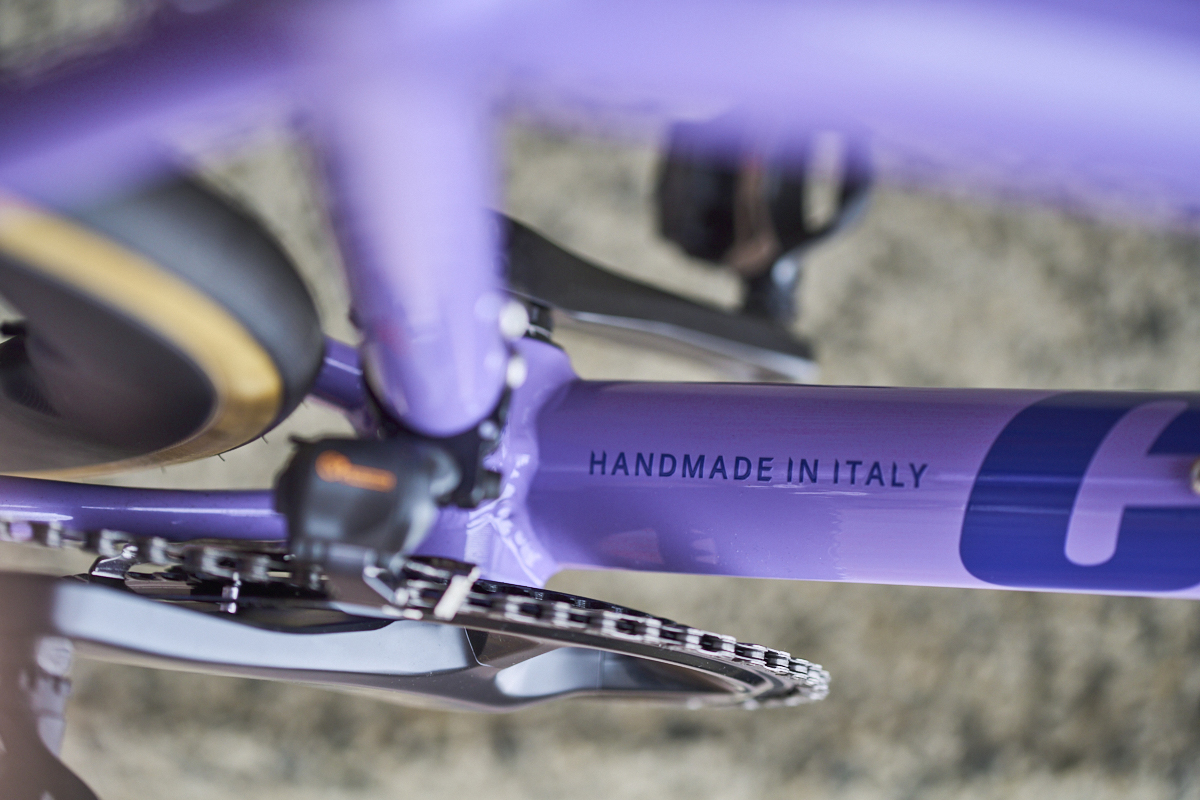
Handmade in Italy written on down tube of Condor Italia RC Ltd.
The Condor Italia RC Ltd is handmade in Italy, as the frame makes clear. Joe McGorty / Condor Cycles

It’s not just the seatstays that are custom, but all of the Italia RC Ltd’s tubing. 

The bike uses 7000 series aluminium for its strength-to-weight ratio, which Condor says allows for “thinner and lighter, yet stiff and durable frame construction”. 

Condor hand-welds the tubes and assembles each frame one at a time, rather than on a production line. Condor says this enables its builders “to use less material at each join and dedicate greater attention to detail, ultimately enhancing the ride’s overall quality”.

“At Condor, we’ve always believed that aluminium never quite got the recognition it deserved at cycling’s highest level,” the London-based brand says. “When crafted correctly by skilled artisans using a precise selection of aluminium alloys, it delivers a ride that’s both smooth and incredibly lively.” 

Condor claims the Italia RC Ltd frame weighs 1,500g, painted in a size 55cm with fixings and bolts. The carbon fork adds 350g. 

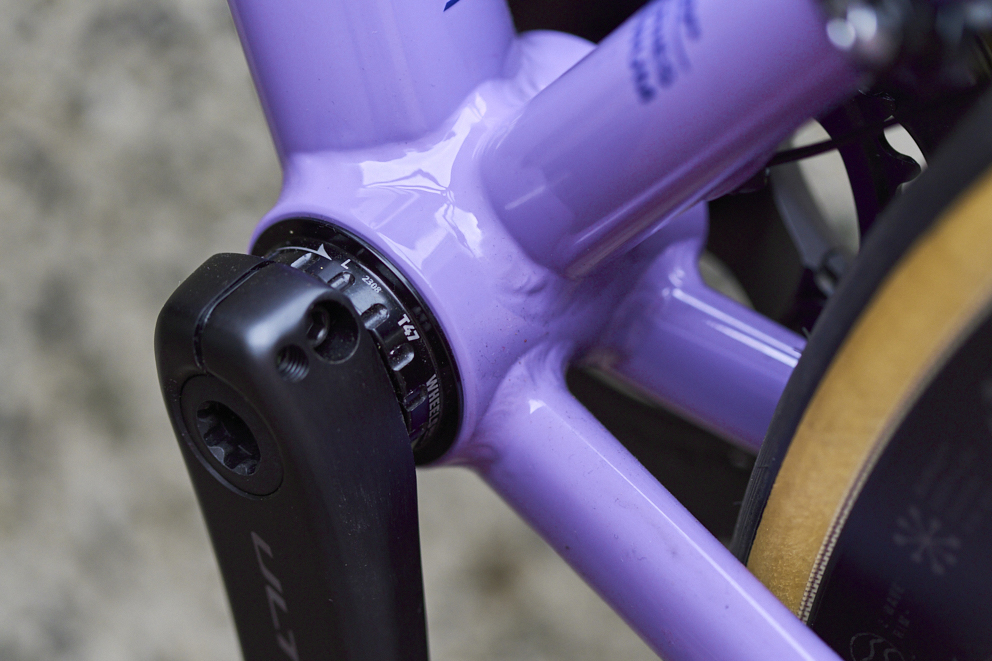
T47 bottom bracket on Condor Italia RC Ltd.
The bike has a T47 bottom bracket. Joe McGorty / Condor Cycles

Elsewhere, the Italia RC Ltd has a T47 bottom bracket. Condor uses threaded bottom brackets on all its bikes for ease of maintenance and says the T47 aids power transfer.

Tyre clearance remains the same as the standard Italia RC at 32mm. 

How much does the Condor Italia RC Ltd cost? 

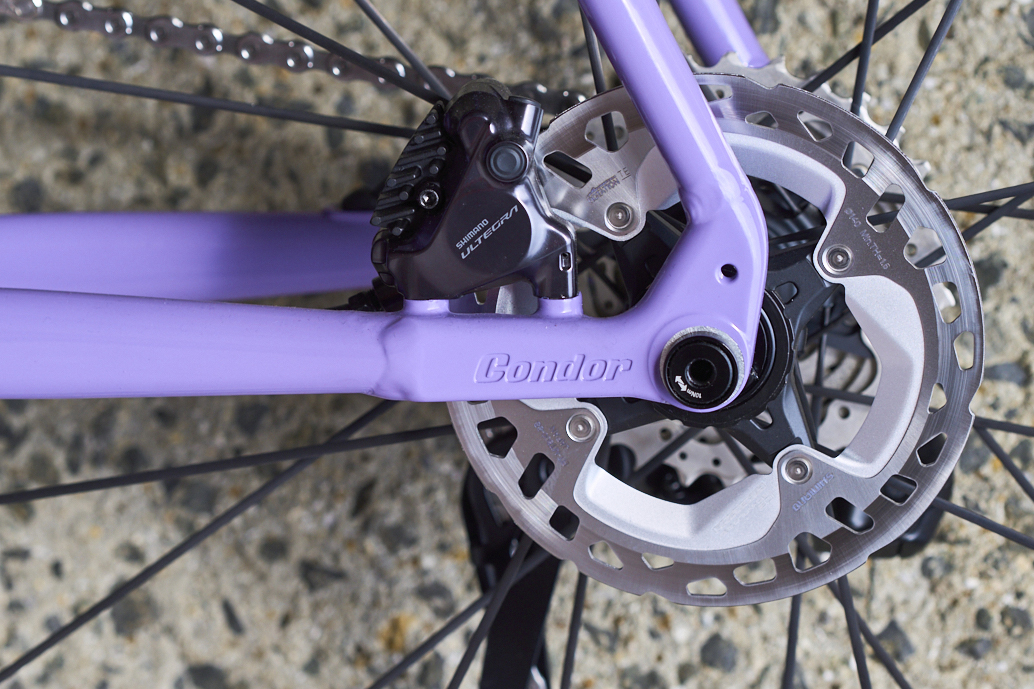
Condor Italia RC Ltd rear dropout showing Condor name.
The Condor name at the rear dropout. Joe McGorty / Condor Cycles

At £1,499, the Italia RC Ltd frameset costs £100 more than the standard Italia RC. 

Condor has provided a range of example builds. Pricing starts from £3,762 for an Italia RC Ltd with Shimano 105 Di2 and rises to £7,861 with Campagnolo Super Record Wireless 13-speed. 

SQUIRREL_13213521

Meta’s Latest Move: Why You Shouldn’t Trust AI with Everything You Say

Meta, the parent company of Facebook, Instagram, and WhatsApp, has made headlines again with a controversial move that raises serious concerns about privacy and data ethics. According to a recent report by Heise, Meta is updating its privacy policy to explicitly allow user data—including public posts, comments, and interactions—to be used for training its generative AI models.

This news comes in the wake of broader privacy concerns tied to Meta’s messaging platforms, particularly WhatsApp. A deeper dive into how WhatsApp handles private data can be found in this post, which outlines how vague language and shifting terms make it difficult for users to truly understand what data is being collected—and how it’s used.

The implications of this new AI training policy are troubling. Meta’s ability to vacuum up user data and feed it into AI systems doesn’t just raise privacy issues; it highlights a deeper risk we rarely acknowledge: the illusion of safety when talking to or through AI-powered systems.

The post Meta’s Latest Move: Why You Shouldn’t Trust AI with Everything You Say appeared first on Linux Today.