Vox publishes a story about “the quiet revolutions that have prevented millions of cancer deaths….
“The age-adjusted death rate in the US for cancer has declined by about a third since 1991, meaning people of a given age have about a third lower risk of dying from cancer than people of the same age more than three decades ago… ”
The dramatic bend in the curve of cancer deaths didn’t happen by accident — it’s the compound interest of three revolutions. While anti-smoking policy has been the single biggest lifesaver, other interventions have helped reduce people’s cancer risk. One of the biggest successes is the HPV vaccine. A study last year found that death rates of cervical cancer — which can be caused by HPV infections — in US women ages 20-39 had dropped 62 percent from 2012 to 2021, thanks largely to the spread of the vaccine. Other cancers have been linked to infections, and there is strong research indicating that vaccination can have positive effects on reducing cancer incidence.
The next revolution is better and earlier screening. It’s generally true that the earlier cancer is caught, the better the chances of survival… According to one study, incidences of late-stage colorectal cancer in Americans over 50 declined by a third between 2000 and 2010 in large part because rates of colonoscopies almost tripled in that same time period. And newer screening methods, often employing AI or using blood-based tests, could make preliminary screening simpler, less invasive and therefore more readily available. If 20th-century screening was about finding physical evidence of something wrong — the lump in the breast — 21st-century screening aims to find cancer before symptoms even arise.
Most exciting of all are frontier developments in treating cancer… From drugs like lenalidomide and bortezomib in the 2000s, which helped double median myeloma survival, to the spread of monoclonal antibodies, real breakthroughs in treatments have meaningfully extended people’s lives — not just by months, but years. Perhaps the most promising development is CAR-T therapy, a form of immunotherapy. Rather than attempting to kill the cancer directly, immunotherapies turn a patient’s own T-cells into guided missiles. In a recent study of 97 patients with multiple myeloma, many of whom were facing hospice care, a third of those who received CAR-T therapy had no detectable cancer five years later. It was the kind of result that doctors rarely see.
The article begins with some recent quotes from Jon Gluck, who was told after a cancer diagnosis that he had as little as 18 months left to live — 22 years ago…
Complete our short survey today about how you use BikeRadar and get a free one-month digital magazine of your choice from Our Media Limited. No payment details needed – just pick your title and enjoy great content on your mobile device.
Even better? UK residents will also have the chance to win one of five £50 Love2shop eGiftcards in our exclusive prize draw.
Ajit Pai is back on the telecom policy scene as chief lobbyist for the mobile industry, and he has quickly managed to anger a coalition that includes both cable companies and consumer advocates.
Pai was the Federal Communications Commission chairman during President Trump’s first term and then spent several years at private equity firm Searchlight Capital. He changed jobs in April, becoming the president and CEO of wireless industry lobby group CTIA. Shortly after, he visited the White House to discuss wireless industry priorities and had a meeting with Brendan Carr, the current FCC chairman who was part of Pai’s Republican majority at the FCC from 2017 to 2021.
Pai’s new job isn’t surprising. He was once a lawyer for Verizon, and it’s not uncommon for FCC chairs and commissioners to be lobbyists before or after terms in government.
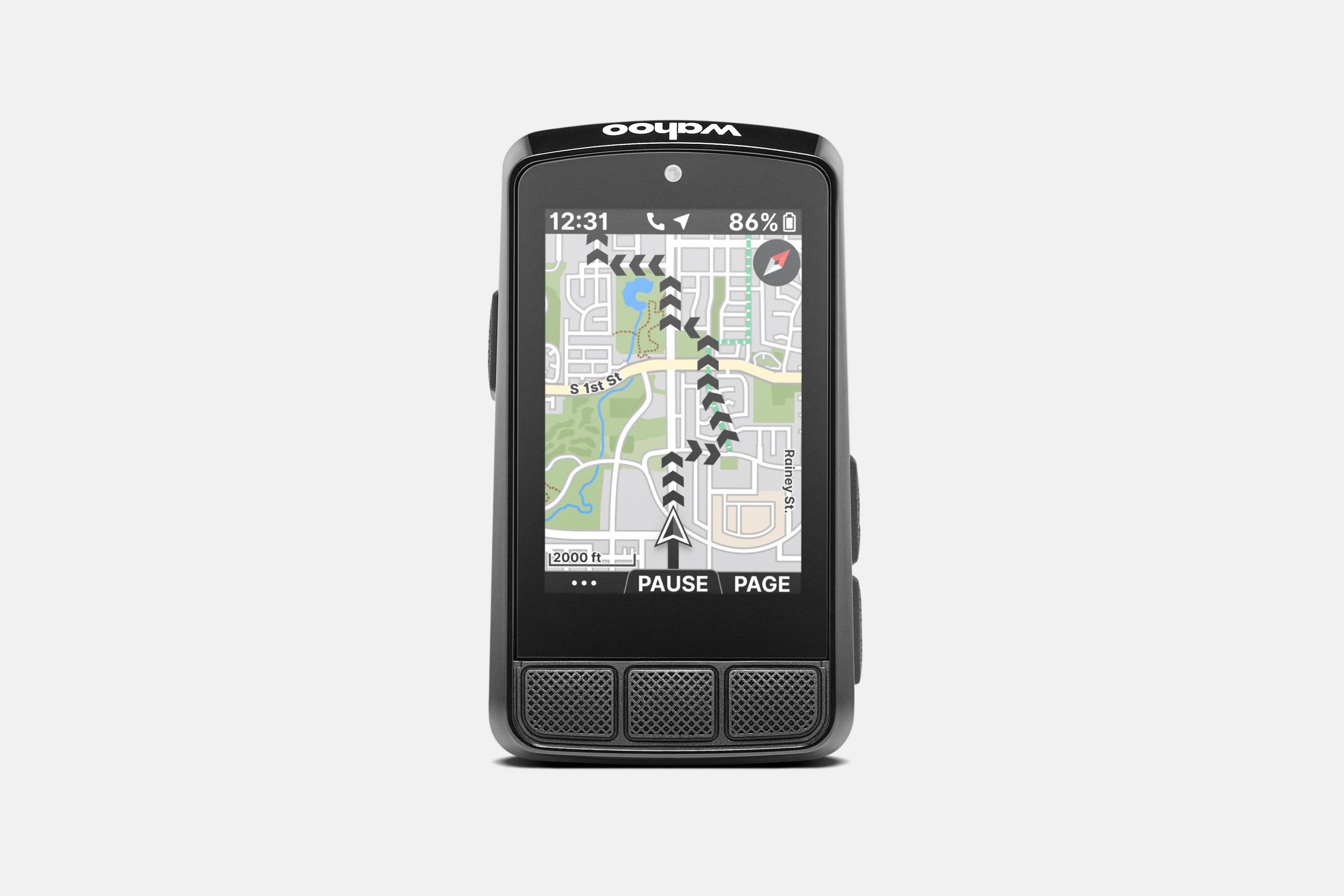
Wahoo has raised prices on all its products for US consumers, with increases ranging from $10 to $2,000.
The brand’s Wahoo Elemnt Ace bike computer has increased from $599 to $649, while a Kickr Core with a Zwift Cog is up $40 to $534.
The biggest price hike is the Wahoo Kickr Run, which has risen from $4,999 to $6,999.
According to DC Rainmaker, Wahoo’s US site appeared “to be updating itself, because if you hover over products, you’ll see the old price. But once you open up the product page, you’ll see the new price”.
Wahoo’s US price increases at a glance
Wahoo Elemnt Ace: $599 to $624
Wahoo Elemnt Bolt 3: $329 to $349
Wahoo Elemnt Roam 3: $449 to $464
Wahoo Kickr V6: $999 to $1,049
Wahoo Kickr Core (with Zwift Cog): $499 to $534
Wahoo Kickr Bike V2: $3,799 to $3,899
Wahoo Kickr Climb: $699 to $749
Wahoo Headwind: $299 to $319
Wahoo Trackr Radar: $199 to £249
Wahoo Trackr HR: $89 to $99
Are Trump’s tariffs causing the price hikes?
Wahoo looks to be the latest brand to have increased its prices due to Trump’s tariffs. Simon von Bromley / Our Media
Wahoo’s European and UK pricing appears to have remained the same, which suggests these price increases are due to Trump’s tariffs.
The cycling industry has seen many brands adjust their pricing or distribution in light of the tariffs.
In April, Silca revealed that selling its new Elettrico electric bike pumps in the US was not viable due to the impact of tariffs. However, last week it was revealed that a reduction in trade war facilities opened an import window for the electric bike pumps.
At the end of April, Garmin revealed its January–March 2025 earnings, showing a 12 per cent year-on-year uptick.
Garmin’s president and CEO, Cliff Pemble, said the results were outstanding, but added that US trade policy was affecting every business, especially those with global supply chains.
Pemble said this would likely result in price increases: “So we’re evaluating pricing not broadly, but specifically in context of each market and product line… there are cases where definitely, there’s room to have different pricing, and there’s other cases because… it’s more competitive and difficult to increase prices.”
Specialized and Trek have also adjusted their pricing in light of the tariffs, with the former adding a surcharge to products and the latter introducing a price increase.
The US bicycle industry’s trade association, PeopleForBikes, has said Trump’s tariffs will have “devastating impacts” on the industry.
Why are there varying price increases?
The Elemnt Bolt 3 had a lower shipping price than the Trackr Radar. Wahoo
The variation in price increases is likely due to where Wahoo’s products are made.
In May, Wahoo added a surcharge to its Wahoo Trackr Radar via increased shipping fees.
US consumers were faced with a $50 fee for the radar bike light, whereas the cheapest shipping fee for an Elemnt Bolt 3 was $15.
The difference between these products is the Trackr Radar is made in China, and therefore subject to higher tariffs, while the Elemnt Bolt 3 is made in Taiwan.
What does Wahoo say about the price increase?
Wahoo hasn’t yet said anything about the price increases on products in the US.
While a point release, Mold 2.40.1 is another notable step forward for this high-speed linker alternative to GNU LD/Gold and LLVM LLD. Mold 2.40.1 brings yet more performance improvements…
When it comes to the Qualcomm Snapdragon X laptops on Linux it’s been primarily focused on the Snapdragon X Elite support with the X Plus SoC support not being as well off yet. But recently there has been more patches surfacing around the Snapdragon X Plus support, including the Adreno X1-45 GPU used by that lower-tier SoC…
Are you a teacher who is interested in data science education for key stage 5 (age 16 to 18)? Then we invite you to join our free, in-person workshop exploring the topic, taking place in Cambridge, UK on 10 July 2025.
You will be among the very first educators to see some of our first test activities for teacher training to build data science concepts, and your contributions will feed into our future work. Sign up by 20 June to take part.
Data science: What do we need to teach school-age learners?
Current artificial intelligence (AI) methods, especially machine learning (ML), rely heavily on data. While young people learn mathematics, and some statistics, at school, data science concepts are not commonly taught.
To complement our work on AI literacy, we have been investigating what data science teaching resources and education research are currently available.
Our goals for this work are:
To work out what data science concepts may need to be taught in schools, initially with a focus on key stage 5
To develop related teacher professional development and classroom resources
Join us to discuss data science education
If you are interested in data science education for young people, and maybe even have experience of teaching it to learners aged 16 to 18 in your school (in any subject, including computer science, social sciences, mathematics, statistics, and ethics), please join our free workshop on Thursday 10 July in our office in Cambridge. We are able to reimburse some travel expenses.
At the workshop:
We would love to hear about your experience of teaching any elements of data science
We will share some exploratory concept building activities with you and discuss them together
You’ll be the first group of working teachers we will share these activities with — your feedback will be invaluable, and you’ll have the chance to shape our work going forward.
You will then receive more information from us by 27 June. Spaces in the workshop are limited, so please do not book any travel until we confirm your space.
We’re looking forward to shaping the future of data science education with you.
WCH’s new CH32H417 microcontroller introduces a dual-core RISC-V architecture designed for embedded applications requiring high-speed connectivity and peripheral integration. It is built on the Qingke V5F core running at 400 MHz and the V3F core at 144 MHz. The microcontroller supports USB 3.2 Gen 1 with a 5Gbps PHY and dual-role host/device functionality, along with […]
The open-source, unofficial VA-API driver implementation for NVIDIA GPUs is out with a new release. The NVIDIA-VAAPI-Driver project continues to build VA-API support atop NVIDIA’s NVDEC interface to allow the NVIDIA proprietary driver stack to work with VA-API-only applications like the Mozilla Firefox web browser on Linux…
The Atlantic makes that case that “the foundation of the AI industry is a scam” and that AI “is not what its developers are selling it as: a new class of thinking — and, soon, feeling — machines.”
[OpenAI CEO Sam] Altman brags about ChatGPT-4.5’s improved “emotional intelligence,” which he says makes users feel like they’re “talking to a thoughtful person.” Dario Amodei, the CEO of the AI company Anthropic, argued last year that the next generation of artificial intelligence will be “smarter than a Nobel Prize winner.” Demis Hassabis, the CEO of Google’s DeepMind, said the goal is to create “models that are able to understand the world around us.” These statements betray a conceptual error: Large language models do not, cannot, and will not “understand” anything at all. They are not emotionally intelligent or smart in any meaningful or recognizably human sense of the word. LLMs are impressive probability gadgets that have been fed nearly the entire internet, and produce writing not by thinking but by making statistically informed guesses about which lexical item is likely to follow another.
A sociologist and linguist even teamed up for a new book called The AI Con: How to Fight Big Tech’s Hype and Create the Future We Want, the article points out:
The authors observe that large language models take advantage of the brain’s tendency to associate language with thinking: “We encounter text that looks just like something a person might have said and reflexively interpret it, through our usual process of imagining a mind behind the text. But there is no mind there, and we need to be conscientious to let go of that imaginary mind we have constructed.”
Several other AI-related social problems, also springing from human misunderstanding of the technology, are looming. The uses of AI that Silicon Valley seems most eager to promote center on replacing human relationships with digital proxies. Consider the ever-expanding universe of AI therapists and AI-therapy adherents, who declare that “ChatGPT is my therapist — it’s more qualified than any human could be.” Witness, too, how seamlessly Mark Zuckerberg went from selling the idea that Facebook would lead to a flourishing of human friendship to, now, selling the notion that Meta will provide you with AI friends to replace the human pals you have lost in our alienated social-media age….
The good news is that nothing about this is inevitable: According to a study released in April by the Pew Research Center, although 56 percent of “AI experts” think artificial intelligence will make the United States better, only 17 percent of American adults think so. If many Americans don’t quite understand how artificial “intelligence” works, they also certainly don’t trust it. This suspicion, no doubt provoked by recent examples of Silicon Valley con artistry, is something to build on…. If people understand what large language models are and are not; what they can and cannot do; what work, interactions, and parts of life they should — and should not — replace, they may be spared its worst consequences.
The EdgeLogix-1145 is a rugged industrial controller that integrates edge computing, PLC functionality, and IIoT gateway capabilities. Designed around the Raspberry Pi CM5, it offers a compact, fanless platform designed for automation tasks in harsh environments such as factories, energy systems, and smart infrastructure. The system is built on the Broadcom BCM2712 SoC, a quad-core […]
“Replanting forests can help cool the planet even more than some scientists once believed, especially in the tropics,” according to a recent announcement from the University of California, Riverside.
In a new modeling study published in Communications Earth & Environment, researchers at the University of California, Riverside, showed that restoring forests to their preindustrial extent could lower global average temperatures by 0.34 degrees Celsius. That is roughly one-quarter of the warming the Earth has already experienced. The study is based on an increase in tree area of about 12 million square kilometers, which is 135% of the area of the United States, and similar to estimates of the global tree restoration potential of 1 trillion trees. It is believed the planet has lost nearly half of its trees (about 3 trillion) since the onset of industrialized society.
The Washington Post noted that the researchers factored in how tree emissions interacted with molecules in the atmosphere, “encouraging cloud production, reflecting sunlight and cooling Earth’s surface.”
In a news release, the researchers acknowledge that full reforestation is not feasible… “Reforestation is not a silver bullet,” Bob Allen, a professor of climatology at the University of California at Riverside and the paper’s lead author, said in a news release. “It’s a powerful strategy, but it has to be paired with serious emissions reductions.”
Simon Ser announced the release of Sway 1.11 on Sunday as the newest feature update to this popular i3-inspired Wayland compositor from which the wlroots library was originally born…
Catch up on the latest Linux news: Rocky 9.6, VirtualBox 7.1.10, KDE Gear 25.04.2, Linux Mint 20.x reaches EOL, without Hyprland in Debian 13, Xlibre – an attempt to save X11, and more.
The upcoming Linux Mint 22.2 (Zara) operating system will feature a brand-new app called Fingwit, providing users with fingerprint authentication capabilities.
A new study “adds a whole extra level of detail to our understanding of caffeine’s impact on the brain during sleep,” reports ScienceAlert:
Caffeine was shown to increase brain signal complexity, and shift the brain closer to a state of ‘criticality’, in tests run by researchers from the University of Montreal in Canada. This criticality refers to the brain being balanced between structure and flexibility, thought to be the most efficient state for processing information, learning, and making decisions. However, this state might prevent restful sleep, the researchers suggest. The caffeine isn’t just keeping us alert, but actually changing how the brain is operating. What’s more, they found younger adults aged 20 to 27 were more greatly affected in this way…
When it comes to the different reactions across different ages, the researchers suggest that changes in the brain as we age might be responsible. Adenosine molecules gradually build up in the brain during the day, leading to a greater feeling of fatigue as bedtime approaches. Caffeine works by blocking the receptors that adenosine interacts with, giving us a temporary jolt of energy. Adenosine receptors are more abundant in younger brains, which may explain why younger people seem to be more sensitive to caffeine’s powers. That includes both the positive energizing effects, and the negative effects of keeping the brain too active overnight.
The U.K. electricity grid “was built to deliver power generated by coal and gas plants near the country’s major cities and towns,” reports the BBC, “and doesn’t always have sufficient capacity in the wires that carry electricity around the country to get the new renewable electricity generated way out in the wild seas and rural areas.
“And this has major consequences.”
The way the system currently works means a company like Ocean Winds gets what are effectively compensation payments if the system can’t take the power its wind turbines are generating and it has to turn down its output. It means Ocean winds was paid £72,000 [nearly $100,000 USD] not to generate power from its wind farms in the Moray Firth during a half-hour period on 3 June because the system was overloaded — one of a number of occasions output was restricted that day. At the same time, 44 miles (70km) east of London, the Grain gas-fired power station on the Thames Estuary was paid £43,000 to provide more electricity.
Payments like that happen virtually every day. Seagreen, Scotland’s largest wind farm, was paid £65 million last year to restrict its output 71% of the time, according to analysis by Octopus Energy. Balancing the grid in this way has already cost the country more than £500 million this year alone, the company’s analysis shows. The total could reach almost £8bn a year by 2030, warns the National Electricity System Operator (NESO), the body in charge of the electricity network. It’s pushing up all our energy bills and calling into question the government’s promise that net zero would end up delivering cheaper electricity… the potential for renewables to deliver lower costs just isn’t coming through to consumers.
Renewables now generate more than half the country’s electricity, but because of the limits to how much electricity can be moved around the system, even on windy days some gas generation is almost always needed to top the system up. And because gas tends to be more expensive, it sets the wholesale price.
The UK government is now considering smaller regional markets, so wind companies “would have to sell that spare power to local people instead of into a national market. The theory is prices would fall dramatically — on some days Scottish customers might even get their electricity for free…
“Supporters argue that it would attract energy-intensive businesses such as data centres, chemical companies and other manufacturing industries.”
After a symphony, online multiplayer and a remaster, the well-regarded (and often handheld) puzzler Lumines is getting Enhance’s full synesthetic, Tetris-flowing, treatment. Lumines Arise is almost here.
If you haven’t played the game before, Lumines’ premise centers on rotating and dropping four-square blocks made of one or two colors, building up larger squares of a single color. The game’s timeline sweeps across the playfield – to the beat of the soundtrack – erasing completed squares in its path, while also giving you the brief opportunity to quickly drop more squares, add multiplier combos and score even more points.
Lumines Arise adds a new mechanic to the addictive yet simple puzzle. ‘Burst’ is a refillable bar that you can trigger with L2/R2, which locks a square on the playing field, allowing you to pile on subsequent blocks. You can initiate Burst once the counter has rolled above 50, although it maxes out at 100. As you might expect for a synesthesia-tickling game like Arise, Burst mode has its own low-key musical accompaniment.
Lumines has never looked better. But that’s not just due to 2025 hardware power, but also design choices for Lumines’ skins – the unhinged wallpaper design and block themes that bubble up as you advance through puzzle stages. They’re delightfully mad and, at times, distracting. (As you play, the view of your Lumines blocks will occasionally ‘zoom’ closer – this is intentional. Game Director Takashi Ishihara said this was to both add some dynamism to what are typically static blocks, but also to pull the players’ attention back to the game at hand. Lumines Arise wants you to focus on the now, not the score, your Burst meter, or your customizable avatar.)
My favorite part of the demo was the final stage, which featured two chameleons simply raving along to the dance music. The soundtrack is, naturally, a banger, too. Lumines Arise features new music from Hydelic, also responsible for the award-winning soundtrack of Tetris Effect: Connected. (The band has already launched one track, “Only Human,” on Bandcamp – it’s coming to other streaming services, too.)
On another stage, two skeletal hands, seemingly strung up like puppets, twitch and wriggle as you shift and rotate your blocks. If anything, I think Enhance missed a trick not mapping the finger movements to a DualSense controller. I said that in front of Ishihara because I have zero sense of decorum — apparently, he’d had the same idea. I now consider myself a game designer.
I got to briefly see Lumines Arise running on a Steam Deck, too. The time of the handheld console and PC is now, so it’s nice to see a typically made-for-consoles game ready for this new gaming PC form factor.
Ishihara teased that there’s more to reveal ahead of Arise’s launch. The game will launch on both PS5 and Steam, and it will also feature VR compatibility on both platforms. While Enhance wasn’t yet willing to reveal the details, there will also be some form of multiplayer, but it seems like it’ll be in a different form compared to the more adversarial nature of Tetris Effect’s multiplayer modes.
Additionally, Ishihara wanted to highlight that the avatars, which dance and emote in sync with your in-game actions, now feature legs. That is important, apparently. Enhance is promising more answers in due time. Lumines Arise is set to launch in fall 2025.
This article originally appeared on Engadget at https://www.engadget.com/gaming/lumines-arise-hands-on-interview-takashi-ishihara-000038767.html?src=rss
Sword of the Sea is a game about letting go. Its main mechanic involves surfing across vast desert dunes on a thin blade, slicing through glittering sands and scaling ancient towers on a quest to unearth the secrets of civilizations past. It plays best when you forget about the controls entirely, and just surrender to the slick physics and let your little character flow. With enough exploration, you’ll naturally discover glowing orbs and shining gold gems, and the sands will transform into deep, crystal clear seas with fish swimming through the air, carving wet paths through the dirt. Your character, dressed in flowing robes and a gold mask, rides the orange hills and the blue waves with the same easy athleticism, reacting instantly to every input on the controller.
Charge up a jump and then complete sick tricks with a few quick inputs, or unleash a bubble of sonic energy to smash nearby vases, uncovering bits of currency in the shattered pieces. The protagonist moves in whatever direction you push, stopping immediately when you let go of the analog stick. There are giant chains to grind, a hover ability in some areas, and half pipes generously positioned around the environments. Control prompts pop up when you’re first introduced to an ability, but the text fades quickly and you’re left alone in the desert. There are no waypoints in Sword of the Sea, but the environment tells a clear story, inviting you to solve puzzles in the mysterious temples dotting the landscape. Find glowing orbs on the rooftops and hidden down secret passageways to unlock the buildings’ secrets, opening up new areas.
I played about 20 minutes of Sword of the Sea at Summer Game Fest, but I wanted to surf its dunes for a lot longer. It’s the kind of game that makes the real world fade away, no matter how chaotic or intrusive your immediate surroundings are. It’s built on rhythm and vibes, and it encourages a meditative flow state from its first frames. Learn the controls and then forget them; play with pure intuition and it’ll most likely be the right move.
“The game is about surfing, and it’s really about the process of learning to surf and getting comfortable with surfing, and then trying things that are a little bit beyond your abilities, failing, and then figuring it out and actually accomplishing them,” Sword of the Sea creator Matt Nava told Engadget on the SGF show floor. “And in the process, you kind of realize that surfing is all about harnessing the power of something greater than yourself. You’re not paddling — the waves carry you. The zoomed out camera, the little character; in a lot of games, they’re right on the character, because the character is the focus. But in this game, it’s about how the character is a part of the environment, that is the focus. And I think that’s a constant in a lot of the games that we’ve made.”
Nava is the creative director and co-founder of Giant Squid, the studio behind Abzû and The Pathless. Even with these two successful games under his belt, Nava is still best known as the art director of Journey, thatgamecompany’s pivotal multiplayer experience that hit PlayStation 3 in 2012. Nava has spent the past decade attempting to build explicitly non-Journey-like games with Giant Squid, and while Abzû and The Pathless both have his distinctive visual stamp, they’re the opposite of Journey in many ways. Where Journey was set in a dry, desert landscape, Nava’s follow-up, Abzû, took place in an underwater world. After that, The Pathless was mostly green, rather than dusty orange.
Giant Squid
With Sword of the Sea, Nava let go. He dropped all preconceptions of what he should be making and mentally said fuck it. He finally allowed himself to manifest the game that came naturally to him.
“In this game, it’s very much taking on, accepting and proclaiming that this is me,” Nava said. “I did Journey. I’m doing orange again. And I’m going back to the desert because I have way more ideas that we couldn’t do in that game … It’s like I’ve been living in my own shadow for a long time in a weird way. It’s like, why am I doing that? I should just be who I am and continue to explore the art that is my art.”
Sword of the Sea is a specific and special game, and even though it’s set in an orange desert, it doesn’t feel like Journey. The game also includes music by Austin Wintory, the Grammy-nominated composer behind Journey, Abzû and The Pathless. Together, Nava and Wintory form a formidable foundation.
“A lot of video game scores, they just make a music track for the area,” Nava said. “If you’re in the town, you hear town music, and then it just repeats. But that’s not how it works here. The music advances as your story advances, it reflects where you are on your surfing adventure, what you’re learning how, how far your character has gone on this character arc. And so that’s where the music of a video game like ours should be.”
As Nava and I chatted, someone sat down to play Sword of the Sea on a nearby screen, and when I glanced up, I saw that they were gliding through an area I didn’t find in my runthrough. A giant animal skeleton was half-buried in the sand, bright white vertebrae dotted with gold gems for the player to collect. There are a lot of secrets in Sword of the Sea, Nava assured me. The best way to find them is to just let go and play.
This article originally appeared on Engadget at https://www.engadget.com/gaming/sword-of-the-sea-is-what-happens-when-matt-nava-strides-back-into-journeys-shadow-233148894.html?src=rss
Today, Linus Torvalds announced the general availability of the first Release Candidate development milestone of the upcoming Linux 6.16 kernel series for public testing.