Announcing the Rust Innovation Lab

During the opening of RustConf 2025 in Seattle, Washington,
the Rust Foundation announced

a new initiative
to provide financial and administrative support to open-source Rust projects. The first project to benefit from the new Rust Innovation Lab is

Rustls
, an implementation of TLS in Rust. The foundation welcomes inquiries from other projects. Dr. Rebecca Rumbul, Executive Director of the Rust Foundation said:

Rustls is hopefully the first of many really good […] projects that will find a home in the foundation.

No winner on stage 11 of La Vuelta due to pro-Palestine protests

There was no winner on stage 11 of the Vuelta a España in Bilbao today after pro-Palestine protestors disrupted the finish, with the general classification times taken with 3km to go. 

Protestors disrupted the race throughout the day, displaying flags and banners, with others encroaching on the race. 

The peloton was briefly stopped during the neutral zone at the beginning of the day as protestors entered the course. Later, Mads Pedersen was impeded on the intermediate sprint with 38km, and protesters ran onto the penultimate climb of the day, causing the peloton to change course. Images show riot police at the finish in Bilbao working to hold the crowds back.

Towards the end of the stage, the race organisers announced that there would be no winner.

“Due to some incidents at the finish line, we have decided to take the time at 3 kilometres before the line. We won’t have a stage winner. We will give the points for the mountain classification and the intermediate sprint, but not on the finish line,” the organisers said, according to Cycling Weekly. 

TOPSHOT - Basque regional police 'Ertzaintza' officer lifts a truncheon as pro-Palestinian protesters holding Palestinian flags demonstrate during the eleventh stage of the Vuelta a Espana cycling tour, a 167 km race from Bilbao to Bilbao, on September 3, 2025. (Photo by ANDER GILLENEA / AFP) (Photo by ANDER GILLENEA/AFP via Getty Images)
Police hold back protesters at La Vuelta. Ander Gillenea / Getty Images

The decision didn’t halt the GC battle.

Race leader Jonas Vingegaard (Visma–Lease a Bike) and Tom Pidcock (Q36.5 Pro Cycling) attacked in the closing kilometres of the stage to gain time over João Almeida (UAE Team Emirates–XRG), who is currently second in the general classification, and was in a group behind Vingegaard and Pidcock. 

Stage 11’s neutralised finish follows a string of protests over the presence of Israel–Premier Tech at the race.

Last week, protesters disrupted Israel–Premier Tech’s team time trial. And yesterday, demonstrators disrupted stage 10, which led to Wanty–Intermarché’s Simone Petilli crashing. 

Although he finished the stage, Petilli later called for calm. The Wanty–Intermarché rider said on X: “I understand that is not a good situation, but yesterday I crashed because of a Protest on the road.”

“Please, we are just Cyclists and we are doing our Job, but if it will continue like this our safety is not guaranteed anymore, and we feel in danger! We just want to race! Please,” he added.

The riders’ union, the Cyclistes Professionels Associés (CPA), also met with the race organisers before stage 11 began to discuss how to deal with the protests, allegedly stating they would ride as long as protests remained peaceful.  

Dumbing Down the SAT Bodes Poorly for Education

The SAT is billed as “a great way to find out how prepared students are for college.” If that’s true, recent changes to its format offer an unflattering assessment of the country’s aspiring scholars, Bloomberg’s editorial board wrote Wednesday. From the piece: […] Then the pandemic hit. As in-person exams became impractical, hundreds of schools dropped their testing requirements. The SAT and its main competitor, the ACT, lost millions of dollars in revenue. Although both recently started offering digital options, schools have been slow to reinstate their requirements. Today, more than 80% of schools remain test-optional.

“If students are deciding to take a test,” as one College Board executive put it, “how do we make the SAT the one they want to take?” To anyone familiar with American teenagers, the company’s answer should come as no surprise: Make the test easier. The newly digitized format allows a calculator for the entire math section and drastically cuts reading comprehension. Gone are the 500- to 750-word passages about which students would answer a series of questions. Instead, test takers read 25- to 150-word excerpts — about the length of a social media post — and answer a single question about each.

[…] An effort by the College Board to reemphasize the benefits of deep reading — for critical thinking, for self-reflection, for learning of all kinds — might go a long way toward restoring some balance. It should build on efforts to incorporate college prep into school curricula, work with districts to develop coursework that builds reading stamina for all test takers, and consider reducing the cost of its subject-specific Advanced Placement exams that continue to test these skills (now $99), in line with the SAT ($68). Schools, for their part, should recommit to teaching books in their entirety.


Read more of this story at Slashdot.

Garmin’s Next Watch Is the First MicroLED Wearable

We may earn a commission from links on this page.

Two new versions of Garmin’s Fenix 8 were announced today. Both have the ability to make emergency calls, and one has the first microLED screen I’ve seen on a smartwatch. This is a new display technology that should allow for incredible brightness, even in sunlight, but with a tradeoff: shorter battery life, and a hefty purchase price. 

The two new watches

Both new watches are versions of the Fenix 8, a top-of-the-line fitness smartwatch that launched last year. There were already variants with AMOLED displays or MIP displays with a solar panel. Today Garmin adds two more watches to that family: 

  • Fenix 8 Pro AMOLED ($1,199.99 and up): This is similar to the Fenix 8 AMOLED, but adds LTE and satellite connectivity for emergency texts and calls. It comes in a 47-millimeter and 51-millimeter size (it’s $100 more for the bigger size).

  • Fenix 8 Pro MicroLED ($1,999.99): This also has LTE and satellite connectivity, and also comes in a 51-millimeter size. It adds a microLED display, which is a brand-new display type that allows much brighter screens than before.

Both watches will be available to purchase on September 8, 2025.

Why microLED is a big deal for wearables

Most smartwatch screens are OLED or AMOLED displays; this is the kind with glowy pixels that you’re used to seeing on Apple Watches or, for that matter, your smartphone. A few older-style watches use a MIP or LCD display, which reflects the light around you or can be lit up with a backlight. (I have a breakdown of the pros and cons of both display types here.) 

But microLED is a new technology, not seen in a smartwatch until now. LEDs can now be made small enough—hence the “micro”—to be roughly pixel-sized. The microLED version of the Fenix 8 Pro has over 400,000 tiny LEDs in its round 454×454 pixel screen. (Both versions of the watch have the same resolution.) 

The main difference for users is that these screens are bright. MicroLEDs don’t have an organic component (the “O” in OLED or AMOLED) and this lets manufacturers put a lot more power into them without fear of burn-in. 

Garmin says their microLED screen can deliver 4,500 nits of brightness. For comparison, the Apple Watch series 10 has a 2,000-nit display, while the Apple Watch Ultra 2 bumps to 3,000 nits. Garmin doesn’t usually give nit ratings for their AMOLED watches, so it’s hard to compare, but safe to say 4,500 is a lot more brightness than you can expect from any other model.

You definitely pay for that in battery life, though. The microLED version of the Fenix 8 Pro burns through battery far faster than its more traditional AMOLED sibling, based on these comparisons for different use scenarios: 

  • Smartwatch mode: 10 days for microLED, 27 days for AMOLED

  • Smartwatch mode, always-on display: 4 days for microLED, 15 days for AMOLED

  • All satellite systems (during an activity): 37 hours for microLED, 60 hours for AMOLED

  • All satellite systems, but with the display always on: 16 hours for microLED, 47 hours for AMOLED

  • All satellite systems, multi-band, and LTE livetrack: 17 hours for microLED, 21 hours for AMOLED

  • As above, with LTE livetrack, but with the display always on: 10 hours for microLED, 19 hours for AMOLED

The Fenix 8 Pro has cell and satellite connectivity, but it’s not as useful as you might hope

Both Fenix 8 Pro models (the microLED and the regular AMOLED) have two types of connectivity for emergency communications. Unfortunately this is not the kind of connectivity that can give you casual notifications from various apps, the way you might expect from something like an Apple Watch.

The Fenix 8 Pro gets its connectivity two ways. One is LTE connectivity. This uses LTE-M signals, a low-power type of cell signal that is available in most places that have cell coverage. The other is a type of satellite communication, similar to what’s available from the InReach line of emergency satellite communicators. (Garmin brands the new connectivity as “InReach on your wrist.”)

These technologies allow voice calls and texting, so long as the person you’re calling or texting has the Garmin Messenger app on their phone (or is also wearing a Fenix 8 Pro). So you’ll be able to receive texts from your partner who knows you’re out in the woods, but you aren’t going to get casual messages from coworkers or friends who haven’t installed the app. 

You’ll need an InReach subscription to make use of these features, including the SOS Response that can contact a Garmin call center and potentially get a search-and-rescue team out to you in a serious emergency.  According to this Garmin page, InReach subscriptions run either $7.99/month or $14.99/month, depending on which plan you choose. Fenix 8 Pro users are able to waive the $39.99 activation fee. That page also notes that the Fenix 8 Pro cannot use satellite connectivity for live location tracking. 

PayPal and Venmo users get a free year of Perplexity Pro and early access to its AI browser

Perplexity, the NVIDIA- and Bezos-backed AI company, is partnering with PayPal to get its Comet browser in front of millions of the financial tech giant’s users. The deal will see PayPal and Venmo customers in the US and select international markets gain access to the AI-powered browser, as well as a free 12-month subscription to Perplexity Pro, which normally costs $200. There are, of course, some conditions.

The promotion is part of PayPal’s new subscription hub, where users can manage all their recurring PayPal payments. The company is also offering users a $50 credit when they link and pay for three subscriptions using the hub. PayPal users in the US can claim their free 12-month Perplexity Pro subscription from the PayPal app today. Likewise, Venmo users can access the offer from within the Venmo app. The deal is on offer through the end of this year, and the Perplexity Pro subscription will auto-renew after the free 12 months is up at the then current rate unless cancelled.

The Comet browser was in beta testing earlier this summer before launching in July as part of Perplexity’s $200-per-month Max subscription. Perplexity’s AI is integrated into Comet and serves as the browser’s default search engine. This incorporation allows users to pull up the AI in a sidebar to ask questions about what they see on screen, summarize text and even take actions on behalf of the user, like sending an email or looking up directions on Google Maps.

The browser is built on Chromium, the same open-source codebase beneath Chrome, Edge and Opera. Perplexity actually offered to buy Chrome in August for $34.5 billion when it appeared that the courts might force a divestment, but a judge ruled this week that Google can keep its browser.

This article originally appeared on Engadget at https://www.engadget.com/ai/paypal-and-venmo-users-get-a-free-year-of-perplexity-pro-and-early-access-to-its-ai-browser-155844658.html?src=rss

Netflix adds Twitch-like clipping function, complete with an editor

Netflix has upgraded its Moments feature for the mobile app. It already lets users save iconic scenes, but now there’s a simple editor to bring it in line with something like Twitch’s clipping tool. Viewers can use the tool to set start and end points, so they can turn preferred scenes into “full clips to save, relive and share anytime.”

Just tap the “Clip” button when watching something on mobile and the new editor will pop up. Once something is saved, it’ll reside in the “My Netflix” tab. The company says users can “make the clip as long or as short” as they’d like, so there aren’t any time constraints. These clips can be shared on various social media sites and in text messages.

Netflix is launching this alongside a new batch of Wednesday episodes, so maybe there’s something potentially viral in there like that dance scene from the first season. However, that’s not even the most-saved moment on the platform. That honor goes to a song from the recent smash KPop Demon Hunters.

Again, this tool is only available for mobile users. Believe it or not, the most used device to stream Netflix is still the television. Studies indicate that televisions are involved with 60 to 70 percent of streaming on the platform.

This article originally appeared on Engadget at https://www.engadget.com/entertainment/tv-movies/netflix-adds-twitch-like-clipping-function-complete-with-an-editor-154518598.html?src=rss

CachyOS ISO Snapshot for August 2025 Introduces a New Package Dashboard

With this release, the CachyOS devs introduce a brand-new, web-based dashboard for finding packages across all CachyOS repositories and viewing details about the latest updates. The new dashboard lets users sort packages by architecture, package name, repository, and update time, and it features light and dark themes.

The post CachyOS ISO Snapshot for August 2025 Introduces a New Package Dashboard appeared first on Linux Today.

Samsung announces a pair of flashy new party speakers

It’s shaping up to be a good week for people who like enormous party speakers. Hot on the heels of JBL’s PartyBox 720 comes Samsung’s latest Sound Tower. The two new models are the ST50F and the ST40F, both of which are designed to provide music for large gatherings, indoors or outdoors.

A redesigned acoustic structure houses dual dome tweeters equipped with Samsung’s Waveguide tech, which it says delivers a wider and more even soundstage. These are joined by a pair of woofers, the output of which you can adjust by choosing between Deep, Punchy and Gentle bass modes. You can even customize further by selecting one of four sound modes — Standard, Wide, Stadium and Outdoor — to get the best sonic balance for your environment. Presumably you opt for Stadium at your own risk.

The Sound Tower isn’t just about big sound. This is very much an audiovisual device, with the visual element provided by Samsung’s Party Lights+ system, which is exactly what it sounds like. It offers five mood presets and six “dynamic lighting patterns,” with the LEDs arranged in five different areas of the speaker’s exterior illuminating in sync with the rhythm of whatever music you’re playing. You can switch lighting modes using the updated Samsung Sound Tower app, and the speaker has built-in DJ Booth and Karaoke modes. You can even plug a guitar into it.

The Sound Tower ST50F has wheels and a telescopic handle for easy transportation, with a battery life of up to 18 hours. Its loudspeakers are slightly larger than those in the ST40F (6.5-inch vs 5.25-inch on the respective woofers), which has a handle but no wheels, and only lasts for 12 hours on a single charge. Both speakers are IPX4-rated for water resistance, which means they’ll be fine with a little splash, but don’t send them for a swim.

The new Samsung Tower is available to buy from this month, retailing at $700 for the ST50F and $500 for the ST40F.

This article originally appeared on Engadget at https://www.engadget.com/audio/speakers/samsung-announces-a-pair-of-flashy-new-party-speakers-153027692.html?src=rss

Acer Swift Air 16 Copilot+ With Ryzen AI 300 Weighs Less Than A 13″ MacBook Air

Acer Swift Air 16 Copilot+ With Ryzen AI 300 Weighs Less Than A 13
Talk about attention-grabbing: over at IFA 2025, Acer has revealed the Swift Air 16, an ultrabook that weighs less than a standard 13-inch MacBook Air, despite its more expansive 16-inch screen. Still, there are some compromises that future shoppers may want to be aware of.

No doubt, the most striking feature of the Swift Air 16 is its

America is in a Serious Jobs Slump

For the first time in more than four years, there are fewer open jobs in the U.S. than there are job seekers. CNN: “This is a turning point for the labor market,” Heather Long, chief economist at Navy Federal Credit Union, wrote Wednesday. “It’s yet another crack.”

The number of job openings fell to an estimated 7.18 million at the end of July, according to Bureau of Labor Statistics data released Wednesday. Job openings not only are at their lowest level in 10 months, but they’re also below the number of unemployed workers (at 7.2 million) for the first time since April 2021.


Read more of this story at Slashdot.

Audi design finds its minimalist groove again with Concept C

Fans of the TT rejoice—there’s a new Audi two-seater on the way. The German automaker just unveiled Concept C, a stylish and minimalist sports car that marks the start of a new styling philosophy and, hopefully, a return to the bold designs that brought it so much success.

There are design cues and links back through Audi’s history, but this is no pastiche of a retro design as we might have seen from J Mays. Rather, Audi’s design team under Chief Creative Officer Massimo Frascella says that the design influences include one of Adolf Hitler’s pre-war Silver Arrows racing cars, the 1936 Auto Union Type C—Audi being one of the four brands that combined to form Auto Union.

Audi Concept C seen from the rear 3/4s
The design is deceptively large—bigger than a TT or even an R8.


Credit:

Aud

Audi Concept C back half in profile, roof up
The Concept C has a targa top—here, it’s on.


Credit:

Audi

Audi Concept C back half in profile, roof down
And here, it’s off.


Credit:

Audi

The slats that cover the Concept C’s rear bring to mind the cooling louvres at the rear of the Type C, necessary to let the heat generated by its monstrous V16 engine to escape the rear engine bay. But I also see some of the streamlined Rennlimousine in the Concept C’s slab sides.

Read full article

Comments

European court rules in favor of the latest US and EU data transfer framework

Europe’s second-highest court has dismissed a challenge against a data transfer pact between the European Union and the US. “On the date of adoption of the contested decision, the United States of America ensured an adequate level of protection for personal data transferred from the European Union to organisations in that country,” the EU’s General Court ruled (PDF).

The two sides brokered the Trans-Atlantic Data Privacy Framework in 2023 to continue allowing US companies to store European users’ personal data on Stateside servers. The pact included a proviso that allows for Europeans to file complaints over what US companies do with their data.

French politician Philippe Latombe sued the European Commission (EC), the EU’s executive arm and the body that struck the deal with the US, claiming that “there were inadequate guarantees of respect for private and family life in the agreement because of the widespread and bulk collection of personal data,” according to Reuters. He also said that the Data Protection Review Court (DPRC), the body that was set up to handle complaints from Europeans, wasn’t an independent tribunal and didn’t necessarily offer the level of protection required under European law.

The General Court determined that the DPRC’s functioning and appointment of judges “are accompanied by several safeguards and conditions to ensure the independence of its members.” It stated that the judges can only be removed by the Attorney General and for cause, while the AG and intelligence agencies “may not hinder or improperly influence their work.”

The political landscape has shifted dramatically since the agreement was reached in 2023. The Trump administration has asserted control over independent government agencies and it’s been at loggerheads with the EU over issues such as regulating major US-based tech companies and international trade. Still, the General Court points out that the EC is required to keep an eye on the application of the legal framework. 

“If the legal framework in force in the United States at the time of the adoption of the contested decision changes, the Commission may decide, if necessary, to suspend, amend or repeal the contested decision or to limit its scope,” the court said. The judges also dismissed Latombe’s claims regarding the bulk collection of personal data.

Latombe can still take the case to the Court of Justice of the European Union. Europe’s top court previously scrapped two previous data transfer deals between the EU and US — the Safe Harbor agreement and the Privacy Shield — following challenges by pro-privacy activist Max Schrems, who raised concerns about American intelligence agencies accessing the private data of European citizens.

This article originally appeared on Engadget at https://www.engadget.com/big-tech/european-court-rules-in-favor-of-the-latest-us-and-eu-data-transfer-framework-150049576.html?src=rss

NVIDIA’s Discrete GPU Market Share Surges To 94% As Panic And Confusion Set In

NVIDIA's Discrete GPU Market Share Surges To 94% As Panic And Confusion Set In
Overall shipments of GPUs increased by 8.4% to 74.7 million units in the second quarter, which is a sign of pre-tariff panic buying, according to a pair of reports by Jon Peddie Research. That figure includes 66.9 million PC processor shipments with integrated GPUs, and if accounting for those, Intel is the top dog with a 61% share of the

Streameast, World’s Largest Illegal Sports Streaming Platform, Shut Down in Sting

Streameast — the world’s largest illegal sports streaming platform — has been shut down after a year long investigation, according to a leading United States-based anti-piracy organisation. From a report: The network of 80 unauthorised domains generated 1.6billion combined visits over the past year, providing free access to global sports fixtures, including Europe’s top football leagues and competitions, such as the Premier League and Champions League, as well as the NFL, NBA and MLB.

The Athletic has been informed by the Alliance for Creativity and Entertainment (ACE) — a coalition of 50 media and entertainment organisations including Amazon, Apple TV+, Netflix and Paramount — that an operation alongside Egyptian law enforcement officials took place on Sunday August 24 to disrupt Streameast’s dominant position in the illegal streaming market.

Traffic to the site reached 136million average monthly visits, with domains primarily originating from the U.S., Canada, the United Kingdom, the Philippines and Germany.


Read more of this story at Slashdot.

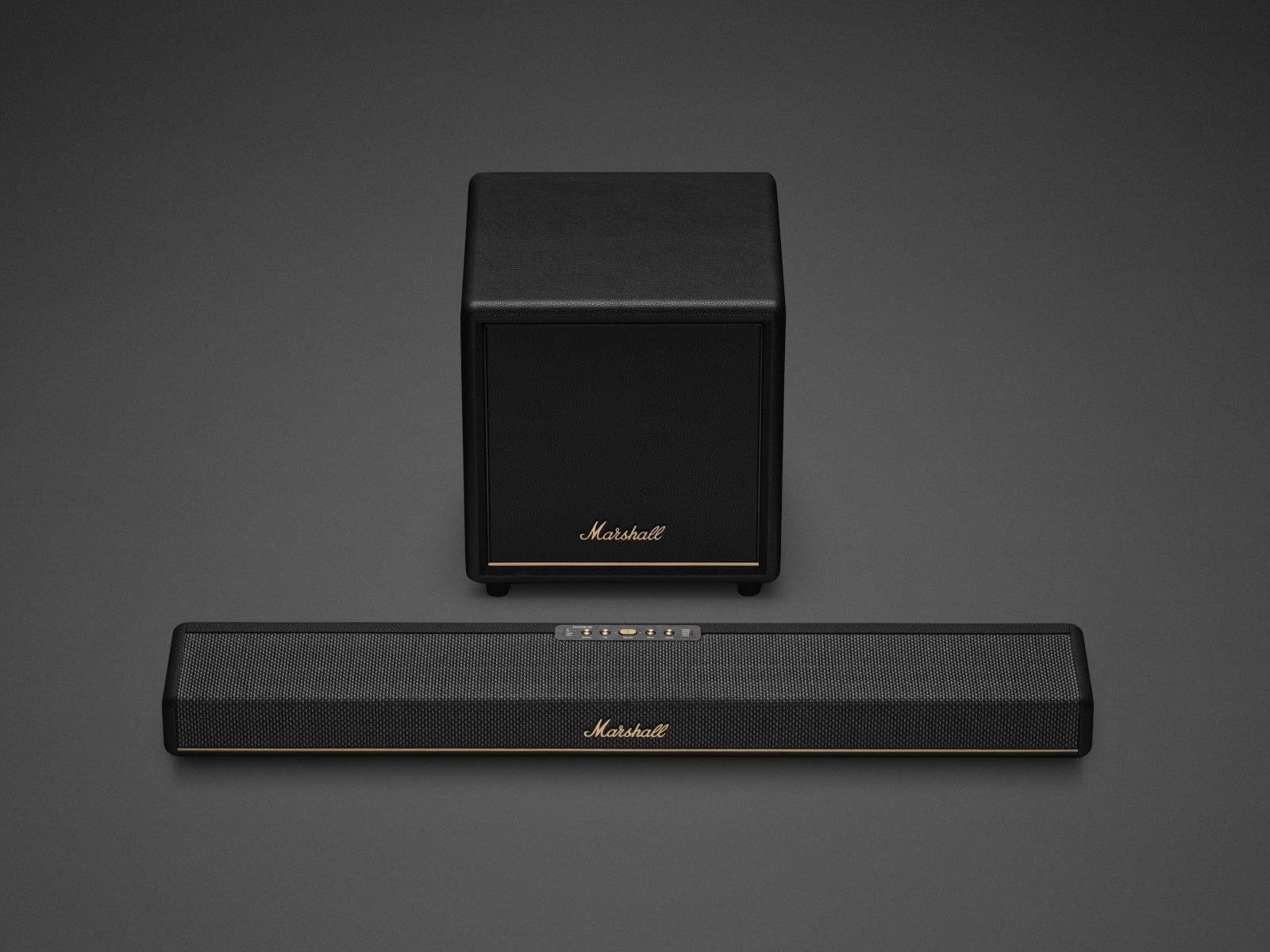
Marshall Heston 60 Soundbar And Sub 200 Subwoofer Bring Vintage Vibes And Room-Shaking Bass

Marshall Heston 60 Soundbar And Sub 200 Subwoofer Bring Vintage Vibes And Room-Shaking Bass
Marshall, a name most synonymous with guitar amps, is (ahem) amplifying its presence in the home theater market with the introduction of two new products: the Marshall Heston 60 compact soundbar and the Heston Sub 200 wireless subwoofer. Following the launch of the larger Heston 120 model earlier this year, this new duo expands Marshall’s