How AMD Zen 6 CPUs May Use TSMC’s 2nm & 3nm Nodes For A Performance Boost

How AMD Zen 6 CPUs May Use TSMC's 2nm & 3nm Nodes For A Performance Boost
Today’s news isn’t strictly news, but a second source is reporting the same thing that was rumored before, so we’re going to cover it now. The short version is that AMD’s Zen 6 processors are said to be using TSMC’s N2 fabrication process for the CCDs, the Core Complex Dice which are shared between Ryzen and EPYC. Meanwhile, the cIOD, or “Client

Mis-issued certificates for 1.1.1.1 DNS service pose a threat to the Internet

People in Internet security circles are sounding the alarm over the issuance of three TLS certificates for 1.1.1.1, a widely used DNS service from content delivery network Cloudflare and the Asia Pacific Network Information Centre (APNIC) Internet registry.

The certificates, issued in May, can be used to decrypt domain lookup queries encrypted through DNS over HTTPS, a protocol that provides end-to-end encryption when end-user devices seek the IP address of a particular domain they want to access. Some security experts are also concerned that the certificates may underpin other sensitive services, such as WARP, a VPN offered by Cloudflare. The certificates remained valid at the time this post went live on Ars.

Key failures

Although the certificates were issued four months ago, their existence came to public notice only on Wednesday in a post to an online discussion forum. They were issued by Fina RDC 2020, a certificate authority that’s subordinate to the root certificate holder Fina Root CA. The Fina Root CA, in turn, is trusted by the Microsoft Root Certificate Program, which governs which certificates are trusted by the Windows operating system. Microsoft Edge accounts for approximately 5 percent of the browsers actively used on the Internet.

Read full article

Comments

The first new Bond game in over a decade is Hitman meets action blockbuster

IO Interactive seemingly wrapped up its assassination series Hitman in 2023, launching the anthology on practically every game platform. But it’s not done with sneaking, subterfuge, and… sniper rifles. The game developer announced that it was making a new James Bond game, teasing an “unrefined” Bond in training – yes, it’s another reimagined origin story.

At a closed-door briefing at Gamescom, I watched the team play through some early parts of 007 First Light, with Bond part of a team of more seasoned spies hunting down a rogue double-‘o’ agent. Ah, that sounds like a Bond plot.

The gameplay was separated into three parts. First, the creative, exploratory sandbox part, as Bond tries to elbow his way into a bougie mansion – when he should be readying the escape car. Like Hitman, Bond can sneak around, triggering items to draw away guards or distract from his own actions. He scrambles up a building to get in through an open window, while vaguely flirting with staff and pretending he’s meant to be there. The team explained that social interactions will form another part of how the rookie agent can interact with people and progress through areas and toward goals.

Some features differentiate First Light from the aforementioned bald-headed assassination games. First of all, it’s far less centered on all the killing (at least until the full-throttle action sections later), with the team attempting to reflect Bond adventures beyond bullets and grizzly ends.

There’s also an Omega-branded Q Watch that attempts to elegantly fold in HUD features like location markers, weaponry, and gadget selection. It’ll also help analyze the environment for interactive parts and opportunities for Bond. Players will apparently have a degree of freedom to decide how they approach missions and areas, even if we only saw one approach during this presentation. It did manage to convey the stress and pressure I’d expect to feel from an IO Interactive game.

The early demo diverges from Hitman familiarity elsewhere. IO Interactive said that while 007 will offer a linear adventure of sorts, players will still have “control of their adventure.” A blend of action setpieces and more measured, thinking, exploratory sections should separate it from other games and other Bond games, too, which have typically been first-person shooters, some of which are terrible.

The demo jumps ahead as Bond follows the rogue agent in an exciting-looking car chase. These reminded me of Uncharted car segments, filled with destruction and chaos. Bond drives through a Swiss market, with something catching on his car tires for the rest of the chase, while there are jumps, explosions, and near-misses as you fight to catch up. It’s a shame that, at this early stage at least, you can tell that regardless of your honed driving skills, you will never catch up to your quarry until the game wants you to. The chase ends at a very well-guarded airbase.

This leads into the other facet of First Light: gunplay and way too many oil drums and trucks filled with gasoline. The final segment includes Bond rushing the airbase and chasing a military transport craft as it takes off. Fighting is a mix of duck-and-cover, using the environment, and, if all else fails, throwing your gun once it’s out of bullets.

There’s a great point after Bond barely makes it on board the plane just before it takes off. He uses his Q Watch to tilt the plane, swinging cargo and enemies into the walls of the plane or even out the cargo door. Eventually, 007 is flung from the plane too, and as he falls, has to claim a parachute.

It’s a real change of pace from the early part of the demo but suggests First Light might cover all the Bond movie beats. I might not be sold on another Bond origin story, but hopefully, IO Interactive can successfully blend three different types of game together.

This article originally appeared on Engadget at https://www.engadget.com/gaming/007-first-light-hitman-meets-action-movie-183551755.html?src=rss

Amazon’s Tomb Raider series will star Sophie Turner as Lara Croft

We finally have our Lara Croft, well over two years after Prime Video’s Tomb Raider series was first announced. Game of Thrones alum Sophie Turner has been cast in the role, according to The Hollywood Reporter. She had better start trying on khaki shorts and blue sleeveless shirts.

Turner acknowledges the “massive shoes to fill” from previous actors that have played the role, shouting out Angelina Jolie and Alicia Vikander. She also says she can’t wait for audiences “to see what we have cooking.”

We also now know when the show will enter production. Filming starts on January 19. We don’t know when the series will come out, but at least we know it’s a real thing that’s going to get filmed.

Sophie Turner set to star as Lara Croft in upcoming Tomb Raider series from Amazon MGM Studios.

Phoebe Waller-Bridge serves as creator, writer, executive producer and co-showrunner.

Jonathan Van Tulleken set as director and executive producer and Chad Hodge joins as… pic.twitter.com/m7aaaZH9Sk

— Amazon MGM Studios (@AmazonMGMStudio) September 3, 2025

Additionally, the platform has announced that Chad Hodge will join Phoebe Waller-Bridge as a co-showrunner. Bridge was revealed as the creator well over a year ago. Hodge is best known for his work on shows like Good Behavior and movies like Single All the Way.

Bridge may be best known for creating the romantic comedy series Fleabag, but she has had plenty of experience with action-heavy projects. She created the series Killing Eve and co-wrote a James Bond film. She also starred in the most recent Indiana Jones movie, which is a franchise the Tomb Raider games cribbed from.

As for those games, Amazon is also publishing the next entry in the long-running franchise. Crystal Dynamics is developing it, which is the company that has been in charge of the mainline titles since 2003.

This article originally appeared on Engadget at https://www.engadget.com/entertainment/tv-movies/amazons-tomb-raider-series-will-star-sophie-turner-as-lara-croft-183035877.html?src=rss

Ubisoft’s free Assassin’s Creed Mirage Discovery Tour app allows you to explore 9th century Baghdad

Ubisoft is releasing a free Discovery Tour app covering the history of Baghdad, the setting of Assassin’s Creed Mirage. The game launched in 2023 without Ubisoft’s “Discovery Tour” feature, a mode that’s previously been packed into Assassin’s Creed games — starting with 2017’s Assassin’s Creed Origins — and uses the game’s open-world maps and character models to illustrate the history and cultural specifics of their chosen setting.

This new app takes a slightly different approach, reworking the map of Assassin’s Creed Mirage to deliver a two hour narrative adventure set in 9th century Baghdad. The Discovery Tour app also includes “encyclopedic entries on the history, art, and culture of medieval Baghdad and the Abbasid Caliphate” and an augmented reality feature that lets you view 3D models of famous artifacts.

It sounds like less of a playable history lesson than past Discovery Tours, but still an excellent use of the historical research that goes into each Assassin’s Creed game. It’s a bit unusual the app is being offered for free when Ubisoft has traditionally charged for Assassin’s Creed games or its standalone Discovery Tour apps, but maybe that reflects Assassin’s Creed Mirage‘s unique place in the series. The game was pitched as a back-to-basics stealth game without the open-world fluff of past games, and largely delivered.

Ubisoft’s approach to Assassin’s Creed might also be changing in general. The game franchise was spun-off alongside Far Cry and Tom Clancy’s Rainbow Six into a new subsidiary partially funded by Tencent earlier this year. Even grander plans to turn Assassin’s Creed into an always-online live-service game still loom in the background, too.

You can download and try the Ubisoft’s Discovery Tour App: Medievil Baghdad for yourself from the App Store and Play Store.

This article originally appeared on Engadget at https://www.engadget.com/gaming/ubisofts-free-assassins-creed-mirage-discovery-tour-app-allows-you-to-explore-9th-century-baghdad-182020279.html?src=rss

Google Is Making It Easier to Share Audio Across Multiple Headphones

Did you know you can customize Google to filter out garbage? Take these steps for better search results, including adding my work at Lifehacker as a preferred source.


If you have a Pixel, and you want to listen to music or watch a movie with a friend, you don’t have a ton of options. You could share earbuds—which, gross—or listen through the speaker, which will disturb everyone around you. That’s now changing, thanks to expanded support for Auracast and LE Bluetooth Audio.

LE Audio is a Bluetooth standard that enables a host of new features for compatible devices, including, notably, Auracast. With Auracast, one device can output an audio signal that you can pick up with your headphones or hearing aids. The use cases run the gamut, from private audio sharing between devices, to the ability to tap into announcements in public spaces.

Google has been working on Auracast integration with Android for some time now, but Android 16 ratchets up support in a major way. The company announced two key Auracast upgrades that users can enjoy, assuming they have both a supported Android device as well as a pair of LE Audio headphones.

Expanded Auracast support

First things first: Auracast will only work if you have devices that support it. As such, part of today’s announcement involves expanded support for the standard: On the audio device front, Google says it is rolling out LE Audio capabilities for Sony headphones. It is also rolling out Auracast support for certain Pixel phones.

With that news, this is Google’s full list of Android devices that can take advantage of Auracast and its features:

  • Google Pixel 8 and newer

  • Samsung Galaxy S23

  • Samsung Galaxy S24

  • Samsung Galaxy S25

  • Samsung Galaxy Z Fold 5

  • Samsung Galaxy Z Fold 6

  • Samsung Galaxy Z Fold 7

  • Xiaomi 14T

  • Xiaomi 14T Pro

  • Xiaomi 14

  • Xiaomi 15

  • Xiaomi 14 Ultra

  • Xiaomi 15 Ultra

  • Xiaomi MIX Flip

  • POCO X6 Pro

  • POCO F6 Pro

  • POCO F7 Pro

  • POCO F7 Ultra

Audio sharing

If you and a friend each have a pair of LE Audio devices, you can now pair them simultaneously to your compatible Android device to share audio—which is much more preferable than sharing earbuds. This was possible previously on certain Android devices, but it was much more limited, and similar to how Apple supports simultaneous AirPods or Beats connections.

Similarly, you can also share audio in a a “private broadcast” with groups of people via Auracast. Friends can pair their headphones to your device via Fast Pair, or can scan a QR code to tap in. Google doesn’t say if there’s a limit to the number of participants on these private broadcasts, though the company does say “the whole group” can jump in. All your friends need are LE Audio headphones: Even if they have a different smartphone or streaming service than you, they can still participate.

Google’s latest Pixel drop brings the Material 3 Expressive UI to older devices

Now that the Pixel 10 series has been out for a week, Google has begun rolling many of the software features it debuted with those phones to its older devices as part of the September Pixel drop. Starting today, if you own any Pixel device Google has released since 2021, including the Pixel 6 and Pixel Tablet, you can start to customize your device with the company’s new Material 3 Expressive user interface.

Among other tweaks, Google made it possible to add “Live Effects,” including a few that cover the weather, to your phone’s lock screen wallpaper. Material 3 Expressive also gives you more control over how the contact cards your phone displays when your friends and family call you look. Even if you’re not one to endlessly tweak Android’s appearance, as part of the redesign Google has once again reworked the Quick Settings pane in hopes of making it easier to use.

As Google mentioned during last month’s Pixel 10 event, the Pixel Buds Pro 2 will receive a handful of new software features, beginning later this month. To start, there’s Adaptive Audio, which Google says will allow the Pixel Buds Pro 2 to intelligently adjust the output of your earbuds to your surroundings. At the same time, Loud Noise Protection will limit the volume of the Pixel Buds Pro 2 to preserve your hearing. Two new gestures allow you to accept or dismiss a call by nodding or shaking your head. You can do the same when a text message arrives.

In Gboard, Google is adding new AI writing tools to help users with editing their texts and messages.
Google

Bluetooth audio on the whole is getting a few upgrades on Android, courtesy of LE Audio Auracast. With the new tech, you can now simultaneously pair two different sets of Bluetooth headphones with a single Android handset. In practice, this will allow you and a friend to listen to the same song or podcast from a single device. If you want to involve more people, you can use your phone to create a QR code, which both friends and strangers can then use to join a private broadcast. Google suggests this could be a fun way to host a silent disco. To make it as easy as possible to start an audio broadcast, Google has redesigned Android’s Quick Share menu. A simple toggle allows you to switch between sending and receiving files, and there’s a new indicator where you can follow the progress of your transfers.

As mentioned, the new audio features are made possible by Auracast, which enables public broadcasts of Bluetooth audio. Google began supporting Auracast with the third Android 16 beta, and now we’re starting to see that support mature, with devices now from Google, Samsung and Xiaomi all ready to join in on the fun.

Of course, it wouldn’t be a recent Google release if the company didn’t include new AI features. On that front, the company is offering additional writing tools in Gboard. Like its iOS counterpart, the tool allows you to use an on-device model to edit your writing. The algorithm can tweak your messages to make them more formal, expressive or concise. It will also correct any spelling or grammatical errors.

Last but not least, Google is introducing an experience called Androidify, which allows you to use AI to create your own Android bot — you know, the cutesy mascot in most of the company’s smartphone marketing. The experience is available online and through an app Google has released on the Play Store. To get started, you can upload a selfie, write a prompt and add some accessories to your bot. Afterward, Google’s latest AI models will do the rest.

This article originally appeared on Engadget at https://www.engadget.com/mobile/smartphones/googles-latest-pixel-drop-brings-the-material-3-expressive-ui-to-older-devices-180011681.html?src=rss

Google’s Latest Pixel Drop Adds Three Important New Features

Did you know you can customize Google to filter out garbage? Take these steps for better search results, including adding my work at Lifehacker as a preferred source.


Google’s September Pixel Drop is here. While the update doesn’t ship with a ton of new features, what is new here is going to be quite obvious. If you have a Pixel that can run Android 16, your phone is going to look and act quite different. Plus, if you have Pixel Buds Pro 2 or a Pixel Watch, there are some new updates to explore as well.

Google says that these updates are rolling out starting today, though they will continue “over the next few weeks.” As such, you might see some of all of the features hit your devices today, but don’t be surprised if they take more time to appear.

Material 3 Expressive

Back in May, Google announced Material 3 Expressive, the company’s latest design language for Android. Material 3 Expressive has new UI elements, text styles, bright colors, and fresh animations, and while it’s not a total design overhaul, it’s not a particularly subtle update, either. It also comes with some additional features, like new iPhone-style Calling Cards for Google’s Phone app.

This new design launched first with Google’s Pixel 10 line of phones, so if you bought one, you’ve already experienced it. However, if you’re still rocking an older Pixel, you no longer need to wait to try out Material 3 Expressive. Google announced that the new update is rolling out to Pixel 6 and newer, including Pixel Tablet, starting today.

Adaptive Audio

If you have a set of Pixel Buds Pro 2, you’re getting a pretty big update later this month. Google will be rolling Adaptive Audio, a feature that analyzes your surroundings and adjusts audio levels accordingly, to these earbuds. Google doesn’t go into much detail here, but it seems similar to Adaptive Sound, which is available on previous Pixel Buds devices. Google also highlights “Loud Noise Protection,” a feature that “protects” your ears if you encounter a loud sound. Again, few details here, but it sounds like Pixel Buds Pro 2 will limit the audio levels coming through the buds when something like a siren passes by.

Google Maps updates for Pixel Watch

I feel like smartwatches could be the ideal navigation device. When you’re on the move, you don’t really want to be looking at your phone all the time to see when the next turn is. Instead, I’d rather glance at my watch, and keep my eyes on my surroundings.

To that point, Google’s latest Pixel Drop makes navigating with a Pixel Watch a bit easier. Now, you can start walking or biking directions on Google Maps on your phone, and your Pixel Watch will automatically pick up navigation. That way, you can set your course on your Pixel, put it away, and be on your way.

Cloudflare Thwarts Record-Setting 11.5 Tbps DDoS Attack, Lock Down Your IoT Devices Now

Cloudflare Thwarts Record-Setting 11.5 Tbps DDoS Attack, Lock Down Your IoT Devices Now
Cloudflare just announced on X that it blocked the highest DDoS (distributed denial-of-service) attack in history, which was an 11.5 Terabits per second DDoS attack that came as a UDP (User Datagram Protocol) flood. It was brief, about 35 seconds long, but slammed resources at over 5.1 billion packets per second.

In UDP flood attacks, attackers

In win for infectious diseases, Florida to end all school vaccine requirements

Florida is planning to end all vaccination requirements in the state, including requirements for school children to get routine childhood vaccinations that protect them and their communities from severe and life-threatening diseases, such as Haemophilus influenzae type b (Hib), pertussis (whooping cough), diphtheria, measles, tetanus, RSV, and polio.

Florida Surgeon General Joseph Ladapo made the announcement at a press conference on Wednesday alongside Governor Ron DeSantis.

“What I’m most excited about is an announcement that we’re making now, which is that the Florida Department of Health, in partnership with the governor, is going to be working to end all vaccine mandates in Florida law—all of them, all of them, all of them, every last one of them,” Ladapo said. “Every last one of them is wrong and drips with disdain and slavery.”

Read full article

Comments

Acer Unveils High-Octane Nitro And Predator Gaming PCs, Plus A 720Hz OLED Monitor

Acer Unveils High-Octane Nitro And Predator Gaming PCs, Plus A 720Hz OLED Monitor
IFA 2025 is chock-full of announcements for new hardware, and Acer decided to bring everything plus the kitchen sink to the trade show. The PC giant has pulled back the curtain on its refreshed Nitro and Predator gaming gear lineup, comprised of laptops, desktops, and monitors.

We’ll start with the moving parts. The Nitro V 16 and V 16S

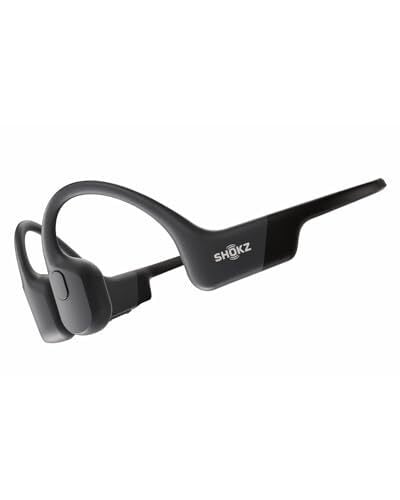
My Favorite Amazon Deal of the Day: Shokz OpenRun Headphones

We may earn a commission from links on this page. Deal pricing and availability subject to change after time of publication.

Did you know you can customize Google to filter out garbage? Take these steps for better search results, including adding Lifehacker as a preferred source for tech news.


Bone conduction headphones are ideal for activities where it is vital to your safety to hear your surroundings, such as running or biking outdoors. That’s because they use a technology that sends audio vibrations through to the inner ear while leaving your ear canals open—and Shokz is one of, if not the best, brand making bone conduction headphones right now.

At the high end of Shokz’s offerings is the OpenRun Pro 2, which I tested and reviewed; at the budget end of the spectrum are the Shokz OpenRun, which are $89.95 (originally $129.95) right now, which matches their Prime Day price, according to price-tracking tools.

If you’ve never used bone conduction headphones, they’re worth a try, and the Shokz Open are a great introduction since they’re the cheapest option from arguably the best brand. The technology has come a long way since its early days. The major downside of the technology has been that the bass doesn’t sound as good as in-ear earbuds. As the name implies, these are meant to be used on runs outdoors. They have an IP67 rating for dust- and water-proofing, are lightweight and comfortable, and, because of their design, can be worn with bicycle helmets and sunglasses.

You can use these as everyday headphones around the house as well since they can take calls; just be mindful that they don’t block any sound. If you plan to use these in a location with loud music or has a lot of ambient noise, you’ll hear everything, so you might prefer taking regular headphones—but that will defeat the purpose of the “open ear” headphones. These have multipoint connectivity, but there is no companion app or EQ functionality.


Deals are selected by our commerce team

Common Pesticide Linked To Widespread Brain Abnormalities In Children

alternative_right shares a report from ScienceAlert: The insecticide chlorpyrifos is a powerful tool for controlling various pests, making it one of the most widely used pesticides during the latter half of the 20th century. Like many pesticides, however, chlorpyrifos lacks precision. In addition to harming non-target insects like bees, it has also been linked to health risks for much larger animals — including us. Now, a new US study suggests those risks may begin before birth. Humans exposed to chlorpyrifos prenatally are more likely to exhibit structural brain abnormalities and reduced motor functions in childhood and adolescence.

Progressively higher prenatal exposure to chlorpyrifos was associated with incrementally greater deviations in brain structure, function, and metabolism in children and teens, the researchers found, along with poorer measures of motor speed and motor programming. […] This supports previous research linking chlorpyrifos with impaired cognitive function and brain development, but these findings are the first evidence of widespread and long-lasting molecular, cellular, and metabolic effects in the brain. “The disturbances in brain tissue and metabolism that we observed with prenatal exposure to this one pesticide were remarkably widespread throughout the brain,” says first author Bradley Peterson, a developmental neuroscientist at the University of Southern California’s Keck School of Medicine. Senior author Virginia Rauh added: “It is vitally important that we continue to monitor the levels of exposure in potentially vulnerable populations, especially in pregnant women in agricultural communities, as their infants continue to be at risk.”

The report notes that the EPA banned residential use of chlorpyrifos in 2001 but the pesticide is still used in agriculture around the world.

The findings have been published in the journal JAMA Neurology.


Read more of this story at Slashdot.

World’s Biggest Iceberg Breaks Up After 40 Years

The world’s largest iceberg is now breaking apart rapidly in warmer waters after nearly 40 years adrift. “Earlier this year, the ‘megaberg’ known as A23a weighed a little under a trillion tons and was more than twice the size of Greater London,” reports The Guardian. “It is now less than half its original size, but still a hefty 1,770 sq km (683 sq miles) and 60km (37 miles) at its widest point…” Scientists expect it to completely disintegrate within weeks. From the report: A23a calved from the Antarctic shelf in 1986 but quickly grounded in the Weddell Sea, remaining stuck on the ocean floor for over 30 years. It finally escaped in 2020 and, like other giants before it, was carried along “iceberg alley” into the South Atlantic Ocean by the powerful Antarctic Circumpolar Current. Around March, it ran aground in shallow waters off distant South Georgia island, raising fears it could disrupt large colonies of adult penguins and seals there from feeding their young. But it dislodged in late May, and moved on. […] Iceberg calving is a natural process. But scientists say the rate at which they were being lost from Antarctica is increasing, probably because of human induced climate change.


Read more of this story at Slashdot.

AI-Powered Drone Swarms Have Now Entered the Battlefield

An anonymous reader quotes a report from the Wall Street Journal: On a recent evening, a trio of Ukrainian drones flew under the cover of darkness to a Russian position and decided among themselves exactly when to strike. The assault was an example of how Ukraine is using artificial intelligence to allow groups of drones to coordinate with each other to attack Russian positions, an innovative technology that heralds the future of battle. Military experts say the so-called swarm technology represents the next frontier for drone warfare because of its potential to allow tens or even thousands of drones — or swarms — to be deployed at once to overwhelm the defenses of a target, be that a city or an individual military asset.

Ukraine has conducted swarm attacks on the battlefield for much of the past year, according to a senior Ukrainian officer and the company that makes the software. The previously unreported attacks are the first known routine use of swarm technology in combat, analysts say, underscoring Ukraine’s position at the vanguard of drone warfare. […] The drones deployed in the recent Ukrainian attack used technology developed by local company Swarmer. Its software allows groups of drones to decide which one strikes first and adapt if, for instance, one runs out of battery, said Chief Executive Serhii Kupriienko. “You set the target and the drones do the rest,” Kupriienko said. “They work together, they adapt.”

Swarmer’s technology was first deployed by Ukrainian forces to lay mines around a year ago. It has since been used to target Russian soldiers, equipment and infrastructure, according to the Ukrainian military officer. The officer said his drone unit had used Swarmer’s technology more than a hundred times, and that other units also have UAVs equipped with the software. He typically uses the technology with three drones, but says others have deployed it with as many as eight. Kupriienko said the software has been tested with up to 25 drones. A common operation uses a reconnaissance drone and two other UAVs carrying small bombs to target a Russian trench, the officer said. An operator gives the drones a target zone to look for an enemy position and the command to engage when it is spotted. The reconnaissance drone maps the route for the bombers to follow and the drones themselves then decide when, and which one, will release the bombs over the target.


Read more of this story at Slashdot.

Niri 25.08 released

Version
25.08
of the niri scrollable-tiling Wayland compositor has been
released. Notable changes include xwayland-satellite
integration, modal exit confirmation, and the introduction of basic
support for screen readers:

A series
of posts
by fireborn earlier this year on the screen reader
situation in Linux got me curious: how does one support
screen readers in a Wayland compositor? The documentation is
unfortunately scarce and difficult to find. Thankfully, @DataTriny from the AccessKit project came across my issue,
pointed me at the right protocols, and answered a lot of my questions.

So, as of this release, niri has basic support for screen readers!
We implement the org.freedesktop.a11y.KeyboardMonitor D-Bus
interface for Orca to listen and
grab keyboard keys, and we expose the main niri UI elements via
AccessKit. […]

The current screen reader support and further considerations are
documented on the new Accessibility wiki page.

LWN covered niri in
July.