Is the web thriving or faltering? Google has an unexpected take in a new legal filing. Google is heading back to court soon in hopes of convincing a judge that it should not have to split up its ad business. The company lost its adtech antitrust case earlier this year, and now it’s up to the court to decide on remedies for the illegal conduct. In its response to the Department of Justice’s requested remedies, Google made a startling claim: “The fact is that today, the open web is already in rapid decline.”
Google says that forcing it to divest its AdX marketplace would hasten the demise of wide swaths of the web that are dependent on advertising revenue. This is one of several reasons Google asks the court to deny the government’s request. The DOJ also tried to force a divestment of Chrome in the search antitrust trial, but the judge in that case declined to order that in the remedies.
Google’s advertising business has turned it into an unrivaled Internet juggernaut. Google increasingly is the Internet—websites have no choice but to adhere to Google’s standards for search and ads because there’s no substantial competition. The court in this case ruled that in tying its display ad services with the AdX marketplace, Google suppressed the adoption of rival technologies, and this gave it an opportunity to preference its own services in ad auctions.
An anonymous reader shares a report: In what is being called the largest supply chain attack in history, attackers have injected malware into NPM packages with over 2.6 billion weekly downloads after compromising a maintainer’s account in a phishing attack.
The package maintainer whose accounts were hijacked in this supply-chain attack confirmed the incident earlier today, stating that he was aware of the compromise and adding that the phishing email came from support [at] npmjs [dot] help, a domain that hosts a website impersonating the legitimate npmjs.com domain.
In the emails, the attackers threatened that the targeted maintainers’ accounts would be locked on September 10th, 2025, as a scare tactic to get them to click on the link redirecting them to the phishing sites.
Google is opening up AI Mode to more languages. Starting today, the AI chatbot the company is integrating into Google Search is available in Hindi, Indonesian, Japanese, Korean and Brazilian Portuguese.
The company has been rapidly expanding access to the search experience. In May, Google started offering it to everyone in the US (and later the UK and India) after starting public tests just two months earlier.
Google added more features to AI Mode in July, including support for the Gemini 2.5 Pro model and Deep Search. As of last month, AI Mode has been present in more than 180 countries. But until now, AI Mode had only been available in English. This is the first language support expansion for the chatbot.
“Building a truly global Search goes far beyond translation — it requires a nuanced understanding of local information,” Hema Budaraju, Google’s vice president of search product management wrote in a blog post. “With the advanced multimodal and reasoning capabilities of our custom version of Gemini 2.5 in Search, we’ve made huge strides in language understanding, so our most advanced AI search capabilities are locally relevant and useful in each new language we support.”
Google has been claiming recently that traffic to websites from Search is “relatively stable” since the rollout of AI Overviews and that “the web is thriving.” However, the company admitted something very different in a court filing last week. Its lawyers stated that “the open web is already in rapid decline.” That, plus the expansion of AI Mode, will surely be welcomed with open arms by publishers who are seriously feeling the pinch of declining web traffic.
This article originally appeared on Engadget at https://www.engadget.com/ai/google-expands-ai-mode-beyond-english-for-the-first-time-192245955.html?src=rss
Nobel Prize-winning molecular biologist and former Caltech president David Baltimore—who found himself at the center of controversial allegations of fraud against a co-author—has died at 87 from cancer complications. He shared the 1975 Nobel Prize in Physiology for his work upending the then-consensus that cellular information flowed only in one direction. Baltimore is survived by his wife of 57 years, biologist Alice Huang, as well as a daughter and granddaughter.
“David Baltimore’s contributions as a virologist, discerning fundamental mechanisms and applying those insights to immunology, to cancer, to AIDS, have transformed biology and medicine,” current Caltech President Thomas F. Rosenbaum said in a statement. “David’s profound influence as a mentor to generations of students and postdocs, his generosity as a colleague, his leadership of great scientific institutions, and his deep involvement in international efforts to define ethical boundaries for biological advances fill out an extraordinary intellectual life.”
Baltimore was born in New York City in 1938. His father worked in the garment industry, and his mother later became a psychologist at the New School and Sarah Lawrence. Young David was academically precocious and decided he wanted to be a scientist after spending a high school summer learning about mouse genetics at the Jackson Laboratory in Maine. He graduated from Swarthmore College and earned his PhD in biology from Rockefeller University in 1964 with a thesis on the study of viruses in animal cells. He joined the Salk Institute in San Diego, married Huang, and moved to MIT in 1982, founding the Whitehead Institute.
Apple’s “Awe Dropping” event kicks off tomorrow, Sept. 9, and all of the tech world is focused on the iPhone 17. But new iPhones aren’t the only upgrades Apple is set to unveil tomorrow. If rumors are to be believed, we’ll also get a look at the company’s upcoming Apple Watches, including the Apple Watch Ultra 3.
This device would mark the first new “Ultra” since 2023’s Ultra 2. The Ultras are Apple’s “pro” watch line, focused on durability and lengthy battery life. They tend to be pricier than other Apple Watches, but they also come with unique features, including Apple’s largest and brightest watch display. Based on what we know, the Ultra 3 won’t be a reinvention, but it should offer some interesting upgrades that might entice customers (provided they are OK with spending $800 on an Apple Watch).
Here’s what the rumors suggest we’ll see tomorrow.
An upgraded processor
Apple frequently introduces a new processor, or chip, with new Apple Watches. The Ultra 2 uses the S9, while the Series 10 uses the S10. As such, the rumor mill has been back and forth on whether the Ultra 3 will adopt the Series 10’s S10 chip, or ship with a brand new one.
According to Bloomberg’s Mark Gurman, signs point to the latter. Gurman believes Apple’s newest Ultra watch will introduce the S11 chip. Not only that, but it seems possible Apple’s other new smartwatches, the Series 11 and the new SE, will also feature the S11.
That doesn’t mean these watches will wildly outperform the company’s previous chips. MacRumors analyzed the S11’s leaked architecture, and found the S9 and S10 chips have the same underlying tech as the new S11. That’s still a high-performing chip: The S9, S10, and, presumably, S11, are all 64-bit dual-core processors with a quad-core Neural Engine, with second-gen Ultra Wideband and 64GB of internal storage. However, this does suggest that speed upgrades might not be the reason to pick up any of Apple’s newest watches this year. We’ll have to see what the company announces tomorrow.
A bigger, better display
The Ultra series has the largest display you can get on an Apple Watch, and according to rumors, the Ultra 3 could have an even larger screen. MacRumors says the new watch could bump up the display resolution from 410 x 502 to 422 x 514. That wouldn’t be a dramatic increase, but it would make it the largest watch screen Apple has ever made.
The Ultra 3 will likely also borrow from the Series 10’s display technology: The latter’s LPTO3 OLED display allows the watch to refresh its display faster than the Ultra 2, which would enable Always-On watch faces with a moving second hand. The Series 10 also comes with a wide-angle OLED display, which increases the brightness of the display when viewed at an angle. The Ultra 3 could follow suit.
Satellite connectivity
Ever since the Series 3, Apple has offered customers the option to buy a watch that supports cellular connectivity, but the Ultra 3 could be Apple’s first smartwatch to support satellite connectivity. What this means is, whenever your watch is out of range of a cellular signal, it would be able to connect to a satellite instead. This type of connection is usually much slower than a traditional cellular connection, but it does work, and would allow you to contact friends, family, or emergency services when you have no service. Suddenly, there are no more “dead zones.”
But the connectivity improvements aren’t limited to areas without cell service. The Ultra 3 may also be the first Apple Watch to support 5G, as Apple may tap MediaTek for the device’s embedded modem. Cellular-enabled Apple Watches only support 4G LTE, so users upgrading to a theoretical 5G Ultra 3 would improve speeds in areas with 5G connections.
Quick charging
MacRumors believes the Ultra 3 could introduce a faster charging experience, following in the footsteps of the Series 10. That watch can charge to 80% in 30 minutes, while the Ultra 2 needs 60 minutes to charge to 80%. MacRumors highlights that the difference comes down to the material the watches are made out of: The Series 10 has a metal casing with a larger charging coil, while the Ultra 2 uses the usual crystal casing most all other Apple Watches have used.
A blood pressure monitor
The Ultra 3 could also introduce a blood pressure monitor for the first time in an Apple Watch. This is something Apple has reportedly been working on for some time, and the Ultra 3 could be its debut. That said, Gurman suggests that Apple has run into “regulatory and engineering” issues with the feature, so it’s possible we won’t see it until the launch of the Ultra 4 or Series 12.
It’s interesting timing, as Apple just got the all-clear to bring back the Apple Watch’s blood oxygen sensor. The company was forced to disable the feature for Series 9 and Ultra 2 devices following a lawsuit, though a subsequent case allowed the company to reinstate the feature. (Older watches with the blood oxygen sensor never saw it disabled.)
Vodafone made a commercial starring an AI avatar posing as a real lady. This is interesting because Vodafone is a major global brand and not a fly-by-night TikTok company using a ridiculous deepfake of Jackson Galaxy to sell cat toys.
The tells in the commercial are obvious and what one would expect. The AI avatar’s hair is a bit off, which ruins the charade that this is a real person. The physical mannerisms and speaking tone are also wonky. A facial mole moves around at one point. It’s AI. You know the drill.
The company responded to a question on a message board as to why it couldn’t put “a real person in front of the camera” by saying this is simply an experiment. It said it was “testing different styles of advertising — this time with AI,” and that “AI is so much a part of everyday life these days that we also try it out in advertising.”
This article originally appeared on Engadget at https://www.engadget.com/ai/vodafone-is-testing-an-ai-actor-to-sell-its-products-instead-of-paying-a-human-to-do-it-185301360.html?src=rss
Intel is looking to leverage its chip manufacturing foundry business as a core part of its plan to right the ship, as the company attempts to secure orders from third parties. Though comments from Qualcomm CEO Cristiano Amon won’t help matters. Amon claimed in a recent interview that Intel still has work to do when it comes to optimizing its
President Donald Trump signed an executive order Friday authorizing the Department of Defense to refer to itself as the Department of War, reverting to a more bellicose title used until a 1940s-era military shakeup in the aftermath of World War II.
The order approves the Pentagon’s use of the Department of War name as an “additional secondary title” for the Department of Defense while the Trump administration seeks congressional approval to officially change the name. Until Congress votes on the issue, the name change is effectively a rebrand of the DoD that could be reversed with the signature of a future president.
But there was another potential name change revealed by the Pentagon on Friday, just hours before Trump signed the War Department order. This one may have more staying power.
Signal has begun rolling out end-to-end encrypted cloud backups in its latest Android beta release. The opt-in feature allows users to restore message history if their phone is lost or damaged. Free backups include all text messages and 45 days of media attachments. A $1.99 monthly subscription extends media storage to 100GB.
Users generate a 64-character recovery key on their device that Signal’s servers never access. Backups refresh daily, excluding view-once messages and those set to disappear within 24 hours. The nonprofit cited storage costs as the reason for its first paid tier. iOS and Desktop support will follow the Android rollout. Signal said it stores backup archives without linking them to specific user accounts or payment information.
SpaceX’s complaints to the Federal Communications Commission have helped the satellite company land a $17 billion deal to buy spectrum licenses from EchoStar.
The deal consists of up to $8.5 billion in cash and up to $8.5 billion in SpaceX stock, EchoStar said. SpaceX also agreed to pay $2 billion worth of interest payments on EchoStar debt through November 2027.
After SpaceX alleged that EchoStar subsidiary Dish Network “barely uses” its spectrum and urged the FCC to make the spectrum available to other carriers, FCC Chairman Brendan Carr announced an investigation into EchoStar and threatened to revoke its spectrum licenses. EchoStar countered that it had met the network construction deadlines associated with its spectrum licenses, but decided to start selling off the licenses instead of fighting the FCC.
Bad actors are also abusing Calendar invites to send phishing emails that look like PayPal purchase notifications—and because the messages come from Apple’s mail server, they can slip past security measures and find their way into your inbox.
Scammers are using Calendar to send callback phishing emails
This latest scam, detailed by BleepingComputer, is a form of callback phishing, which aims to get targets on the phone in order to collect sensitive information or connect to users’ devices.
The scheme begins with a calendar invite to an event titled “Purchase Invoice.” The notes for the event state that the recipient’s PayPal account has been billed for a large sum of money and directs the user to call a support number to discuss, make changes to, or cancel the payment. The hope is that you will be scared into believing your PayPal account has been compromised. If you call, the scammer on the other end will likely try to extract sensitive information or direct you to download and install malware to your device under the guise of issuing a refund.
On closer inspection, you’ll find that the message originated from noreply@email.apple.com, a legitimate Apple mail server, which allowed it to get through security checks and spam filters. As BleepingComputer describes, anyone can create an iCloud Calendar event and add others to initiate email invitations from Apple’s servers.
In this case, scammers also appear to be using a Microsoft 365 email address that is actually a mailing list, which forwards messages to recipients added to the group—the targets for this scam. Threat actors used a similar tactic earlier this year to send emails that appeared to be from service@paypal.com.
How to combat fake calendar invites
Unfortunately, there’s not much you can do to prevent fraudulent iCloud Calendar invites from ever reaching your inbox, and declining them may actually make the problem worse. You can transfer spam events to a separate calendar and delete calendars entirely, but when it comes to the notification emails and any directions listed within, the best thing to do is not engage.
Always proceed with an abundance of caution with calendar invites you weren’t expecting, and watch out for scam hallmarks like a sense of urgency related to payment or account security issues. Never call phone numbers listed in these messages—if you’re concerned about your account, log in via the legitimate website or app to check activity and reach out to the company using contact information found there.
Google has stated in a court filing that “the open web is already in rapid decline,” contradicting recent public statements from executives including its CEO Sundar Pichai and Search VP Nick Fox, who maintained in May that web publishing and the web were thriving.
The admission appeared in Google’s response to a divestiture proposal, arguing that breaking up the company would accelerate the decline and harm publishers dependent on open-web display advertising revenue. Google’s VP of Global Ads Dan Taylor has since clarified the company was referring specifically to open-web display advertising, not the entire open web.
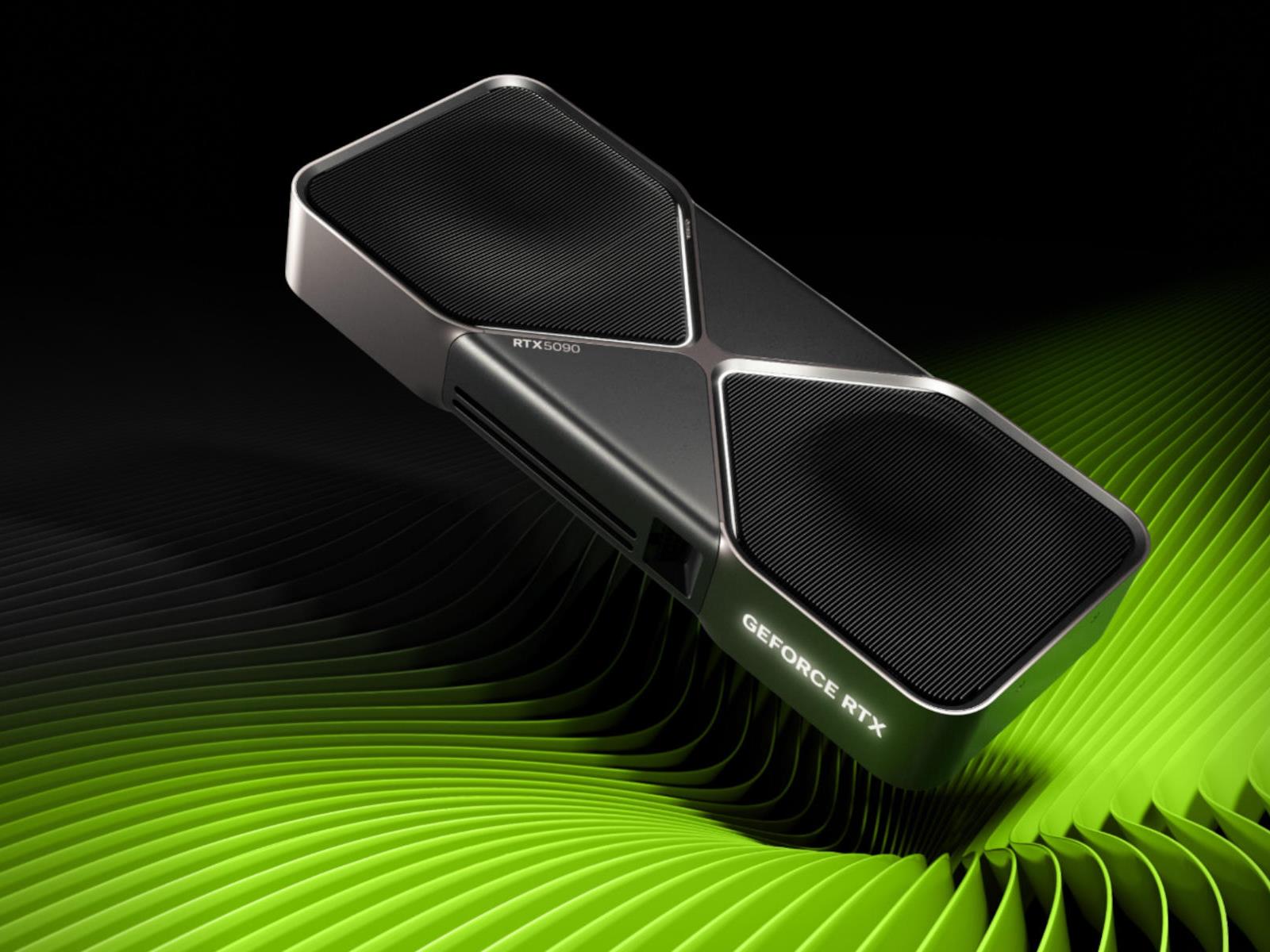
PC enthusiasts around the Internet were buzzing recently, when @I_Leak_VN posted reports of a bespoke GeForce RTX 5090 featuring a whopping 128GB of prototype GDDR7X VRAM, to reportedly be sold for a wallet-busting $13,200 USD. Compared to a stock GeFoce RTX 5090’s hefty allocation of 32GB GDDR7 VRAM, that’s an exorbitant number— four times
Today, Polestar debuted its newest model. Just as threeis followed by four, next in the series comes five—in this case the Polestar 5. And the new EV is a little departure from the products we’ve seen so far from this Swedish/Chinese startup. It’s a handsome if angular sedan that, like the Polestar 4 SUV, eschews a rear window in favor of more headroom for passengers and a rear-view camera.
“Polestar 5 is bringing the future to our present. Our vision for Polestar’s design, technology, and sustainability direction is no longer a dream but a reality our customers can buy,” said Polestar CEO Michael Lohscheller. “With its pure Scandinavian design inside and out, unique platform, powerful motors, sophisticated chassis, cutting-edge technology, and consciously sustainable materials, the Polestar 5 is a guiding star for the industry and the perfect Polestar flagship.”
As we found out when we met the car early during its development, the Polestar 5 uses a bonded aluminum chassis, similar to various Lotuses and most current Aston Martins. Indeed, plenty of the development engineers working at Polestar’s UK R&D center in Coventry can count those brands on their CVs. The bonded aluminum approach results in a very stiff but quite light chassis, making it a good starting point for a performance car.
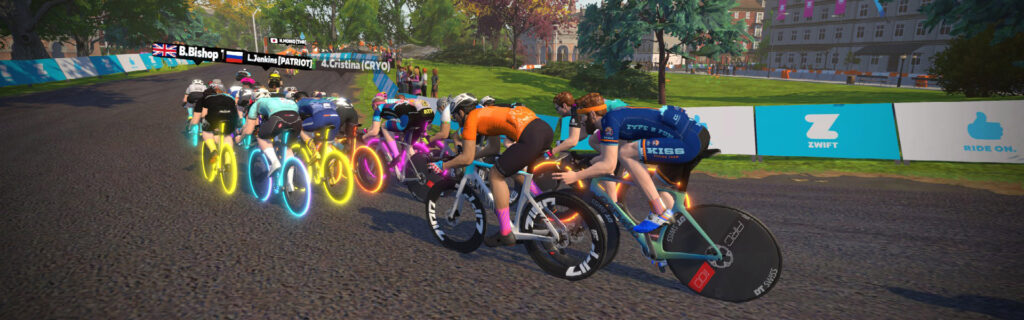
In the Fall 2025 “This Season on Zwift” press release, Zwift revealed several upcoming changes to the Zwift Racing Score system which is used to group riders for most of the races on the platform. These changes will have a significant impact on rider scores, so let’s dive into the details…
Zwift Racing Score Decay
Launching mid-September
Zwift Racing Score decay was built into the early system, but the feature was turned off in October 2024 because feedback from Zwifters indicated it wasn’t making scoring more accurate. At that time, Zwift said, “We may turn this back on later after making some improvements to the mechanism.”
Zwift has now made those improvements, and they are reintroducing decay into the ZRS system. Zwift says, “This means that if you stop racing for a while, your displayed score will very gradually drift downward (after 30 days without a race), and the system’s uncertainty about your true level goes up – so when you return, you’re matched more fairly rather than a stale high score.”
Digging a little deeper, this change involves:
30‑day grace period: Your score will only begin decaying after 30 days without a scored race.
Rising Uncertainty, Fairer Returns: After the 30-day grace period, the system’s uncertainty for your score will also increase, allowing your score to adjust more rapidly once you do race again. Or to put it another way: returning racers will adjust faster to their real level.
Decay is Capped (or better, Floored): Your score will not drift infinitely downward.
Discourages Rating Squatting: Built-in decay means riders can’t climb to a higher score and stay there without racing. It keeps rankings fresh.
In practical terms, Zwift says this is what you can expect if you take a break from racing:
Short break (within grace period): No change; you won’t feel penalized for a holiday or training block.
Moderate break: Slight downward adjustment; you may see a modest score dip that encourages re-engagement.
Long break: You settle at a conservative plateau; when you come back, early results will move you faster than before.
Rewarding Personal Bests with Instant Score Updates
Launching mid-September
ZRS is a results-based algorithm where your score changes based on your finishing position in races. But the foundational component of the ZRS algorithm is your seed score, which is based on your 90-day power personal bests.
One crucial thing your seed score provides is a ZRS floor value – the lowest your score can drop to. Your ZRS floor is 15% below your seed score.
Currently, if you set a new power PB (in a free ride, workout, race, or any Zwift activity), your ZRS is only immediately changed if the updated floor value based on your new power PB is higher than your current ZRS. This means there are plenty of scenarios where riders will hit new power PBs outside of a race, but their scores don’t change. Here’s one example of how that could work…
Example 1 (current system):
Current ZRS: 500
New Seed Score Based on New Power PB: 540
New Floor Value (85% of Seed Score): 459
New ZRS: 500 (unchanged, because it is higher than the new floor value)
With the new system, when a rider achieves a 90-day power PB, their racing score will immediately be set to the new, higher “seed” value if that seed value is higher than their current ZRS.
Example 2 (new system):
Current ZRS: 500
New Seed Score Based on New Power PB: 540
New ZRS: 540 (score instantly set to new seed score, since it was higher than the rider’s current score)
In simple terms, this change will lead to ZRS increases for more riders, which should mean more riders’ scores will accurately affect their current peak fitness. To be specific:
Active Racers will see score boosts immediately when their power PB wasn’t in a race
Active Non-Racers who are training but not racing will get their score adjusted upwards with new PB values, helping ensure their score is accurate once they race
Returning Users coming back to Zwift after a break will have their scores adjusted more quickly as they set power PBs in any Zwift activity
30-Day Best Score for Race Categorization
Launching late September/early October
Soon, race organizers will have the option of categorizing riders based on 30-day best ZRS, as opposed to the current ZRS that all scored races use.
Why the change? Some racers have complained that riders are purposely tanking their score by riding hard enough to bypass Zwift’s anti-tanking measures while still finishing far down in the results. This is especially prevalent among racers who naturally sit near the cutoff lines for categories.
These racers may enter a “target” race with a score that places them near the top of their category, winning the race and receiving a ZRS result that would push them out of their category and into the next highest.
They will then purposely tank a race or two (or perhaps four, via our Tiny Races), dropping their ZRS so they can once again enter the lower category in their target race.
With this change, race organizers may enable “30-Day Max Score Enforcement” for their event, meaning even if a racer purposely tanked their score across multiple events, they would still be categorized based on their highest score in the past 30 days.
Simply put, this is an additional anti-tanking measure. And I think it’s a good one that many race organizers will use.
(For our Tiny Races in particular, this feature will have the added benefit of reducing how often a rider starts the set of four Tinies in one category, then gets forced into a higher category mid-set, eliminating their chance of a high overall placing since they raced in two different categories on the day.)
Displaying Score Deltas in Results
Launching mid-September
We published a post about the ZwiftPower ZRS browser plugin just 2 weeks ago. This fun little community-created add-on for ZwiftPower adds ZRS results to ZwiftPower pages, including a delta figure showing how much each rider’s ZRS changed in that race.
In that post, I asked Zwift to add the delta figure to race results found on event pages at zwift.com. Little did I know, Zwift already had that change in the works (which explains why the delta figure was available in the API data for the ZwiftPower ZRS plugin to access in the first place).
Anyway – this is a small change, but a welcome one. The deltas will also be visible in results on Zwift Companion.
Questions or Comments
That’s a pretty significant list of changes impacting Zwift Racing Score. What do you think of the changes? Share your thoughts below!
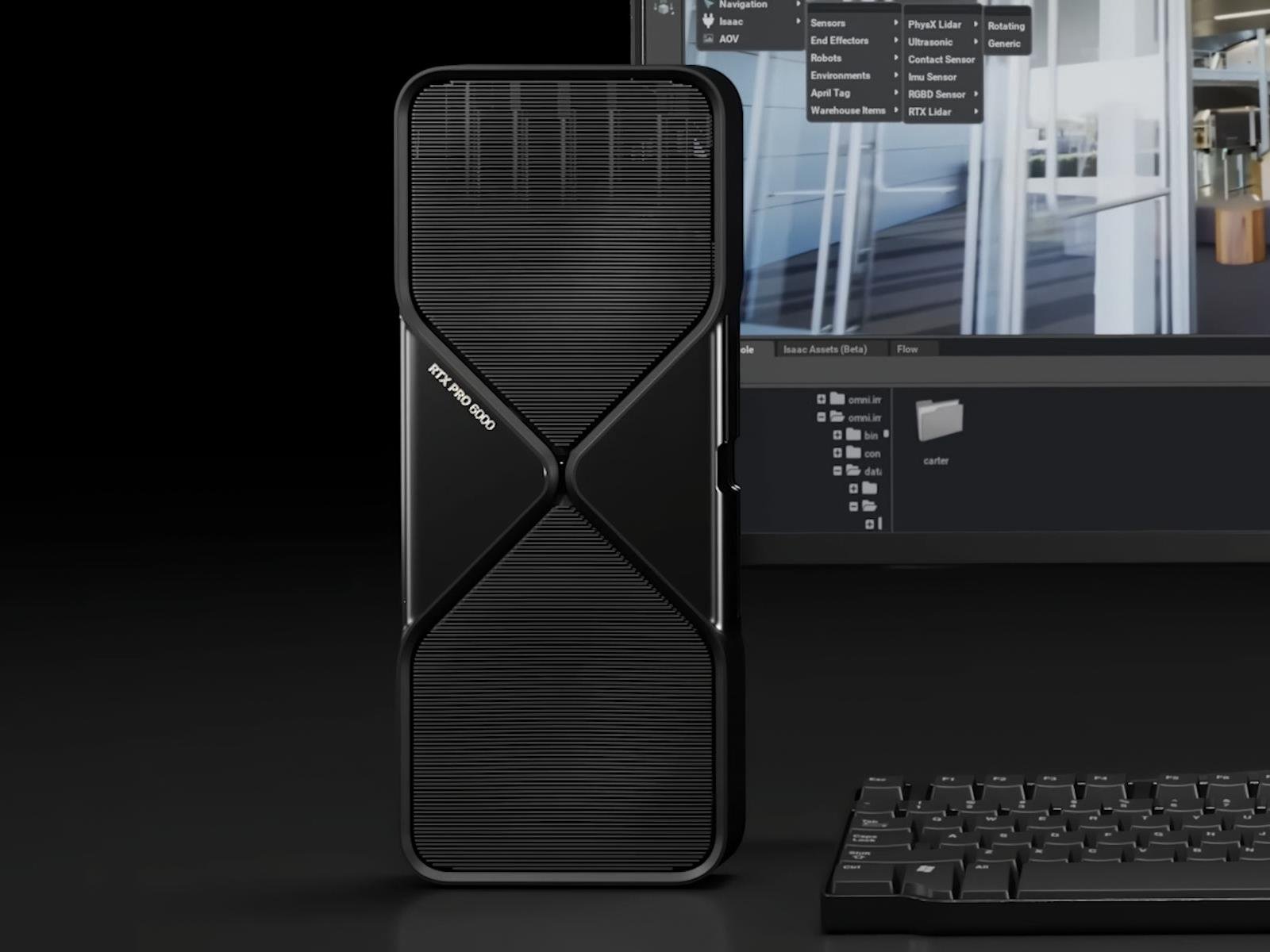
CloudRift.AI posted a $1000 bug bounty on their blog a couple of days ago, asking the Internet at large for help with an NVIDIA reset bug impacting the RTX 5090 and RTX Pro 6000 Series GPUs. Then, prominent AI venture TinyCorp signal boosted this bug bounty on Twitter, magnifying this story in eyes of the general public. This also resulted
The Aikido blog describes
an apparently ongoing series of phishing attacks against NPM package
maintainers, resulting in the uploading of compromised versions of heavily
used packages:
All together, these packages have more than 2 billion downloads per
week.
The packages were updated to contain a piece of code that would be
executed on the client of a website, which silently intercepts
crypto and web3 activity in the browser, manipulates wallet
interactions, and rewrites payment destinations so that funds and
approvals are redirected to attacker-controlled accounts without
any obvious signs to the user.
Amazon Music has just launched new AI-powered weekly playlists based on the “preferences and mood” of listeners. This just means it scrapes what you’ve already been listening to and extrapolates further. It doesn’t apply modern technology to gauge the actual mood of users.
The company says the playlists include “a curated mix of familiar favorites from their most listened-to artists and latest favorites to new discoveries.” I’m not exactly sure how this is different from what music streaming platforms have always done to create personalized playlists, other than these are made using Amazon’s Bedrock generative AI platform.
Amazon
They do arrive with snappy names to suggest the type of songs included, like “Empowerment Anthems” and “Melodic Flex.” This seems similar to Spotify’s Daylists, which also use cute little names. The Amazon playlists can be saved to the library or shared with friends via text or social media.
“The feature represents another way we’re harnessing AI to help fans connect with more music that resonates with them,” said Ryan Redington, General Manager of Amazon Music. He also said this brings a “new dimension” to the service by “creating personalized playlists celebrating their favorite artists while introducing new music that matches their unique tastes.” Again, personalized playlists are nothing new.
Download the latest update to the app to get started. These weekly playlists are currently only available to US listeners and drop on Mondays.
This article originally appeared on Engadget at https://www.engadget.com/entertainment/music/amazon-music-launches-ai-powered-weekly-playlists-based-on-preferences-and-mood-174239246.html?src=rss
Private detective Benoit Blanc (Daniel Craig) might just turn out to be Rian Johnson’s greatest creation. Introduced in 2019’s Knives Out, Blanc’s syrupy Southern drawl and idiosyncratic approach to solving a mysterious New England death charmed audiences worldwide and launched a modern whodunnit franchise.
The third installment in the series, Wake Up Dead Man: A Knives Out Mystery, has already garnered early rave reviews after screening at the Toronto International Film Festival (TIFF) over the weekend. And now Netflix has released the official trailer, showcasing Blanc tackling the inexplicable death of a parish priest in a spookily Gothic small-town setting.
(Very minor spoilers for Knives Out and Glass Onion below.)
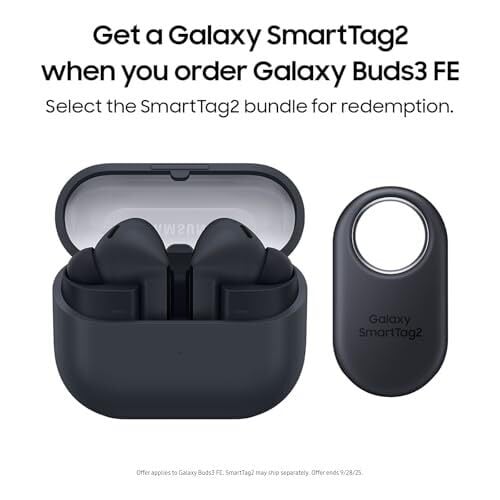
Samsung’s FE series stands for “Fan Edition,” and it’s the budget version of its devices, similar to Pixel’s A-series. The design is sleek and stays on brand compared to previous models. You can pinch and swipe the earbuds to control media. You can take them on a run outside without worrying about sweat and some rain since it’s rated IP54 (water and dust resistance).
In the audio department, it’s nice to see Samsung not skimp out just because they’re “budget” earbuds, offering support for 24-bit audio that lets you play hi-fi sound. It also features ANC, which Samsung claims to have improved upon compared to the previous generation. Something new is Samsung’s Crystal Clear Call, which uses AI to help isolate your voice when you’re on a call. The mics are now also facing your mouth so it should result in better overall call quality.
If you have a Pixel, Samsung, or compatible phone, you’ll be able to take advantage of the Gemini or the Galaxy AI support, which can do real-time translation, where someone speaks to you in another language and you hear the translation on your earbuds in real time. You also get auto-switching and can track your earbuds, among other features. The battery is great, at eight hours with ANC off (six hours with ANC on), the highest run time in the Galaxy Buds series.