In a new interview with The Telegraph (paywalled), William Shatner revealed he has never earned residuals from reruns of the original Star Trek series, since syndication royalties weren’t in place until after the show ended in 1969. “Nobody knew about reruns,” said Shatner. “The concept of syndication only came in after ‘Star Trek’ was canceled when someone from the unions said: ‘Wait a minute, you’re replaying all those films, those shows.’ There was a big strike. But in the end, the unions secured residual fees shortly after ‘Star Trek’ finished, so I didn’t benefit.”
The now 94-year-old actor said he’s actually only seen a “few” episodes of his work and has “never seen” any of the spinoffs. “I’m gonna tell you something that nobody knows. I’ve never seen another ‘Star Trek’ and I’ve seen as few ‘Star Treks’ of the show I was on, I’ve seen as few as possible,” he told Entertainment Tonight. “I don’t like to look at myself, and I’ve never seen any other. I love it, I think it’s great. I just don’t, you know, I don’t watch television, per se.”
BrianFagioli shares a report from NERDS.xyz: Plex has alerted its customers about a security incident that may have affected user accounts. In an email sent to subscribers, the popular media server company confirmed that an unauthorized third party gained access to one of its databases. The breach exposed emails, usernames, and hashed passwords. Plex emphasized that passwords were encrypted following best practices, so attackers cannot simply read them. The company also reassured users that no credit card data was compromised, since Plex does not store that information on its servers. Still, out of caution, it is requiring all account holders to reset their credentials.
Users are being directed to reset their passwords at plex.tv/reset. During the process, Plex recommends enabling the option to sign out all connected devices. This measure logs out every device associated with the account, including Plex Media Servers, forcing a fresh login with the updated password. The company says it has already fixed the method used by the intruder to gain entry and is conducting additional security reviews. Plex is also urging subscribers to enable two-factor authentication if they have not already done so.
Microsoft is preparing to ship Windows 11 25H2 as their newest incremental update to their operating system. Windows 11 25H2 is currently available via their preview channel in advance of the formal public release in October. With Canonical also putting the finishing touches on their Ubuntu 25.10 release also due for a stable release in October, here are some benchmarks looking at how those competing operating systems are fairing in various CPU benchmarks on the same hardware.
Bluesky has added a built-in bookmarking feature so users finally have a way to privately save posts on the platform. The update is out now on Bluesky’s website and app.
Bookmarks on Bluesky work pretty much like they do on any other service. Save a post and you can revisit it later from the “saved posts” section of the app and website. It’s overall a basic feature — there’s currently no way to organize your saves into folders, for example — but it’s a very long overdue addition to the platform.
Up to now, Bluesky users have technically been able to save posts via a workaround. Bluesky developer Jaz created a custom “pinned” feed that allowed subscribers to save posts by replying with a � emoji. But while this provided a handy way to save posts in the absence of an official bookmarking feature, it wasn’t private since it created a public reply for every save. Now, though, there’s a handy tool to convert your previously “pinned” posts into private bookmarks. You can also opt to delete your public “pins” or leave them as is.
This article originally appeared on Engadget at https://www.engadget.com/social-media/bluesky-finally-has-a-private-bookmarking-feature-224110038.html?src=rss
An anonymous reader quotes a report from Ars Technica: Last year, we reported on the efforts of classic iPod fans to preserve playable copies of the downloadable clickwheel games that Apple sold for a brief period in the late ’00s. The community was working to get around Apple’s onerous FairPlay DRM by having people who still owned original copies of those (now unavailable) games sync their accounts to a single iTunes installation via a coordinated Virtual Machine. That “master library” would then be able to provide playable copies of those games to any number of iPods in perpetuity.
At the time, the community was still searching for iPod owners with syncable copies of the last few titles needed for their library. With today’s addition of Real Soccer 2009 to the project, though, all 54 official iPod clickwheel games are now available together in an easily accessible format for what is likely the first time.
[…] Now that the consolidated clickwheel game collection is complete, though, owners of any iPod 5G+ or iPod Nano 3G+ should be able to sync the complete library to their personal device completely offline, without worrying about any server checks from Apple. They can do that by setting up a Virtual Machine using these GitHub instructions or by downloading this torrented Internet Archive collection and creating their own Virtual Machine from the files contained therein. The effort was made possible by GitHub user Olsro, with help from other iPod enthusiasts. To Olsro, completing the project “means this whole part from the early 2000s will remain with us forever.”
He also expressed hope that “this Virtual Machine can also be useful towards any security [or] archeologist researcher who want to understand how the DRM worked.”
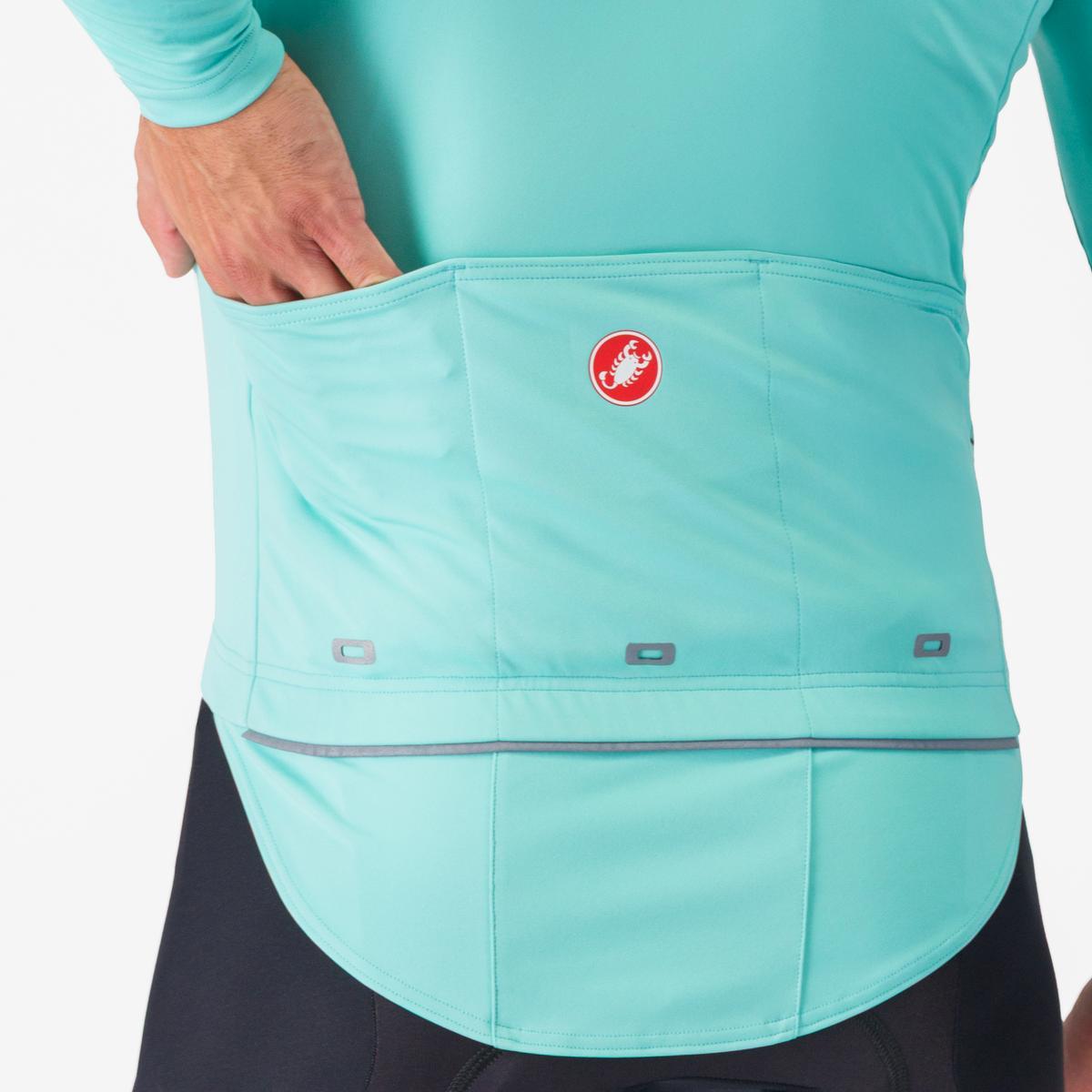
The new Castelli Perfetto 3 RoS jacket has undergone a major overhaul, dropping the Gore-Tex Infinium fabric that was synonymous with the Italian brand’s wet-weather cycling kit and moving to Polartec’s new Aircore fabric.
Castelli worked closely with Polartec to develop the new “revolutionary” Aircore fabric. It says the fabric “ticks every box when it comes to being lightweight, highly breathable, windproof, and water repellent” and helps the Perfetto 3 redefine “what ‘breathable’ means”.
The fabric is also completely free from PFAs-based chemicals. These toxic ‘forever chemicals’ don’t break down in the natural environment and are now banned in some parts of the world.
Steve Smith, head of cycling at the MVC Group, which owns Castelli and Sportful, says this fabric is a “huge deal”.
“The drive to remove PFAs from wet weather clothing has been challenging to say the least. A number of products coming out dramatically compromise breathability for the sake of waterproofing,” says Smith.
“In so few areas of our lives is the move towards sustainability actually bringing us better performance. But here, we’re improving breathability, we’re improving water protection, we’re improving stretch and comfort, and we’re PFAs free,” he explains.
Fewer people are heading out for a bike ride in the rain, according to Steve Smith. Castelli
Entering an era free of PFAs, Castelli began designing the new Perfetto with a blank canvas and “a hard look” at what cyclists need.
“We’re seeing a big change in the way cyclists are riding in cool and wet conditions. That’s partly driven by technology, but also driven by climate change,” Smith says.
When it comes to technology, cyclists are spending more time riding indoors, which means they’re not braving the elements so often. And with more accurate weather forecasts, cyclists are adapting their rides to avoid downpours.
On climate change, Smith says: “There’s data out there that says we’re actually getting fewer days of rain, although the total amount of rainfall is maintaining the levels it always has. It’s just increasing in intensity.”
So when we do cycle in the rain, Smith says we’re reaching for rain jackets more than the kind of mixed-conditions, wet-weather kit for which Castelli is renowned, such as the Gabba.
These factors led Castelli to ask a question. “If we didn’t have to worry so much about water, how far could we push the breathability so that we can keep the cyclists drier on the inside across the widest range of temperatures and intensity levels?” says Smith.
Enter Polartec Aircore
The Castelli Perfetto 3 RoS jacket uses the “revolutionary” Polartec Aircore fabric. Castelli
After speaking to a range of fabric suppliers, engineers and scientists, Castelli found Polartec best understood its quest not to compromise on breathability or water protection.
Ramesh Kesh, business manager at Polartec, says you can basically make any rain jacket shell waterproof by putting a plastic film in it. But this means the material can’t breathe, which leads to moisture build-up.
With Polartec’s new Aircore fabric, Kesh says: “The idea is to prevent wind and moisture getting in, but at the same time, it has to get out so that you don’t feel clammy and start becoming uncomfortable.”
This is particularly tricky with sports such as cycling due to the Clausius–Clapeyron law. Kesh explains: “For every degree increase in your body temperature, you’re going to accumulate about 7 per cent more water, which means that as you do your high aerobic activity, condensation is going to build up.”
Aircore gets around this issue thanks to a nano-fibre membrane that’s sandwiched between two layers of textile.
The membrane is produced by a process called electrospinning, where a hydrophobic polymer is pushed through a needle that’s charged at 20,000 volts. The needle emits filaments, which are approximately 100 times smaller than a human hair and “fall like snow” to create a membrane that’s incredibly tight but still allows air to move through it.
A graphic showing how air can move through the Aircore fabric. Castelli
Smith says this airflow through the Perfetto is imperceivable: “Your perception of wearing this garment is that it is completely windproof, you don’t feel that there’s a wind chill, but yet there’s a small amount of air coming in that’s grabbing the moisture and taking it out.”
The end result is a fabric, and therefore a cycling jacket, which ventilates sweat away from your body to keep you dry and blocks out the wind and rain.
“A disservice to the industry”
Steve Smith says the water column of 10,000mm has been a “disservice to the industry”. Castelli
When it comes to waterproofing, the new Perfetto has a water column equivalent to 5,000mm.
This is half of the 10,000mm figure that is often the legal definition of waterproofness, and Smith thinks has “really been a disservice to the industry”.
“It got set at that because of the lobbyists for the industry, who were the earlier players that figured out how to make a product that gave that level of waterproofness,” he claims.
“In reality, lighter rain falls with the water column equivalent of around 800mm while heavy rain falls at around 2,000mm. So when you go to 10,000mm, you have way more waterproofness than you actually need,” Smith adds.
This means that although the new Perfetto has a high water column value, “we can’t call it waterproof in a legal sense”. Instead, Smith says Castelli promises you “effective waterproofing” with its latest jacket.
What else is new with the Castelli Perfetto 3?
The new Castelli Perfetto 3 RoS jacket is similar to its predecessor. Castelli
Apart from the new fabric, the Perfetto 3 (£280 / $320 / €249.95) is similar to its predecessor, with a few small tweaks.
The jacket still has taped shoulder seams to keep any water out, but these are now reflective. There is also a new reflective strip underneath the three rear pockets, which still feature drainage holes. A drop-tail design protects you from any road spray, while the high collar keeps your neck warm.
Suitable for temperatures ranging from 4–14˚C, the jacket now has a two-way zip and retains its two body zips, which may not be of great use. Smith says the jacket was in development over the last winter and by the time it had gone into production in spring, Castelli realised the body zips weren’t necessary thanks to the breathability of the fabric. “You may never open them,” he says.
The Perfetto retains the body zips for ventilation. Castelli
The jacket has three rear pockets and a drop tail. Castelli
What’s next for Aircore?
Castelli has exclusive rights to use Aircore for cycling kit, and it will soon release a range of products that use the new fabric.
But there are currently brands outside of cycling looking at Aircore, so we can probably expect to see it crop up across the outdoor industry – and possibly elsewhere – in due course.
Kesh says the next stage of development will be to make the Aircore membrane from recycled material, which would make the fabric 100 per cent recycled.
“The idea is to leave the world in a better place, but not to compromise on performance,” says Kesh.
Rimac Technology has unveiled a new battery pack platform for electric vehicles that uses only solid-state batteries. The company has been an EV supplier for notable car brands including Aston Martin and Koenigsegg, as well as making electric supercar Nevara. Rimac collaborated with ProLogium and Mitsubishi Chemical Group on the product, which it claims will offer a lighter, safer and more energy-dense EV battery. It introduced this tech, alongside new composite and hybrid battery EV developments, at the IAA Mobility 2025 event.
Solid-state batteries are being touted as an important new development for EVs. European R&D operation Imec released a study into this tech last year that backed claims that these batteries did indeed have the potential to improve efficiency while bringing down costs.
However, the commercial development of solid-state batteries has been slow going. Despite a flurry of partnerships several years ago, the targets for getting EVs fully powered by the tech onto the road may still be some time away. For instance, Nissan said it aims to have its first EV solely using solid-state batteries released by its 2028 fiscal year. Rimac didn’t offer even a rough timeline for when it might have its new battery tech available for customers.
This article originally appeared on Engadget at https://www.engadget.com/transportation/evs/rimac-introduces-its-take-on-solid-state-batteries-for-electric-vehicles-215915664.html?src=rss
Kevin Barry, founder and sole developer of Nova Launcher, has left parent company Branch Metrics after being told to stop work on both the launcher and an open-source release. While the app remains on Google Play, the launcher’s website currently shows a 404 error. The Verge reports: Mobile analytics company Branch Metrics acquired Nova in 2022. The company’s CEO at the time, co-founder Alex Austin, said on Reddit that if Barry were to leave Branch, “it’s contracted that the code will be open-sourced and put in the hands of the community.” Austin left Branch in 2023, and now with Barry officially gone from the company, too, it’s unclear if the launcher will now actually be open-sourced.
“I think the newer leadership since Alex Austin left has put a different focus on the company and Nova simply isn’t part of that focus in any way at all,” Cliff Wade, Nova’s former customer relations lead who left as part of the 2024 layoffs, tells The Verge. “It’s just some app that they own but no longer feel they need or want.” Wade also said that “I don’t believe Branch will do the right thing any time soon with regards to open-sourcing Nova. I think they simply just don’t care and don’t want to invest time, unless of course, they get enough pressure from the community and individuals who care.”
Users have started a change.org petition to ask for the project to be open-sourced, and Wade says it’s a “great start” to apply that pressure. Wade said he hasn’t personally seen Barry’s contract, so couldn’t corroborate the claim of a contractual obligation to open-source Nova. Still, he said that the community “deserves” for the launcher to be open-sourced. “Branch just simply needs to do the right thing here and honor what they as a company have stated as well as what then CEO Alex Austin has stated numerous times prior to him leaving Branch.”
A new set of Linux kernel patches posted today work to improve the nested VMX performance for benefiting Intel processors making use of KVM virtualization…
I reviewed the TCL QM7 a year ago, and I’m still impressed at the quality and value for the money offered by this mid-tier QLED TV. Along with Hisense, TCL has raised the bar for QLED TVs, with both brands battling it out to become the go-to for the best value QLED TV.
One of the highlights of the QM7 is its incredible brightness—up to 2,400 nits, thanks to the mini-LED backlight for the display. But this can actually be overwhelming when watching TV at night in a dark bedroom, especially if you’re getting ready to go to sleep (or if someone else in the room is already trying to sleep). But I found a setting that allows me (and my wife) to coexist with this TV in our bedroom—and your QLED TV likely has it too.
Having to manually lower the TV brightness every night got old pretty quickly (despite the “quick settings” button on the remote that took me directly to the brightness settings), so I started looking for a way to handle it automatically. Lucky for me, my TCL set has a setting for that—and it’s likely yours does too.
Most modern smart TVs will have a setting with a name like “Adaptive Brightness” that will allow it to auto-adjust the screen brightness based on the light in your environment. That’s the setting you need to turn on so you won’t blind yourself if you want to watch some TV before going to bed.
Here is how to turn it on for the QM7; the process is likely similar for other models and brands:
Press the Settings button (gear icon) on your TCL remote.
Navigate to Settings and select Display & Sound.
Choose Intelligent Settings.
In the Intelligent Settings menu, find Intelligent Picture.
Turn on the setting called Adaptive Brightness.
The QM7 has a light sensor that detects the light in your room, which it then uses to change your TV’s brightness. My set also offers Adaptive Content, which will automatically adjust your picture settings depending on what’s onscreen. For example, during dark scenes, the TV will dim to preserve shadow detail, and during bright scenes, it will increase highlights to make the picture pop more.
Not every QLED set will offer these exact settings, but most have something similar. Hunt around in the menus and try enabling them if you sometimes find your super-bright screen can be a little overwhelming.
Jaguar Land Rover has extended the shutdown of its UK and overseas factories after a cyberattack forced it to take IT systems offline, disrupting production, dealerships, and suppliers. The BBC reports: Jaguar Land Rover’s (JLR) UK factories are now expected to remain closed until at least Wednesday after work was disrupted by a cyber attack just over a week ago. The car plants at Halewood and Solihull and its Wolverhampton engine facility, along with production facilities in Slovakia, China and India, have been unable to operate since the company fell victim to the cyber attack. Staff who work on the production lines have been told to remain at home. JLR shut down its IT systems in response to the attack on 31 August, in order to protect them from damage. However, this caused major disruption. […]
Under normal circumstances, the company builds about 1,000 cars a day. The production stoppage has had a significant impact on the company’s suppliers, with some understood to have told their own staff not to come into work. As well as forcing the factories to stop building cars, it also left dealerships unable to register new cars and garages that maintain JLR vehicles unable to order the parts they needed — although it is understood workarounds have since been put in place. The attack began at what is traditionally a popular time for consumers to take delivery of new vehicles. The latest batch of new registration plates became available on Monday, September 1.
Training for a marathon can be a massive commitment, but not every marathon runner can rework their entire life around a training plan. There are physical roadblocks like injury and illness (which can be difficult to handle, but which aren’t insurmountable). But you’ll also face mental obstacles, like the difficulty of giving up your precious free time. (I skipped a run last week because of a surprise FaceTime from an old friend. I’m happy to have heard from her. I’m stressed to have missed a run.)
After running six marathons, I know that training for a race requires careful planning and execution—and the ability to make the most of your limitations. If you’re struggling with that latter part, consider me an authority as the laziest marathon runner you know. It turns out you can be irresponsibly busy, maybe a little lazy, and terrible at sticking to plans, yet still run a marathon without injuring yourself.
Here are my mental hacks to strategize a running plan when you’re short on both time and motivation.
The basics of a marathon training plan
The general consensus is you should follow at least a 14- to 16-week training plan, with 18 to 20 weeks being preferable.
Even if you need to deviate from your training plan, or you need to skip straight to week four to cram everything in, you still need to have a plan in the first place. Here’s my guide to properly choosing a training plan suited to your lifestyle, running experience, job commitments, and race goals. But after picking your plan comes the hard part: Sticking to it, even when nothing is going right.
Even once you have a plan, how can you run a marathon with minimal training? It depends—how do you feel about being too sore to sit down the next day? If you’re determined to do it, here’s the least you can get away with without seriously risking injury.
Start with a base. You should be able to run 3 to 5 miles comfortably before beginning a plan. If you can’t, spend a month building up to this level. You can try jumping into a training plan weeks ahead of your current fitness level, but then you might hurt yourself or burn out before making it to the marathon starting line.
Prioritize long runs. Your weekly long run is non-negotiable. If you aren’t able to run at least 16 miles at least two weeks beforehand, I wouldn’t even bother trying to run a marathon.
Squeeze in training runs whenever you can. Aim for two more runs per week at a minimum. One should be a medium-long run (starting at 4 to 5 miles and building up to 8 to 10), and one can be an easy 3 to 4 miler.
That’s it: the absolute barebones of marathon training. Now, here’s how you can build on that to further prepare yourself without going all-in.
Invest in proper running gear
If you’re going to try to eke out a marathon, you don’t want to sabotage yourself with worn-down shoes or chafing-related setbacks. Here’s the basic gear you’ll need to help be the laziest marathon runner possible:
Proper running shoes. Think trusted brands like Hoka and Nike. Personally, I’ve been rotating shoes between the Saucony Endorphin Speed 5 and Brooks Ghost Max 3, so that I don’t risk a single blister before race day.
A running belt. You’ll have a more enjoyable run if you’re not stuck holding your phone or listening to your keys jangle. The two big names in running belts are the SPIbelt and FlipBelt, and you can’t go wrong with either one.
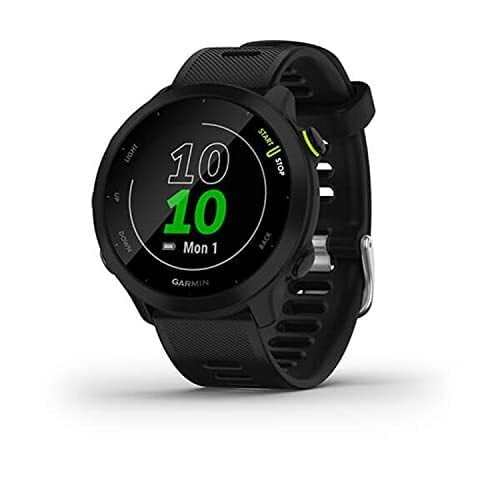
A fitness trackers or GPS watch. I’ve run plenty of races without a smartwatch, but during training, they can make a world of a difference—particularly when it comes to pacing myself. Serious runners benefit from advanced metrics in $300+ GPS watches, casual runners can opt for a no-nonsense budget option like the Garmin Forerunner 55.
I would love to be a running influencer who can afford to orient my decisions around long runs, but that’s simply not the life I lead. (Yet—Nike, if you’re reading this, shoot me an email.) Until then, the “I’m busy and inconsistent” approach is all about honesty and self acceptance. Follow these tenants whenever you’re training for a marathon on the bare minimum.
Keep prioritizing long runs. If you’re going to skip some runs, you cannot afford to skip your long run.
Be flexible. Some runners are rigid about which days of the week correspond to how far they run. Personally, I look at my weekly schedule and work backwards from there. This means that sometimes my classic Sunday long run is actually a Tuesday long run. The exact day or order of your runs won’t matter as much as getting the runs in.
Focus on time over distance. On busy weeks, focus on time spent running rather than distance. A 30-minute run is better than no run at all. Thinking “time over distance” will help you strategize runs across the board, especially when you have to shorten individual runs to squeeze
Something is better than nothing. Can’t fit in a full run? Do a 10-minute jog when you can—or even multiple mini-runs throughout the day. It’s not ideal, but it’s better than nothing.
Don’t overdo it. While you need to prioritize your weekly long runs, it’s still unwise to increase your weekly mileage by more than 10% at a time. If you have to skip a long run, you may want to shuffle long runs around so you aren’t jumping from 10 to 18 miles (for example) on back-to-back weekends.
A final piece of advice
Remember, everything above is about doing the bare minimum. Most marathon runners are not “bare minimum” people. You’ll be more comfortable and less likely to injure yourself if you can fit in more training. But if life gets in the way and you need to cut corners, focus on gradually building your long run and getting in at least two other runs or cross-training sessions per week.
Even if you had planned to stick to an ambitious training plan, sometimes the bare minimum is all you can manage. If so, don’t sweat it. Listen to your body. If you’re feeling pain (not just normal soreness), take a break. It’s better to arrive at the starting line slightly undertrained than injured. Now lace up those shoes and get moving. Or don’t—there’s always tomorrow, right?
With support from NASA, a team of six researchers from the University of California, San Diego ISSCOR laboratory investigated the effect of spaceflight on human cells. The results show that being in space increases the rate at which human hematopoietic stem and progenitor cells age.
In the study published in the scientific journal, Cell
An anonymous reader quotes a report from The Register: All work in IT departments will be done with the help of AI by 2030, according to analyst firm Gartner, which thinks massive job losses won’t result. Speaking during the keynote address of the firm’s Symposium event in Australia today, VP analyst Alicia Mullery said 81 percent of work is currently done by humans acting alone without AI assistance. Five years from now Gartner believes 75 percent of IT work will be human activity augmented by AI, with the remainder performed by bots alone.
Distinguished VP analyst Daryl Plummer said this shift will mean IT departments gain labor capacity and will need to show they deserve to keep it. “You never want to look like you have too many people,” he advised, before suggesting technology leaders consult with peers elsewhere in a business to identify value-adding opportunities IT departments can execute. Plummer said Gartner doesn’t foresee an “AI jobs bloodbath” in IT or other industries for at least five years, adding that just one percent of job losses today are attributable to AI. He and Mullery did predict a reduction in entry-level jobs, as AI lets senior staff tackle work they would once have assigned to juniors.
The two analysts also forecast that businesses will struggle to implement AI effectively, because the costs of running AI workloads balloon. ERP, Plummer said, has straightforward up-front costs: You pay to license and implement it, then to train people so they can use it. AI needs that same initial investment but few organizations can keep up with AI vendors’ pace of innovation. Adopting AI therefore creates a requirement for near-constant exploration of use cases and subsequent retraining. Plummer said orgs that adopt AI should expect to uncover 10 unanticipated ancillary costs, among them the need to acquire new datasets, and the costs of managing multiple models. The need to use one AI model to check the output of others — a necessary step to verify accuracy — is another cost to consider. AI’s hidden costs mean Gartner believes 65 percent of CIOs aren’t breaking even on AI investments.
A group of current and former Meta employees are accusing the company of suppressing its own research on child safety in virtual reality. According to two current and two former Meta employees, Meta’s lawyers are screening, editing, and vetoing internal studies about youth safety in virtual reality in order to minimize the risk of bad press, legal actions, and government regulation.
To back up the accusations, the group has presented a trove of internal documents to members of a Senate Judiciary Committee, ahead of hearings on the issue to be held on Tuesday. First obtained by The Washington Post, the documents include thousands of pages of internal messages, presentations, and memos that the group says detail a years-long strategy, led by Meta’s legal team, to shape research on “sensitive topics.”
Meta denies the accusations. In a statement to The Washington Post, company spokesperson Dani Lever categorized the accusations as a “few examples…stitched together to fit a predetermined and false narrative; in reality since the start of 2022, Meta has approved nearly 180 Reality Labs-related studies on social issues, including youth safety and well-being.”
Meta and child safety
Internally, it appears Meta has long been aware of questions related to child safety and virtual reality. An internal message board post from 2017 included in the trove is titled, “We have a child problem and it’s probably time to talk about it.” In it, an unnamed Meta employee writes, “These children are very obviously under our 13-year-old age limit…” and goes on to estimate that 80 to 90 percent of users were underage in some virtual reality spaces.
After leaked Meta studies led to congressional hearings in 2021, the company strongly reiterated the importance of transparency, with CEO Mark Zuckerberg writing, “If we wanted to hide our results, why would we have established an industry-leading standard for transparency and reporting on what we’re doing?”
But according to the whistleblowers, behind-the-scenes, Meta’s legal team began screening, editing, and even vetoing research about youth safety to “establish plausible deniability,” detailing potential strategies to “mitigate the risk” of conducting sensitive research. In a November 2021 slide presentation, Meta’s lawyers suggested researchers could “conduct highly-sensitive research under attorney-client privilege,” and have all highly sensitive studies reviewed by lawyers and shared only on a “need-to-know” basis.
Another strategy from the slide suggests researchers “be mindful” of how studies are framed, avoid using terms like “illegal” or “not compliant,” and avoid saying anything violates a specific law, in favor of leaving legal conclusions to attorneys.
An example of Meta’s policy in practice is given in the documents, and involves conversations between Meta researchers and a German woman. The unnamed mother reported that she did not allow her sons to interact with strangers in Meta’s virtual reality, but her teenage son interrupted to say that adults had sexually propositioned his brother, who was younger than 10, numerous times.
According to one of the researchers and Jason Sattizahn, then one of Meta’s specialists in studying children and technology, higher-ups at Meta ordered that the recording of the teen’s comments should be deleted, and that no mention of it should be made in the company’s report. Sattizahn says he was eventually fired from Meta after disputes with managers about restrictions on research.
How many children are actually using Meta’s virtual reality?
Unfortunately, it’s impossible to know exactly how many kids are actively using Meta’s VR platforms. Anecdotally, I’ve spent enough time in virtual reality to believe there are a lot of people under 13 in just about every virtual reality space, including (and especially) Meta’s own “Horizon Worlds.” I can’t say for certain that the people behind the avatars are children, but it sure seems like a lot of kids to me, a conclusion suggested by documents in the trove. One report indicates that only 41 percent of users gave the same date of birth they’d used previously when asked. “These findings show that many users may be unwilling to provide us with their true DOB,” the analysis says.
Maintaining that “gray area” of not really knowing (or publicly acknowledging) the ages of users of the service may be in Meta’s best interest. According to a document included in the trove, one of Meta’s lawyers wrote, “In general, the context is that we should avoid collection of research data that indicates that there are U13s present in VR or in VR apps (or U18 currently in the context of Horizon) due to regulatory concerns.”
The combination of the documents and Meta’s response indicate a company walking a thin line—publicly promising transparency and safety, while privately managing its research process to limit blowback in the form of liability and regulators’ attention. Whether Meta is suppressing damaging information or exercising understandable legal caution is an open question, but hopefully these congressional hearings (as messy as they’re likely to be) get us closer to the real goal of protecting children in immersive spaces.
Over the past year, Meta has blanketed TV screens around the world with commercials touting the privacy of Whatsapp, its encrypted messenger with a monthly user base of 3 billion people.
“It’s private,” one ad campaign featuring the former cast of the Modern Family TV show says. “On Whatsapp, no one can see or hear your personal messages … not even us,” a different series of ads declares.
“Serious risks to user data”
On Monday, the former head of security for the Meta-owed messaging app filed a federal whistleblower lawsuit that tells a far different narrative. The suit, filed in US District Court for the District of Northern California, recites a litany of purported security and privacy flaws that Meta not only didn’t fix after becoming aware of them, but also kept secret, allegedly in violation of a $5 billion settlement then-Whatsapp parent company Facebook reached with the Federal Trade Commission. The complaint was filed by Attaullah Baig, who became head of WhatsApp security in 2021.
Kodi 22 (codename Piers) has entered development for this powerful open-source, free, and cross-platform media center and entertainment hub software for all your digital media.
If you had trouble or slow speeds when trying to connect to Asian websites (or vice-versa) over the weekend, you’re not alone. The underlying reason for the slowdowns were a few undersea fiber cables cut nearby Jeddah, South Arabia. According to Microsoft, the cut happened around 5:45 on the morning of September 6th.
Samsung’s newest tablet, the Galaxy Tab S11, just released this month, and you can already score a deal when buying one. Right now, Amazon is selling it with a free storage upgrade (from 128GB to 256GB) for $799.99 (originally $859.99).
The Samsung Galaxy Tab S11 comes in two models: the Galaxy Tab S11, which is the one available with a free storage upgrade; and the Galaxy Tab S11 Ultra, which starts at $1,200. Both come with 12GB of RAM, but the Ultra has a giant 14.6-inch screen, while the Galaxy Tab S11 is a more portable 11 inches, replacing the Plus model from previous generations.
You can add more storage with the microSD slot (up to 2TB), but you might not need it with the free upgrade to 256GB. The 8,400 mAh battery should last about 18 hours, depending on use, which is on par with other Tab devices since the Tab S9. The front camera has a 12-MP Ultrawide lens, while the rear camera is a 13-MP. The Mediatek Dimensity 9400 Plus processor is about 25% faster than the previous model’s, so you should notice AI tools and apps running a little more smoothly.
The S Pen is included with the tablet, which is fair considering you need it to get the most out of the device. It comes with Samsung’s DeX mode, so you can hook it up to a screen, making it a pseudo computer with the addition of a keyboard. You can read more about the tablet on CNET’s first-look.