
The Zink OpenGL-on-Vulkan driver is well optimized for Linux gaming and desktop use thanks to the work by Mike Blumenkrantz being funded by Valve. Zink has even worked with OpenCL thanks to Rusticl and now another frontier is being conquered for this generic OpenGL on Vulkan driver: workstation graphics with optimizing around the SPECViewPerf test cases…
Category Archives: Unfiltered RSS
Spotify lossless streaming is finally here and it’s included with a Premium plan
Stop me if you’ve heard this one before: over a half-decade of rumors, infrequent teases and affirmations that something is on the way, only for fans to impatiently bide their time and the thing to eventually arrive with very little advance warning. No, I’m not talking about Hollow Knight: Silksong this time. Spotify is finally rolling out a lossless option that offers higher-quality music streaming.
Best of all, the company is offering it to Premium members at no extra charge. You’ll get a notification once it’s enabled on your account. Starting today, Spotify is rolling out lossless audio in the US, UK, Australia, Austria, Czechia, Denmark, Germany, Japan, New Zealand, the Netherlands, Portugal and its home territory of Sweden. In all, Spotify Premium users in more than 50 markets will gain access to lossless audio by the end of October.
The option is available on mobile, desktop and tablets, along with many Spotify Connect-compatible devices, including Sony, Bose, Samsung, and Sennheiser products. Spotify Lossless will make its way to Sonos and Amazon devices, as well as others, next month.
We’re rolling out our best sound quality, Lossless, to Premium users.
Find out more: https://t.co/mG78GMA8R6 pic.twitter.com/P2VzcAsc71
— Spotify (@Spotify) September 10, 2025
Somewhat annoyingly, you’ll have to enable Spotify Lossless manually, and you’ll need to do that on each device on which you want to use it. To switch it on in the Spotify app, tap your profile icon in the top left, then go to Settings & Privacy > Media Quality. From there, you can choose to turn on lossless audio for Wi-Fi and cellular streaming, as well as your downloads. When it’s on, you’ll see a lossless indicator in the Now Playing view and the Connect Picker.
Lossless streaming uses more data than other quality options, which is why Spotify is offering several settings for Wi-Fi, cellular and downloads so you (hopefully) don’t bust through any data caps you might have. You’ll be able to see how much data the various options — low, normal, high, very high and lossless quality — will use to help you figure out which way to go.
Spotify Lossless offers up to 24-bit/44.1 kHz FLAC streaming. The company says the option means you’ll be able to stream in “greater detail across nearly every song available on Spotify.”
Of note, the company says that you’ll get the best lossless experience when you stream music on Wi-Fi using wired headphones or speakers on non-Bluetooth connections, because Bluetooth doesn’t yet have enough bandwidth to support lossless audio. As such, if you try streaming lossless music with a Bluetooth connection, the audio signal will still be compressed before it reaches your ears. It might take slightly longer for each lossless audio track to start playing too, as your device might need to cache it to avoid mid-song stutters.
“The wait is finally over; we’re so excited lossless sound is rolling out to Premium subscribers,” said Gustav Gyllenhammar, Spotify’s vice-president of subscriptions, said. “We’ve taken time to build this feature in a way that prioritizes quality, ease of use, and clarity at every step, so you always know what’s happening under the hood. With Lossless, our premium users will now have an even better listening experience.”
Gyllenhammar isn’t kidding about Spotify taking its time to offer lossless listening. It was reported all the way back in 2017 that the company was “close” to delivering lossless audio. In 2021, Spotify said it would start offering a CD-quality option that year, but that didn’t happen and the company has largely kept mum about a higher-quality streaming option since (it said in 2022 a Spotify HiFi experience was still in the pipeline, but declined to commit to a release window).
Earlier this year, it was suggested that Spotify would finally offer a lossless option in 2025 and that it would be a $6 per month add-on. Thankfully, that’s not quite the case, as Lossless is included with a $12 Premium subscription that will definitely not get more expensive at some point in the future. Nope, no way. In any case, including it with Premium puts Spotify on par with the likes of Apple Music, which has offered lossless streaming to paid subscribers at no extra cost since 2021. Now then, Spotify, about Dolby Atmos…
This article originally appeared on Engadget at https://www.engadget.com/entertainment/music/spotify-lossless-streaming-is-finally-here-and-its-included-with-a-premium-plan-131009528.html?src=rss
Pay-per-output? AI firms blindsided by beefed up robots.txt instructions.
Leading Internet companies and publishers—including Reddit, Yahoo, Quora, Medium, The Daily Beast, Fastly, and more—think there may finally be a solution to end AI crawlers hammering websites to scrape content without permission or compensation.
Announced Wednesday morning, the “Really Simply Licensing” (RSL) standard evolves robots.txt instructions by adding an automated licensing layer that’s designed to block bots that don’t fairly compensate creators for content.
Free for any publisher to use starting today, the RSL standard is an open, decentralized protocol that makes clear to AI crawlers and agents the terms for licensing, usage, and compensation of any content used to train AI, a press release noted.
NVIDIA’s GeForce Now with RTX 5080 GPUs is a cloud gaming revelation
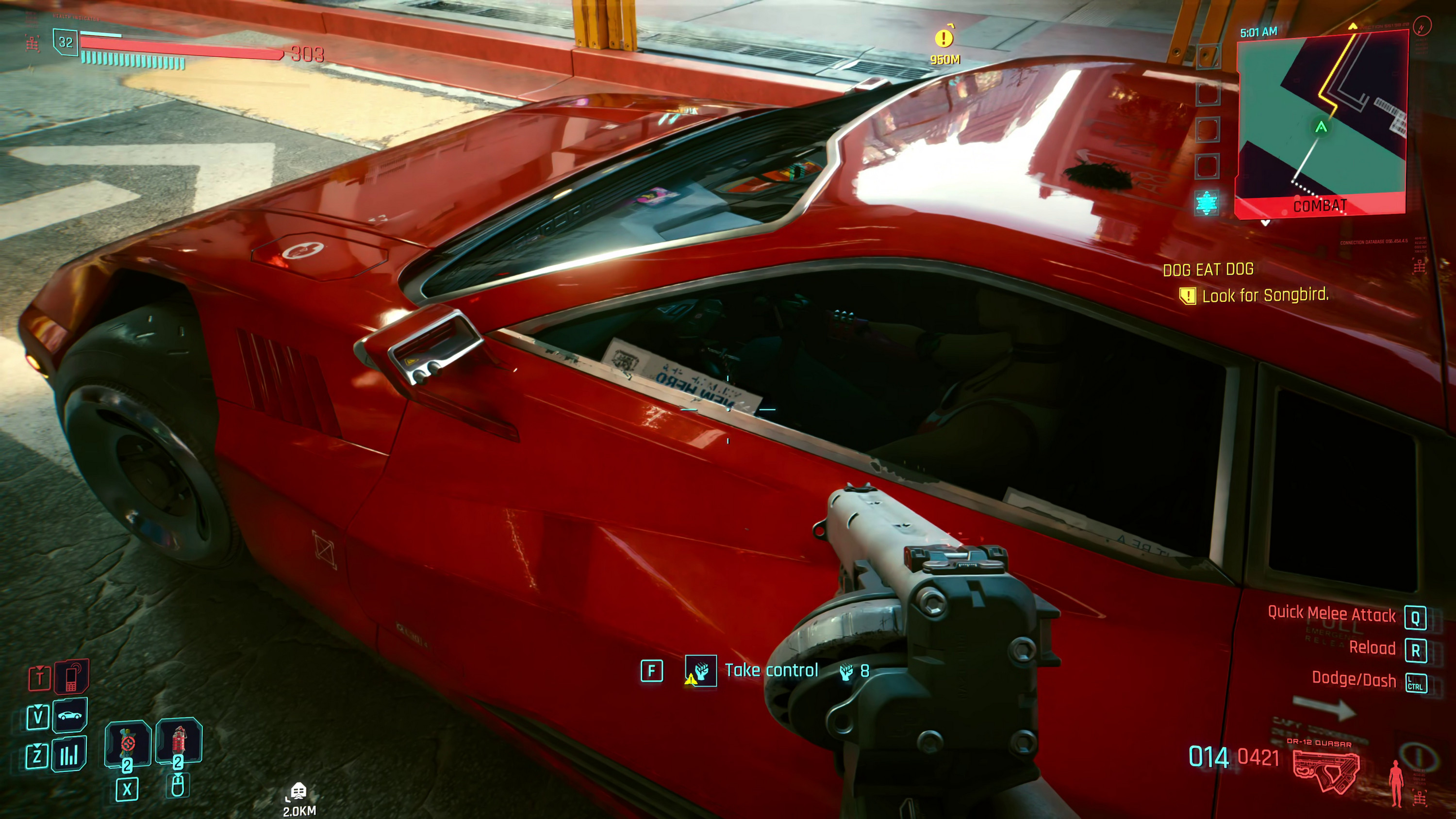
If you had told me five years ago that playing PC games over the cloud would soon look indistinguishable from using a powerful rig, I would have called you a fool. But after diving into NVIDIA’s new RTX 5080-powered GeForce Now servers for several hours, I think we’ve reached a major milestone for cloud streaming. From a New Jersey server almost a thousand miles away from my Atlanta-area home, I was able to play Cyberpunk 2077 in 4K at 170 fps (with NVIDIA’s DLSS 4 frame generation) and Overwatch 2 at a blistering fast 360 fps in 1080p. I genuinely couldn’t tell the difference between this souped-up GeForce Now server and my own RTX 5090-powered desktop.
That got me thinking: What’s the point of investing thousands in a desktop when cloud streaming can look this good for $20 a month? That’s the price for GeForce Now’s top-end Ultimate plan, which is required to use the RTX 5080 servers. And if you don’t need that level of power, you can also get a pretty solid gaming experience with the $10 Performance plan, which is restricted to 1,440p/60 fps at best.
Devindra Hardawar for Engadget
During my testing, I was constantly astounded by how sharp every game looked. The neon lights and reflective surfaces of Cyberpunk’s Night City lit up my Alienware OLED monitor. A few minutes into my first session, I completely forgot I was streaming the game. There were none of the video compression artifacts or occasional stuttering I’ve seen on other streaming services. Hell, I was even able to rip through several Overwatch 2 matches without noticing much lag. I only noticed a bit of latency when I turned on multi-frame generation while playing Cyberpunk in 4K — that pushed my frame rate up to 160 fps from 70 fps, but those interpolated frames made everything feel more sluggish.
We’ve clearly come a long way from Microsoft and Sony’s foray into game streaming for consoles. I’ve used Xbox offering on and off over the years, and while it’s typically been easy to use, it always felt a bit low-res (it tops out at 1080p/60 fps) and filled with blotchy video compression. Even today, it’s obvious you’re getting a second-rate experience. Sony’s streaming for PS Plus Premium subscribers can now reach up to an admirable 4K/60 fps for some PS5 titles, and it also turned the PlayStation Portal into a more viable handheld. But Sony’s cloud gaming seems more useful for letting you play older PS3 games, instead of giving you a complete gaming experience untethered from its core console business.

Devindra Hardawar for Engadget
GeForce Now has always had a technological advantage over the competition, as it’s easy for NVIDIA to stuff servers full of high-end GPUs. But it’s lagged behind a bit when it comes to usability, since playing games involves connecting to your accounts on storefronts like Steam, followed by downloading and installing those titles in a remote connection window. It’s not as easy as hitting a button on the Xbox Windows app. GeForce Now is clearly aimed at PC gamers who already have large collections of games and are used to suffering through the indignities of Steam’s interface.
For those players, NVIDIA’s latest upgrades have turned GeForce Now from a “nice to have” service to something that could be essential. There’s the raw power inherent in the leap to RTX 5080-level GPUs, which leads to higher frame rates and the ability to lean into demanding features like ray tracing. The actual “Blackwell” GPU hardware NVIDIA is using in its servers also sports a whopping 48GB of VRAM, a major leap from the 16GB of VRAM the consumer-grade RTX 5080 cards are stuck with. Technically, you could see better performance in GeForce Now compared to running a 5080 locally.
NVIDIA has also bumped its resolution and frame rate limits up to 5K/120 fps (which is currently only supported by one LG monitor), 4K/240 fps and 1080p/320 fps. That covers the gamut of people who want the highest quality possible, to those who demand the most frames for fast-paced shooters.
And in an effort to make cloud gaming look a bit less like you’re just streaming video, NVIDIA has also developed “Cinematic Quality Streaming” features, including support for better color depth with 4:4:4 chroma subsampling. There are also “AI-powered” video filters to help make text clear, as well as support for AV1 encoders for efficient streaming that can adapt to network changes.
If you’re stuck with an aging video card, it may make more sense to subscribe to GeForce Now Ultimate for $20 a month, instead of shelling out $1,200 or more for a genuine RTX 5080.
As usual for cloud streaming, though, the Achilles heel of GeForce Now is its exorbitant bandwidth demands. NVIDIA bumped up its maximum video bitrate to 100Mbps, which can add up to 45GB of bandwidth over an hour. You’ll need a beefy internet connection to stream games without slowing down the internet for everyone else in your home, and you can just give up on the idea entirely if you’re restricted by bandwidth caps. If you’ve been thinking of an excuse to upgrade to an uncapped gigabit internet connection, this is it.
Streaming Cyberpunk 2077 in 4K consumed 29.5GB over an hour of gameplay. GeForce Now hovered between 60Mbps and 80Mbps for most of the session, but it occasionally peaked to 100Mbps. I’ve got a reliable AT&T fiber connection in the suburbs, but I’d definitely be worried if I was still using a finicky cable internet in Brooklyn, where the overall bandwidth is shared with everyone on your cable node. A single GeForce Now session could take down internet speeds for your entire block, or you could find yourself without enough bandwidth to play smoothly during peak usage.
It’s also worth noting that GeForce Now also doesn’t support every PC game out there. You can access more than 4,000 recent titles, but you may run into issues trying to find obscure older games. NVIDIA is expanding its streaming library a bit with a new “Install to Play” feature, which lets you install some games in persistent cloud storage. I was able to set up and play 1000xResist without any trouble, and I’m hoping more indie titles will be added eventually.
The need for killer bandwidth and the reality of shoddy internet infrastructure are the biggest issues holding cloud gaming back from truly replacing local play. If my normally stable internet goes down, that means no gaming at all. And the same is true if NVIDIA’s servers get slammed. For most people, picking up a console or gaming PC will simply be more reliable.
Even with those caveats, GeForce Now still makes a compelling case for gaming away from your main rig. Perhaps you’re itching to put a dent in your Steam library while on vacation, or you just want to keep playing Mafia: The Old Country on your couch. It’s all possible, as long as your internet holds up.
This article originally appeared on Engadget at https://www.engadget.com/nvidias-geforce-now-with-rtx-5080-gpus-is-a-cloud-gaming-revelation-130000231.html?src=rss
GeForce RTX 3060 For $4.99 And RTX 3080 Ti For $23.50? Shut Up And Take My Money!
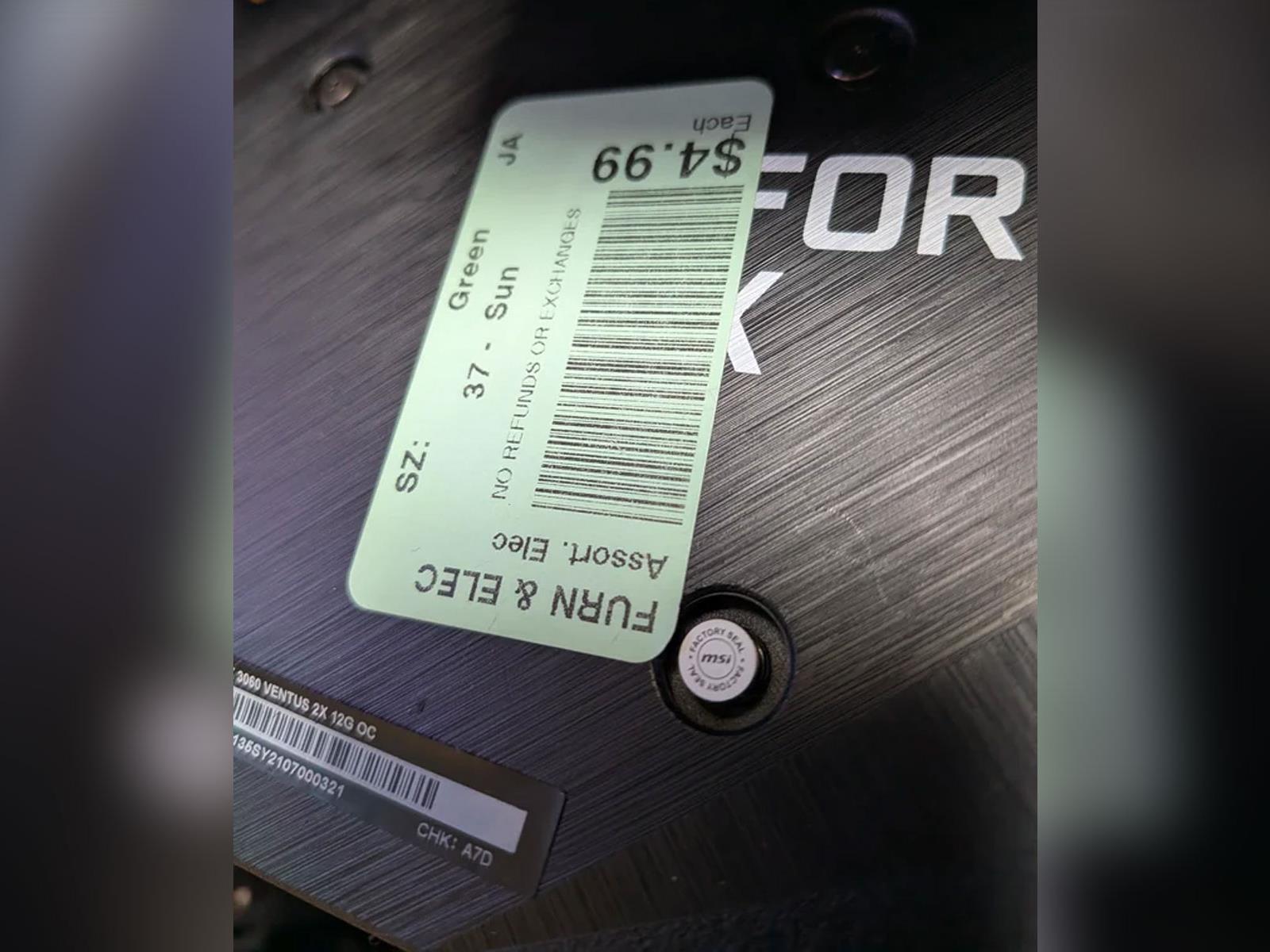
Have you ever stumbled upon a dollar bill or perhaps even a larger denomination on the ground and thought, ‘Wow, this is my lucky day!’? It happens, but it pales in comparison to the kind of lucky finds some Reddit users are coming across in their thrift store and auction escapades. A couple of recent posts highlight major GPU finds, including
Pogocache 1.2 Now Uses Microsoft’s Mimalloc By Default: “Excellent Performance”
Pogocache is the open-source fast caching software built from scratch that is optimized for low latency and CPU scalability/efficiency. Pogocache claims to outperform Memcached, Valkey, Redis, and other alternatives. Out today is Pogocache 1.2 as the newest feature release for this fast cache…
This Motorola Razr+ Foldable Is $450 Right Now
We may earn a commission from links on this page. Deal pricing and availability subject to change after time of publication.
Did you know you can customize Google to filter out garbage? Take these steps for better search results, including adding Lifehacker as a preferred source for tech news.
The 2024 Motorola Razr+ (Unlocked) is going for $449.99 on Woot right now, undercutting Amazon’s price and even dipping below its previous all-time low of $499.99 (according to price-trackers). That’s a significant gap for anyone considering a foldable phone. Woot throws in free standard shipping for Prime members, while everyone else pays $6. The phone ships unlocked with a full one-year Motorola warranty. This discount is valid for the next three days (or until stock runs out).
Motorola hasn’t reinvented the wheel with this model, but the Razr+ 2024 is refined in ways that make it easy to like. The aluminum frame has softer edges, and the vegan leather back keeps the phone from feeling slippery. Folded, it slips neatly into a pocket, and the redesigned hinge feels sturdier while being easy to open one-handed. Plus, the IPX8 rating means it can survive a dunk in water, which is a big step up from the previous year’s splash-only protection. The outer 4-inch OLED screen is genuinely useful, with enough brightness to check emails or run apps outdoors, and the inner 6.9-inch display is sharp, fast, and bright, even if the center crease is still visible when the screen is off, according to this PCMag review.
Performance is where the 2024 Razr+ feels like a real upgrade. The Snapdragon 8s Gen 3 paired with 12GB of RAM and 256GB of storage keeps everything running smoothly, from casual scrolling to heavier gaming. Battery life comes in at about 14 and a half hours (which outlasts Samsung’s Z Flip 5 by a few hours), and it recharges quickly with a 45W brick, though you’ll need to supply your own since it’s not included in the box. That said, wireless and reverse charging are both on board, adding some flexibility. The cameras, however, are a mixed bag. The 50MP main lens holds up well in bright daylight, but the telephoto reportedly produces noisy shots, and low-light photos fall short of what you’d get from Samsung or Google’s flagships.
Our Best Editor-Vetted Tech Deals Right Now
Samsung Galaxy S25 Edge 256GB Unlocked AI Phone (Titanium JetBlack)
—
$849.99
(List Price $1,099.99)
Samsung Galaxy S25 Edge 256GB Unlocked AI Phone (Titanium JetBlack)
—
$849.99
(List Price $1,099.99)
Deals are selected by our commerce team
Riders vote to neutralise Vuelta a España if there are protests during stage 17
The riders at the Vuelta a España have voted to neutralise the race if there are further protests during today’s stage 17.
Bahrain Victorious’s Jack Haig spoke to the media ahead of today’s stage on behalf of the riders’ union, the Cyclistes Professionnels Associés (CPA).
“We decided that if there is an incident, we would try to neutralise the race and then that would be it because in the end racing to an undefined finish line is not really fair sport,” said Haig, as reported by Cycling News.
“Unfortunately, we’re being caught in the middle of something that maybe doesn’t even really involve us and at the moment we are kind of just the pawns in a very large chess game that unfortunately is affecting us,” the Australian said.
Haig explained that the riders’ decision was only for stage 17, and we can expect further daily votes.
Yesterday’s stage 16 saw pro-Palestine demonstrators blocking the course with 3km to go, with race organisers deciding to curtail the stage, which finished under the 8km-to-go banner. Egan Bernal won the stage.

There has been ongoing concern from riders regarding their safety, and several riders have crashed due to the protests.
Regarding stage 16, Haig said: “Yesterday it started to become a little bit uncomfortable because there were some acts to maybe deliberately try and harm the riders by cutting down trees, by putting the thumb [tacks] on the ground, to deliberately light fires.”
Cycling journalist Daniel Friebes wrote on X that there is: “General dismay growing among riders that they are (main?) decision-makers in this process. They have no appetite to race for improvised finish-lines like yesterday’s.”
General dismay growing among riders that they are (main?) decision-makers in this process. They have no appetite to race for improvised finish-lines like yesterday‘s.
— Daniel Friebe (@friebos) September 10, 2025
Haig added that riders want to end the race in Madrid on Sunday, but that it needs to happen in a “fair way where riders are safe”.
The protests at La Vuelta are primarily against the participation of Israel–Premier Tech. The team is co-owned by Canadian–Israeli businessman Sylvan Adams, who has said Israel–Premier Tech’s riders are ambassadors for Israel.
In a bid to aid safety, Israel–Premier Tech removed ‘Israel’ from its kit on Saturday.
The protests at La Vuelta were called for by the Palestinian Campaign for the Academic and Cultural Boycott of Israel (PACBI). Stephanie Adam, a campaigner for PACBI, told BikeRadar that Israel–Premier Tech’s presence at La Vuelta is “sportswashing pure and simple”.
Adam said that protests at La Vuelta will continue at La Vuelta, and until Israel–Premier Tech is excluded from UCI races and events.
LoL esports team suspends player for saying women can’t compete while menstruating
A popular League of Legends esports player, Bwipo, has been suspended by his organization after he said on a Twitch stream that women shouldn’t be playing competitively while menstruating. Bwipo, whose real name is Gabriël Rau, told viewers on a Twitch stream: “I think there’s just not enough support for female pro players… women’s anatomy and their monthly cycles are just extremely different from males, and there’s no proper support system for women to go through what they’re going through.” And before he mentioned women’s anatomies, some viewers were probably thinking that he was going to talk about how there should be more support for women in esports. But then he continued:
“…even men just tilt out of their f—ing minds when they’re playing League of Legends. So, when a woman is on the wrong part of the month and playing competitively, there is a time of the month where you should not be f—ing playing competitive games as a woman, in my opinion.” He justified his statement by saying that it’s based on his experience “living with one for a while.” He claimed the woman he lived with played League of Legends made it “really obvious when she was just getting irritated at every stupid little thing.” Bwipo added: “This is not me trying to be sexist or anything.” His video circulated on Reddit, but it’s no longer available.
In a response to his statement posted on TikTok, the host and co-creator of League Awards, Eefje “sjokz” Depoorter, criticized and opposed his views. “I thought we’re past that,” she said about Bwipo calling a woman’s period the “wrong” time of the month. “That’s such a crazy take,” sjokz continued, talking about how women make Olympic records, climb mountains, work 24-hour shifts, are providers for their children, and care for the elderly, all while bleeding buckets and experiencing pain. “Also the notion that men aren’t emotional in games of League…” she trailed off and made a sound.
Bwipo’s organization, FlyQuest, then posted an announcement on X, acknowledging that he “made sexist comments” and that they were “antithetical” to its core values. “Comments that might discourage even one young woman from pursuing her dream of becoming a pro player harm the future of esports, and we take that very seriously,” it wrote. FlyQuest has decided to suspend “Bwipo from play for the next series in the LTA playoffs,” which he’s currently in. The organization is also donating his prize money from the event to causes that support women in gaming. To note, FlyQuest has an esports team called Red that showcases “women and gender expansive folks in gaming.”
After FlyQuest’s announcement, Bwipo posted an apology on X, admitting wrongdoing. “I’m sorry to those I hurt,” he wrote. “I regret using my platform to fuel vitriol and sexism instead of support.”
Hi everyone, I know I fucked up. My comments were ignorant and disrespectful to women, including those close to me.
I’m sorry to those I hurt. I regret using my platform to fuel vitriol and sexism instead of support, and I’ll be taking steps to reflect, listen, and do better.
— Bwipo (@Bwipo) September 10, 2025
This article originally appeared on Engadget at https://www.engadget.com/gaming/lol-esports-team-suspends-player-for-saying-women-cant-compete-while-menstruating-120045752.html?src=rss
“Southern Coast Cruise” Route Details
Hackabone Project Offers BeagleBone-Based Embedded Linux Training with Emulated Framework
A new initiative called Hackabone has been launched with the goal of providing more accessible Embedded Linux training. Created by long-time Embedded and real-time Linux instructor Alejandro Lucero, the project combines detailed documentation with a web-based emulation framework centered around the BeagleBone Black single-board computer. The project name, short for “Hack-a-Bone,” reflects its emphasis on […]
The Morning After: Hands-on with the iPhone Air, iPhone 17 Pro, AirPods Pro 3 and more
As the Pumpkin Spice approaches, it’s time for a bunch of new iPhones. Welcome to a special edition of the Engadget newsletter, breaking down everything Apple announced in the last 24 hours. What’s notable this year is, of course, the iPhone Air. Launching alongside the base iPhone 17 and iPhone 17 Pro and Pro Max, it’s an intriguing new flavor of iOS.
The iPhone Air: It’s a brave choice to label the new superslim phone with the same suffix as the game-changing MacBook Air. Barring the slimmer profile and accompanying compromises, it’s not as surprising as it could have been. Early rumors suggested it might have arrived without a single port, with wireless charging and WiFi alone.
Instead, the iPhone Air (no 17) is an engineering marvel. With a body thickness of just 5.6mm and made of spacecraft-grade titanium, it also has Ceramic Shield 2 on both sides, which helps make it more durable than any previous iPhone.
Engadget
It features the same A19 Pro chip as the iPhone 17 Pro, along with Apple’s N1 chip for wireless connectivity and the new C1X modem, which is reportedly twice as fast as the C1 introduced with the iPhone 16e.
Compromises had to happen, though. Apple kept the iPhone Air thin in part by going for a single 48-megapixel camera, but it did try to make it as versatile as possible. It has a large two-micrometer quad-pixel sensor that excels in low light, along with an optical quality 2x telephoto. Apple says it’s “the equivalent of four lenses in their pocket,” but well, why doesn’t the base iPhone 17 have it? It also seems a bit weak compared to the S25 Edge (Samsung’s super-thin smartphone) and its 200MP main camera.
Worried that a thin battery means precarious battery life? Apple claims the iPhone Air will get “all-day” battery life thanks in part to hardware designed to cram more battery into smaller designs and software like Adaptive Power Mode. To assuage those concerns, Apple made a new super-slim MagSafe battery pack to boost how long it lasts.
There’s also an intangible appeal to the ‘first’ of a new Apple product. I remember upgrading a year into my iPhone 7 contract to get the first iPhone without a home button. The iPhone X is a good comparison to make, perhaps. Both the iPhone X and iPhone Air have the same price: $999.
— Mat Smith
Get Engadget’s newsletter delivered direct to your inbox. Subscribe right here!
Our first impressions and hands-ons at the Apple iPhone 17 event
-
iPhone Air hands-on: The super-sleek precursor to Apple’s upcoming foldable
-
iPhone 17 Pro hands-on: The unibody and camera plateau feel more significant in person
-
Apple Watch Series 11 hands-on: Feels and looks the same, but real changes are deeper
The iPhone 17 Pro is redesigned to house its biggest battery ever
New thermals, new cameras, new color!
Apple
So, if the iPhone Air grabs the headlines, what about the pro model? Apple’s most powerful iPhone now has the A19 Pro chipset and comes with 6.9- (iPhone 17 Pro Max) and 6.3-inch (iPhone 17 Pro) screen sizes. Glass has been replaced with Ceramic Shield 2, which makes the iPhone 17 Pro more durable than ever.
A new rear camera setup includes a new 48MP telephoto lens, which can shoot up to 8x “optical quality” zoom at 12MP and 4x at its full resolution. Both the wide and ultrawide sensors are 48MP too, for resolution parity across them all. The iPhone 17 Pro series starts at $1,099 for a 256GB model and will be available for pre-order starting Friday, September 12.
The iPhone 17 has a better screen and better durability
With base storage up to 256GB.
Arriving in four colorways, the iPhone 13 has improvements in power efficiency, a smoother screen and a new selfie cam. This might be the most intriguing update: The company has improved the selfie camera to be a “center stage” front camera, with better stabilization, a wider field of view and a new larger square sensor. Because it’s square, you won’t have to rotate your iPhone when you want to take a photo or video in landscape mode.
AirPods Pro 3 have better noise cancellation and health-tracking features
Live translation is built into the buds.
Apple
Yes, we have an update to Apple’s AirPods Pro — arguably, the Apple hardware I’ve used the most over the last three years. I even bought a standalone USB-C charging case. The company has improved the wireless buds in some major ways. The big features include a heart rate sensor that can hook into iOS workout apps (and third-party apps) and a new live translation feature (a la Pixel Buds) that converts foreign languages on the fly and even lowers audio of the speaker so you can better hear the translation. They’ll support English, French, German, Portuguese and Spanish at launch. The buds themselves are a bit smaller to fit more ears, and there are now five tip sizes, up from three.
No feature yet to make people who talk to you while wearing AirPods less insufferable. The AirPods Pro 3 cost $249, and pre-orders are open right now.
Apple launches the Watch Series 11, Ultra 3 and SE
Something for everyone?
Apple
The Series 11 is twice as scratch-resistant as previous Apple Watches and now even has 5G connectivity. The watch will monitor for high blood pressure using improved algorithms and the built-in heart rate monitor. If the watch identifies patterns of hypertension, you’ll get an alert in the Health app. The biggest upgrade may be up to 24 hours of battery life on a single charge.
The Ultra 3 has a bigger display, satellite connectivity, and emergency SOS. The Watch Ultra 3’s new 3D printed case has even smaller bezels, while the display technology has been tweaked (LTPO3) to improve off-angle viewing.
The Apple Watch SE is getting an update with a new always-on display, optional 5G, the improved S10 chip and support for gestures like double tap and wrist flick. The Apple Watch SE will also provide sleep apnea notifications and the new Sleep Score feature that’s available on Series 11 watches. The Apple Watch Series 11 starts at $399, the Ultra 3 starts at $799 and the SE starts at $249.
The Apple news you might have missed
-
Apple isn’t making any carbon-neutral claims with its Series 11 smartwatch
-
All of the new iPhones start with 256GB of storage. Finally.
-
iOS 26, iPadOS 26, watchOS 26 and macOS 26 will be released on September 15
-
Apple gives iPhone 14 and 15 owners an extra free year of satellite connectivity
This article originally appeared on Engadget at https://www.engadget.com/general/the-morning-after-hands-on-with-the-iphone-air-iphone-17-pro-airpods-pro-3-and-more-111101338.html?src=rss
Nikon’s ZR is its first cinema camera co-designed with RED
Nikon has unveiled its first cinema camera developed in collaboration with the company it acquired last year, RED. The Nikon ZR (the “R” is for “RED” I imagine) is a camera that neither company could have made on its own, marrying RED’s color science and video codecs with Nikon’s advanced subject detect AF and in-body stabilization. It will go up against other creator-oriented models like Canon’s new C50 and the Sony FX3 but at a much lower price.
Nikon’s mirrorless cameras are known for their high dynamic range and the company is leaning into that for the ZR. It has a partially stacked 24MP sensor with a Dual Base ISO of 800/6400 that promises 15+ stops of dynamic range for high low-light sensitivity and greater detail in shadows and highlights. Though it doesn’t quite match the C50’s 7K resolution, it will output 12K RAW 6K video at 60 fps, or 4K at 120 fps.
The internal RAW format used will be RED’s new R3D NE and a log format called Log3G10 with the same color science as RED’s high-end cinema cameras (so it can match those in post). That’s a lighter codec designed exclusively for Nikon, but the ZR also supports Nikon’s N-RAW format along with ProRes/ProRes RAW and H.265. If you want to apply RED’s LUTs, you can load and monitor up to 10 at a time.
Nikon
Nikon focused on audio as well, offering 32-bit float internal audio recording and Nokia’s OZO surround sound tech via three built-in high-performance mics. You can choose from five pickup patterns including front (super directional), front, all directions, rear and stereo (binaural) for any situation from interviews to vlogging to ASMR.
The ZR comes with subject tracking hybrid phase-detect autofocus, making it more palatable for content creators than any RED camera that has ever existed. That includes AI tracking of people (eyes, head and body) along with animals and vehicles, with nine types total. It also has five-axis in-body stabilization with 7.5 stops of smoothing, something palpably lacking in Canon’s new C50. Another key feature is digital focus-breathing compensation.
Nikon
Since the ZR has no viewfinder, Nikon made the screen as big, bright and sharp as possible. It’s a 4-inch 16:10 display with 1,000 nits of brightness and full DCI-P3 HDR color coverage, with 3070K dots of resolution, one the highest of any camera display. Meanwhile, the tiny 540 gram (1.2 pound) body dissipates heat well enough to allow 6K 60 fps RAW recording for up to 125 minutes at 25C (77F) temperatures. It supports audio capture through a the digital hotshoe or a 3.5mm input and has a USB-C port for charging, data transfers and webcam/streaming, along with a headphone input. The HDMI port is unfortunately a small and flimsy Micro HDMI type, however.
For its capabilities, the Nikon ZR looks like a stunning bargain. It starts at $2,200 for the body only without accessories, which is nearly half the price of the Sony FX3 and $1,700 cheaper than Canon’s C50. Shipping is expected to start on October 20, 2025. It supports any Nikon (or third-party) Z mount lens or F mount glass with an adapter. Nikon also unveiled the $339 ME-D10 digital shotgun mike that’s compatible with the camera’s 32-bit float audio.
This article originally appeared on Engadget at https://www.engadget.com/cameras/nikons-zr-is-its-first-cinema-camera-co-designed-with-red-110022972.html?src=rss
The Atherton A.130 is our Trail Bike of the Year for 2025 – here’s why
Hot on the heels of dishing out our Road Bike of the Year awards last week, it’s time to turn our attention off-road and crown our Trail Bike of the Year winner… the Atherton A.130.
This year, we’ve put eight of the best all-rounders through the wringer to find a winner, with the A.130 shining through as a trail bike that’s a comfortable climber, and ridiculously flickable and fun on mellower trails, but a proper hooligan when pointed downhill.
Up against stiff competition from Canyon and Forbidden in our final head-to-head showdown, with bikes from Specialized, Giant, Pivot, Santa Cruz and Yeti also tested and earning highly commended nominations, Atherton’s A.130 takes top honours as a trail bike that does it all with aplomb.
My head-to-head feature on the Atherton, Canyon and Forbidden bikes delivers a blow-by-blow account of how these three fare against one another – and explains why the Atherton edges it to take the crown – but, for now, let’s dive into more detail on Trail Bike of the Year 2025.
Want to know more about our Road Bike of the Year winners? Head this way – or check out our full Bike of the Year hub.
Bike of the Year is supported by Auto-Trail

Big thanks to sports campervan specialists Auto-Trail for supporting our Bike of the Year 2025 test. Head to auto-trail.co.uk for more details about their range, including the cycling-specific Auto-Trail Expedition 68, which features a purpose-built bike garage.
Our 2025 Trail Bike of the Year podium



What we tested
Highly commended
Runners-up
Winner
How we found our Trail Bike of the Year

For this year’s MTB Bike of the Year test, we decided to focus exclusively on the trail bike category – it’s an exciting segment that’s really developed over the last few years, with bikes now better than ever.
We’ve got an expert team of testers here and, together with my colleague Alex Evans, and skills coach Luke Marshall, we looked back on the last 10 months of riding to put together our shortlist of the best trail bikes we’ve tested collectively.

That enabled us to capture a broad range of trail bikes with varying amounts of travel and differing builds, across a wide range of prices.
Once we’d all put our favourites forward, we hit the trails again to determine which bike came out on top. And guess what? It wasn’t easy… not only because these bikes are so good, but because the trail bike category continues to evolve.
What even is a trail bike?

We say it every year, but defining what a trail bike is can be challenging.
During the process of this test, what we’ve discovered is that while the amount of suspension travel is important, it’s certainly not the most important factor when defining a bike.
Suspension travel on the bikes here varies from as little as 130mm at the rear to as much as 160mm up front, and while the amount of squish is important, it’s not the defining factor. How it’s delivered – in terms of leverage rate, anti-rise, anti-squat and other kinematics – is crucial, dictating whether a bike is super-efficient on the climbs or will soak up chunder as effectively as a longer-travel enduro rig.
There’s also been more of an emphasis on adding bigger, more powerful brakes, along with grippier tyres that’ll stave off ride-ruining punctures.
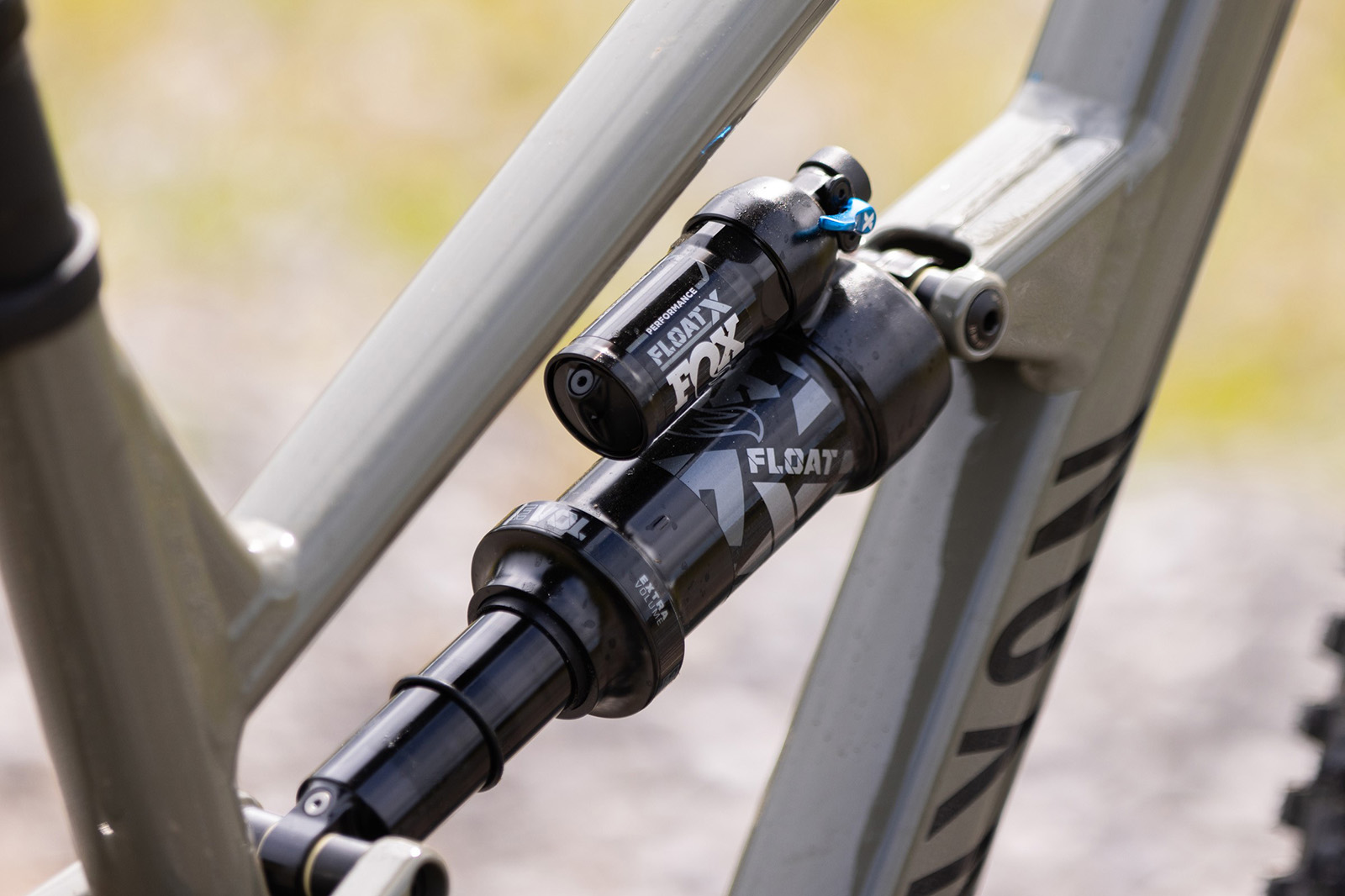
That is largely down to ensuring the bike – even if it’s capable of being ridden all day – should still be able to handle a beasting, no matter what you’ve got it pointed down.
But despite, in some cases, being focused more on going downhill, all the bikes here are more than capable of going up and along, too.
After all, trail riding is such a mix of everything that these bikes need to be the truest of all-rounders. Designing a bike like that isn’t easy.

While there’s a need for it to be pedalled out into the hills for hours, maybe even days at a time, it still needs to handle the descents, a trip to the bike park or even just an evening in the woods ripping turns and hitting jumps.
There will always be some level of compromise with trail bikes, but one thing is for sure, not a single bike included here is a dud in any way.
What we were looking for in the winner

Because we’ve hand-picked every bike here based on our testing experience – a big advantage of the way we’ve approached Bike of the Year this time round – each of them is worth considering for your next purchase.
Which one suits you best will depend on what you’re looking for in a bike and how much money you’ve got to spend. For our overall winner, we were looking for an all-rounder that exemplifies the modern trail bike.

It needed to be lively and engaging, fast and efficient, but still capable of soaking up the hits – and with geometry that would ensure we weren’t terrified on steeper, more technical trails.
It’s a big ask, but thankfully, nearly every brand out there now makes something that can meet or, in some cases, exceed these expectations.
However, the Atherton A.130 is the bike that heads off the competition as our 2025 Trail Bike of the Year.
Meet the team behind Trail Bike of the Year
Robin Weaver
As our technical editor-in-chief, Rob has years of racing and testing experience, so knows what makes a good trail bike.
Alex Evans
A hard rider with a habit of breaking bikes, senior technical editor Alex pulls no punches with his reviews.
Luke Marshall
Our former tech writer turned skills coach is rarely off a bike and can quickly expose any kit weaknesses
The Newest DRM Display Driver Being Worked On For Linux: “Yhgch”
The newest Direct Rendering Manager (DRM) display driver that has been in the works for the Linux kernel is “Yhgch” from Inspur…
Intel Loses One Of Its NPU Driver Maintainers: “Time To Let Someone Else Deal With The NPU Bugs”
Following the numerous Intel Linux developer departures last month from the company following layoffs at Intel and others deciding to voluntarily leave, there is another one to report today. One of the Intel IVPU accelerator driver maintainers for the Intel NPUs found in Core Ultra SoCs is departing the company…
LLVM 21.1.1 Ships A Variety Of Compiler Fixes
For those preferring for the first point release to major new compiler releases before upgrading, LLVM 21.1.1 is out today along with the likes of Clang 21.1.1 for this widely-used open-source compiler stack…
7 things you need to know about the new Garmin Edge 550 and 850 bike computers
Garmin has launched its new Edge 550 and 850 bike computers. Here’s what you need to know about the new computers, in brief:
- Garmin says the Edge 550 and 850 are its “brightest and smartest” compact bike computers.
- The computers are “built to help riders better prepare and train for an event or goal”. You can use them to access free Cycling Coach plans, track your cycling ability, and monitor hydration and fuelling while riding.
- The Edge 550 and 850 now offer real-time weather updates, including wind direction.
- They also have features for mountain bikers, such as enduro and downhill ride profiles that enable more precise GPS tracking.
- Battery life is 12 hours in “demanding use cases” and 36 hours in battery saver mode.
- The Edge 850 has several extra features, including a touchscreen and built-in speaker, and you can use it to make contactless payments.
- The Edge 550 costs £379.99, while the Edge 850 costs £469.99.
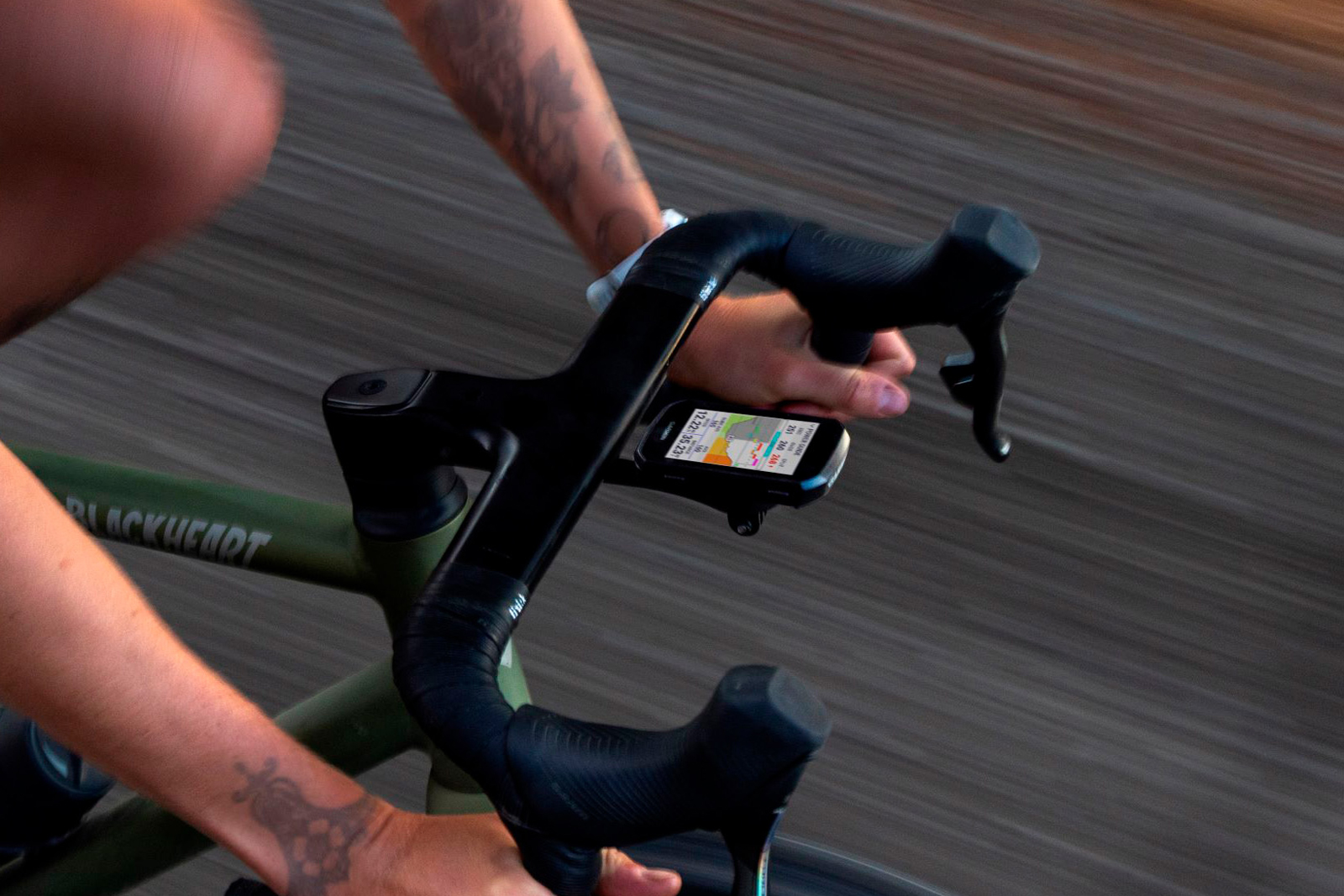
Want to know more? Read our coverage of the new Garmin Edge 550 and 850 bike computers.
SpecFive Strike Handheld Linux Workstation with LoRa Mesh
The SpecFive Strike is a handheld Linux workstation with integrated LoRa mesh networking. Built on the Raspberry Pi Compute Module 4 and a custom SpecFive carrier board, it targets developers, makers, hackers, and off-grid communicators by combining Linux computing, wireless connectivity, and portability. The device comes in a PETG enclosure featuring a 4.3-inch touchscreen and […]
Fedora’s Modern OS Installer UI Working Well & Expanding Scope Before Deprecating GTK UI
The long-in-development web-based user interface for the Anaconda installer used by Fedora (and Red Hat Enterprise Linux) continues maturing well and expanding its usage before eventually seeing the Anaconda GTK-based UI deprecated in the future…