10 Shows Like ‘Foundation’ to Watch Next

We may earn a commission from links on this page.

Way back in 1942, Isaac Asimov’s Foundation universe (which began as a series of short stories before being published as a trilogy) offered a simple, clever premise built around the idea of “psychohistory,” which suggested the actions of individuals might be entirely random, but en masse, we’re entirely predictable. And as anyone might have predicted, adapting this, er, foundational work of genre literature seemed only natural for the content-hungry streaming era.

While the Apple TV+ adaptation occasionally misses the point of its source material in throwing in bits of mysticism here and there, taken on its own terms, it’s an impressively realized, centuries-spanning science-fiction epic focused on the lives of the scholars and rebels working to bring down an empire in order to save it.

It’s one of the few TV shows that truly captures the feel and scope of golden age science fiction, incorporating ideas from other Asimov works outside the Foundation books. But it’s not the only one. Here are 10 shows that flirt with the same scope and intelligence.


Dune: Prophecy (2024 – )

This spin-off of the lucrative film franchise could have easily been an afterthought, but instead, we got a thoughtful, juicy space-set soap opera that takes place 10,000 years before the Denis Villeneuve films. There’s a lot going on, but generally, the series focuses on Valya and Tula Harkonnen (Emily Watson and Tula Williams)as they struggle to build and maintain the Sisterhood that we’ll later come to know as the Bene Gesserit, by any means necessary, and in the face of an unstable Imperium—not at all unlike the Foundation’s efforts in the face of Empire over on that other show. The ruling dynasty has a new weapon in Desmond Hart (Travis Fimmel), a manipulative former soldier who seems immune to the persuasive abilities of the Sisters, thus threatening their places at the Emperor’s side. This one resonates with Foundation while also playing a bit like a star-spanning Game of Thrones. Stream Dune: Prophecy on HBO Max.


Andor (2022 – 2025)

Just when I felt like I was done with Star Wars, along came prequel series Andor, the morally complex story of thief-turned-rebel spy Cassian Andor (Diego Luna) and his radicalization on the road to becoming the heart and soul of the Rebellion. We see the slow march of Empire, as citizens of the galaxy become slowly acclimated to rising fascism, and witness the conflict between various rebel faction: Genevieve O’Reilly’s Mon Mothma fights from within the Galactic Senate, while Stellan Skarsgård’s Luthen Rael, Andor’s handler, favors dark deeds done under cover of darkness. Forest Whitaker’s Saw Gerrera is content to burn the Galaxy down rather than allow it to become what he hates. It’s not only good television, it’s the first time in a long time that it feels like Star Wars has something meaningful to say. Stream Andor on Disney+.


For All Mankind (2019 – )

For All Mankind starts with a tantalizing alt-history premise: What if Soviet space pioneer Sergei Korolev hadn’t died prematurely in 1966 and instead helped bring his country’s space program to full flower, extending the space race indefinitely? If America and the world been forced to continue and expand upon the space program, our past (and present) would look quite different, at least according to this show, which jumps across decades to imagine how that might go (à la Foundation‘s time jumps, if much less dramatic in scope), revealing an alternate past (and future). A spin-off involving a Soviet space program, Star City, is in the works. Stream For All Mankind on Apple TV+.


The Expanse (2015 – 2022)

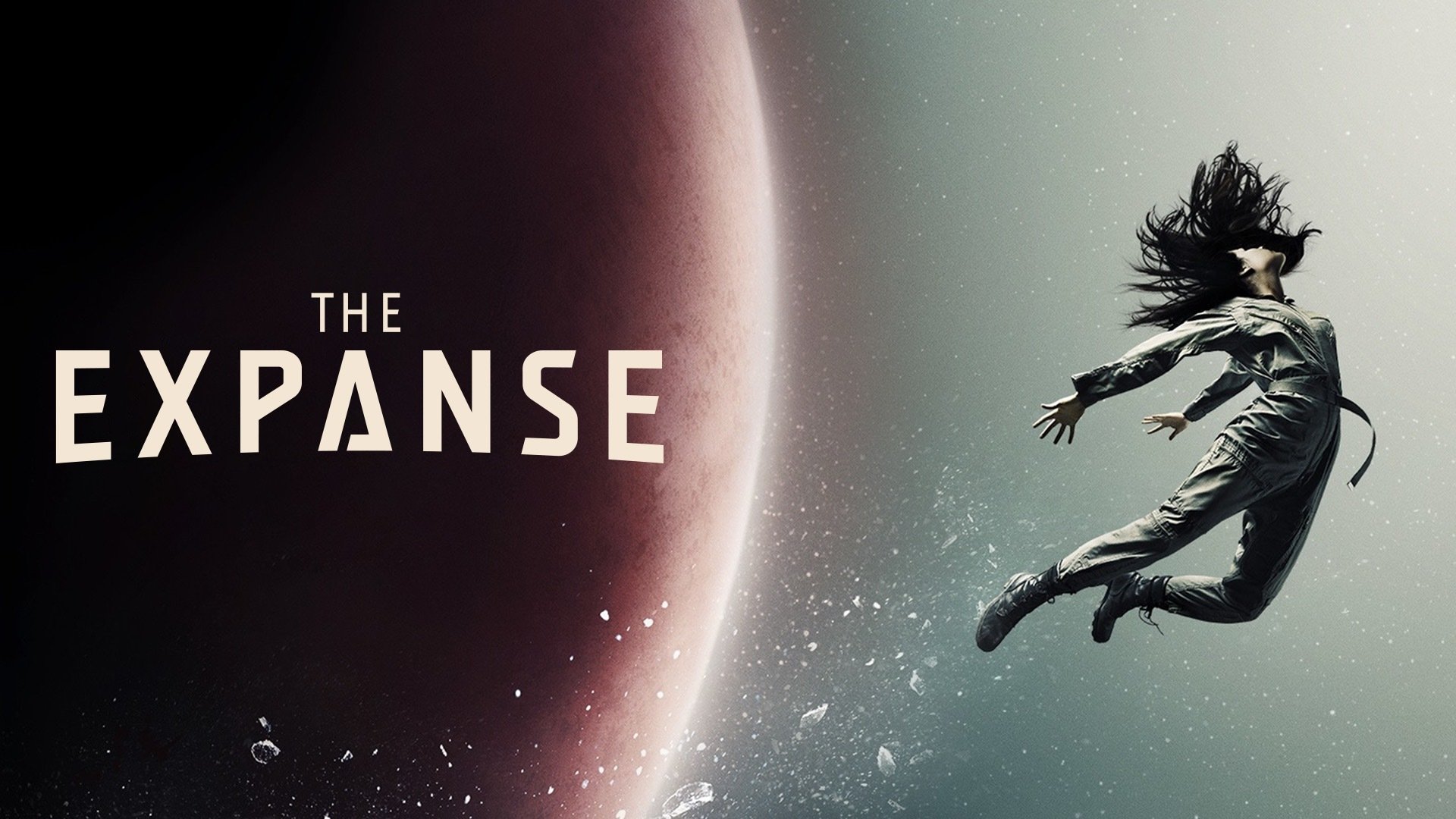
Set in a somewhat near-ish future, The Expanse (based on the book series by James S.A. Corey) imagines a colonized solar system into which we’ve carried all of our old familiar problems, and then some: Earth sits at the historical and cultural center of things, while Mars colonists, by virtue of having to survive in a challenging environment, have developed technological and military superiority, and folks living in “the Belt” have had to scrabble to survive. Greed, fear, and shortsightedness make conflict nearly inevitable, even if the series isn’t quite as cynical as it at first appears: James Holden and Naomi Nagata (Steven Strait and Dominique Tipper) head up the blended crew of thec cargo ship Rocinante, which winds up having an outsized impact on events by being in the right place at the right time and having a crew with reasonably good intentions. Shohreh Aghdashloo plays Chrisjen Avasarala, a deeply cynical (and infamously foul-mouthed) politician who conceals within her the show’s beating heart. Stream The Expanse on Prime Video.

Babylon 5 (1993 – 1998)

J. Michael Straczynski’s wildly ambitious sci-fi epic was way ahead of its time, carrying out a planned (more or less) five-season story arc set on the titular space station that recalls the more orchestrated prestige series of today. Babylon 5 is a remote outpost that becomes the last best hope for peace in the face of conflicting human and alien agendas—even more so after an ancient and very unexpected threat is awakened. The threats from without serve to expose the strains within—the extent to which we come together in the face of shared danger, and the ways we fall apart. With increasingly complex storylines blending science-fiction, politics, and outer-space mysticism, it still holds up (dated CGI effects notwithstanding). Stream Babylon 5 on Tubi.


Shōgun (2024 – )

Not science fiction, but still a stunningly well-produced series depicting the impending demise of an old order, and the rise of what follows in its wake. Set at the tail-end of Japan’s Warring States period, the series finds ambitious English maritime pilot John Blackthorne (Cosmo Jarvis) shipwrecked in Japan, and in the power of the warlord Lord Yoshii Toranaga (Hiroyuki Sanada). Each of these men has something to offer the other. Reluctantly serving as translator between them is Toda Mariko (Anna Sawai), highly loyal to Toranaga, but with a complicated past. The political and military maneuvering feel out of time, as does the sense that this upheaval could lead to something new and better, or just as easily, an end of days. Stream Shōgun on Hulu.


Murderbot (2025 – )

Don’t let the title fool you: While there’s certainly some dark comedy to be found here, this is one of the smarter shows on TV, based on a Hugo-Award winning book series by Martha Wells. Alexander Skarsgård is the title’s hilariously deadpan Murderbot, a private “security construct” who’s managed to hack its way through its own programming and gain free will—which it mostly wants to use to watch its favorite streaming shows. It can’t just run off for fear of drawing attention, but the self-titled Murderbot (known as SecUnit to everyone else) is content to do the bare minimum when it’s assigned to a team of inexperienced and naive researchers who don’t see the need for a killer security robot, at least until they’re enmeshed in a complicated capitalist plot in which they’re all just cogs. Stream Murderbot on Apple TV+.


Star Trek: Discovery (2017 – 2021)

While not nearly as serious-minded as Foundation (this is Star Trek, after all), Discovery pushes further into the dark than most of its cousin shows. Sonequa Martin-Green stars as Michael Burnham, initially a disgraced Starfleet officer who eventually becomes captain of the titular starship. Beginning as a prequel set during a conflict between the Federation and the Klingon Empire, the series winds up spanning centuries following a mid-stream time jump, with Discovery and her crew traveling nearly 1,000 years into the future, where the Federation is hanging on by a mere thread. It’s after this point that Discovery and Foundation have the most in common—specifically, lead protagonists who have survived for centuries, fighting to preserve what they can of a system they believe in. Stream Star Trek: Discovery on Paramount+.


Silo (2023 – )

The setting here is far from intergalactic, but the scope is no less ambitious in spite of the confined setting. The characters all live in the 144-story silo of the title, a sealed environment sustaining (or imprisoning?) the last dregs of humanity on a ravaged Earth. Societal politics blend with elements of mystery (nothing in the silo is quite what it seems) in an impressively conceived dystopia. Based on Hugh Howey’s book trilogy, the show has at least one other thing going for it in addition to its killer cast (including Rebecca Ferguson, Rashida Jones, David Oyelowo, Common, and Tim Robbins): Unlike so many premature cancelled streaming series, it will reach a planned conclusion after having been renewed for two more seasons. Stream Silo on Apple TV+.


Battlestar Galactica (2003 – 2009)

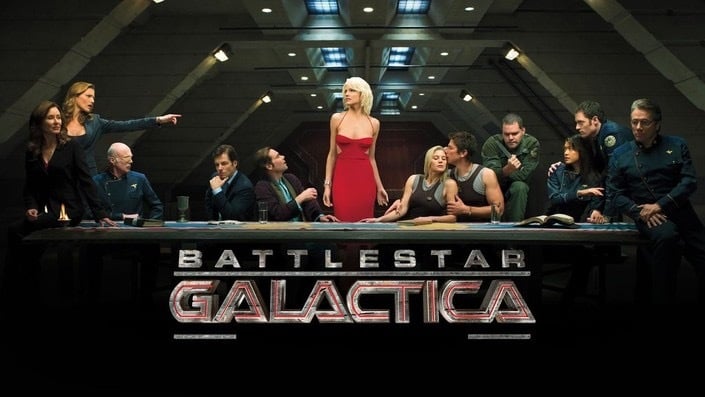
While the original was a fun, but often awkward, blend of smart sci-fi and 1970s kitsch, the aughts reboot from Ronald D. Moore (who also co-created the aforementioned For All Mankind) and company brought science fiction fully into the prestige TV era. Created to be humanity’s robot slaves, the Cylons rebel and launch a sneak attack on the human colonies, leading to an exodus into space. The only hope for humanity is to reach the mythical world of Earth. The monotheistic Cylons see their crusade as a nearly holy one, while the more rationalistic human refugees struggle to survive and find common purpose in an order that’s crumbling day by day. Edward James Olmos and Mary McDonnell lead an impressive cast. Buy Battlestar Galactica from Apple TV+ and Prime Video.

Spotify peeved after 10,000 users sold data to build AI tools

For millions of Spotify users, the “Wrapped” feature—which crunches the numbers on their annual listening habits—is a highlight of every year’s end, ever since it debuted in 2015. NPR once broke down exactly why our brains find the feature so “irresistible,” while Cosmopolitan last year declared that sharing Wrapped screenshots of top artists and songs had by now become “the ultimate status symbol” for tens of millions of music fans.

It’s no surprise then that, after a decade, some Spotify users who are especially eager to see Wrapped evolve are no longer willing to wait to see if Spotify will ever deliver the more creative streaming insights they crave.

With the help of AI, these users expect that their data can be more quickly analyzed to potentially uncover overlooked or never-considered patterns that could offer even more insights into what their listening habits say about them.

Read full article

Comments

Intel Panther Lake CPUs Spotted Prowling Around Samsung Galaxy Book Laptops

Intel Panther Lake CPUs Spotted Prowling Around Samsung Galaxy Book Laptops
It seems that contrary to previous doom-and-gloom rumors about missed yield targets, Intel is actually making good headway on its upcoming mobile Panther Lake chips. The latest confirmation of sorts comes from known leaker, @x86deadandback, who’s posted an interesting chart. Whereas previous information was pinning the launch for possibly

Rode’s Wireless Go III wireless microphone is cheaper than ever

The Rode Wireless Go III wireless microphone is down to $199 via Amazon. This is a record-low price and represents a discount of 30 percent, as it typically costs $285. The deal applies to all 13 colorways.

This one made our list of the best mobile microphones. It strikes a good balance between features and value, which is especially true right now. The mic offers great sound, onboard storage, 32-bit float and universal compatibility with iPhones, Android, cameras and PCs.

The various colorways are also nice, offering influencers and creators a way to match a channel’s theme or branding. It can store up to 40 hours of footage at one time and it connects wirelessly via 2.4 GHz. It also comes with accessories like a charging hub, various connection cables, a windshield and a carry pouch.

The microphone doesn’t connect via Bluetooth, which could be a dealbreaker for some. The affiliated Rode Central app occasionally runs into hiccups, but nothing that will ruin the overall functionality. This is a great mic at a great price.

Follow @EngadgetDeals on X for the latest tech deals and buying advice.

This article originally appeared on Engadget at https://www.engadget.com/deals/rodes-wireless-go-iii-wireless-microphone-is-cheaper-than-ever-162231812.html?src=rss

A $3 Billion Error Draws Apology From South Africa Energy Agency

An anonymous reader shares a report: South Africa’s energy regulator apologized for a 54 billion-rand ($3.1 billion) error in calculating electricity tariffs, a mistake that will be passed on to consumers.

The National Energy Regulator of South Africa, which determines what state power utility Eskom Holdings SOC Ltd. can charge for electricity, announced the miscalculation last month, without providing further details. On Wednesday, it put the blunder down to a “data input error” that was picked up by Eskom, according to a presentation to lawmakers.

While the mistake had been identified before the tariff determination was made in January, it wasn’t rectified as indicated at the time, and only discovered five months later, the regulator said. “The error is regrettable; it should not have happened,” it said.

The incident brought into the spotlight South Africa’s surging electricity prices and will result in them increasing by 8.76% in the next financial year, instead of the 5.36% originally agreed, and by 8.83% the year after, compared with 6.19%.


Read more of this story at Slashdot.

[$] How many ways are there to configure the Linux kernel?

There are a large number of ways to configure the 6.16
Linux kernel. It has 32,468 different configuration options on x86_64,
and a comparable number for other platforms. Exploring the ways the kernel can
be configured is sufficiently difficult that it requires specialized tools.
These show the

number of possible configurations
that options can be combined in has
6,550 digits. How has that number changed over the history of the kernel, and
what does it mean for testing?

Center Stage is a better vision of the Apple Intelligence era

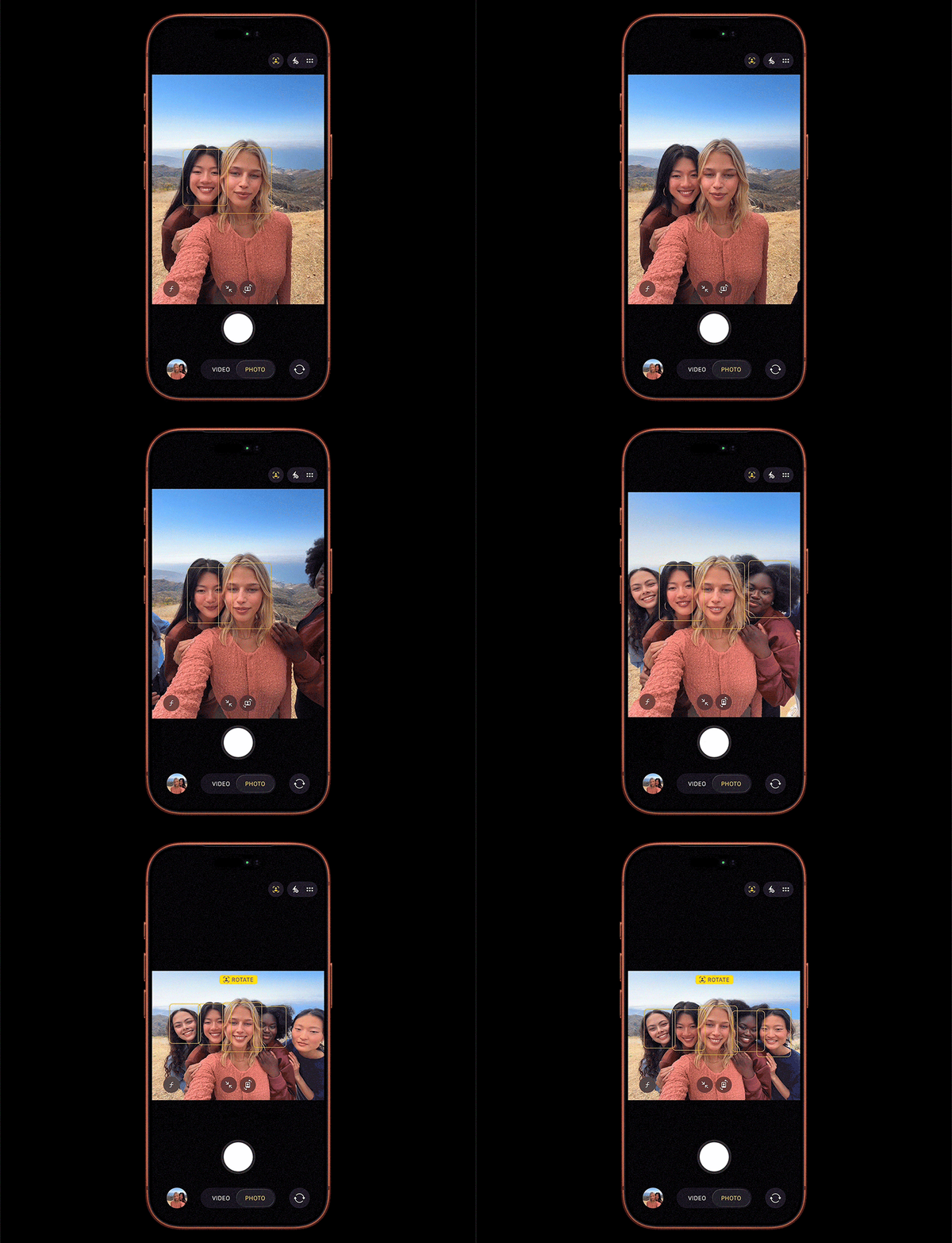
Apple has offered a few different variations of Center Stage — its photo tracking and enhancement suit — over the years, but with the iPhone 17 line and iPhone Air the company has designed the feature to solve a small (albeit annoying) problem with modern smartphones. Now there’s no need to change how you hold the device to shoot portrait- or landscape-oriented selfies. It’s vintage Apple: a seemingly simply melding of hardware and software in a way few other companies excel at.

The reason it can do this is because Apple has paired a square front-facing camera sensor with its latest machine learning-assisted image recognition software. This allows the iPhone 17 and its siblings to capture high-resolution selfies and videos in any orientation.

A GIF demonstrating Center Stage in action. The interface automatically adapts to shot a landscape shot after three women join to take a selfie.
A GIF demonstrating Center Stage in action.
Apple

I hope it’s also the start of a new trend toward more thoughtful and useful AI features. For years, machine learning algorithms have powered many of the most significant software advancements in our phones and tablets. For instance, Apple’s Photonic Engine technology wouldn’t be possible without machine learning. If you need a refresher, whenever you go to snap a photo with a modern iPhone, the device will capture a burst of stills before and after you press the shutter and fuse these images to reduce noise and improve sharpness. 

However, as I wrote following the end of I/O 2025, sometime in the last few years machine learning and AI went from a means to an end to an end in and of themselves. With large language learning models now all the rage, most companies appear to have forgotten these technologies exist to enable new experiences (or reduce friction in existing ones). Apple, perhaps more so than any other company, has had trouble navigating this new era of tech with its usual foresight and vision, with Apple Intelligence among its most disappointing releases in recent memory. Center Stage is an example of the company remembering the best use of AI: A way to solve actual problems.

It’s too soon to tell if Apple will be able to build on its work with Center Stage to deliver other similarly useful AI features. After all, we’re still waiting on the new, more personal Siri to arrive. In the meantime, I look forward to every Android manufacturer copying Apple’s camera design. Maybe it will even inspire them to rethink their approach to AI.

This article originally appeared on Engadget at https://www.engadget.com/mobile/smartphones/center-stage-is-a-better-vision-of-the-apple-intelligence-era-160428405.html?src=rss

Ferrari Testarossa Returns As An Electrifying Plug-In Hybrid Ripping 1036HP

Ferrari Testarossa Returns As An Electrifying Plug-In Hybrid Ripping 1036HP
Ferrari has officially pulled the covers off the 2027 Ferrari 849 Testarossa, resurrecting an iconic nameplate. Can this V8 plug-in hybrid redefine supercar performance and revive its position on the walls of Gen Z-ers and Gen Alphas like many of us did with the OG? 

Core to the 2027 Testarossa is a heavily revised version of Ferrari’s

Spotify Finally Supports Lossless Audio

Did you know you can customize Google to filter out garbage? Take these steps for better search results, including adding my work at Lifehacker as a preferred source.


It’s official: Spotify finally supports lossless audio. The company made the announcement in a blog post on Wednesday, revealing that the high fidelity audio option will begin rolling out to Premium subscribers in “select markets.”

That means if you live in one of those select markets and pay for Spotify, you’ll be able to enjoy your music in up to 24-bit/44.1 kHz FLAC. That’s quite the jump: Previously, Spotify Premium supported up to 320kbit/s on its apps, and only 256kbit/s on the web.

How to take advantage of lossless audio

What the change means for you is a better listening experience, assuming you’re using high quality headphones or speakers. 320kbit/s audio sounds good enough, but it’s compressed, which means you’re losing audio data in the name of lowering storage or streaming sizes. Lossless audio, on the other hand, keeps all the original audio data during compression, so with the right equipment, you’ll be able to hear more details in your music than before.

That doesn’t mean these other quality configurations are going away. 24-bit/44.1 kHz FLAC likely uses a lot of data, whether you’re streaming or downloading the lossless files. Spotify hasn’t shared what those file sizes are yet, so we can’t know for sure what the difference will be. But if you have a limited cellular data plan, or a device with limited storage, streaming or downloading in lossless might not be feasible.

You might not actually notice a difference anyway, particularly if you typically use Bluetooth headphones or speakers. Bluetooth is convenient, but the technology is limited when it comes to audio quality: It can support high quality audio playback, but not lossless, so anything above that 320kbit/s will likely be compressed before it reaches your ears. As such, Spotify recommends you used wired audio outputs when playing back lossless tracks.

I’m not sure exactly what took Spotify so long to roll this out. The company has been teasing the option since February 2021, while other streaming services—notably, Tidal and Apple Music—jumped on the bandwagon years ago.

Spotify plans to roll out lossless audio to over 50 markets, but is starting with the following: Australia, Austria, Czechia, Denmark, Germany, Japan, New Zealand, the Netherlands, Portugal, Sweden, the U.S., and the U.K.

How to stream lossless on Spotify

changing settings to lossless on spotify

Credit: Spotify

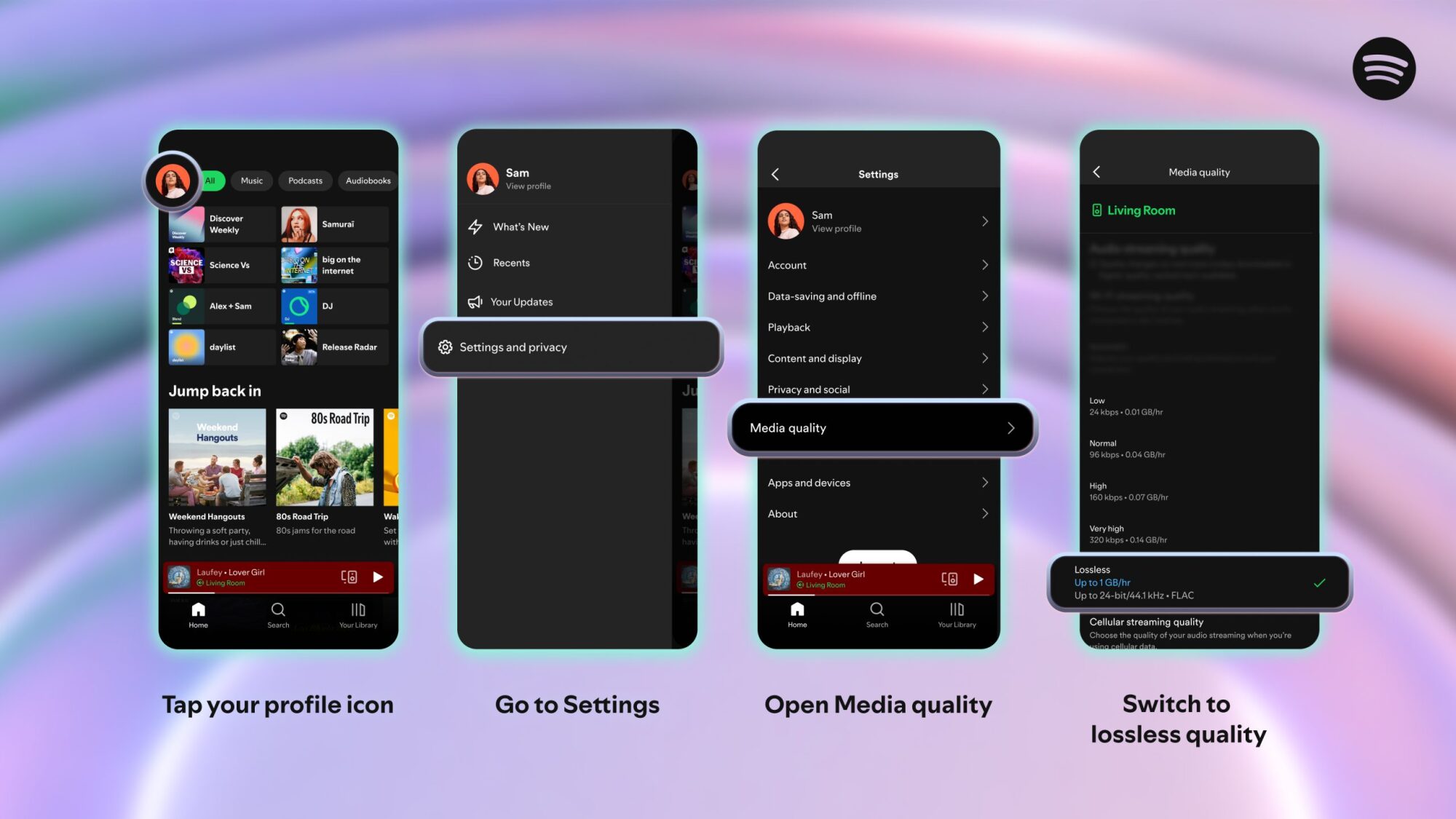
Spotify says you’ll need to manually enable lossless on each device you listen on. When the feature rolls out to you, you will have to do the following:

  1. Open Spotify, then tap your profile in the top left.

  2. Head to Settings and privacy > Media Quality.

  3. Here, choose Lossless.

  4. You can also choose how you want to experience lossless, including over cellular, downloads, or wifi.

Evernote and WeTransfer owner Bending Spoons is set to buy Vimeo for $1.38 billion

Vimeo is set to get a new owner. Bending Spoons — the parent of Evernote, WeTransfer, Meetup and fellow video streaming platform Brightcove — plans to take the company into private ownership in an all-cash, $1.38 billion deal. Stockholders will receive $7.85 per share, quite a bit more than the $4.82 Vimeo closed at on Tuesday (the price jumped significantly after the announcement, of course). 

Vimeo’s directors unanimously approved the takeover. The acquisition is expected to close by the end of the calendar year, pending shareholder approval, closing conditions and regulatory approval. 

Once seen as a competitor to YouTube, Vimeo has shifted focus over the two decades it’s been around. It used to be a go-to hosting option for filmmakers, but these days it’s more oriented toward business users. Vimeo does not permit content scraping or generative AI models to train on any video it hosts without the uploader’s permission, perhaps making it an enticing video-hosting service for enterprise users. More recently, Vimeo started bringing back its TV apps, two years after killing those off in an ill-advised move.

Bending Spoons, meanwhile, has a track record of gutting the companies it takes over. It bought Evernote in 2022 and laid off most of the note-taking service’s workers the following year. Bending Spoons bought WeTransfer last year and a few weeks later, it announced plans to fire three-quarters of the file-sharing platform’s staff.

This article originally appeared on Engadget at https://www.engadget.com/entertainment/streaming/evernote-and-wetransfer-owner-bending-spoons-is-set-to-buy-vimeo-for-138-billion-155602681.html?src=rss

Microsoft ends OpenAI exclusivity in Office, adds rival Anthropic

Microsoft’s Office 365 suite will soon incorporate AI models from Anthropic alongside existing OpenAI technology, The Information reported, ending years of exclusive reliance on OpenAI for generative AI features across Word, Excel, PowerPoint, and Outlook.

The shift reportedly follows internal testing that revealed Anthropic’s Claude Sonnet 4 model excels at specific Office tasks where OpenAI’s models fall short, particularly in visual design and spreadsheet automation, according to sources familiar with the project cited by The Information, who stressed the move is not a negotiating tactic.

Anthropic did not immediately respond to Ars Technica’s request for comment.

Read full article

Comments

Amazon’s Zoox launches its autonomous robotaxi service

Amazon’s Zoox has announced that its robotaxi service is now available on and around the Las Vegas Strip after months of testing. The autonomous rides are free and can be booked through the Zoox app for iOS and Android devices. This is the company’s first official service launch after Amazon acquired the self-driving startup in 2020.

The Las Vegas service will operate at select pickup and drop-off locations along the Strip, and riders will enter and exit the vehicles at each destination’s ride-hail zone. Though the company didn’t provide an exhaustive list of locations, Resorts World Las Vegas and AREA15 are official partner destinations. They will both feature dedicated areas just for Zoox riders, with an on-site concierge service to walk riders through the app and answer questions.

The company’s autonomous vehicle is an odd duck, with two bench-like seats facing each other and no steering wheel. (Tesla is working on a similar “Cybercab” with no steering wheel or pedals, which is supposed to go into production before 2027.) Its self-driving tech bears more similarity to existing vehicles though, with cameras, lidar, radar and long-wave infrared sensors.

Competition in the robotaxi market has been heating up as existing players continue expanding into new markets and newer players join the space. Waymo now operates in five cities with a goal of 10 by the end of 2025.

The launch of self-driving taxis hasn’t been without incident though. Zoox issued a software recall in May after one of its vehicles collided with a passenger vehicle in Las Vegas. In another instance one of its taxis kept moving after a scooter-riding pedestrian ran into it. Waymo has issued a number of recalls, and was the subject of a NHTSA probe. Earlier this summer, a Tesla robotaxi made light contact with the tire of another parked vehicle before stopping. Most famously, one of Cruise’s robotaxis pinned a pedestrian under its wheels, eventually leading to the program being shuttered.

This article originally appeared on Engadget at https://www.engadget.com/transportation/amazons-zoox-launches-its-autonomous-robotaxi-service-153750246.html?src=rss

openSUSE Disabling Bcachefs Support For Its Linux 6.17+ Kernel Builds

Linus Torvalds recently marked Bcachefs as “externally maintained” and isn’t merging any new Bcachefs code for the time being but for now at least is keeping the existing Bcachefs code in-tree for anyone that has been relying on this experimental CoW file-system from prior kernel versions. OpenSUSE announced today though they are resorting to disabling the kernel driver in their Linux 6.17+ builds…

“We’re not designing a bike for the wind tunnel” – how Argon 18 made its fastest ever bike

Argon 18 has launched its new Nitrogen Pro aero bike, which is designed for real-world riding rather than wind-tunnel performance at all costs.

“We’re not designing a bike for the wind tunnel – I couldn’t care less where it would rank in a wind tunnel test,” says Alexandre Côté, Argon 18’s product manager.

“It would be nice to be top of the list, and it might be close to that, but the real performance comes in [the] real world – crosswinds, headwinds, rain, crappy weather.

“We all know what we ride in, and it’s not [a] pristine tarmac-controlled, resurfaced road in the south of France for the Tour de France in July. We’re riding in real-world conditions, and we have a bike that performs well in those conditions.”

‘This is where most brands get it wrong’

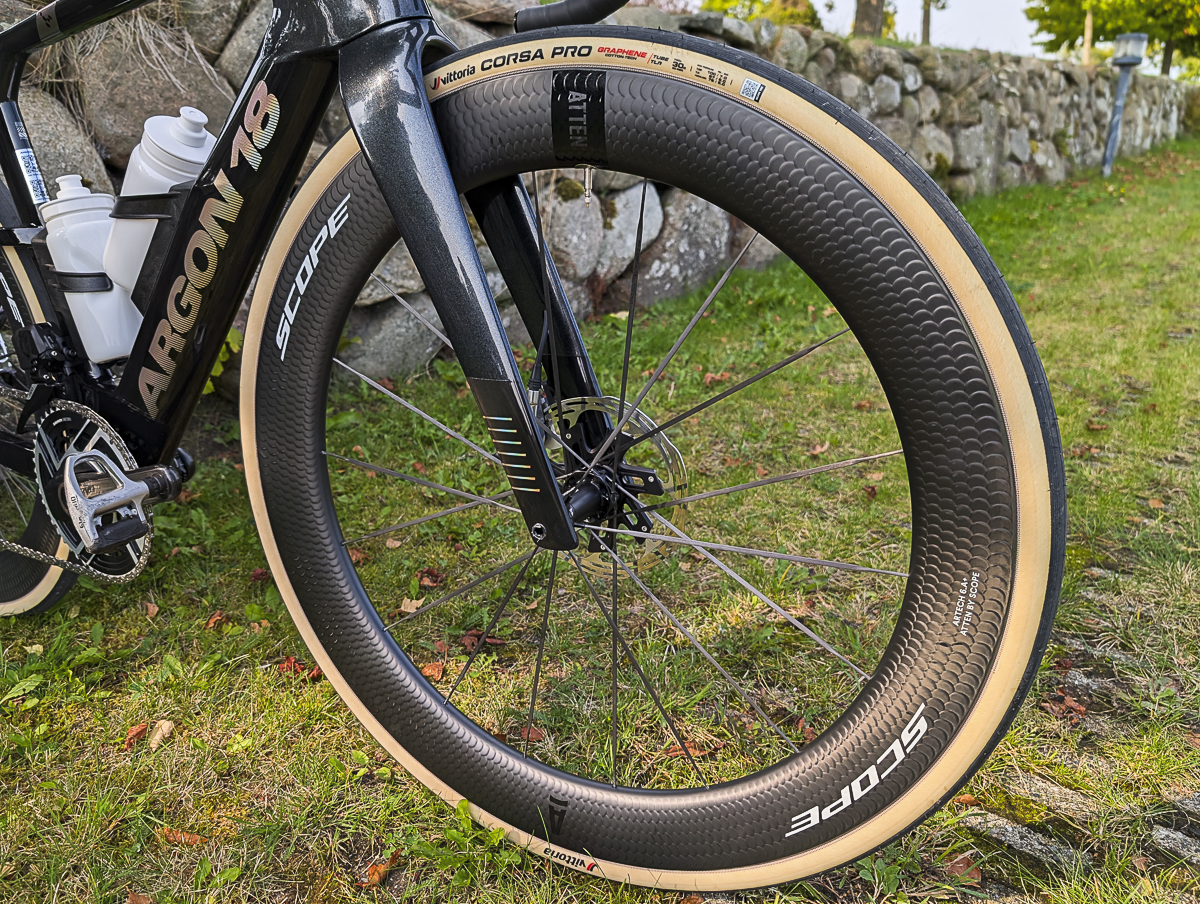
Argon 18 designed the bike around 30c tyres. Charlie Allenby / Our Media

The Canadian brand has done this by designing an aero platform from the bottom up – or rather front to back, starting with 30c tyres.

“It’s what the pros and amateurs ride up out there,” says Côte. “Why make something in the lab in isolation, where the reality is different? This is where most of the brands get it wrong at the moment – optimising for a test instead of real applications.”

Argon 18 hasn’t eschewed wind tunnels completely, and undertook three rounds of testing at the Silverstone wind tunnel during the bike’s development, but tested with a rider in place and focusing on wind-averaged drag (an average of all the yaw angles you’d experience in the real world).

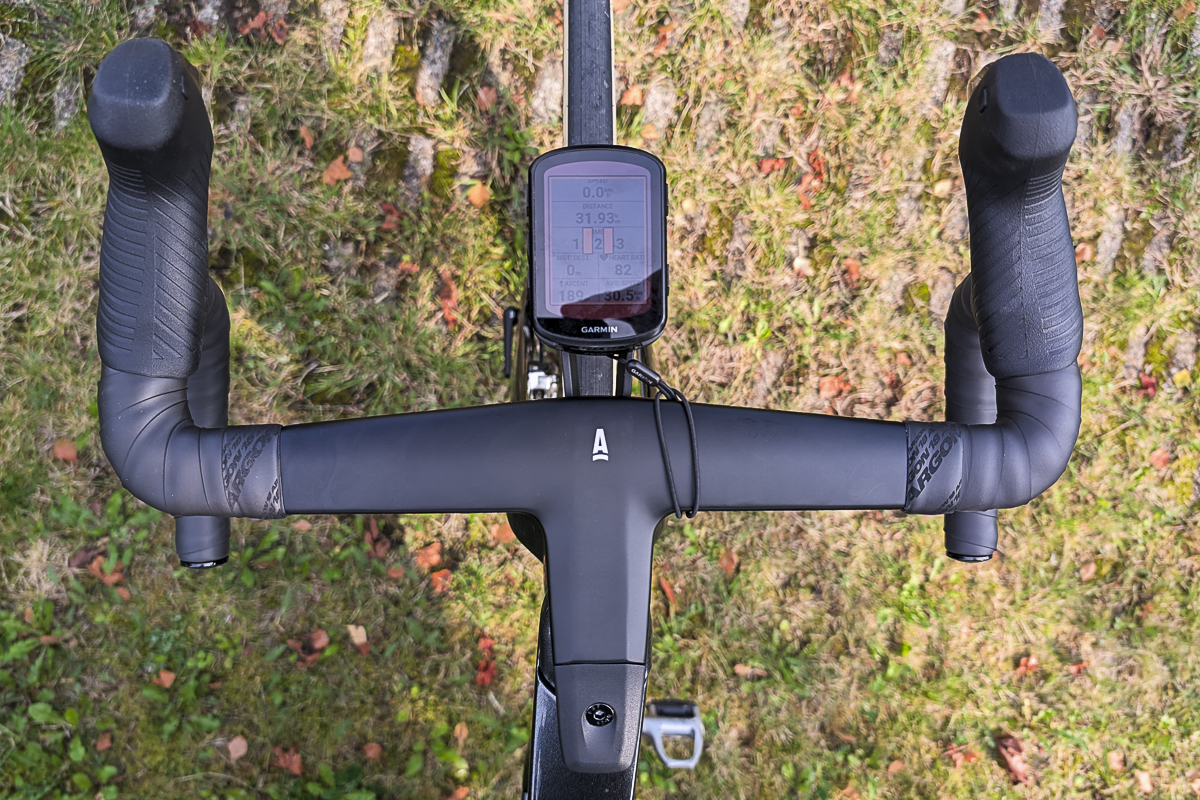
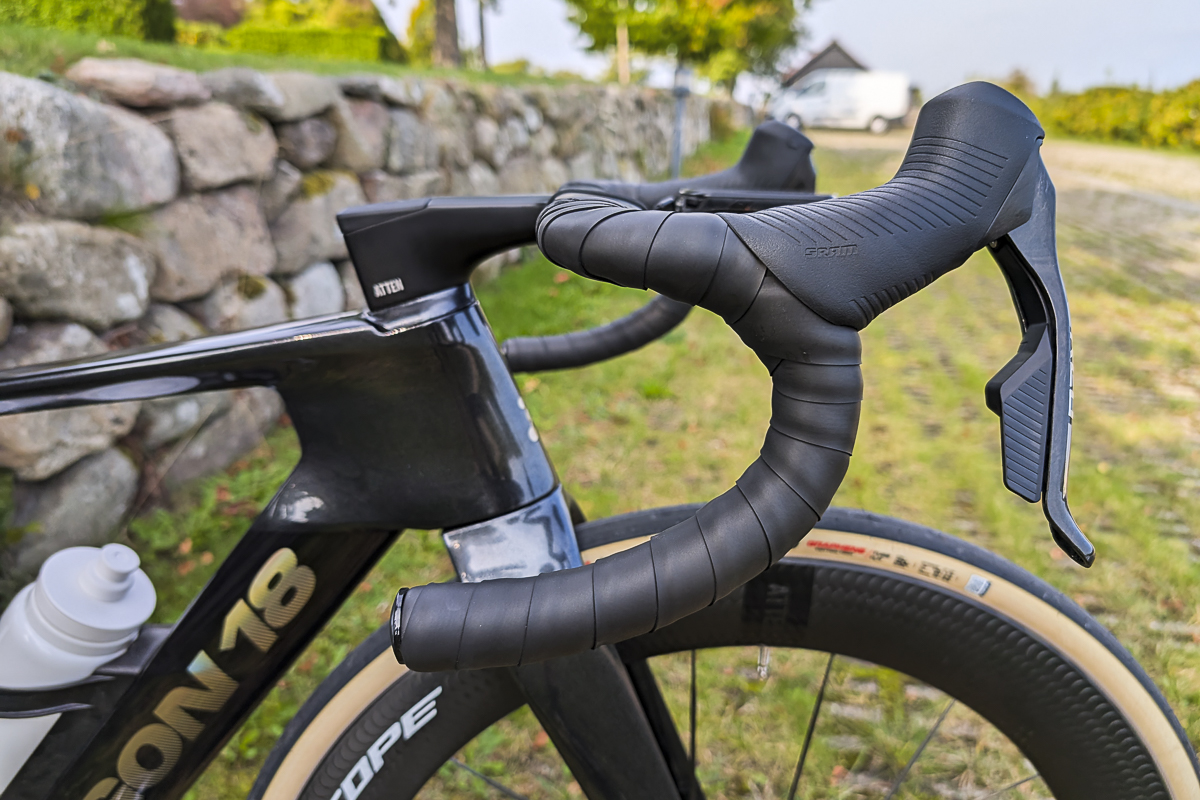
Argon 18 designed a cockpit specifically for the bike. Charlie Allenby / BikeRadar

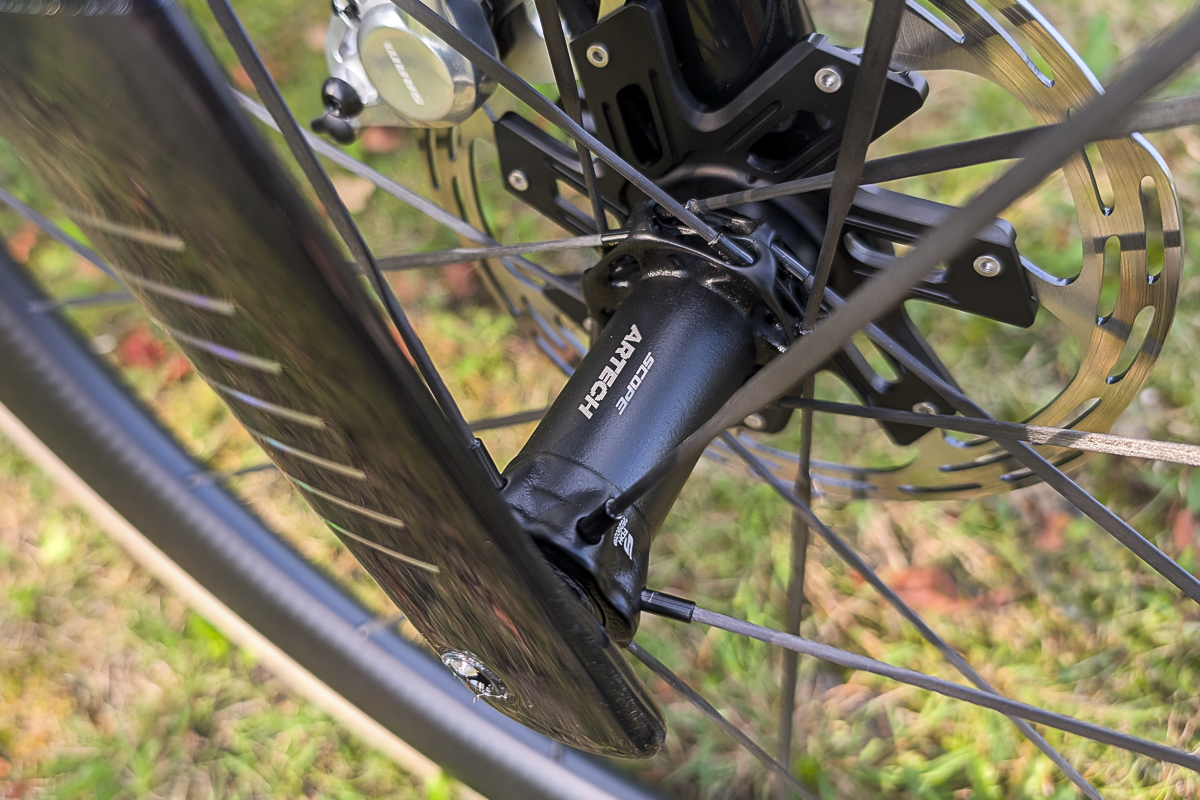
In its pursuit of the perfect bike, Argon 18 seemingly left no stone unturned – including the designing of a proprietary cockpit, bottle cages and a bespoke Artech 6.A wheelset collaboration with Scope.

Although an aero platform, Côte explains that Argon 18 also wanted the Nitrogen Pro to be optimised as a complete system – meaning it’s also lightweight, with a good fit and ride feel.

The result is a frameset that comes in at 950g and a complete bike that, in its range-topping Red AXS setup, weighs 6.95kg (including power meter, bottle cages and a computer mount) in medium.

It is also 24 watts faster than the SUM Pro, making it the brand’s fastest ever bike.

Development of the bike

The brand worked with Scope to develop wheels specifically for the bike. Charlie Allenby / Our Media

The Nitrogen Pro has been almost three years in the making, with the brand’s product and R&D team taking a ground-up approach to the complete bike’s design process.

Rather than coming up with a frameset in isolation and not having any control over its integration and aerodynamic interaction with components and finishing kit, Argon 18 started with “the best all-round high-performance tyre” – Vittoria’s Corsa Pro in 30c – as the first component to encounter aerodynamic resistance, and continuously analysed the downstream impact each choice would have on the next.

This philosophy is how it ended up collaborating with Scope on a bespoke version of the Dutch brand’s Artech 6.A wheelset. They weren’t optimised for a 30c Corsa Pro, which measured at 31.4mm when fitted, so the brands set to work on developing a version that was.

The result has a proprietary rim shape, 65mm-deep rims, and 3D-printed hubs that contribute to a 1,320g wheelset weight.

From here, the frame and fork were optimised to interact with the wheelset, which involved 130 different frame tube profiles and 25 fork prototypes, to find the combination that performed best.

The carbon layup was also fine-tuned to keep the weight down, with the stiffness – which is 18.5 per cent stiffer than the SUM Pro, according to Argon18 – arising from the profiles and shape.

Atten-tion to detail

Atten is the Argon 18’s new house component brand.

Argon 18 says the componentry available on the market wasn’t up to scratch, so it decided to design its own.

“The way this industry is structured is everybody does their own thing and tries to put it together and see if it fits,” says Côte. “For us, it’s unacceptable, moving forward. It’s something we won’t be doing, if we can do better.”

The brand’s new component line is labelled Atten – the Danish word for 18 – and its most noticeable inclusion on the Nitrogen Pro is the one-piece cockpit.

Arrow-shaped to “limit the stagnation point along the leading edge”, it includes a 3° inward flair off the drops to create an ergonomically optimised setup that avoids riders needing to twist the hoods inwards.

The brand’s testing also showed that it saved 3.2 watts compared to the Vision Metron 5D ACR Evo.

The bike is said to be faster when ridden with bottles. Charlie Allenby . Pur Media

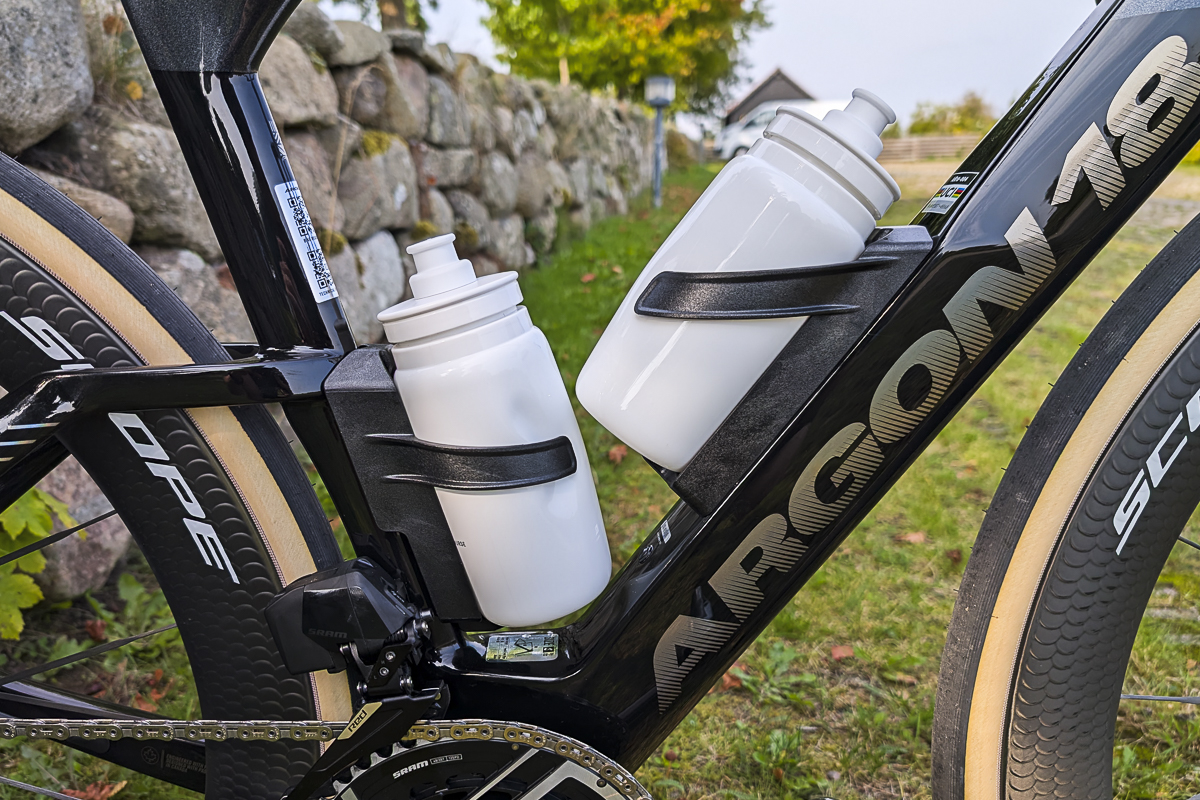
The attention to detail doesn’t end there. All of the aero testing took place with bottle mounts in place – “people need to carry water, so why not optimise around that?” – and the bike is faster with bottle cages than without them as a result.

And if you only ride with one bottle on the down tube, the brand recommends keeping the seat tube one in place, with a vented design enabling air to pass through unimpeded.

All of this comes with a serious price tag – the Nitrogen Pro SRAM Red AXS will set you back £13,000 / $13,500 / €13,995 when it becomes available in February 2026. 

But the brand has also created a standard Nitrogen line-up, which features the same frame design, albeit with a different carbon layup. This starts at a more reasonable £5,200 / $5,400 / €5,995 for the 105 Di2 version. This includes the Atten cockpit, bottle cages and 42mm Atten wheels.

How Britain Built Some of the World’s Safest Roads

Britain’s road death rate has declined 22-fold per mile driven since 1950, dropping from 111 deaths per billion miles to approximately 5 today, according to new analysis from Our World in Data. Annual road fatalities fell from 5,000-7,000 deaths in the 1920s and 1930s to 1,700 in recent years despite a 16-fold increase in vehicles and 33-fold increase in miles driven.

The UK now ranks among the world’s safest countries for road travel at 1.9 deaths per 100,000 people. Key interventions included mandatory breathalyzer tests in 1967 that reduced drunk-driving deaths by 82%, the introduction of motorways beginning in 1958, conversion to roundabouts that cut fatal accidents by two-thirds, and 20-mph speed zones around schools. If global road death rates matched Britain’s current levels, approximately one million lives would be saved annually from the current 1.2 million road deaths worldwide.


Read more of this story at Slashdot.

You Don’t Need to Buy the AirPods Pro 3 to Use Live Translation

Did you know you can customize Google to filter out garbage? Take these steps for better search results, including adding my work at Lifehacker as a preferred source.


Yesterday, Apple announced its newest flagship earbuds: AirPods Pro 3. The new earbuds seem like a solid improvement over the previous generation of Pros in a number of ways, including the built-in heart rate monitor and redesigned shape.

But the feature that really stole the show for me was live translation. Here’s how it works: When you’re talking to someone who speaks a language you don’t understand, you’ll hear a live translation of their words through your AirPods. Your buds will even boost noise cancellation to lower the volume of the speaker, so you can focus on the translation. When you speak, your words are translated live as well, only on your iPhone’s display. That way, the other person can understand what you’re saying, too. If it works the way it seemed to in Apple’s demo, it feels like the future, and is sure to be a reason people buy these earbuds when they go on sale.

But here’s the thing: You don’t actually need AirPods Pro 3 in order to use live translation. While Apple showcased the feature during the AirPods Pro 3 segment, the company conveniently forgot to mention that customers who own AirPods Pro 2 and AirPods 4 with Active Noise Cancellation can also use the feature. You can see that from Apple’s own AirPods comparison tool: All three models support live translation.

If you take a look at the fine print, you’ll see the reason: Your AirPods themselves aren’t really doing the translating. Instead, the feature is powered by iOS 26 and Apple Intelligence. You’ll need an iPhone that can run both—which means an iPhone 15 Pro or newer—as well as the latest AirPods firmware. Assuming you have a compatible iPhone and AirPods, both running the right software, you can use the feature.

Live translation isn’t the only new Apple feature available on older devices. When the company announced new Apple Watches yesterday, it advertised new hypertension alerts and sleep scores, and made it seem like those feature were exclusive to the new watches. As it turns out, hypertension alerts are available on Series 9 and newer, while sleep score is available on Series 6 and newer. I get that Apple wants to show its newest features running on its newest devices, but this is more than a little misleading.

Nikon ZR 6K Full-Frame Cinema Camera Co-Designed With RED Is Here To Rival Sony & Canon

Nikon ZR 6K Full-Frame Cinema Camera Co-Designed With RED Is Here To Rival Sony & Canon
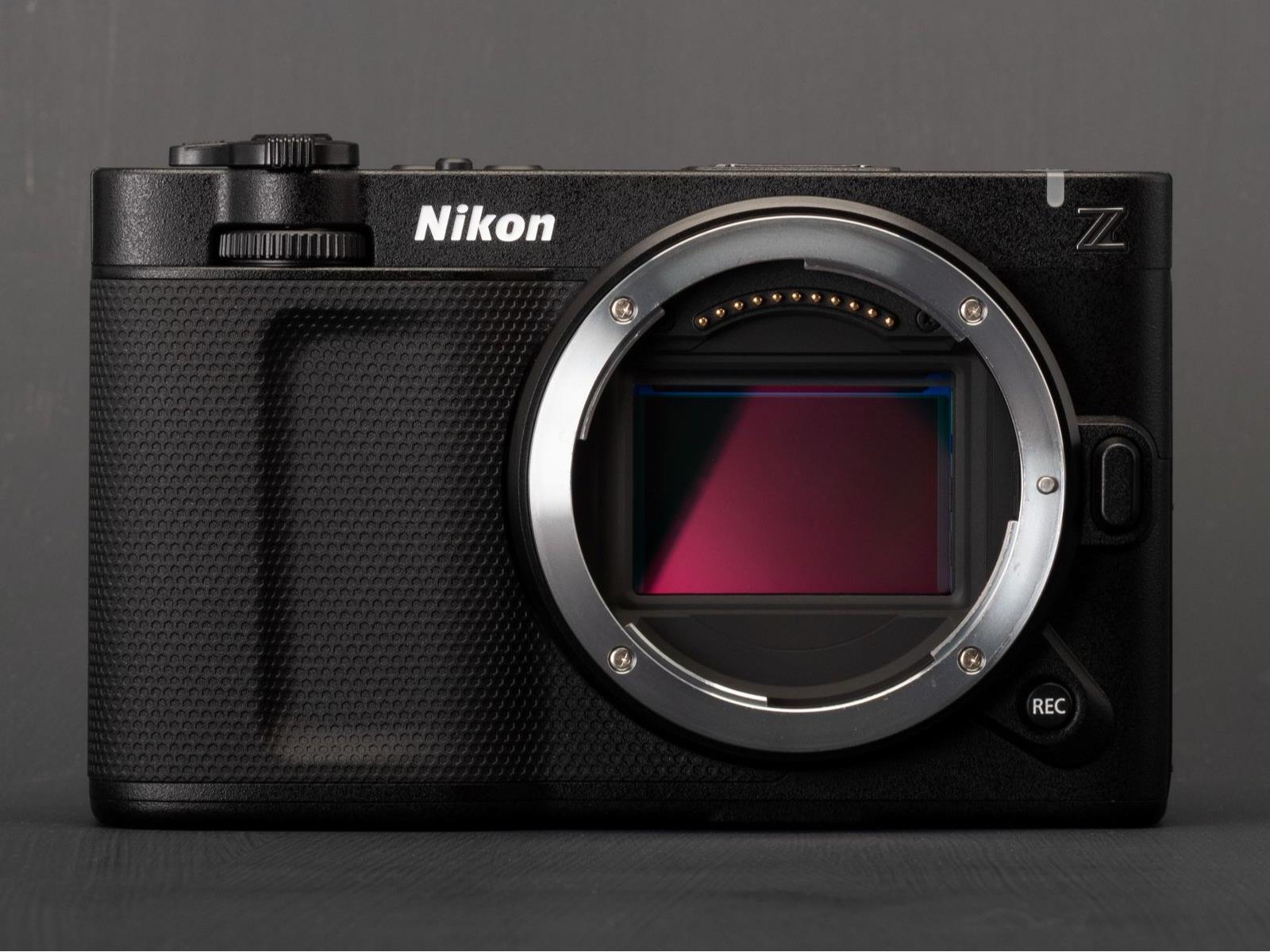
Nikon has created a disturbance in the Force with the new ZR, its first compact cinema camera, plus it’s developed in collaboration with RED Digital Cinema no less. The ZR promises the best that RED processing and Nikon hardware have to offer at a lower price compared to the rest of the market. Should Sony and Canon be afraid?

As it is,

Flush door handles are the car industry’s latest safety problem

Earlier this week, Ars spent some time driving the new Nissan Leaf. We have to wait until Friday to tell you how that car drives, but among the changes from the previous generation are door handles that retract flush with the bodywork, for the front doors at least. Car designers love them for not ruining the lines of the door with the necessities of real life, but is the benefit from drag reduction worth the safety risk?

That question is in even sharper relief this morning. Bloomberg’s Dana Hull has a deeply reported article that looks at the problem of Tesla’s door handles, which fail when the cars lose power.

The electric vehicle manufacturer chose not to use conventional door locks in its cars, preferring to use IP-based electronic controls. While the front seat occupants have always had a physical latch that can open the door, it took some years for the automaker to add emergency releases for the rear doors, and even now that it has, many rear-seat Tesla passengers will be unaware of where to find or how to operate the emergency release.

Read full article

Comments

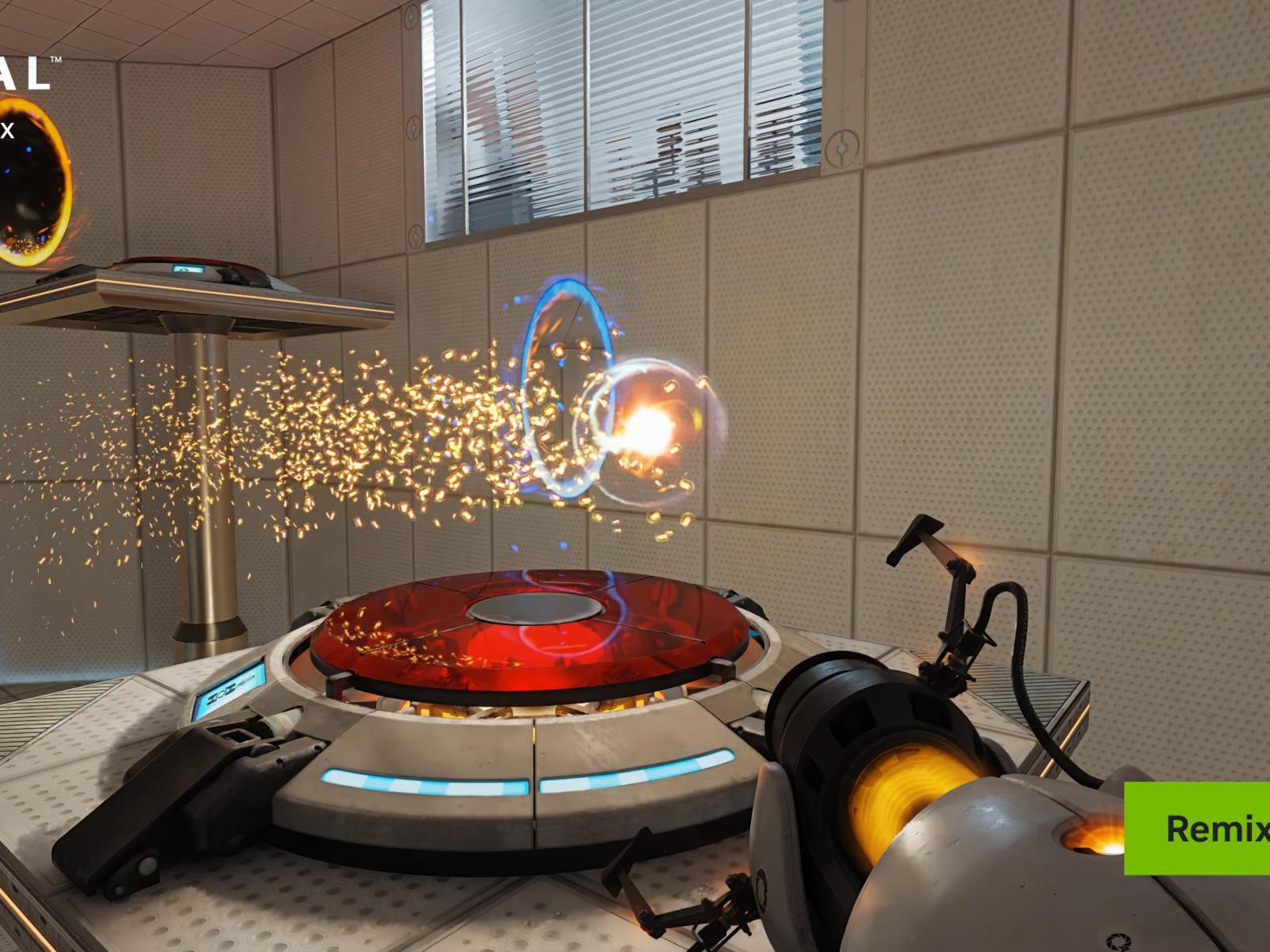
NVIDIA RTX Remix Gets Path-Traced Particles To Add Stunning Mods To Classic Games

NVIDIA RTX Remix Gets Path-Traced Particles To Add Stunning Mods To Classic Games
Yesterday, NVIDIA announced a new feature coming to the RTX Remix modding toolkit— fully path-traced, GPU-accelerated particles, first demonstrated running under Portal With RTX, as well as Half-Life 2 RTX in additional documentation. The primary demonstration was uploaded to YouTube using Portal With RTX to showcase spark particles coming