The new 14-inch Wacom One ups the display size, but not the price

Wacom has announced its latest beginner-friendly graphics tablet, the Wacom One 14. The obvious upgrade from its 2023 predecessor is a larger 14-inch IPS display, which gives digital artists a bit of extra space for their sketching. The bezels have been trimmed down to accommodate the bigger canvas, while keeping the design thin and compact enough to easily throw the Wacom One in a backpack.

The 1920 x 1080 HD display’s textured surface is supposed to replicate the feeling of drawing on paper, with an anti-glare coating that with an anti-glare coating that theoretically allow you to use it outdoors with minimal frustration. It’ll resist fingerprints too, but unlike other tablets in Wacom’s lineup, this one lacks multitouch tech. It’s designed to be used strictly with the included battery-free pen, which has a 16ms response time and clips to the top of the tablet for easy access. It’s pressure-sensitive and has two customizable buttons.

Given it’s marketed at amateurs just getting started on their artistic journey, you get a selection of bundled software that includes Skillshare lessons and a trial for Clip Studio Paint Pro. You can also use Foxit to edit and annotate PDF files, making the Wacom One a good pick for teachers who don’t need the additional functionality of an iPad.

You connect the Wacom One 14 to a Mac or PC by either using the provided USB-C cable, or via a Wacom converter to which you connect separate cables if your device isn’t equipped with Thunderbolt or DisplayPort Alt Mode. You can pick one up now for $300.

This article originally appeared on Engadget at https://www.engadget.com/mobile/tablets/the-new-14-inch-wacom-one-ups-the-display-size-but-not-the-price-142322193.html?src=rss

PS5 Update Just Made It Way Easier To Game On PC & Console With DualSense Controllers

PS5 Update Just Made It Way Easier To Game On PC & Console With DualSense Controllers
Sony’s DualSense controller is one of the best gamepads around and courtesy of a new PlayStation 5 system update, it just became a heck of a lot more convenient to use it on multiple platforms and systems. The days of having to pair and re-pair DualSense controllers on separate systems are officially over. Instead, you can register up to four

Waymo is headed to Nashville in 2026

Waymo is plotting a route for Tennessee, as it plans to bring its robotaxis to Nashville. The company expects to start autonomous driving operations in the city in the coming months before opening up to the public in 2026.

At the outset, folks in the area will be able to hail a ride via the Waymo app. Down the line, Lyft will be able to match users with Waymo rides in Nashville.

Waymo is currently up and running in five US cities: San Francisco (and other parts of the Bay Area), Los Angeles, Phoenix, Austin and Atlanta. Along with Nashville, Waymo is planning to soon move into Denver and Seattle, where it started testing its vehicles this month, as well as Miami and Washington DC.

The company also received permission from New York City in August to start test rides there, albeit with a human driver behind the wheel. In addition, testing is underway in Tokyo — Waymo’s first international location — though human drivers are manually operating the vehicles at the outset.

This article originally appeared on Engadget at https://www.engadget.com/transportation/evs/waymo-is-headed-to-nashville-in-2026-140807997.html?src=rss

Anthropic Refuses Federal Agencies From Using Claude for Surveillance Tasks

Anthropic has declined requests from federal law enforcement contractors to use its Claude AI models for surveillance activities, deepening tensions with the Trump administration, Semafor reported Wednesday, citing two senior officials. The company’s usage policies prohibit domestic surveillance, limiting how agencies including the FBI, Secret Service, and Immigration and Customs Enforcement can deploy its technology. While Anthropic maintains a $1 contract with federal agencies through AWS GovCloud and works with the Department of Defense on non-weapons applications, administration officials said the restrictions amount to making moral judgments about law enforcement operations.


Read more of this story at Slashdot.

Anthropic Denies Federal Agencies Use of Claude for Surveillance Tasks

Anthropic has declined requests from federal law enforcement contractors to use its Claude AI models for surveillance activities, deepening tensions with the Trump administration, Semafor reported Wednesday, citing two senior officials. The company’s usage policies prohibit domestic surveillance, limiting how agencies including the FBI, Secret Service, and Immigration and Customs Enforcement can deploy its technology. While Anthropic maintains a $1 contract with federal agencies through AWS GovCloud and works with the Department of Defense on non-weapons applications, administration officials said the restrictions amount to making moral judgments about law enforcement operations.


Read more of this story at Slashdot.

Systemd v258 released

Systemd
v258
has been released with a long list of new features and
changes; slice units now have basic workload management features,
quotas for tmpfs have been added, the “systemctl start”
command now has a verbose (-v) option, and more. This release
also, finally, completely removes support for control groups v1
support. LWN covered
some of systemd v258’s features and changes in August.

[$] Providing support for Windows 10 refugees

In October, consumer versions of Windows 10 will
stop receiving security updates. Many users who would ordinarily move
to the next version are blocked by Windows 11’s hardware
requirements unless they are willing to buy a newer PC. The “End of 10” campaign is an effort to
convince those users to switch to Linux rather than sticking with an
end-of-life operating system or buying a new Windows system. At
Akademy 2025, Dr. Joseph De Veaugh-Geiss,
Bettina Louis, Carolina Silva Rodé, and Nicole Teale discussed their
work on the campaign, its progress so far, and what’s next.

Consumer Reports Warns Ending Free Windows 10 Support Is A National Security Threat

Consumer Reports Warns Ending Free Windows 10 Support Is A National Security Threat
While AMD is keeping its nine-year-old socket AM4 kicking with yet another Ryzen 5000 series processor launch, Microsoft is getting ready to send its decade-old operating system, Windows 10, into retirement. It’s not a total retirement, but free support for Windows 10 comes to an end next month, and Consumer Reports sees this as a major security

Ned Boulting is organising a 40m hill climb after a mystery sign appeared in South London

Cycling commentator, sports writer and BikeRadar contributor Ned Boulting is organising a 40-metre hill climb after a mystery sign appeared on a cobbled climb in Lewisham, South London.

The event is billed as the “inaugural (and almost certainly only ever)” hill climb by Never Strays Far (NSF), the podcast hosted by Boulting, David Millar and Peter Kennaugh with honorary guest Lizzie Deignan. 

It will take place on Saturday 18 October on Whitepost Lane, where this summer a ‘mystery person’ erected a sign that named the short cobbled climb ‘Mûr de Ned’. 

“At NSF, we thought it might [be] good fun to race up it. It’s about 40 metres long, but quite steep. We thought people might like to have a go at the existing Strava record, which stands at 8 seconds,” the NSF team wrote in a post on its website.

Whitepost lane in Lewisham, South London.
Whitepost Lane is only 40m, but steep and cobbled. Ned Boulting

Unlike the hill climbs that are a distinct part of the British bike-racing scene, participants will be able to attempt the Mûr de Ned hill climb in three open categories: cycling, running or walking. 

“The fastest recorded time in each category will win a trophy, if we can get round to making one,” wrote NSF. 

“Also, there will be a special prize for the oldest and the youngest contestants, regardless of their time.” 

Any participants choosing cycling won’t be able to bring the kind of customised bikes you see at the British hill climb championships. Instead, all entrants will choose from a selection of bikes prepared for the event by the XO Bikes shop in Lewisham. 

“XO Bikes do amazing work offering ex-offenders a chance to prepare for life on the outside, training up as bike mechanics. We want to raise as much as we can on the day to help them in their activities, and to showcase the amazing work they do,” NSF added. 

While race entry is now sold out, NSF asks that people come along and support the hill climb. After all, it could be the last one. 

You absolutely should not buy Apple’s iPhone Air MagSafe battery pack

Apple released its thinnest phone yet last week, the iPhone Air, and revealed the new iPhone Air MagSafe Battery alongside it. The existence of a specially-made battery pack wasn’t a big surprise to me, because there had been rumors of the iPhone Air for months leading up to the event. Everyone was prepared for the thinnest iPhone ever to make some battery life sacrifices to achieve its svelte design.

However, what was a surprise to me was how much Apple leaned on the new battery during the iPhone Air launch presentation. The company even lists battery life estimates with and without this optional battery pack in the iPhone Air specs. That tells me — and regular consumers — that the battery pack is a highly-recommended purchase on a good day and downright necessary on a bad day for all iPhone Air owners.

So, folks spending $999 (or more) on an iPhone Air should plan to pony up another $99 for this specially designed battery pack? I’m here to tell you that’s a ridiculous notion and that you shouldn’t do it, especially when there are so many other options available at lower prices.

To be clear, I personally haven’t tried out the iPhone Air with this battery pack. My colleague Sam Rutherford has (check out his iPhone Air review), and he thinks it’s a great fit for the iPhone Air. In particular, he likes some of the (admittedly) smart features Apple included like the battery’s ability to charge itself and the phone simultaneously while the phone is plugged in, and that it can wirelessly top up a pair of AirPods Pro 3. However, he does acknowledge that the math simply ain’t mathin’ on this one when it comes to value for money.

The $99 iPhone Air MagSafe Battery has a 3,149 mAh, according to the information written on the power bank itself. That comes out to about $0.03 per milliampere hours. Let’s compare that to one of the top picks in our guide to the best MagSafe power banks, this Anker Nano battery: that 5,000 mAh pack is priced at $55, which comes out to $0.01 per milliampere hours. Even the watt-hour rating (Whr) on Apple’s pack is lower: 12.26Whr, as compared to 25Whr on this Anker option. And don’t forget, the Anker pack isn’t exclusively made for the iPhone Air — it, like other magnetic power banks, can be used with other iPhones and smartphones.

To add insult to injury, Apple’s Air MagSafe Battery tops out at 12W wireless charging unless it’s plugged in while powering the phone up and can employ help from passthrough USB-C charging. The Anker pack is Qi2-certified for up to 15W of wireless charging, and since the iPhone Air supports up to 20W of wireless power, that means Anker’s accessory could deliver its full 15 watts when snapped to the back of the Air.

Not only are you getting nearly double the mAh capacity for half the price with the Anker option (and faster charging to boot), but the numbers become even more ridiculous if you consider (hypothetically), what a larger Apple-made battery pack could cost. With those numbers, a 5K Apple MagSafe battery would cost $150 and a 10K bank would set you back $300. Imagine paying those prices for any other power bank made by any other company — it’s laughable, and we should treat it as such.

Now, is this out of character for Apple to make an overpriced accessory? Absolutely not. But this is different from a $99 Milanese Loop band for Apple Watch or even a $250 Magic Keyboard for iPad. This battery pack is so important to the overall iPhone Air story that the handset’s power specifications can’t be examined properly without it. That’s insane.

I used one of the picks from our guide as an example, but rest assured, there are plenty of other MagSafe battery packs available now made by reputable manufacturers with similar specs. Just look for any Qi2-compatible magnetic power bank that works with the iPhone Air, and you’ll probably have a better value on your hands than Apple’s in-house made pack. Those who want to overpay for sleekness and convenience can certainly do so, but don’t let anyone convince you it’s your best or only option.

This article originally appeared on Engadget at https://www.engadget.com/mobile/smartphones/you-absolutely-should-not-buy-apples-iphone-air-magsafe-battery-pack-131009089.html?src=rss

China blocks sale of Nvidia AI chips

China’s Internet regulator has banned the country’s biggest technology companies from buying Nvidia’s artificial intelligence chips, as Beijing steps up efforts to boost its domestic industry and compete with the US.

The Cyberspace Administration of China (CAC) told companies, including ByteDance and Alibaba, this week to end their testing and orders of the RTX Pro 6000D, Nvidia’s tailor-made product for the country, according to three people with knowledge of the matter.

Several companies had indicated they would order tens of thousands of the RTX Pro 6000D, and had started testing and verification work with Nvidia’s server suppliers, the people said.

Read full article

Comments

AMD Refuses To Quit On Socket AM4 With Yet Aother Ryzen 5000 CPU Launch

AMD Refuses To Quit On Socket AM4 With Yet Aother Ryzen 5000 CPU Launch
AMD is writing the book on socket longevity and it’s doing it with AM4, which is approaching a decade of service. Just when you thought we’d seen the last hurrah for the aging platform when AMD released a new Ryzen 5 5500X3D with 3D V-Cache earlier this summer, it’s went and quietly launched yet another socket AM4 processor, the Ryzen 5 5600F.

Gas Stove Makers Quietly Delete Air Pollution Warnings as They Fight Mandatory Health Labels

The home appliance industry would like you to believe that gas-burning stoves are not a risk to your health — and several companies that make the devices are scrambling to erase their prior acknowledgements that they are. From a report: That claim is at the heart of a lawsuit the Association of Home Appliance Manufacturers has filed against the state of Colorado to stop it from requiring natural gas stoves, which burn methane, to carry health labels not unlike those on every pack of cigarettes. “Understand the air quality implications of having an indoor gas stove,” the warning would read.

The law was to take effect August 5 but is now on hold, and state officials did not respond to a request for comment. In its federal lawsuit, the Association — whose board includes representatives of LG Electronics, BSH Home Appliance Corp. (which makes Bosch appliances), Whirlpool, and Samsung Electronics — asserts that the labeling requirement is “unconstitutional compelled speech” and illegal under the First Amendment. It calls the legislation a climate law disguised as a health law and, most strikingly, it claims there is “no association between gas stoves and adverse health outcomes.”


Read more of this story at Slashdot.

With Lumo, Proton thinks it can carve a place at the AI table

Proton released Lumo — its privacy-focused chatbot built on open-source models — in mid-July, and, following an update in August that addressed some early issues, I find myself using it more often than ChatGPT or Claude. In a world where internet companies have done so much damage to our society, I’m trying to find more ethical tools. But when the competition offers flashier features in exchange for the low price of user data, does Proton seriously think it can compete?

If Eamonn Maguire, Proton’s head of machine learning, shares my concerns, he doesn’t show it during the hour or so we chat over Zoom. If anything, I start to see why he believes Lumo has found a valuable niche. 

Proton began work on Lumo last year following the release of Scribe. The email writing tool was the company’s first foray into AI. According to Maguire, the reception to Scribe was “better than [Proton] thought it would be.” Soon enough, people were asking the company why the tool wasn’t included in their Unlimited subscription. Internally, Scribe also changed how Proton thought about AI. Proton released its mail client in 2014, almost exactly 10 years after the debut of Gmail in 2004. Proton Drive, meanwhile, arrived in 2020 or eight years after Google Drive. The company felt it couldn’t be late to chatbots too. 

“We knew we needed to move faster on this because it’s going to be a big privacy problem in the future,” said Maguire, pointing to the monetization arc of past platforms like Gmail. After cornering the email market, Google turned to ads and selling user data to fund Gmail’s operations. It’s a familiar scenario, and one Maguire argues we’re already seeing play out again with AI chatbots, with Elon Musk recently telling advertisers that xAI would display sponsored responses alongside regular content from Grok. In other words, the enshitification of AI chatbots has already begun.    

The growing strength of open-source models is one of the reasons Maguire believes Proton can compete against the likes of OpenAI and Google. Open systems, particularly those coming out of China, may lag behind proprietary models in user adoption but they’re beginning to match them in testing benchmarks. For instance, Zhipu AI’s GLM-4.5 currently sits top 10 overall on LMArena. At the same time, “all the top models are starting to cluster together in benchmarks now,” Maguire says. Even accounting for some of the safety issues with Chinese models “Overall, open systems are competing, not just tailgating [closed models].”

Lumo employs a combination of smaller open-source models that require fewer resources to run — specifically Nemo, OpenHands 32B, OLMO 2 32B, and Mistral Small 3. Maguire argues Proton’s approach allows it to be nimble. That’s important for a company that hasn’t raised venture capital funding, and needs to think about building a sustainable business model from the start. “A lot of people think they need the best model to get the best responses. But I think it’s been shown that you can get very capable responses from models that are smaller,” Maguire said.

For consumers, that also means Proton can offer Lumo for less. Like most chatbots, basic features are available for free, with the option to remove rate and token limits through a paid subscription. For Lumo, that costs $13 — less than $20 per month most AI companies charge for their basic paid plans, and substantially less than the $200 tier many of them have begun offering for nearly unlimited usage of their models.      

Maguire suggests thinking about it this way: You could drive a Formula One car to the grocery store, but that would be overkill. If you find LLMs useful in your workflow, there’s a good chance a state-of-the-art model like OpenAI’s o3 is similarly overkill for your needs. Unless you’re a researcher, you probably don’t need a system that can reason over many minutes to tackle a complex problem.

Similarly, if you’re just driving a sedan or crossover to complete errands, then what better represents the neighborhood you live in digitally than your email and, perhaps, your cloud storage. Lumo gains some benefit from being baked into that environment, in the same way many AI companies are attempting to layer their chatbots on top of desktop and mobile operating systems. 

The other reason Maguire feels that Proton has a shot against established chatbots is because, at the end of the day, they’re all just tools — some better equipped for certain tasks than others. For example, Anthropic’s Claude systems are great at coding, but they don’t offer image generation. As platforms, chatbots also don’t benefit from network effects in quite the same way (or sometimes at all, depending on their user data training policies) that social networks do.    

It should come as no surprise then at least one of the AI giants is trying to change that. In April, The Verge reported that OpenAI was testing a version of ChatGPT that includes a social feed to image generation. Whether users want such a thing remains to be seen, as gluing social elements to an unrelated product often fails (see: Google+). Without social features, maybe consumers will have an easier time jumping between these tools, especially as they become cluttered with ads or engage in more egregious privacy violations.

At this point in our conversation, I’m still not convinced Lumo might carve out a niche for itself. I think of Mozilla and its recent string of bad news, from layoffs affecting its advocacy group to the shutdown of Pocket. Firefox is arguably a better browser than Chrome, with privacy features like robust anti-tracking built right into the app. However, it has a fraction of the market share. 

There’s also the AGI-sized elephant in the room. In the pursuit of models that can match or exceed human intelligence at most tasks, AI companies are engaged in a contest where there can only be one winner, burning enormous sums of cash to exceed human intelligence through silicon and paying a king’s ransom to hire the top minds in the field to achieve that. In that context, what chance does a small player like Proton stand?      

Once again, the family sedan stands to beat the sportscar, or perhaps a spaceship to extend the metaphor. “If your goal is to help people become more productive and learn better, do you need AGI? Probably not,” said Maguire. “We’re not under the illusion that everyone is going to switch from ChatGPT to Lumo. Our goal is to provide the best ecosystem where people can do the most amount of things within a privacy-preserving mantra.”

As of 2023, Proton Mail had 100 million users. It’s a far cry from the more than 2 billion people using Gmail, but I don’t think anyone could convincingly argue Proton Mail is a failure. The company is still going strong, and now competing in a space people like Sam Altman would have you believe requires a trillion dollars of investment. If Proton can prove AI doesn’t need to be “the antithesis of privacy,” as Maguire believes it can, that might be enough to call Lumo a success too. 

This article originally appeared on Engadget at https://www.engadget.com/with-lumo-proton-thinks-it-can-carve-a-place-at-the-ai-table-130000740.html?src=rss


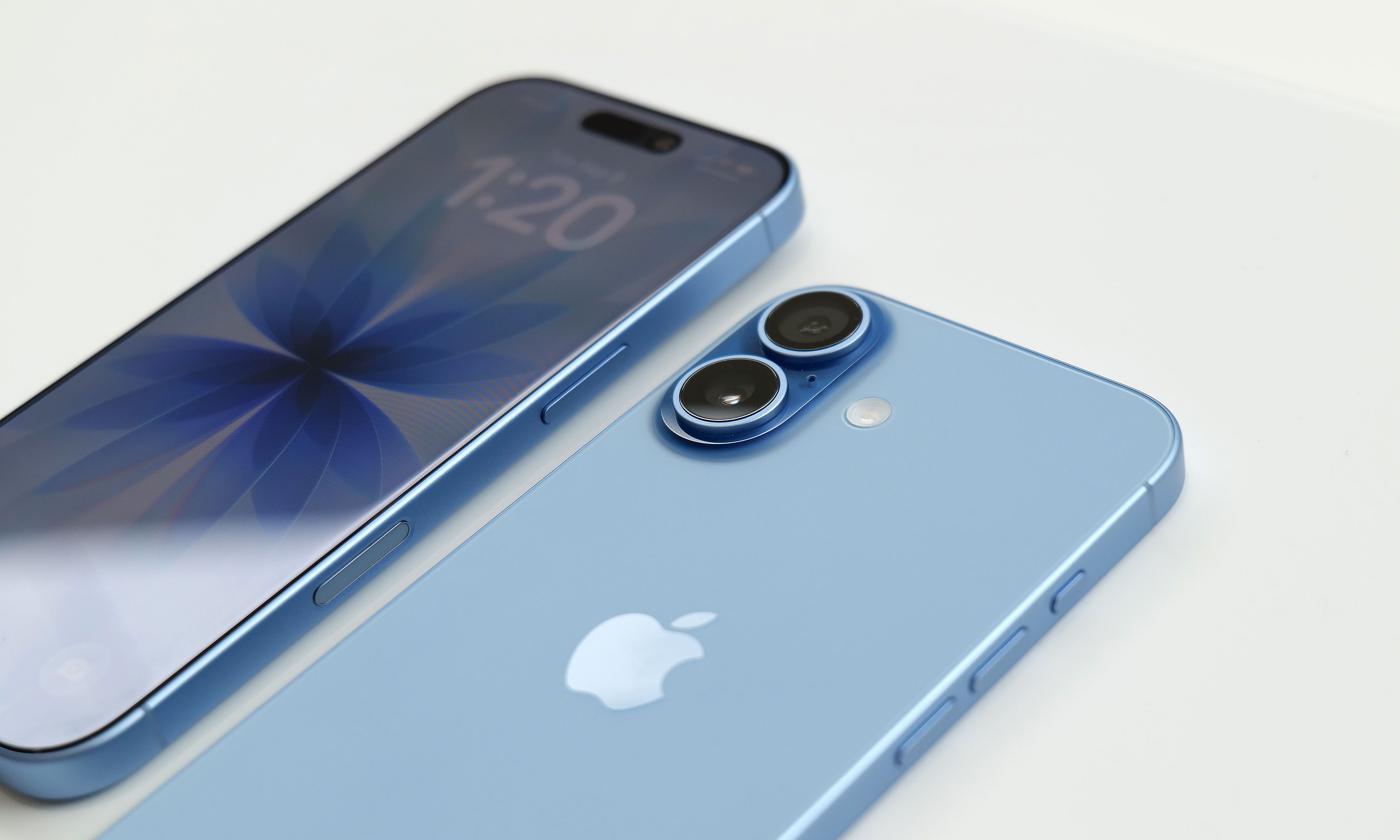
The iPhone 17 makes the iPhone 16e even more pointless

We were pretty underwhelmed by the iPhone 16e when it debuted earlier this year, mostly due to its $599 price tag, which makes it a poor replacement for the budget-oriented iPhone SE. And now that the iPhone 17 has debuted, the 16e makes even less sense. For $200 more, you get a larger and better screen with ProMotion, support for MagSafe wireless charging, a zippier processor, two cameras instead of one — and double the storage. Sure, that price difference hurts a bit, but I think the iPhone 17 is still a better deal since it’s not nearly as limiting as the iPhone 16e, which should have been priced closer to $500 to take on something like the Pixel 9a.

Last fall, I argued that the vanilla iPhone 16 was a smart buy given its revamped CPU and support for Apple Intelligence, and I think that remains true for the iPhone 17 with its many new features and identical price point. While I’m sure Apple would love for more customers to jump to the $999 iPhone Air or $1,099 iPhone 17 Pro, it’s still hard for a lot of people to stomach spending four figures on a smartphone. The ultra-thin Air will likely be a hit with influencers and the style-obsessed, and power users will have a ball with the iPhone 17 Pro’s more capable camera array. For everyone else, the iPhone 17 remains a solid device that will serve you well for many years.

The addition of ProMotion support alone removes one of the feature gaps between the plain iPhone and the Pro models. It allows for a variable screen refresh rate of up to 120Hz, compared to the 60Hz limit of previous years. In practice, that means that scrolling through websites and your social media feeds will look smoother and less headache-inducing. You’ll notice the difference immediately — 60Hz screens look unbearably choppy and slow once your eyes have gotten used to something faster. 

And before Android fans jump in to brag — yes, we know that mid-range Android phones have offered high refresh rate screens for years. Apple is undoubtedly slow to react here, but the upgrade is still worth celebrating. The iPhone 17’s screen isn’t just smoother than before, it genuinely looks better, according to Engadget Senior Reporter Billy Steele. “The difference between this new model and my iPhone 16 Plus was immediately apparent,” he wrote in his hands-on. “Colors are more vivid, details are sharper and it’s just more pleasant to look at.”

iPhone 17
iPhone 17
Sam Rutherford for Engadget

When it comes to cameras, the iPhone 17 improves its ultrawide shooter to 48 megapixels, joining the 48MP main sensor. But the big camera upgrade is actually on the front of the phone, thanks to the new Center Stage camera. It’s been bumped to 18MP from 12MP, but more importantly, Apple also introduced a square sensor that lets you jump from landscape to portrait orientations without rotating your phone. I’ve already gone deep on why the square selfie sensor (which is available on all iPhone 17 models) is a big deal, but here’s one key takeaway: “By making it easier to take selfies, it follows that you’ll start to take even more of them, ultimately tying yourself into Apple’s ecosystem even further.”

And speaking of features available on all of the new iPhones, the vanilla iPhone 17 also supports Dual Capture, which lets you record video using the front and rear cameras at the same time. Center Stage keeps your face in the middle of the frame during those shots as well, which might make Apple’s implementation of Dual Capture more effective than what we’ve seen from Samsung and other phone makers. I could have seen Apple gatekeeping this feature for the more powerful iPhone Air and 17 Pro models, but it’s nice to see it on the vanilla entry. Similar to selfies, it only benefits Apple if you’re using your devices more to produce content, and I could see Dual Capture footage becoming a big deal on Instagram and TikTok.

While Apple is keeping the iPhone 16 around at $699, it genuinely makes more sense to jump straight to the $799 iPhone 17 for all of the reasons mentioned above. (But if you find a good deal on a refurbished iPhone 16, that’s another story. It’s still a very capable phone, and it’s compatible with Apple Intelligence features as well.) Aside from lowering the price – something I don’t see Apple ever doing – there’s not much else the iPhone 17 is missing. And for anyone who needs something more fashionable or powerful, the iPhone Air and iPhone 17 Pro are right there.

The only missing hole in the iPhone lineup is a budget option that’s cheaper than the $599 iPhone 16e – hopefully, that’ll be something a future iPhone 17e might be able to solve.

This article originally appeared on Engadget at https://www.engadget.com/mobile/smartphones/the-iphone-17-makes-the-iphone-16e-even-more-pointless-123000387.html?src=rss

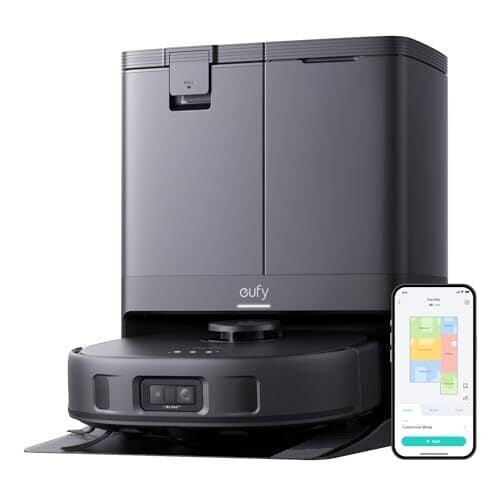
This Eufy All-in-One Robot Vacuum/Mop Is $350 Off Right Now

We may earn a commission from links on this page. Deal pricing and availability subject to change after time of publication.

Did you know you can customize Google to filter out garbage? Take these steps for better search results, including adding Lifehacker as a preferred source for tech news.


The Eufy X10 Pro Omni is currently selling for $549.99 on Amazon, a steep drop from its $899.99 list price and the lowest it has gone for, according to price trackers.]

It’s pitched as an all-in-one cleaning machine: it vacuums, mops, empties its own bin, and washes and dries its mop pads. On paper, that’s the dream—drop it in the corner, set a schedule, and let it handle the basics while you do anything else with your day.

In practice, the X10 Pro Omni hits some impressive notes while missing others. Navigation is excellent, especially in tricky rooms where many robots get stuck or spin in circles. It hugs walls and edges well, even using a dedicated “edge-hugging” mop feature to clean right up against the wall (something most bots leave untouched). The dual mop pads also wiggle as they move, which does a better job of lifting dirt when you run multiple passes. Rugs and pet hair aren’t a big issue either, as long as the roller brush is clear.

Where it stumbles is with larger debris and error recovery. If something small gets caught, it can throw the whole system into a loop of alerts and failed attempts to restart. This Lifehacker review notes that instead of recovering quickly, it sometimes spirals into repeated errors that need manual intervention.

That leaves the X10 in an interesting spot. If your home mostly deals with dust, daily dirt, and the occasional hair tumbleweed, it can be a huge help. It’s especially appealing for homes with complicated layouts since its obstacle avoidance and pathfinding are among the best around. But if you’ve got kids dropping food or floors that collect bigger debris, this model may test your patience. At $549.99, you’re getting a feature-rich robot that nails navigation and edge mopping at a lower price than its rivals, but you’ll want to be realistic about what it can and can’t handle.


Our Best Editor-Vetted Tech Deals Right Now

Deals are selected by our commerce team

China reportedly bans tech companies from buying NVIDIA’s AI chips

The Cyberspace Administration of China (CAC) has reportedly banned the country’s local tech companies from purchasing NVIDIA’s newest AI chip made for the region. According to the Financial Times, the internet regulator told Chinese tech companies, including ByteDance and Alibaba, to cancel their orders for and to stop testing NVIDIA’s RTX Pro 6000D. After receiving the directive from CAC, the companies reportedly told their suppliers to stop all activities related to the GPU. As Reuters notes, the ban is stronger than the “guidance” the regulator issued against the company’s older H20 chips for the country. NVIDIA CEO Jensen Huang is disappointed by the ban, the BBC reports. “There are a lot of places we can’t go to, and that’s fine,” he told reporters. He also said he would “support the US” as it resolves its geopolitical issues with China. 

Chinese companies had previously indicated that they would be ordering and testing tens of thousands of the AI chip based on NVIDIA’s Blackwell architecture. Reuters recently reported, however, that it has received lukewarm demand and that some tech firms decided not to put in orders for the product altogether. Some of the companies are apparently holding out for NVIDIA’s B30A, which is a more powerful model, to be approved for export by US authorities. The Times says Chinese regulators also recently concluded that local-made AI chips are now comparable to or have even exceeded the counterparts NVIDIA is selling in their country. They reportedly gathered domestic chipmakers, including Huawei and Baidu, to ask for a report on how their products compared against NVIDIA’s. 

If you’ll recall, the US put an export restriction on NVIDIA’s H20 AI chips in April, out of concerns that China could use it to develop AI tech for its military. In July, the US government allowed the company to export the chips again, reportedly after closing a deal that would give it 15 percent of the sales. Huang also introduced the RTX Pro 6000D in Beijing during his visit at the time. It wasn’t the comeback NVIDIA was hoping for, however. Chinese regulators issued a guidance, dissuading local companies from purchasing the H20 chips, allegedly because they were insulted by statements made by US commerce secretary Howard Lutnick. By the end of August, The Information reported that the company asked its suppliers to halt production related to the H20. 

This ban comes days after another Chinese regulator accused NVIDIA of violating China’s antitrust laws over its acquisition of chipmaker Mellanox. The State Administration for Market Regulation said the company breached both national regulations and the conditions China set when it originally approved the acquisition. Those terms stated that NVIDIA must continue supplying GPUs and other products to the country and adhering to “fair, reasonable, and non-discriminatory principles”

This article originally appeared on Engadget at https://www.engadget.com/ai/china-reportedly-bans-tech-companies-from-buying-nvidias-ai-chips-120143740.html?src=rss

DJI’s Mini Pro 5 drone is the first in the series with a 1-inch sensor

DJI’s flagship Mini 5 Pro consumer drone has arrived and it’s the first in the series with a 1-inch sensor camera for improved low-light video. Nearly every other feature has been updated as well, including the obstacle detection, range, subject tracking and more — all for around the same price as its predecessor, the Mini 4 Pro. I’ve had the drone for just enough time to give some quick thoughts (stay tuned for a full review later), but so far it looks like DJI has outdone itself again. 

The Mini 5 Pro is a bit bigger and sits higher than the Mini 4 Pro, but it’s still under 250 grams (249.9 to be exact) so you don’t need a permit to fly it. A key new feature is the LiDAR sensors installed in the nose to detect and avoid obstacles when flying at night in light as low as 1 lux, while allowing RTH (return to home) in low light, even without a GPS signal. It also has six omni sensors to detect obstacles in every direction to keep the drone safe during ActiveTrack 360 and other types of flying in tight quarters. 

DJI Mini 5 Pro drone
Steve Dent for Engadget

The camera nacelle is noticeably larger to accommodate the 1-inch 50MP sensor that’s a big step up from the 1/1.3-inch sensor on the Mini 4 Pro. It’s the same size as the sensor on the Air 3S, bringing improved low light capability and finer detail to a lower priced drone. However, video resolution is only slightly up from the Mini 4 Pro to 4K at 120 fps max, up from 100 fps before. 

With 10-bit D-LogM capture, it promises dynamic range up to 14 stops for easier grading. The extra resolution also allowed DJI to boost zoom to 2x without any noticeable loss in resolution. The company also added an enhanced portrait mode that optimizes brightness, contrast and skin tone performance to the level of the company’s best-selling Pocket 3 gimbal cam. 

DJI Mini 5 Pro drone
DJI’s Mini 5 Pro has improved ActiveTrack 360 capabilities for sports like cycling
DJI

The gimbal now rolls up to 225 degrees to allow true vertical video and let users capture rotating footage, while offering support for intelligent modes like QuickShot Rotate, Timelapse, Spotlight and Waypoint Flight. DJI also upgraded its ActiveTrack 360 function for tracking subjects while doing camera moves, making it safer and more stable while balancing speed and agility. Specifically, DJI says that during cycling it offers a “more agile response and keeps the target firmly locked.” 

Battery life has improved to 36 minutes or 52 minutes with the Intelligent Flight Battery Plus (available in the US but not Europe and elsewhere). However, it offers a noticeably shorter charging time of just 115 minutes for three batteries (38.3 minutes per battery) with the two-way charging hub and DJI 65W portable charger. The maximum transmission distance via DJI’s O4+ system is unchanged at 20 km in the US (12.4 miles) or 10 km in Europe. 

DJI Mini 5 Pro drone Fly More kit with RC 2 screen controller
DJI

The Mini 5 Pro ships with either the standard RC-N3 controller or the RC-2 screen controller that first appeared with the DJI Air 3 mid-sized drone. I’d recommend the RC-2 if you can afford it (it adds $129 to the price), as it’s far more convenient and the screen is bright enough to use on sunny days. 

I received a Mini 5 Pro in the Fly More combo with three batteries, a charger and the RC-2 screen controller, along with with extra propellers and the ND filter kit, and flew it a few times to briefly test the video quality and ActiveTrack 360 capabilities. So far, I’m impressed. Video and photo quality has noticeably improved with lower noise, sharper detail and more accurate color rendering. Dynamic range is also higher in sunny conditions when shooting with the D-LogM setting. 

So far, the biggest difference appears to be shooting at dusk. Where the Mini 4 Pro delivered video with excessive noise or splotchy colors due to the aggressive noise reduction, the Mini 5 Pro offers relatively clean video up to ISO 3200 or even ISO 6400. While grain is very noticeable at the new highest ISO setting of 12,800, video is certainly usable with enough available light. Most importantly for many shooters, cityscapes at night are much cleaner than before with higher detail, lower noise and more saturated colors than the last model. 

DJI Mini 5 Pro drone sample video still
DJI Mini 5 Pro drone video shot in the evening at ISO 3200 shows improved clarity and reduced noise
Steve Dent for Engadget

My brief tests of DJI’s new LiDAR and ActiveTrack 360 capabilities were also successful. The Mini 5 Pro did a better job of avoiding fine branches than before and its algorithms took it on smooth and safe trajectories when I manually set the camera angles. The result was smoother and more interesting footage of someone walking and running around trees. At night, the LiDAR did do a good job of keeping the drone away from obstacles, however I found it to be a bit too conservative. For instance, one time with no obstacles around it except a wall, it refused to move in any direction.

Battery life, noise levels and other factors still require testing, but so far the Mini 5 Pro looks like a solid successor to the Mini 4 Pro, which sold like hotcakes. Once again, DJI hasn’t officially released the drone in the US but like DJI’s Mic 3, it could be available later at major retailers like Amazon. It’s on sale in Europe for €799/£689 with a battery, €999/£869 in the fly More Combo with the DJI RC-N3 controller and €1,129/£979 in the same combo with the RC-2 controller. More information about US pricing will be released as soon as it’s available.

This article originally appeared on Engadget at https://www.engadget.com/cameras/djis-mini-pro-5-drone-is-the-first-in-the-series-with-a-1-inch-sensor-120026323.html?src=rss