Key takeaways from a new survey by Pew Research: 1. Americans are much more concerned than excited about the increased use of AI in daily life, with a majority saying they want more control over how AI is used in their lives.
2. Far larger shares say AI will erode than improve people’s ability to think creatively and form meaningful relationships.
3. At the same time, a majority is open to letting AI assist them with day-to-day tasks and activities.
4. Most Americans don’t support AI playing a role in personal matters such as religion or matchmaking. They’re more open to AI for heavy data analysis, such as for weather forecasting and developing new medicines.
5. Americans feel strongly that it’s important to be able to tell if pictures, videos or text were made by AI or by humans. Yet many don’t trust their own ability to spot AI-generated content.
Certain dogs can not only memorize the names of objects like their favorite toys, but they can also extend those labels to entirely new objects with a similar function, regardless of whether or not they are similar in appearance, according to a new paper published in the journal Current Biology. It’s a cognitively advanced ability known as “label extension,” and for animals to acquire it usually involves years of intensive training in captivity. But the dogs in this new study developed the ability to classify their toys by function with no formal training, merely by playing naturally with their owners.
Co-author Claudia Fugazza of Eötvös Loránd University in Budapest, Hungary, likens this ability to a person calling a hammer and a rock by the same name, or a child understanding that “cup” can describe a mug, a glass, or a tumbler, because they serve the same function. “The rock and the hammer look physically different, but they can be used for the same function,” she said. “So now it turns out that these dogs can do the same.”
Fugazza and her Hungarian colleagues have been studying canine behavior and cognition for several years. For instance, in 2023, we reported on the group’s experiments on how dogs interpret gestures, such as pointing at a specific object. A dog will interpret the gesture as a directional cue, unlike a human toddler, who will more likely focus on the object itself. It’s called spatial bias, and the team concluded that the phenomenon arises from a combination of how dogs see (visual acuity) and how they think, with “smarter” dog breeds prioritizing an object’s appearance as much as its location. This suggests the smarter dogs’ information processing is more similar to that of humans.
Trek has launched the Checkpoint+, adding a motor to its gravel adventure bike.
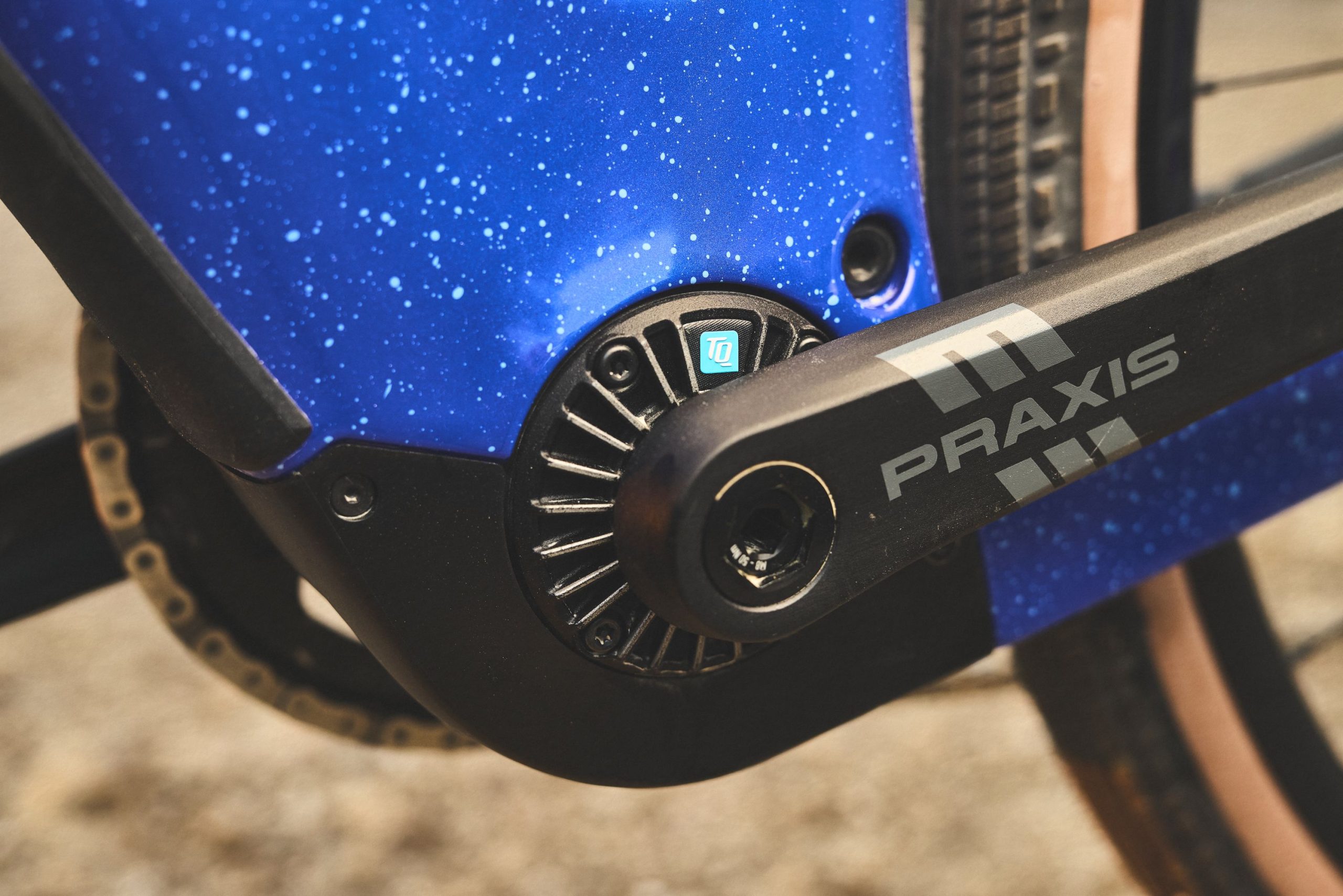
As with the Domane+ SLR road bike, launched in 2022, Trek has chosen a TQ harmonic pin ring motor, but for the Checkpoint+, it’s the upgraded HPR60 that’s also trickling into the electric mountain bike market.
The motor kicks out 60Nm of torque, up from 50Nm on the HPR50, along with 350W peak power rather than 300W. Trek says the TQ HPR60 is both lighter and quieter than the HPR50.
Like the Domane+, the Checkpoint+ is a Category 3 electric bike in the US and can provide assistance up to 28mph, although riders elsewhere are limited to 25km/h.
The upgraded TQ HPR60 motor offers 60Nm torque and 350W peak power.
The in-frame 360Wh battery offers a 50-mile/97km claimed range in Eco mode, with a full recharge time of 3 hours 45 minutes.
There’s the option to add a bottle-cage mounted 160Wh external range extender, increasing the range by up to 44 per cent.
Buttons below the hoods enable you to select the assistance level.
As with the Domane+, Trek puts tiny buttons on the bar to enable you to change modes, placing them below the brake hoods, so you don’t have to release your grip to use them.
There’s an LED display built into the top tube, providing data on battery level, range and more. On the top-spec SL 7 AXS bike, the display is colour; it’s monochrome for the lower-spec bikes.
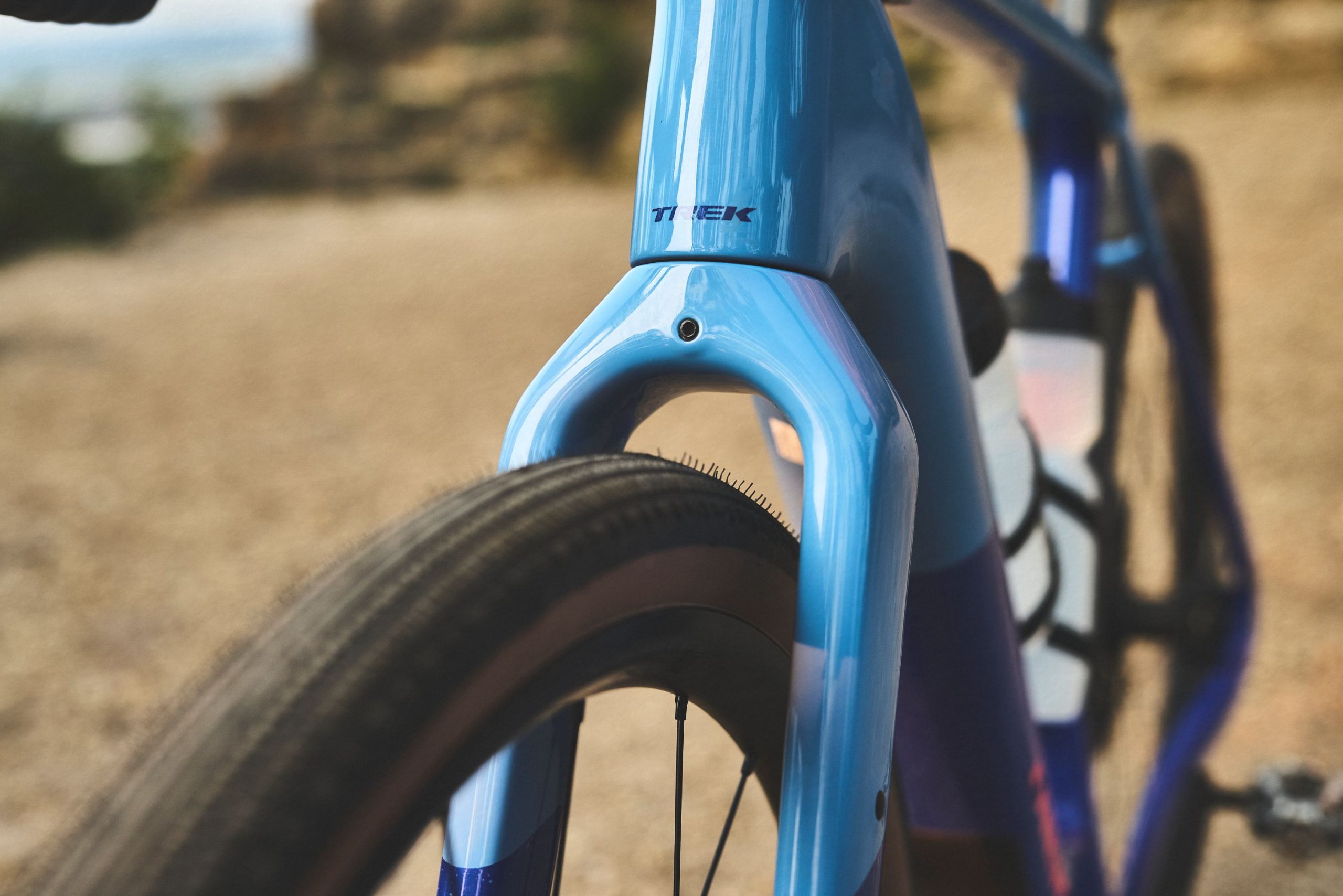
50mm tyre clearance
50mm tyre clearance is fast becoming the norm for gravel bikes.
Trek applies its gravel endurance geometry, also seen in the current-generation non-assisted Checkpoint, to the Checkpoint+’s 500 Series OCLV carbon frame, including its rear IsoSpeed ride-smoothing tech.
The Checkpoint+’s geometry has a shorter reach and higher stack than Trek’s previous-generation gravel bikes, matching that of the non-assisted Checkpoint.
Gravel bike tyre clearance has increased significantly, with a host of gravel bikes, including the non-assisted Checkpoint and the just-launched fourth-generation Specialized Diverge, now offering 50mm clearance. The Checkpoint+ joins that list.
The top-spec Checkpoint+ SL 7 is fitted with a 40mm-travel suspension fork.
The Checkpoint+ SL 7 AXS includes a 40mm-travel RockShox Rudy XPLR suspension fork, while the lower-spec SL 5 and SL 6 have rigid forks. You can fit a gravel suspension fork aftermarket to all frame sizes except XS and add a dropper post to all sizes.
Typically of gravel bikes, there are numerous mounting points, enabling you to fit mudguards, a rack and an array of bikepacking bags. You can add Trek’s clip-on bar extensions, too. With the battery in the down tube, there’s no in-frame storage, though.
Trek Checkpoint+ model range and prices
All bikes in the range get 1x drivetrains.
There are three spec levels on offer, all with 1x drivetrains, with two SRAM AXS 12-speed mullet builds and a Shimano GRX option. All are tubeless-ready and come with the valves and sealant necessary to set up tubeless.
While the SL 5 and SL6 specs are available in sizes from XS to XL, the SL 7 is only available from S to XL, due to its suspension fork.
We’ve quoted Euro prices for the Netherlands and Belgium, although they vary by country.
Trek Checkpoint+ SL 7 AXS
Frame: Checkpoint+ Series 500 OCLV carbon
Fork: RockShox Rudy, 40mm travel
Groupset: SRAM XO Eagle Transmission, Force levers, Praxis cranks
China is ending its antitrust probe into Google, which had centered around Android’s ubiquity in the mobile world and what impact, if any, it was having on Chinese phone makers like Oppo and Xiaomi that use the software. As reported by the Financial Times, this move comes amid ongoing discussions between the US and Chinese governments over TikTok, NVIDIA, tariffs and the broader trading relationship between the world’s two largest economies.
Google’s search engine remains blocked in China, along with many of its other core products like Gmail, YouTube and Google Maps. Despite this, the tech giant still generates substantial revenue in the country through cloud services and ad sales to Chinese companies targeting overseas audiences.
According to the Financial Times, the decision by Beijing to ease up on Google is a tactical move, as China increasingly flexes its regulatory scrutiny on NVIDIA as a negotiating tool during trade talks with the US.
Earlier this summer NVIDIA struck a deal with the Trump administration to sell its pared-back H20 GPUs in China on the condition that it gives the US government 15 percent of the sales. Shortly thereafter, however, China began discouraging local companies from buying the H20 chips. Recently, the government outright banned Chinese tech companies from buying NVIDIA’s newest AI chip made specifically for the region, the RTX Pro 6000D.
In yet another move to exert control and flex power, Chinese regulators have accused NVIDIA of violating Chinese antitrust laws with its acquisition of chipmaker Mellanox. Were the chipmaker to be found in violation of China’s anti-monopoly law, the company could owe fines between 1 percent and 10 percent of its 2024 sales.
US and Chinese officials just wrapped three days of trade talks in Madrid, with President Donald Trump and President Xi Jinping set to speak on Friday. The leaders are expected to discuss a supposed framework for a TikTok deal that would cede control of the company’s US business to American companies, resulting in a roughly 80 percent stake in the entity domestically.
This article originally appeared on Engadget at https://www.engadget.com/big-tech/china-closes-antitrust-probe-into-googles-android-operating-system-145815140.html?src=rss
Version
1.90.0 of the Rust language has been released. Changes include
switching to the LLD linker by default,
the addition of support for workspace publishing to cargo, and the
usual set of stabilized APIs.
At last year’s Meta Connect, Mark Zuckerberg focused less on the company’s line of Quest VR headsets and more on the “Orion” prototype see-through augmented reality glasses, which he said could launch in some form or another “in the next few years.” At the Meta Connect keynote Wednesday evening, though, Zuckerberg announced that the company’s Meta Ray-Ban Display AR glasses would be available starting at $799 as soon as Sept. 30.
To be sure, Meta’s first commercial smartglasses with a built-in display are a far cry from the Orion prototype Zuckerberg showed off last year. The actual “display” part of the Ray-Ban Display is a paltry 600×600 resolution square that updates at just 30 Hz and takes up a tiny 20 degree portion of only the right eyepiece. Compared to the 70 degree field-of-view and head-tracked stereoscopic 3D “hologram” effect shown on the Orion lenses, that’s a little disappointing.
Still, Zuckerberg was able to call the 42 pixels per degree (PPD) you get on the Ray-Ban Display’s display “very high resolution,” in a sense (the Meta Quest 3 tops out at around 25 PPD across its much larger display). And hands-on reports suggest the bright 5,000 nit display is viewable even in bright outdoor scenarios, thanks in part to Transitions lenses that automatically darken to block outside light.
One of the exciting elements of Intel’s Xeon 6 Granite Rapids launch last year was introducing support for MRDIMMs alongside DDR5-6400 memory support. After the Xeon 6900P series debut I posted some of the first independent DDR5-6400 vs. MRDIMM-8800 benchmarks. One year later, today is a fresh look at the DDR5-6400 vs. MRDIMM-8800 performance for Granite Rapids with new/updated benchmarks, the latest Linux software improvements, and also looking at the impact on power and thermals of MRDIMM memory.
Autumn has nearly arrived (the fall season officially kicks off next Monday, September 22), which means it’s a great time to go apple picking. It’s also a good time to go Apple device picking, especially if you’ve been considering a MacBook. No, they still don’t have OLED or touchscreen displays (somewhat soon, though), but there are several
If you’ve just shelled out thousands of dollars on one of Samsung’s smart fridges, you’d be forgiven for expecting it to leave you alone, rather than encouraging you to spend even more money. But that is no longer the case — following a recent update, you’ll start seeing ads on the fridge’s display.
According to Android Authority, the new software update is being rolled out to Samsung’s Family Hub refrigerators in the US, and will now display ads and promotions while the display is idle. In a statement to the outlet, Samsung confirmed that it’s conducting a pilot program as part of its commitment to (brace yourselves for this one) “enhancing every day value for our home appliance customers.”
The Cover Screen on which ads show up appears when a refrigerator is not displaying something else, such as Samsung’s Art Mode or a photo album. Samsung told Android Authority that advertising won’t appear when one of these modes is active, adding that specific ads can also be dismissed and won’t appear again while the campaign is running.
What the statement doesn’t make clear is whether advertising can be turned off altogether, which again, seems like a reasonable option given that you can expect to pay anything between $1,800 and $3,500 for a Family Hub-equipped fridge. But it doesn’t appear to be possible while the pilot period is live. It also isn’t clear if any specific models are omitted from the testing.
Back in April, Samsung’s head of R&D for digital appliances, Jeong Seung Moon, told The Verge that at that time the company had no plans to bring ads to its smart home displays, but in the case of its refrigerators it appears to have changed its mind pretty quickly.
This article originally appeared on Engadget at https://www.engadget.com/home/smart-home/samsungs-very-expensive-family-hub-fridges-will-now-treat-you-to-ads-on-their-displays-143529070.html?src=rss
Just ahead of the iPhone 17 lineup arriving on Friday, you can pick up Apple’s 25W MagSafe charger for a song. The two-meter version of the more powerful charging cable has dropped by 29 percent from $49 to $35. That’s a record-low price.
As it happens, that actually makes the two-meter version of the cable less expensive than the one-meter variant. The shorter cable will run you $39 as things stand.
If you have an iPhone 16, iPhone 17 or iPhone Air, this cable can charge your device at 25W as long as it’s connected to a 30W power adapter on the other end. While you’ll need a more recent iPhone to get the fastest MagSafe charging speeds, the charger can wirelessly top up the battery of any iPhone from the last eight years (iPhone 8 and later). With older iPhones, the charging speed tops out at 15W. The cable works with AirPods wireless charging cases too — it’s certified for Qi2.2 and Qi charging.
The MagSafe charger is one of our favorite iPhone accessories, and would pair quite nicely with your new iPhone if you’re picking up one of the latest models. If you’re on the fence about that, be sure to check out our reviews of the iPhone 17, iPhone Pro/Pro Max and iPhone Air.
Check out our coverage of the best Apple deals for more discounts, and follow @EngadgetDeals on X for the latest tech deals and buying advice.
This article originally appeared on Engadget at https://www.engadget.com/deals/apples-25w-magsafe-charger-is-on-sale-for-35-143415970.html?src=rss
After a catastrophic asteroid impact 78 million years ago, life didn’t just survive—it thrived, at least according to new research that provides the first direct evidence of microbial life recolonizing an impact crater. The study, which centers on the Lappajärvi impact structure in Finland, both confirms the ongoing theory that meteoric craters
Last week, a prominent US senator called on the Federal Trade Commission to investigate Microsoft for cybersecurity negligence over the role it played last year in health giant Ascension’s ransomware breach, which caused life-threatening disruptions at 140 hospitals and put the medical records of 5.6 million patients into the hands of the attackers. Lost in the focus on Microsoft was something as, or more, urgent: never-before-revealed details that now invite scrutiny of Ascension’s own security failings.
In a letter sent last week to FTC Chairman Andrew Ferguson, Sen. Ron Wyden (D-Ore.) said an investigation by his office determined that the hack began in February 2024 with the infection of a contractor’s laptop after they downloaded malware from a link returned by Microsoft’s Bing search engine. The attackers then pivoted from the contractor device to Ascension’s most valuable network asset: the Windows Active Directory, a tool administrators use to create and delete user accounts and manage system privileges to them. Obtaining control of the Active Directory is tantamount to obtaining a master key that will open any door in a restricted building.
Wyden blasted Microsoft for its continued support of its three-decades-old implementation of the Kerberos authentication protocol that uses an insecure cipher and, as the senator noted, exposes customers to precisely the type of breach Ascension suffered. Although modern versions of Active Directory by default will use a more secure authentication mechanism, it will by default fall back to the weaker one in the event a device on the network—including one that has been infected with malware—sends an authentication request that uses it. That enabled the attackers to perform Kerberoasting, a form of attack that Wyden said the attackers used to pivot from the contractor laptop directly to the crown jewel of Ascension’s network security.
After the Sept. 10, 2025, assassination of conservative political activist Charlie Kirk, President Donald Trump claimed that radical leftist groups foment political violence in the US, and “they should be put in jail.”
“The radical left causes tremendous violence,” he said, asserting that “they seem to do it in a bigger way” than groups on the right.
Top presidential adviser Stephen Miller also weighed in after Kirk’s killing, saying that left-wing political organizations constitute “a vast domestic terror movement.”
Orbea has launched new components as part of its RS concept, consisting of the HMI handlebar control for ebikes and its own wired electronic MC10-RS smart dropper. Both run off an ebike’s battery.
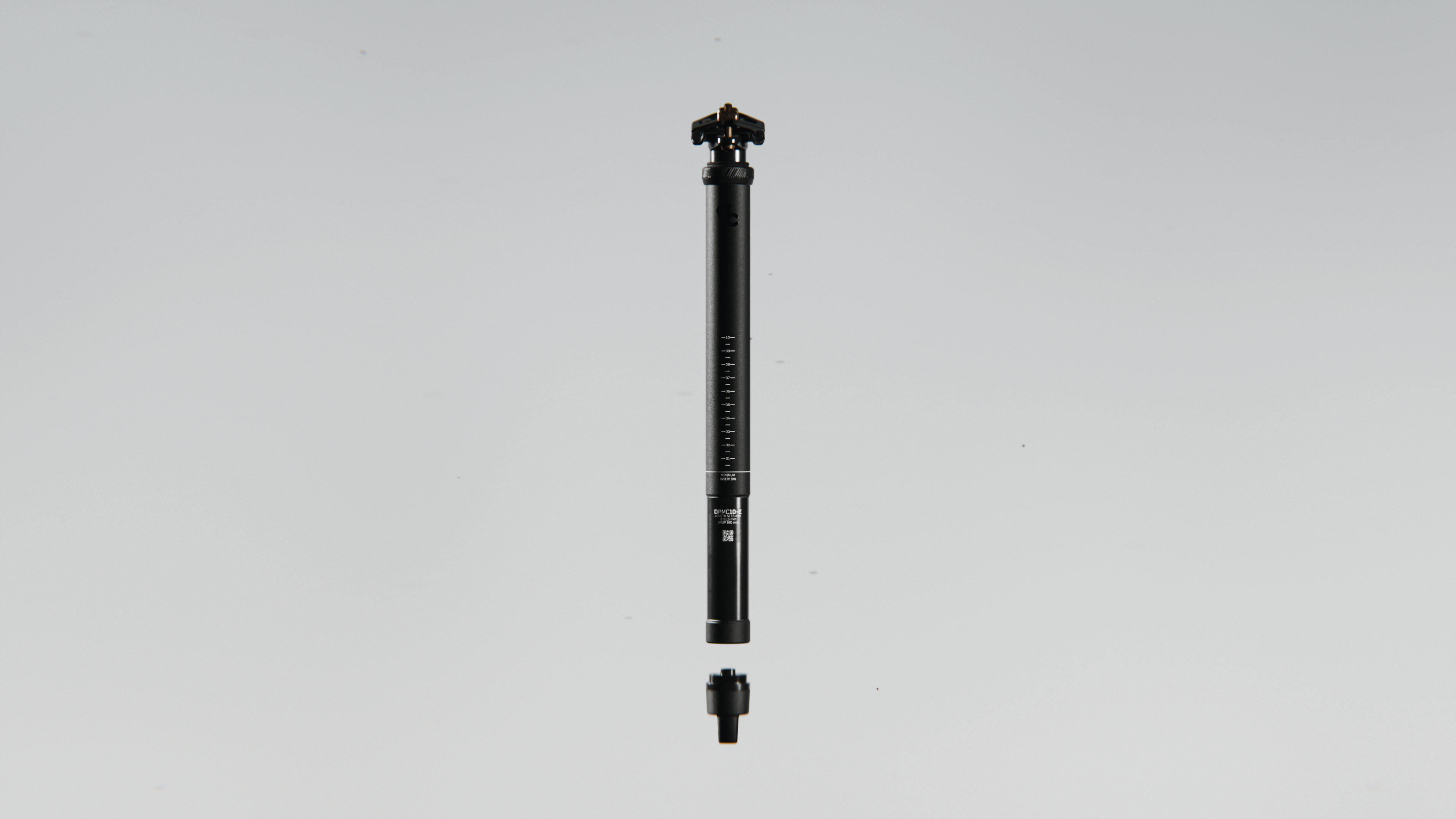
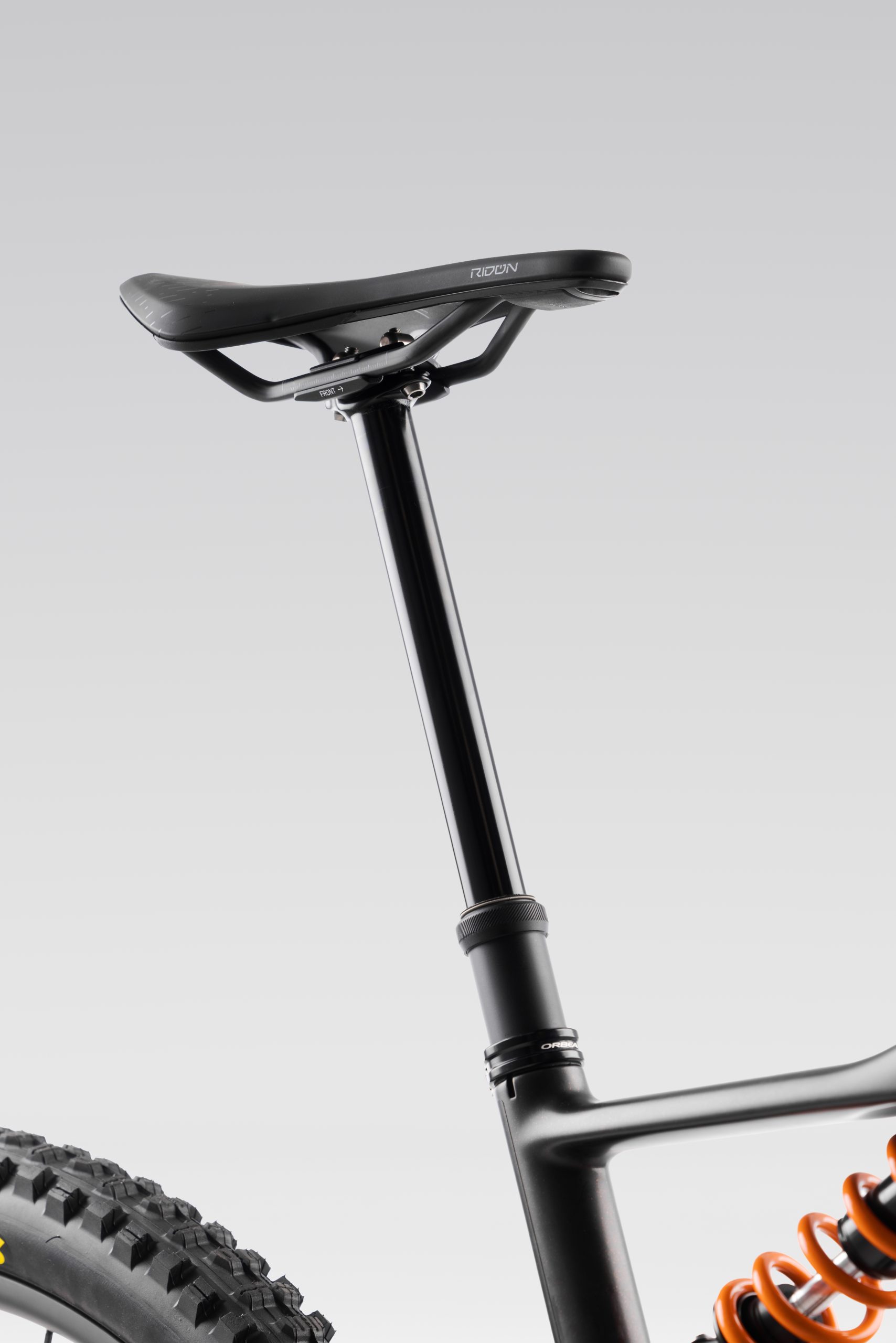
The new dropper post runs off the ebike battery and is programmable for custom drops.
Orbea claims the new RS dropper is the lightest 240mm dropper post available, including all mechanical and electric posts.
The Basque brand has also shared details of its new Rise eMTB range, with a full launch slated for 23 September. The new tech will feature as standard on those bikes.
Orbea’s new HMI (Human Machine Interface) is part of its RS System, using Shimano firmware. Orbea
Orbea calls the new RS concept products “The future of control”. It’s a new communication ecosystem linking an ebike’s motor, dropper and display, which Orbea is confident will set the standard for the future.
The Basque brand is keen to stress it isn’t launching simply a remote or a dropper. The brand claims it is reimagining the whole system, by both replacing the Shimano EMC100 remote (used on the current Orbea Rise) with a more ergonomic and integrated ebike remote, and integrating a dropper post lever.
Aware that many ebikes have five or more batteries, Orbea set out to design a system around one central ebike battery, with one auxiliary control on the handlebar.
The resulting RS Control System links the motor, dropper, display and handlebar control.
Orbea MC10-RS dropper post
Orbea says the new MC10-RS dropper post is as light as an XC dropper, but as tough as an enduro post. Orbea
Orbea boasts the new dropper is around 100g lighter than a typical cable-actuated dropper post.
The MC10-RS is said to be the world’s first ‘smart’ dropper, meaning the button can be programmed to perform different functions, such as a partial drop, which could be useful on technical climbs.
The post is available with 180, 210 or 240mm of travel, and each can be adjusted by 25mm in intervals of 5mm.
Orbea claims this is the lightest dropper post in its category: as light as an XC dropper, but with the performance of enduro droppers.
Orbea says using the CAN BUS technology means there’s no need for a separate battery or cable: it runs on the main ebike control cable. No additional batteries are required for the dropper or remote because both run off the ebike battery.
Orbea explains its Time Of Flight sensor unlocks the smart features programmable in the Orbea RS app.
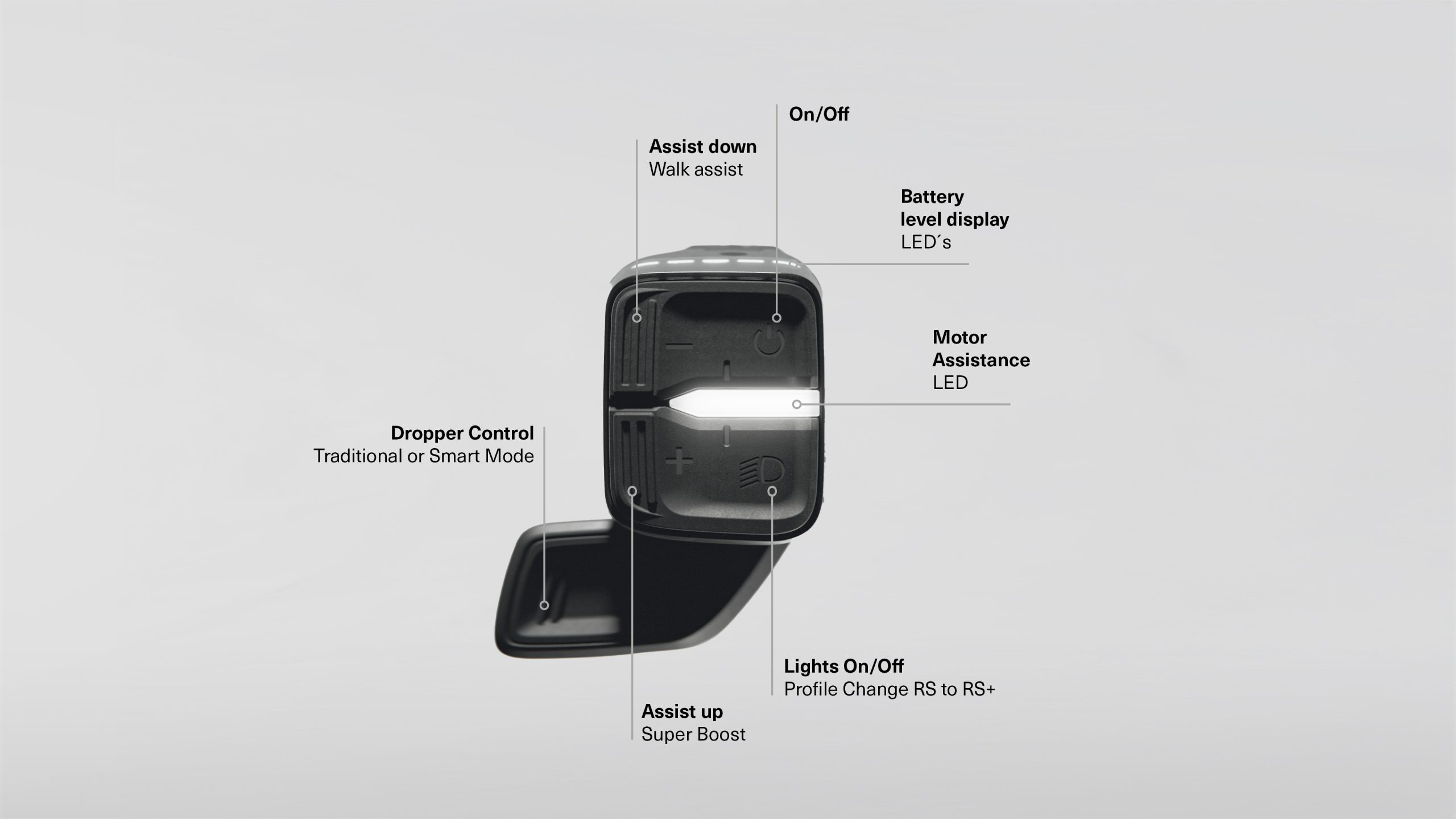
The dropper button on the Human Machine Interface (HMI) can be used as a traditional dropper by pressing and holding.
It can also be programmed with smart features. These include using a double-press to activate a 20% drop, which could be useful for technical climbs (the percentage drop is programmable through the app). This tech could have significant real-world implications, changing the way we use dropper posts.
The new design means fewer cables hanging out of the front of the bar than a mechanical dropper. The cable for the ebike remote (with integrated dropper lever) goes from the grip through the handlebar and into the frame. The cable is plug-and-play, with connectors inside the bike linking the dropper and drive unit with the same cable.
Due to not including the weight of the cable or the battery, Orbea is claiming some impressive weights for the post. It says the 180mm MC10-RS (564g) is lighter than a cross-country dropper, such as the Fox Transfer SL 150 (560g).
The MC10-RS dropper is programmable with smart functions. Orbea
Orbea claims the MC10-RS is 140g lighter than wireless droppers, with the 240mm post claimed at 646g. Fox’s Transfer Neo in 200mm (with remote and battery) is said to weigh 786g and the RockShox Reverb AXS in 225mm weighs a claimed 815g for the system.
Orbea also compares the MC10-RS with mechanical dropper posts, stating it’s the lightest 240mm dropper on the market. It claims the MC10-RS is lighter than the mechanical Fox Transfer setup in 240mm size, which it says weighs 862g, and OneUp’s V3 in 240mm, which is said to weigh 733g.
Orbea RS HMI handlebar control
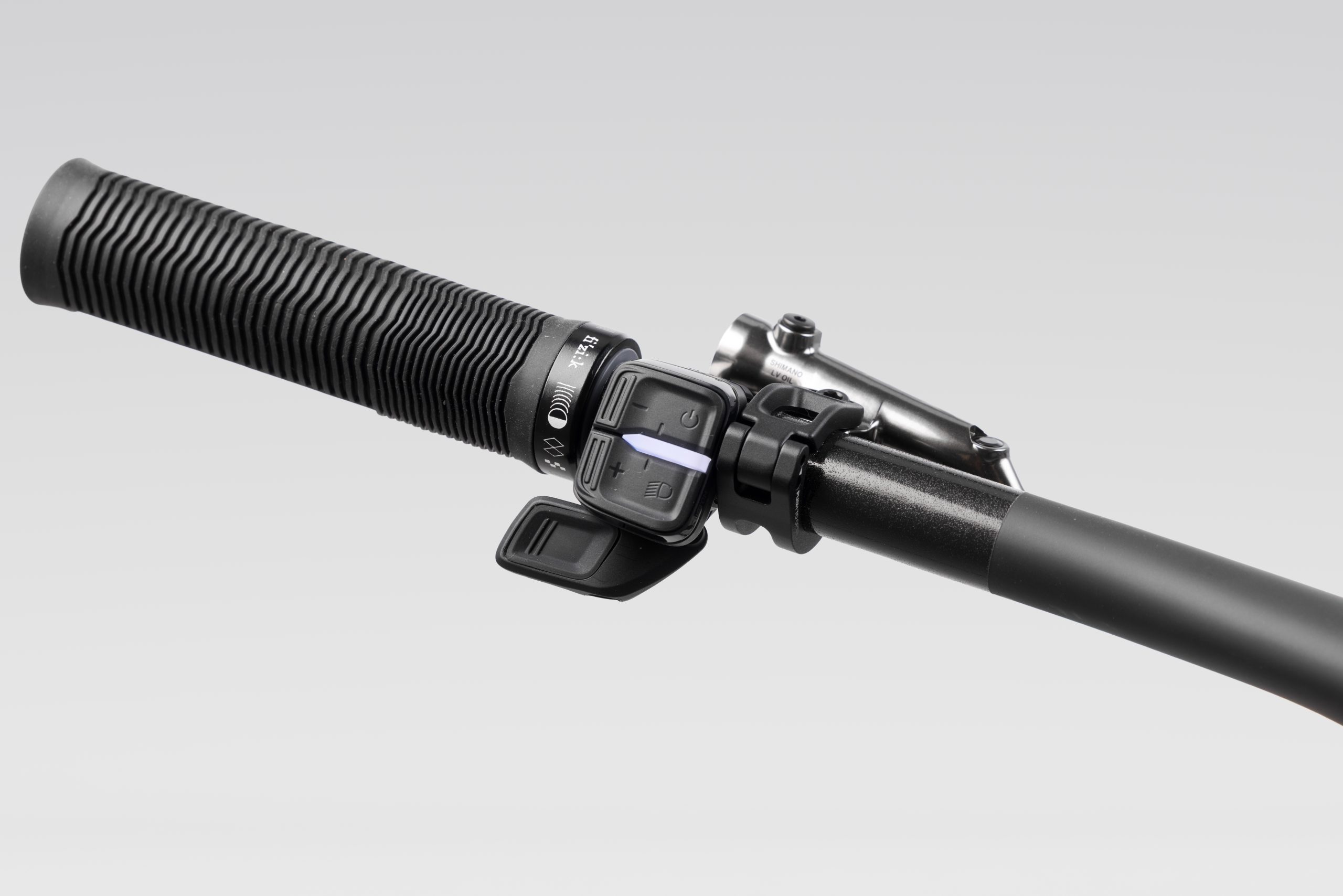
Orbea’s HMI handlebar control combines the electronic dropper post remote, function buttons and displays. Orbea
Orbea’s Human Machine Interface (HMI) handlebar control is designed to be integrated and ergonomic, and function as a control for both the ebike and the dropper post.
The HMI has larger buttons with replaceable touch points and a minimal display. It has a graduated light on the front and five LEDs on top.
This doesn’t look to be particularly intuitive and riders will need to learn what the different colours and lights mean.
Shimano symbiosis
Shimano allowed Orbea to use its firmware to develop the RS system. Orbea
Orbea’s RS concept is: “More bike and less E, with a seamless connection between bike and rider”.
To enable this, Orbea developed its own firmware and battery to work in conjunction with the Shimano motor and handlebar control.
New Orbea Rise coming soon
The Orbea Rise SL M-Ltd will use the new RS System, along with the other three new Rise models. Orbea
This tech will be included as standard on the new Orbea Rise eMTB, with four models launching on 23 September.
These are the LT version in M10 and M-Team specs, and the SL version in M10 and M-Ltd specs.
The bikes will include Shimano Di2, with the shifting powered from the main ebike battery, and use Shimano’s Free Shift technology.
There are two battery sizes on offer: 420Wh and 630Wh. These can be chosen on the Orbea configurator. Both carbon and alloy Rise models will have these options.
Riders can switch between two profiles: RS mode, offering 54Nm, which Orbea says brings a more natural feel, and RS+ mode, unleashing the full 85Nm for maximum power.
Orbea hinted that this may not be the peak power of the drive unit, but declined to reveal any figures.
Orbea estimates using the dropper post and shifting while on a ride will equate to “less than 1% of the main battery’s capacity”.
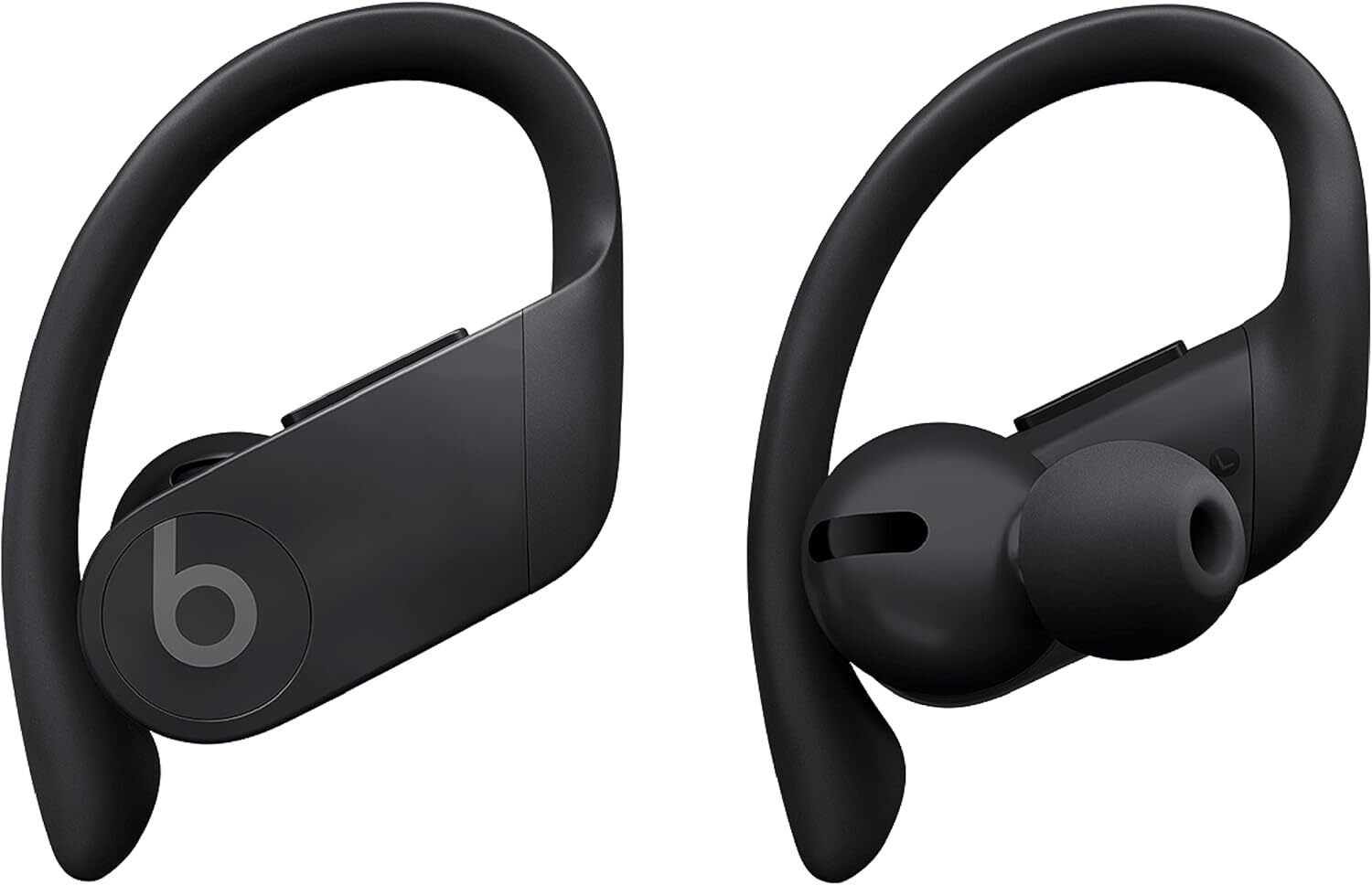
If you’re looking for in-ear earbuds with superior sound quality, long-lasting battery life, and a secure fit, the Beats Powerbeats Pro wireless earbuds are a reliable option, especially for those who are fans of Beats headphones. Right now, you can get an open-box pair for just $100 on Woot, a 60% discount.
The Powerbeats Pro feature over-ear hooks that have a secure fit and are ideal for vigorous workouts and sports, with users praising how stable they remain during movement. Compatible with the Apple ecosystem, they’re easy to pair with iOS and allow for fast device switching. They also have a strong battery life, offering nine hours of playback for the buds alone. With the included charging case, they last up to 24 hours. Volume can be controlled on the earbuds via physical buttons, as can controls that let you control and skip tracks. The IPX4 rating makes them suitable for rainy days and sweaty workouts.
The headphones feature an intense bass-heavy punch and bright highs for a sculpted sound signature, notes this PCMag review. This is mostly a pro, but it may make some tracks like orchestral music sound overly boosted—and you can’t tweak EQ on the companion app. And despite their powerful audio performance, they don’t feature Active Noise Cancellation. Still, they’re widely regarded as some of the best premium earbuds, and with their combination of sound, battery life, Apple compatibility, and a secure fit for fitness lovers, theBeats Powerbeats Pro wireless earbuds are a good deal at just $100.
Apple’s strategic stubbornness to avoid slapping a touchscreen display on its MacBook laptops is coming to an end, and not a moment too soon. At least, that’s the word from Apple analyst Ming-Chi Kuo, who has a positive (though not spotless) track record when it comes to these sort of things. In a post on X, Kuo said Apple is planning on releasing
Try as I might, turn-based strategy games don’t usually do it for me. That’s one reason I haven’t yet dipped into Clair Obscur: Expedition 33, many people’s favorite of the year so far. I’d almost always rather be playing a more action-based game.
But after trying the demo for Flick Shot Rogues on a whim during the most recent Steam Next Fest, the game hasn’t been far from my thoughts. The debut title from Butter By The Fish, a three-person studio in Germany, arrived on Steam this week. Despite the likes of Hollow Knight: Silksong tugging at my attention, I keep turning back to this pirate-themed, turn-based roguelite.
It’s a bit like Subbuteo but with crabs, monkeys and lasers. Each level features several enemies on red discs that you have to take out by flicking your character toward them. One hero causes damage when you clatter into enemies, and another will smash every foe within a certain radius after they stop moving. My favorite, the Froggomancer, collects frogs and uses them to attack goons that they slide by or end up next to.
You can take a couple of characters into each run (and swap to the other one before your turn) and equip each with a relic. These include fire damage, lightning attacks and sticky bombs. Many of these have chain effects, so you can use them to attack multiple bad guys in one turn. Since this is a roguelite, you’ll upgrade your abilities as you go. After the first couple of stages, each level has at least one enemy or boss with a yellow disc. Once you take those out, you beat that wave or level.
There are no prizes for guessing that putting together a strong build is a big part of this game. In one run, I tripled up on a trinket that gave me a 50 percent attack boost (so 150 percent extra damage) when I had full shields, making the first shot of each round all the more important.
Flick Shot Rogues echoes one of my favorite games of 2023, Subpar Pool. I played quite a bit of snooker and pool growing up, and I always enjoyed figuring out the angle and power of my shot — executing it successfully was an entirely different matter. Being able to replicate that here is one reason why I’m digging this game so much.
You can see where your character will end up after hitting a wall or enemy to help you better plan your turn. So, for once in a video game, I’m slowing down and taking more time to actually consider the consequences of my actions before doing anything.
The tactility of slamming my character’s disc into enemies and causing a killer chain reaction helps make Flick Shot Rogues feel more active and engaging to me than many other turn-based games I’ve tried. Each runs can take up to an hour or so, but they don’t feel anything like that long.
I do wish the game did a better job of communicating the enemies’ next moves and how their attacks work. It’s not clear to me, for instance, when a yellow-disc enemy is about to teleport to the other side of a level. You’ll often get an indicator of what your foes are about to do, but not every time. That makes it a little more difficult to decide whether to attack, make a defensive move or reposition for a better angle on my next turn.
But still, I keep coming back for more. Launching a barrage of fire-inducing frogs after squeezing through a narrow gap on a bank shot is pretty fun. I’m looking forward to finding out what other characters, relics and enhancements can do.
This article originally appeared on Engadget at https://www.engadget.com/gaming/flick-shot-rogues-is-the-rare-turn-based-game-that-my-brain-is-gelling-with-133020834.html?src=rss
Along with display-style glasses, Meta’s 2025 line of smart spectacles includes a new version of Oakley Meta glasses. Called Vanguard, these shield-style smart glasses will cost $499 and go on sale Oct. 21.
Vanguards feature a wrap-around frame and a 12MP camera that shoots 3K video from a center-mounted camera that can be operated hands-free. According to Meta, Vanguard glasses have a battery life of up to nine hours of daily use, improved audio, and (of course) integration with Meta’s AI.
At the company’s Meta Connect 2025 keynote, the company also announced partnerships with Garmin and Strava. Garmin users will be able to sync their glasses with Garmin devices to track progress and get performance summaries through the Meta AI app. Strava users will be able to share activities from their glasses and access their workout history. Both devices will allow activity data—distance traveled, pace, heart-rate, and more—to be overlaid on video.