You Can Get This 13-Inch M4 iPad Pro on Sale for $900 Right Now

We may earn a commission from links on this page. Deal pricing and availability subject to change after time of publication.

Apple’s latest tablet is still one of the most powerful pieces of hardware you can carry in a backpack, and right now, the refurbished 13-inch M4 iPad Pro is on sale for $899.99 on StackSocial. That price gets you the 256GB Wi-Fi model in Space Black with a Grade-A rating, meaning it should look and work like new with little to no visible wear. If you need more storage or cellular, prices scale up: 256GB with Wi-Fi + 5G is $999.99, 512GB Wi-Fi is $1,044.99, and configurations go up to 2TB with Wi-Fi + 5G at $1,674.99. All models include a USB-C charger and a 30-day third-party parts-and-labor warranty, and they ship only within the contiguous U.S.

The 13-inch OLED display is sharp at 2,752 by 2,064 pixels, and it gets extremely bright for HDR video. Colors look rich without being oversaturated, and scrolling feels smooth thanks to the adaptive refresh rate. The M4 chip inside is the same class of processor Apple puts in its laptops, so this tablet can handle heavy tasks like editing high-resolution photos, cutting 4K or even 8K video, or juggling multiple apps without slowing down. It’s also thin at 0.20 inches and weighs about 1.28 pounds, so it’s easier to carry than most laptops. Battery life is rated up to 10 hours for web browsing or video playback, though demanding work will likely get you closer to seven hours, notes this PCMag review.

Beyond performance, it covers the basics well. There are 12MP cameras on both sides for video calls and quick photos, speakers that sound fuller than most tablets, clear microphones, Face ID for unlocking, and a Thunderbolt/USB 4 port for connecting a monitor or fast external drive. It runs iPadOS 17 and will support future updates, including iOS 18 and beyond. Accessories like the Apple Pencil Pro and Magic Keyboard work with it, but they are sold separately and add a noticeable amount to the total cost.

Even at a discount, this is a high-end tablet, suitable if you want more than what a standard iPad offers for streaming, email, and casual browsing. It makes sense if you want top-tier power in a thin, touch-first device.


Our Best Editor-Vetted Apple Deals Right Now


Apple AirTag Tracker (4-Pack)


—
$90.49

(List Price $99.00)


Apple 1M USB-C Woven Charging Cable (3-Pack)


—
$21.99

(List Price $57.00)

Deals are selected by our commerce team

Zwift Camp: Breakthrough Announced, Begins April 6

This season, Zwift is leaning heavily into the Zwift Camp concept, launching a three-camp series that kicked off with Zwift Camp: Baseline in September.

Next week (Monday, April 6), the third and final Camp of the season begins. Named “Zwift Camp: Breakthrough”, it’s a 5-stage workout series all about helping you transition to outdoor riding. Dive into all the details below!

Breakthrough Basics

After Zwift Camp: Baseline showed us our power bests across various intervals, and Zwift Camp: Build pushed us to get stronger, Zwift Camp: Breakthrough is here to help us transition confidently into outdoor riding.

The Camp consists of five different workouts, spread across five weeks. You can finish each workout once and complete the Camp, but you can also do a workout multiple times if you’re looking for additional training.

Instead of targeting power intervals like the first two camps, ZC: Breakthrough workouts target your technique while helping you build enduring fitness:

  • Stage 1: The Foundation
  • Stage 2: Body Control
  • Stage 3: Cadence Mastery
  • Stage 4: Standing Skills
  • Stage 5: Flow Session

Workouts + Schedule

Stages can be completed as on-demand (solo) efforts whenever you’d like, or you can join a scheduled group event.

  • Stage 1: April 6-12
    • Foundations: Good posture and a cleaner pedal stroke save you tons of energy. It’s how you make outdoor rides feel effortless. The workout reinforces “calm control” while you build sustainable fitness with mostly steady work, then finishes by sharpening leg speed so you can stay smooth across different cadences.
    • Unlock: Oakley Velo Kato Glasses
    • Route: Triple Twist
  • Stage 2: April 13-19
    • Body Control: Riding outdoors is all about tiny adjustments. When your position changes, staying steady is what keeps rides calm and efficient. The workout guides riders through hand-position changes, one-leg focus drills, and calm upper-body control so adjustments feel natural, not messy, and you stay efficient and confident outside.
    • Unlock: Princeton Wake 6560 Wheels Lava Red Colorway
    • Route: Island Hopper
  • Stage 3: April 20-26
    • Cadence Mastery: We’re teaching cadence adaptability: staying smooth and in control even when rhythm changes (wind, terrain, surges, group pace). The workout emphasizes switching between higher and lower stroke speeds while keeping power steady, so outdoor riding feels composed instead of chaotic.
    • Unlock: Pinarello Dogma F 2024 Starry Red Colorway
    • Route: Green to Screen
  • Stage 4: April 27-May 3
    • Standing Skills: The goal is to make standing feel just as smooth and confident as sitting. The workout focuses on clean seated-to-standing transitions while maintaining control, building confidence for rollers, small rises, quick changes in pace, and “stretch-and-reset” moments outdoors.
  • Stage 5: May 4-10
    • Flow Session: The “put it all together” capstone. This is practice for the real world—you’re training control, not just fitness. Posture, pedal stroke, cadence control, and standing transitions blended into one steady, outdoor-ready rhythm. The script positions it as the final integration—helping riders feel calm, smooth, and capable when roads, terrain, and pace change.
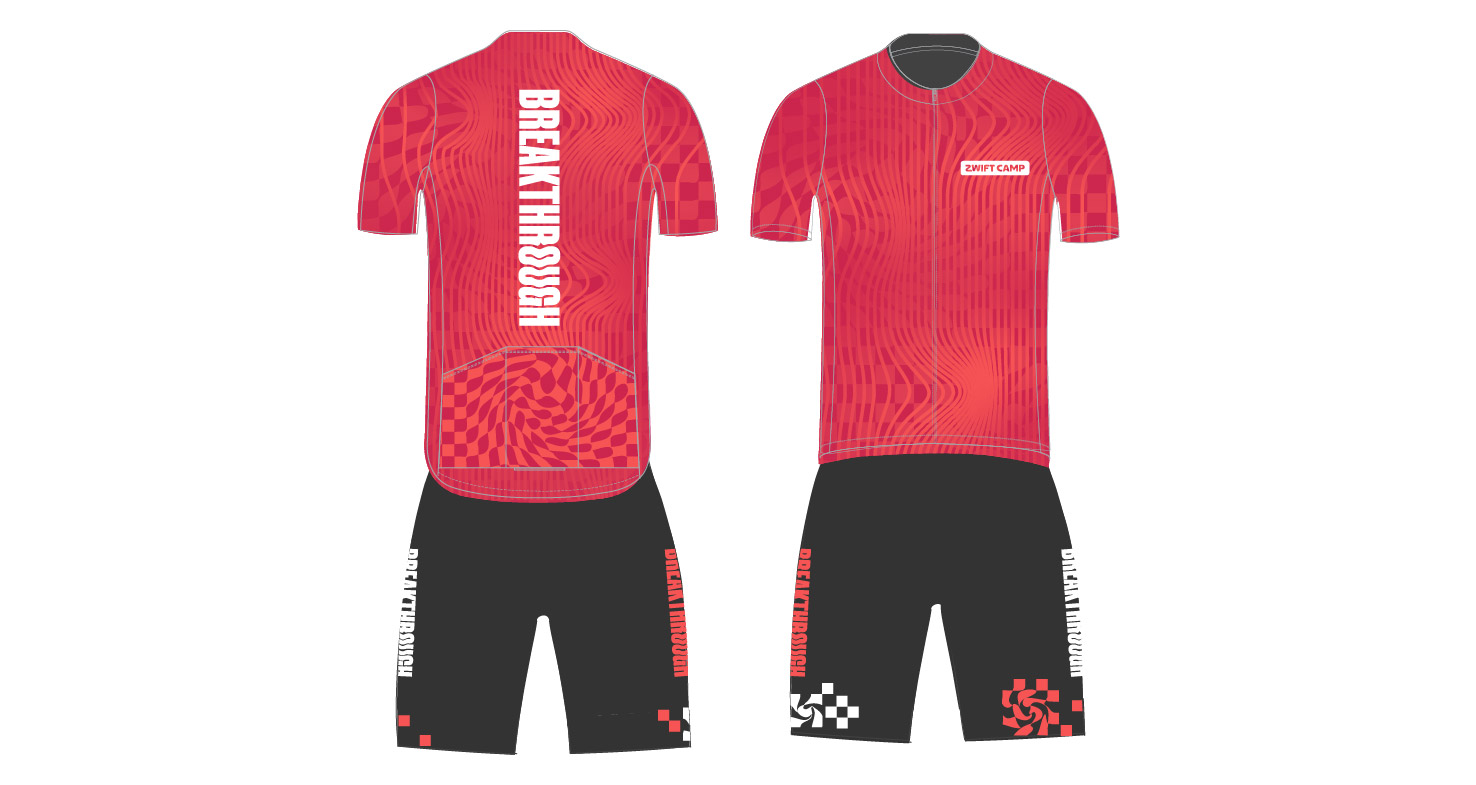
    • Unlock: Zwift Camp: Breakthrough Kit
    • Route: Big Flat 8
  • Make-Up Events: May 11-17

Sign up at zwift.com/zwift-camp > (events coming soon)

Each stage is a week long, with events beginning at 9am PST on Monday and scheduled hourly on the hour until 8am PST the following Monday.

Progressive Unlocks

Four unlocks are available as you work your way through Zwift Camp: Breakthrough:

  • Complete Stage 1: Oakley Velo Kato glasses
  • Complete Stage 2: Lava Red Colorway for Princetown Carbonworks Wake 6560 wheels*
  • Complete Stage 3: Starry Red Colorway for Pinarello Dogma F 2024 frame*
  • Complete all 5 Stages: Zwift Camp: Breakthrough cycling kit

*These unlocks are for colorways only. You must still purchase the base Princetown Carbonworks Wake 6560 wheels and Pinarello Dogma F 2024 frame in the DropShop.

Questions or Comments?

What do you think of this last Zwift Camp of the season? Planning to participate? Got questions? Share your thoughts below!

New Company Hopes to Build Age-Verification Tech into Vape Cartridges

Their goal is to use biometric data and blockchain to build age-verification measures directly into disposable vape cartridges.

Wired reports on a partnership between vape/cartridge manufacturer Ispire Technology and regulatory consulting company Chemular (which specializes in the nicotine market) — which they’ve named “Ike Tech”:

[Using blockchain-based security, the e-cig cartridge] would use a camera to scan some form of ID and then also take a video of the user’s face. Once it verifies your identity and determines you’re old enough to vape, it translates that information into anonymized tokens. That info goes to an identity service like ID.me or Clear. If approved, it bounces back to the app, which then uses a Bluetooth signal to give the vape the OK to turn on.

“Everything is tokenized,” [says Ispire CEO Michael Wang]. “As a result of this process, we don’t communicate consumer personal private information.” He says the process takes about a minute and a half… After that onetime check, the Bluetooth connection on the phone will recognize when the vape cartridge is nearby and keep it unlocked. Move the vape too far away from the phone, and it shuts off again. Based on testing, the companies behind Ike Tech claim this process has a 100 percent success rate in age verification, more or less calling the tech infallible. “The FDA told us it’s the holy grail technology they were looking for,” Wang says. “That’s word-for-word what they said when we met with them….”

Wang says the goal is to implement additional features in the verification process, like geo-fencing, which would force the vape to shut off while near a school or on an airplane. In the future, the plan is to license this biometric verification tech to other e-cig companies. The tech may also grow to include fingerprint readers and expand to other product categories; Wang suggests guns, which have a long history of age-verification features not quite working.


Read more of this story at Slashdot.

Project Hail Mary is already Amazon MGM’s highest-grossing film ever

It’s safe to say that Project Hail Mary is a success. The movie has taken in over $300 million globally, making it the best showing for Amazon MGM yet, Variety reports. Amazon bought MGM for $8.5 billion in 2022. 

Creed III previously held the record for Amazon MGM, having grossed $276 million. Notably, the achievement for Amazon MGM is just versus its own markers, rather than against other production companies. But it’s certainly notable given streamers aren’t known for focusing on theatrical releases. 

With that said, Amazon MGM has pivoted recently, announcing last April that it planned to release 14 films in theaters this year. These titles include Is God Is (May 15), Masters of the Universe (June 5), and Verity (October 2).

Project Hail Mary is based on a 2021 novel by Andy Weir, author of The Martian. It follows Ryan Gosling as high school teacher Ryland Grace, who wakes up on a spacecraft with no idea who he is or why he’s there. It has garnered mostly positive reviews and a 95 percent rating on Rotten Tomatoes. 

This article originally appeared on Engadget at https://www.engadget.com/entertainment/tv-movies/project-hail-mary-is-already-amazon-mgms-highest-grossing-film-ever-112955144.html?src=rss

Tadej Pogačar’s Milan–San Remo jersey is up for auction, but be prepared to spend a lot of cash

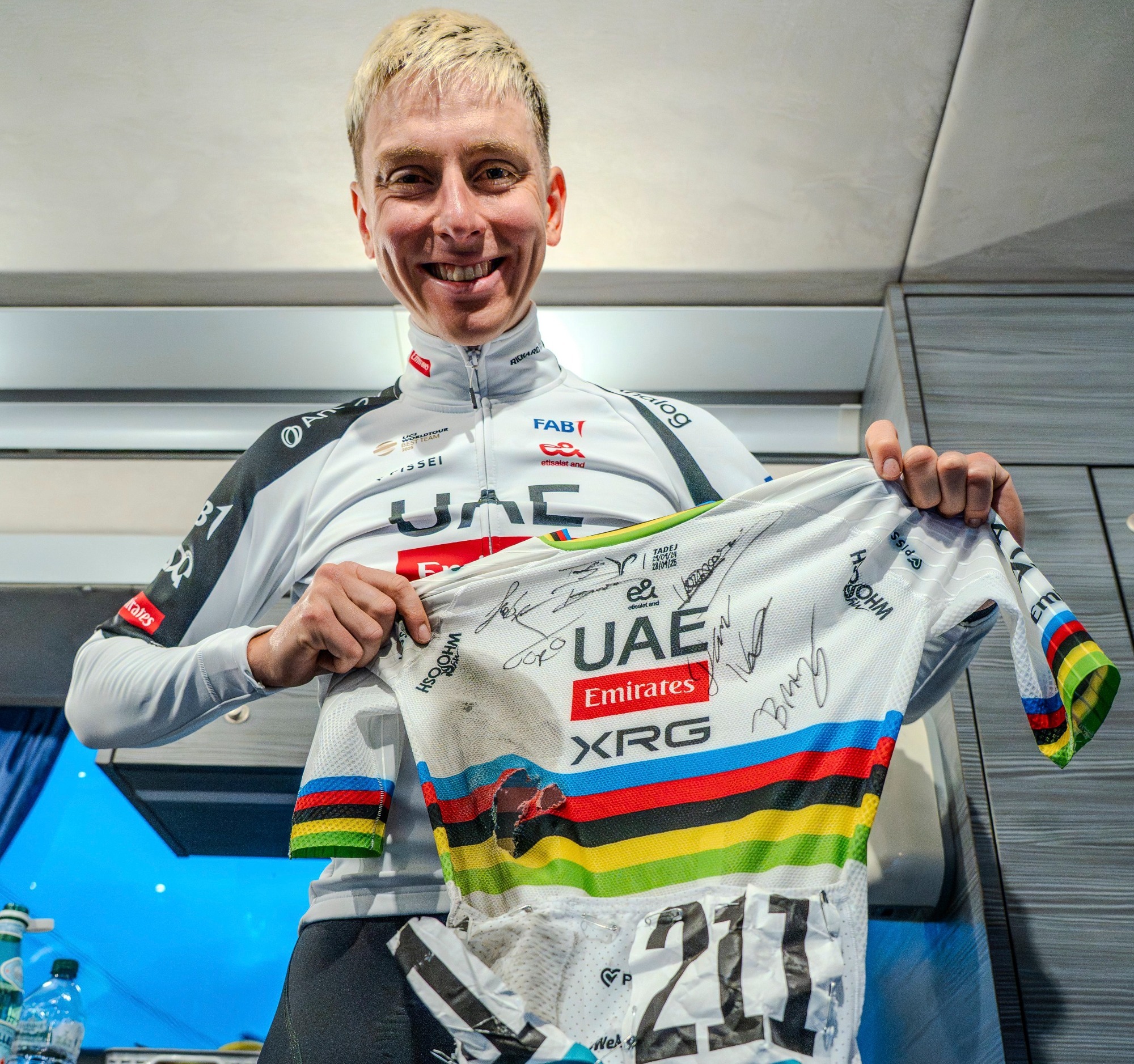
The all-white world champion’s skinsuit worn by Tadej Pogačar when he won this year’s Milan-San Remo is up for auction.

Pogačar crashed on the approach to the Cipressa with 32km to go, but still rode back to the bunch in the ripped skinsuit and won the race in a two-up sprint against Tom Pidcock. 

Now the skinsuit, described as ‘exactly as it was that day’, complete with a torn race number and road grime, although with the addition of his teammates’ signatures, is up for auction on GalaBid.com.

The highest bid for the battered skinsuit stands at €60,100. GalaBid.com

The highest bid for the skinsuit stands at €60,100 with 13 days until the auction closes, so there’s still time for you to up the ante.

Alternatively, you could sit it out to see if Pogačar wins Paris-Roubaix to seal his fifth and final Monument and puts that jersey up for auction as well.

If you do submit the winning bid for the Milan-San Remo skinsuit, you’ll not only bag yourself a piece of cycling history. Pogačar has pledged to double the winning sum and donate the total to his foundation, which supports children and young people in need.

Of course, the Milan-San Remo jersey may turn out to be a bargain if Pogačar does win Paris-Roubaix. Particularly if he crashes on the way. 

Apple’s Early Days: Massive Oral History Shares Stories About Young Wozniak and Jobs

Apple’s 50th anniversary is this week — and Fast Company’s Harry McCracken just published an 11,000-word oral history with some fun stories from Apple’s earliest days and the long and winding road to its very first home computers:

Steve Wozniak, cofounder, Apple: I told my dad when I was in high school, “I’m going to own a computer someday.” My dad said, “It costs as much as a house.” And I sat there at the table — I remember right where we were sitting — and I said, “I’ll live in an apartment.” I was going to have a computer if it was ever possible. I didn’t need a house.

Woz even remembers trying to build a home computer early on with a teenaged Steve Jobs and Bill Fernandez from rejected parts procured from local electronics companies. Woz designed it — “not from anybody else’s design or from a manual. And Fernandez was one of those kids that could use a soldering iron.”

Bill Fernandez: The computer was very basic. It was working, and we were starting to talk about how we could hook a teletype up to it. Mrs. Wozniak called a reporter from the San Jose Mercury, and he came over with a photographer. We set up the computer on the floor of Steve Wozniak’s bedroom.

Well, the core integrated circuit that ran the power supply that I built was an old reject part. We turned on the computer, and the power supply smoked and burnt out the circuitry. So we didn’t get our photos in the paper with an article about the boy geniuses.

But within a few years Jobs and Wozniak both wound up with jobs at local tech companies. Atari cofounder Nolan Bushnell remembers that Steve Jobs “wasn’t a good engineer, but he was a great technician. He was pristine in his ability to solder, which was actually important in those days.” Meanwhile Allen Baum had shared Wozniak’s high school interest in computers, and later got Woz a job working at Hewlett-Packard — where employees were allowed to use stockroom parts for private projects. (“When he needed some parts, even if we didn’t have them, I could order them.”) Baum helped with the Apple I and II, and joined Apple a decade later.

Wozniak remembers being inspired to build that first Apple I by the local Homebrew Computing Club, people “talking about great things that would happen to society, that we would be able to communicate like we never did [before] and educate in new ways. And being a geek would be important and have value.” And once he’d built his first computer, “I wanted these people to help create the revolution. And so I passed out my designs with no copyright notices — public domain, open source, everything. A couple of other people in the club did build it.”

But Woz and Jobs had even tried pitching the computer as a Hewlett-Packard product, Woz remembers:

Steve Wozniak: I showed them what it would cost and how it would work and what it could do with my little demos. They had all the engineering people and the marketing people, and they turned me down. That was the first of five turndowns from Hewlett-Packard. Steve Jobs and I had to go into business on our own.

In the end, Randy Wigginton, Apple employee No. 6 remembers witnessing Jobs, Wozniak, and Ronald Wayne the signing of Apple’s founding contract, “which is pretty funny, because I was 15 at the time.” And it was Allen Baum’s father who gave Wozniak and Jobs the bridge loan to buy the parts they’d need for their first 500 computers.

After all the memories, the article concludes that “Trying to connect every dot between Apple, the tiny, dirt-poor 1970s startup, and Apple, the $3.7 trillion 21st-century global colossus, is impossible.”

But this much is clear: The company has always been at its best when its original quirky humanity and willingness to be an outlier shine through.

Mark Johnson, Apple employee No. 13: I was in Cupertino just yesterday. It’s totally different. They own Cupertino now.

Jonathan Rotenberg, who cofounded the Boston Computer Society in 1977 at age 13: People want to hate Apple, because it is big and powerful. But Apple has an underlying moral purpose that is immensely deep and expansive…

Mike Markkula, the early retiree from Intel whose guidance and money turned the garage startup into a company: The culture mattered. People were there for the right reasons — to build something transformative — not just to make money. That alignment produced extraordinary results…

Steve Wozniak: Everything you do in life should have some element of joy in it. Even your work should have an element of joy… When you’re about to die, you have certain memories. And for me, it’s not going to be Apple going public or Apple being huge and all that. It’s really going to be stories from the period when humble people spotted something that was interesting and followed it

I’ll be thinking of that when I die, along with a lot of pranks I played. The important things.


Read more of this story at Slashdot.

Rivian and Lucid Win Right to Sell Their EVs Directly to Buyers in Washington State

The Wall Street Journal reports that Rivian “just won a yearslong battle with car dealers in Washington state that threatens the model of how cars are sold.”

After fighting to sell its vehicles directly to buyers, Rivian threatened to take its case to voters with a ballot measure to permit direct sales. The dealers blinked. The state’s dealer lobby not only dropped its opposition to a sales loophole for Rivian and rival EV-maker Lucid, but also encouraged lawmakers to approve one. The measure became law this month…

New auto entrants like Rivian, and Tesla before it, have spent years contending with long-established U.S. state laws that require new cars to be sold through independent franchised dealers. The auto startups — typically makers of EVs — argue that they can offer a better experience by selling directly to consumers, much as Apple sells iPhones through its own stores and online. Rivian CEO RJ Scaringe has said the company is committed to direct-only sales because it’s more profitable and gives the company control over how its vehicles are sold, marketed and maintained. The Washington compromise riled traditional automakers, including General Motors, Ford and Toyota, which lobbied against it, arguing it unfairly advantages startups. A trade group representing the automakers called it discriminatory and argued the exception could one day open the door to Chinese EV makers…

German automaker Volkswagen is currently facing several lawsuits from dealers over its plan to sell new Scout vehicles directly to consumers. Dealers say independent franchises are vital to the car-buying process, creating competition between dealerships that keeps prices affordable for consumers, while providing valuable services such as repairs, warranty work and financing… Yet for Washington’s dealers, the prospect of putting franchise laws up for a popular vote laid bare a tough reality: given the choice, many car buyers want the freedom to avoid dealerships. Rivian’s polling, which the company shared with lawmakers, showed nearly 70% of respondents favored allowing direct sales when asked whether they would support manufacturers selling cars directly to consumers…
The fight comes at a critical time for Rivian, which is launching a new, more affordable SUV in a bid to make consistent profits amid a downturn in U.S. EV sales… Rivian is able to directly sell cars in roughly half of U.S. states, but a number of them limit how many locations the company can operate. They can’t disclose the price, though. For that, customers must go online.
The article notes that “Following the win, Rivian executives are eyeing other states that, like Washington, ban direct sales but also allow ballot initiatives: Arkansas, Ohio, Oklahoma, Montana, Nebraska and South Dakota…” It adds that lawmakers (from both parties) in the state of Washington had said “they have long felt pulled between giving consumers more car-buying freedom and protecting dealers, essentially small-business owners who are vital to local economies — and politically powerful.”
But an executive at the Washington State Auto Dealers Association said dealers supported this new law partly because it protects them by barring future automakers from selling directly in the state, and by requiring Rivian and Lucid to adhere to the same regulations that govern how dealers operate.


Read more of this story at Slashdot.
Will Social Media Change After YouTube and Meta’s Court Defeat?

Yes, this week YouTube and Meta were found negligent in a landmark case about social media addiction.

But “it’s still far from certain what this defeat will change,” argues The Verge’s senior tech and policy editor, “and what the collateral damage could be.”

If these decisions survive appeal — which isn’t certain — the direct outcome would be multimillion-dollar penalties. Depending on the outcome of several more “bellwether” cases in Los Angeles, a much larger group settlement could be reached down the road… For many activists, the overall goal is to make clear that lawsuits will keep piling up if companies don’t change their business practices…

The best-case outcome of all this has been laid out by people like Julie Angwin, who wrote in The New York Times that companies should be pushed to change “toxic” features like infinite scrolling, beauty filters that encourage body dysmorphia, and algorithms that prioritize “shocking and crude” content. The worst-case scenario falls along the lines of a piece from Mike Masnick at Techdirt, who argued the rulings spell disaster for smaller social networks that could be sued for letting users post and see First Amendment-protected speech under a vague standard of harm. He noted that the New Mexico case hinged partly on arguing that Meta had harmed kids by providing end-to-end encryption in private messaging, creating an incentive to discontinue a feature that protects users’ privacy — and indeed, Meta discontinued end-to-end encryption on Instagram earlier this month.

Blake Reid, a professor at Colorado Law, is more circumspect. “It’s hard right now to forecast what’s going to happen,” Reid told The Verge in an interview. On Bluesky, he noted that companies will likely look for “cold, calculated” ways to avoid legal liability with the minimum possible disruption, not fundamentally rethink their business models. “There are obviously harms here and it’s pretty important that the tort system clocked those harms” in the recent cases, he told The Verge. “It’s just that what comes in the wake of them is less clear to me”.
The article also includes this prediction from legal blogger/Section 230 export Eric Goldman. “There will be even stronger pushes to restrict or ban children from social media.” Goldman argues “This hurts many subpopulations of minors, ranging from LGBTQ teens who will be isolated from communities that can help them navigate their identities to minors on the autism spectrum who can express themselves better online than they can in face-to-face conversations.”


Read more of this story at Slashdot.

Is It Time For Open Source to Start Charging For Access?

“It’s time to charge for access,” argues a new opinion piece at The Register. Begging billion-dollar companies to fund open source projects just isn’t enough, writes long-time tech reporter Steven J. Vaughan-Nichols:

Screw fair. Screw asking for dimes. You can’t live off one-off charity donations… Depending on what people put in a tip jar is no way to fund anything of value… [A]ccording to a 2024 Tidelift maintainer report, 60 percent of open source maintainers are unpaid, and 60 percent have quit or considered quitting, largely due to burnout and lack of compensation. Oh, and of those getting paid, only 26 percent earn more than $1,000 a year for their work. They’d be better paid asking “Would you like fries with that?” at your local McDonald’s…

Some organizations do support maintainers, for example, there’s HeroDevs and its $20 million Open Source Sustainability Fund. Its mission is to pay maintainers of critical, often end-of-life open source components so they can keep shipping patches without burning out. Sentry’s Open Source Pledge/Fund has given hundreds of thousands of dollars per year directly to maintainers of the packages Sentry depends on. Sentry is one of the few vendors that systematically maps its dependency tree and then actually cuts checks to the people maintaining that stack, as opposed to just talking about “giving back.”

Sentry is on to something. We have the Linux Foundation to manage commercial open source projects, the Apache Foundation to oversee its various open source programs, the Open Source Initiative (OSI) to coordinate open source licenses, and many more for various specific projects. It’s time we had an organization with the mission of ensuring that the top programmers and maintainers of valuable open source projects get a cut of the tech billionaire pie.
We must realign how businesses work with open source so that payment is no longer an optional charitable gift but a cost of doing business. To do that, we need an organization to create a viable, supportable path from big business to individual programmer. It’s time for someone to step up and make this happen. Businesses, open source software, and maintainers will all be better off for it.

One possible future… Bruce Perens wrote the original Open Source definition in 1997, and now proposes a not-for-profit corporation developing “the Post Open Collection” of software, distributing its licensing fees to developers while providing services like user support, documentation, hardware-based authentication for developers, and even help with government compliance and lobbying.


Read more of this story at Slashdot.

Kernel prepatch 7.0-rc6

The 7.0-rc6 kernel prepatch is out for
testing.

Anyway, exactly because it’s just “more than usual” rather than
feeling *worse* than usual, I don’t currently feel this merits
extending the release, and I still hope that next weekend will be
the last rc. But it’s just a bit unnerving how this release doesn’t
want to calm down, so no promises.

‘Project Hail Mary’: Real Space Science, Real Astrophotography

Project Hail Mary has now grossed $300.8 million globally after earning another $54.1 million this weekend from 86 markets, reports Variety, noting that after just nine days it’s now Amazon MGM’s highest-grossing film ever. And last weekend it had the best opening for a “non-franchise” movie in three years, adds the Associated Press — the best since 2023’s Oppenheimer:

Project Hail Mary, which cost nearly $200 million to produce… is on an enviable trajectory. Its second weekend hold was even better than that of Oppenheimer, which collected $46.7 million in its follow-up frame.

But the movie is based on a book by The Martian author Andy Weir, described by one news outlet as “a former software engineer and self-proclaimed ‘lifelong space nerd’… known for his realistic and clear-eyed approach to scientifically technical stories.”

Project Hail Mary has plenty of real science in it, whether it be space mathematics, physics, or astrobiology… The film’s namesake project is even comprised of the space programs of other nations, such as Roscosmos from Russia, the Chinese space program, and the European Space Agency…

The story relies on work NASA has done regarding exoplanets, or planets outside our solar system… [This includes a nearby star named Tau Ceti approximately 12 light years from Earth which is orbited by four planets — two once thought to be in “the habitable zone” where liquid water can exist.] Tau Ceti has long been the setting used by sci-fi authors and storytellers. Isaac Asimov used it for his Robot series. Arthur C. Clarke’s “Rama” spacecraft came across a mysterious tetrahedron in the Tau Ceti system. Authors Ursula K. Le Guin and Kim Stanley Robinson also set stories in Tau Ceti, and it also serves as the extrasolar setting of the 1968 Jane Fonda film Barbarella. Most recently, the Bungie video game Marathon is set in the far-off system, serving as part of the background story for the extraction shooter, about a large-scale plan to colonize the Tau Ceti system.

The movie also mentions 40 Eridani A, according to the article, a real star about 16 light-years away that was said to be orbited by the fictional planet Vulcan, home to Star Trek’s Mr. Spock, and mentioned in Frank Herbert’s Dune as the planet of at least one alien species.

And in a video on IMAX’s YouTube channel, the film’s directors explain how for a crucial scene they used non-visible-light photography, which is also an important part of modern astronomy. “Even the credits incorporate real astrophotography into the final moments,” the article points out, using the work of award-winning Australian astrophotographer Rod Prazeres. “The only difference between his work of capturing space data in images and what ended up on the big screen was that he gave them ‘starless versions’ of his photographs to make it easier to place credit text over them.”

Prazeres wrote on his web site that he was touched the producers “wanted the real thing… In a world where CGI and AI are everywhere, it meant a lot…”


Read more of this story at Slashdot.

World’s Smallest QR Code – Smaller Than Bacteria – Could Store Data for Centuries

“Scientists have created a microscopic QR code so tiny it can only be seen with an electron microscope,” reports Science Daily. It’s “smaller than most bacteria and now officially a world record.”

“But this isn’t just about size; it’s about durability. By engraving data into ultra-stable ceramic materials, the team has opened the door to storing information that could last for centuries or even millennia without needing power or maintenance.”

Scientists at TU Wien, working with data storage company Cerabyte, produced a QR code measuring just 1.98 square micrometers… officially confirmed and recorded in the Guinness Book of Records…

Each pixel measures just 49 nanometers, which is about ten times smaller than the wavelength of visible light. As a result, the pattern is completely invisible under normal conditions and cannot be resolved using visible light. However, when viewed with an electron microscope, the QR code can be clearly and reliably read. The storage capacity is also impressive. More than 2 terabytes of data could fit within the area of a single A4 sheet of paper using this approach…

This work points toward a more sustainable future for data storage, where information can be preserved securely for the long term with minimal energy use.
“We live in the information age, yet we store our knowledge in media that are astonishingly short-lived,” says Alexander Kirnbaue (from the thin film materials science division at Vienna’s Tu Wein research university). “With ceramic storage media, we are pursuing a similar approach to that of ancient cultures, whose inscriptions we can still read today…”

“We now aim to use other materials, increase writing speeds, and develop scalable manufacturing processes so that ceramic data storage can be used not only in laboratories but also in industrial applications.”


Read more of this story at Slashdot.
This Friendly Robot Just Installed 100 MW of Solar Power

Utility-scale solar construction… by robots! It’s “one of the largest real-world demonstrations,” notes Electrek, with 100 MW of capacity installed by the “Maximo” robots from AES, one of the world’s top power companies.

Maximo uses AI “to automate the heavy lifting of solar panels and accelerate solar installation,” according to their web page, which shows a video of Maximo at work installing a vast field of solar panels in Kern County, California. With assistance from Nvidia, the Maximo team could “develop, test and refine robotic capabilities through physics-based simulation and AI driven modeling before deploying updates in the field,”
reports Electrek, and they’re aiming for a full GW of solar generating capacity:

After completing the first half of the Bellefield complex last summer, Maximo engineers went into a higher gear, with the latest version 3.0 robots consistently surpassing an installation rate of one module per minute, with construction crews installing as many as 24 solar panel modules per hour, per person. If that sounds fast, that’s because it is. At full tilt, the latest Maximo robot-equipped crews have nearly doubled the output of traditional installation methods at similar solar locations throughout Southern California.

“Reaching 100 MW is an important milestone for Maximo and for the role robotics can play in solar construction,” explains Chris Shelton, president of Maximo. “It demonstrates that field robotics can move beyond experimentation and deliver consistent results at utility scale. As solar deployment continues to accelerate globally, technologies that improve installation speed, quality and reliability will become increasingly important….”

Like just about every other business that demands a high degree of physical labor, the construction industry is facing huge labor shortages, making machines like Maximo that provide real efficiency gains welcome additions to the job site.

“The combination of AI, vision, robotics and simulation driven engineering reduced development and validation timelines,” the Maximo team said in a statement, “and increased confidence in field performance as the robotic fleet scaled.”


Read more of this story at Slashdot.

Bethesda is shutting down The Elder Scrolls: Blades on June 30

It’s a sad day for the dozens of players still grinding The Elder Scrolls: Blades. Bethesda announced that it’s permanently shutting down the servers for its free-to-play mobile spinoff on June 30. First spotted on Reddit, The Elder Scrolls: Blades has already been delisted from the App Store and Google Play store, and is currently unavailable on the Nintendo Store.

In the meantime, players will receive a free bundle of Gems and Sigils, while all items in the in-game store are available for just one Gem or Sigil each. With a server shutdown imminent, The Elder Scrolls: Blades‘ will at least cross its six-year mark since its official release was in 2020 for Android, iOS and Nintendo Switch. The dungeon-crawling spinoff did see early success when more than one million iOS users downloaded the game during the first week of its early access period, but it never amounted to the commercial success of Bethesda’s mainline titles.

In the end, The Elder Scrolls: Blades ended up with a “Generally Unfavorable” score on Metacritic, with critics calling it “repetitive” and filled with microtransactions. The shutdown doesn’t come as a total surprise, since Bethesda also killed off its other spinoff, The Elder Scrolls: Legends, by halting development in 2019 and ultimately taking the game’s servers offline in January 2025. For anyone who still wants to play a mobile spinoff of Bethesda’s fantasy world, there’s still The Elder Scrolls: Castles. 

This article originally appeared on Engadget at https://www.engadget.com/gaming/bethesda-is-shutting-down-the-elder-scrolls-blades-on-june-30-191016852.html?src=rss