5 new gravel bikes that have got us excited

Gravel is currently the most exciting cycling discipline. Gravel racing has changed rapidly from the realm of plucky amateurs to a full-blown professional racing scene and the tech has evolved to keep pace.

The initial crop of specialist gravel race bikes were essentially road race bikes with slightly larger clearance and tweaked geometry. That’s all changed in the last couple of years, with the gravel bikes now offering massive clearance as riders realise that traction, stability and mud clearance are essential for success.

At the same time, 32-inch wheels are bubbling under for gravel, as for XC mountain biking. Most brands are approaching 32in cautiously, held back by the lack of component choices, but an increasing number of 32in gravel bikes are being launched. 

Meanwhile, ultra-distance gravel riders are demanding more capable bikes for long-distance rides and suspension is becoming an important consideration.

At present, barely a week goes by without an announcement of a new gravel bike that is lighter, faster or more capable, invariably with larger tyre clearance. Below are five new gravel bikes that have got us excited about the direction of travel in gravel bike design.

Scott Addict Gravel
Addict Gravel
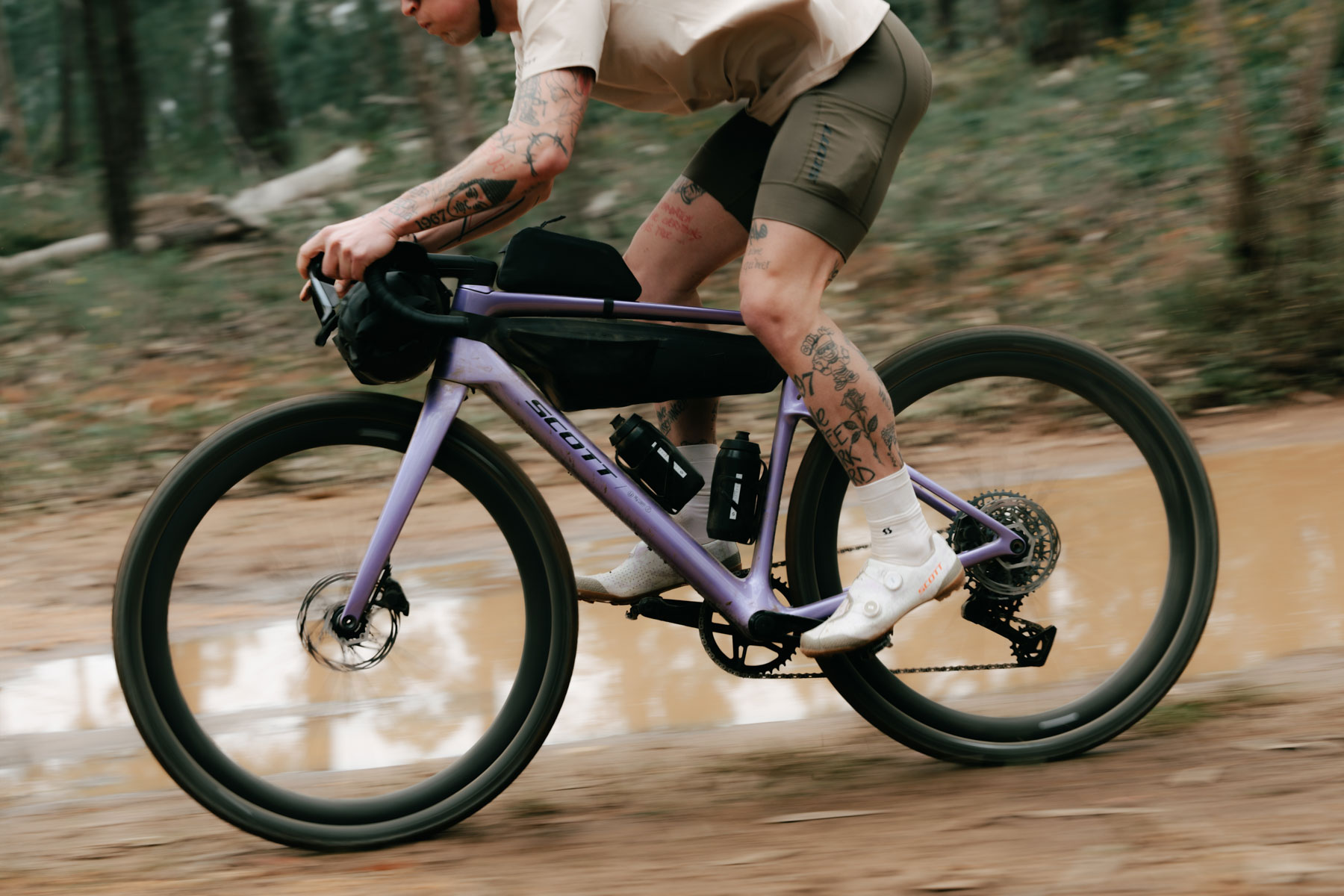
Scott’s new Addict Gravel is more capable and versatile than ever. Scott Bicycles

While many of its competitors have gone aero with their latest gravel bikes, Scott has focused on low weight, shaving 75g off its previous-generation Addict Gravel to reach a claimed 794g for the HMX frameset, with a 7.8kg claimed weight for the top spec in size M.

The frame is less stiff, too, which Scott says increases traction, and there’s a new cockpit with a forward sweep and drops shaped to fit your palms.

Tyre clearance has ballooned to 57mm, and both stack and reach have been increased, paired with shorter stems. There’s greater bottom bracket drop and increased fork rake, although the chainstays remain at a road-bike like 425mm despite the increased clearance.
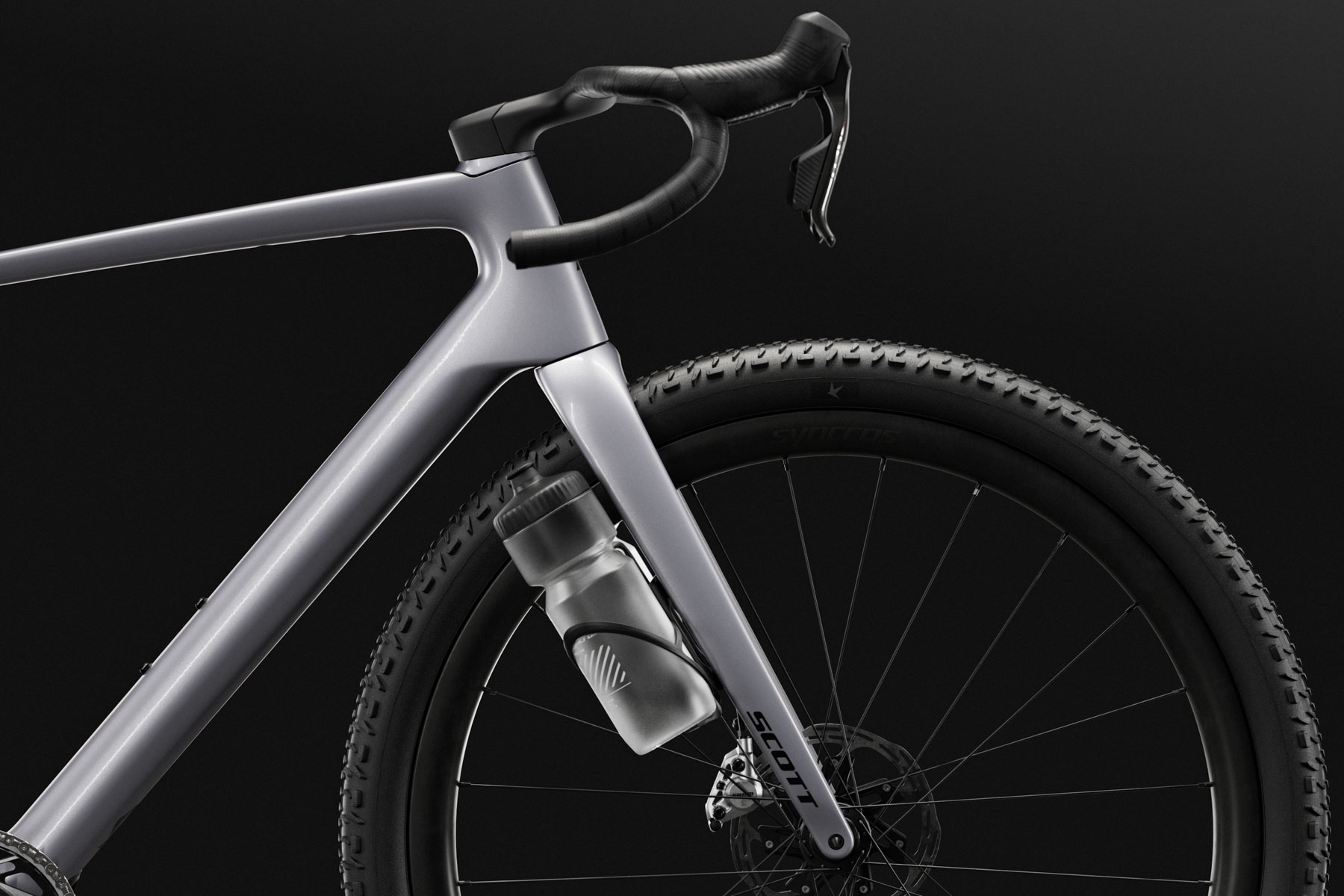
addict gravel bottle mounts
The bottle mounts are positioned on the inner edge of the fork to improve handling. Scott Bicycles

Scott has hidden a tool kit under the down tube and more tools in the bar ends, while there are bags to match and fork-leg mounts that don’t use the standard positioning and place the load further rearwards for better handling.

There’s no 32in wheel version of the Addict Gravel though, despite Robin Gemperle winning this year’s Unbound XL on a prototype. 

Factor Elara
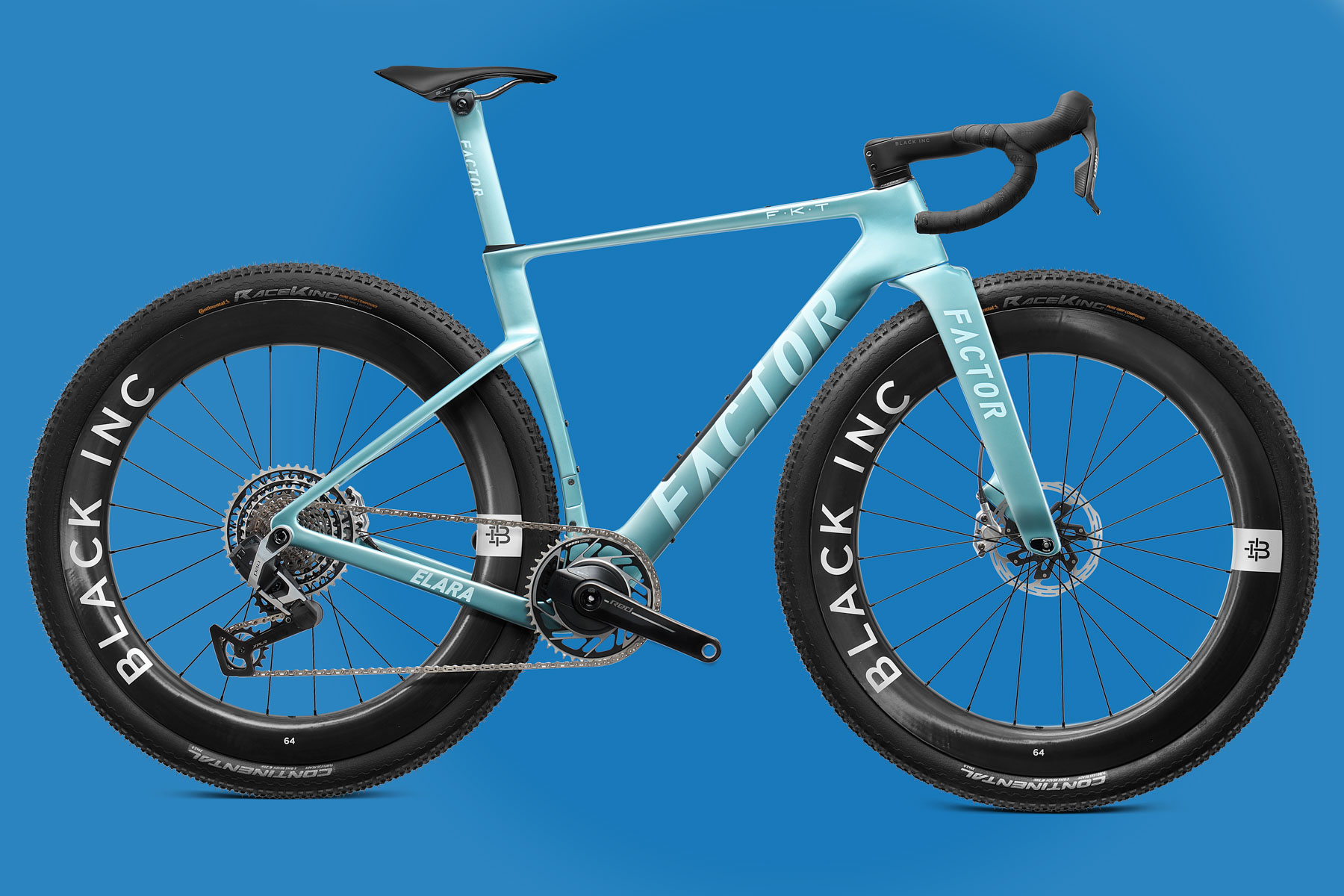
Factor Elara
The Factor Elara is claimed to handle like a road race bike, but on gravel. Factor

While Scott hasn’t gone aero with its new gravel bike, Factor has with the Elara, which replaces the Ostro Gravel and, Factor says, has aerodynamics on a par with road bikes.

It’s another gravel bike that can handle 57mm tyres, while keeping short chainstays – in this case 423mm. Reach has increased from the Ostro Gravel, but trail has decreased and there’s a wide-stance fork akin to that of the Factor One aero road bike.
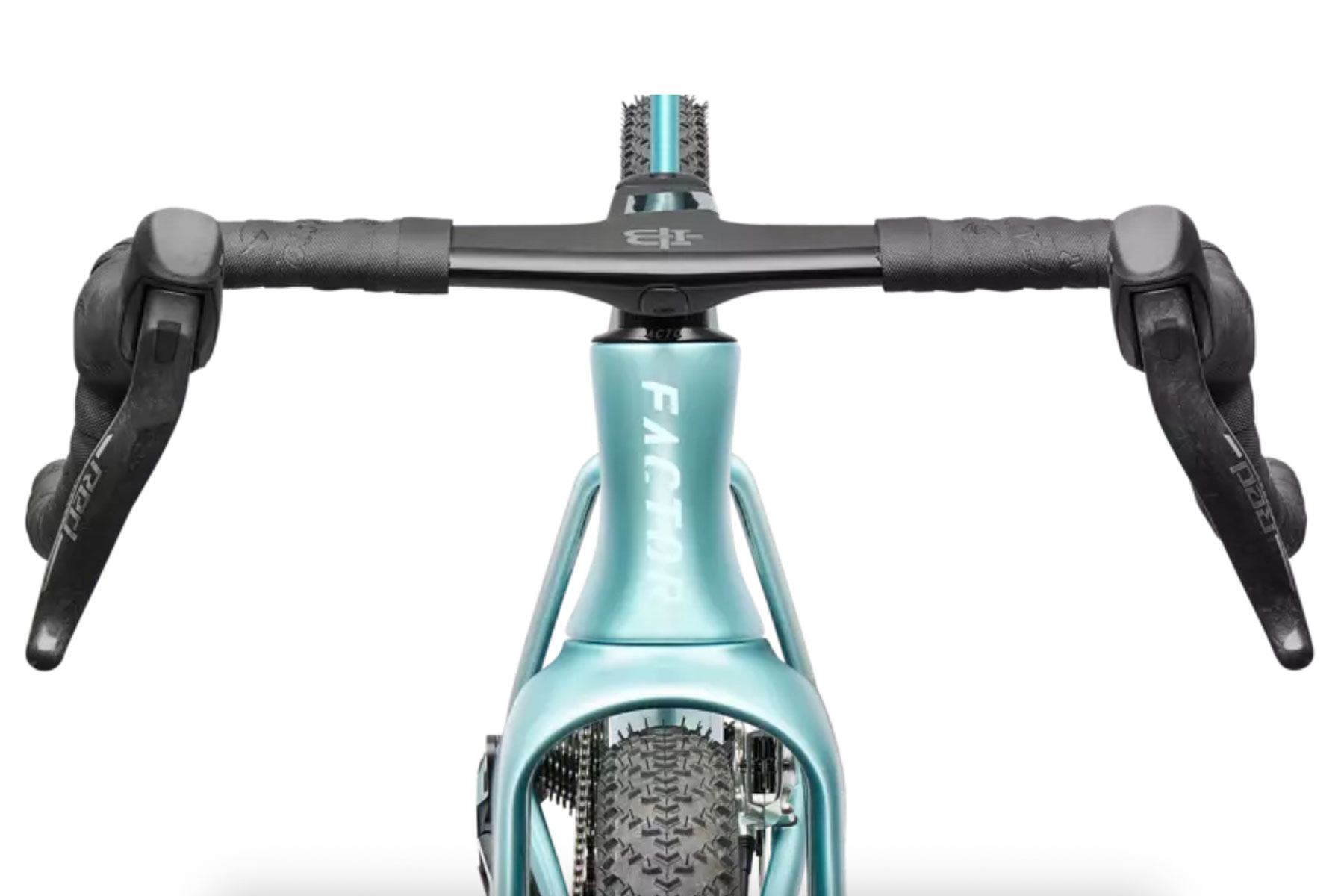
Factor Elara
The Elara’s fork design is based on that of the One aero road race bike. Factor

Despite the clearance, the Elara can still be set up 2x as well as 1x, while in-frame storage helps keep draggy spares out of the way. Black Inc, Factor’s component brand, has supplied a new cockpit and 64mm-section, 30mm-internal-width wheels to match the Elara.   

Winspace G5
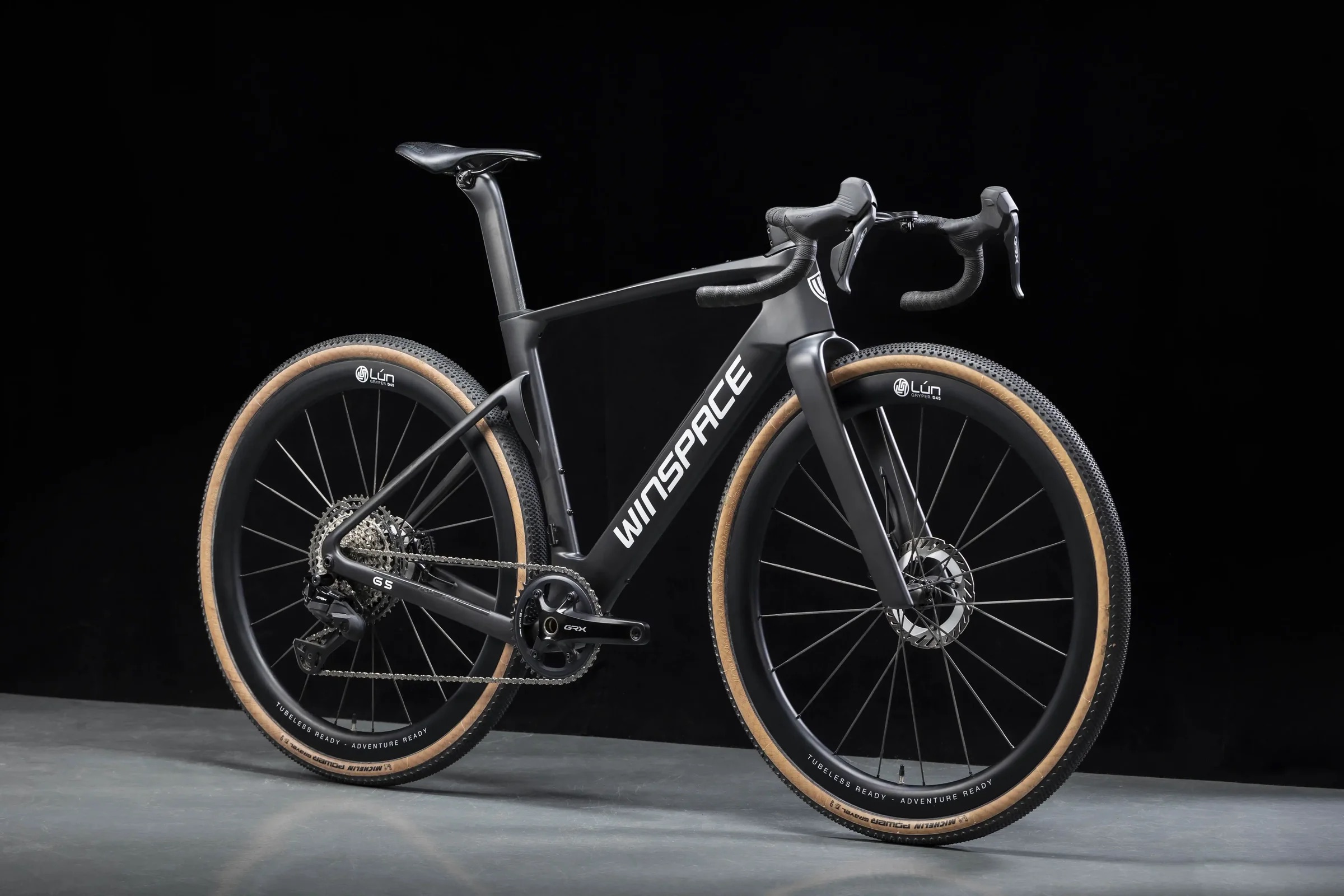
Winspace G5 in black
The Winspace G5 offers an impressive spec for its price. Winspace

Winspace is one of a growing number of Chinese bike brands making their presence felt for Western riders. Its G5 aero gravel race bike costs around half as much as established brands’ offerings. It, too, has in-frame storage and big clearance, bettering Scott and Factor by 1mm at 58mm at the front, although with 53mm at the rear.

Winspace says an unpainted size-M frame weighs 950g and a frameset costs only £1,650 / $2,200 / €1,933. You can buy a complete bike with carbon wheels and a Winspace Adventure one-piece carbon cockpit for between $4,799 with GRX RX825 Di2 and $5,999 with Force XPLR AXS. Pay an extra $500 and you can swap in a RockShox Rudy Ultimate XPLR 30mm-travel suspension fork.

Mosaic GT i55 32
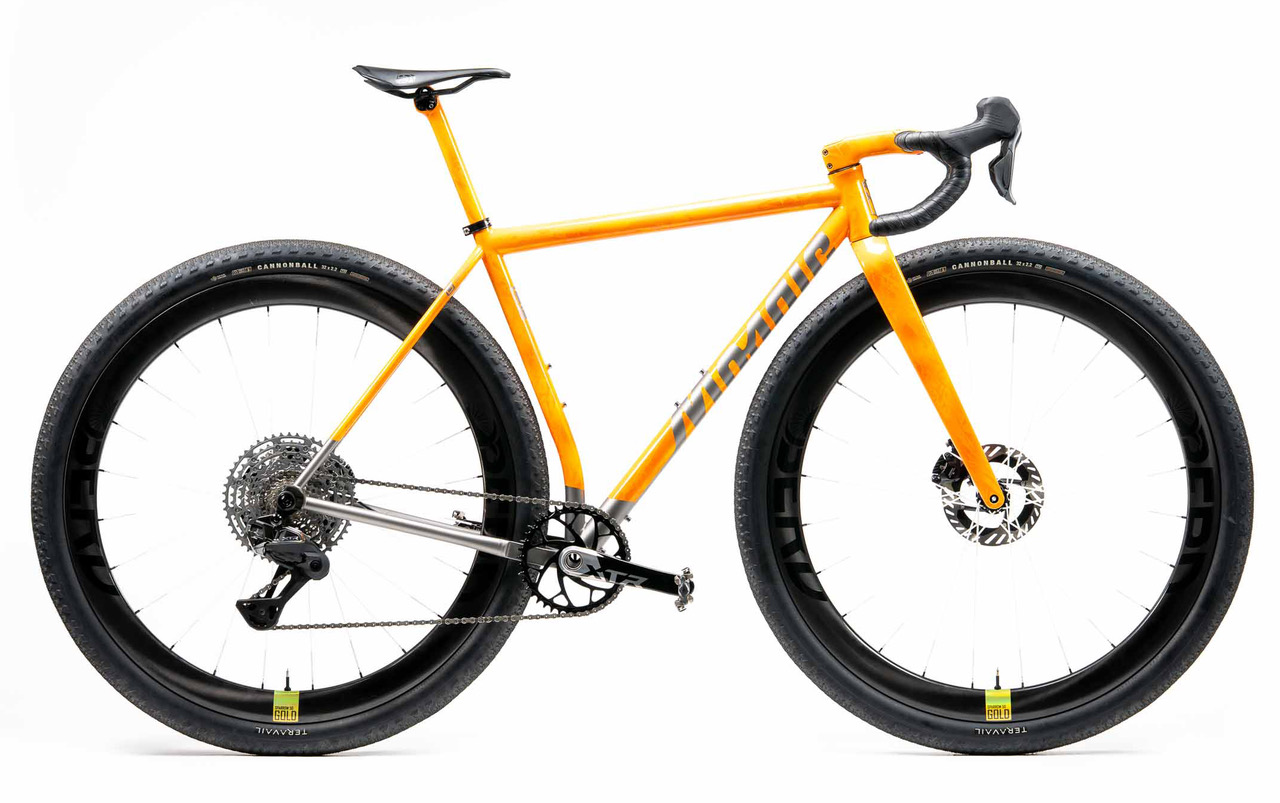
Mosaic GT-1 i55 32 gravel bike.
Mosaic has designed its titanium frame around the 32in wheel size. Mosaic

While Scott has shied away from 32in wheels, they’ve been embraced by Mosaic Cycles for its titanium gravel bike. Mosaic claims the bike has been designed from the ground up for 32in wheels, whereas it suggests other brands adapt an existing 700c frameset for the larger wheel size.

It reckons it has overcome the disadvantages of the larger wheels: higher stack, longer wheelbase, increased toe overlap and longer chainstays. In return, 32in wheels offer potentially better roll-over of rougher trails, greater momentum and increased stability.

A new carbon fork helps reduce stack and offers 55mm tyre clearance. A curved seat tube and 3D-printed chainstay yoke help keep chainstay length down to 445mm or less and retain a standard gravel chainline despite using Boost axle spacing.

Quirk Kegety

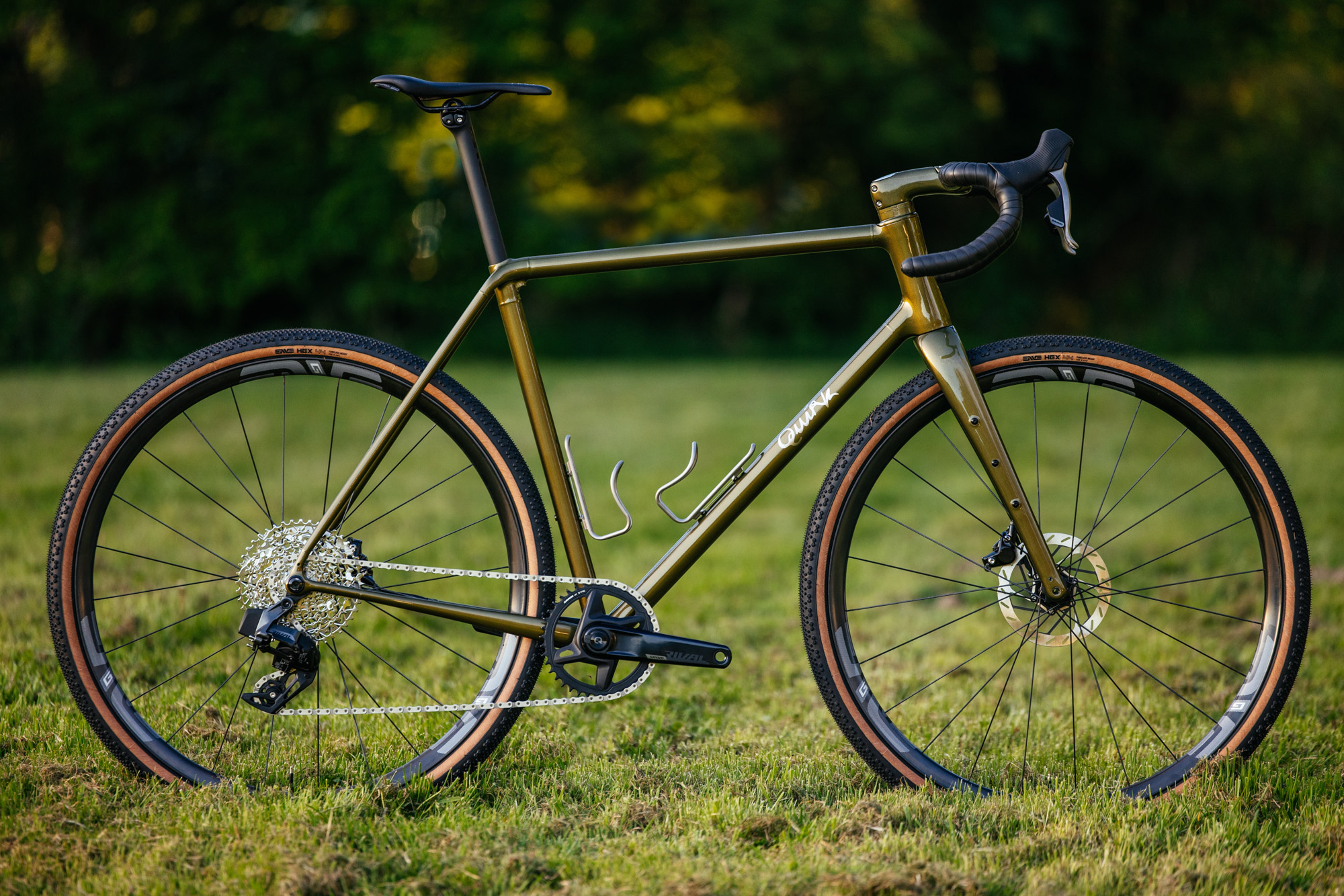
The Quirk Kegety includes 3D-printed parts and Columbus steel tubing. John Watson

Mosaic says its gravel bike will in future move from custom to small-batch builds, but London-based Quirk Cycles already uses small-batch production with stock geometry for its steel Kegety gravel bike.

Made of Columbus Life steel with a 3D-printed head tube, seat cluster and dropouts, it’s a bike focused squarely on gravel adventure riding and is based on owner Rob Quirk’s bike designed for the inaugural Silk Road Mountain Race. 

There’s 50mm tyre clearance, while Quirk fits an ENVE gravel cockpit and fork, with a Chris King headset. It prices the Kegety frameset at £4,999 with full builds from £10,550.
ENVE’s new race bike cuts tyre clearance and surface area in bid to go faster 

ENVE released the first Melee in 2022, and four years later the company that made its name through wheels and finishing kit has unveiled the second generation of its race bike. 

But while the original could fit large 35mm tyres – putting it at the forefront of the growing tyre width trend – the new Melee v2 sees clearance cut to 33mm. 

This is part of ENVE’s more focused objective for its latest bike. Instead of being a race bike for everyday riders, ENVE has pushed the new Melee to be “a lighter, faster and more complete modern race bike”. 

To this end, ENVE says the tyre clearance maintains the volume required for modern road racing, while reducing weight and drag. 

Reduced surface area and new parts

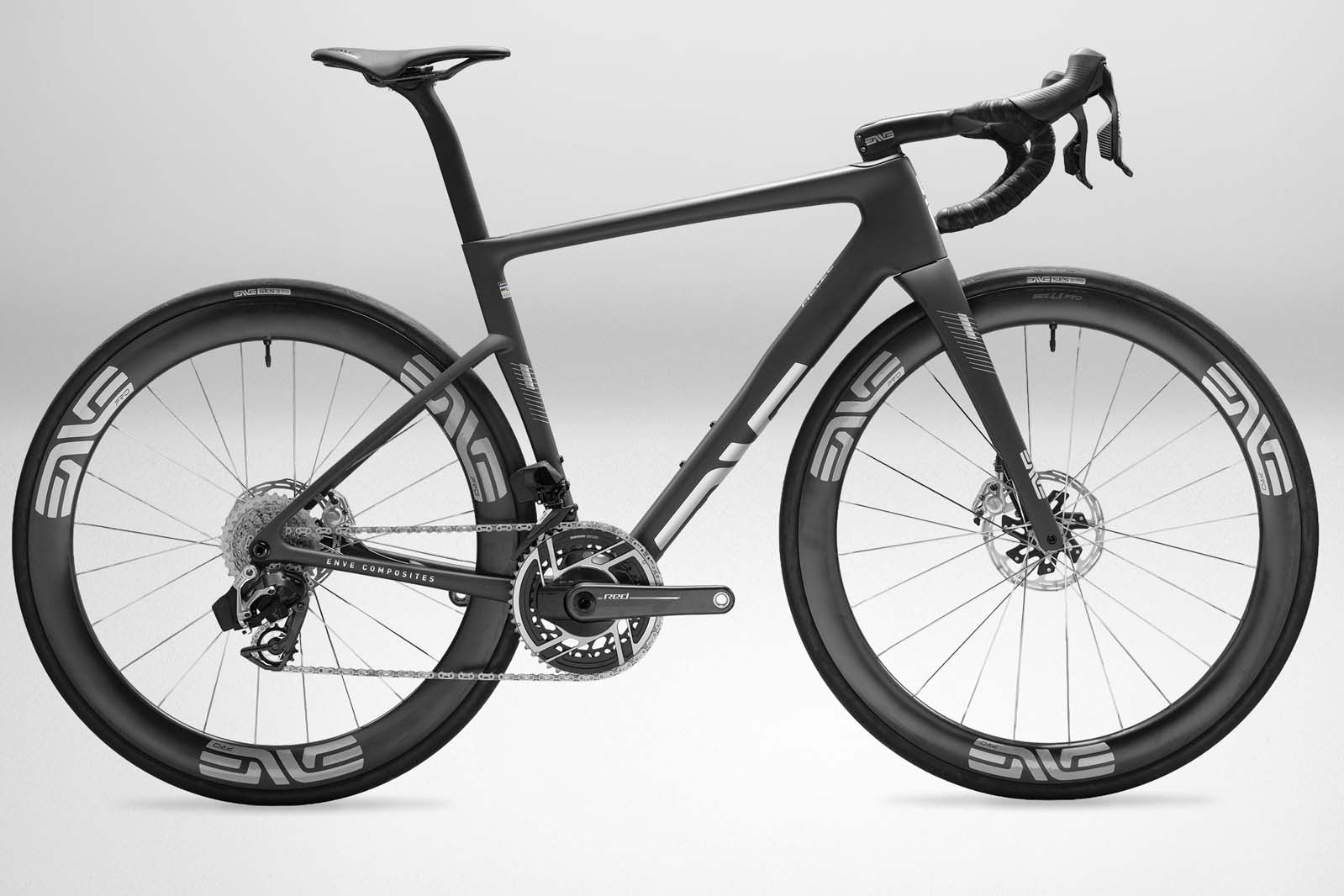
ENVE Melee v2 road race bike side view.
ENVE has reduced the surface area of the Melee by 7.5%. ENVE

ENVE hasn’t only reduced the Melee’s tyre clearance, it has also cut the road bike’s surface area by 7.5%. 

The Melee has a new smaller headset, which allows for a refined head tube shape that contributes to the bike’s lower surface area. ENVE says the new seatpost has a more efficient aero profile, while cutting weight.

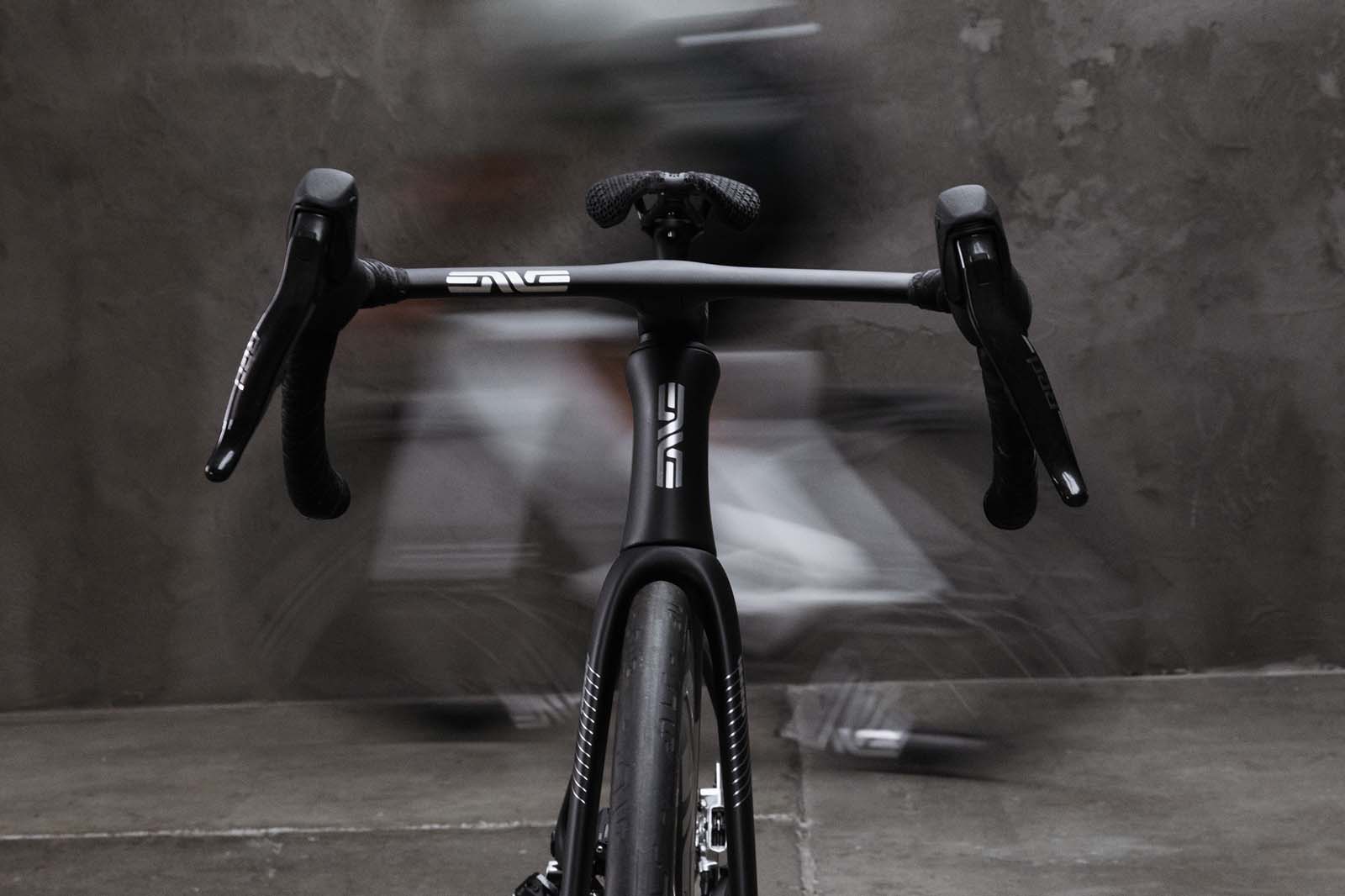
ENVE Melee v2 road race bike front view.
Smaller bearings have helped ENVE refine the bike’s head tube, while the SES Aero Bar is said to reduce drag. ENVE

The new ENVE SES Aero Bar is said to reduce drag, and you can add shaped pads for extra comfort. There is even new bar tape that is 1.2mm thick and minimises “the amount of material exposed to the wind”. 

Meanwhile, ENVE’s latest SES Aero Bottle Cages reduce “the aerodynamic losses that come from adding hydration to the bike”.

Faster and lighter 

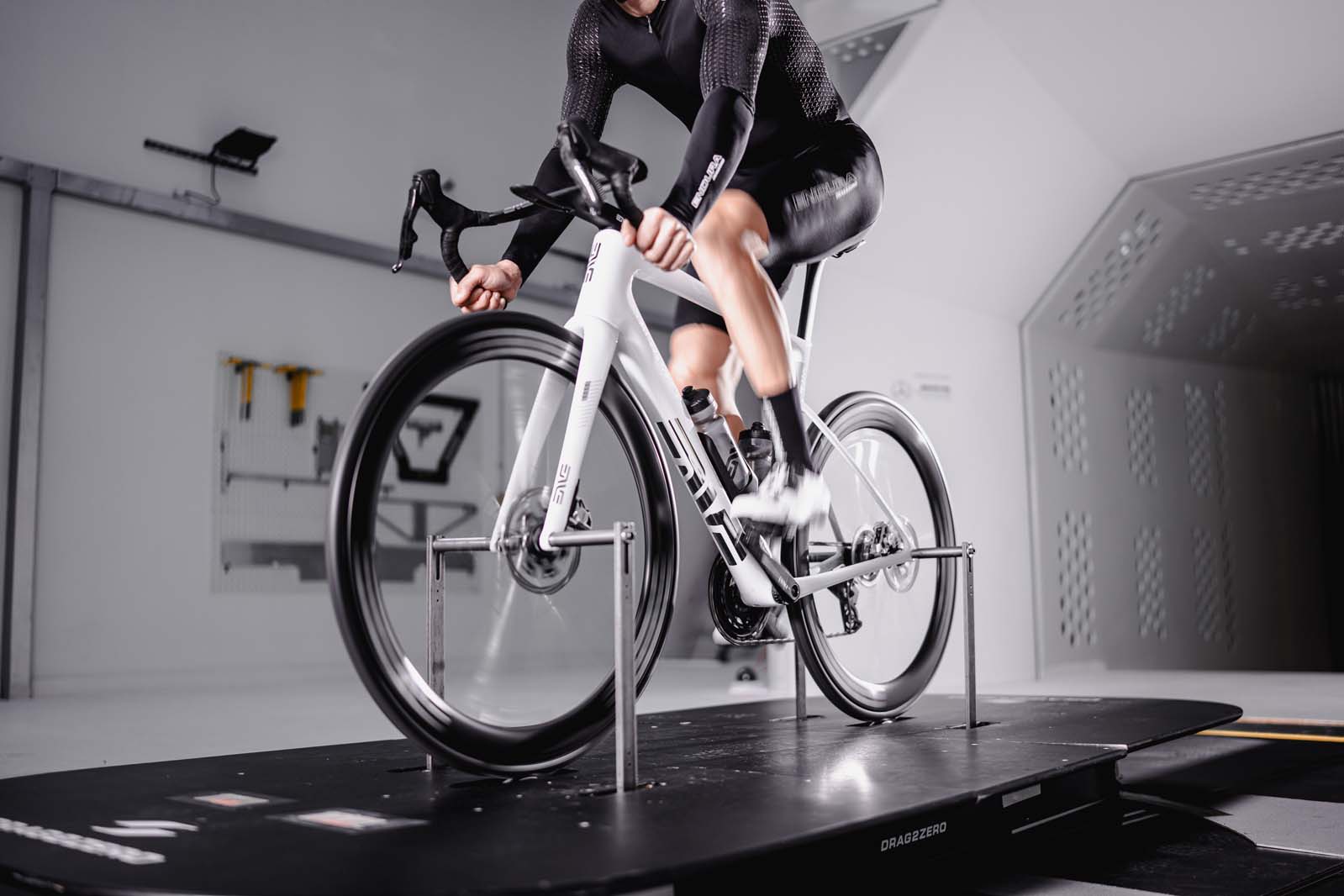
ENVE Melee v2 road race bike in wind tunnel.
The ENVE Melee saves a claimed 17 watts compared to the first-generation bike. ENVE

All these changes appear to have made a difference when it comes to wind-tunnel testing. 

ENVE measured a 17-watt aerodynamic improvement over the previous Melee at 50kph. This includes 11.4 watts from the frame, fork and seatpost; 3 watts from the new bar and bar tape; and 2.6 watts from the bottle cages with standard round bottles. 

ENVE’s test results suggest the new Melee is faster than the Specialized Tarmac SL8 and Trek Madone. With bottles, cages and a rider, ENVE says the Melee is 3-4 watts faster than the Madone (with Trek’s aero bottles) and the SL8. 

The changes have also lowered the bike’s weight. In the Ultralight Black finish, a size-56 Melee v2 weighs less than 800g. A complete bike can hit the UCI’s minimum weight of 6.8kg when fitted with a SRAM Red AXS groupset or equivalent build. 

Tweaked geometry

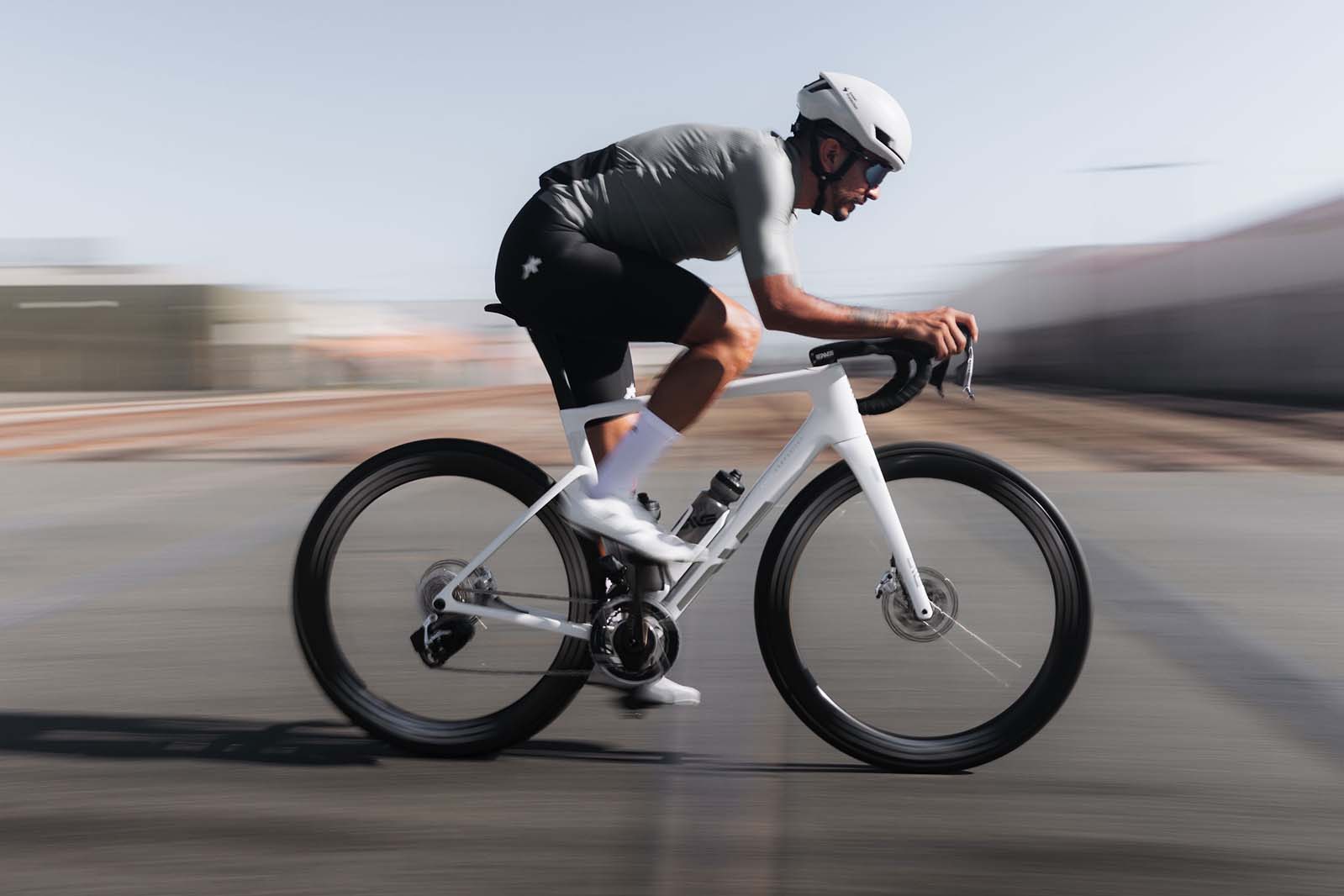
Man riding ENVE Melee v2 road race bike.
The stack height of the larger sizes has been lowered by 11mm. ENVE

ENVE has tweaked the Melee’s geometry to better suit racing.

The stack height on sizes 56 to 60 has been reduced by 11mm through changes to the frame and handlebar designs.

ENVE uses five fork rakes across its seven sizes “to maintain consistent handling throughout the range”. 

It has also increased the seat tube length of the larger sizes for more flexibility with saddle height. 

ENVE Melee v2 specs

The new Melee v2 is available through ENVE’s Spec’d for Speed programme. This enables you to configure complete bikes with SRAM Red or Force AXS groupsets, plus ENVE SES wheels and cockpits. 

An ENVE Melee v2 chassis (with a seatpost and cockpit) costs £5,299 / $5,800.

ENVE Melee v2 Pro Red

  • Frameset: ENVE Melee v2
  • Groupset: SRAM Red AXS
  • Wheels: ENVE SES Wheels
  • Cockpit: ENVE Aero Pro
  • Tyres: ENVE SES Road tyres
  • Price: £13,199 / $13,950 / €15,199

ENVE Melee v2 Premium Red

  • Frameset: ENVE Melee v2
  • Groupset: SRAM Red AXS
  • Wheels: ENVE SES 4.5 Pro or SES 6.7 Pro
  • Cockpit: ENVE SES AR 
  • Tyres: ENVE SES Road tyres 
  • Price: £12,399 / $12,250 / €14,199

ENVE Melee v2 Premium Force

  • Frameset: ENVE Melee v2
  • Groupset: SRAM Red AXS
  • Wheels: ENVE SES wheels 
  • Cockpit: ENVE SES AR
  • Tyres: ENVE SES Road tyres 
  • Price: £10,499 / €11,999

ENVE Melee v2 Foundation Force 

  • Frameset: ENVE Melee v2
  • Groupset: SRAM Force AXS
  • Wheels: ENVE SES Wheels
  • Cockpit: ENVE SES AR
  • Tyres: ENVE SES Road tyres 
  • Price: £8,899 / €10,149

ENVE’s new race bike cuts tyre clearance and surface area in bid to go faster 

ENVE released the first Melee in 2022, and four years later the company that made its name through wheels and finishing kit has unveiled the second generation of its race bike. 

But while the original could fit large 35mm tyres – putting it at the forefront of the growing tyre width trend – the new Melee v2 sees clearance cut to 33mm. 

This is part of ENVE’s more focused objective for its latest bike. Instead of being a race bike for everyday riders, ENVE has pushed the new Melee to be “a lighter, faster and more complete modern race bike”. 

To this end, ENVE says the tyre clearance maintains the volume required for modern road racing, while reducing weight and drag. 

Reduced surface area and new parts

ENVE Melee v2 road race bike side view.
ENVE has reduced the surface area of the Melee by 7.5%. ENVE

ENVE hasn’t only reduced the Melee’s tyre clearance, it has also cut the road bike’s surface area by 7.5%. 

The Melee has a new smaller headset, which allows for a refined head tube shape that contributes to the bike’s lower surface area. ENVE says the new seatpost has a more efficient aero profile, while cutting weight.

ENVE Melee v2 road race bike front view.
Smaller bearings have helped ENVE refine the bike’s head tube, while the SES Aero Bar is said to reduce drag. ENVE

The new ENVE SES Aero Bar is said to reduce drag, and you can add shaped pads for extra comfort. There is even new bar tape that is 1.2mm thick and minimises “the amount of material exposed to the wind”. 

Meanwhile, ENVE’s latest SES Aero Bottle Cages reduce “the aerodynamic losses that come from adding hydration to the bike”.

Faster and lighter 

ENVE Melee v2 road race bike in wind tunnel.
The ENVE Melee saves a claimed 17 watts compared to the first-generation bike. ENVE

All these changes appear to have made a difference when it comes to wind-tunnel testing. 

ENVE measured a 17-watt aerodynamic improvement over the previous Melee at 50kph. This includes 11.4 watts from the frame, fork and seatpost; 3 watts from the new bar and bar tape; and 2.6 watts from the bottle cages with standard round bottles. 

ENVE’s test results suggest the new Melee is faster than the Specialized Tarmac SL8 and Trek Madone. With bottles, cages and a rider, ENVE says the Melee is 3-4 watts faster than the Madone (with Trek’s aero bottles) and the SL8. 

The changes have also lowered the bike’s weight. In the Ultralight Black finish, a size-56 Melee v2 weighs less than 800g. A complete bike can hit the UCI’s minimum weight of 6.8kg when fitted with a SRAM Red AXS groupset or equivalent build. 

Tweaked geometry

Man riding ENVE Melee v2 road race bike.
The stack height of the larger sizes has been lowered by 11mm. ENVE

ENVE has tweaked the Melee’s geometry to better suit racing.

The stack height on sizes 56 to 60 has been reduced by 11mm through changes to the frame and handlebar designs.

ENVE uses five fork rakes across its seven sizes “to maintain consistent handling throughout the range”. 

It has also increased the seat tube length of the larger sizes for more flexibility with saddle height. 

ENVE Melee v2 specs

The new Melee v2 is available through ENVE’s Spec’d for Speed programme. This enables you to configure complete bikes with SRAM Red or Force AXS groupsets, plus ENVE SES wheels and cockpits. 

An ENVE Melee v2 chassis (with a seatpost and cockpit) costs £5,299 / $5,800.

ENVE Melee v2 Pro Red

  • Frameset: ENVE Melee v2
  • Groupset: SRAM Red AXS
  • Wheels: ENVE SES Wheels
  • Cockpit: ENVE Aero Pro
  • Tyres: ENVE SES Road tyres
  • Price: £13,199 / $13,950 / €15,199

ENVE Melee v2 Premium Red

  • Frameset: ENVE Melee v2
  • Groupset: SRAM Red AXS
  • Wheels: ENVE SES 4.5 Pro or SES 6.7 Pro
  • Cockpit: ENVE SES AR 
  • Tyres: ENVE SES Road tyres 
  • Price: £12,399 / $12,250 / €14,199

ENVE Melee v2 Premium Force

  • Frameset: ENVE Melee v2
  • Groupset: SRAM Red AXS
  • Wheels: ENVE SES wheels 
  • Cockpit: ENVE SES AR
  • Tyres: ENVE SES Road tyres 
  • Price: £10,499 / €11,999

ENVE Melee v2 Foundation Force 

  • Frameset: ENVE Melee v2
  • Groupset: SRAM Force AXS
  • Wheels: ENVE SES Wheels
  • Cockpit: ENVE SES AR
  • Tyres: ENVE SES Road tyres 
  • Price: £8,899 / €10,149

ENVE’s new race bike cuts tyre clearance and surface area in bid to go faster 

ENVE released the first Melee in 2022, and four years later the company that made its name through wheels and finishing kit has unveiled the second generation of its race bike. 

But while the original could fit large 35mm tyres – putting it at the forefront of the growing tyre width trend – the new Melee v2 sees clearance cut to 33mm. 

This is part of ENVE’s more focused objective for its latest bike. Instead of being a race bike for everyday riders, ENVE has pushed the new Melee to be “a lighter, faster and more complete modern race bike”. 

To this end, ENVE says the tyre clearance maintains the volume required for modern road racing, while reducing weight and drag. 

Reduced surface area and new parts

ENVE Melee v2 road race bike side view.
ENVE has reduced the surface area of the Melee by 7.5%. ENVE

ENVE hasn’t only reduced the Melee’s tyre clearance, it has also cut the road bike’s surface area by 7.5%. 

The Melee has a new smaller headset, which allows for a refined head tube shape that contributes to the bike’s lower surface area. ENVE says the new seatpost has a more efficient aero profile, while cutting weight.

ENVE Melee v2 road race bike front view.
Smaller bearings have helped ENVE refine the bike’s head tube, while the SES Aero Bar is said to reduce drag. ENVE

The new ENVE SES Aero Bar is said to reduce drag, and you can add shaped pads for extra comfort. There is even new bar tape that is 1.2mm thick and minimises “the amount of material exposed to the wind”. 

Meanwhile, ENVE’s latest SES Aero Bottle Cages reduce “the aerodynamic losses that come from adding hydration to the bike”.

Faster and lighter 

ENVE Melee v2 road race bike in wind tunnel.
The ENVE Melee saves a claimed 17 watts compared to the first-generation bike. ENVE

All these changes appear to have made a difference when it comes to wind-tunnel testing. 

ENVE measured a 17-watt aerodynamic improvement over the previous Melee at 50kph. This includes 11.4 watts from the frame, fork and seatpost; 3 watts from the new bar and bar tape; and 2.6 watts from the bottle cages with standard round bottles. 

ENVE’s test results suggest the new Melee is faster than the Specialized Tarmac SL8 and Trek Madone. With bottles, cages and a rider, ENVE says the Melee is 3-4 watts faster than the Madone (with Trek’s aero bottles) and the SL8. 

The changes have also lowered the bike’s weight. In the Ultralight Black finish, a size-56 Melee v2 weighs less than 800g. A complete bike can hit the UCI’s minimum weight of 6.8kg when fitted with a SRAM Red AXS groupset or equivalent build. 

Tweaked geometry

Man riding ENVE Melee v2 road race bike.
The stack height of the larger sizes has been lowered by 11mm. ENVE

ENVE has tweaked the Melee’s geometry to better suit racing.

The stack height on sizes 56 to 60 has been reduced by 11mm through changes to the frame and handlebar designs.

ENVE uses five fork rakes across its seven sizes “to maintain consistent handling throughout the range”. 

It has also increased the seat tube length of the larger sizes for more flexibility with saddle height. 

ENVE Melee v2 specs

The new Melee v2 is available through ENVE’s Spec’d for Speed programme. This enables you to configure complete bikes with SRAM Red or Force AXS groupsets, plus ENVE SES wheels and cockpits. 

An ENVE Melee v2 chassis (with a seatpost and cockpit) costs £5,299 / $5,800.

ENVE Melee v2 Pro Red

  • Frameset: ENVE Melee v2
  • Groupset: SRAM Red AXS
  • Wheels: ENVE SES Wheels
  • Cockpit: ENVE Aero Pro
  • Tyres: ENVE SES Road tyres
  • Price: £13,199 / $13,950 / €15,199

ENVE Melee v2 Premium Red

  • Frameset: ENVE Melee v2
  • Groupset: SRAM Red AXS
  • Wheels: ENVE SES 4.5 Pro or SES 6.7 Pro
  • Cockpit: ENVE SES AR 
  • Tyres: ENVE SES Road tyres 
  • Price: £12,399 / $12,250 / €14,199

ENVE Melee v2 Premium Force

  • Frameset: ENVE Melee v2
  • Groupset: SRAM Red AXS
  • Wheels: ENVE SES wheels 
  • Cockpit: ENVE SES AR
  • Tyres: ENVE SES Road tyres 
  • Price: £10,499 / €11,999

ENVE Melee v2 Foundation Force 

  • Frameset: ENVE Melee v2
  • Groupset: SRAM Force AXS
  • Wheels: ENVE SES Wheels
  • Cockpit: ENVE SES AR
  • Tyres: ENVE SES Road tyres 
  • Price: £8,899 / €10,149

“A major leap forward in gravel tyre performance”: WTB’s new high-volume aero gravel tyres include features to lower drag

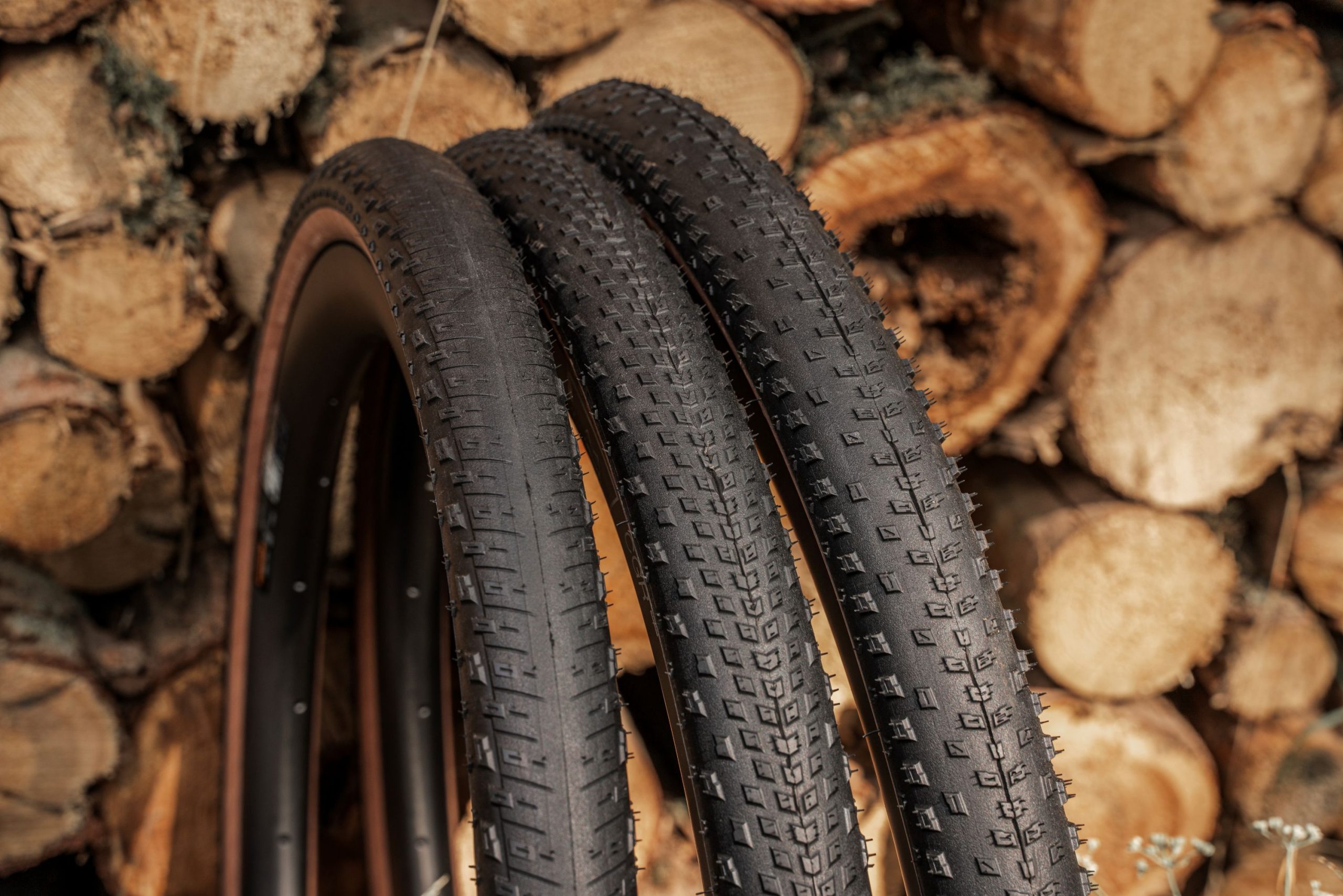
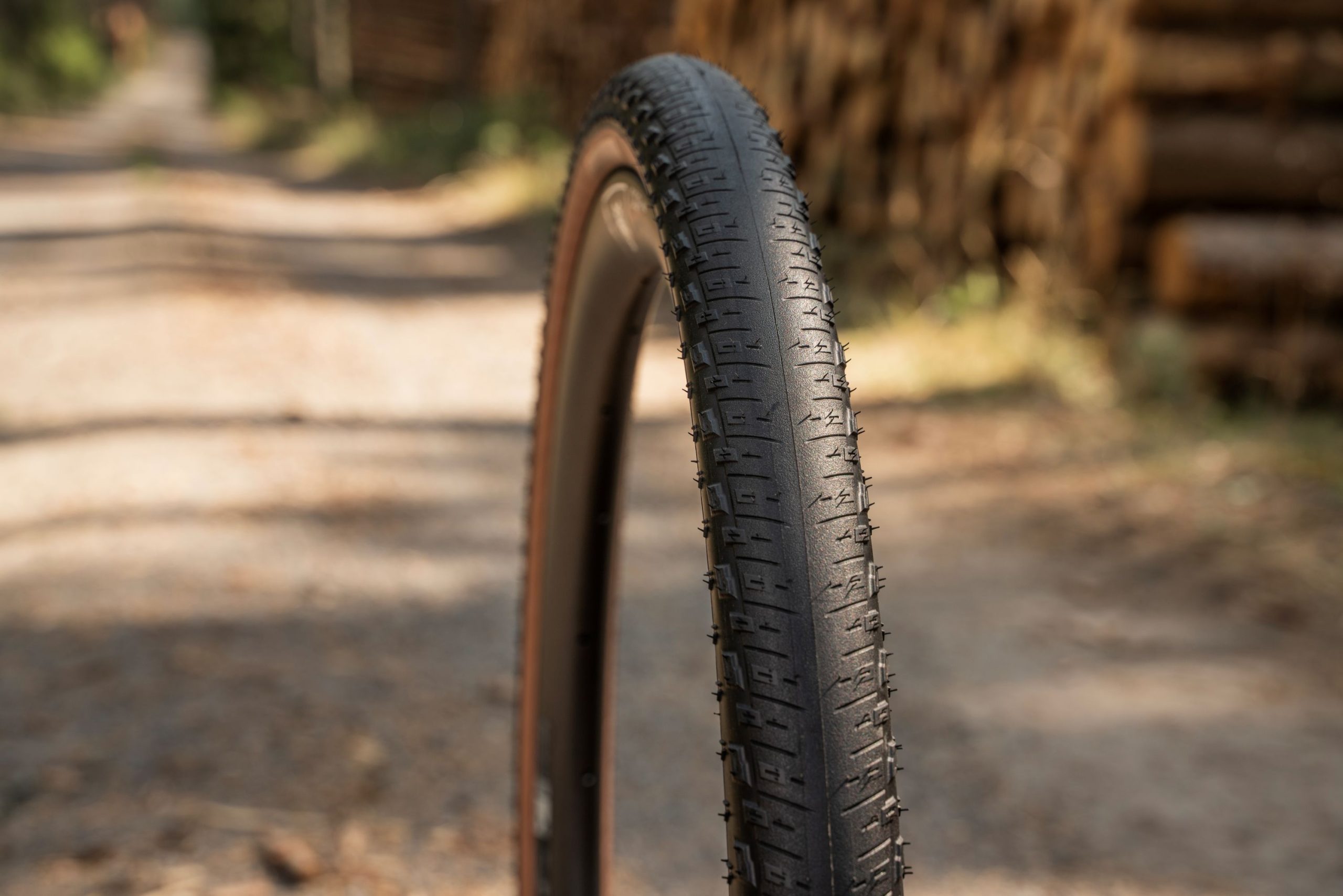
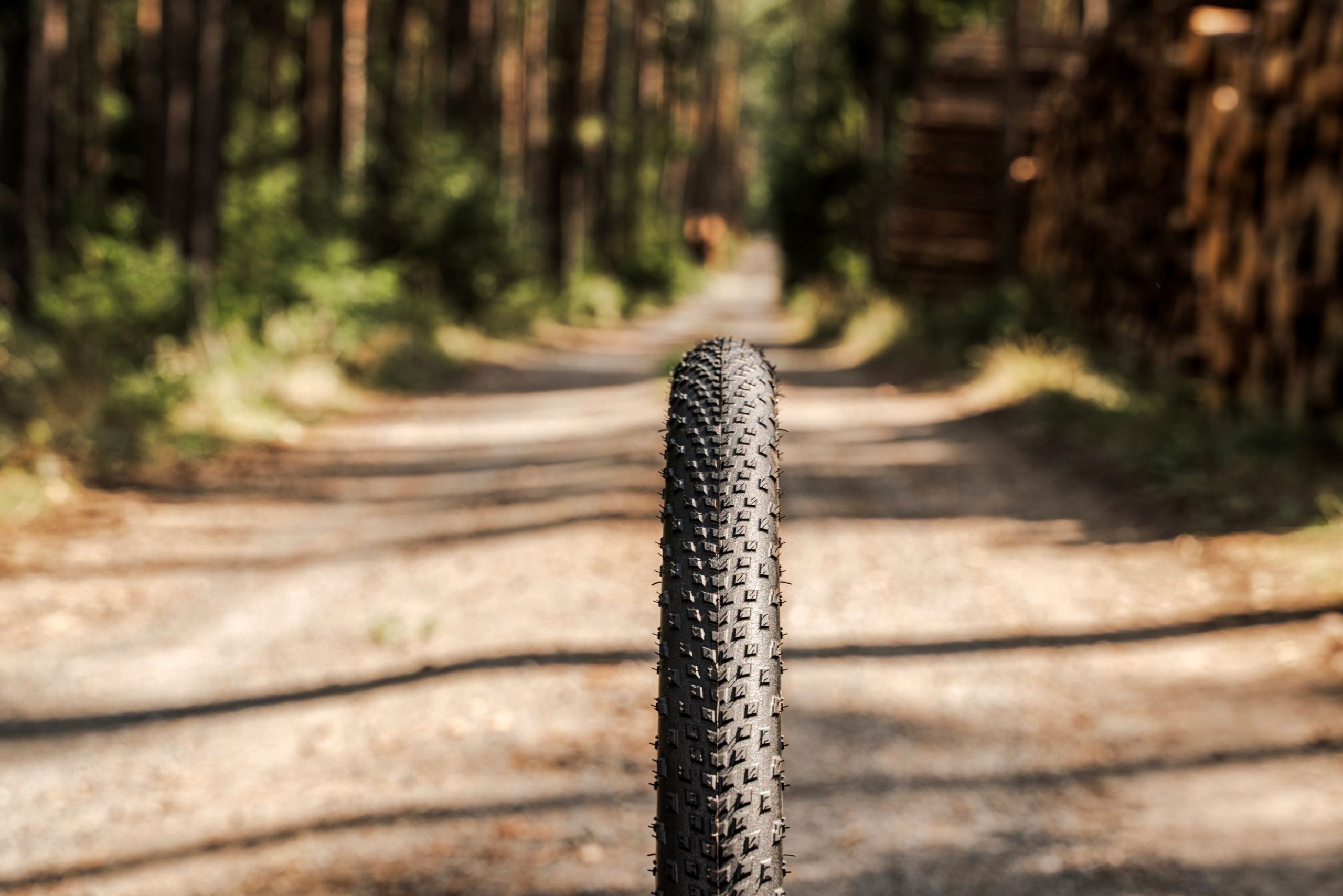
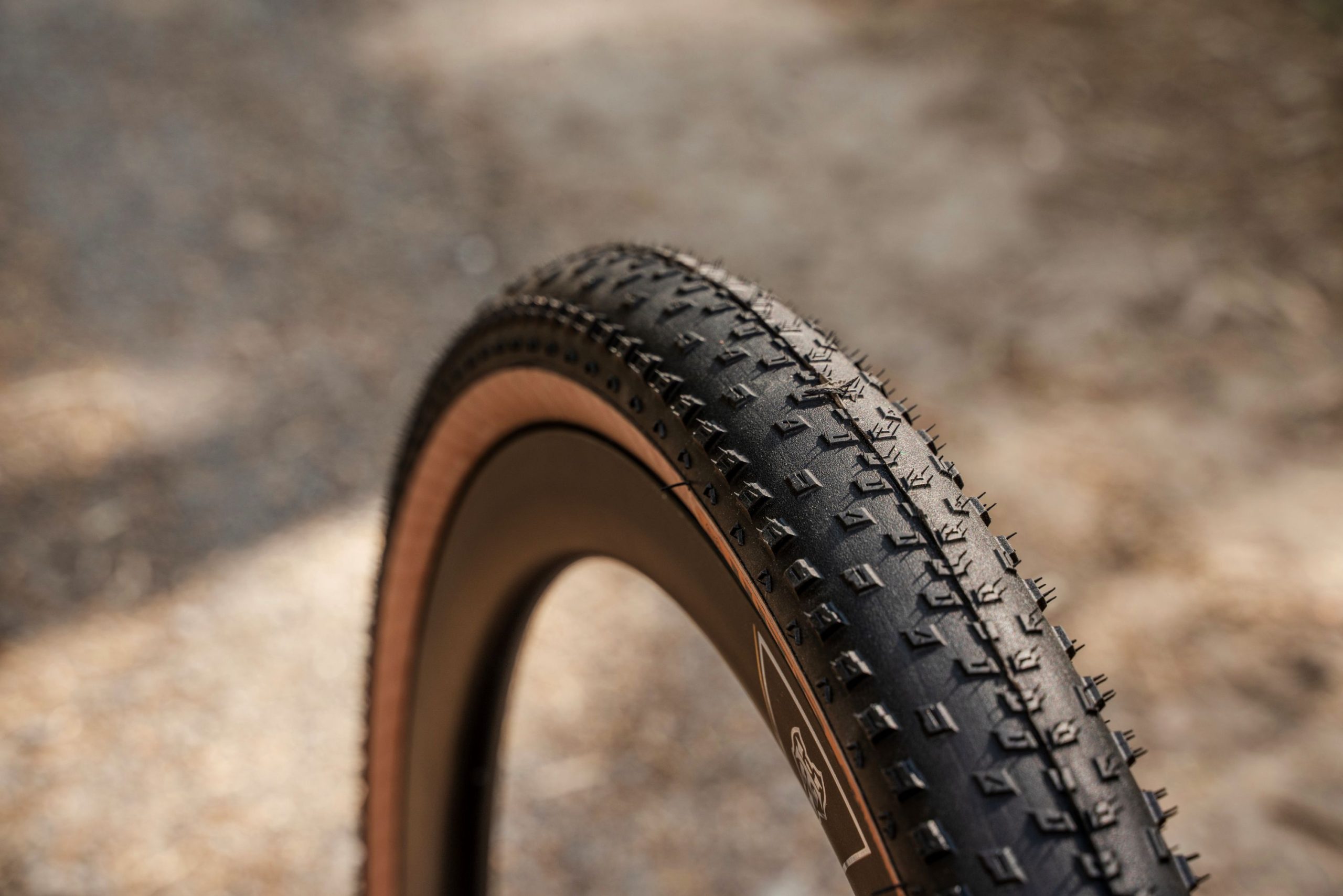
WTB has launched a range of three wide, high-volume gravel tyres, which feature patent-pending technology that is said to improve their aerodynamics and represent “a major leap forward in gravel tyre performance”.

The three new tyres are the 50mm-wide Byway RS, 52mm Course and 54mm Macro.

WTB says it has balanced traction, rolling resistance and flat protection to optimise ride quality and produce what it claims are the fastest gravel tyres possible.

WTB’s new tyres span widths of 50mm, 52mm and 54mm, with increasingly aggressive tread patterns.

WTB has worked on the development of its new gravel tyres with aero road bike brand Stromm, which claims to make the fastest UCI-legal road bike. They’re designed to pair with the now-typical wide gravel wheel rims and optimised for a 28mm internal rim width, although WTB says they will deliver benefits on rims from 25mm to 32mm.

The new tyres have sidewalls that include vortex generators and trip strips, which WTB claims help control boundary layer separation and reduce the drag-inducing low-pressure wake around the wheel and tyre. 

WTB says it has used field testing at a velodrome against a control tyre with the same profile, but without aero features to validate the aero benefits at typical gravel speeds. It says its testing shows a 5.8-watt saving at 30km/h, rising to 9.3 watts at 35km/h and 13.8 watts at 40km/h.

To achieve its aero aims, WTB says it has completely redesigned its tyre-production methods, with closer production tolerances and new materials. There’s a new 120 TPI casing that WTB claims is more supple and offers bead-to-bead puncture protection, which it calls SG2. 

The rubber used has also had an upgrade, with a low-drag compound used at the centre and high-friction shoulder lugs. 

WTB aero gravel tyre range

Byway RS 50

The Byway RS 50 is designed for speed on hardpack gravel and the road.

As with the original Byway, the Byway RS has a slick central section with low-profile side knobs and is designed for speed on hardpacked gravel and tarmac. WTB claims a 620g tyre weight.

Course 52

The Course 52 is designed as a gravel all-rounder.

The Course 52 increases all-terrain capability, with a shallow central tread for rolling efficiency, and is geared to more varied off-road conditions. The claimed weight is 635g per tyre.

Macro 54

The Macro 54 is WTB’s widest offering and designed for the most demanding gravel conditions.

Finally, the Macro 54 has the highest volume of the three tyres and is designed for rougher surfaces, with a more aggressive, more widely spaced tread pattern. Claimed weight is 640g per tyre.

All three WTB aero gravel tyres are available with either black or tan sidewalls and are priced at £69.50 / $89.95 / €79.95. You may also have spotted the WTB carbon gravel wheel rims in the images of the tyres. WTB says they’ll be arriving soon to complement the new aero tyres.

“A major leap forward in gravel tyre performance”: WTB’s new high-volume aero gravel tyres include features to lower drag

WTB has launched a range of three wide, high-volume gravel tyres, which feature patent-pending technology that is said to improve their aerodynamics and represent “a major leap forward in gravel tyre performance”.

The three new tyres are the 50mm-wide Byway RS, 52mm Course and 54mm Macro.

WTB says it has balanced traction, rolling resistance and flat protection to optimise ride quality and produce what it claims are the fastest gravel tyres possible.

WTB’s new tyres span widths of 50mm, 52mm and 54mm, with increasingly aggressive tread patterns.

WTB has worked on the development of its new gravel tyres with aero road bike brand Stromm, which claims to make the fastest UCI-legal road bike. They’re designed to pair with the now-typical wide gravel wheel rims and optimised for a 28mm internal rim width, although WTB says they will deliver benefits on rims from 25mm to 32mm.

The new tyres have sidewalls that include vortex generators and trip strips, which WTB claims help control boundary layer separation and reduce the drag-inducing low-pressure wake around the wheel and tyre. 

WTB says it has used field testing at a velodrome against a control tyre with the same profile, but without aero features to validate the aero benefits at typical gravel speeds. It says its testing shows a 5.8-watt saving at 30km/h, rising to 9.3 watts at 35km/h and 13.8 watts at 40km/h.

To achieve its aero aims, WTB says it has completely redesigned its tyre-production methods, with closer production tolerances and new materials. There’s a new 120 TPI casing that WTB claims is more supple and offers bead-to-bead puncture protection, which it calls SG2. 

The rubber used has also had an upgrade, with a low-drag compound used at the centre and high-friction shoulder lugs. 

WTB aero gravel tyre range

Byway RS 50

The Byway RS 50 is designed for speed on hardpack gravel and the road.

As with the original Byway, the Byway RS has a slick central section with low-profile side knobs and is designed for speed on hardpacked gravel and tarmac. WTB claims a 620g tyre weight.

Course 52

The Course 52 is designed as a gravel all-rounder.

The Course 52 increases all-terrain capability, with a shallow central tread for rolling efficiency, and is geared to more varied off-road conditions. The claimed weight is 635g per tyre.

Macro 54

The Macro 54 is WTB’s widest offering and designed for the most demanding gravel conditions.

Finally, the Macro 54 has the highest volume of the three tyres and is designed for rougher surfaces, with a more aggressive, more widely spaced tread pattern. Claimed weight is 640g per tyre.

All three WTB aero gravel tyres are available with either black or tan sidewalls and are priced at £69.50 / $89.95 / €79.95. You may also have spotted the WTB carbon gravel wheel rims in the images of the tyres. WTB says they’ll be arriving soon to complement the new aero tyres.

“A major leap forward in gravel tyre performance”: WTB’s new high-volume aero gravel tyres include features to lower drag

WTB has launched a range of three wide, high-volume gravel tyres, which feature patent-pending technology that is said to improve their aerodynamics and represent “a major leap forward in gravel tyre performance”.

The three new tyres are the 50mm-wide Byway RS, 52mm Course and 54mm Macro.

WTB says it has balanced traction, rolling resistance and flat protection to optimise ride quality and produce what it claims are the fastest gravel tyres possible.

WTB’s new tyres span widths of 50mm, 52mm and 54mm, with increasingly aggressive tread patterns.

WTB has worked on the development of its new gravel tyres with aero road bike brand Stromm, which claims to make the fastest UCI-legal road bike. They’re designed to pair with the now-typical wide gravel wheel rims and optimised for a 28mm internal rim width, although WTB says they will deliver benefits on rims from 25mm to 32mm.

The new tyres have sidewalls that include vortex generators and trip strips, which WTB claims help control boundary layer separation and reduce the drag-inducing low-pressure wake around the wheel and tyre. 

WTB says it has used field testing at a velodrome against a control tyre with the same profile, but without aero features to validate the aero benefits at typical gravel speeds. It says its testing shows a 5.8-watt saving at 30km/h, rising to 9.3 watts at 35km/h and 13.8 watts at 40km/h.

To achieve its aero aims, WTB says it has completely redesigned its tyre-production methods, with closer production tolerances and new materials. There’s a new 120 TPI casing that WTB claims is more supple and offers bead-to-bead puncture protection, which it calls SG2. 

The rubber used has also had an upgrade, with a low-drag compound used at the centre and high-friction shoulder lugs. 

WTB aero gravel tyre range

Byway RS 50

The Byway RS 50 is designed for speed on hardpack gravel and the road.

As with the original Byway, the Byway RS has a slick central section with low-profile side knobs and is designed for speed on hardpacked gravel and tarmac. WTB claims a 620g tyre weight.

Course 52

The Course 52 is designed as a gravel all-rounder.

The Course 52 increases all-terrain capability, with a shallow central tread for rolling efficiency, and is geared to more varied off-road conditions. The claimed weight is 635g per tyre.

Macro 54

The Macro 54 is WTB’s widest offering and designed for the most demanding gravel conditions.

Finally, the Macro 54 has the highest volume of the three tyres and is designed for rougher surfaces, with a more aggressive, more widely spaced tread pattern. Claimed weight is 640g per tyre.

All three WTB aero gravel tyres are available with either black or tan sidewalls and are priced at £69.50 / $89.95 / €79.95. You may also have spotted the WTB carbon gravel wheel rims in the images of the tyres. WTB says they’ll be arriving soon to complement the new aero tyres.

The Zwift Ride V2 Is Here: Learn What’s New

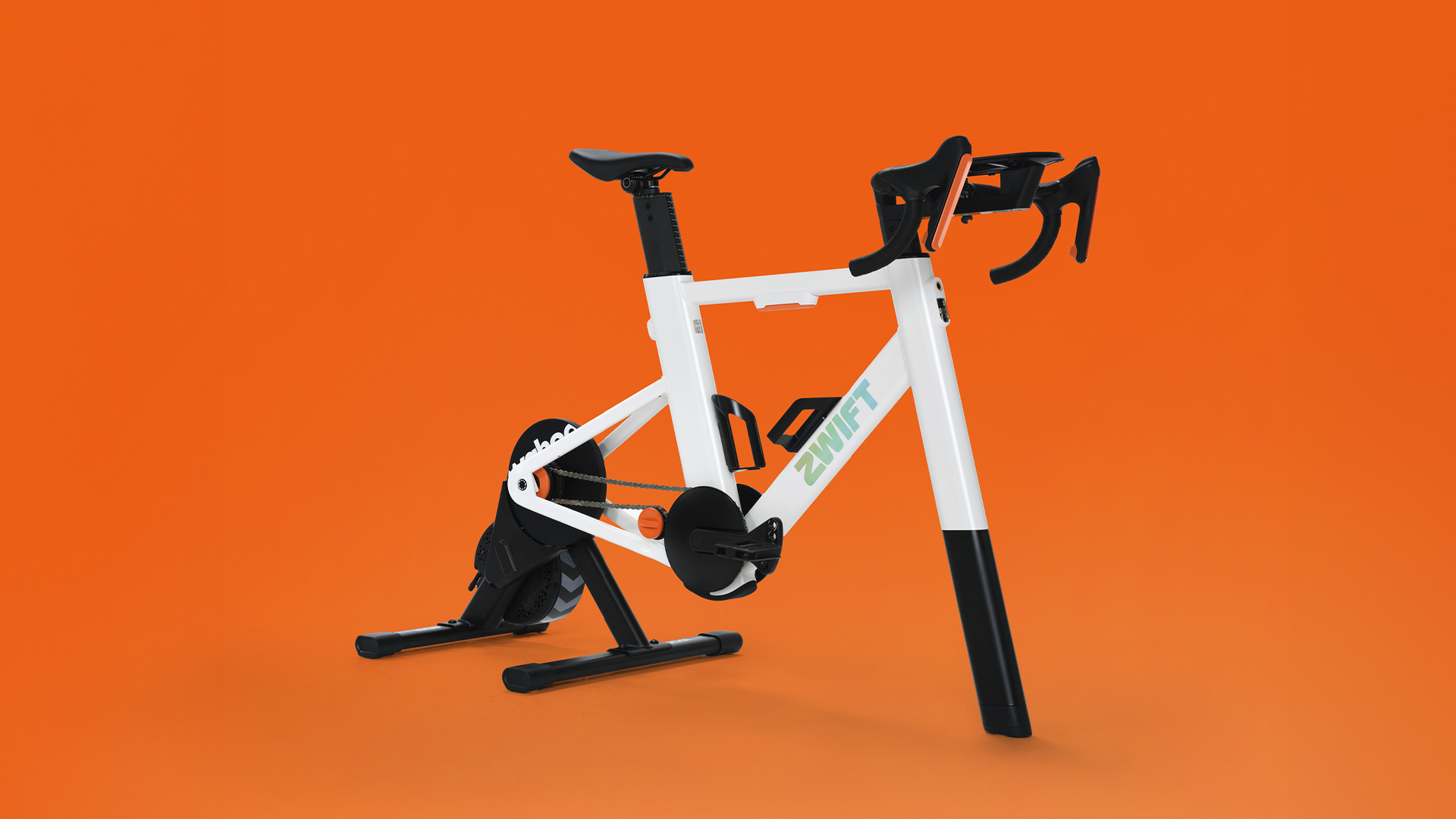
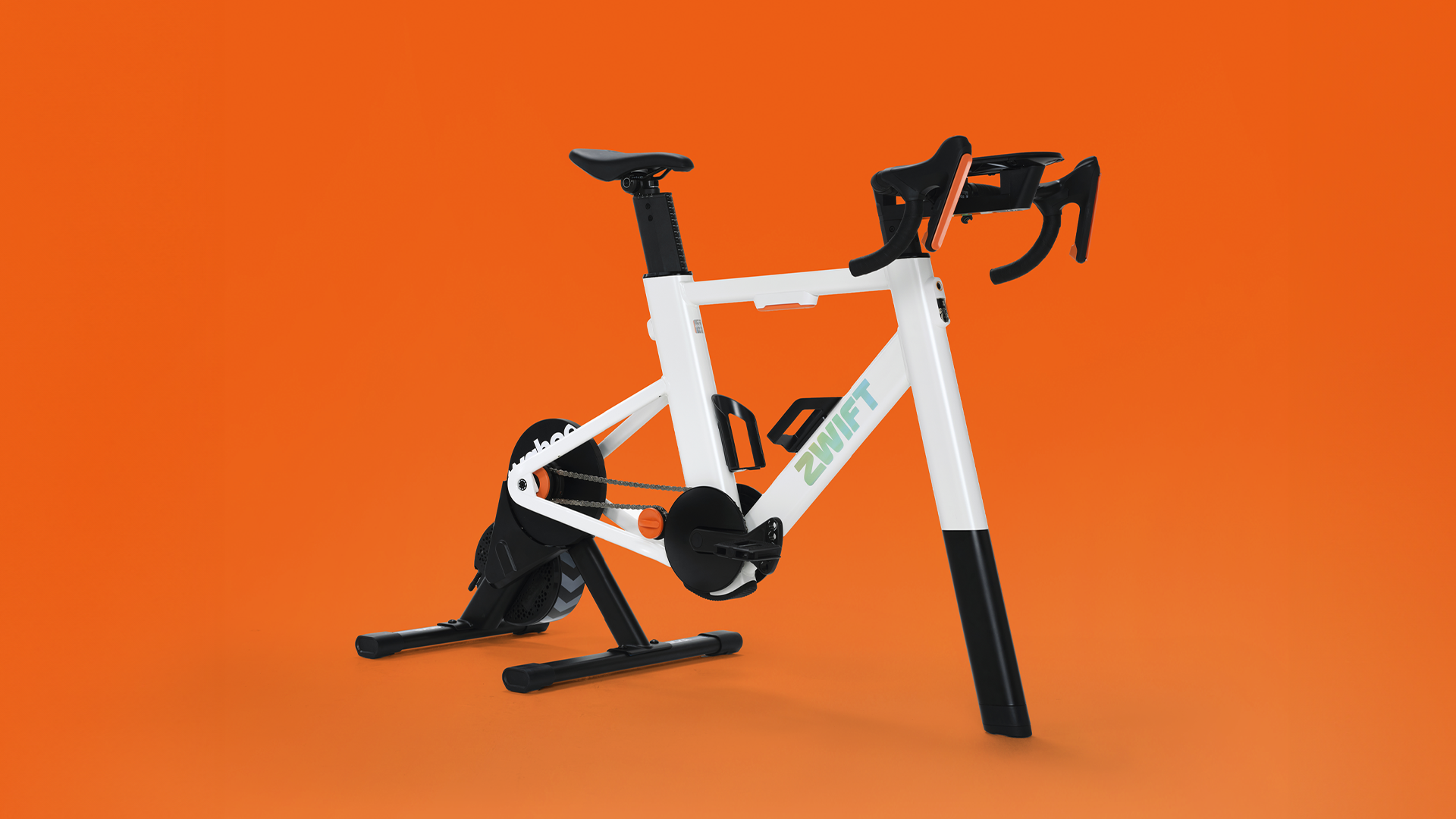
Zwift rolled out version 2 of their popular Zwift Ride smart frame today. This isn’t a radical redesign, but it’s a welcome one! This new iteration makes the Ride more accommodating for more riders, at the same impressive price.

Are you a Zwift Ride V1 owner wondering whether to update? Or perhaps you’re looking to upgrade your current indoor setup or buy your first indoor setup as we head into “Zwift season”? This post is for you! Read on to learn all about the new Zwift Ride.

Buy Now

Note: if you purchase the Ride bundle via the links above, Zwift Insider will be paid an affiliate commission by Zwift to help support this site. Thanks!

What’s New

Here’s how the new Zwift Ride differs from the original V1:

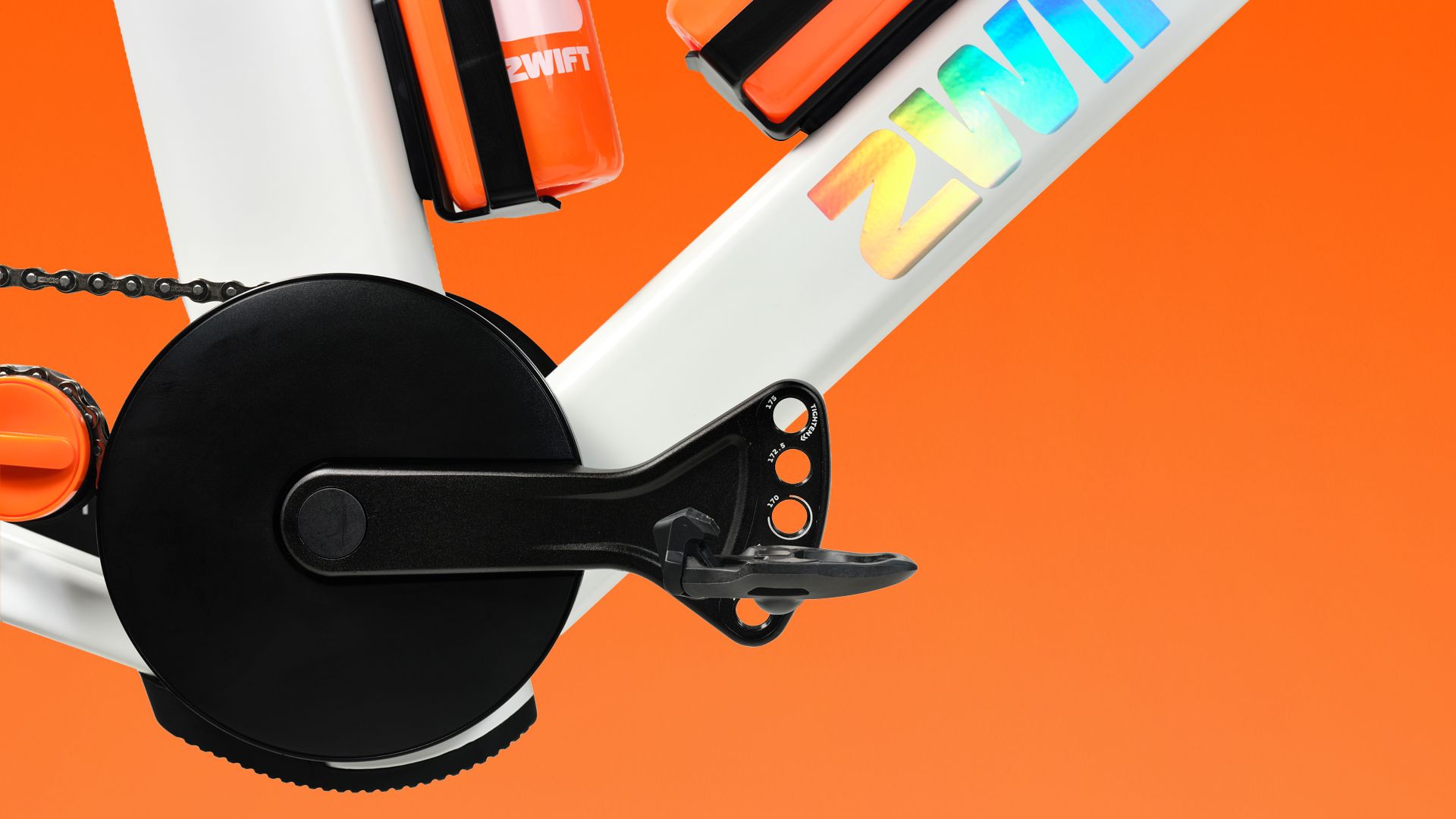
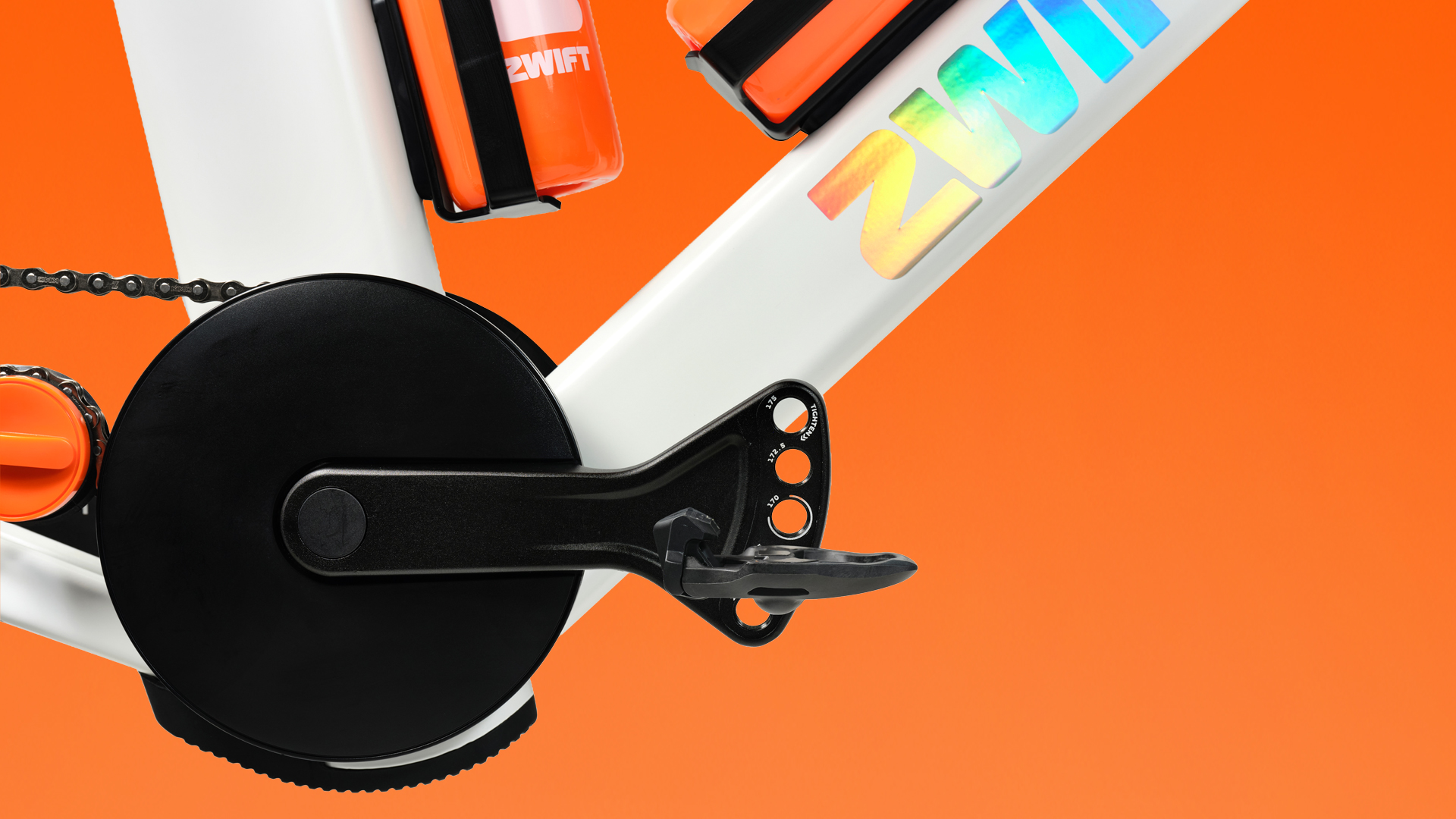
  • Bear Claw Cranks: Probably the most-requested upgrade on the Zwift Ride, these crank arms, offering 5 crank length options, have been available as a $99 upgrade option for over a year.
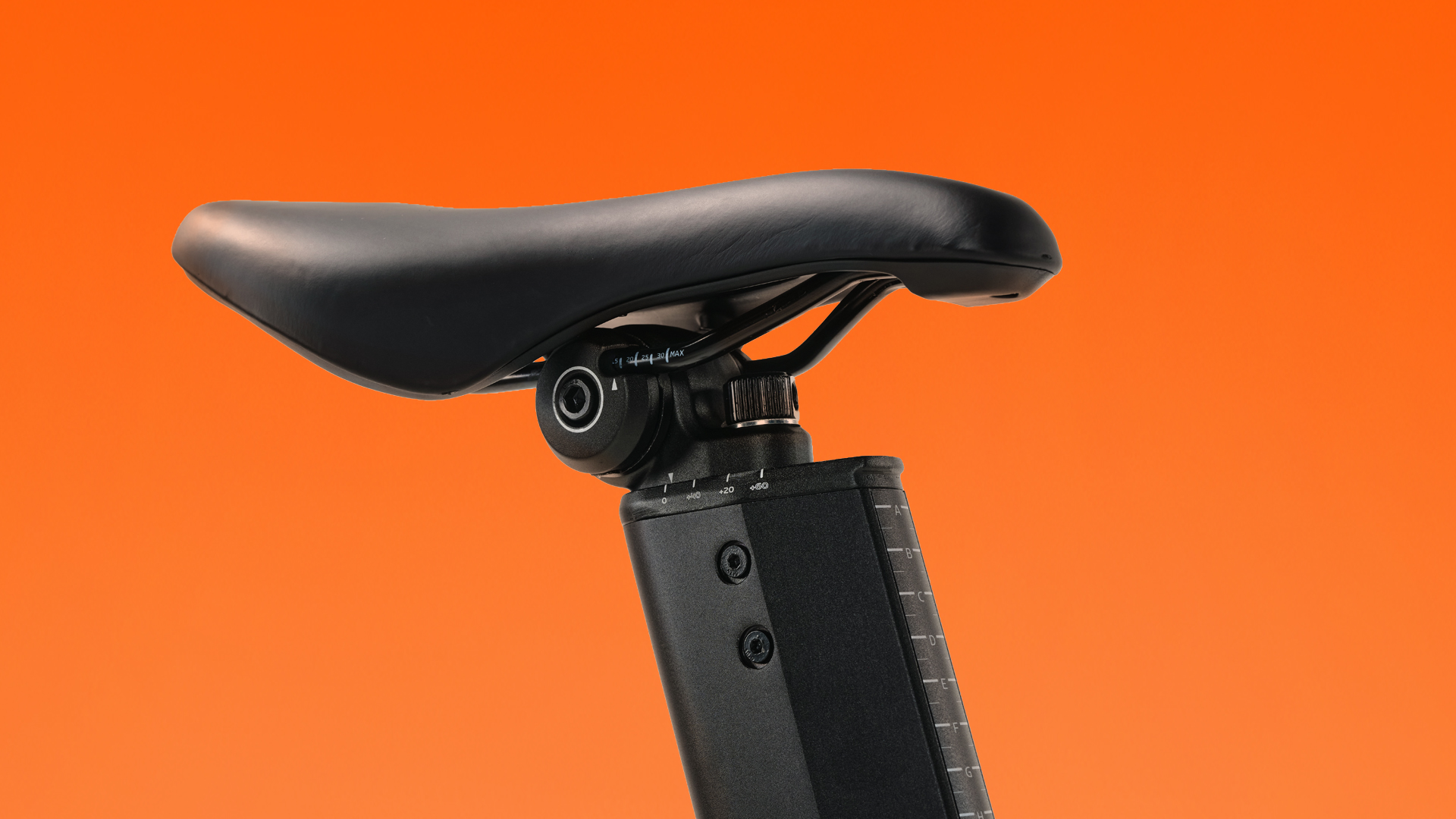
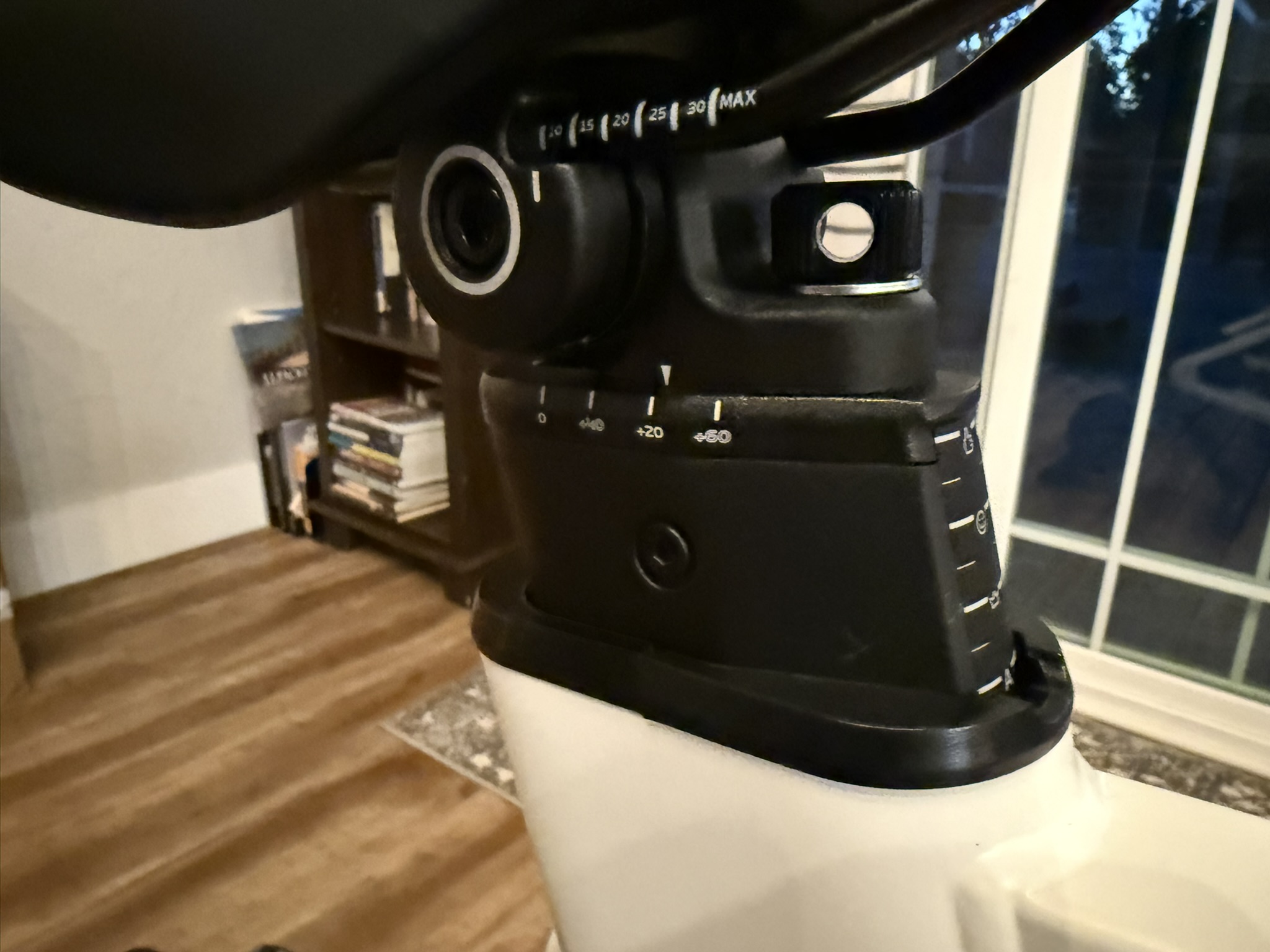
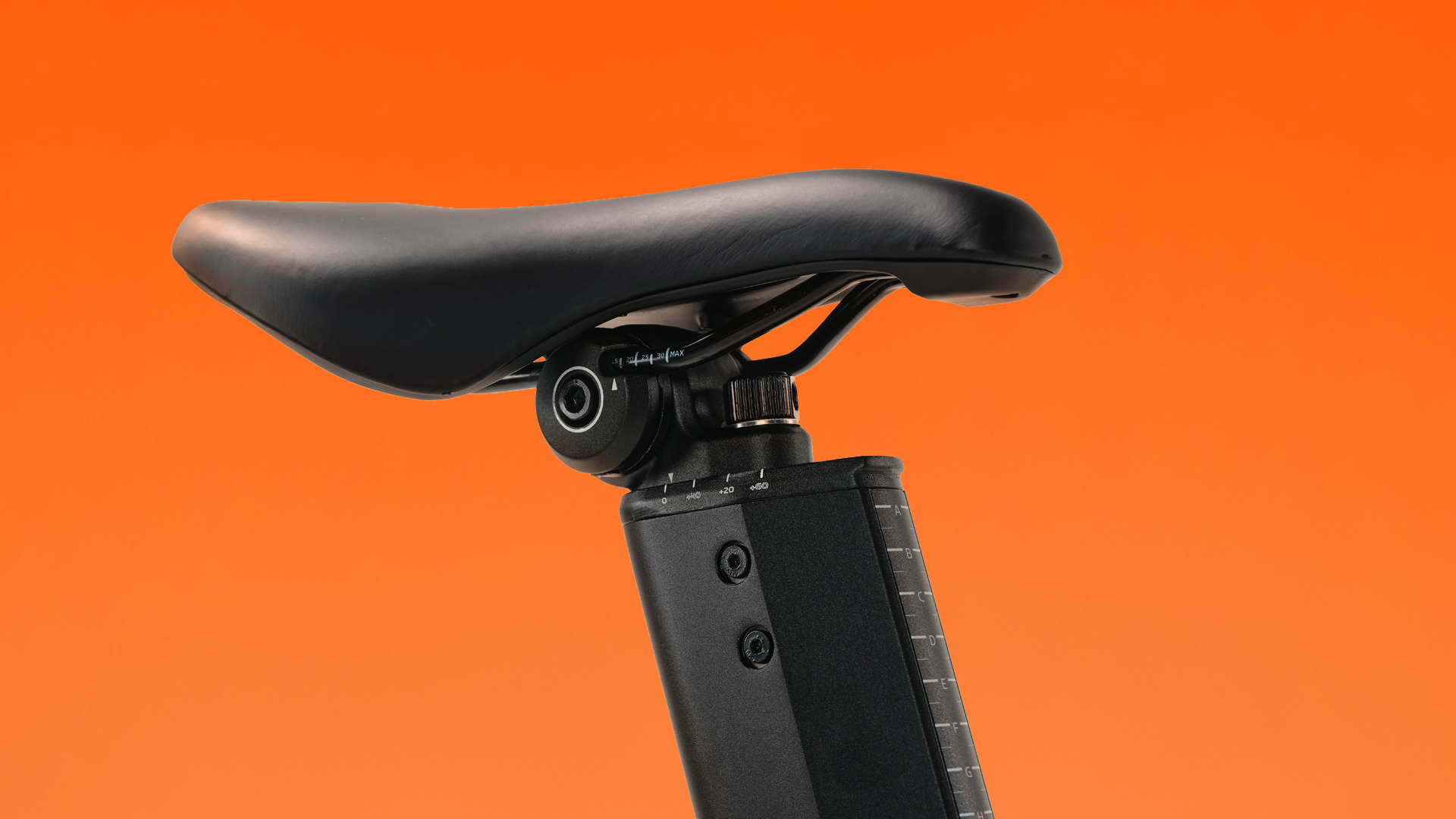
  • Expanded Fore-Aft Seat Adjustment: A redesigned seat post topper lets you place the saddle clamp in 4 different fore-aft positions for an additional 30mm of fore-aft adjustability.
  • Reduced Minimum Saddle Height: Minimum rider height is now 4’10” (146cm), which is 2″ (6 cm) shorter than the V1.
  • Reduced Minimum Bar Height: Your bars can drop almost 4 cm lower on the V1 than the V2.
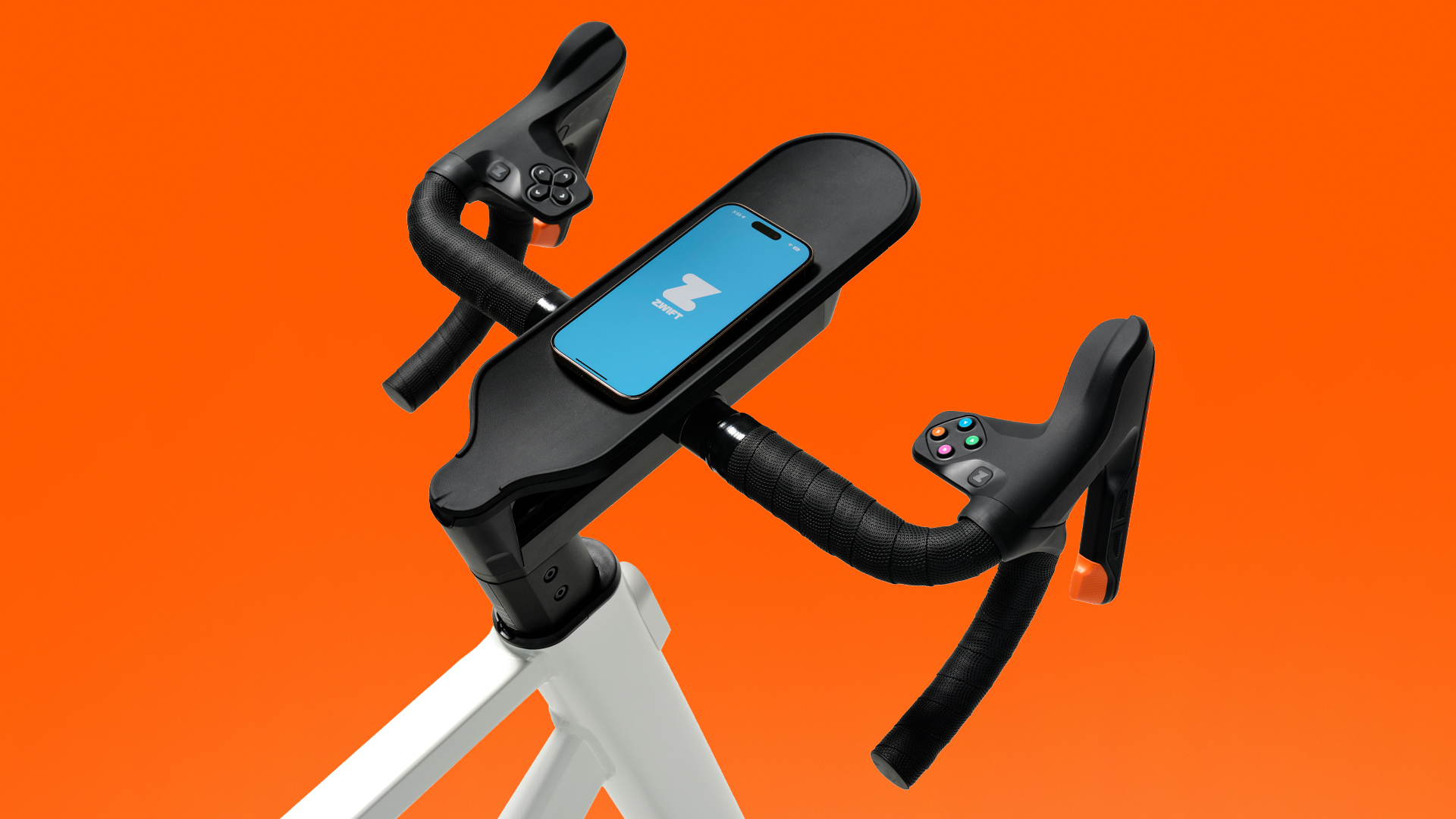
  • Wider Bar Tops: Instead of the uniformly thick bars of the V1, the V2 sports bars with wider tops for more hand comfort.
  • Improved Controllers: Not announced by Zwift, but confirmed by Zwift, the controllers on the new Ride feature an additional internal seal to keep them safe from moisture/sweat.

I dig into most of these changes below, but first… here’s a fun off-the-cuff video from my living room starring Ryan Condon and me…

Unboxing/First Impressions Video

Adjustable Crank Length

At a time when many riders are experimenting with shorter crank lengths, the original Zwift Ride’s lack of adjustability was a common source of complaint. (Not only did the V1 offer only a 170 mm option, but the cranks are non-standard, so you couldn’t swap in aftermarket cranks.) Zwift began selling a $99 bear claw crank upgrade in April 2025, but Zwifters consistently asked for these cranks to be included with a Zwift Ride purchase.

The bear claw cranks on the V2 are the same add-on cranks Zwift has been selling for the V1, with 5 options:

  • 160 mm
  • 165 mm
  • 170 mm
  • 172.5 mm
  • 175 mm

New Fore-Aft Adjustable Seat Post Topper

Since the Zwift Ride’s initial release, some riders have requested the option of a seatpost that allows the saddle to be located further forward. (In fact, aftermarket options have arisen to meet this very need.)

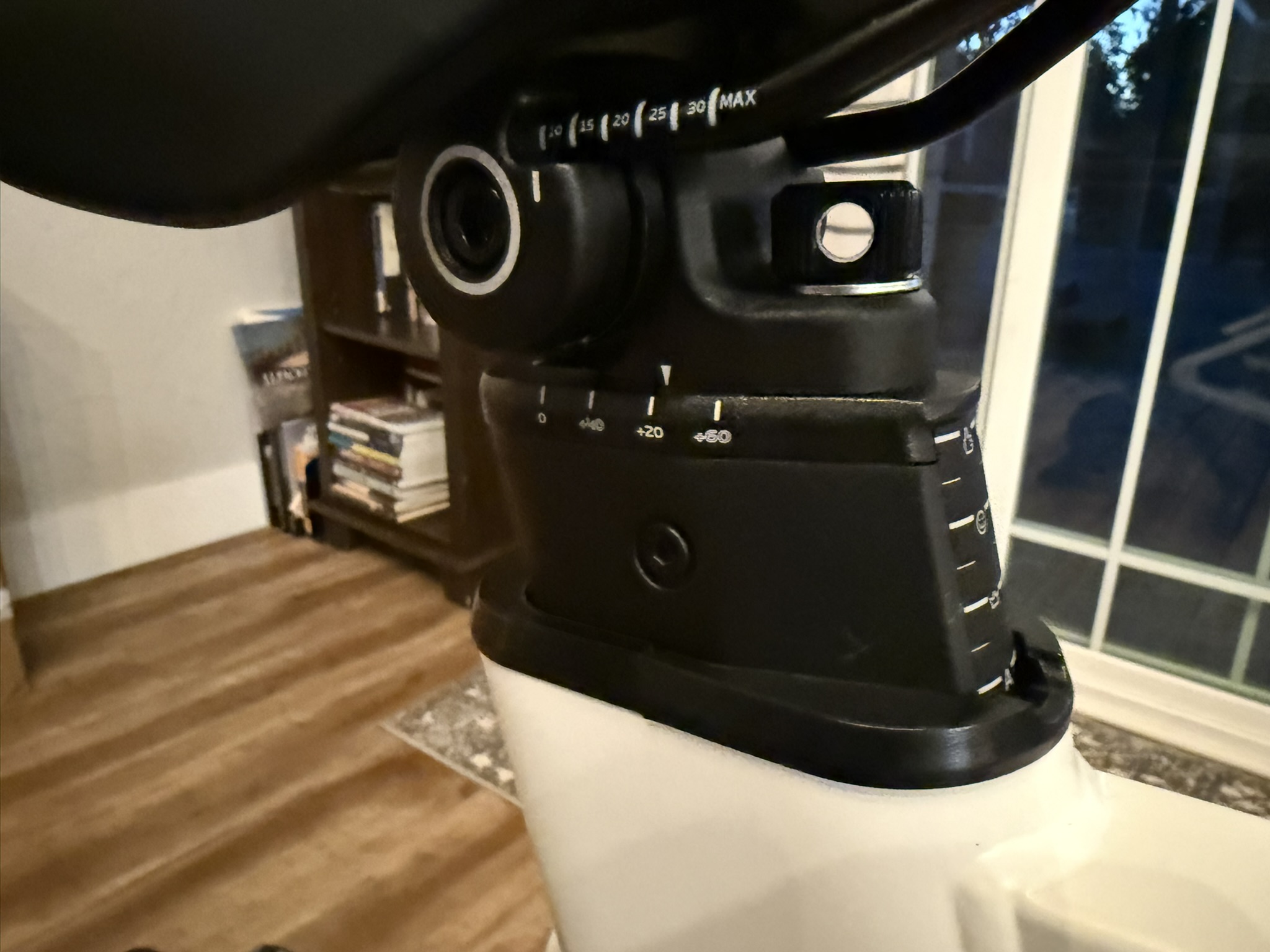
The new seat post topper can be placed in 4 different positions for an additional 3 cm of fore-aft adjustability. Two positions can be reached with the topper oriented in one direction, while the other two positions are reached by turning the entire topper around to face the opposite direction.

A single bolt holds the assembly firmly in place, and it can be tightened or loosened using the Zwift Ride’s built-in tool.

Reduced Minimum Saddle and Bar Heights

Multiple changes to the frame geometry have made the Zwift Ride V2 more accommodating to smaller riders. While the V1’s stated rider size range was 152-198 cm with a minimum saddle height of 60 cm, the V2’s stated size range is 146-198 cm with a minimum saddle height of 56.75cm.

The main change enabling the reduced saddle height (and reach) is a slightly smaller frame, where all parts of the main triangle have been reduced in length. This also reduced the standover height and minimum bar height, with the V2’s bars able to drop almost 4 cm lower than the V1.

Reducing the size of the frame’s main triangle also reduces the minimum reach, further accommodating shorter riders.

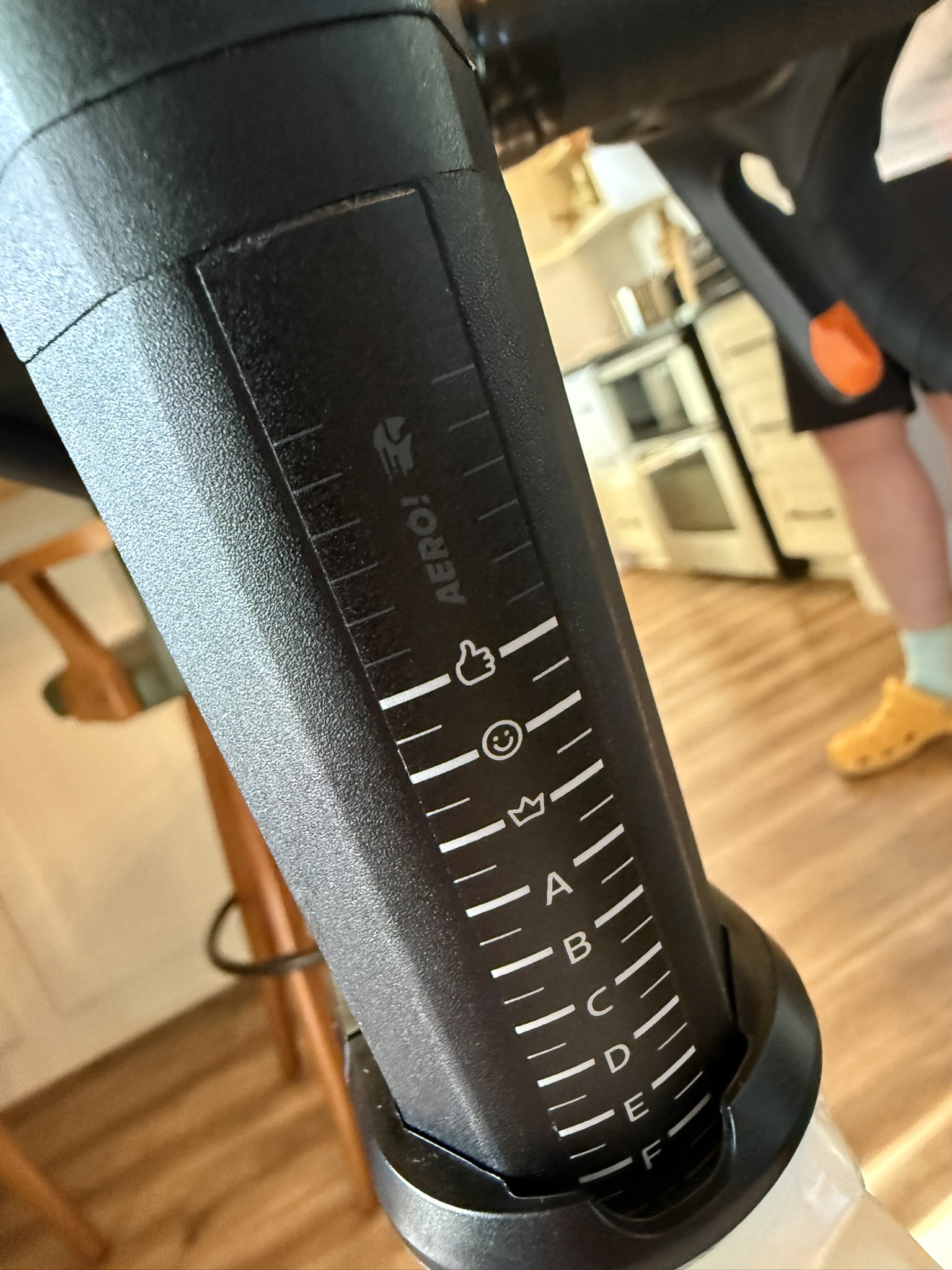
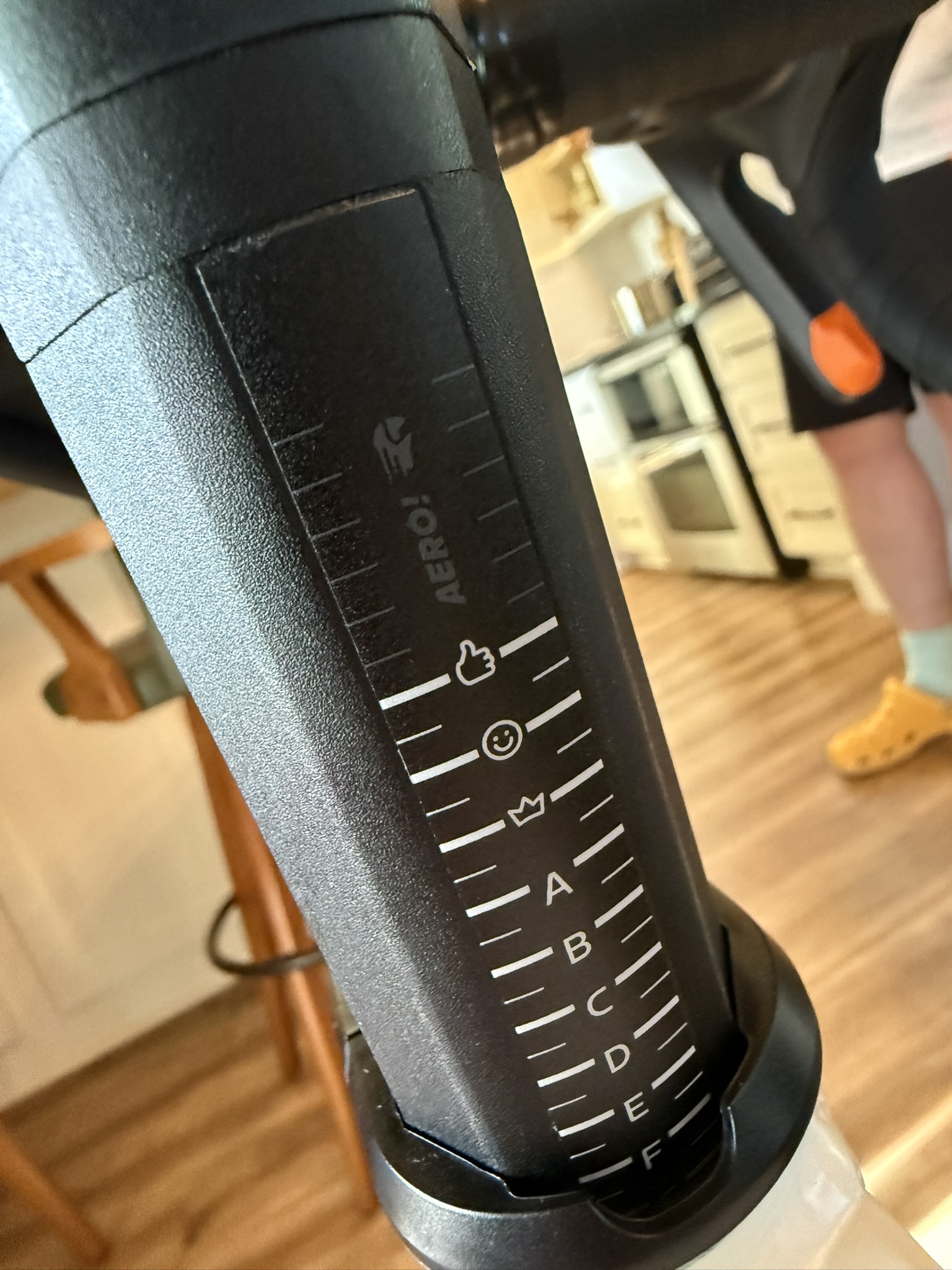
It appears that Zwift labeled the seatpost heights, stem lengths, and bar heights so riders who know their Zwift Ride measurements from a V1 can easily set up a V2. They don’t translate perfectly, and modifying the new seatpost topper’s position will, of course, affect these. But it’s a thoughtful move on Zwift’s part, and a playful twist to have crown, smiley, and Ride On symbols as new measurements…

Wider Bar Tops

The narrow, uniform thickness of the original Zwift Ride’s handlebars didn’t win many fan awards, particularly for riders with larger hands.

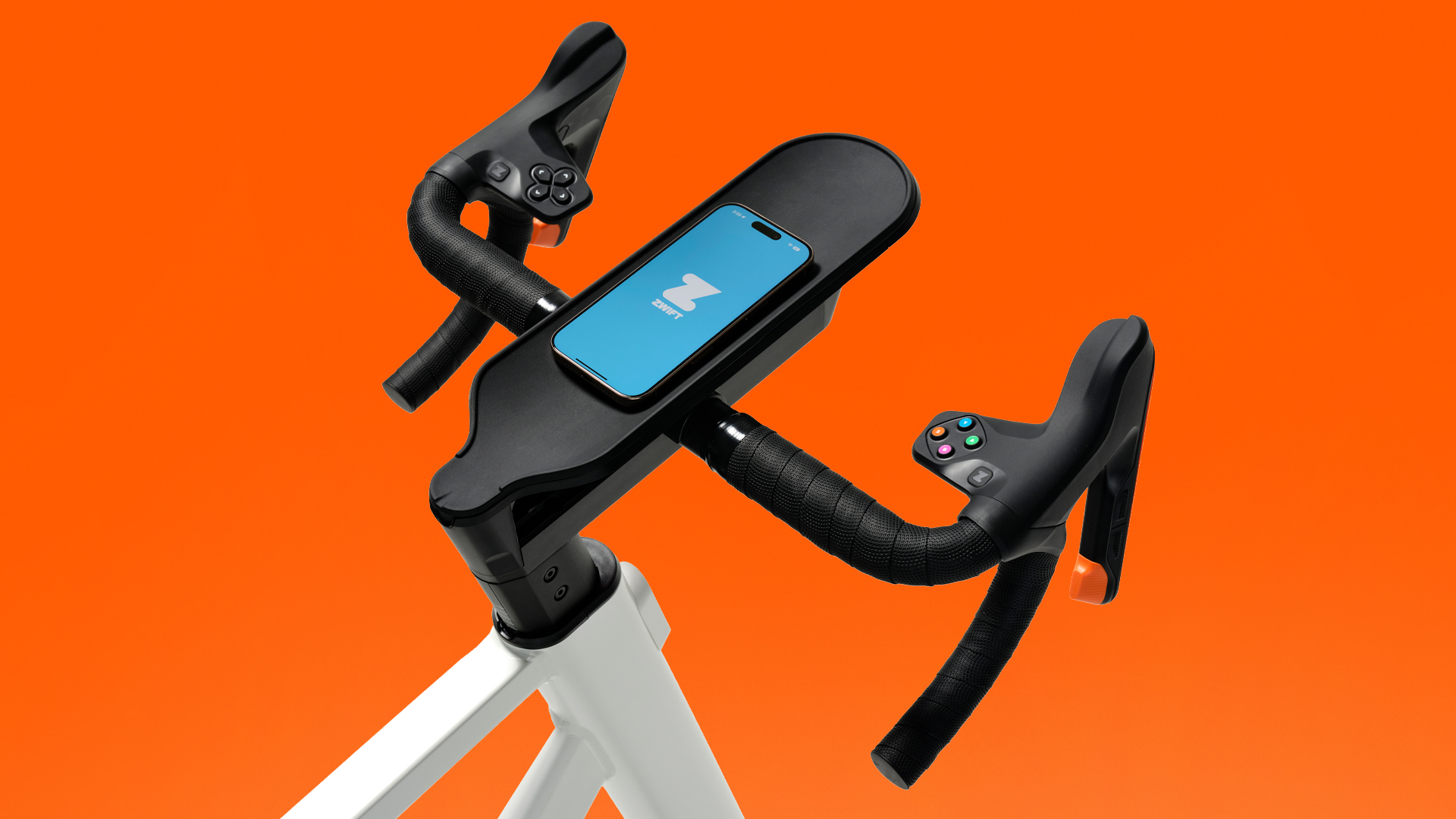
The new Ride’s handlebars are oversized on the tops, like most modern bars, providing a much more comfortable grip surface.

Is it worth the upgrade?

That’s everything that’s new about the Zwift Ride V2 (apart from a new squirrel badge on the head tube and an updated rider sizing card). So the big question is – should you buy one?

Here’s my take: if you already own the Zwift Ride V1, upgrading to the V2 probably doesn’t make sense. If anything, you may want to purchase the adjustable cranks or updated seatpost, which Zwift says will be available at Zwift.com.

But if you’re looking for an upgrade to your existing bike/trainer setup, or looking to purchase your first indoor bike setup, the Zwift Ride V2 is everything the original Zwift Ride was, and more! The crank length options, saddle setback options, and accommodating minimum sizing for smaller riders are all big wins. Add that to the V2 shipping with the latest Wahoo KICKR CORE 2 and you’ve got a killer package at the same great price ($1299.99 / €1199.99 / £1099.99) as the original Zwift Ride.

Buy Now

Note: if you purchase the Ride bundle via the links above, Zwift Insider will be paid an affiliate commission by Zwift to help support this site. Thanks!

Share Your Thoughts

What do you think of the changes made in Zwift Ride V2? Will you be purchasing one yourself? Share your thoughts below!

Related Posts

The Zwift Ride V2 Is Here: Learn What’s New

Zwift rolled out version 2 of their popular Zwift Ride smart frame today. This isn’t a radical redesign, but it’s a welcome one! This new iteration makes the Ride more accommodating for more riders, at the same impressive price.

Are you a Zwift Ride V1 owner wondering whether to update? Or perhaps you’re looking to upgrade your current indoor setup or buy your first indoor setup as we head into “Zwift season”? This post is for you! Read on to learn all about the new Zwift Ride.

Buy Now

Note: if you purchase the Ride bundle via the links above, Zwift Insider will be paid an affiliate commission by Zwift to help support this site. Thanks!

What’s New

Here’s how the new Zwift Ride differs from the original V1:

  • Bear Claw Cranks: Probably the most-requested upgrade on the Zwift Ride, these crank arms, offering 5 crank length options, have been available as a $99 upgrade option for over a year.
  • Expanded Fore-Aft Seat Adjustment: A redesigned seat post topper lets you place the saddle clamp in 4 different fore-aft positions for an additional 30mm of fore-aft adjustability.
  • Reduced Minimum Saddle Height: Minimum rider height is now 4’10” (146cm), which is 2″ (6 cm) shorter than the V1.
  • Reduced Minimum Bar Height: Your bars can drop almost 4 cm lower on the V1 than the V2.
  • Wider Bar Tops: Instead of the uniformly thick bars of the V1, the V2 sports bars with wider tops for more hand comfort.
  • Improved Controllers: Not announced by Zwift, but confirmed by Zwift, the controllers on the new Ride feature an additional internal seal to keep them safe from moisture/sweat.

I dig into most of these changes below, but first… here’s a fun off-the-cuff video from my living room starring Ryan Condon and me…

Unboxing/First Impressions Video

Adjustable Crank Length

At a time when many riders are experimenting with shorter crank lengths, the original Zwift Ride’s lack of adjustability was a common source of complaint. (Not only did the V1 offer only a 170 mm option, but the cranks are non-standard, so you couldn’t swap in aftermarket cranks.) Zwift began selling a $99 bear claw crank upgrade in April 2025, but Zwifters consistently asked for these cranks to be included with a Zwift Ride purchase.

The bear claw cranks on the V2 are the same add-on cranks Zwift has been selling for the V1, with 5 options:

  • 160 mm
  • 165 mm
  • 170 mm
  • 172.5 mm
  • 175 mm

New Fore-Aft Adjustable Seat Post Topper

Since the Zwift Ride’s initial release, some riders have requested the option of a seatpost that allows the saddle to be located further forward. (In fact, aftermarket options have arisen to meet this very need.)

The new seat post topper can be placed in 4 different positions for an additional 3 cm of fore-aft adjustability. Two positions can be reached with the topper oriented in one direction, while the other two positions are reached by turning the entire topper around to face the opposite direction.

A single bolt holds the assembly firmly in place, and it can be tightened or loosened using the Zwift Ride’s built-in tool.

Reduced Minimum Saddle and Bar Heights

Multiple changes to the frame geometry have made the Zwift Ride V2 more accommodating to smaller riders. While the V1’s stated rider size range was 152-198 cm with a minimum saddle height of 60 cm, the V2’s stated size range is 146-198 cm with a minimum saddle height of 56.75cm.

The main change enabling the reduced saddle height (and reach) is a slightly smaller frame, where all parts of the main triangle have been reduced in length. This also reduced the standover height and minimum bar height, with the V2’s bars able to drop almost 4 cm lower than the V1.

Reducing the size of the frame’s main triangle also reduces the minimum reach, further accommodating shorter riders.

It appears that Zwift labeled the seatpost heights, stem lengths, and bar heights so riders who know their Zwift Ride measurements from a V1 can easily set up a V2. They don’t translate perfectly, and modifying the new seatpost topper’s position will, of course, affect these. But it’s a thoughtful move on Zwift’s part, and a playful twist to have crown, smiley, and Ride On symbols as new measurements…

Wider Bar Tops

The narrow, uniform thickness of the original Zwift Ride’s handlebars didn’t win many fan awards, particularly for riders with larger hands.

The new Ride’s handlebars are oversized on the tops, like most modern bars, providing a much more comfortable grip surface.

Is it worth the upgrade?

That’s everything that’s new about the Zwift Ride V2 (apart from a new squirrel badge on the head tube and an updated rider sizing card). So the big question is – should you buy one?

Here’s my take: if you already own the Zwift Ride V1, upgrading to the V2 probably doesn’t make sense. If anything, you may want to purchase the adjustable cranks or updated seatpost, which Zwift says will be available at Zwift.com.

But if you’re looking for an upgrade to your existing bike/trainer setup, or looking to purchase your first indoor bike setup, the Zwift Ride V2 is everything the original Zwift Ride was, and more! The crank length options, saddle setback options, and accommodating minimum sizing for smaller riders are all big wins. Add that to the V2 shipping with the latest Wahoo KICKR CORE 2 and you’ve got a killer package at the same great price ($1299.99 / €1199.99 / £1099.99) as the original Zwift Ride.

Buy Now

Note: if you purchase the Ride bundle via the links above, Zwift Insider will be paid an affiliate commission by Zwift to help support this site. Thanks!

Share Your Thoughts

What do you think of the changes made in Zwift Ride V2? Will you be purchasing one yourself? Share your thoughts below!

Related Posts