Nothing Phone 4a Pro hands-on: A premium design with a price to match the Pixel 10a

Nothing has announced its latest premium midrange device, the Phone 4a Pro. The company says it’s the thinnest full-metal phone on the market, measuring in at 7.95mm. It also looks notably different from the prior A-series phones – and pretty much any of the company’s phones to date.

It features an aluminum unibody while retaining Nothing’s retro-clear hardware design touches, with a clear, redesigned camera unit. Yes, the aggressively protruding circular camera unit of the Phone 3a Pro is gone, replaced with an oblong housing that houses the triple-camera array and a tweaked Glyph Matrix, similar to what debuted on last year’s Nothing Phone 3. It also feels incredibly premium – more so than even the company’s flagship phones.

Despite that, Nothing seems to be strikeinga balance between affordability and wow factor with the Phone 4a Pro. It has a slightly higher price tag ($499) than the 4a and alongside a major hardware redesign, a lot of the improvements here make this phone feel “pro” compared to its smaller sibling. This new premium vibe comes at a cost of design excitement, though. 

It also looks a little like another certain smartphone or two. Don’t call it a camera plateau.

Nothing Phone 4a Pro hands-on
Image by Mat Smith for Engadget

The Phone 4a Pro has its own take on the Glyph Matrix, composed of 137 mini-LEDs. That’s fewer LEDs than the Nothing Phone 3, but they are 100 percent brighter at around 3000 nits. It supports pretty much all the Glyph toys we enjoyed on last year’s Nothing flagship, although the 4a Pro lacks a dedicated Glyph Button, which is a shame. This means in order to hop between toys and modes, you’ll have to dig into Glyph settings inside the settings menu – not the existing Glyph menu – in order to flit between them. Honestly, may make me less likely to play around with the Glyph, but I’ll have to see after further testing. It’s a little odd when there’s a circular metal detail on the lower left corner that looks like it could have been a Glyph button. Ah well.

Nothing Phone 4a Pro hands-on
The gigantic camera unit seen on the Phone 3a Pro is no more.
Image by Mat Smith for Engadget

The Phone 4a Pro has a slightly bigger screen than both its predecessor and the 4a, but the real news isn’t just the extra fraction of an inch. The 6.83-inch display can now reach 144Hz refresh rates, while it can also top out at 5,000 nits of brightness with HDR content. That makes it up to 66 percent brighter than its predecessor, and it was noticeably easier to read in Nothing’s harsh spotlights and daylight.

Nothing has further refined the cameras, and the 4a Pro uses the same telephoto sensor as the flagship Phone 3. That’s paired with a new 50-megapixel Sony LYT-700C camera sensor that’s 24 percent bigger than the 50MP sensor inside the 3a Pro. It’s also faster at auto-focus than its predecessor, and seems to more easily lock onto subjects without having to tap on what you want in focus.

There’s also a new triple 12-bit Image Signal Processor (ISP), which enables up to 140x ultra zoom, like we’ve seen on Galaxy phones for the last few years. Don’t expect to be blown away by those zoom extremes: it seems to work well on the easy-to-guess structures of buildings and patterns, but a 70x zoom range and higher aren’t settings I’m going to lean into much.

I haven’t had time yet to fully scrutinize the 4a Pro’s camera, but there’s a lot of feature parity with pricier phones. It can capture super-slow 120fps video at full HD, while Action Mode is built directly into the camera app to shoot up to 30 Ultra XDR images in a row. Codeveloped with Google, Ultra XDR images are high-dynamic-range images that capture 13 RAW frames at different exposures and combine them into a single image. In practice, this should offer another way to pull usable shots from challenging low-light or harsh-light environments.

Power users may also like new presets, alongside Nothing’s own collection of camera filters. There are seven new editing options, letting you tweak (and save) contrast levels or even apply a vignette effect. I’m a fan of the built-in presets, but it’s nice to have access to the same camera settings to make and save my own B&W filter.

Nothing says you can expect 30 percent improved graphics performance and 27 percent faster CPU speeds, with “flagship” LPDDR5X memory, which makes it 100 percent faster than last year’s 3a Pro. Improvements to the chipset and memory speed weren’t immediately noticeable during my time seeing the device.

Nothing continues to refine its own OS skin, but it’s still a refreshing, different take on the Android interface you’re used to. And if you’re not a fan, you can turn it back to a more stock look. Based on user feedback, there are new size options for the home screen widgets and a new custom lock screen. It may be due to the more powerful processor, but both the 4a Pro and the base 4a seem to have smoother animation flourishes when opening and switching between apps or swiping across content.

New AI software includes a formal launch of Essential Search, able to scour the entire device for information, images, documents, apps and more. The 4a series include the first Nothing devices to include cloud access for the still useful Essential Space app, housing your voice notes, screengrabs, text notes, and more. This means, hopefully, I can transition everything across from my Nothing Phone 3. (Or even between the Phone 4a and 4a Pro.)

Nothing Phone 4a Pro hands-on
Image by Mat Smith for Engadget

It’s a different look for Nothing, and the 4a Pro’s price (and timing) will pit it against both the Pixel 10a (priced the same) and base flagship devices from Samsung. The Phone 4a series pre-orders are open now at nothing.tech and other retailers, with sales of the Phone 4a Pro starting March 27. Expect our full review in the coming weeks.

This article originally appeared on Engadget at https://www.engadget.com/mobile/smartphones/nothing-phone-4a-pro-hands-on-price-launch-date-123053485.html?src=rss
Apple Music can now flag AI content, but only if distributors elect to label it

While music streaming apps like Bandcamp, Spotify and Deezer have taken steps to inform users about AI-generated content, we haven’t heard much out of Apple Music in that regard. However, Apple Music has now introduced “Transparency Tags” designed to show listeners if any elements were generated in whole or part by AI. The catch is that Apple is leaving it up to labels and distributors to create those tags, according to an Apple newsletter to industry partners seen by Music Business Worldwide..  

“Proper tagging of content is the first step in giving the music industry the data and tools needed to develop thoughtful policies around AI, and we believe labels and distributors must take an active role in reporting when the content they deliver is created using AI,” Apple wrote, calling it a concrete first step toward transparency around artificial intelligence.

Streaming platforms already use metadata tags for things like song and album titles, genre and the name of the artist. The new tags will now identify any artwork, tracks, compositions and music videos created in whole or in part by AI. 

However, Apple’s new system requires labels and distributors to opt in and manually flag their use of AI, a system that’s similar to what Spotify is doing. On top of that, Apple has no apparent enforcement mechanism for AI content. 

By contrast, other music platforms including Deezer and Bandcamp are using in-house AI-detection tools to flag content whether the distributor opts in or not. Deezer disclosed in January 2026 that it receives over 60,000 fully AI-generated tracks every day, double the number it saw in September 2025. Synthetic content, also called “AI slop,” has accounted for 13.4 million tracks on its platform, Deezer added.

This article originally appeared on Engadget at https://www.engadget.com/entertainment/music/apple-music-can-now-flag-ai-content-but-only-if-distributors-elect-to-label-it-121521873.html?src=rss

Nothing Phone 4a hands-on: A more technically accomplished entry-level smartphone

Nothing is back with two new smartphones, the entry-level Phone 4a and the mid-range Phone 4a Pro. With the base 4a in particular, there’s no shortage of substantial hardware upgrades since the 3a, even if the design doesn’t quite stand out as much. This year, that’s apparently the role of the Nothing Phone 4a Pro. That said, the base 4a’s two new color options (blue and pink) are gorgeous additions to the usual monochrome duo of white and black.

There have been many upgrades since 2025’s Phone 3a. It comes with IP64 dust and water resistance, and is also physically tougher: Nothing says it has increased bend resistance by 34 percent, but I always considered all of the company’s phones pretty solid. The display also gets Gorilla Glass 7i, something I’ve wanted to see Nothing improve on its cheapest phones. My Phone 2a’s screen got pretty messed up when I tussled with my keys a few years ago. The 6.78-inch display is also 23 percent brighter than its predecessor, reaching 1,600 nits during outdoor viewing.

The main upgrades are centered around the cameras, marking a major improvement over what the Phone 3a last year. A new tetraprism periscope telephoto camera extends to up to 3.5x optical zoom, further than the base Phone 3a.

Nothing Phone 4a hands-on
Image by Mat Smith for Engadget

Nothing says the main camera, with a new Samsung GN9 50-megapixel sensor, captures up to 64 percent more light than similarly sized camera sensors. The company has also upgraded its computational photography and tone mapping, which help it deliver on a new 70x ultra zoom mode, which beefs up your images with AI smarts. While it’s unlikely to be a regular feature for me, it’s still an option. It works well with straight lines and architecture, but don’t expect faces and nuanced detail at 70x zoom. But hey, sometimes you want that up-close picture of an iconic landmark. Fortunately, you’ll get up to a 7x lossless zoom by combining the 3.5x optical zoom with sensor cropping, which works well.

I’ve been testing the Phone 4a for a few days – because I can’t get enough phones – and noticed that photo image quality is noticeably better compared to the Phone 3a. Images have less noise and more detail, with the Phone 4a being far more capable in poor lighting conditions.

Nothing Phone 4a sample image in low light
Image by Mat Smith for Engadget

The Phone 4a has a 1.5K (1,224 × 2,720) display, up from the full HD display (1,920 × 1,080) on last generation’s phone. It supports up to 120Hz refresh rates and has a peak brightness of 4,500 nits for HDR content. That resolution boost means Nothing’s meticulously designed UI and icons look sharper and everything is easier to see when using the 4a in the bright spring sunlight.

Nothing says the new Snapdragon 7s Gen 4 processor offers 10 percent better power efficiency, but what will make the Phone 4a go the distance is more likely the 5,080mAh battery – the biggest yet in Nothing’s midrange phones. Even the storage has been upgraded, with 47 percent faster read and 380 percent faster write speeds. I almost immediately clocked the improvement while attempting some light video editing and installing a few games.

This year’s Glyph system has turned into a Glyph Bar. It’s made up of 63 mini-LEDs in seven square lights in a row. These top out at 3500 nits, which is 40 percent brighter than the Phone 3a’s Glyph Interface. Over the years, I go through waves of loving Nothing’s take on notifications through to forgetting they’re there. Nothing is gradually adding more utility each year, and it’ll double as a notification tracker for a few select apps, like Uber, indicating how far away your ride is. The Glyph Bar can apparently double up as a fill light, although I couldn’t get that to work on my pre-release sample. I’ll update this story when I can test it out. Likewise, Nothing’s Playground of fan-made widgets and mini-apps isn’t entirely compatible with the 4a — at least not yet.

Nothing Phone 4a hands-on
Image by Mat Smith for Engadget

The Nothing Phone 4a is an upgrade over its predecessor in every way – and the improvements are tangible, and I noticed them almost immediately – something that can be challenging with other phone refreshes. The display is crisper, as are the photos and video it can capture.

Like previous Nothing phones, despite the “global launch,” this phone won’t be headed to the US. However, in the UK, starting at £349 (roughly $467), it’s only marginally more expensive than its predecessor and you get a lot more bang for your buck. It’s also a good chunk of change cheaper than the $500 Pixel 10a. For those looking for an eye-catching, capable phone at a similar price, the Phone 4a’s biggest competition may be its bigger brother, the $499 Phone 4a Pro. Expect our hands-on for Nothing’s other phone very soon. The Phone 4a is open for preorders now at nothing.tech, going on sale starting March 13 next week.

This article originally appeared on Engadget at https://www.engadget.com/mobile/smartphones/nothing-phone-4a-hands-on-price-launch-date-111533547.html?src=rss

Nothing’s new over-ear headphones can pump out the jams for five days on a single charge

Nothing just revealed a new pair of over-ear headphones as a relatively budget-friendly alternative to the pre-existing Headphone 1. The Headphone (a) earphones feature a similar design language to the company’s previous cans, but with more color. As a matter of fact, these will be available in four colors, including yellow, pink, white and black.

Perhaps the most notable feature here, however, is the battery life. Nothing says these headphones will last over five days on a single charge. That’s not five days of regular use, working out to several hours each day or whatever. It claims 135 hours of life per charge. As a comparison, Sony’s WH-CH520 headphones, which are praised for great battery life, last around 50 hours. 

Some headphones.
Nothing

Nothing boasts that the headphones can get five hours of juice from just five minutes at the outlet. They are also on the lighter side, at 310 grams, with breathable memory foam cushions that promise a “tailored, snug fit and all-day comfort for every user.”

This new model includes the same tactile controls of the Headphone 1, with buttons, paddles and a roller. This offers a more sensitive way to adjust the volume and skip tracks. A button even lets users swap through different streaming and podcast apps without having to break out the phone. This button can be programmed to do other stuff like snap a photo or start a video

Nothing headphones.
Nothing

Beyond that, the Headphone (a) includes adaptive ANC that makes adjustments depending on ambient noise. This is further assisted by three microphones that monitor for external sounds. They can also approximate spatial audio and integrate with the Nothing X app, which features an equalizer and other goodies.

We don’t yet know how these things sound, which is pretty important, but we also don’t have long to wait. Preorders are open right now, with shipments going out on March 13 for most colorways. The yellow model doesn’t ship until April. They cost $200, which is much cheaper than the $300 price tag accompanying the Headphone 1.

This article originally appeared on Engadget at https://www.engadget.com/audio/headphones/nothings-new-over-ear-headphones-can-pump-out-the-jams-for-five-days-on-a-single-charge-111515728.html?src=rss

Nothing’s Phone 4a Pro picks up flagship features and an even brighter display for $499

Back in January, Nothing shared that it wouldn’t be releasing its flagship Nothing Phone 4 in 2026, and instead focusing on follow-ups to its midrange Phone 3a and Phone 3a Pro. After some expected teasing, those sequels have arrived: the Phone 4a Pro and Phone 4a. And like Nothing’s previous devices, they seem like meaningful departures from what the company has tried in the past.

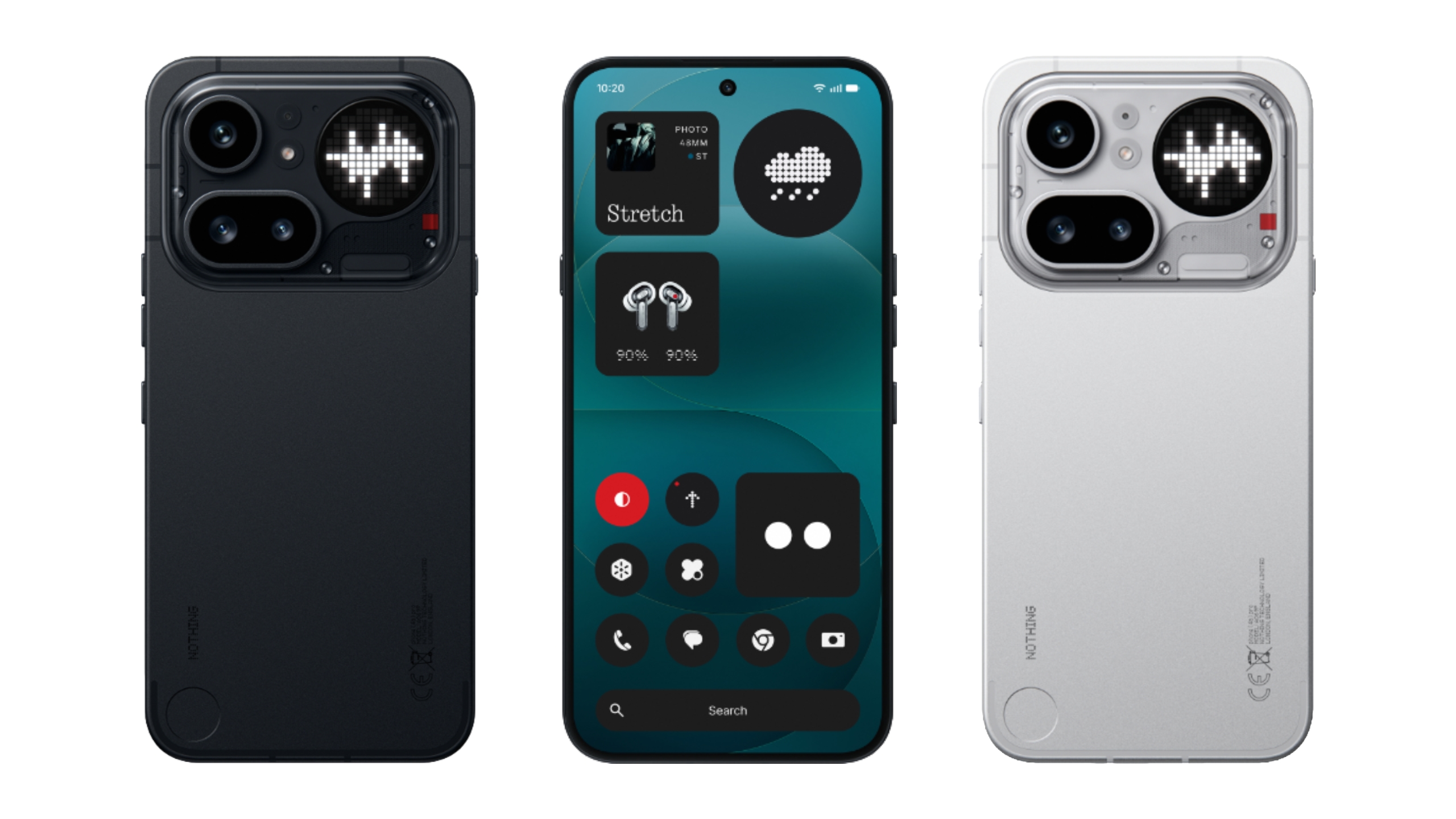
The Nothing 4a Pro represents the biggest change. Gone is the translucent back meant to offer a pseudo-glimpse into the internals of the phone, and in its place is a metal unibody design in black, silver or pink, and Nothing’s Glyph Matrix interface, now even larger and brighter than it was on the Phone 3. Nothing describes the Phone 4a Pro as its slimmest phone ever, and on some level its reminiscent of the iPhone 17 Pro, but the changes in design and materials also support improvements to durability (the phone is rated for IP65 water resistance) and cooling.

The back of a black Nothing Phone 4a Pro, the front screen of a black Phone 4a Pro and the back of a silver Phone 4a Pro.
Nothing

In terms of components, the Phone 4a Pro includes a 6.83-inch AMOLED display with 144Hz refresh rate, and a peak brightness of 5000 nits, and a 5,080mAh battery Nothing says should offer up to 17 hours of use. Like the Phone 3a Pro, the phone also includes four cameras, in this case a 50-megapixel wide lens, a 32-megapixel selfie camera, an ultra-wide and 50-megapixel periscope telephoto lens that’s capable of 140x zoom, twice as much as the Phone 4a. While the phone doesn’t include Qualcomm’s flagship Snapdragon 8 Elite Gen 5 chip, Nothing opted to use the Snapdragon 7s Gen 4, which isn’t as powerful, but should be capable of running Nothing’s growing list of AI-powered features.

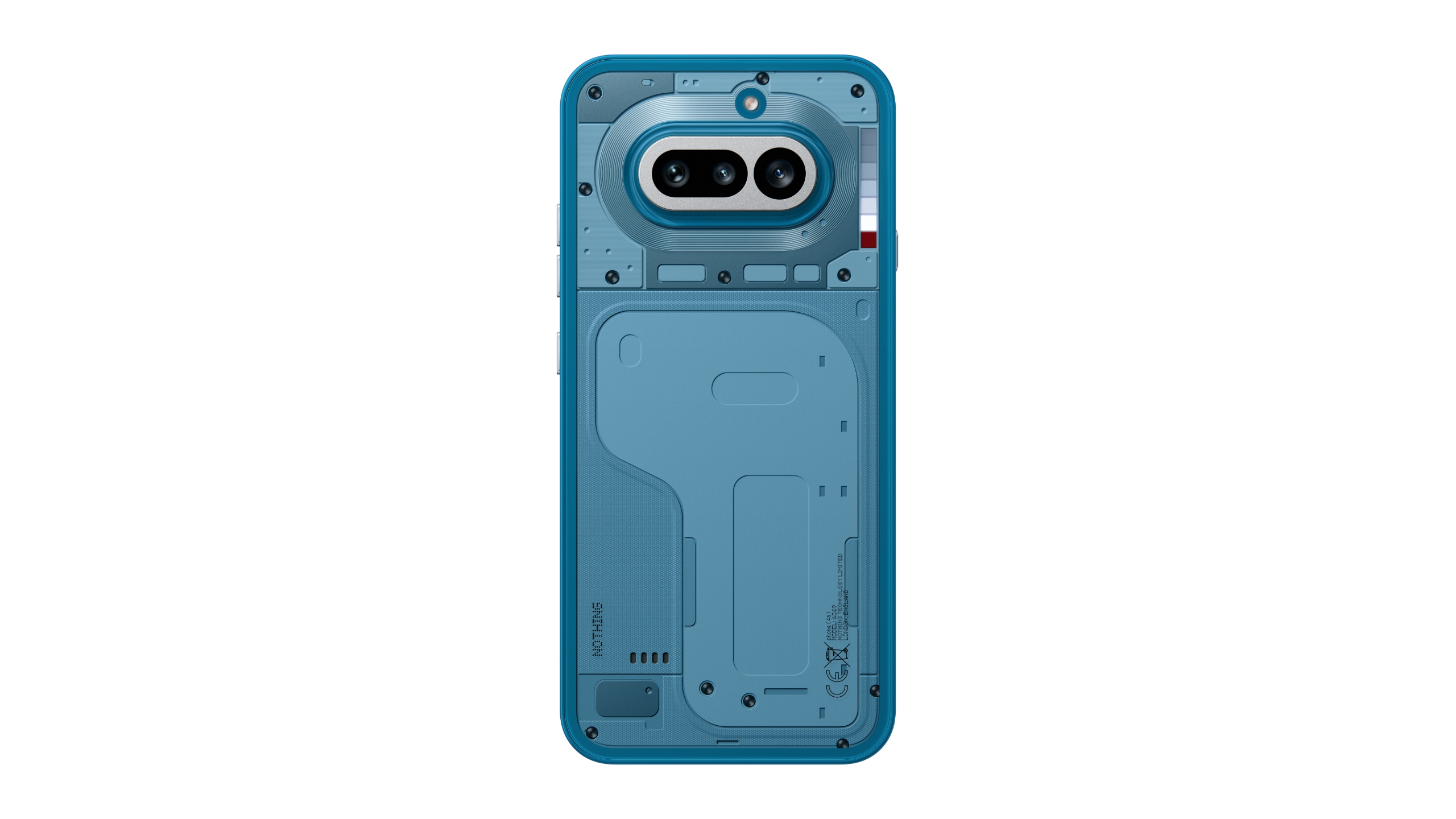
The Nothing Phone 4a was more heavily teased leading up to today’s announcement, but still includes plenty of nice upgrades over the Phone 3a. The midrange smartphone evolves Nothing’s trademark translucent design with new colors (white, pink, black and blue), IP64 dust and water resistance and an updated “Glyph Bar” that’s brighter and now runs in a straight line next to the 4a’s cameras. The Phone 4a has four cameras, a 50-megapixel wide that takes in 64 percent more light, a 32-megapixel selfie camera, an ultra-wide and a new 50-megapixel tetraprism periscope telephoto lens that’s capable of a 3.5x optical zoom, 7x lossless zoom and up to a 70x ultra zoom.

The Nothing Phone 4a in blue with its new "Glyph Bar."
Nothing

Like its more premium sibling, the Phone 4a includes an AMOLED display, though in a smaller 6.78-inch size, with a 120Hz refresh rate and a peak brightness of 4,500 nits. The display is covered with Gorilla Glass 7i, which is supposed to be twice as scratch-resistant as the previous generation, and even better for placing the phone face down. Internally, the Pro’s Snapdragon 7s Gen 4 chip and 5,080mAh battery also make the jump to the cheaper phone.

Nothing says both phones will ship with Nothing OS 4.1, which includes Essential Search for looking up information across apps, personalized results based on your saved “Memories” in Essential Space and Nothing Playground, an app for using AI to create custom widgets. Nothing OS 4.1 is based on Android 16, and Nothing says Phone 4a and Phone 4a Pro owners are guaranteed three years of Android updates and six years of security patches.

Global pre-orders for the Phone 4a begin today, and the phone is available in three different configurations depending on your region and the amount of RAM and storage you want. The Phone 4a starts at €349 for 8GB and 12GB and can cost as much as €429 for 12GB of RAM and 256GB of storage. 

While the Phone 4a Pro will be available globally, the fancier of Nothing’s two new phones is the only one coming to the US. The Phone 4a Pro will be available to pre-order starting March 13, and will either cost $499 for 8GB of RAM and 128GB of storage or $599 for 12GB of RAM and 256GB of storage.

This article originally appeared on Engadget at https://www.engadget.com/mobile/smartphones/nothings-phone-4a-pro-picks-up-flagship-features-and-an-even-brighter-display-for-499-111500926.html?src=rss

Google reportedly muzzles Epic Games CEO Tim Sweeney until 2032

Epic Games’ courtroom battle with Google is over, but it’s reportedly going to affect how its CEO can speak about the tech giant for years for years to come. According to The Verge, part of the settlement terms Epic had signed has a clause stating that Epic and Sweeney will have to speak positively about Google’s competitiveness and app store operations going forward. “Epic believes that the Google and Android platform, with the changes in this term sheet, are procompetitive and a model for app store / platform operations, and will make good faith efforts to advocate for the same,” the clause reportedly reads.

Further, The Verge says the settlement terms between the companies will expire five years after Google is done rolling out changes to its service fees. Since Google expects to finish implementing changes worldwide by September 30, 2027, Sweeney can’t speak negatively about the company until after September 30, 2032.

Sweeney is one of the most vocal critic of how Apple and Google operate their app stores, which had led to several lawsuits between the companies. He once called both Apple and Google “gangster-style businesses” that will “always continue” to be engaged in illegal practices and just pay the fine afterwards. Epic Games filed a lawsuit against Google in 2020, accusing it of illegal monopoly on app distribution and in-app billing services for Android devices. In 2023, Google lost the lawsuit. It then lost its appeal two years later, before the companies reached a settlement in November 2025. On March 4 this year, Google officially scrapped the 30 percent cut it takes from Play Store transactions, lowering it to 20 percent and even to 15 percent in some cases.

In response to the Google’s decision, Epic Games is bringing back Fortnite to the Play Store worldwide. “Google is opening up Android all the way with robust support for competing stores, competing payments, and a better deal for all developers. So, we’ve settled all of our disputes worldwide. THANKS GOOGLE!” Sweeney posted on X. Based on the clause in their settlement, future statements from the CEO about Google will need to carry a similar tone, in the next few years at least.

This article originally appeared on Engadget at https://www.engadget.com/gaming/google-reportedly-muzzles-epic-games-ceo-tim-sweeney-until-2032-105501644.html?src=rss

Intel Xe Linux Driver Ready With Fix For Brand New Lenovo ThinkPad T14 Gen 7 Laptop

This week at MWC 2026, Lenovo announced the ThinkPad T14 Gen 7 as one of their new Intel Core Ultra Series 3 “Panther Lake” powered laptops alongside other products. With Panther Lake running rather well on Linux, the new ThinkPad T14 G7 should be in good standing on Linux and especially with a pending Xe graphics driver fix that is on the way…

BMX brand that made the famous flying bike in E.T. has just released something incredible

Kuwahara has revealed the Grasshopper 1, a chromoly-framed 26in singlespeed ‘ATB’ that harks back to its early mountain bikes.

While those bikes helped Thomas Frischknecht win silver at the 1991 UCI Mountain Bike World Championships, the Japanese brand is better known for its BMXs.

The KZ-1 is one of the most iconic bikes in history, thanks to a starring role in E.T. the Extra-Terrestrial.

Away from the silver screen, the Grasshopper nameplate originated in the 80s, with this retro reinterpretation using standards and components fitting for the time.

There is only one spec level, but the three colourways will enable you to flavour your nostalgia accordingly.

It’s not clear where the bikes will be sold, but if you’re looking to pick one up, it will cost you ¥132,000 or ¥143,000, depending on the colourway.

Extra trendy

Kuwahara Grasshopper 1 black front
The Grasshopper 1 is a throwback. Kuwahara

Kuwahara calls the Grasshopper 1 an ‘ATB’, or All Terrain Bike, saying it’s focused on around-town and light-trail work.

The frame features a classic double-diamond layout and, as you’d expect, its geometry is from a different generation, with a 70-degree head angle.

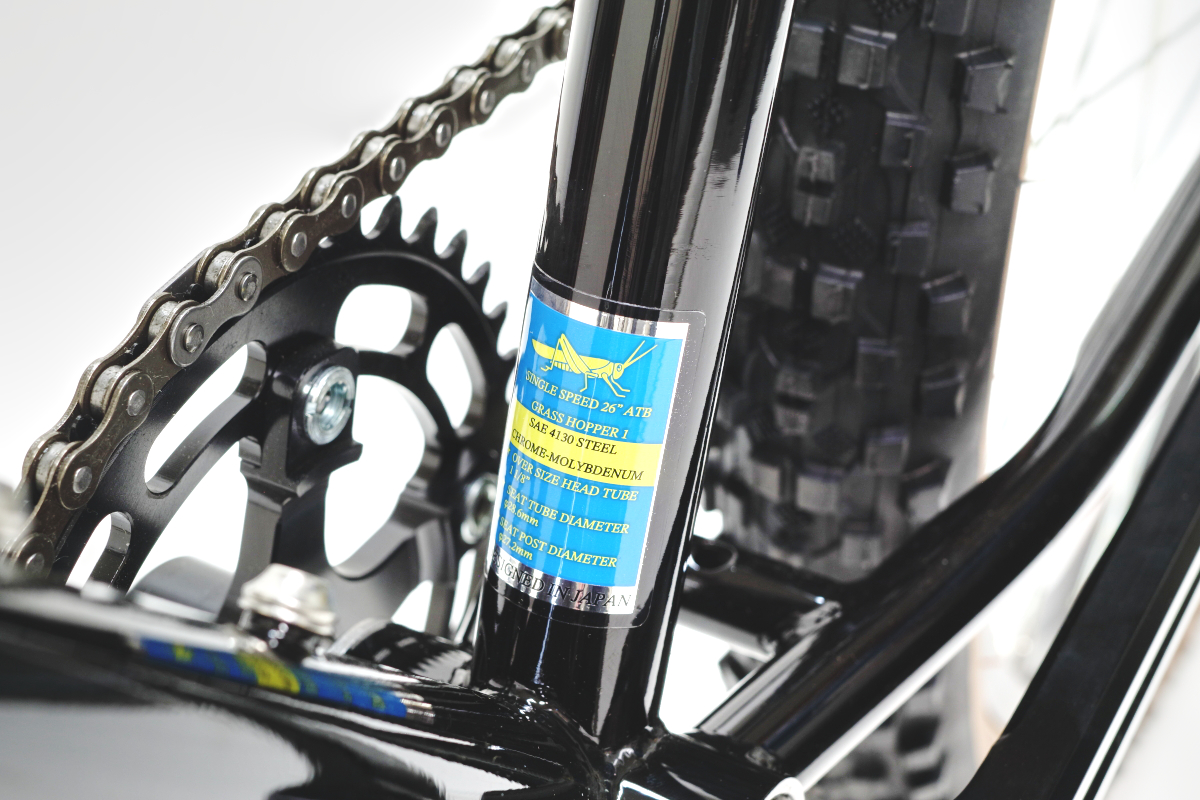
Kuwahara Grasshopper 1 sticker
The Grasshopper 1 was designed in Japan. Kuwahara

4130 Cr-Mo steel is used for the frame and fork, with external cable routing and horizontal dropouts keeping things period-correct.

Kuwahara Grasshopper 1 raw
Kuwahara says the raw colourway is likely to rust over time, but I think that’s what they call patina. Kuwahara

It’s 26in wheels will likely feel like casters to many on technical terrain, but there’s still a strong following in the #26aintdead crowd for whom this bike may seem perfect.  

The wheels use double-wall alloy rims laced to Kuwahara’s own Twin-Turbine hubs.

A singlespeed setup is implemented, which should keep maintenance down to a minimum in and around town.

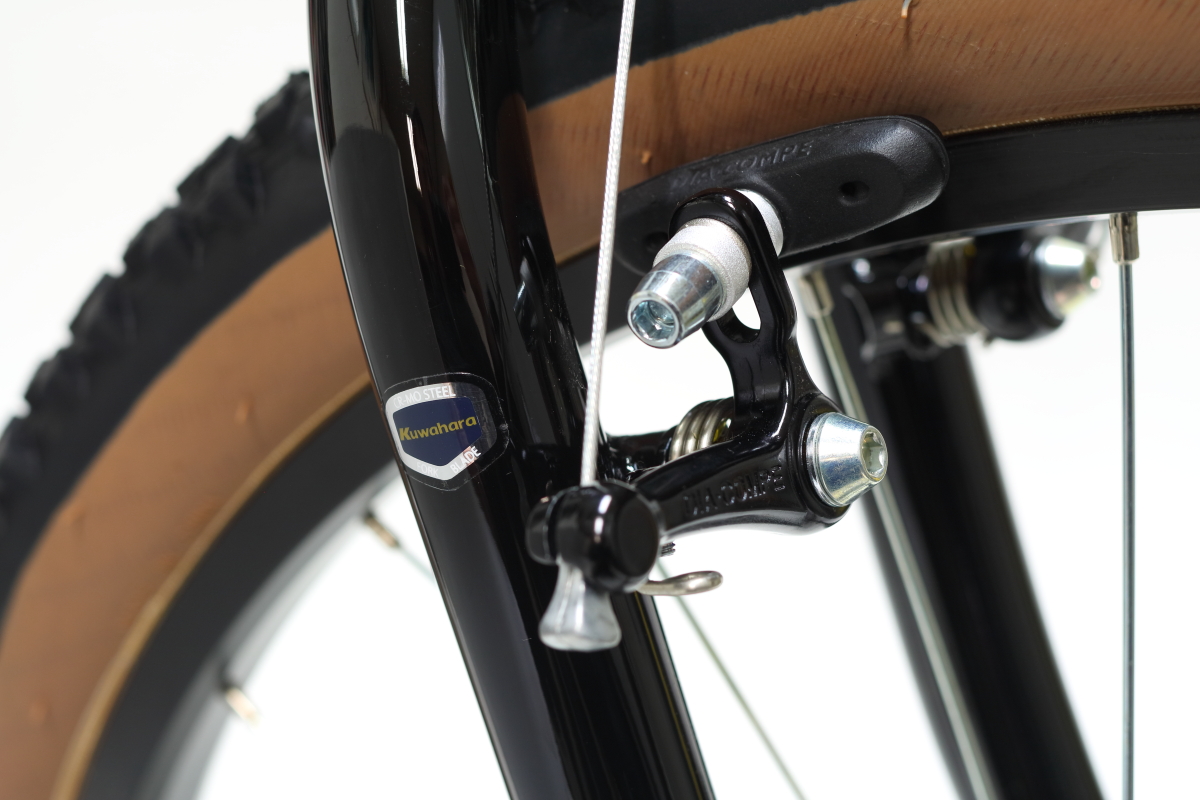
Kuwahara Grasshopper 1 brakes
Very few people mourn the death of cantilever brakes. Kuwahara

Dia-Compe DC-980 cantilever brakes are spec’d, which will slow you down eventually, but it’s not about performance with this bike – it’s a statement of style and simplicity that pays homage to the legendary brand’s roots.

For those who look back with rose-tinted glasses, the purple model features silver components, including the wheels, handlebar, stem and seatpost.

Just be sure to keep those shades on when the sun comes out, or prepare to be dazzled.

US Cybersecurity Adds Exploited VMware Aria Operations To KEV Catalog

joshuark writes: The U.S. Cybersecurity and Infrastructure Security Agency (CISA) has added a VMware Aria Operations vulnerability tracked as CVE-2026-22719 to its Known Exploited Vulnerabilities catalog, flagging the flaw as exploited in attacks. VMware Aria Operations is an enterprise monitoring platform that helps organizations track the performance and health of servers, networks, and cloud infrastructure. The flaw has now been added to the CISA’s Known Exploited Vulnerabilities (KEV) catalog, with the U.S. cyber agency requiring federal civilian agencies to address the issue by March 24, 2026. Broadcom said it is aware of reports indicating the vulnerability is exploited in attacks but cannot confirm the claims.

“A malicious unauthenticated actor may exploit this issue to execute arbitrary commands which may lead to remote code execution in VMware Aria Operations while support-assisted product migration is in progress,” the advisory explains. Broadcom released security patches on February 24 and also provided a temporary workaround for organizations unable to apply the patches immediately. The mitigation is a shell script named “aria-ops-rce-workaround.sh,” which must be executed as root on each Aria Operations appliance node. There are currently no details on how the vulnerability is being exploited in the wild, who is behind it, and the scale of such efforts.


Read more of this story at Slashdot.

Engicam introduces SmarCore iQ6 SMARC module with Dragonwing IQ-6

Engicam has introduced the SmarCore iQ6, a SMARC 2.2 system-on-module based on the Qualcomm Dragonwing IQ-6 Series. The module targets industrial, IoT, and edge computing applications requiring a compact embedded platform with multimedia and AI capabilities. The SmarCore iQ6 is built around the Qualcomm IQ-615 processor and uses a heterogeneous CPU architecture composed of two […]

A Nuclear Reactor Backed By Bill Gates Gets Federal Approval To Start Building

An anonymous reader quotes a report from the New York Times: A novel type of nuclear power plant in Wyoming backed by Bill Gates received a key federal permit on Wednesday, making it the first new U.S. commercial reactor in nearly a decade to receive clearance to begin construction. The Nuclear Regulatory Commission, the federal body that oversees reactor safety, unanimously voted (PDF) to grant a construction permit to TerraPower, a start-up founded by Mr. Gates. TerraPower is one of several companies trying to build a new wave of smaller, advanced reactors meant to be easier to build than the large reactors of old.

The permit, which comes after years of consultations and regulatory reviews, means that TerraPower can begin pouring concrete and building the nuclear components of its proposed nuclear plant in Kemmerer, Wyo. The plant, which still faces plenty of logistical hurdles, is currently expected to come online in 2031 near an old coal-burning power plant that is slated to retire a few years later. […] With its construction permit in hand, the company says it plans to start work on the Wyoming reactor in the coming weeks. The company had already broken ground on the site in 2024 and had begun building the nonnuclear parts of the plant, which did not require a permit.

TerraPower has already had to push back its start date several times, and it will still face hurdles in trying to avoid the snags and cost overruns that have plagued other reactor projects as well as securing the fuel it needs. Before coming online, the reactor will also need to secure a separate operating license from the N.R.C., which has told the company it will continue to monitor several safety issues. TerraPower plans to sell electricity from its first plant to PacificCorp, a utility in the Northwest. The company has also agreed to supply up to eight reactors to Meta to power its data centers in the coming years.


Read more of this story at Slashdot.