“Zwift Spring Classics” Challenge Launched

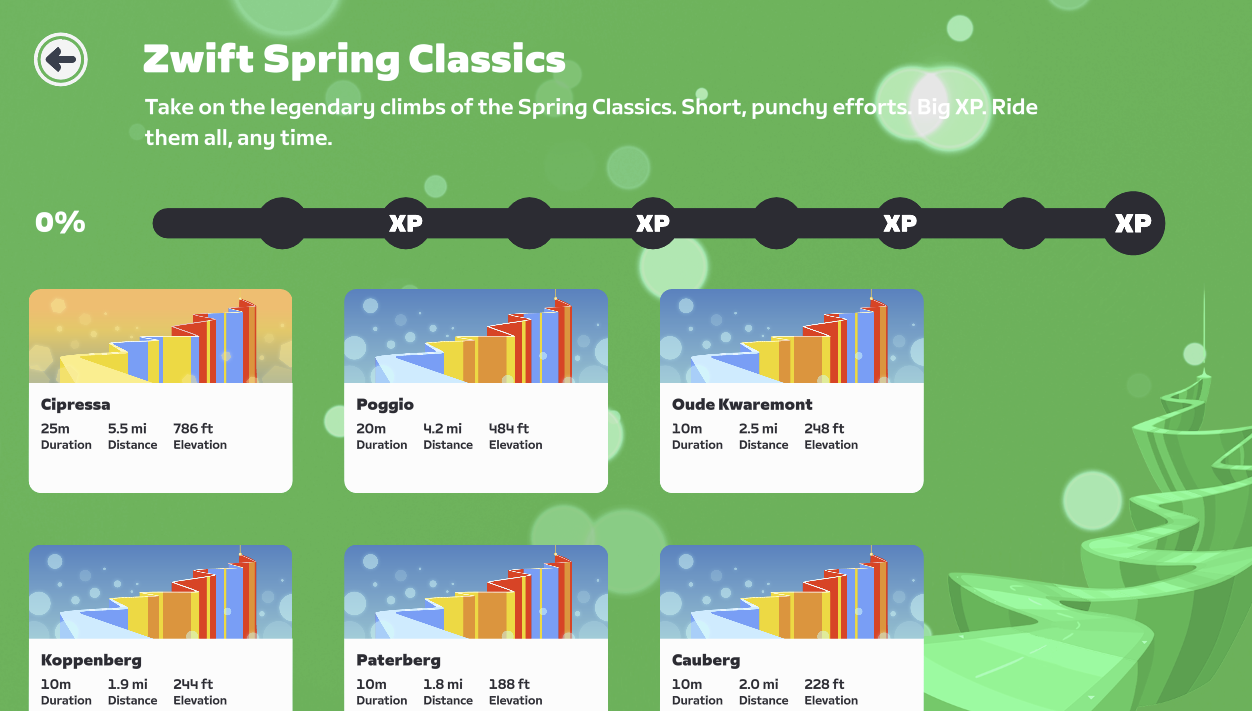
Today, Zwift launched an eight-climb challenge featuring legendary climbs of the Spring Classics. The series runs from March 9 to May 1, and features three new Climb Portals. Read on for details!

Challenge Requirements

The Challenge features eight climbs, including three that are brand-new:

Finish all eight climbs to complete the Challenge!

Joining the Challenge

Everyone is automatically signed up for this challenge. As long as you’ve got version 1.108 or higher installed, you’ll see a progress bar in the challenge card on your homescreen.

Click that card to access the climbs and see reward details.

Challenge Rewards

You will earn 500 XP for every two climbs you complete in the challenge, which means you will earn a total of 2000 XP if you complete the full Challenge.

Read more about Zwift levels and unlocks >

Deadline

This challenge goes live at 9:00 PT on March 9, 2026, and ends May 1, 2026, at 23:59 PT.

(I recommend finishing before the final day, though, as some past Challenges have ended earlier than expected, and you don’t want to be caught out if that happens.)

Questions or Comments?

Post below!

Anthropic Sues the Pentagon After Being Labeled a Threat To National Security

Anthropic is suing the Department of Defense after the Trump administration labeled the company a “supply chain risk” and canceled its government contracts when Anthropic refused to allow its AI model Claude to be used for domestic surveillance or autonomous weapons. Fortune reports: The lawsuit, filed Monday in the U.S. District Court for the Northern District of California, calls the administration’s actions “unprecedented and unlawful” and claims they threaten to harm “Anthropic irreparably.” The complaint claims that government contracts are already being canceled and that private contracts are also in doubt, putting “hundreds of millions of dollars” at near-term risk.

An Anthropic spokesperson told Fortune: “Seeking judicial review does not change our longstanding commitment to harnessing AI to protect our national security, but this is a necessary step to protect our business, our customers, and our partners.” “We will continue to pursue every path toward resolution, including dialogue with the government,” they added.


Read more of this story at Slashdot.

Flexible feline spines shed light on “falling cat” problem

Why do falling cats always seem to land on their feet? Scientists have been arguing about the precise mechanism for a very long time—since at least 1700, in fact—conducting all manner of experiments to pin down what’s going on. The research continues, with a paper published in the journal The Anatomical Record reporting on new experiments to analyze the flexibility of feline spines.

We covered this topic in-depth in 2019, when University of North Carolina, Charlotte, physicist Greg Gbur published his book, Falling Felines and Fundamental Physics. For a long time, scientists believed that it would be impossible for a cat in free fall to turn over. That’s why French physiologist Etienne-Jules Marey’s 1894 high-speed photographs of a falling cat landing on its feet proved so shocking to Marey’s peers. But Gbur has emphasized that cats are living creatures, not idealized rigid bodies, so the motion is more complicated than one might think.

Over the centuries, scientists have offered four distinct hypotheses to explain the phenomenon. There is the original “tuck and turn” model, in which the cat pulls in one set of paws so it can rotate different sections of its body. Nineteenth-century physicist James Clerk Maxwell offered a “falling figure skater” explanation, whereby the cat tweaks its angular momentum by pulling in or extending its paws as needed. Then there is the “bend and twist,” in which the cat bends at the waist to counter-rotate the two segments of its body. Finally, there is the “propeller tail,” in which the cat can reverse its body’s rotation by rotating its tail in one direction like a propeller.

Read full article

Comments

PlayStation 5 Modded Into A Linux Gaming PC Runs Ray-Traced GTA 5 Smooth As Silk

PlayStation 5 Modded Into A Linux Gaming PC Runs Ray-Traced GTA 5 Smooth As Silk
A modder has successfully shown off Grand Theft Auto V: Enhanced Edition running smoothly on the PlayStation 5 under Ubuntu Linux, with the CPU and GPU clocked up to 3.2GHz and 2GHz, respectively. Compared to the default CPU and GPU boost clocks, which peak at 3.5 GHz and 2.23 GHz, the frequencies used were actually lower than what’s possible,

EA laid off staffers across Battlefield studios to ‘better align’ its teams

EA axed an undisclosed number of employees across the game studios behind the Battlefield franchise. As first reported by IGN, EA told affected employees that the layoffs were part of a “realignment” across the Battlefield studios, which include Dice, Criterion, Ripple Effect and Motive Studios. When asked about the report, an EA spokesperson said in a statement that “we’ve made select changes within our Battlefield organization to better align our teams around what matters most to our community.”

IGN reported that all the involved studios will remain operational, but the layoffs will affect multiple offices. The shake-up may come as a surprise to staffers, especially after Battlefield 6 racked up more than seven million copies sold in the first three days following its release in October. EA even called the latest Battlefield title the “best-selling shooter title of 2025” in its third quarter report for FY26, which disclosed the company’s net revenue of more than $1.9 billion for the quarter.

“Battlefield remains one of our biggest priorities, and we’re continuing to invest in the franchise, guided by player feedback and insights from Battlefield Labs,” an EA spokesperson also said in a statement.

Despite being one of EA’s most popular franchises, Battlefield isn’t the only one to suffer staffing cuts. Full Circle, the developer behind the skate. that’s also owned by EA, also announced layoffs and “restructuring” in February. However, EA isn’t the only company in the industry to look at downsizing its personnel. Ubisoft said it was planning to get rid of up to 200 jobs in its Paris office earlier this year and Microsoft announced it would cut thousands of jobs, including within its Gaming division, in July. 

This article originally appeared on Engadget at https://www.engadget.com/gaming/ea-laid-off-staffers-across-battlefield-studios-to-better-align-its-teams-173617672.html?src=rss

Tadej Pogačar’s new sunglasses use titanium temples for a secure, consistent fit 

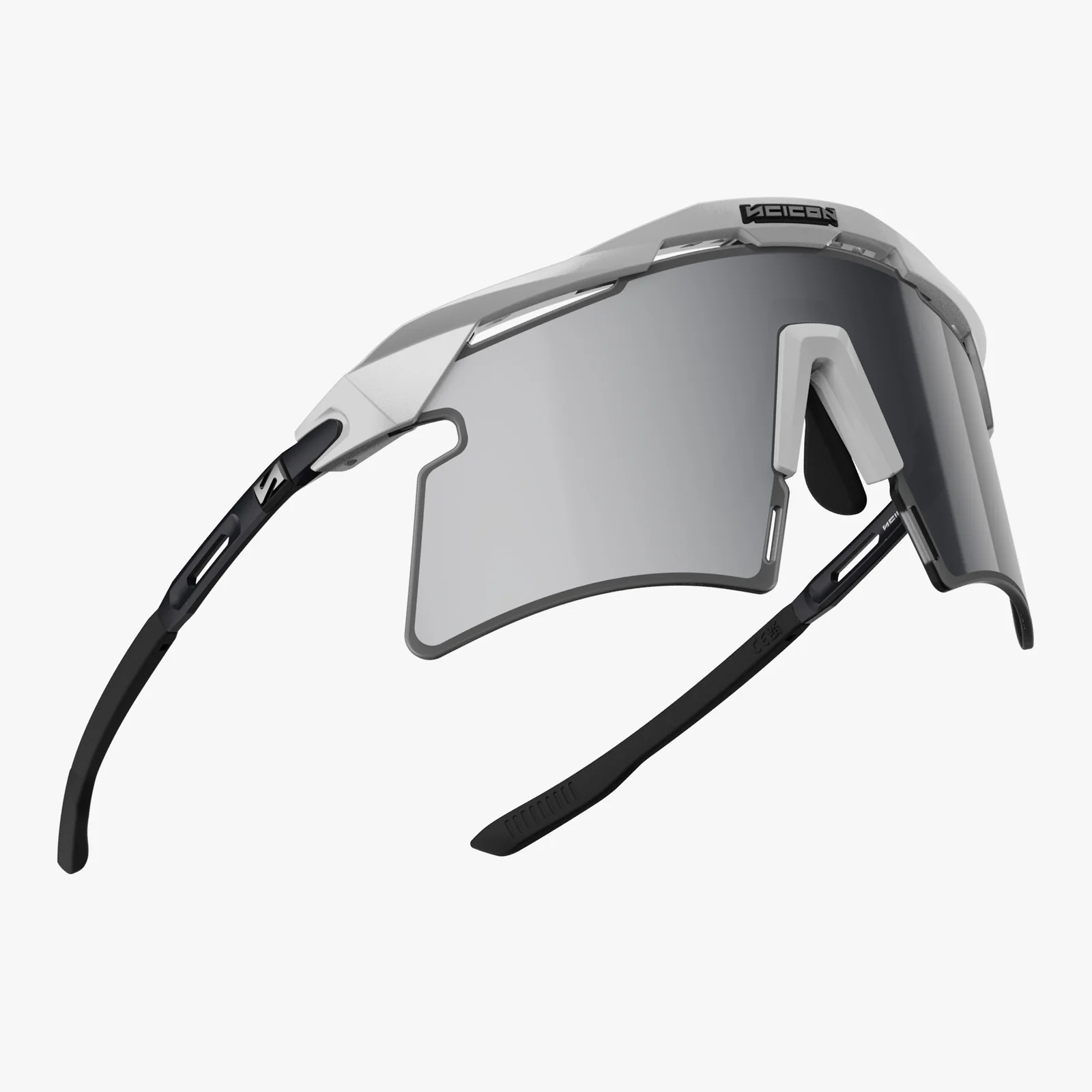
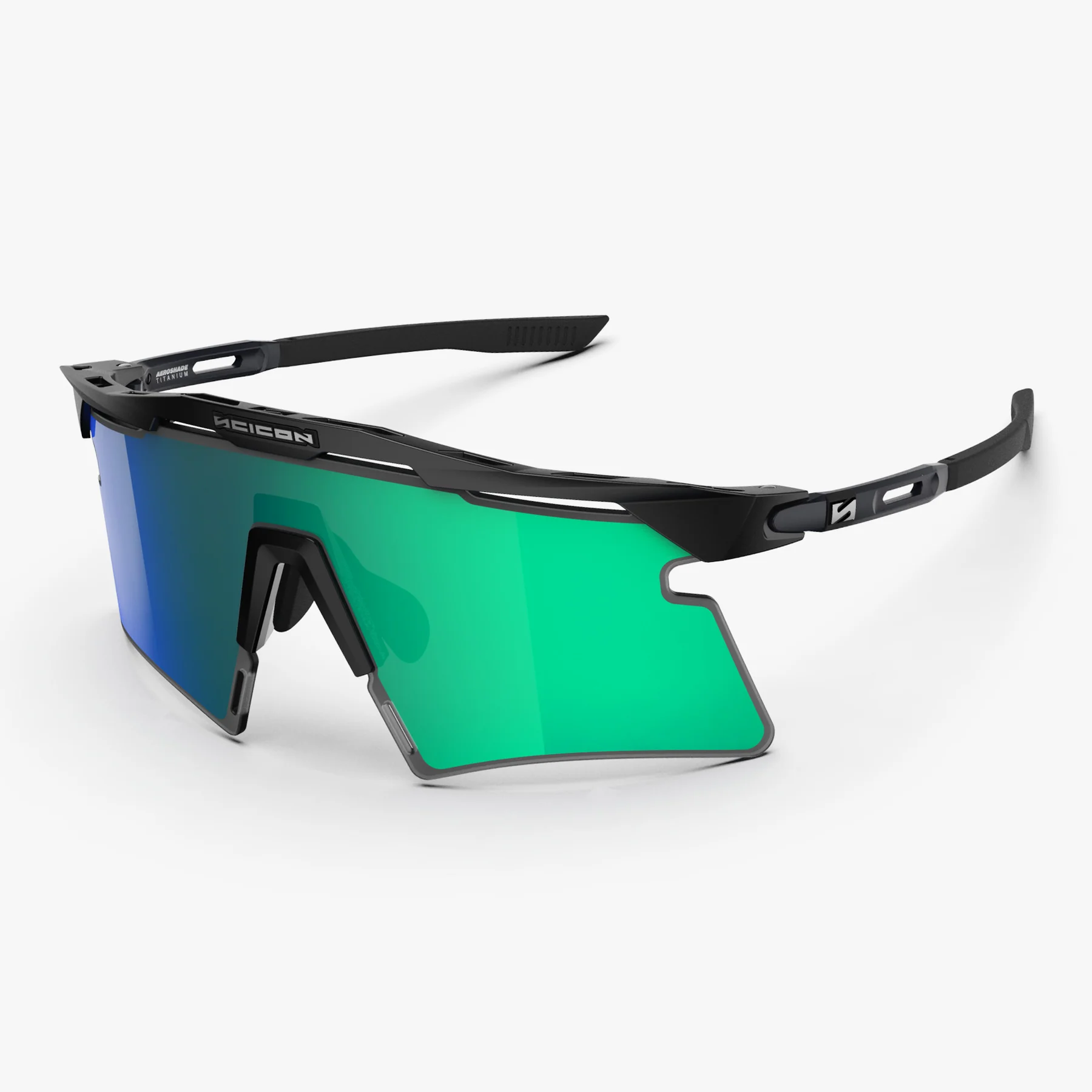
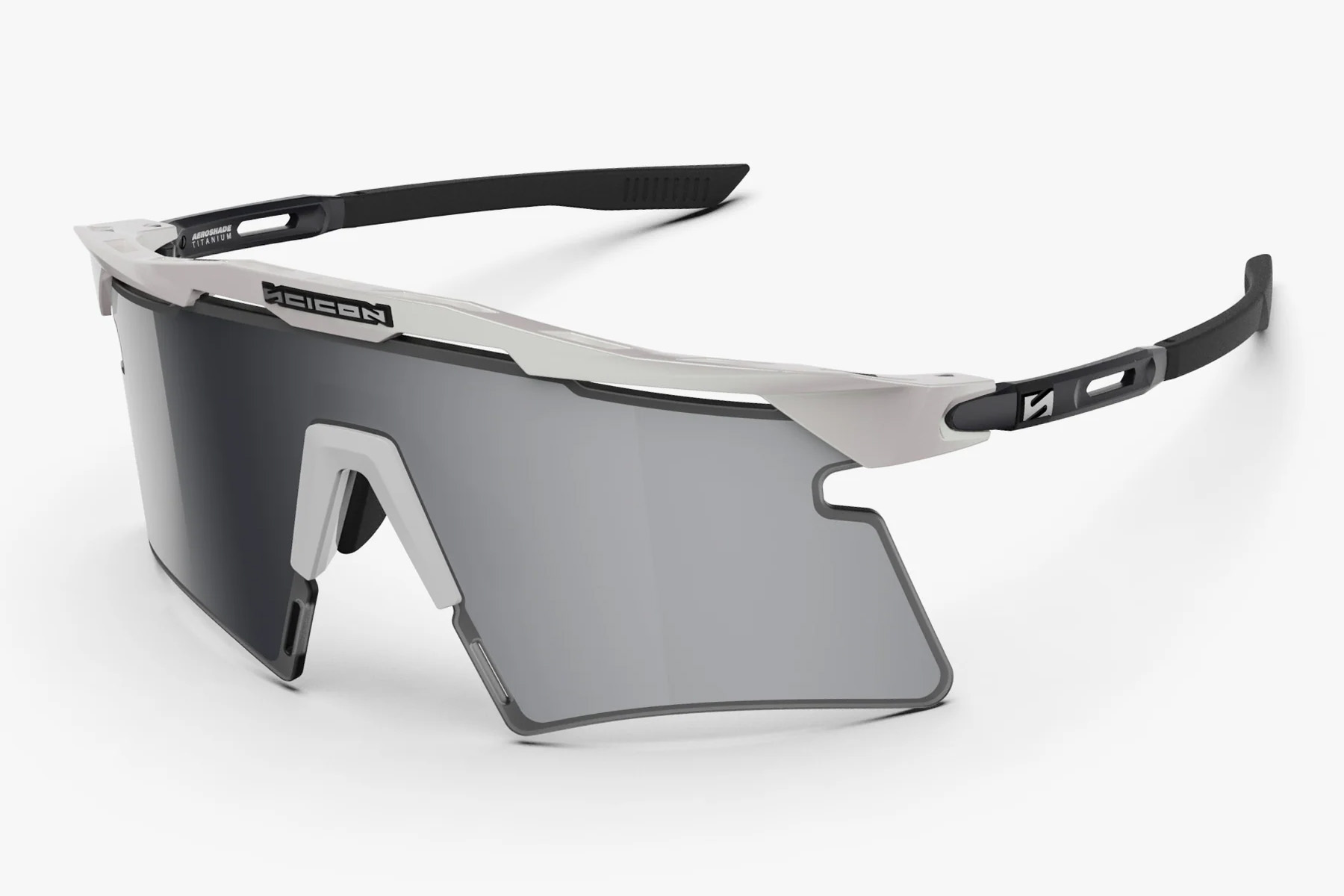
Scicon has released its new Aeroshade 2.0 Titanium sunglasses, an evolution of the glasses worn by Tadej Pogačar, featuring titanium temples and a Grilamid TR90 mono-shield front frame.

The brand says it has used the medical-grade material for strength, flexibility and long-term structural integrity.

It says titanium resists deformation, corrosion and temperature extremes, maintaining a consistent fit and retention ride after ride.

Pogačar wore the glasses at the weekend as he took victory at Strade Bianche, becoming the first rider ever to win the race four times.

The new sunglasses use Scicon’s FlexiFit 2 adjustable nose pad and TactiGrip temple tips are employed for a flexible fit.

Scicon Aeroshade Titanium
The glasses come with a pink spare lens. Scicon

The Grilamid TR90 mono-shield front frame is said to have outstanding strength, flexibility and long-term durability, maintaining precise alignment even under high-speed stress.

Elsewhere, the glasses feature the brand’s VortexFlow ventilation system, which uses strategically positioned ports to optimise airflow and minimise fogging.

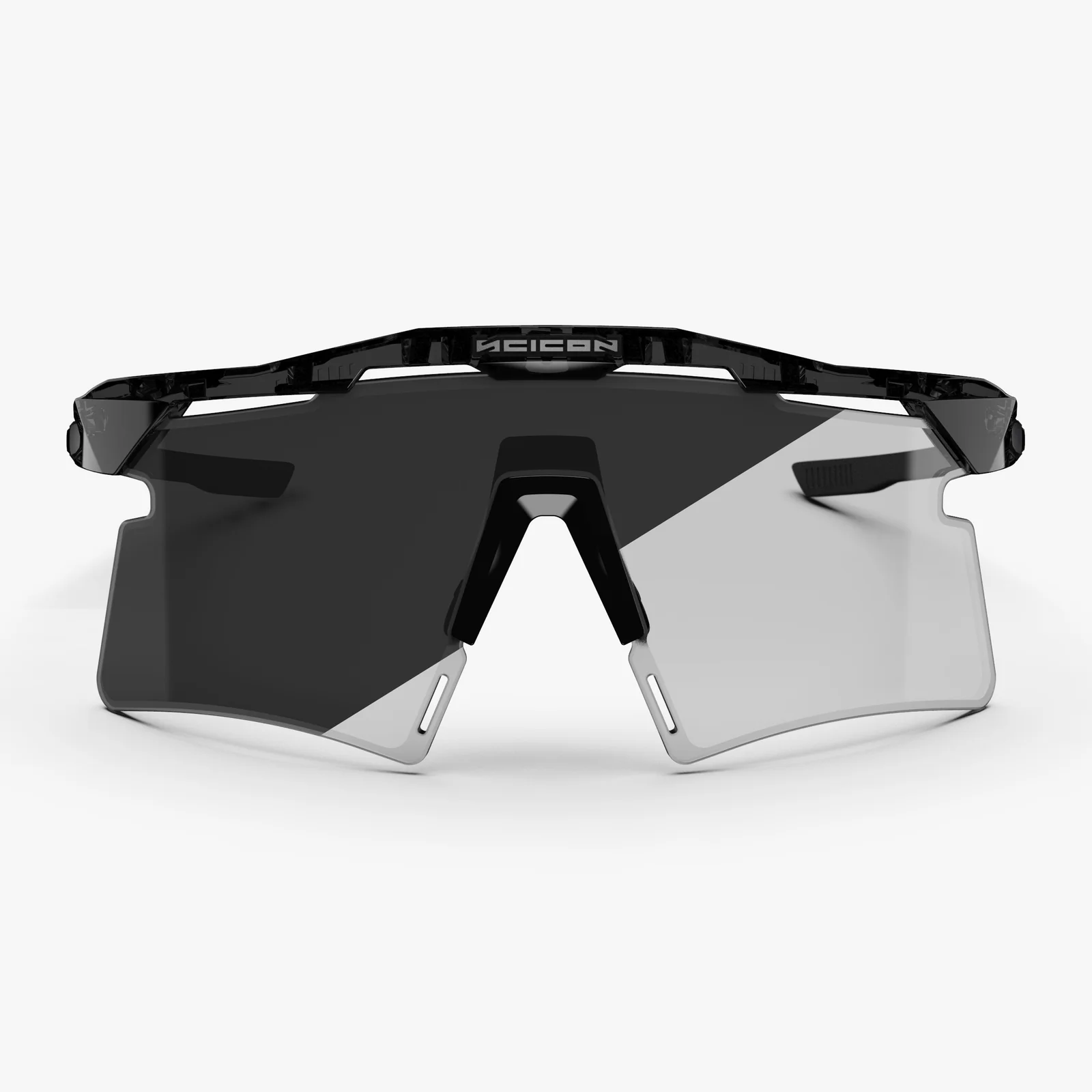
Scicon Aeroshade Titanium photochromic
Photochromic lenses adjust to the ambient light. Scicon

The original Aeroshade glasses have seen plenty of success, with multiple Tour de France wins from Pogačar alone, and more than 500 professional race victories worldwide.

However, the new additions mean the Aeroshade 2.0 is heavier than the previous model, up from 36g to 40g.

Scicon Aeroshade Titanium black
Frame colours are limited. Scicon

There are 20 options to choose from on Scion’s website, with frame colours including white, black, and a white and red option.

Lenses vary too, with mirror and photochromic options available.

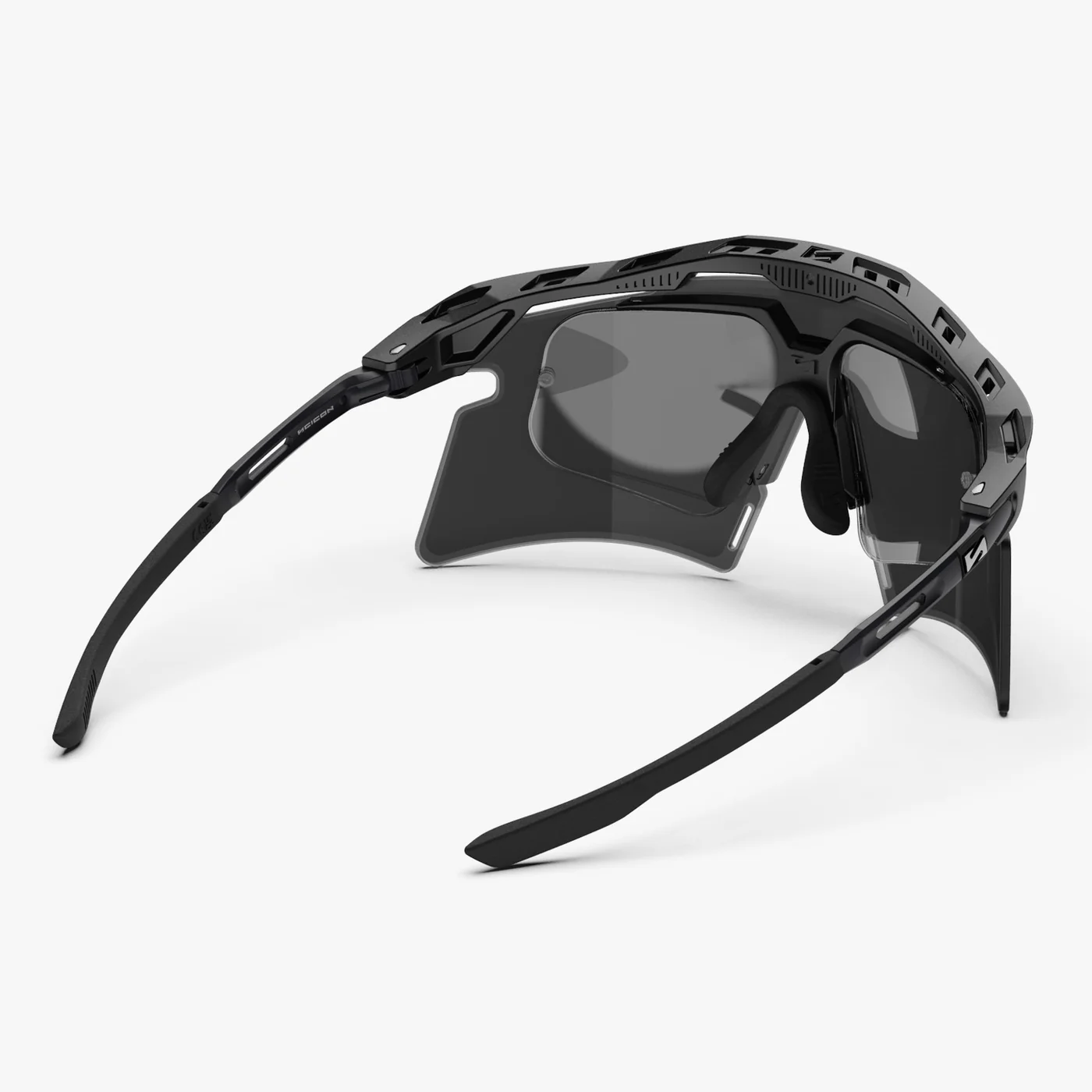
Scicon Aeroshade Titanium optic
There are options for prescription lenses. Scicon

For spectacle wearers, the glasses are also compatible with the Scion’s AC028 Optical Insert, and the RX model comes with this as standard.

Scicon Aeroshade Titanium white
Prices vary depending on lens type. Scicon

Prices start at £192 / $265 / €220, with photocromic lenses priced at £220 / $295 / €250 and the RX model £265 / $360 / €300.

If you’re one of the first 200 to buy the glasses from Scicon’s website, you’ll also receive a Tadej Pogačar Triple Crown photobook with your order.

Here’s What’s in Garmin’s 218-Page Countersuit Against Suunto

Before the better-known Strava lawsuit against Garmin grabbed headlines last year, Suunto had actually sued Garmin first. In September, Suunto and their parent company Dongguan Liesheng quietly filed suit against Garmin over five patent infringement allegations. Garmin recently responded with a 218-page countersuit that reads less like a legal filing and more like Garmin decided it was done being polite.

Why did Suunto sue Garmin?

The five patents in the initial lawsuit from Suunto had to do with the following features:

  • Golf shot tracking using an accelerometer to detect impact

  • Respiration rate derived from an optical heart rate sensor

  • Slot mode antenna design in wearable devices

  • Antenna placement in a wrist-worn device

  • Additional wrist-worn antenna design concepts

Three of the five are antenna-related, one covers physiological metrics, and one is about golf shot detection. As patent lawsuits go, Suunto’s original filing was relatively standard in tone; Garmin’s response was not. Suunto and Garmin are not, historically, enemies. The two companies coexisted constructively for the better part of two decades, with Suunto licensing numerous technologies from Garmin during that span. That’s what makes this lawsuit stand out. 

What’s in Garmin’s 218-page countersuit

So how did Garmin respond to all of this? Well, here’s a stand-out quote, spotted by DC Rainmaker: “Like everything else, Suunto predictably looked to copy Garmin’s GPS technology as it fell behind in the marketplace.” That’s pretty blunt language to have on the record.

Garmin’s response goes on to argue that Suunto’s products have historically followed Garmin’s technology roadmap, particularly around GPS features. Garmin filed five counter-patents of its own, and the filing makes clear the company intends to fight.

What’s also worth noting in Garmin’s language is a recognition that the company it’s going after in court isn’t quite the same Suunto it spent two decades working alongside. Garmin seems to understand that it’s fighting Dongguan Liesheng’s lawyers more than it’s fighting Suunto’s people.

What the Suunto/Garmin lawsuit means for you

Patent cases between major tech companies move slowly. Claims get narrowed, filings get amended, and many of these disputes end in cross-licensing agreements rather than verdicts. For athletes and consumers, nothing about your current devices or features changes in the short term.

But stepping back, this case is a useful reminder of just how much intellectual property is layered underneath a modern sports watch. The hardware and software that makes these devices work is deeply patented territory, and when ownership structures change and relationships cool, that IP becomes leverage. As always, if you have any precious data saved to a watch or app, make sure to back it up on your own personal hard drive. 

For the full technical breakdown of the filings, Ray Maker’s reporting over at DC Rainmaker is the definitive read.

‘If Lockheed Martin Made a Game Boy, Would You Buy One?’

“If Lockheed Martin made a Game Boy, would you buy one?” That was the [rhetorical] question The Verge’s Sean Hollister asked when he reviewed ModRetro’s Game Boy-style handheld device back in 2024. He said it “might be the best version of the Game Boy ever made,” though the connection to Palmer Luckey and his defense tech startup Anduril left him conflicted. “I don’t remember my childhood nostalgia coming with a side of possible guilt and fear about putting money into the pocket of a weapons contractor,” he wrote. “Feels weird!”

Those conflicted feelings have lingered ever since. TechCrunch recently cited Hollister’s review while reporting that ModRetro is now seeking funding at a $1 billion valuation. The company is said to have additional retro-inspired hardware in development, including one designed to replicate the Nintendo 64. As for Anduril? It’s reportedly in talks to raise a new funding round that would value the company at around $60 billion.


Read more of this story at Slashdot.

Hyper Light Drifter studio workers form union after rounds of layoffs

Workers at Heart Machine, the independent studio behind Hyper Light Drifter and Solar Ash, have formed a union with Communications Workers of America (CWA) Local 9003. The wall-to-wall unit covers all 13 frontline employees at the studio, which voluntarily recognized the union in February after a supermajority of eligible workers voted for the measure.

The organizing effort follows a rough stretch at Heart Machine, after the studio laid off employees in November 2024, then announced in October 2025 that it would end development on its early access title Hyper Light Breaker and cut further staff.

“I decided to get involved in organizing my studio because I’ve seen so many peers in the industry stand up to protect the craft we all care so deeply about. Watching that momentum grow made me realize that if we love this work, we have to protect it, especially now,” said Steph Aligbe, a gameplay tools engineer at the studio.

Heart Machine joining the CWA extends the union’s gaming footprint even further. The union counts thousands of employees at Microsoft subsidiaries among its members, as well as staff at EA, Id Software and others. CWA also runs the United Videogame Workers, a direct-join union that launched in 2025, allowing individual game workers in the US and Canada to sign up on their own without elections or employer consent. Large gaming studios like Ubisoft have been undergoing a seemingly endless string of layoffs, and workers are increasingly demanding to have their voices heard.

This article originally appeared on Engadget at https://www.engadget.com/gaming/hyper-light-drifter-studio-workers-form-union-after-rounds-of-layoffs-165828565.html?src=rss

Don’t worry, Valve still plans to launch the Steam Machine “this year”

Valve quickly reconfirmed that it plans to ship the Steam Machine and other recently announced hardware products “this year,” after an official blog post late last week set off some worried speculation about possible delays.

While Steam’s 2025 Year in Review mainly focused on new Steam tools and features released last year, the introductory section focused on the company’s previously announced upcoming hardware plans. However, when that Year in Review post was first published Friday afternoon, it included a surprisingly vague line saying “we hope to ship in 2026, but as we shared recently, memory and storage shortages have created challenges for us.” (Emphasis added.)

As stray chatter about that stray line started to filter through message boards and comment threads, Valve quickly issued a clarification. By late Friday, the blog post had been updated to note that, despite the global supply chain challenges, “we will be shipping all three products this year. More updates will be shared as we finalize our plans.” (Emphasis added.)

Read full article

Comments

The MacBook Neo Outperforms These M-Series MacBooks

We may earn a commission from links on this page.

The MacBook Neo might just eclipse the iPhone Air as the most interesting Apple product in years. This machine offers buyers the full macOS experience, in their choice of fun new colors, for $599 ($499 for “students”). Not so long ago, Apple’s cheapest laptop, the MacBook Air—long priced at $999, but increased to $1,099 with the launch of the current M5 model—felt like a good deal. Now, you can get a machine that includes all of Apple’s latest Mac features for as little as half the price.

Of course, the Neo isn’t a MacBook Air. To get the price of a Neo down to $500 or $600, Apple had to make some concessions, like using a mechanical trackpad instead of a modern haptic one; the absence of Touch ID on the base model keyboard; older USB-C tech, including one USB-2.0 port; and no backlight on the keyboard. These are things many users won’t notice or won’t miss much in light of the price. But what’s really allowing for the lower cost of the MacBook Neo is arguably its most interesting feature: While all of Apple’s Macs now run the company’s M-series chipset, the Neo is running the A18 Pro, the chip Apple put in the iPhone 16 Pro, coupled with 8GB of RAM.

Not only is the Neo running an iPhone SoC, this one has one fewer GPU core than the A18 Pro found in the iPhone, as Apple is using the “binned” version of the chip for this laptop. When chips are manufactured, some come out better than others. The better ones are sold as higher-end chips, while others are sold as lower-performing chips, or “binned” chips. In this case, the MacBook Neo is running A18 Pros that weren’t up to the iPhone 16 Pro standard. You can see that from the Neo’s tech specs: While it has the same six-core CPU as the iPhone 16 Pro, the Neo has a five-core GPU, one fewer than the iPhone 16 Pro’s six-core GPU.

It seems safe to assume that a MacBook running a binned iPhone chip, with 8GB of RAM, no less, wouldn’t fare as well running the latest macOS as a chip designed for the operating system. But the truth is more complicated than that.

MacBook Neo keeps up with some M-series MacBooks in benchmarking

While there aren’t any full reviews of the MacBook Neo quite yet, initial benchmarks, as spotted by MacRumors, are quite promising. The Neo’s first Geekbench tests show the laptop’s A18 Pro chip scores a 3461 in single-core performance, 8668 in multi-core performance, and 31286 in Metal (GPU) performance.

Those numbers don’t mean anything unless they’re compared to other devices, of course. Let’s look at the iPhone 16 Pro first: Despite having one more GPU than the Neo, the 16 Pro has slightly lower single-core (3445) and multi-core (8624) scores. That sixth GPU core likely helps it eke out a win in the Metal test, scoring a 32575. Still, performance across the board is relatively similar between the two devices—despite running totally different operating systems.

Where things start to get really impressive, however, is when you start comparing the Neo’s “iPhone” chip to the Mac chips in other MacBooks. The M1 MacBook Air, for example, scores a 2346 in single-core, 8342 in multi-core, and 33148 in Metal. While M1 beats the Neo in Metal tests, the Neo’s A18 Pro chip wildly outperforms M1 in single-core performance, and even wins out in multi-core by a few hundred points. That means simple tasks that don’t require a lot of processing are going to run faster on the Neo than an M1 Air, as will complex tasks—though not by as much.

Even Apple’s M4 MacBook Air doesn’t totally obliterate the Neo. The M4 Air scores a 3696 in single-core, 14730 in multi-core, and 54630 in Metal. Yes, in multi-core and GPU-intensive tasks, the M4 Air smokes the Neo. But for single core tasks, it outperforms the Neo by a smaller margin than the Neo outperforms M1 in multi-core. Simple tasks will likely feel comparable between the M4 Air and the Neo.

The MacBook Neo could be a big win for Apple

Benchmarks don’t necessarily reflect real-world performance, so we won’t really know how the MacBook Neo stacks up against Apple’s M-series MacBooks until reviewers put it through its paces. But these numbers only make me more convinced than ever that the MacBook Neo is going to be a huge success for Apple. Not only is this a great alternative to a Chromebook or a low-end Windows PC, it seems like it’s a good MacBook in its own right. You could buy an older MacBook, say an M1 or M2 machine, or you could buy a brand-new Neo, and enjoy the perks that come with a fresh purchase.

That said, one area the benchmarks don’t measure is multitasking. The Neo has 8GB of RAM, which should be find for single tasks, but once you start running too many things at once, you could choke the system. If you open too many browser tabs, or run too many apps at once, you may start to feel that pain. That’s not an issue if you were between a Neo and an M1 MacBook Air with 8GB of RAM. But if you can find an M1 MacBook Air with 16GB of RAM at a similar price point, that might be the move. You’ll get comparable performance and more flexibility for multitasking—not to mention some future-proofing with the additional RAM, as macOS gets ever more complex.

AI Allows Hackers To Identify Anonymous Social Media Accounts, Study Finds

An anonymous reader quotes a report from the Guardian: AI has made it vastly easier for malicious hackers to identify anonymous social media accounts, a new study has warned. In most test scenarios, large language models (LLMs) — the technology behind platforms such as ChatGPT — successfully matched anonymous online users with their actual identities on other platforms, based on the information they posted. The AI researchers Simon Lermen and Daniel Paleka said LLMs make it cost effective to perform sophisticated privacy attacks, forcing a “fundamental reassessment of what can be considered private online”.

In their experiment, the researchers fed anonymous accounts into an AI, and got it to scrape all the information it could. They gave a hypothetical example of a user talking about struggling at school, and walking their dog Biscuit through a “Dolores park.” In that hypothetical case, the AI then searched elsewhere for those details and matched @anon_user42 to the known identity with a high degree of confidence. While this example was fictional, the paper’s authors highlighted scenarios in which governments use AI to surveil dissidents and activists posting anonymously, or hackers are able to launch “highly personalized” scams.


Read more of this story at Slashdot.

Live Nation settlement avoids breakup with Ticketmaster

To keep Ticketmaster, Live Nation is going to have to make some major changes. As first reported by Politico, Live Nation reached a settlement with the Department of Justice in its antitrust case that accused the live entertainment giant of monopolistic practices. Live Nation will reportedly pay at least $200 million in damages to states that were part of the lawsuit filed in May 2024, but avoid selling off Ticketmaster.

Live Nation will also be required to make a few changes to its business practices. According to NBC News, Ticketmaster, a subsidiary of Live Nation, will be required to create a “standalone ticketing system” that allows third-party competitors like SeatGeek and Eventbrite to sell tickets on.

The settlement aims to loosen some of Live Nation’s control over venues as well. According to NBC News, the company will have to divest up to 13 amphitheaters and be prohibited from retaliating against venues that choose another ticket seller over Ticketmaster.

The settlement comes less than a week after the case went to trial. While the matter may be concluded with the Justice Department, many of the states’ attorneys general who were part of the lawsuit will be continuing their legal action separately.

“The settlement recently announced with the U.S. Department of Justice fails to address the monopoly at the center of this case and would benefit Live Nation at the expense of consumers,” New York State Attorney General Letitia James wrote in a press release. “We will continue our lawsuit to protect consumers and restore fair competition to the live entertainment industry.” 26 other attorneys general signed onto continuing the lawsuit with James.

This article originally appeared on Engadget at https://www.engadget.com/entertainment/music/live-nation-settlement-avoids-breakup-with-ticketmaster-155031214.html?src=rss

2026 Australian Grand Prix: Formula 1 debuts a new style of racing

Formula 1’s 2026 season got underway this past weekend in Melbourne, Australia. Formula 1 has undergone a radical transformation during the short off-season, with new technical rules that have created cars that are smaller and lighter than before, with new hybrid systems that are more powerful than anything since the turbo era of the 1980s—but only if the battery is fully charged.

The changes promised to upend the established pecking order of teams, with the introduction of several new engine manufacturers and a move away from the ground-effect method of generating downforce, which was in use from 2022. For at least a year, paddock rumors have suggested that Mercedes might pull off a repeat of 2014, when it started the first hybrid era with a power unit far ahead of anyone else.

That wasn’t entirely clear after six days of preseason testing in Bahrain, nor really after Friday’s two practice sessions in Melbourne, topped by Charles Leclerc’s Ferrari and Oscar Piastri’s McLaren, respectively. The Mercedes team didn’t look particularly worried, and on Saturday we found out why when George Russell finally left off the sandbags and showed some true pace, lapping more than six-tenths faster by the end of free practice than the next-quickest car, the Ferrari of Lewis Hamilton.

Read full article

Comments

Anthropic sues US government over supply chain risk designation

According to Reuters, Anthropic has filed a lawsuit to prevent the Pentagon from adding the company it a national security blocklist. This comes days after the Department of Defense sent a letter to Anthropic confirming the company was labeled a supply chain risk; at the time CEO Dario Amodei had all but guaranteed Anthropic would fight back with legal action.

The lawsuit claims the designation is unlawful and violated free speech and due process rights. “These actions are unprecedented and unlawful. The Constitution does not allow ​the government to wield its enormous power to punish a company for its protected speech,” Anthropic said in a statement published by Reuters.

Engadget received the following statement from an Anthropic spokesperson:

 “Seeking judicial review does not change our longstanding commitment to harnessing AI to protect our national security, but this is a necessary step to protect our business, our customers, and our partners. We will continue to pursue every path toward resolution, including dialogue with the government.” 

The lawsuit states that the government’s actions “are unprecedented and unlawful.” It goes on to say that “the Constitution does not allow the government to wield its enormous power to punish a company for its protected speech. No federal statute authorizes the actions taken here. Anthropic turns to the judiciary as a last resort to vindicate its rights and halt the Executive’s unlawful campaign of retaliation.”

Today’s legal action comes after several weeks of back-and-forth between the AI company and the government. In late February, news broke that the Department of Defense and Defense Secretary Pete Hesgeth were pressuring Anthropic to remove certain safeguards from its AI systems, but Amodei made it clear the company would refuse to allow its model to be used for mass surveillance or development of autonomous weapons.

On the February 27 deadline, Amodei refused to budge, leading Hesgeth to threaten the company with the supply chain risk designation; he also said the US government would cancel its $200 million contract with the company. The same day, President Trump ordered all federal agencies to cease using Anthropic as well.

Despite the fact that, according to the lawsuit, Anthropic had agreed to “collaborate with the Department on an orderly transition to another AI provider willing to meet its demands,” the government followed up with “public castigation.”

Amidst all this, it was reported late last week that Anthropic was once again meeting with the Department of Defense to try and reach a solution — but it seems those talks were unsuccessful.

This story is developing, please refresh for further updates.

This article originally appeared on Engadget at https://www.engadget.com/ai/anthropic-sues-us-government-over-supply-chain-risk-designation-152838128.html?src=rss