CNN looks at “the Magic AI fitness mirror,” a new product “watching you, and giving you feedback automatically,” while sometimes playing footage of a recorded personal trainer.
Long-time Slashdot reader destinyland describes CNN’s video report:
CNN says the device “tracks form, counts reps, and corrects technique in real-time — and it doesn’t go easy on you.” (Although the company’s CEO/cofounder, Varun Bhanot, says “we’re not trying to completely replace personal trainers. What we are providing is a more accessible alternative.”)
CNN call the company “more a computer-vision firm than a fitness company, building the tech for this mirror from the ground up.” CEO Bhanot tells CNN he’d hired a personal trainer in his 20s to get fit, but “Going through that journey, I realized how old-fashioned personal training was. Dumbbells were still dumb. There was no data or augmentation for the whole process!”
“The AI fitness and wellness market is already huge — and it’s growing,” CNN adds. “In 2025 the global market was worth $11 billion, according to [market research firm] Insightace Analytic. By 2035, this market is expected to reach just shy of $58 billion. And Magic AI is far from alone. Form, Total, Speediance, and Echelon, to name a few, are all brands vying for a slice of this market.
Even the most purely physical of activities — exercising your body — now gets “enhanced” with AI accessories…
“Google is beginning to replace news headlines in its search results with ones that are AI-generated,” reports the Verge:
After doing something similar in its Google Discover news feed, it’s starting to mess with headlines in the traditional “10 blue links,” too. We’ve found multiple examples where Google replaced headlines we wrote with ones we did not, sometimes changing their meaning in the process. For example, Google reduced our headline “I used the ‘cheat on everything’ AI tool and it didn’t help me cheat on anything” to just five words: “‘Cheat on everything’ AI tool.” It almost sounds like we’re endorsing a product we do not recommend at all.
What we are seeing is a “small” and “narrow” experiment, one that’s not yet approved for a fuller launch, Google spokespeople Jennifer Kutz, Mallory De Leon, and Ned Adriance tell The Verge. They would not say how “small” that experiment actually is. Over the past few months, multiple Verge staffers have seen examples of headlines that we never wrote appear in Google Search results — headlines that do not follow our editorial style, and without any indication that Google replaced the words we chose. And Google says it’s tweaking how other websites show up in search, too, not just news.
The good news, for now, is that these changed headlines seem to be few and far between, and they’re not yet the kind of tripe we’ve seen in Google Discover. (For example, Google Discover told me this week that the PlayStation Portal was getting a 1080p streaming mode, when it actually got a higher bitrate mode instead.) Compared to that and other lying Google Discover headlines like “US reverses foreign drone ban” — on a story reporting the opposite — the nonsense headlines we’re seeing in Google Search are downright tame.
The article points out that Google “originally told us its AI headlines in Google Discover were an experiment too. A month later, it told us those AI headlines are now a feature…”
“Google confirmed that the test uses generative AI, but claimed that ‘if we were to actually launch something based on this experiment, it would not be using a generative model and we would not be creating headlines with gen AI’…”
Chinese bicycle brands had a seminal year in 2025. More Chinese brands began to appear in Western countries and they bagged major sponsorship deals. XDS teamed up with Astana, while IGSport joined Groupama–FDJ United. Meanwhile, Britain’s Harry Hudson won the Junior World Road title at the Rwanda UCI Worlds on a Quick Pro road bike.
But what’s behind the surge in Chinese cycling brands? One person who is well placed to explain their newfound success is British expat Joe Whittingham.
Whittingham started out reporting on Chinese bikes, components and kit in 2016 through his YouTube channel China Cycling. He then co-founded Panda Podium, a website that curates the best of China’s home-grown products for sale overseas, and sponsors Hudson.
So we sat down with Whittingham for his take on the rapid development of Chinese brands and where he sees the future of this rapidly growing market.
BikeRadar: For a long time in the ‘West’, the perception of Chinese products and brands has been one of very low quality, both in manufacturing and design. How do you think today’s Chinese products and brand design compares to when you first started to report on the industry?
Joe: The difference between Chinese products and brands now and 10 years ago is night-and-day. But first, we have to define what we mean when we say ‘Chinese bike’. If it’s just something that’s ‘Made in China’, then around half the pro peloton is riding Chinese bikes, as the mainstream western brands have been using China and its factories for production for many years.
However, when most people say ‘Chinese bike’, they mean a bike from a Chinese brand.
Western brands originally moved carbon fibre manufacturing to China, attracted by cheap labour and relatively lax environmental laws (carbon fibre production is a pretty messy business).
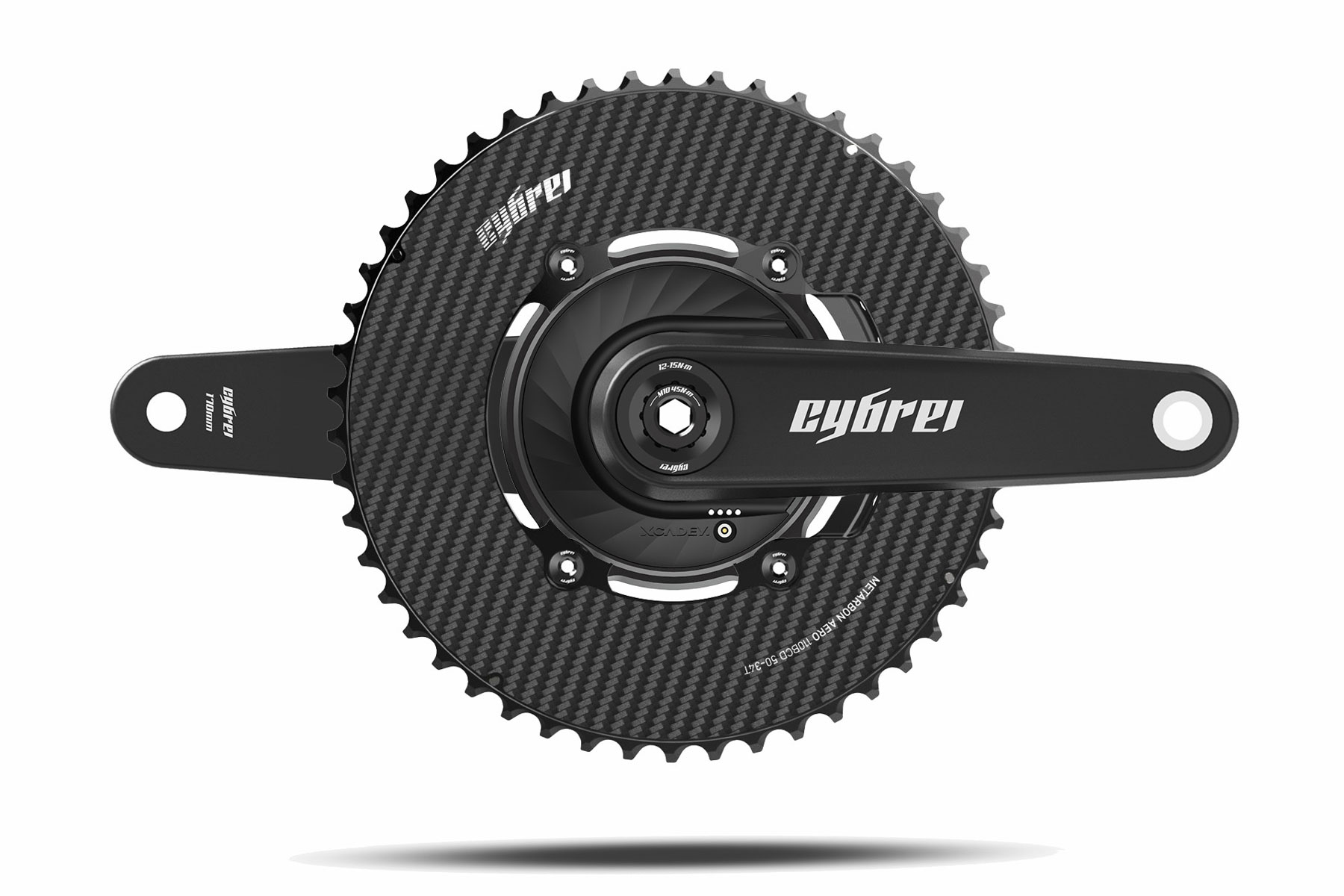
A Cybrei Carbon power meter crankset with carbon ring, just one of the more interesting brands coming out of China. Cybrei
In the early days, Western faces were a common sight in the factories as they worked on setting up the production lines and training the local engineers. As more and more brands moved production to mainland China, the local expertise and supply chain grew rapidly.
It’s not only the carbon fibre factories. It’s the factories that make the moulds, the EPS inserts, the paint factories, the water-transfer decal factories and even the pre-preg carbon fibre itself.
Most high-end frames use Japanese Toray carbon fibre, but the raw carbon fibre is imported into China and turned into prepreg – a ‘ready to bake’ mixture of resin and carbon fibre in Chinese factories.
The SpeedX Leopard promised a great deal, but proved a letdown. Chinese bikes have come a long way since then. Oliver Woodman / Immediate Media
Why do you think Chinese brands got such a poor reputation early on?
In the early days, there was the odd hiccup. Western brands would prototype a product in their own lab in their head office. It would work no problem and pass all the testing.
However, due to small differences in the actual manufacturing, the ‘same’ products being produced out of Chinese factories would encounter issues.
Many product recalls can be traced to issues during the manufacturing process. A difference in temperature or humidity in the factory compared to the headquarters, or even just inexperienced staff, would lead to critical differences in the composite.
These are differences that are invisible to the naked eye and only rear their head when frames start cracking or failing in the field.
These examples were few and far between as most Western brands had ‘boots on the ground’ with employees overseeing the factory’s production, but they definitely happened.
As the local expertise and experience grew, the Western brands enjoyed reaping the seeds of their hard work. The Chinese expertise and knowledge had grown to the point that many Western brands simply had to send a 3D drawing of a frame to the factory.
The details of the layup and the tooling were all being handled by the Chinese factories. Less back-and-forth communication, less expensive business class tickets to Asia, and fewer product recalls.
Some of the larger brands put protection in place. They had agreements with factories that, in return for training them on the knowledge to produce the frames, these factories would exclusively produce for that Western brand.
To this day, many of those agreements are still in place. But the key engineers who were trained at those factories have since left to start their own factories or brands.
These new brands and factories also started producing for Western brands, offering a full service from frame design through to delivery.
For smaller brands, they offered a catalogue of ‘open mould’ frames. These are frames that a factory would design and manufacture in-house, and smaller Western brands could order with their own paintjobs and logos applied. This removed the need for the Western brands to do their own R&D.
At the same time, these new factories started offering some of their products for sale directly to consumers.
Whittingham and his team test out all of the bikes and components before they get approved for a Panda Podium listing. Panda Podium
The mainstream still viewed Chinese products as ‘too risky’. This was perhaps partly due to earlier mishaps, but maybe also due to a constant propaganda campaign of the established brands or the elitist mindset of many road bike riders. They couldn’t accept that someone on an $800 frame had gotten the same (or close) to the same quality as their $4,000 frame.
But at this point, the Chinese brands were still limited. They knew there was no way any Western consumer was going to pay over $1,000 for a Chinese frame or Chinese wheelset. This meant they were limited to producing relatively low-end frames.
So, China had a whole bunch of factories capable of making top-tier frames, but Western consumers weren’t willing to pay anything but low prices because the Chinese brands were missing one thing: branding.
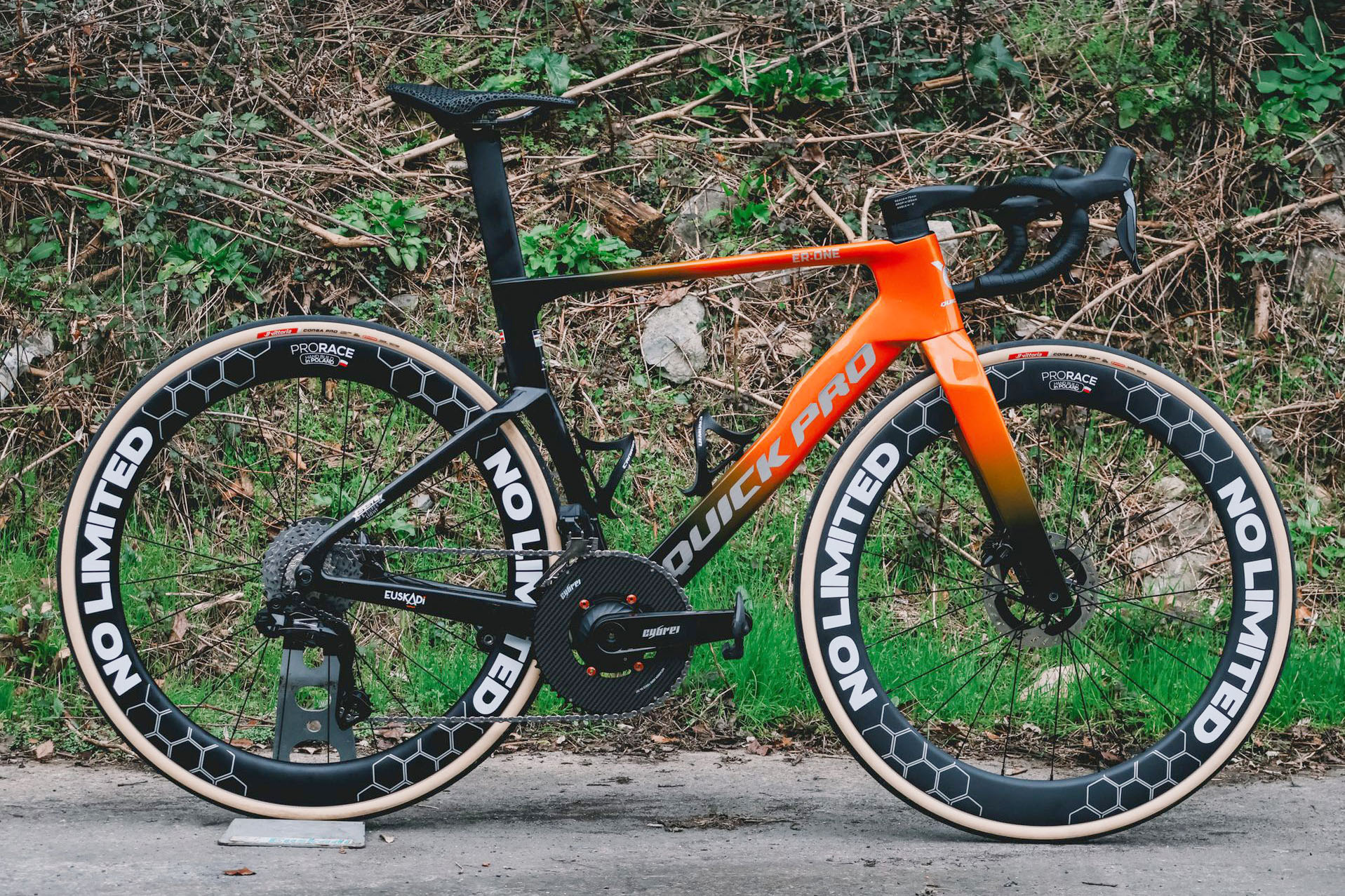
Euskaltel-Euskadi Quick Pro ER One aero road bike Euskaltel-Euskadi
How do you think the balance has shifted when it comes to the balance of design and branding?
Many consumers will claim they don’t care about branding: they want the fastest bike or the lightest bike, and they don’t care what brand it’s from – but for most people, that’s just not true.
The clothes we wear, the car we drive and the bike we ride are all an expression of our personality.
So, what did riding a Chinese bike say about you? The same old-school mentality that means if your neighbour brought a new Audi, you had to buy a new Mercedes was alive and well.
But then a shift started to take place. Instead of consumers wanting to show how rich they were, some consumers wanted to start showing how smart they were.
If your neighbour brought an Audi, you didn’t buy a Mercedes; you bought a Tesla. It showed that you were smart with your money. This was before Elon [Musk] went crazy and before EVs had to pay road tax, but you were getting supercar acceleration, not paying road tax, and you could take the kids to school.
The same consumer-thinking shift started to happen in bikes, too. Suddenly riding a pair of Farsports wheels, for example, showed you were smart with your money, and you understood bikes.
The smarter Chinese brands leaned into this. But it wasn’t just marketing. This change in thinking meant that Western consumers were now willing to pay more for the Chinese brands.
This removed the previous restrictions on them, and they could finally start selling their own high-end models using high-end raw materials. Of course, not all the Chinese brands took this approach. Many brands just saw the mainstream adoption of Chinese brands as an excuse to raise their prices without improving their product at all.
While all this was happening, another ‘perfect storm’ brewed. Covid. This is another long story, but here’s the short version.
Before Covid, many Chinese factories were happy just producing for Western brands. They paid their bills on time, and for the factories, it was a low-stress, reliable income.
Then Covid hit and demand for bikes in the West skyrocketed. Western brands were throwing money at the factories to increase production.
Production lines were added and new factories were built. Capacity in many factories doubled or tripled within the space of a year. Then, as quickly as the demand rose, it disappeared.
Western brands quickly realised they were overstocked and started cancelling orders. Factories that had spent millions developing new production lines found the whole factory empty.
At the same time that the market went downhill in the West (2023-2024) road cycling in China had its own boom. So, there was the perfect storm. The factories had this almost endless supply due to their increased production capacity, and an almost endless demand as a country of 1.4 billion people suddenly became obsessed with road bikes.
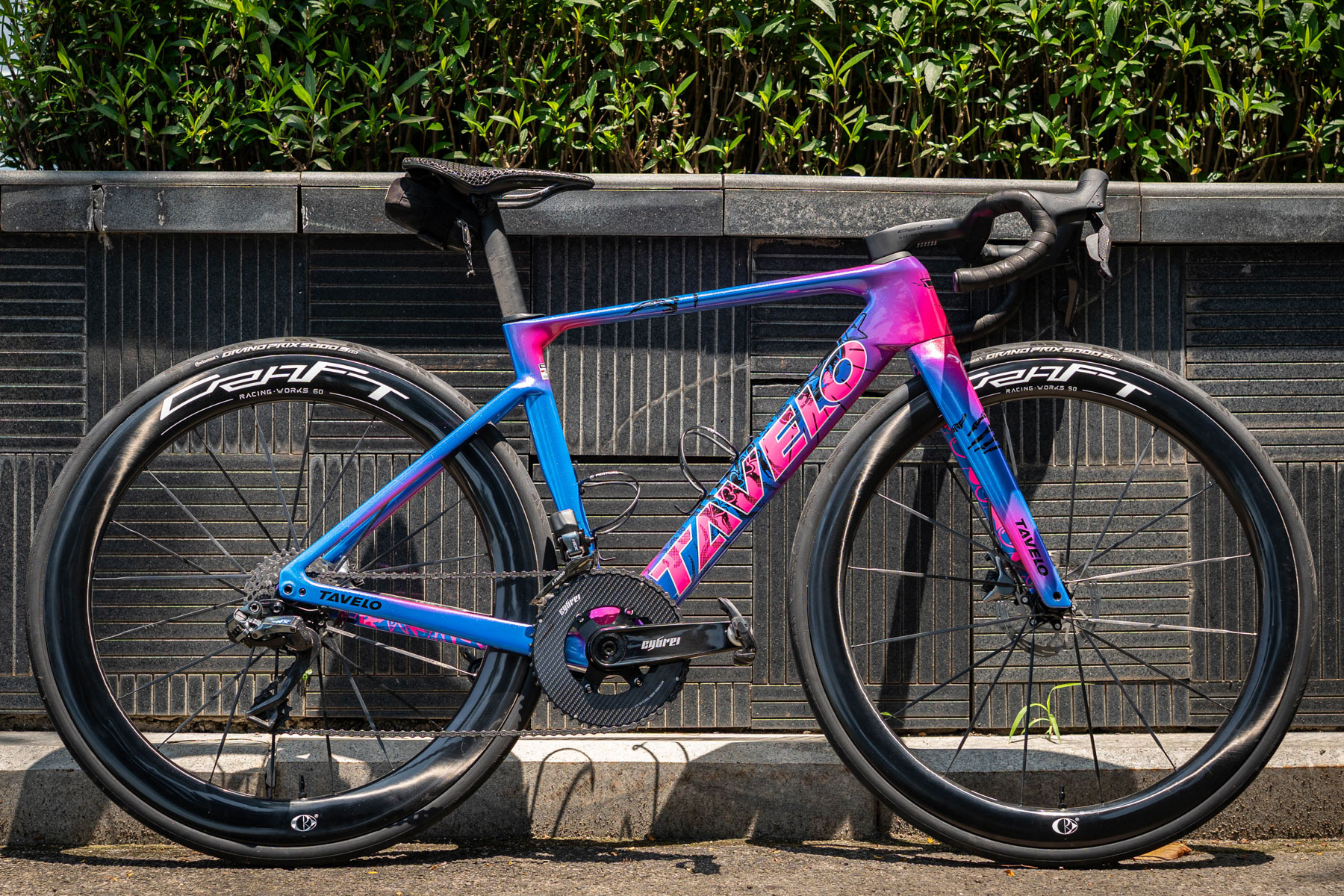
Tavelo’s Arow Race with CRW wheels. Tavelo
Many of the factories that had been too scared to start their own brands for fear of angering their Western customers found themselves with nothing to lose and everything to gain.
Their western customers were all cancelling orders anyway; there was nothing to lose from angering them. So, they started their own brands, and the local markets ate it up. Don’t get me wrong, there’s still huge demand for Western brands in China, but the low prices and the ‘patriotic’ edge of buying a local brand skyrocketed sales.
With that in mind, how do you see the situation today?
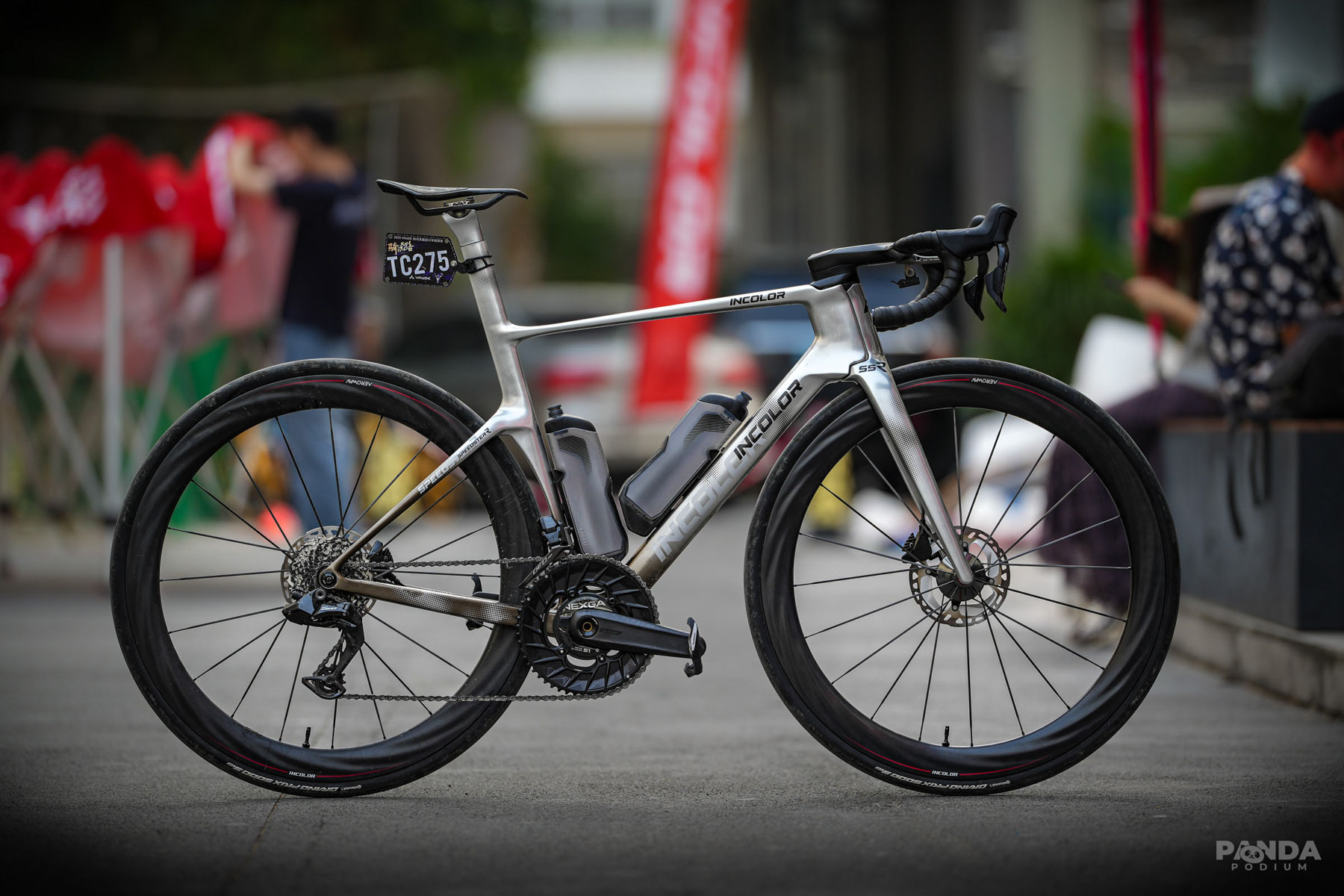
‘Chinese bikes’ is now a term that encompasses a huge range of products. Frames, for example, probably range from roughly $600 for a no-brand, open mould frame to more than $4,000 for something like the Incolor SSR, which is an aero frame that weighs just 750g, but tests faster than a Cervélo S5 in the Silverstone wind tunnel.
The Incolor SSR is an aero bike that’s tested faster than an S5 at the Silverstone wind tunnel. Incolor
There really is something for everyone and every budget, but it can be a bit of a minefield for the uninitiated. That was the whole premise of Panda Podium: trying to simplify the process of buying directly from China.
Part of that is the testing and product vetting. A bunch of us in the office are avid cyclists. We train, race and have even Everested on the products we sell.
Every brand that wants us to sell its product has to first undergo strict testing. We visit their factories, inspect their production lines and give the bikes a good thrashing on the road.
There are plenty of products that we get sent that never make it to the website; rejected for bad quality, bad design or just blatantly copying existing products. The other aspect of simplifying the experience is the actual purchasing process itself.
Our team is able to offer advice on what’s compatible, what’s best for the roads you ride, or what length stem you should get to best replicate your current fit. By making Chinese brands more mainstream, more Chinese brands will emerge with more products and more choice for consumers.
The rise of the Chinese brands will hopefully also put pressure on Western brands to lower their prices. So, even if you don’t plan on riding a Chinese bike, it’s a win-win for everyone.
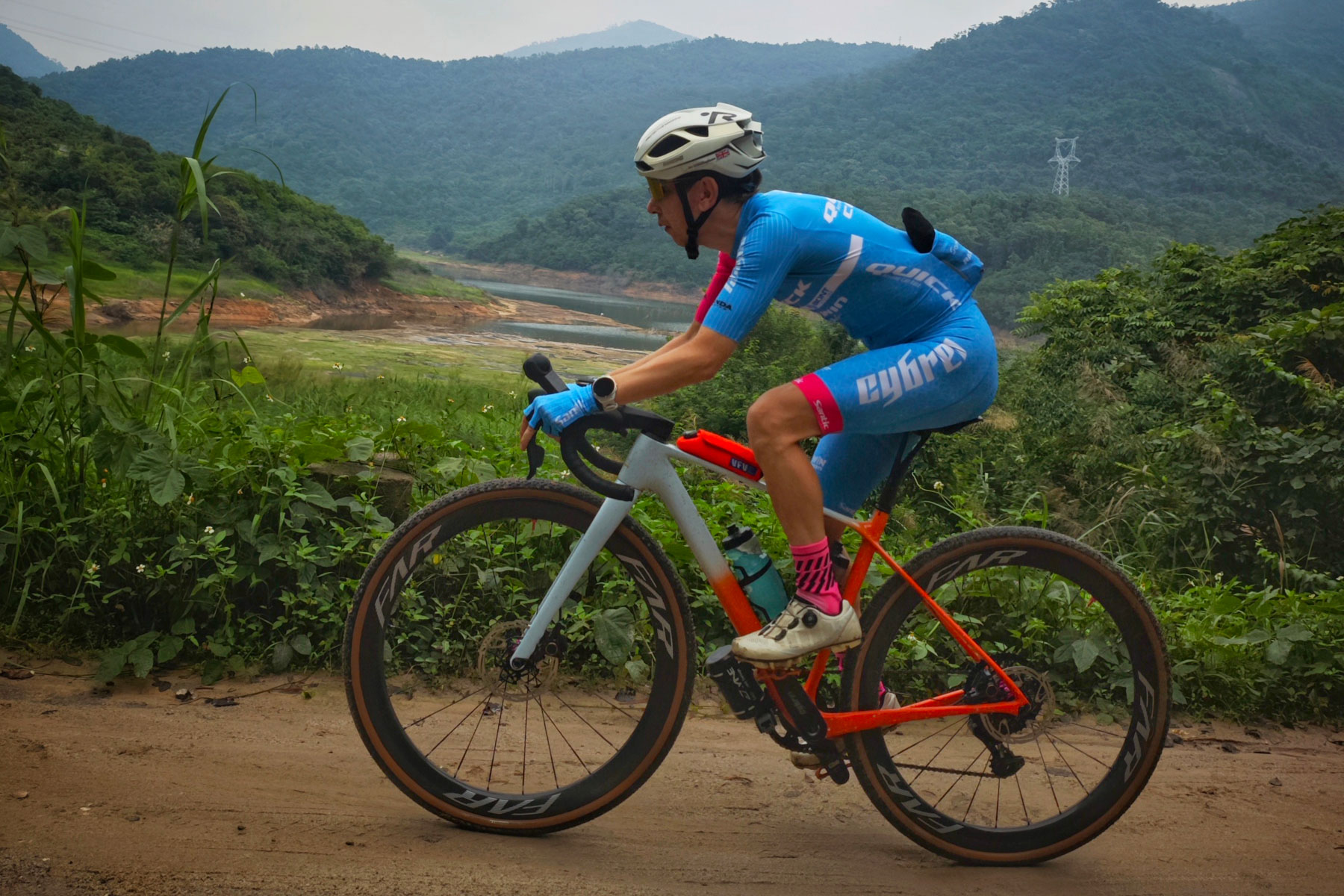
Gravel is becoming more and more popular in China. Panda Podium
When it comes to the emergence of this new generation of bikes and components that are getting more exposure in the West, how long do you think it’ll be before we see the larger brands arriving in Western retailers under their own names?
I think Chinese brands are going more mainstream, but a part of that process is appearing in brick-and-mortar stores.
Many consumers don’t have the time, patience or knowledge to build their own bike, so having the option to just walk into a bike shop and buy with local support is a prerequisite of becoming fully ‘mainstream’.
The biggest thing preventing this at the moment is profit margins. As most of the Chinese brands have built their reputation on being value-for-money brands, it means there simply isn’t enough room for a decent profit margin for distributors and dealers.
There are a few solutions for this. Either the Chinese brands can open their own retail locations in the West (popular Chinese brand RockBros has already started doing this with stores in the USA and Germany).
Another approach is that Chinese brands will have to raise prices to the point that there’s enough profit margin for offline stores. Finally, the brands can continue to operate as direct-to-consumer brands, but with warehouses and distribution in the West.
Canyon thrives with its direct-to-consumer model, and there’s no reason a Chinese brand couldn’t replicate that. It will be interesting to see which brand chooses which approach.
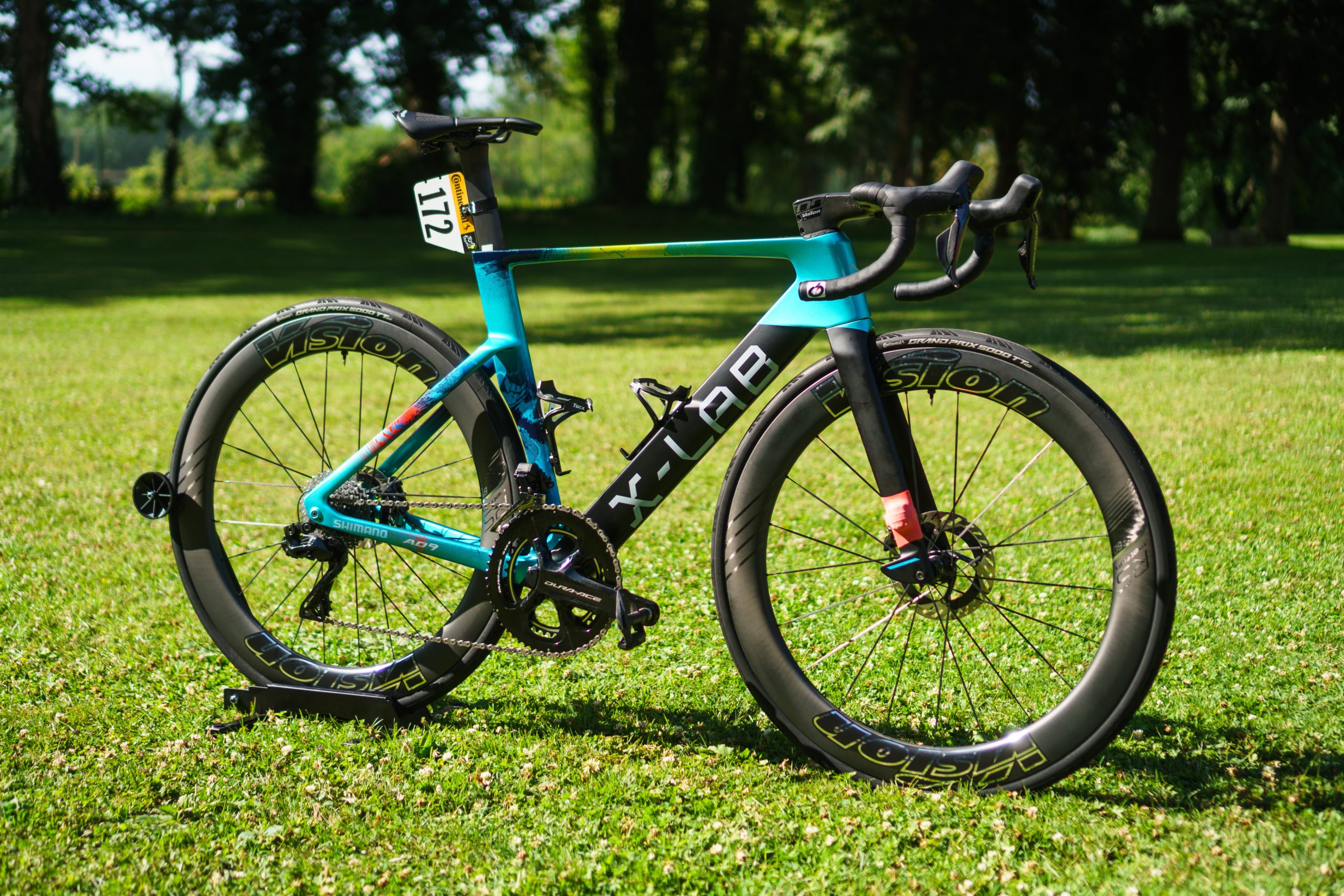
Davide Ballerini’s X-Lab AD9 at the 2025 Tour de France. Simon von Bromley / Our Media
With the likes of X-Lab sponsoring a WorldTour team, not to mention Harry Hudson’s junior worlds win on a Quick Pro, do you think a Tour de France podium is within the reach of one of the brands coming out of China?
Is a Chinese bike good enough to win in the Tour de France? Of course. But winning Grand Tours is less about the performance of the bike and more about the economics of it all.
Sponsoring a men’s WorldTour team is a huge investment. And unless you’re sponsoring Jumbo or UAE, the chances of a victory are slim.
If I were a brand, I probably wouldn’t sponsor a WorldTour team. I believe the average age for a viewer of the Tour is over 60. A consumer like that already has their brand loyalty. You’re not going to change their mind.
But the younger generation is on social media. TikTok, Instagram, etc. You can sponsor a lot of influencers for €2 million.
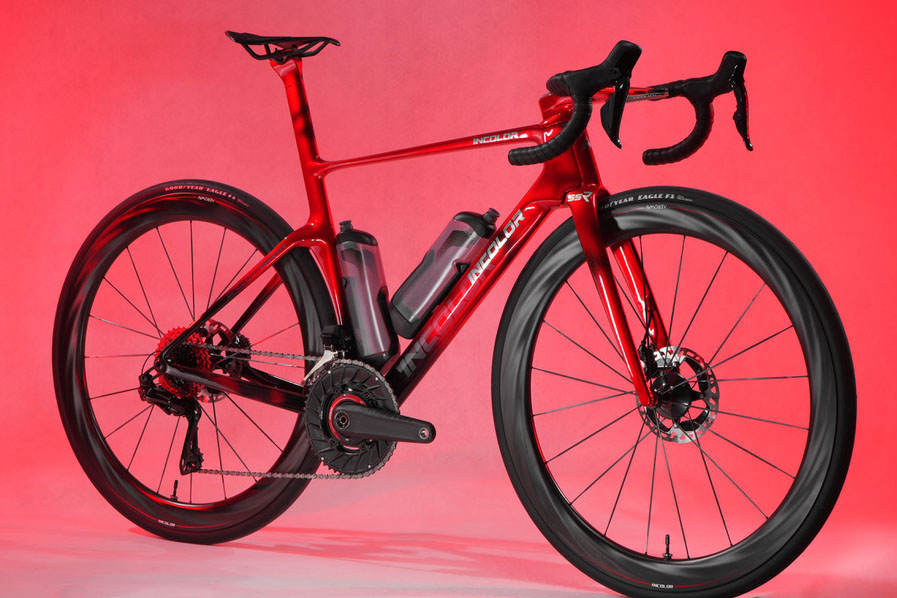
The Incolor SSR in a complete China-based brand build looks every inch the superbike. Incolor
Finally, do you think we’re now approaching an era of Chinese expertise stepping out of the shadowy world of being vendors for the larger, well-known brands and becoming not just a challenger technically but also a challenger in desirability?
Technically, no problem. They’re already there. But for desirability, that’s a tough one.
What we ride is still an expression of ourselves. For many consumers, the bike you ride is still in the realm of fashion.
I think you can look at the NBA for a good example. Chinese footwear brands like Li-Ning and Anta make great shoes and are spending hundreds of millions of dollars sponsoring athletes such as Dwyane Wade and Klay Thompson, but if you walk around the streets of America, you’re not seeing anyone walking around in Li-Ning or Anta T-shirts. And for what it’s worth, you see plenty of people wearing those T-shirts in China.
I think it might happen, but it will be a long-term change. Twenty to thirty years ago, many people thought of Skoda as an uncool brand. Now they’re sponsoring the Tour, and people drive them with pride. So, give it a few decades and let’s see.
Amazon has acquired Rivr, a Swiss robotics company developing machines for “doorstep delivery,” the company confirmed Thursday… It announced the deal in a notice sent to third-party delivery contractors… “We believe this technology, when working alongside your [delivery associates], has the potential to further improve safety outcomes and the overall customer experience, particularly in the last steps of the delivery process….” In its notice to delivery service partner owners, Amazon said Rivr’s technology, which includes a four-legged robot on wheels, will allow it to research and test how the devices can be integrated into delivery operations, including “helping [delivery associates] carry packages from delivery vehicles to customer doorsteps.”
The 1980s brought us so many terrific films, including director Russell Mulcahy’s sword-and-sorcery fantasy action film Highlander, starring Christopher Lambert as an immortal Scotsman who must battle others like him to the death until just one remains. The film spawned two direct sequels and two TV series (one live action, one animated), and a planned reboot has been kicking around Hollywood since 2008. But the original still stands tall as the best of the bunch, 40 years later.
(Spoilers below because it’s been 40 years.)
Screenwriter Gregory Widen was a college student at UCLA when he wrote the first draft of what would become Highlander for a screenwriting class. It was originally entitled Shadow Clan and partially inspired by Ridley Scott’s 1977 film about two swordsmen engaged in a longstanding feud (The Duelists). Combine that with Widen’s visits to Scotland and the Tower of London, with its impressive display of historical armor, and Widen had all he needed for his tale of dueling Immortals secretly living among us. He sold that first draft for $200,000—a princely sum for a college student—and a few revisions later, Highlander was ready for filming.
Meta’s lawyers successfully shut down VRPirates, which was by far the largest and most prominent source of pirated Quest VR games.
VRPirates was cracking paid VR titles from the Meta Horizon Store, removing the entitlement check system, and distributing them for free. The group even has a desktop PC tool on GitHub, called Rookie Sideloader, which allowed users to easily browse and sideload these cracked games to a connected Quest headset via USB (or wireless ADB). Worse, from a legal standpoint, the group was accepting financial donations from fans.
Earlier this month, Meta’s legal department issued VRPirates a formal DMCA takedown notice. According to VRPirates, Meta’s request made specific reference to Beat Saber, which it owns.
“As much as I hate to say this, they’re well within their rights”, a VRPirates developer wrote on Reddit.
In response to Meta’s legal notice, VRPirates says it has “shut down” all its file hosting servers, and publicly declared that they will “never come back”. Further, it says it will no longer accept financial donations.
The Rookie Sideloader PC tool still allows you to sideload APKs you download yourself, just as the Meta Quest Developer Hub and SideQuest do, but it no longer shows the VRPirates library of cracked content.
Multiple developers of popular paid singleplayer Quest games tell UploadVR that they’re elated with the news, and that their internal metrics suggest that piracy was a significant problem on Meta’s platform.
Of course, fighting digital piracy can often be a game of whack-a-mole. For now, the collapse of VRPirates has essentially eliminated the public Quest piracy scene. But will another group emerge to take its place, or will the chilling effect of Meta’s legal takedown relegate Quest piracy to private spaces for the foreseeable future?
The mdadm utility for managing software RAID on Linux systems is out with a new release that adds new features while addressing some recent boot failure issues that were reported…
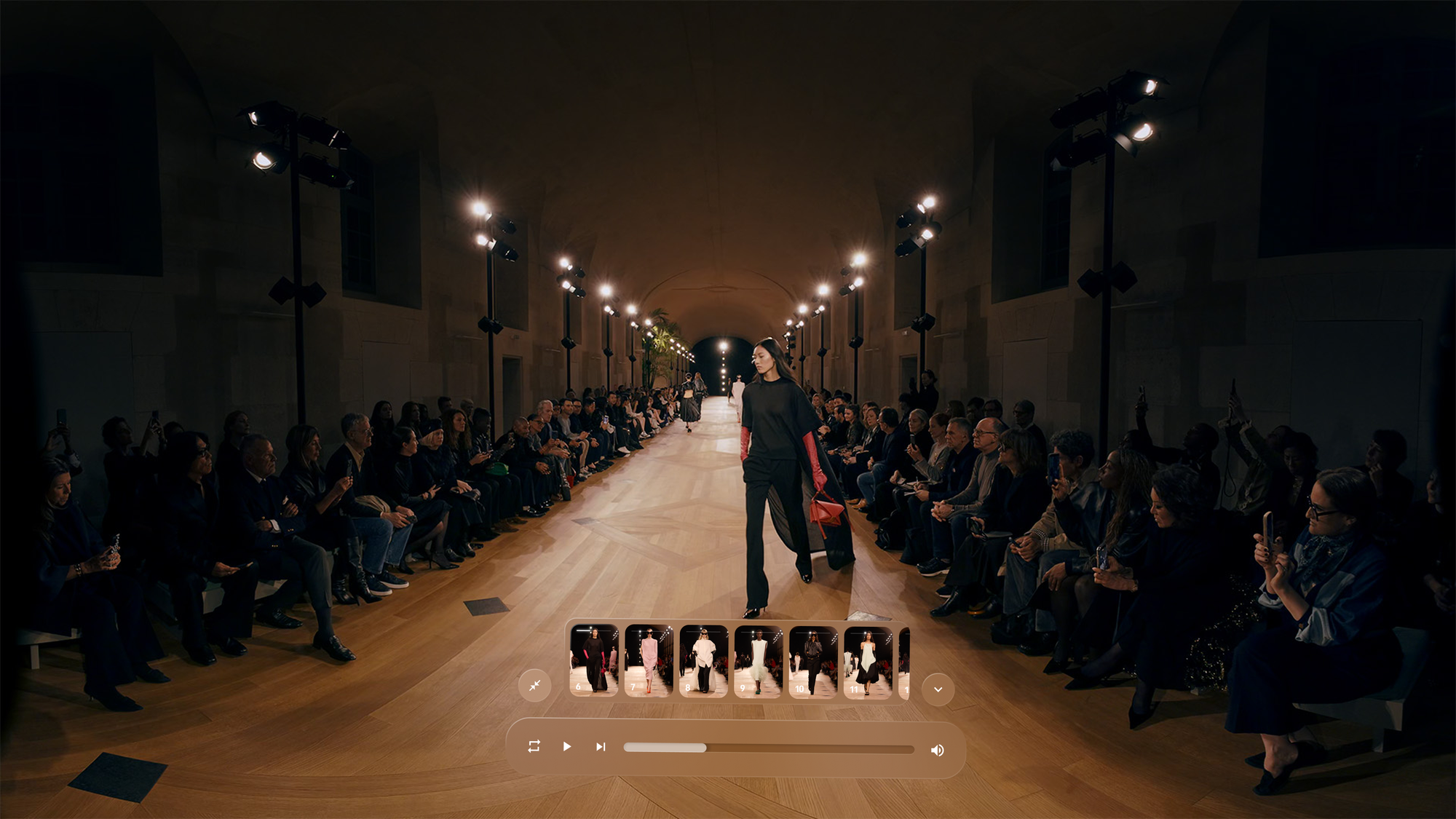
You can step onto the runway and experience Pier Paolo Piccioli’s debut with the Summer 26 show in Balenciaga’s Apple Vision Pro app.
Filmed using the Blackmagic URSA Cine Immersive camera, the experience gives guests a spot at the end of one of the runway paths. Models walk directly towards you and then turn back to show off the shape and movement of the pieces. The vantage point places you directly in line with models, making the access feel closer than sitting along the runway’s edge. Despite my general preference for fully immersive experiences, the 180-degree view never feels limiting. Everything unfolds in front of you, with nothing like models entering or leaving from behind you to pull your attention away or prompt you to turn around only to find nothing there. At first, being placed at the edge of the runway felt a little isolating, with no sense of acknowledgement from the models or even audience. But that creative choice keeps the focus on the collection itself as it is being showcased.
The level of visual detail is striking, from the textures of premium fabrics to the ability to even glance at the screens on guests’ phones nearby to see which looks they chose to capture. It’s the kind of clarity that makes the quality of the pieces stand out in a way that’s difficult to replicate in other headsets, let alone screens. From soft leathers to feathers, the detail draws you in, even if you’re simply there to appreciate the artistry.
Image from the Balenciaga Apple Vision Pro app – Summer 26 Runway Show
Cutting The Experience Short
For the most part, the show flowed naturally, though occasional edits were noticeable, disrupted the sense of presence, and felt unnecessary. At times, some models appear to jump slightly forward or reappear a step further along the runway during a turn. The transitions are brief, but in an immersive format they stand out more than they would in a traditional runway video. From an experience standpoint, I would have preferred to watch the full capture of the show unfolding as if I were there.
The finale moment was also missing a key element. The show builds to the usual finale walk, with the models returning together to show off the looks. But then the experience fades out. In the full, non-immersive runway presentation elsewhere, Piccioli steps out smiling after the finale walk. That moment isn’t included here. In an immersive format, it would have been a fitting ending not only to celebrate the creative director, but to create a moment of acknowledgement for the viewer positioned on the runway, even through a sense of eye contact. It could have strengthened the connection, both to the experience and to the Balenciaga house.
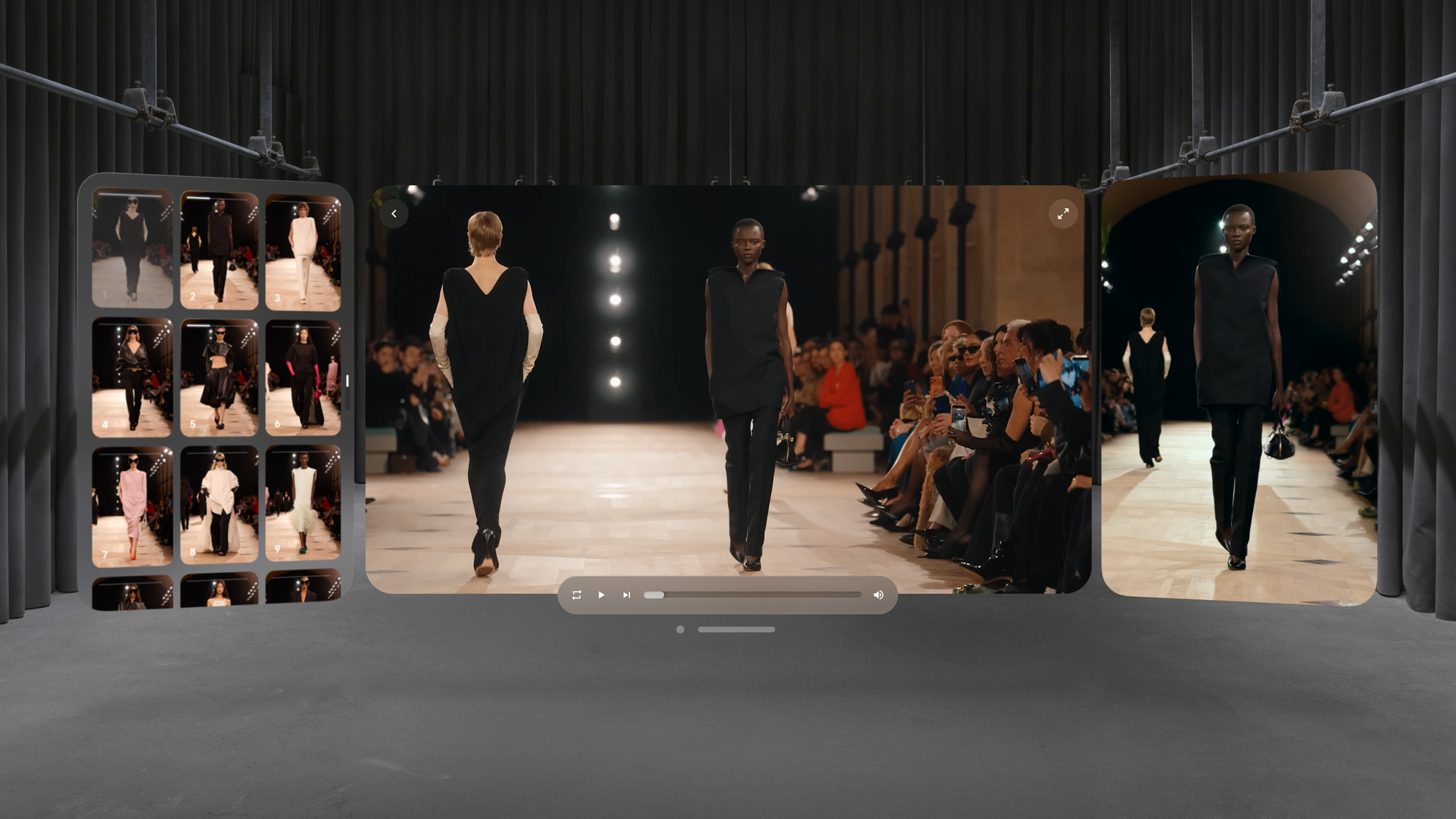
Image from the Balenciaga Apple Vision Pro app – Summer 26 Runway Show
How the App Lets You Explore the Collection
The immersive runway is just one way to experience the collection inside the app. There is also a hybrid viewing mode that presents the collection differently. A central non-immersive video plays the runway presentation while a column of numbered looks appears along the left side. On the right, a stereoscopic image highlights the look being featured from a different vantage point. I see less value with this option because the immersive runway is the best way to see the details in the collection. This also allows users to jump to different looks however information about what the pieces are is limited and viewing the collection on the Balenciaga website unlocks much more right now, including the ability to buy or reserve items in store.
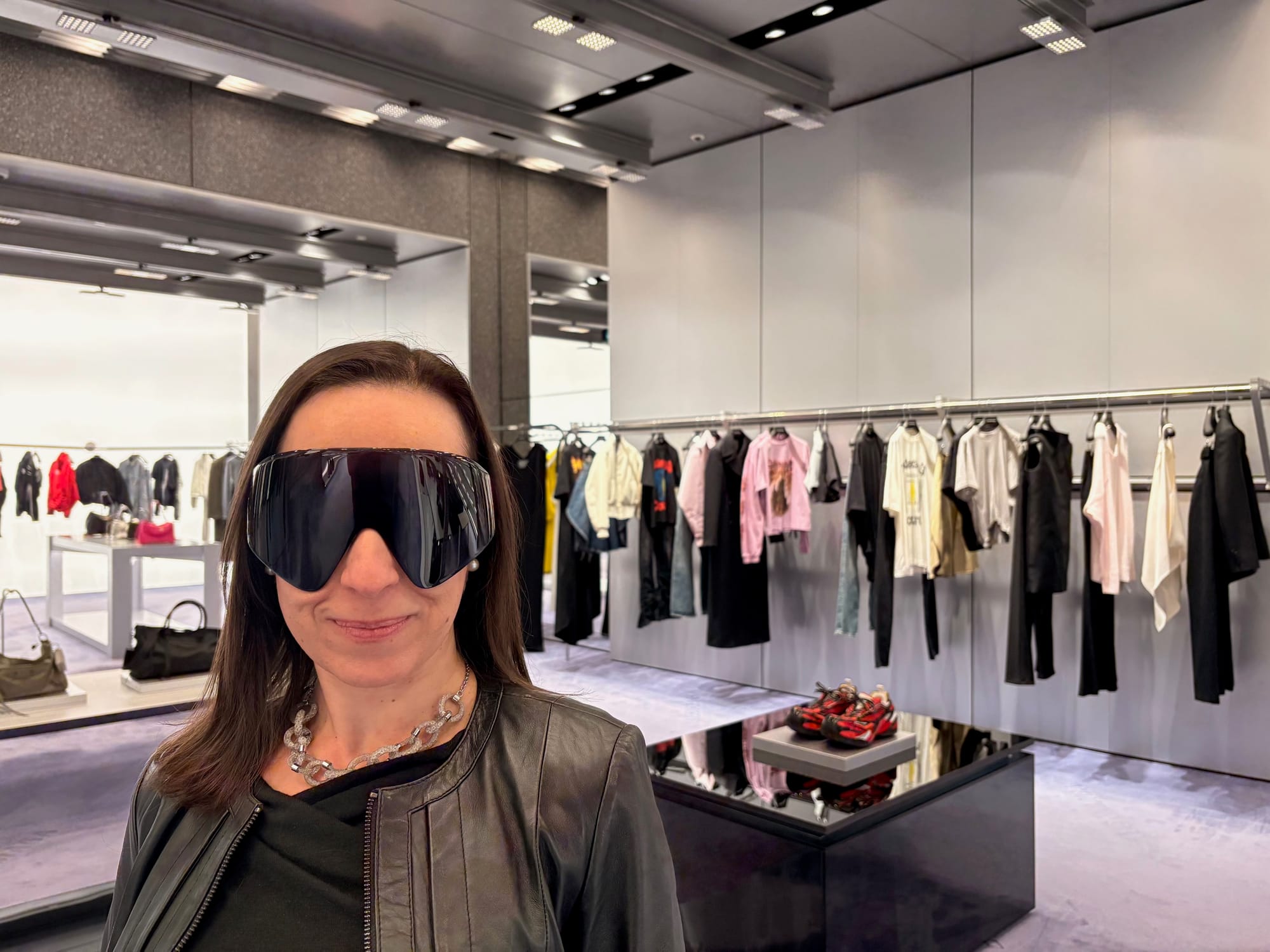
Real-world visit to the Balenciaga store for try-ons. Glasses pictured are part of the Pre-Fall 2026 Collection.
A Growing Archive, with Opportunity to Expand
This isn’t Balenciaga’s first experiment with showcasing runway experiences on the Apple Vision Pro. The app already includes an archive of shows dating back to Winter 23, offering visitors different vantage points in their shows from sitting alongside audience members to being in the middle of the room during couture shows with an up-close view of the collections as well as iconic guests watching with you, like Anna Wintour. You can also get up close with a very small curation of accessories but that is limited to only two past seasons.
As Balenciaga adds more content to their app, I hope to see more options like a version of virtual try-ons even if it’s just accessories to start – especially eyewear given the details of my face are already captured. Pieces from each collection are not always easy to try on in person depending on where you are located with limited stores selling Balenciaga. During a visit to a local Balenciaga store, I also learned that pieces from each collection are not always shipped to each store. For example I was able to try on eyewear from the Pre-Fall collection but not Summer. Summer 26 is just starting to arrive now but the brand could benefit from more potential customers getting up close with the collection especially through the immersive experience. Watching shows this way doesn’t replace the atmosphere of attending a runway presentation in person. But access to a Balenciaga runway is inherently limited, and for those who are customers or simply curious, Apple Vision Pro offers guaranteed access. The few Balenciaga staff that I spoke to didn’t know about the Balenciaga app on Apple Vision Pro, but I am sure that if there were a way to more seamlessly demo Apple Vision Pro content in stores that sell Balenciaga, this could help drive more sales.
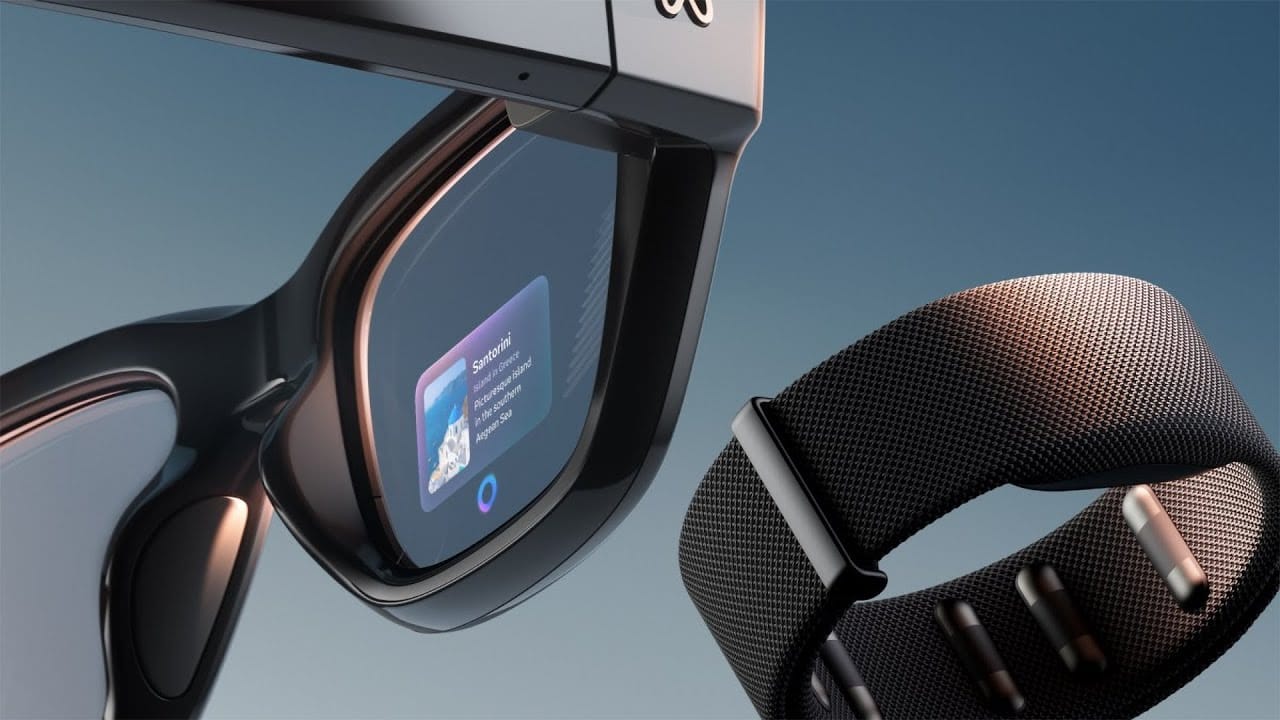
Meta awarded $150,000 in research funding to each of six university teams studying how people learn to control computers using muscle signals, and what ethical issues come with that shift. The grants focus on wrist-based surface electromyography (sEMG), the subtle input method Meta has been developing for its glasses.
This technology is already in use in the Meta Neural Band that allows subtle hand and finger control of Meta Ray-Ban Display glasses. The wristband shown with Orion also used sEMG sensors to convert almost imperceptible muscle signals as gesture input.
sEMG For Learning And Agency
At the University of British Columbia, researchers are developing sEMG-Talk, a system that uses forearm muscle signals and machine learning to generate speech without using the mouth and throat. The team also plans to build a neuroethics framework around this new form of interaction.
UC Davis is studying how different users learn sEMG controls, comparing more structured instruction with gamified and implicit training. The project also looks at how age, sentiment, and social support shape the learning experience.
The University of South Florida is focused on helping people gain voluntary control over subtle muscle signals that may not produce visible movement. The work will include stroke survivors, while also examining trust, agency, and user preferences.
Meta’s Ray-Ban Display comes with the Neural Band.
The emphasis on learning makes sense given what we have already seen from EMG wristband gestures, where the challenge goes beyond simply reading signals to making devices feel useful and natural.
From Speech To Higher-Bandwidth Input
Newcastle University is exploring multi-sEMG input that could expand communication bandwidth while fitting alongside normal hand use. The researchers also plan to study attitudes toward large-scale data collection and possible barriers to adoption.
At the University of Central Florida, the focus is on co-adaptive training, where both the user and the system improve together over time. The project also embeds ethics work directly into the engineering process, including questions around privacy, agency, and embodiment.
Northwestern University is comparing gradual skill-building with AI-assisted training that teaches multiple muscle inputs at once. The work includes both non-injured participants and people with stroke or spinal cord injuries, with ethics advisory input built in from the start.
These grants connect with other recent Meta accessibility research, which suggests wrist-based input could promote more inclusive computing.
Why sEMG Research Matters
Meta is treating sEMG as more than just a flashy demo. The company already has a shipping product in Meta Ray-Ban Display and has continued expanding what the wristband can do with features such as handwriting recognition.
These six projects target the harder part, exploring accessibility and ethics while making gestural sensory control learnable, trustworthy, and comfortable enough for everyday use. See Meta’s announcement for more details.
Wine 11.5 introduces C++ build system support, improved Linux integration, and several fixes that enhance stability and compatibility across applications.
America’s cable TV industry “is undergoing its most dramatic collapse in history,” reports Cord Cutters News, “with operators large and small waving the white flag on traditional TV service and pointing their customers toward streaming platforms instead.” Just in 2025 Comcast lost 1.25 million pay-TV subscribers (ending the year with just 11.3 million), while Charter Spectrum also lost hundreds of thousands of customers each quarter.
But “for smaller regional operators, who lack the scale and diversified revenue streams of giants like Comcast, those kinds of losses are simply unsurvivable,” they write. And “the companies that once delivered hundreds of channels through coaxial cables are now either shutting down entirely or reinventing themselves as internet providers.”
Pay-TV subscriptions have plummeted from nearly 90% of U.S. households in the mid-2010s to roughly half by the end of 2025, resulting in billions in lost revenue and forcing many smaller operators to conclude that continuing linear TV services is no longer viable… [This year over U.S. 50 cable TV companies — primarily smaller and midsize providers — are “expected to cease operations entirely or shut down their television services,” Cord Cutters News reported earlier.] YouTube TV’s pricing is so competitive that the platform is projected to have close to 12.6 million subscribers by the end of 2026, positioning it to become the largest paid TV distributor in the United States. Exclusive content deals, such as YouTube TV’s acquisition of NFL Sunday Ticket rights, have further eroded the value proposition of traditional cable at every level of the market… As older cable subscribers age out of the market, there is no new generation of customers waiting to replace them…
[Cable TV] operators like WOW! are betting that their physical infrastructure — now increasingly upgraded to fiber — is more valuable as an internet delivery system than as a cable TV platform. [WOW! serves customers across Michigan, Ohio, Illinois, and Alabama — but is “phasing out its proprietary streaming live TV service and directing all customers toward YouTube TV,” the article notes.] Industry observers see this as part of a broader trend: operators shedding unprofitable video segments to focus on broadband, where returns and network investments are prioritized.
By the end of 2026, non-pay-TV households are expected to surge to 80.7 million, outnumbering traditional pay-TV subscribers at 54.3 million — a milestone that would have seemed unthinkable just a decade ago. For the cable companies still standing, the math is now inescapable: the era of the cable bundle is ending, and the only real question left is how gracefully each operator manages its exit.
More than 13,000 feet below the surface of the Pacific Ocean, a more-than-70-ton machine trundled like a tank on its caterpillar tracks for a tenth of a mile—sucking up potato-sized nodules of rock packed with copper, manganese, cobalt, and nickel. It was 2022, and that pilot run of a subsea harvester by a Canadian business, The Metals Company, was pronounced a success.
The company is working to get a green light to deploy similar machines for commercial harvesting over an area of 65,000 square kilometers, to extract over 600 million metric tons of nodules.
There are riches on the ocean floor—round deposits made up of tightly packed layers of critical minerals that have long been out of reach.But not anymore. The pursuits of The Metals Company are among 31 initiatives by companies, governments and state-owned enterprises—including China, India, and the Republic of Nauru, a tiny island nation in the southwestern Pacific Ocean—to collect nodules for analysis and to test mining equipment.
For years Electron apps were notorious for continuing to depend upon X11/XWayland and not jive well with the modern Wayland experience on modern Linux desktops. But for the past several months, Wayland has been well supported out-of-the-box on upstream Electron. An Electron blog post this week outlined the technical work done for achieving good Wayland support…
Building off Friday’s exciting release of Wine 11.5 with Syscall User Dispatch support, Wine-Staging 11.5 is now available for this experimental/testing build of Wine that at the moment is some 228 patches atop the upstream code…
For any holdouts still running SysV Init instead of systemd or other alternatives like OpenRC, SysV Init 3.16 is out as the first release in a half-year and bringing a few refinements…