The ‘Hot To Go’ singer seems to have been caught up in a big misunderstanding

The ‘Hot To Go’ singer seems to have been caught up in a big misunderstanding

Gorgeous vistas aren’t enough when the rest of game is such a boring, annoying slog
Back in December, news outlets spotted Google messing with headlines on articles that appeared in Discover. As it happens, this was Google experimenting with AI-generated headlines; rather than show readers the headlines the outlets wrote themselves, Google’s AI would take it upon itself to rewrite them. Why? According to Google, it was a “small UI experiment for a subset of Discover users” that “changes the placement of existing headlines to make topic details easier to digest.” While those of us that actually write headlines would argue such an experiment isn’t really necessary, Google apparently disagrees, as the experiment is now a feature.
The thing is, Google isn’t content with keeping AI-generated headlines exclusive to Discover. As spotted by The Verge, the company is now expanding its AI rewrites to Google Search as well. That means if you click an article on a Google Search page, it might have had a headline that the publication had no input on. Of course, when you click through to the actual article, you’ll see the real headline. Once again, Google says this is an experiment—a “small” and “narrow” one at that, and that, in its current state, the feature isn’t ready for a full rollout. But The Verge says it has spotted multiple examples of Google taking its articles and changing the headlines for Search.
For example, the AI turned the headline “I used the ‘cheat on everything’ AI tool and it didn’t help me cheat on anything” into “‘Cheat on everything’ AI tool.” Sure, the article is about the “Chat on everything” tool, but the AI version leaves out some serious context: The Verge isn’t just spotlighting this tool, or, worse yet, endorsing it; it’s heavily criticizing it—something the original headline was designed to advertise to readers. In another example, “You can’t replace the battery in Lego’s Smart Bricks — and many of its sensors aren’t active yet” was changed to “You can’t replace the battery in Lego’s Smart Bricks.” At least this one doesn’t reframe the story, but it does leave out part of the story entirely. Finally, there’s “I met Olaf — the Frozen robot who might be the future of Disney Parks,” which Google’s AI awkwardly truncated to “the Frozen robot who might be the future of Disney Parks.” Yes, the “the” is lowercase in Search, for some reason.
The Verge acknowledges that Google has changed far fewer headlines in Search than it has in Discover, which means the chances are much lower that you’ll encounter an AI headline in a Google Search than scrolling through the Discover feed. But if the feature’s journey in Discover is any indication, Google will only ramp up AI-generated headlines in Search in the near future.
Google told The Verge that the goal is to “identify content on a page that would be a useful and relevant title to a users’ query,” and apply “better matching titles to users’ queries and facilitating engagement with web content.” This experiment is apparently not specific to news articles, and that, if Google were to launch such a feature, it wouldn’t use generative AI to rewrite the headlines. So, why use generative AI to rewrite the headlines in the experiment? To that point, The Verge says that sometimes, Google’s AI uses its headline, but the wrong version. Outlets like The Verge will sometimes produce two versions of a headline: one for the website, and one that appears on Search. Google’s AI will reportedly swap the headlines, choosing the site headline for Search when The Verge wrote an entire headline designed for Search.
Google Search belongs to Google, of course, and we’re all at the company’s mercy when it comes to what appears in those results. But it seems a bit beyond the pale to change a website’s headline when ranking it in Search, whether that be cutting off half the angle, or changing the angle entirely. If readers click through thinking they’re getting one thing, and find another, who’s that good for? I guess Google thinks it’s good for them, but, like many of the changes the company has made in recent years, it isn’t really good for anyone else.
LG Display is mass-producing laptop screens that automatically change their refresh rate from 1 Hz to up to 120 Hz, based on what’s on-screen, it announced this week. The display supplier said that it’s the first company to mass-produce these 1–120 Hz screens, which are supposed to boost battery life.
According to LG’s announcement, the LCD screens, which it’s calling Oxide 1Hz, will automatically use a 1 Hz refresh rate when detecting a static image on-screen and switch to up to 120 Hz when needed. Without providing more detail, LG said it created proprietary “circuit algorithms and panel design technology” and discovered “new materials and [applies] the oxide with the lowest power leakage during low-refresh-rate mode to the display’s thin-film transistor.”
In its announcement this week, LG said that “when performing tasks involving primarily still images—such as checking emails or reading e-books and research papers—the panel operates at the lowest refresh rate of 1 Hz. Conversely, it runs in high-refresh-rate mode at up to 120 Hz when streaming content such as movies or sports as well as playing games with frequent screen changes.
Apple is reportedly preparing to add search ads to Apple Maps, “and it could start to roll out to users by the summer,” reports AppleInsider, citing sources from Bloomberg (paywalled). From the report: Apple will make an announcement as soon as March. This will bring ads to search queries within the navigation app, which will operate similar to Google’s advertising system. Retailers and brands will be able to bid for ad spots located against search queries for specific terms, such as types of food or services. The winning bid will be able to show an ad at the top of the results, pointing to a related location for that business. Apple also announced in January that it would add more ads within the App Store, starting March in the UK and Japan.


Read more of this story at Slashdot.
EA has put another game on the chopping block, or at least the console versions of it. The company says it will delist the PS4 and Xbox One versions of Battlefield Hardline from digital storefronts on May 22, and shut down the online services on June 22. The single-player campaign will remain playable for those who own the game. The PC version of Battlefield Hardline isn’t affected by these changes.
In its announcement on X, EA didn’t explain exactly why it’s ceasing support for the game on PS4 and Xbox One. It pointed readers to a FAQ on its website that lays out some of the typical reasons why it ends online support for its games. These include factors like declining player bases.
Battlefield Hardline, which was released in 2015, will still be available on Steam as well as EA’s own PC app. The Steam version has a peak concurrent player count of 41 so far this year.
It’s hardly uncommon for a publisher to end online services for games with declining player bases, but it’s an issue that’s come into greater focus over the last few years thanks in part to the Stop Killing Games movement. EA alone has sunsetted dozens of games. Its website has a full accounting of these, spread across three webpages.
This article originally appeared on Engadget at https://www.engadget.com/gaming/ea-is-nuking-battlefield-hardline-on-consoles-193321551.html?src=rss
On Monday, the Trump administration announced its newest approach to its goal of blocking the development of offshore wind: pay companies to walk away from lease sites they had paid for under the Biden administration. The Department of the Interior, which arranges leases of coastal sites for the development of wind farms, would end up returning about $1 billion to France’s TotalEnergies, which has promised both to invest that money in US-based fossil fuel projects and to not do any further offshore wind development in the US.
Rumors of the deal had begun circulating last week. The deal comes in the wake of the administration’s repeated failures to block offshore wind projects after construction had started.
The deal would see TotalEnergies invest roughly $1 billion in oil and natural gas projects in the US. Once those commitments are made, the US would pay the company that amount in return for its abandonment of two areas it had leased for offshore wind. One of those areas would have hosted a relatively small project near the Carolinas. But the second project, Attentive Energy, is a large site east of New Jersey that would have the capacity to generate 3 Gigawatts of power—capacity that the nearby states would find difficult to replace with other means.
We may earn a commission from links on this page.
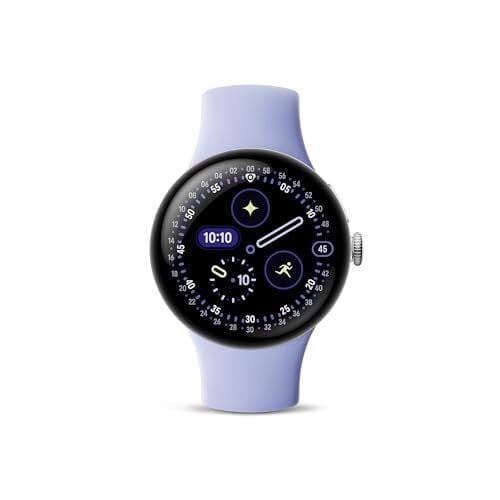
Ever since the March Pixel feature drop, some Pixel watch users have been reporting that their step counts and calorie counts are off. An official fix isn’t out yet, but users have found a few approaches that seem to correct the numbers.
The problem, according to numerous posts on forums like r/PixelWatch and comments on the March feature drop, is that the Fitbit app is reporting far more steps than the user feels is plausible. For example, one user reports: “my watch says I’ve walked 6,688 steps today, which is impossible! I just walked to the bathroom and back, and now my watch says I’ve walked 7,025 steps! I’ve probably only walked half that!”
Calorie counts seem to be affected for some users as well. One Redditor says: “I only got in roughly 7,000 steps yesterday, yet my Pixel Watch 4/Fitbit said I burned more than 11,000 calories, which is, obviously, impossible given that I’m not literally on fire and didn’t run three or four marathons yesterday while working my desk job.”
While the issues seem to have started shortly after the March drop, the issue may not be with the Pixel Watch firmware itself but with something else, like the Fitbit app. A few of the reports are from people who haven’t gotten the feature update on their watch yet, yet still have inflated calorie or step counts. (The March drop included a firmware update for Bluetooth/wifi watches but not LTE watches, so people with LTE watches haven’t gotten the update. You can see all available firmware updates here.)
While Google hasn’t published an official fix yet, forum users have been sharing steps that they say fix the problem. One or more of the following may help:
On your phone, go to Settings, then Apps, then Fitbit, then Storage. Select Clear cache.
On your Pixel Watch, go to Settings, then Apps & Notifications, then App info, System apps, Fitbit, App info (again), and then Clear cache.
Restart your watch: hold in the crown until a menu pops up, then select Restart.
Restart your phone.
Some users said the issue was fixed after they cleared their phone’s app cache, and some said it was fixed after restarting their watch. Some recommended doing all the steps above.

Have a brilliant time filling binders without having to find new packs
Cloudflare’s technical blog posts about their hardware and software efforts are always a treat to read. Their latest fascinating technical content is on their newest “Gen 13” server platform based around AMD EPYC Turin where they are now achieving 2x throughput and 50% better performance-per-Watt thanks to these latest-generation AMD EPYC server processors paired with software improvements too…

Mozilla has published today the final builds of the Firefox 149 open-source web browser ahead of its official unveiling on March 24th, 2026, so it’s time to take a look at the new features and improvements.
An appeals court invalidated the Biden-era Federal Trade Commission’s attempt to punish Intuit for allegedly deceptive ads that pitched TurboTax as free.
Under then-Chair Lina Khan, the FTC determined in 2024 that the TurboTax maker violated US law with deceptive advertising and ordered it to stop telling consumers, without more obvious disclaimers, that TurboTax or other products are free. The FTC’s chief administrative law judge had previously found that Intuit’s ads violated prohibitions on deceptive advertising because the firm “advertised to consumers that they could file their taxes online for free using TurboTax, when in truth, for approximately two-thirds of taxpayers, the advertised claim was false.”
Intuit appealed in the conservative-leaning US Court of Appeals for the 5th Circuit and got a resounding victory on Friday in a 3–0 ruling issued by a panel of judges. “Following the Supreme Court’s decision in SEC v. Jarkesy, we hold that adjudication of a deceptive advertising claim before an administrative law judge violated the constitutional separation of powers,” the 5th Circuit panel said.
Many U.S. consumers are increasingly interested in lower-cost Chinese electric vehicles but steep tariffs and political resistance are keeping them out of the market. A recent survey from Cox Automotive found that 40% of respondents support allowing Chinese auto brands into the U.S. market. Reuters reports: While Chinese autos hit the highways of Europe, Latin America and even Canada, the U.S. government has effectively banned the cars with tariffs exceeding 100%, out of concerns over data security and protecting American jobs.
In places like Europe, a number of Chinese EVs sell at prices under $30,000. Some of those cars include amenities like advanced driving assistance software, a built-in mini fridge, and the option to sing karaoke with your fellow passengers. “The technology they offer for those lower price tags was astounding,” said Clint Simone, senior features editor for car-shopping website Edmunds, who drove several Chinese vehicles while at the CES trade show earlier this year. […]
Consumers have some concerns over allowing Chinese car imports, though, including over data security and protecting U.S. businesses, survey results from The Harris Poll as well as Cox show. Rhett Ricart, an Ohio car dealer who sells several brands, including Ford, Chevrolet and Hyundai, said he has no doubt customers would snap up Chinese models if they became available. He and other dealers don’t want that to happen yet, according to a recent Cox Automotive survey, which found that just 15% of dealers supported the entry of Chinese auto brands into the U.S., and just 26% trust that they would comply with U.S. safety standards.
Not meeting U.S. safety standards is one reason Chinese EVs cannot yet be owned permanently in the U.S. But those obstacles haven’t quieted the buzz. The Cox survey polled 802 U.S. consumers who expect to buy a car in the next two years. Nearly half — 49% — rated Chinese cars as having very good or excellent value, and 40% say they support the idea of Chinese auto brands in the U.S. market. Rich Benoit, a car enthusiast whose YouTube videos reviewing Chinese models garner millions of views, said the most compelling feature is the price. “That’s what a lot of people are looking for: efficient, quiet and low cost,” he said. “They want to ‘get to work– not everyone is a car enthusiast.” He’s considering buying a BYD model in Mexico and driving it across the border. “That’s the only way to get one,” Benoit said. “They’ve been selling in Mexico for years… “I want to own a Chinese EV in America.”


Read more of this story at Slashdot.


Apple announced today that it would be holding its annual Worldwide Developers Conference (WWDC) from June 8 to 12 this year, giving both developers and the general public a first look at “incredible updates for Apple platforms, including AI advancements and exciting new software and developer tools.” The conference will start with an in-person “special event” at the company’s Apple Park headquarters that will also be streamed online via YouTube and Apple’s Developer app, among other places.
Apple occasionally introduces new hardware at WWDC, but the presentation is usually dedicated mostly to the major software releases that Apple will test all summer and release alongside new iPhones and other products in the fall. We don’t know much for sure about what’s coming in the new releases, but we can probably expect iOS 27, iPadOS 27, macOS 27, and the other new updates to refine the Liquid Glass design language, introduce the promised “AI advancements,” and end support for the last remaining Intel Macs.
Like the past few years, Apple will primarily host the developer-centric parts of the conference online. The keynote and the more technical Platforms State of the Union presentation will be live, in-person presentations on the 8th, and Apple says that day will also include opportunities to “meet with Apple engineers and designers, and connect with the worldwide developer community.” In-person passes will be handed out via lottery to those who request them.
If you work from a laptop, your built-in webcam may suit you fine for video calls. But for those of us with external monitors, or laptops with subpar cameras, it’s helpful (or necessary) to seek out dedicated, high-quality webcams. Before you drop hundreds of dollars on one from Amazon, just use your smartphone. Your iPhone or Android very likely has native webcam support that makes it easy to tap into the phone’s camera for work or personal calls. I guarantee your phone has a better camera than your laptop—even if it’s not quite as convenient to use.
I was surprised to learn today, however, that Samsung Galaxy phones have not supported this feature. You’ve been able to turn Galaxy devices into webcams using third-party apps, but it was never baked into the OS itself. It’s not a huge deal, but it adds an extra hurdle that doesn’t need to be there, and likely reduces the chances that Galaxy users even know they can use their smartphones as a webcam.
Luckily, that’s no longer the case. As reported by Android Authority, Samsung is now rolling out webcam support to Galaxy S26 devices. That includes that Galaxy S26, S26 Plus, and S26 Ultra. Samsung isn’t putting its own spin on the feature, either: It works exactly as it does on Pixel, so if you’ve used Android’s built-in webcam feature, you know how this works.
This isn’t the only Galaxy S26-exclusive feature to drop this week. Samsung also rolled out AirDrop support for the S26 line, joining the Pixel 9 and Pixel 10 series. Now, these Android phones can send files wireless to iPhones via Quick Share, something that would have sounded impossible six months ago.
This is a pretty straightforward feature, assuming you have compatible equipment. First, on your S26, open USB settings, then, under “Use USB for,” choose “Webcam.” Next, plug your S26 into your computer. You should see an alert letting you know you’ve connected your phone via USB. Tap it, then choose “Webcam” when the option appears. Your phone should now be in webcam mode: Tap into the webcam alert that appears to see the viewfinder and set up your angle accordingly.
Now, you should see your S26 as a camera option in any video calling client you use. Just select it over your device’s webcam (or choose it as your camera if you don’t have one in the first place), and you should notice a bump up in camera quality.
Apple is reportedly planning on inserting ads into the Maps app, according to Bloomberg’s Mark Gurman. An announcement could come as soon as this month, with the ads themselves appearing on iPhones this summer.
This will likely work similarly to ads in Google Maps and Yelp, which lets retailers and brands bid for coverage with particular search queries. I’ve personally never found the ads in Google Maps to be that annoying, so let’s hope Apple’s implementation is similar.
This potential ad revenue could seriously bolster Apple’s services business, which currently generates $100 billion a year for the company. This division accounts for around 25 percent of annual revenue but faces challenges in both the short-term and long-term, as regulators around the world push for changes to App Store policies.
Apple has yet to comment on the matter. This idea has been floating around since last year, with rumors going all the way back to 2022. The company already displays ads on the App Store and on the News app, so the jump to Maps isn’t coming out of left field.
This article originally appeared on Engadget at https://www.engadget.com/apps/apple-will-reportedly-start-stuffing-ads-into-the-maps-app-182311634.html?src=rss