
New Vision Pro App Bets on Apple’s Persona Avatars to Form Genuine Connections

AuraTap is an upcoming social network for Vision Pro users, which hopes to get members forming genuine connections by putting Apple’s realistic Persona avatars at the heart of every interaction.

The News

AuraTap isn’t an XR social platform in the traditional sense, where users meet in shared virtual environments to chat and play games together. Instead, members join short video calls with other Vision Pro users—of course using the headset’s exclusive Persona system, which serve up photorealistic avatars featuring both eye and mouth-tracking.

The biggest selling point though is that chats start out lasting only two minutes, putting you on something of a temporary trial basis. If you’re both vibing with the conversation, and independently choose to connect, the call clock disappears and you carry on with making a new friend.

What’s more, choosing a chat partner also requires both to consent. Users signal interest in a chat by tapping on their profile. If the other person also taps, you’re matched, and can start chatting.

AuraTap was founded last year by serial XR entrepreneur Artur Sychov, who is also behind social VR platform Somnium Space, crypto-based social network Authencity, and Somnium VR1, a wide field-of-view PC VR headset for consumers and enterprise.

The app was designed by Phil Traut, an iOS and visionOS designer behind chocolift, a launcher app that lets you open Mac apps with your iPhone.

AuraTap is slated to launch exclusively on Vision Pro on March 27th. You’ll find it over on the App Store then, with pre-orders coming sometime before launch.

My Take

AuraTap is an interesting idea, mashing up things like Chat Roulette, speed dating, and a healthy slice of tech bro mixer culture. Notably, the studio bills it as “the future of networking.” And to me, this concept could only really work on Vision Pro.

While Personas are extremely lifelike, they also give users an insulating level of abstraction from strangers—something you don’t really get when truly face-to-face on a video call. Almost like wearing an idealized mask, Personas let you capture yourself when you’re at your freshest, most awake, and totally not fighting back a cowlick since you just rolled out of bed.
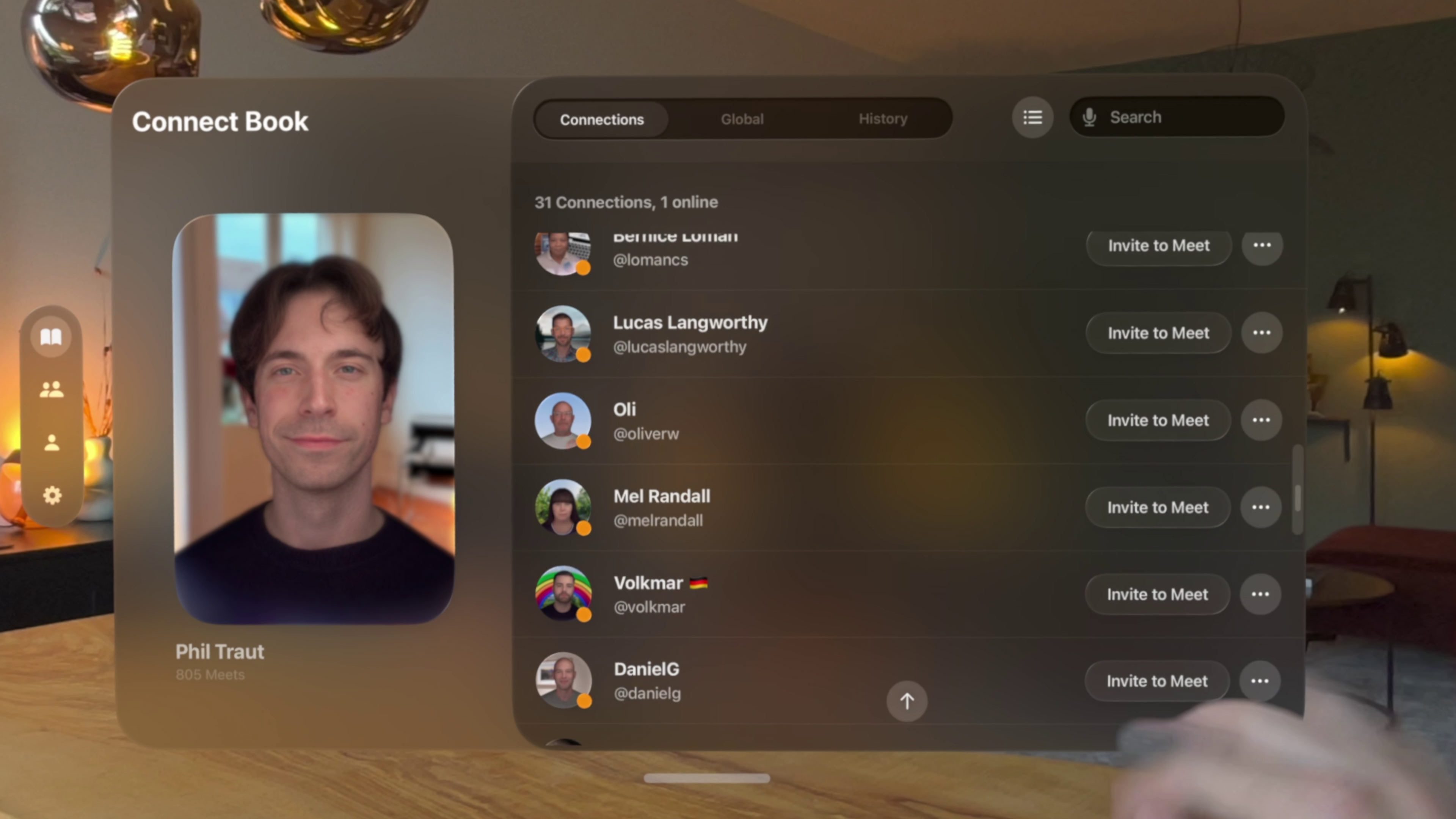
Image courtesy AuraTap

The requirement to scan a physical face also makes it difficult to spoof Personas, which is something hardly any social network can claim right now.

Granted, someone could technically scan someone else’s face and use the headset, although there’s no practical way to then scale that idea and create a network of scammers since Personas are stored on the device itself and can’t be imported or exported as a sharable file.

The biggest problem though is making sure there are actually enough Vision Pro users online at one time to make the app useful. Much like the early days of multiplayer VR games, populating servers—or in this case, a contact list with online users—requires a constant inflow to benefit from the network effect.

I wish AuraTap well, because it might just be the right thing for Vision Pro-owning business types looking for the next digital mixer. That said, the studio certainly has its work cut out for it if they want it to become an indispensable companion app to Vision Pro.

The post New Vision Pro App Bets on Apple’s Persona Avatars to Form Genuine Connections appeared first on Road to VR.
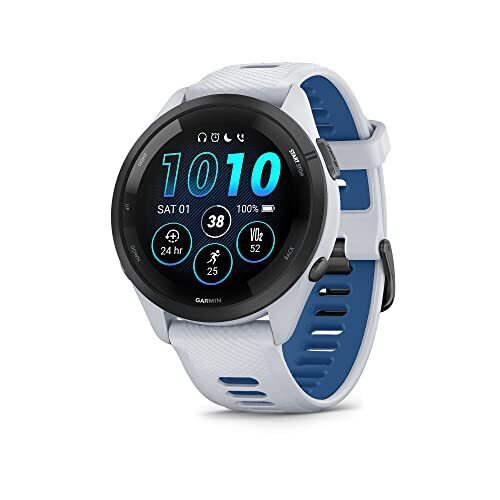
The Garmin Forerunner 265 Is a Pretty Good Buy During Amazon’s Big Spring Sale

We may earn a commission from links on this page. Deal pricing and availability subject to change after time of publication.

The best sale you’ll find on a Garmin watch during the ongoing Amazon Big Spring Sale is probably this Forerunner 265, which will run you $344.95. It’s an excellent watch—I said as much when I reviewed it. If this watch appeals to you, go ahead and buy it—but there are some caveats you should consider before buying one.

It’s a low price—but only a little cheaper than usual

The first to know is that older-model watches are not always as good a deal as they appear. This watch is $344.95 today, down from an original price of $449.99, and it’s got a “Big Spring Sale” tag; that makes it look like an excellent deal. But the price history tells a different story: Earlier this month, it was going for $349.99 (only $5 more) and the highest price in the last few days was $368.99 ($24 more). Looking over the last year or so of price data, the 265 and 265S have spent a month or more at $349.99 (or lower) on at least two occasions—the first big one when the 570 launched in early summer, and the second for the holiday shopping season.

Older watches reveice fewer updates from Garmin

And since the 265 has been replaced by the 570, I need to talk about what that means for people who buy the 265. The 265 is an older watch, having launched in 2023. Now, that’s not a problem in itself—Garmins tend to age well. Whatever you would have liked about the watch in 2023, it’s got all the same features now. It’s still a good watch. 

But ever since the launch of the 570 and 970, Garmin’s regular updates have been bringing new features to the ’70 series, but not the ’65. (Similarly, the Fenix 8 has been getting upgrades that the Fenix 7 does not.) In the past, Garmin hasn’t walked away from older models this quickly, but it seems like the new models are different enough from their predecessors that most new features only make sense to roll out on the newer hardware. 

The 265 is still getting updates for stability and bug fixes (here’s the latest, from just two months ago) so it’s still supported, it’s just not getting the best new features. For example, the new glances for battery health, sports scores, and lifestyle logging are only for the newer watches. 

The Garmin Forerunner 265 is still a strong buy

With all that in mind, is the 265 still a good watch? Honestly, yes, but it no longer occupies a “sweet spot” at the center of features and value. In 2026, if you want a watch with all the best Garmin features, it’s better to upgrade to the Forerunner 570 or 970, or for more of a lifestyle watch, the Venu 4. On the budget side, the Vivoactive 6 is a good pick from the newer generation. But none of those are currently seeing significant discounts, so if price is a major factor in your buying decision, I’d consider looking at Coros or Suunto too. 

Our Best Editor-Vetted Amazon Big Spring Sale Deals Right Now

Deals are selected by our commerce team

Meta and YouTube Found Negligent in Landmark Social Media Addiction Case

A jury found Meta and YouTube negligent in a landmark social media addiction case, ruling that addictive design features such as infinite scroll and algorithmic recommendations harmed a young user and contributed to her mental health distress. The verdict awards $3 million in compensatory damages so far and could pave the way for more lawsuits seeking financial penalties and product changes across the social media industry. “Meta is responsible for 70 percent of that cost and YouTube for the remainder,” notes The New York Times. “TikTok and Snap both settled with the plaintiff for undisclosed terms before the trial started.” From the report: The bellwether case, which was brought by a now 20-year-old woman identified as K.G.M., had accused social media companies of creating products as addictive as cigarettes or digital casinos. K.G.M. sued Meta, which owns Instagram and Facebook, and Google’s YouTube over features like infinite scroll and algorithmic recommendations that she claimed led to anxiety and depression.

The jury of seven women and five men will deliberate further to decide what further punitive damages the companies should pay for malice or fraud. The verdict in K.G.M.’s case — one of thousands of lawsuits filed by teenagers, school districts and state attorneys general against Meta, YouTube, TikTok and Snap, which owns Snapchat — was a major win for the plaintiffs. The finding validates a novel legal theory that social media sites or apps can cause personal injury. It is likely to factor into similar cases expected to go to trial this year, which could expose the internet giants to further financial damages and force changes to their products. The verdict also comes on the heels of a New Mexico jury ruling that found Meta liable for violating state law by failing to protect users of its apps from child predators.


Read more of this story at Slashdot.

Google’s TurboQuant AI-compression algorithm can reduce LLM memory usage by 6x

Even if you don’t know much about the inner workings of generative AI models, you probably know they need a lot of memory. Hence, it is currently almost impossible to buy a measly stick of RAM without getting fleeced. Google Research recently revealed TurboQuant, a compression algorithm that reduces the memory footprint of large language models (LLMs) while also boosting speed and maintaining accuracy.

TurboQuant is aimed at reducing the size of the key-value cache, which Google likens to a “digital cheat sheet” that stores important information so it doesn’t have to be recomputed. This cheat sheet is necessary because, as we say all the time, LLMs don’t actually know anything; they can do a good impression of knowing things through the use of vectors, which map the semantic meaning of tokenized text. When two vectors are similar, that means they have conceptual similarity.

High-dimensional vectors, which can have hundreds or thousands of embeddings, may describe complex information like the pixels in an image or a large data set. They also occupy a lot of memory and inflate the size of the key-value cache, bottlenecking performance. To make models smaller and more efficient, developers employ quantization techniques to run them at lower precision. The drawback is that the outputs get worse—the quality of token estimation goes down. With TurboQuant, Google’s early results show an 8x performance increase and 6x reduction in memory usage in some tests without a loss of quality.

Read full article

Comments

Antibiotic resistance among germs swells during droughts, study suggests

For as long as we’ve known that soil bacteria manufacture molecular weapons to fight each other, we’ve been swiping their battle plans. In clinics and hospitals, those turf-war weapons have become miraculous drugs of modern medicine—antibiotics—that blow away otherwise deadly infections.

But, of course, there’s a dark side of mimicking microbial munitions—bacteria have defenses, too, namely antibiotic resistance. You’re probably aware that we’re facing a rising threat of drug resistance among disease-causing bacteria, one that is rendering much of our stolen weaponry obsolete and making infections harder to defeat.

Often, this growing crisis is framed as a clinical failure: We’re overusing and misusing antibiotics, hastening our bacterial foes’ natural ability to develop and spread resistance. While this is certainly true, a new study in Nature Microbiology this week identifies a potentially new driver of rising antibiotic resistance—and we’re at least partly to blame for this one, too.

Read full article

Comments

Here’s your first look at For All Mankind spinoff Star City

Apple’s excellent For All Mankind might be wrapping up after its recently confirmed sixth season, but as one big-budget alt-history sci-fi show departs, another is born. Apple TV has just dropped the first teaser for Star City, which focuses on the reimagined space race of the 1960s from the Soviet perspective.

ICYMI, For All Mankind has been running for nearly five seasons now (the fifth arrives later this week), with its debut season in 2019 asking, “what if Russia had beaten America to the moon?” For All Mankind has jumped a number of decades ahead since then, but Star City returns us to that initial premise, taking us behind the Iron Curtain to see how the Soviet Union orchestrated its fictional historical triumph.

The brief teaser doesn’t show us much in the way of plot, but you straight away get what vibe the streamer is going for with a show it describes as a “propulsive paranoid thriller.” We also get a look at some of the cast, which includes House of the Dragon’s Rhys Ifans, Anna Maxwell Martin and Agnes O’Casey.

Interestingly, Star City’s two-episode premiere lands on Apple TV on May 29, right after the finale of For All Mankind season 5, which takes place in the 2010s. That could make for a pretty jarring backwards time jump if you watch both seasons back to back, but nobody can say that Apple isn’t serving its sci-fi audience.

This article originally appeared on Engadget at https://www.engadget.com/entertainment/streaming/heres-your-first-look-at-for-all-mankind-spinoff-star-city-174359587.html?src=rss

Google’s Lyria 3 Pro can now generate AI music (slop) up to 3 minutes in length

Google just introduced Lyria 3 Pro, an updated version of its AI model that generates songs based on prompts. The biggest improvement here is the ability to make full three-minute songs, up from 30 seconds when the product launched last month.

The tool also brings a lot more customization into the mix. Users can now prompt the model to create specific elements within a song, like intros, verses, choruses and bridges. Google says “Lyria 3 Pro better understands musical composition” when compared to the previous model and that it’s “great for experimenting with different styles or generating songs with complex transitions.”

It’s already available for paid Gemini users and for enterprise customers on Vertex AI. Additionally, developers have access to the tool via the Gemini API and Google AI Studio. The company is also integrating it into Google Vids, an AI-based video-generation platform.

Google says that “responsibility was foundational” when designing and training this model, so it only uses materials that the company has actual rights to. Additionally, all Lyria 3 Pro outputs are embedded with SynthID, which is a watermark for identifying AI-generated content.

That’s all well and good, but do we need yet another AI music-making tool? Current estimates suggest that around 50,000 AI-generated tracks get uploaded daily to Spotify alone. The platform had to delete, and this is not a typo, 75 million of these tracks last year.

This article originally appeared on Engadget at https://www.engadget.com/ai/googles-lyria-3-pro-can-now-generate-ai-music-slop-up-to-3-minutes-in-length-172738752.html?src=rss

The Best Budget Treadmill Is Even Cheaper During Amazon’s Big Spring Sale

We may earn a commission from links on this page. Deal pricing and availability subject to change after time of publication.

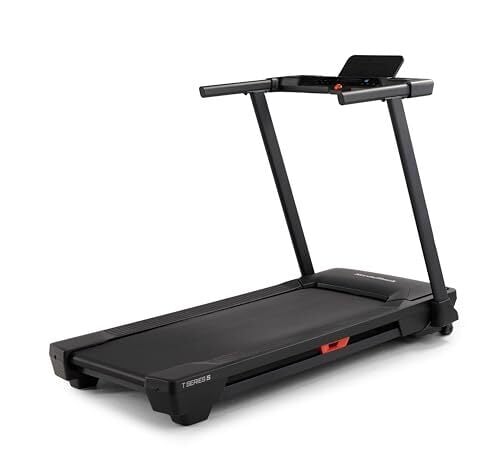
Running is one of the simplest workouts a person can do—and unless you have plans on opening up a professional-grade gym, there’s probably no need for you to blow thousands of dollars on a fancy treadmill. Today, one of the best budget treadmills, the NordicTrack T Series 5, is on sale for $479. That’s a 20% markdown from its typical price of $599, all thanks to Amazon’s Big Spring Sale.

If you are looking for something more high-tech (think a 16-inch touchscreen and a foldable frame), the T Series 16 is on sale for $1,349, down from its typical price of $1,499. Otherwise, the T Series 5 is the perfect starter treadmill for anyone who just wants to lace up their shoes and pound that belt.

Perhaps the coolest part of joining the NordicTrack ecosystem is the access to over 10,000 workouts through iFIT. For $39/month (or $396/year), you can follow expert trainers through global runs, hikes, strength training, yoga sessions, and more, all while the system automatically adjusts your treadmill’s speed and incline to match the workout. And for those of us who like to track their progress across multiple platforms, iFIT syncs with your Strava, Garmin, and Apple Health.

Our Best Editor-Vetted Amazon Big Spring Sale Deals Right Now

Deals are selected by our commerce team

My Favorite JBL Over-Ear Headphones Are $100 Off During Amazon’s Big Spring Sale

We may earn a commission from links on this page. Deal pricing and availability subject to change after time of publication.

If you’re a music aficionado looking for a deal during Amazon’s Big Spring Sale, these JBL Tour One M3 headphones might change your relationship with sound like they changed mine. And!—they’re on sale for the lowest price Amazon has ever offered, a neat $100 off off the full retail price of $449.95.

Here are only some of the ways these JBL cans are better than my previous pair of over-ear headphones:

  • Excellent sound quality: That’s the point, right? JBL’s high-res audio is top-notch, especially for bluetooth headphones.

  • JBL Smart Tx: A separate unit that lets you connect to just about any audio source, including analog sources and non-bluetooth sources, and listen. It’s also a touch screen controller so you can access all the controls without pulling out your phone.

  • 8-Mic True Adaptive Noise Cancelling 2.0: These things do a great job cancelling noise of all kinds, whether you want to fully focus on music or just have blessed silence at will. I had no idea how much ambient sound I’d been swimming in all day—the fridge running, the cars on the road, the wind—all gone in an instant.

  • Head-tracking spatial audio: JBL’s spatial audio is just excellent, whether you use it for music, movies, or gaming.

  • High quality microphone: If you take calls with these, your voice will sound like a face-to-face conversation.

  • Battery life: They stay charged forever—up to 70 hours of music on a single charge.

It’s not just me who thinks so: PCMag gave these four stars. Amazon’s reviewers give them 4.4 stars. They’re a great buy, especially right now.

Meta lays off hundreds of workers, including more from Reality Labs

Meta is laying off more employees. Of the hundreds of cuts made on Wednesday, the Reality Labs division is one of the prime recipients. The layoffs come a day after news broke that Meta executives (sans Mark Zuckerberg) could be set for windfalls of up to $2.7 billion each under new pay packages.

Today’s cuts of “hundreds” fall well short of its reported 20 percent workforce reduction plans that leaked earlier this month. At the end of 2025, Meta’s workforce stood at around 79,000 people. However, this could simply be a smaller initial round before the larger cuts come into play.

Earlier in March, Meta reportedly asked some managers to prepare cost-cutting plans. The company is looking to offset its costly AI infrastructure investments, which include a plan to spend $600 billion on data centers by 2028.

Mark Zuckerberg wearing a Meta Quest headset
YouTube / Meta

The layoffs are also said to affect Meta’s recruiting, sales, Facebook and global operations divisions. But the Reality Labs cuts further illustrate how the company’s VR and metaverse bets failed to pay off. Today’s cuts follow layoffs in January that shed over 1,000 jobs from the division, which has lost over $70 billion since the beginning of 2021. Now, despite the 2021 rebranding that pivoted from social media to the metaverse, Zuckerberg now increasingly views Meta as an AI titan.

In January, the CEO forecast the AI world Big Tech is creating when he said he was beginning to see “projects that used to require big teams now [being] accomplished by a single very talented person.” That sure sounds peachy for the dwindling few reaping the benefits. Those farther down the food chain may have different thoughts.

Speaking of that sweet, sweet C-suite life, Meta is taking a page from Tesla’s Elon Musk pay package. SEC filings reveal that the company is planning a lucrative new incentive system for six executives: CTO Andrew Bosworth, CFO Susan Li, COO Javier Olivan and CPO Chris Cox. They’re set to receive more stock-based compensation tied to performance. Bosworth, Cox, Li and Olivan could reportedly be looking at bounties of up to $2.7 billion apiece.

This article originally appeared on Engadget at https://www.engadget.com/big-tech/meta-lays-off-hundreds-of-workers-including-more-from-reality-labs-171536879.html?src=rss

This Heart Rate Monitor Is Widely Regarded As the Best, and It’s 27% Off During Amazon’s Big Spring Sale

We may earn a commission from links on this page. Deal pricing and availability subject to change after time of publication.

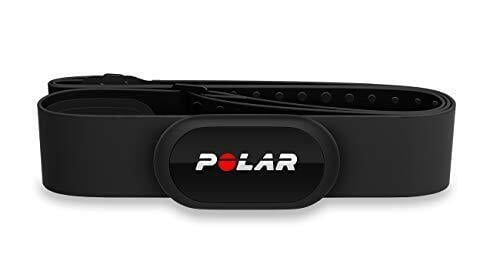
A chest strap is the most accurate way to measure your heart rate during workouts, and today some of the best ones are discounted for Amazon’s Big Spring Sale. That includes the popular and highly rated Polar H10.

While most fitness watches and other devices (like smart rings) can measure heart rate, they use optical sensors that are often “good enough” but not necessarily as accurate as you’d like. I’ve written more here about why chest straps are your best option if you care about accuracy. Most chest straps—including the H10—sense the electrical activity of your heart directly. Watches, rings, and armbands use a green light instead to detect blood in your blood vessels. These can be thrown off by poor fit or ambient light, so they aren’t as reliable as a chest strap.

Fortunately, most watches can pair to a chest strap—so your Apple Watch or your Garmin can display your heart rate from the strap while you’re running. You can even pair a chest strap directly to your phone, no watch needed. (The iPhone’s Fitness app recently added this capability; on Android, you may need a third-party app like Polar Beat for a direct-to-phone connection.)

Today’s deals on Polar heart rate monitors include: 

  • Polar H10: $76.99, down from $104.99. This is widely regarded as the best heart rate monitor out there. 

  • Polar H9: $56.44, down from $69.90. This model can only pair to one Bluetooth device at a time, which is enough for most of us.

  • Polar Verity Sense: $84.99, down from $104.99. This is an armband with an optical sensor. 

If you need some help deciding between the three, the H10 is hands-down your best option. It has excellent accuracy and can connect to two Bluetooth devices at a time (say, your Peloton bike and your Garmin watch). If you don’t need dual connections, the H9 is significantly cheaper and will do the same job. 

The Polar Verity Sense is not a chest strap, but I’m including it here because it’s a wildly popular device. It uses an optical sensor, just like smartwatches do, and that sensor is mounted on an armband. Many people find that an armband placement is more accurate than a sensor on the wrist (this will vary from person to person), so it’s a good option if you don’t like the fit or feel of chest strap sensors. 

Our Best Editor-Vetted Amazon Big Spring Sale Deals Right Now

Deals are selected by our commerce team

[$] Collaboration for battling security incidents

The keynote for Sun Security Con
2026
(SunSecCon) was given by Farzan Karimi on how incident handling
can go awry because of a lack of collaboration between the “good
guys”—which stands in contrast to how attackers collaboratively operate.
He provided some “war stories” where security incident handling had
benefited from collaboration and others where it was hampered by its lack.
SunSecCon was held in conjunction with SCALE 23x in Pasadena
in early March.

Meta Loses Trial After Arguing Child Exploitation Was ‘Inevitable’

Meta lost a child safety trial in New Mexico after a court found that its platforms failed to adequately protect children from exploitation and misled parents about app safety. According to Ars Technica, the jury on Tuesday “deliberated for only one day before agreeing that Meta should pay $375 million in civil damages…” While the jury declined to impose the maximum penalty New Mexico sought, which could have cost the company $2.2 billion, Meta may still face additional financial penalties and could be forced to make changes to its apps. From the report: The trial followed a 2023 lawsuit filed by New Mexico Attorney General Raul Torrez after The Guardian published a two-year investigation exposing child sex trafficking markets on Facebook and Instagram. Torrez’s office then conducted an undercover investigation codenamed “Operation MetaPhile,” in which officers posed as children on Facebook, Instagram, and WhatsApp. The jury heard that these fake profiles were “simply inundated with images and targeted solicitations” from child abusers, Torrez told CNBC in 2024. Ultimately, three men were arrested amid the sting for attempting to use Meta’s social networks to prey on children. At trial, Mark Zuckerberg and Instagram chief Adam Mosseri testified that “harms to children, such as sexual exploitation and detriments to mental health, were inevitable on the company’s platforms due to their vast user bases,” The Guardian reported. Internal messages and documents, as well as testimony from child safety experts within and outside the company, showed that Meta repeatedly ignored warnings and failed to fix platforms to protect kids, New Mexico’s AG successfully argued.

Perhaps most troubling to the jury, law enforcement and the National Center for Missing and Exploited Children also testified that Meta’s reporting of crimes to children on its apps — including child sexual abuse materials (CSAM) — was “deficient,” The Guardian reported. Rather than make it easy to trace harms on its platforms, the jury learned from frustrated cops that Meta “generated high volumes of ‘junk’ reports by overly relying on AI to moderate its platforms.” This made its reporting “useless” and “meant crimes could not be investigated,” The Guardian reported.

Celebrating the win as a “historic victory,” Torrez told CNBC that families had previously paid the price for “Meta’s choice to put profits over kids’ safety.” “Meta executives knew their products harmed children, disregarded warnings from their own employees, and lied to the public about what they knew,” Torrez said. “Today the jury joined families, educators, and child safety experts in saying enough is enough.” Meta said the company plans to appeal the verdict. “We respectfully disagree with the verdict and will appeal,” Meta’s spokesperson said. “We work hard to keep people safe on our platforms and are clear about the challenges of identifying and removing bad actors or harmful content. We will continue to defend ourselves vigorously, and we remain confident in our record of protecting teens online.”


Read more of this story at Slashdot.

Google’s Pixel 9a Is Just $399 for the Amazon Big Spring Sale

It’s tempting when choosing a new smartphone to go for the latest and greatest model. In Google’s corner, there’s the Pixel 10 series, including the brand-new Pixel 10a. But tech has advanced a lot in recent years, to the point where the value of a last-gen smartphone is often just as good—if not better—than the latest model. Take, for example, the Pixel 9a. You can pick up the predecessor to the Pixel 10a right now for just $399, $100 off its MSRP, during Amazon’s Big Spring Sale.

The Pixel 9a is a capable Android device that doesn’t reach the $1,000 premium price we’ve seen from many flagships in recent years. It comes with a 6.3-inch 1080p OLED display with a variable refresh rate of 60-120Hz; Google’s Tensor G3 chip with 8GB of RAM and 128GB of storage; a single 48MP rear camera with a 13MP selfie cam; support for 5G, Wi-Fi 6e, and Bluetooth 5; and an average battery life of just over 12 hours (30 hours of talk time). In her review of the Pixel 9a back in August, former Lifehacker associate tech editor Michelle Ehrhardt said the device was “arguably the best Google phone yet.” She praised the lack of a camera bar—a fixture of the Pixel series for years now—its long battery life, its brighter screen, and how lightweight the phone felt.

The Pixel 9a isn’t perfect, of course. This is Google’s “affordable” phone, which means there are some compromises here over the main Pixel line. Notably, Michelle found the camera to be “just OK,” and expressed concern than Google’s battery update would weaken the battery life overtime. She also found fault with the 9a’s Tensor chip, thought that’s not a unique issue with the phone itself. Google uses its in-house Tensor chip for all its smartphones, and it’s simply not as powerful as some others on the market, like the Snapdragon SoCs you’ll find in the Samsung Galaxy series.

You might think things would only go up with the Pixel 10a, but Michelle didn’t agree. In her review, she found the 10a to be more of a Pixel 9a rerelease than a sequel, carrying over plenty of the benefits of the phone, without doing much to differentiate itself from its predecessor. If you need a new Android phone, especially one that runs stock Android (this is Google, after all), for a decent price up front, this is a solid deal. That said, while this is a great price for the 9a, it isn’t the cheapest it’s ever been. According to Keepa, Amazon sold the phone for $349 for about a week in early February, before raising it back up to $399. It has been over $400 for over a month, though, reaching as high as $470, so this is still a great deal.

Our Best Editor-Vetted Amazon Big Spring Sale Deals Right Now

Deals are selected by our commerce team

Who needs Shimano? These boutique brakes are incredibly pretty and could even make maintenance easy

While the majority of mountain bikers opt for brakes from one of the major brands, there’s an undercurrent of high-end brakes from lesser-known outfits that prove big-budget R&D departments aren’t necessary.

The new Kaha brakes from New Zealand brand Radic, spotted at the Taipei International Cycle Show, look like one such example.

They’ll certainly be a compelling choice if their performance backs up their evident build quality and good looks.

At the business end

Radic Kaha hoses
Stainless steel braided hoses connect lever to caliper. Tom Marvin / OurMedia

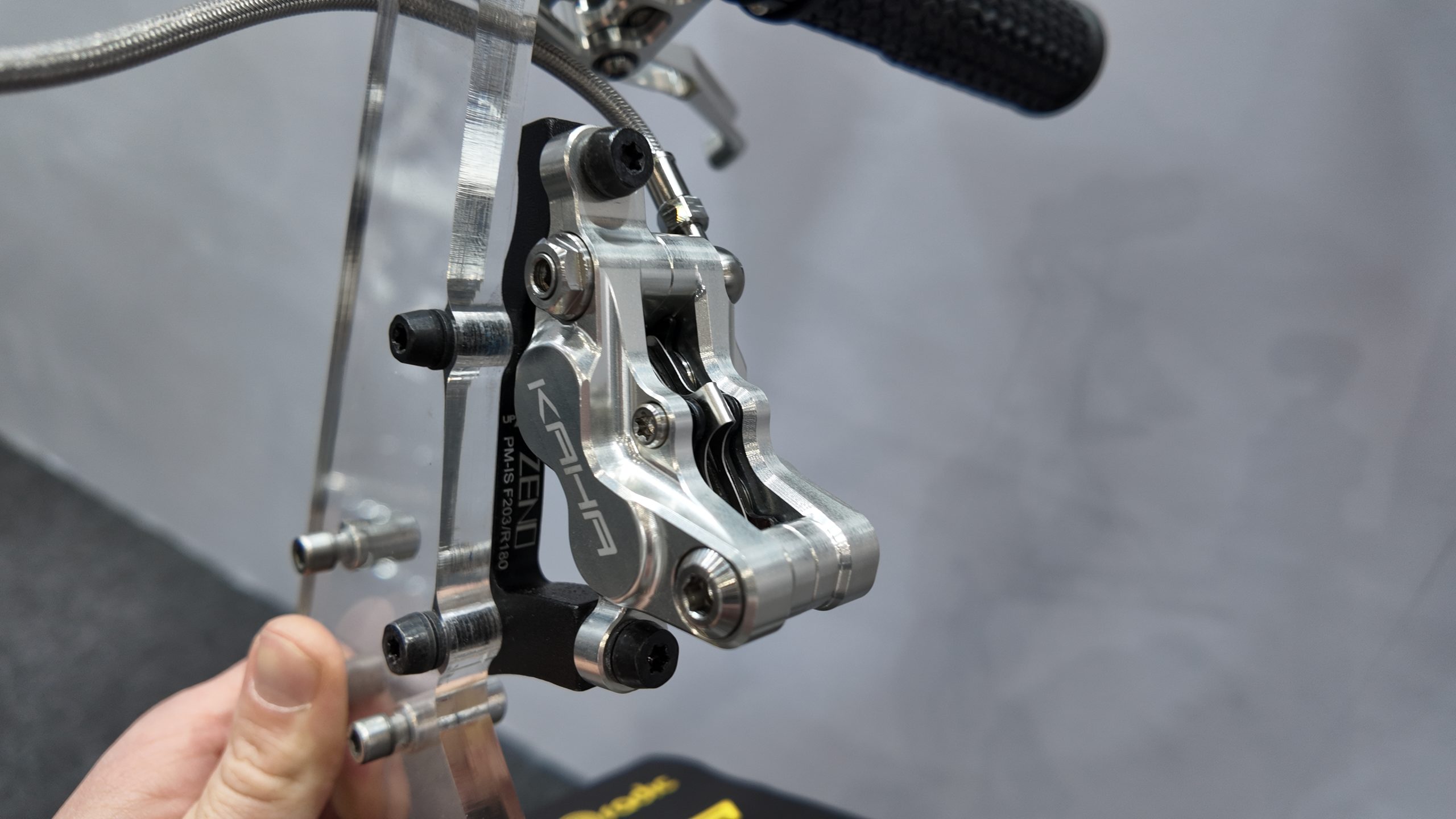
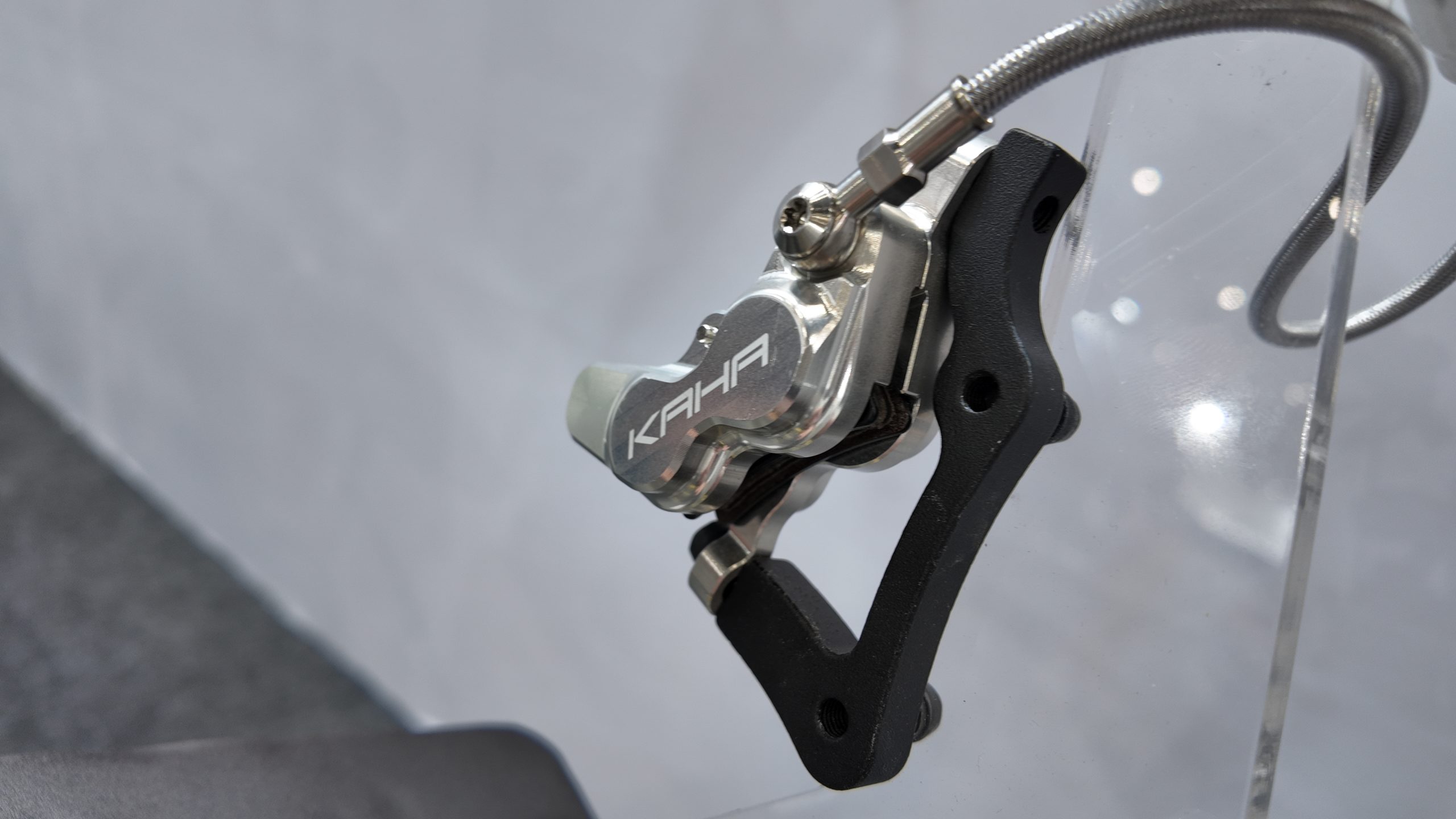
The brakes are targeted towards enduro and DH riders, with four stainless steel pistons at the caliper – two at 16mm and two at 17mm.

The caliper is shaved of excess material, while still holding onto those large-bore pistons, which push onto a brake pad shaped the same as Hope’s V4 pads – replacing them should be easy.

The two-piece aluminium caliper has an angle-adjustable banjo to help ensure your cable routing is smooth out of the rear brake. Oil channeling through the piston has been designed to minimise the risk of bubbles being caught during a bleed.

Radic Kaha brake pads
The brake caliper holds a set of Hope V4 brake pads. Tom Marvin / OurMedia

Titanium hardware is used to keep weight sensible.

The calipers are designed to be user-serviceable, with the exposed inner surface of the pistons threaded to make for easier removal.

The brakes can use mineral or DOT fluids, depending on your preference – a swap of seals is all you need in order to run either fluid.

Moving forward

Radic Kaha caliper
The caliper has had all unnecessary material removed. Tom Marvin / OurMedia

A braided stainless steel hose connects the caliper to the lever in a nod to the motorsport manufacturing past of Radic’s engineer.

In theory, this should swell less when high pressures are applied.

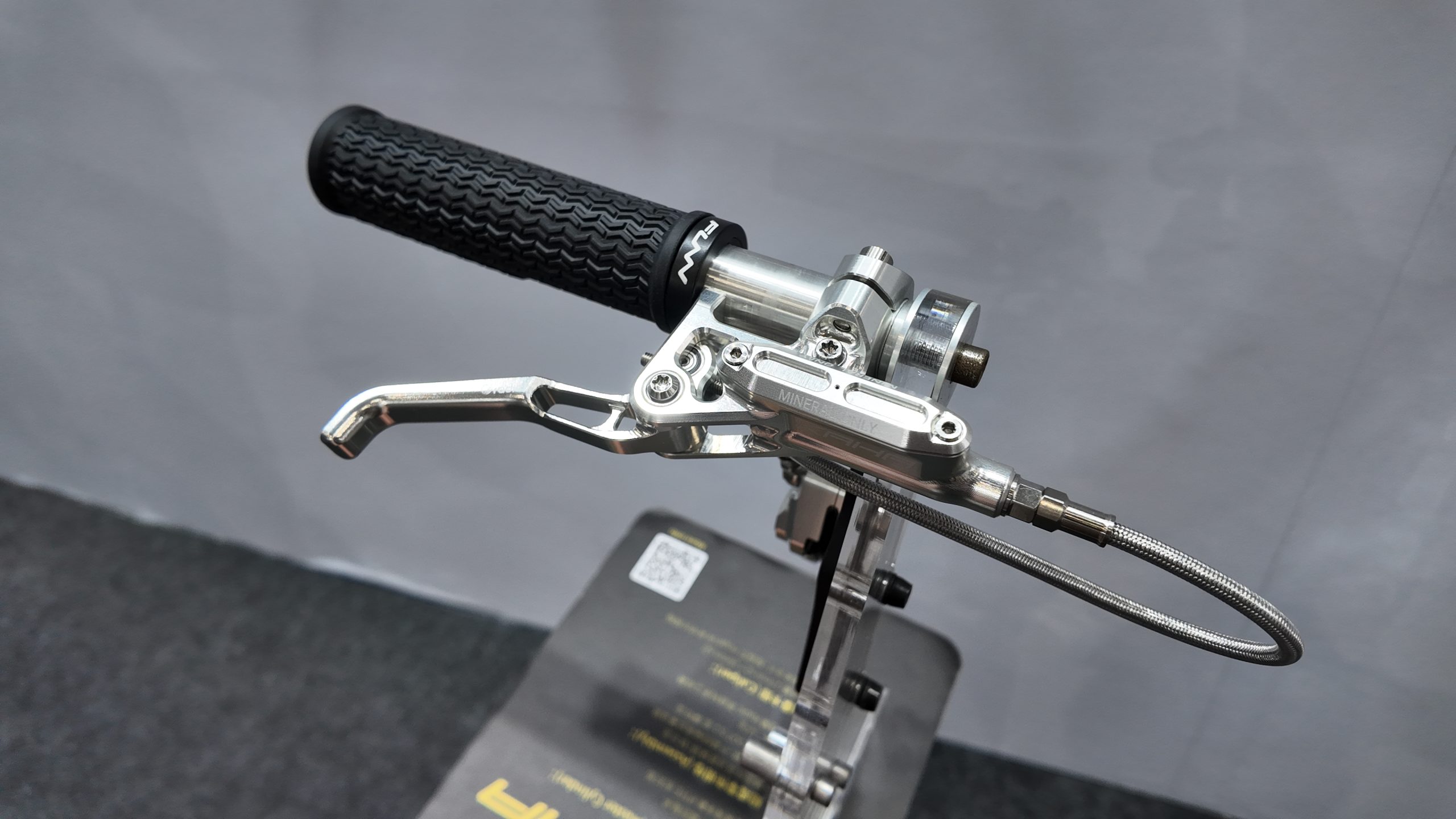
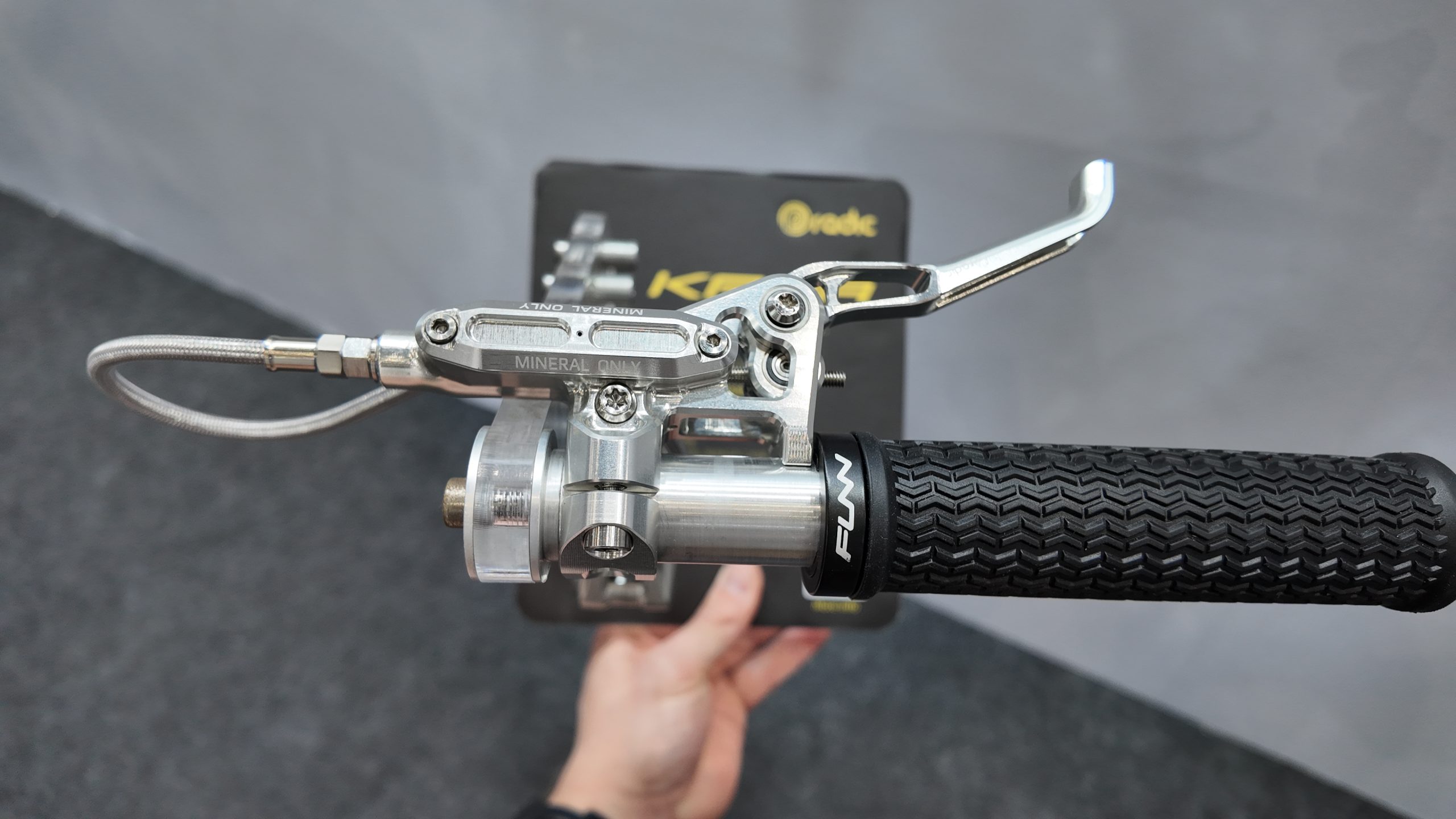
At the lever end, things remain incredibly pretty – and well thought-out.

Radic Kaha lever body
As per Shimano, the lever body received additional anti-flex support. Tom Marvin / OurMedia

Shared with Shimano’s brakes, the lever body has an additional support that pushes on the bar when the lever is squeezed, minimising any flex in the lever body.

The lever blade is fairly long, with a tight hook at the end to ensure your finger stays in place.

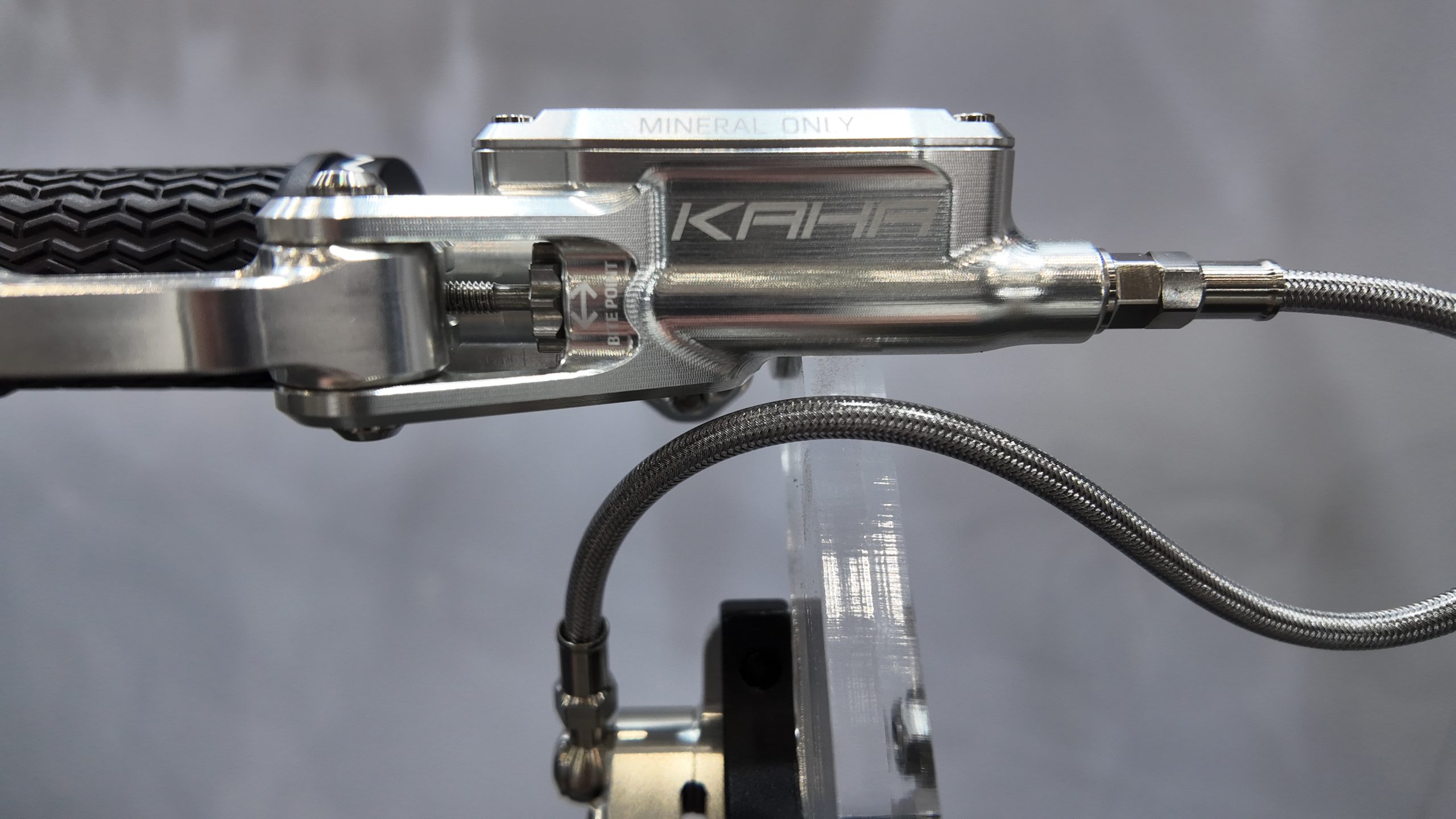
Lever reach and bite-point adjustments are offered, while the lever blade itself pivots on bearings.

Radic Kaha adjustment
The bite-point adjust wheel is held snugly in the body of the lever, but it’s still adjustable with your fingers. Tom Marvin / OurMedia

All in, the lever has a very smooth and light feel, along with a short lever throw before the pads bite on the disc.

The brakes are listed at NZ$1200, which works out at just over £500 in the UK.

The Best Budget Running Watch Is Even Cheaper During Amazon’s Big Spring Sale

We may earn a commission from links on this page. Deal pricing and availability subject to change after time of publication.

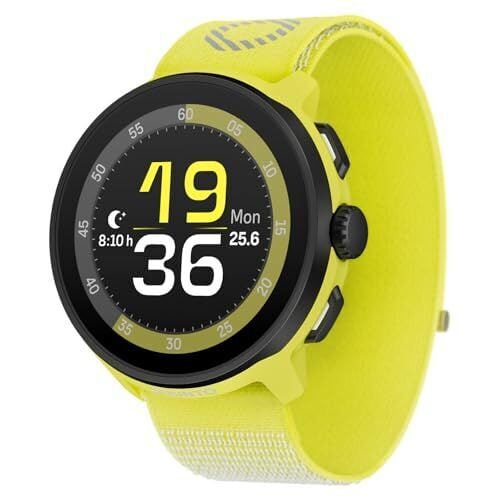
If you’ve been searching for an affordable running watch, one of your best options just got even more budget-friendly. The Suunto Run is at the lowest price it ever gets, down to $179. That’s a solid 10% discount (or $20 off) from its typical $199 price tag, during Amazon’s Big Spring Sale.

As someone who loves to stay up-to-date with the running community, I know the Suunto is something of a cult classic. This watch is a niche pick for runners who want lightweight simplicity, but without sacrificing quality in their GPS and heart rate accuracy. For runners who want reliable tracking and solid performance without breaking the bank, this is an excellent option. My colleague Beth Skwarecki reviewed the Suunto Run and found herself surprised by how much she enjoyed it.

More Suunto deals in Amazon’s Big Spring Sale

If you’re looking at other models in the Suunto lineup, several are discounted right now:

  • Suunto Race S: $299 (normally $349)

  • Suunto Vertical: $379 (normally $499)

Those two watches offer fancier features depending on your training needs, but the Suunto Run remains my top recommendation for a quality budget option.

Our Best Editor-Vetted Amazon Big Spring Sale Deals Right Now

Deals are selected by our commerce team