

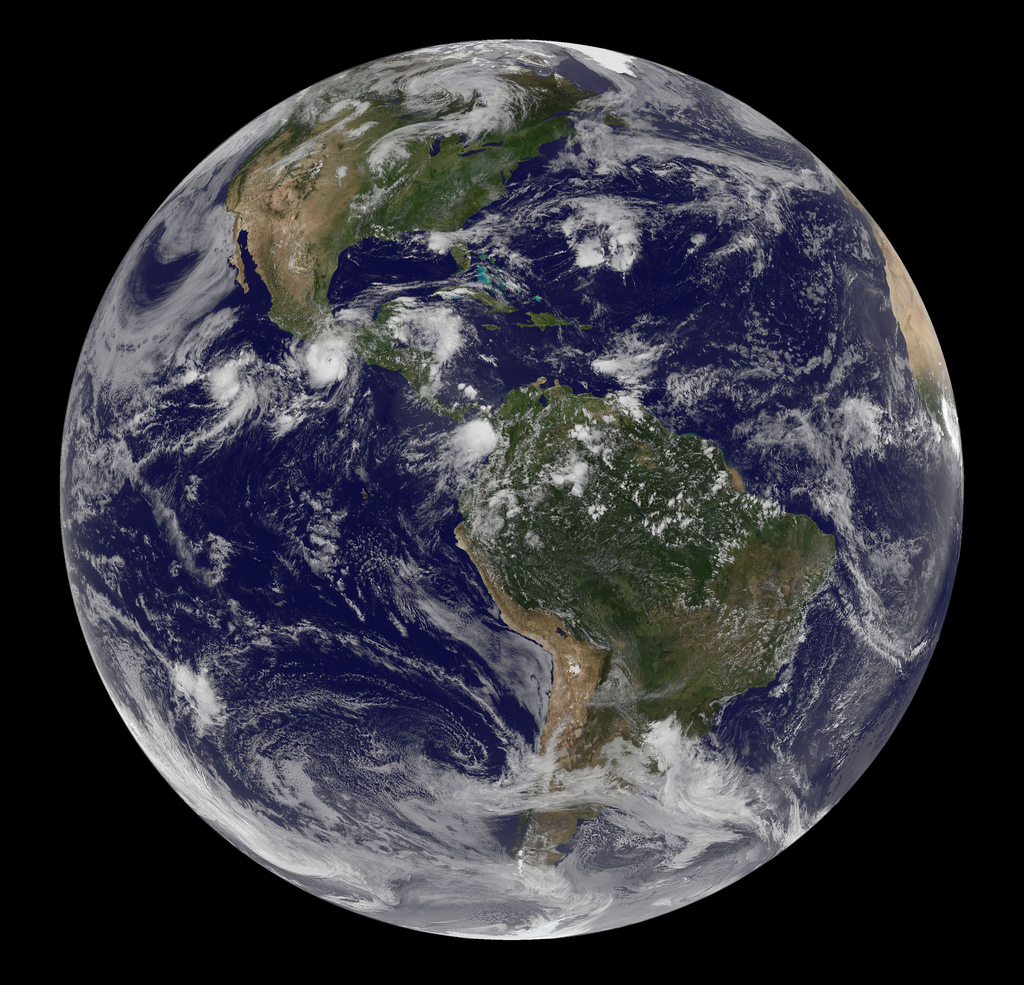
Enlarge (credit: NASA/NOAA GOES Project)
In 2015, representatives from 196 countries met for the Paris Climate talks, setting greenhouse gas emissions targets for the year 2025. As part of this agreement, the US has set what are called “intended nationally determined contributions,” which are planned reductions in carbon emissions. A recent paper in Nature Climate Change examined the current federal policies and determined that it is unlikely the US will meet its own targets as things now stand.
The paper attempted a comprehensive evaluation of historical and projected greenhouse gas emissions in the US, and it put a particular emphasis on the most influential policy years. These were 2005 (the year the Kyoto Protocol went into effect and the Montreal action plan was developed) and 2025 (the date for reaching the targeted goals of the Paris climate talks). Researchers built a model that included historical and projected estimates of both climate data and energy use. The team then used the model to test the potential effects of several different pieces of climate policy that have been proposed or passed in recent years.
They found that the EPA’s Clean Power Plan would be the largest contributor to greenhouse gas emissions reductions, producing an estimated drop of 221 to 267 million tons of CO2 equivalent. However, the team did find that an earlier, more ambitious version of the Clean Power Plan would have had an even larger effect.
Read 5 remaining paragraphs | Comments
Source: Ars Technica – US unlikely to meet targets set after Paris climate agreement