

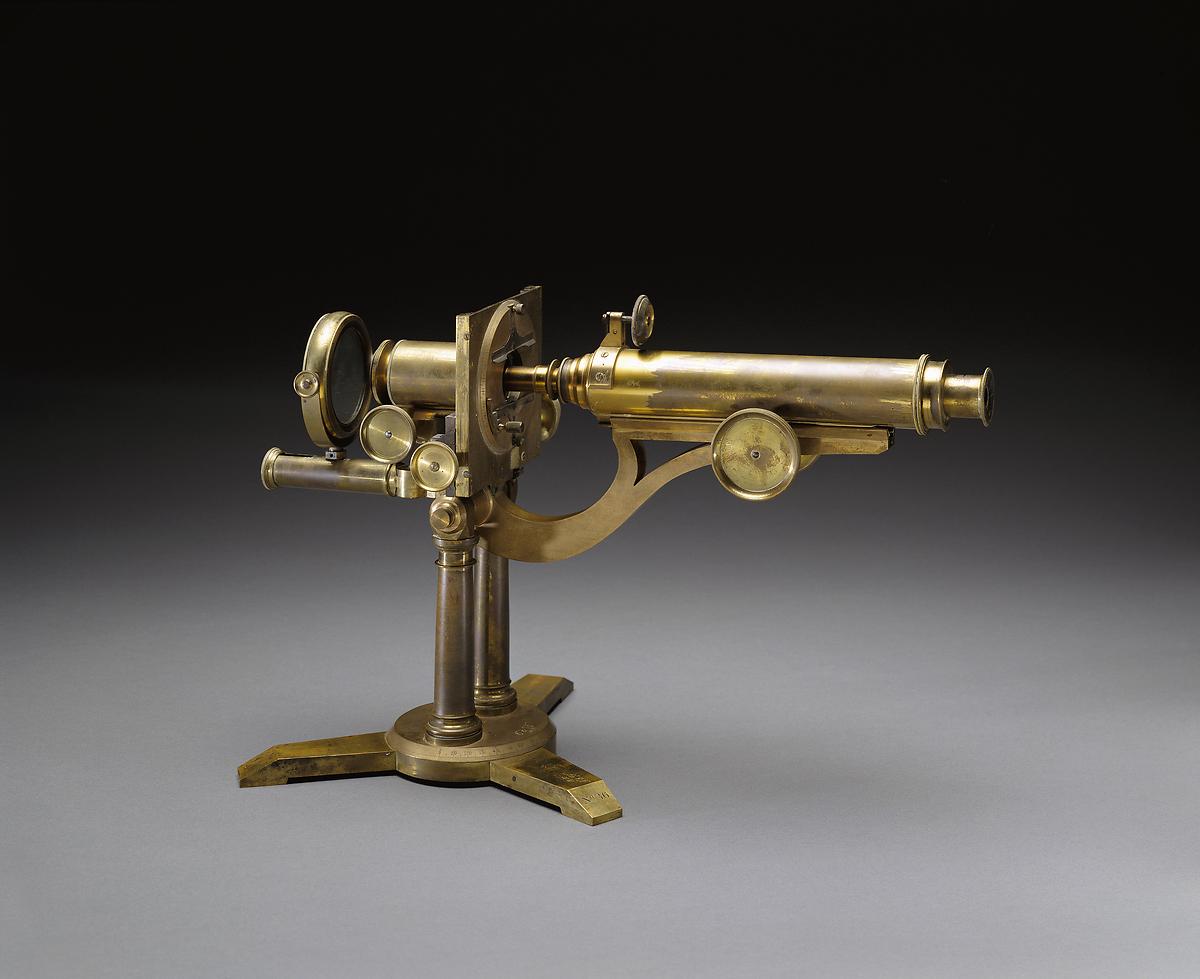
Enlarge / We’ve come a long way from this technology. (credit: NIH)
Most of the world of biology, and, indeed, a significant part of physics, is focused on trying to generate a clear image of really tiny stuff. For many reasons, it simply isn’t possible to get better images. Still we keep trying, and a recent success reminded me that sometimes all you can do is stare in awe at utter genius.
I present to you a microscope that is a hybrid of Michael Phelps and an arcade game. It’s a swimming lens that you steer over a surface, bringing back fascinating views of the terrain below. It goes one better than Phelps, in that it gets its energy locally, so there’s no need to drag it out of the pool for food and recreational drugs. And, finally, it’s really, really simple. So simple that if you have a decent microscope already, you can probably use one of these swimming lenses with a few minor modifications.
Enhance my image
As always, to reveal the full beauty of the idea, we need to see why an ordinary version of the technology fails. The basic ideas behind a microscope’s failure go back to two things: conservation of energy and conservation of momentum. Light consists of waves that have a certain energy and momentum, depending on the frequency and wavelength of the light. When light scatters off a surface, the frequency and wavelength don’t change, which means that the total momentum and energy of the light is unchanged.
Read 15 remaining paragraphs | Comments
Source: Ars Technica – Using beads with little engines to play microscopy arcade