
Skip to primary content

Prime-WoW

My site, my way, no big company can change this

Prime-WoW

Main menu

  • Home
  • Discord
  • Forums
  • Games
    • 7DtD
      • 7DtD Map
      • 7DtD Official Forums
      • 7DtD Wiki
    • Minecraft
      • Survival Map
      • Vanilla Map
      • FTB Map
      • FTB Wiki
      • Download FTB Client
    • NWN
      • NWN Wiki
      • NWN Lexicon
      • NWN Vault
      • NWNX
      • NWN Info
      • Rhun Guide
    • Terraria
      • Terraria Map
    • WoW
      • Prime-WoW Site
      • WoW Armory
  • Unfiltered RSS
    • Bikes
    • Games
      • Kotaku
      • PS4 News
      • VR
    • Nature
      • TreeHugger
      • Survival
    • Technology
      • Hardware
        • Hot Hardware
      • Linux
        • Linux Today
        • LWN.net
        • LXer
        • Phoronix
        • RPi
      • LifeHacker
      • Akihabara News
      • AnandTech
      • Ars Technica
      • Engadget
      • Gear & Gadgets
      • Geekologie
      • Gizmodo
      • [H]ardOCP
      • io9
      • Slashdot
      • TG Daily

Post navigation

← Previous Next →

Thousands of years ago, a warm Arctic made mid-latitudes drier

Posted on March 28, 2019 by Xordac Prime
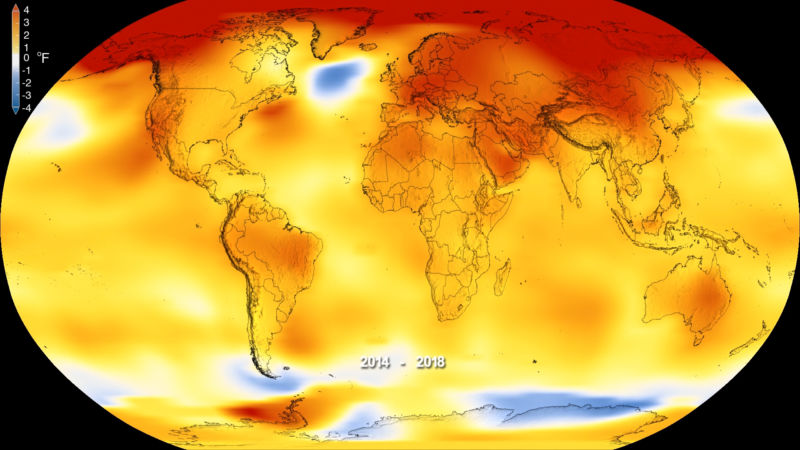
The Arctic is the fastest-warming region of the planet.

Enlarge / The Arctic is the fastest-warming region of the planet. (credit: NASA)

The thing about a global climate change is that it isn’t as simple as shifting the temperatures everywhere by a set number of degrees. The temperature change isn’t uniform around the globe, and these regional differences can drive considerable knock-on effects on weather patterns.

The Arctic, for example, will warm more than the equatorial region. For our current global warming venture, there will be consequences of this fact beyond the Arctic itself. One juicy hypothesis is that the greater Arctic warming affects the behavior of the polar jet stream, driving significant changes on extreme weather patterns in the mid-latitudes. This idea is the subject of ongoing research, as well as genuine scientific debate and uncertainty.

Lessons from the past

One way to study patterns like this is to look to past climate changes. That’s what a team led by Northern Arizona University’s Cody Routson did, compiling paleoclimate records of rainfall in the Northern Hemisphere over the last 10,000 years.

Read 9 remaining paragraphs | Comments


Source: Ars Technica – Thousands of years ago, a warm Arctic made mid-latitudes drier

This entry was posted in Ars Technica, Unfiltered RSS and tagged Ars Technica by Xordac Prime. Bookmark the permalink.
Proudly powered by WordPress