

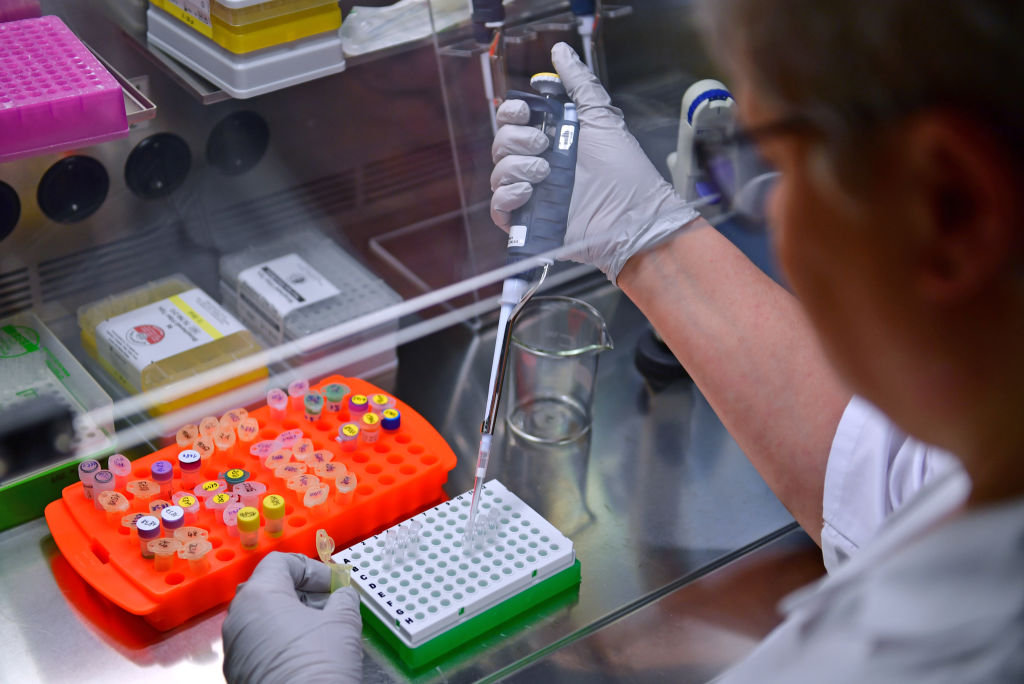
Enlarge / 07 February 2019, Saxony-Anhalt, Halle (Saale): In the genetic engineering monitoring laboratory of the State Office for Environmental Protection of Saxony-Anhalt, Damaris Horn is sipping reaction preparations for the polymerase chain reaction (PCR) in a special cabin. (credit: Picture Alliance | Getty Images )
Of late, gene editing has been in the news due to an ethically reckless experiment in which human embryos were subjected to an inefficient form of gene editing. The subjects, now born, gained uncertain protection from HIV in exchange for a large collection of potential risks. A large number of ethicists and scientists agreed that this isn’t the sort of thing we should be using gene editing for.
That response contains an implicit corollary: there are some things that might justify the use of gene editing in humans. Now, a series of papers looks at some reasonable use cases in mice and collectively find that the technology really isn’t ready for use yet.
Use cases
Gene editing will likely always come with a bit of risk; when you’re cutting and pasting DNA in millions of cells, extremely rare events can’t be avoided. So the ethical questions come down to how we can minimize those risks, and what conditions make them worth taking.
Read 14 remaining paragraphs | Comments
Source: Ars Technica – Gene editing still has a few bugs in the system