

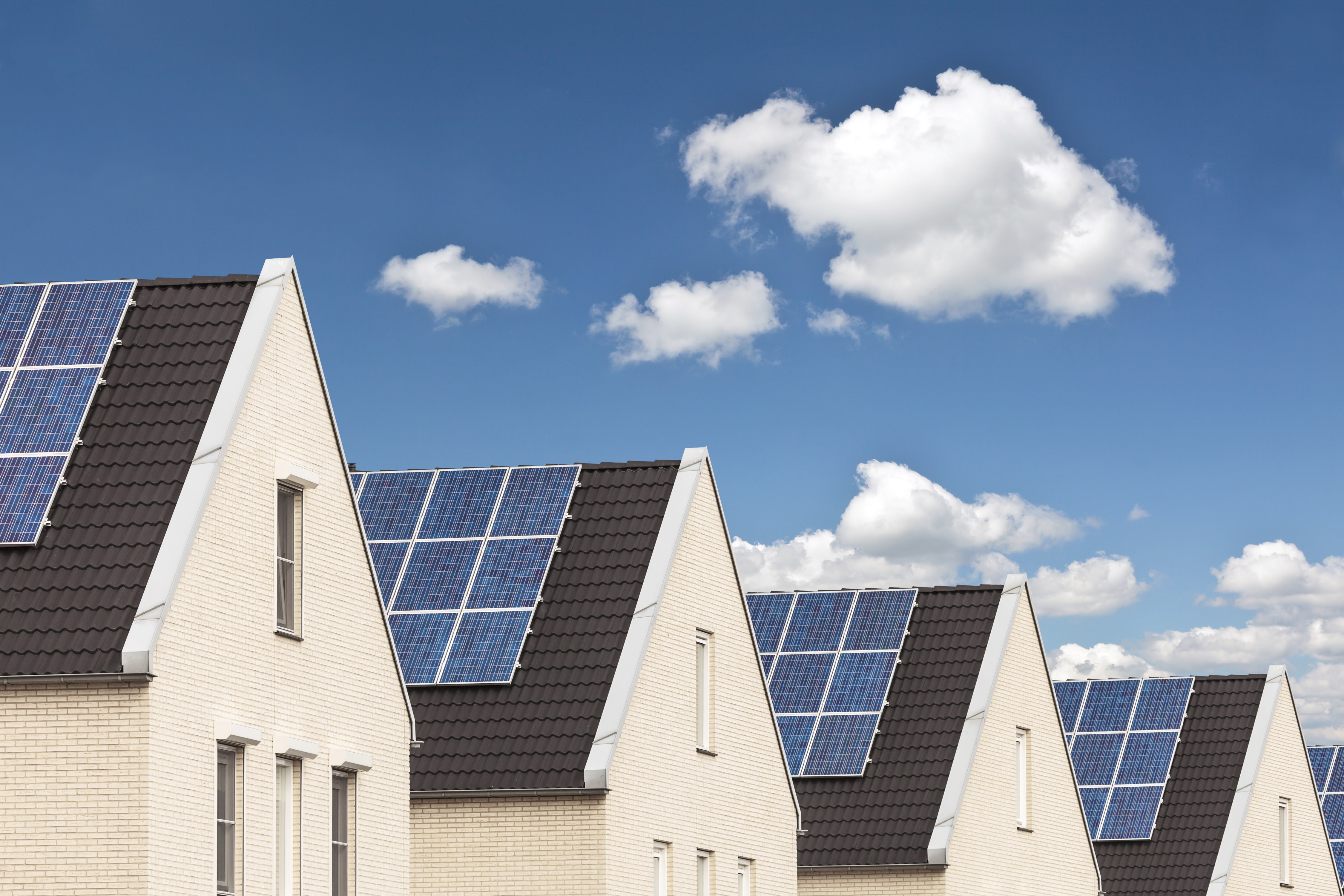
Enlarge / Row of new Dutch houses with solar panels attached on the roofs. (credit: Lawrence Berkeley Lab)
As the price of solar panels has plunged, a strange thing has happened. The panels have gone from being a large fraction of installation costs to a relatively minor component. That means all the other things—permits, labor, supporting hardware, and so on—make up the bulk of the cost of putting panels on your roof. While these costs are going down as well, they’re not falling at nearly the same rate as the panels themselves.
All of which raises an intriguing question: if there’s a large fixed cost involved in getting panels on your roof, does it make sense to install more efficient panels, despite their higher costs? A collaboration between MIT researchers and people at solar power companies have answered this question with a very qualified “yes.” Critically, one of the qualifications is that they assume availability of a technology we haven’t developed yet.
Efficiency limits
Currently, thin-film solar panels have efficiency percentages in the teens, while silicon has reached the low 20s. While there’s some room for improvements in both of these technologies, progress is probably going to be incremental. There also exist some alternative technologies that have high material costs that aren’t likely to drop substantially any time soon. Beyond those, physics sets a hard cap on the maximum efficiency possible at 33 percent.
Read 13 remaining paragraphs | Comments
Source: Ars Technica – Installation costs so much that it’s better to use expensive solar panels