

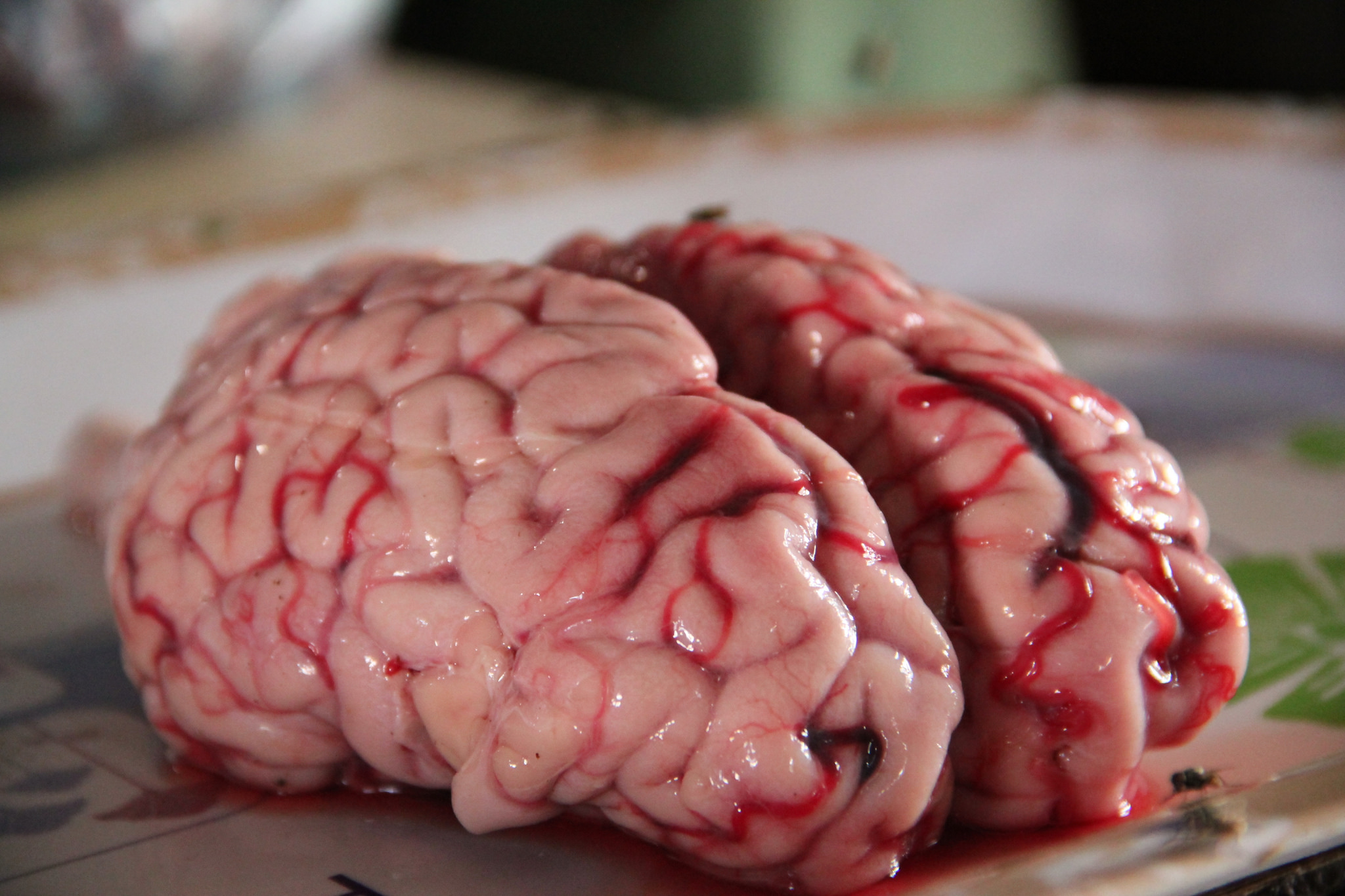
Enlarge / Brains are gross. (credit: Adeel Anwar / Flickr)
The premiere of the second season of Westworld is a perfect time to ponder what makes us human. This is not new territory; such questions have long been dealt with in works of fiction, and they have appeared in science in the form of studies of creatures that have human-like characteristics—like consciousness—yet are not Homo sapiens.
These studies raise ethical questions whether the subject is an animal or an AI. Last May, a consortium of bioethicists, lawyers, neuroscientists, geneticists, philosophers, and psychiatrists convened at Duke to discuss how this question may apply to relatively new entities: brain “organoids” grown in a lab. These organoids can be either chimaera of human or animal cells or slices of human brain tissue. Will these lab-grown constructs achieve any sort of consciousness deserving of protection?
Why organoids?
If we ever want to understand, let alone cure, the very complex brain disorders that plague people—like schizophrenia, ASD, and depression—we need research models. And in order to be informative, these models must be accurate representations of the human brain. Yet as our models become more and more like the real thing (and for now, they are still quite a long way off), the problems with using them become so pronounced as to negate their utility—like Borges’ map.
Read 9 remaining paragraphs | Comments
Source: Ars Technica – Human brain cells can make complex structures in a dish—is this a problem?