

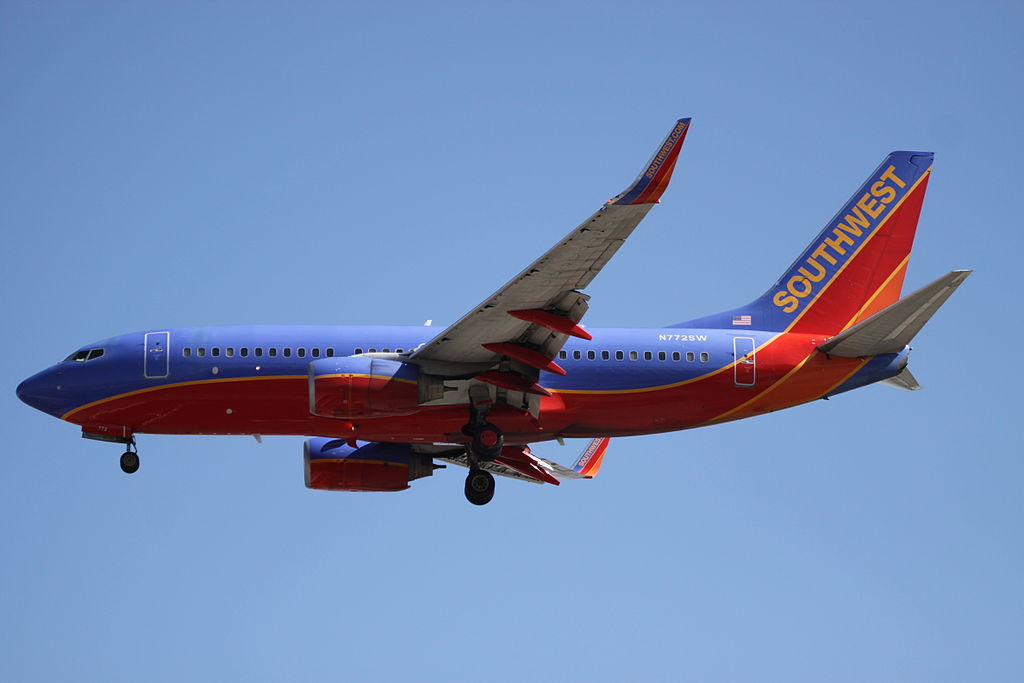
Enlarge / Southwest’s Boeing 737-700, tail number N772SW, was the aircraft for Southwest flight 1380. A failure in its left turbofan engine caused the death of one passenger and multiple other injuries. (credit: Aeroprints)
While a National Transportation Safety Board investigation is still underway, NTSB officials confirmed that the uncontained engine failure aboard Southwest Airlines Flight 1380 was the result of a fan blade breaking from a crack near the fan’s hub. The failure is similar to one that occurred on another Southwest flight in September 2016.
“The fan blade separated in two places,” said NTSB Chairman Robert Sumwalt. “At the hub… there’s a fatigue fracture where this #13 fan blade would come into that hub. It also fractured roughly halfway through it. But it appears the fatigue fracture was the initial event. We have the root part, but we don’t have the outboard part. The crack was interior, so certainly not detectable from looking at it from the outside.”
After that incident, the manufacturer of the engine—CFM International—issued a technical bulletin urging customers to conduct more frequent ultrasonic inspections of the fan in the type of turbofan engine used by Southwest’s 737 Next Generation aircraft. In 2017, CFM even asked the FAA to enact a new rule requiring those checks. But Southwest Airlines opposed the proposed change to inspection frequency, stating in a comment to the FAA that it would take longer for the airline to comply because of the number of engines in its fleet:
Read 5 remaining paragraphs | Comments
Source: Ars Technica – Southwest Airlines protested airworthiness directive designed to prevent engine failures