

Enlarge / palaeodeserts project, human bone, phalanx. (credit: Ian Cartwright)
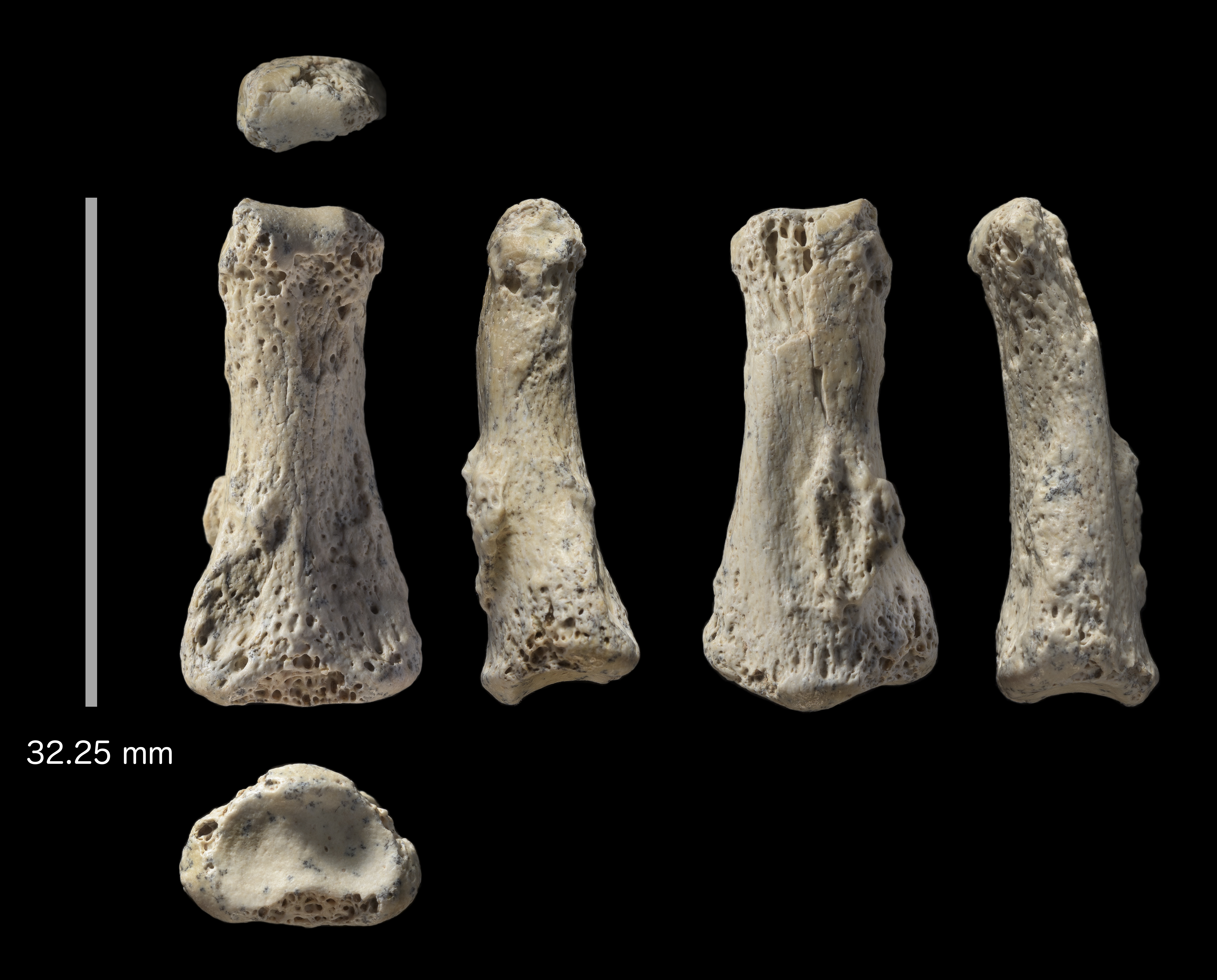
Paleontologist Iyad Zalmout of the Saudi Geological Survey was walking through the Al-Wusta dig site in 2016 when he spotted a tiny bone eroding out of a layer of sediment. The 87,000-year-old fossil turned out to be a human intermediate phalanx—the middle section of your finger—from what was probably a middle finger. It’s the earliest directly dated human fossil that has been found so far outside Africa or the Levant, and archaeologists say it’s evidence that once humans ventured beyond Africa, they spread farther and faster than previously thought.
A green Arabia
According to uranium-series dating, the fossil is between 85.1 and 90.1 thousand years old. At that time, the Nefud Desert wasn’t the 40,000-square-mile sea of sand that now stretches across the Northern Arabian Peninsula. Around 84,000 years ago, a shift in the climate brought stronger summer monsoons to Arabia. Based on evidence from layers of sediment at the site and hundreds of animal bones, Al-Wusta was the shore of a shallow lake, one of hundreds in an arid Pleistocene grassland. African antelope grazed here, and hippos wallowed in the muddy waters of the lake. And the site was home to a few dozen hunter-gatherers, according to Oxford University archaeologist Huw Groucutt, who directed the fieldwork at the site.
The people who dwelled here 87,000 years ago lived in a fairly densely populated landscape by the standards of the late Pleistocene. Groucutt and his colleagues have identified several other ancient lakes over the course of a decade of survey and excavation in the region, and many of them have their own stone tool assemblages, a sign that several hunter-gatherer bands roamed the lake-dotted landscape at around the same time. But Al-Wusta is the first site where archaeologists have found actual remains of those early settlers.
Read 16 remaining paragraphs | Comments
Source: Ars Technica – Saudi Arabian fossil find puts finger on the story of human dispersal