

Enlarge (credit: Jaysin Trevino / Flickr)
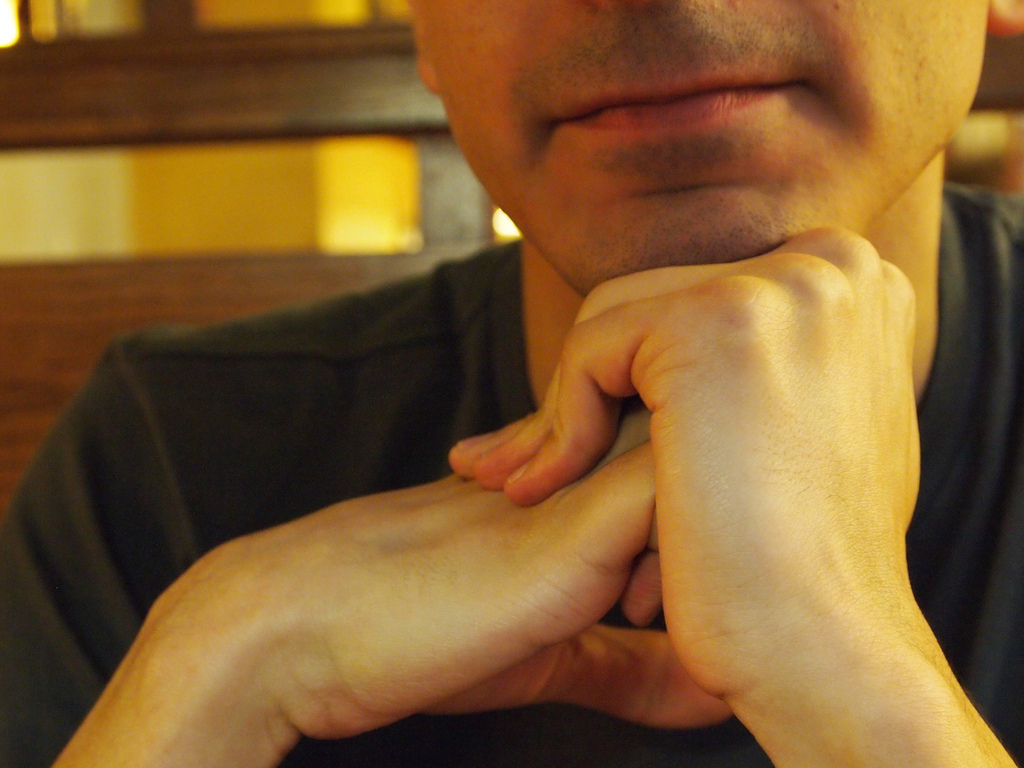
Picture this: a dark alley where the suave evil dude has cornered a helpless plot point. Looming behind the evil dude is someone as broad as he is tall. The generic muscle has a shaven head, missing teeth, and an in-grown T-shirt. The plot point cowers as the muscle moves in. But, before flogging the soon-to-be-dead plot point, the muscle leers and the sound of cracking knuckles echoes off the walls.
Movie clichés not withstanding, popping joints are still something of a mystery. After some experiments and a great deal of thought (and argument, probably involving knuckle cracking), scientists concluded that the popping noise was due to the collapse of cavitation bubbles in the fluid that lubricates joints. That explanation went unchallenged for some 40 years, until more sophisticated experiments showed that, after the popping noise, there were still bubbles in the joint fluid. How could the collapse of bubbles be the source of sound if the bubbles were still there? Now, a pair of scientists have has developed a mathematical model of knuckle cracking that shows how both can be true.
Sucking bubbles
Joint popping usually occurs when bones of the joint are suddenly separated by an unusual amount of fluid. As the two bone surfaces move apart, the fluid between the joints suffers a sudden pressure loss. When the pressure drops low enough, the fluid turns to a gas, creating a bubble. This is cavitation.
Read 15 remaining paragraphs | Comments
Source: Ars Technica – New model offers snappy explanation of knuckle cracking