

Enlarge / The Falcon Heavy rocket proved that 27 engines can fly together and not go all explode-y. (credit: SpaceX)
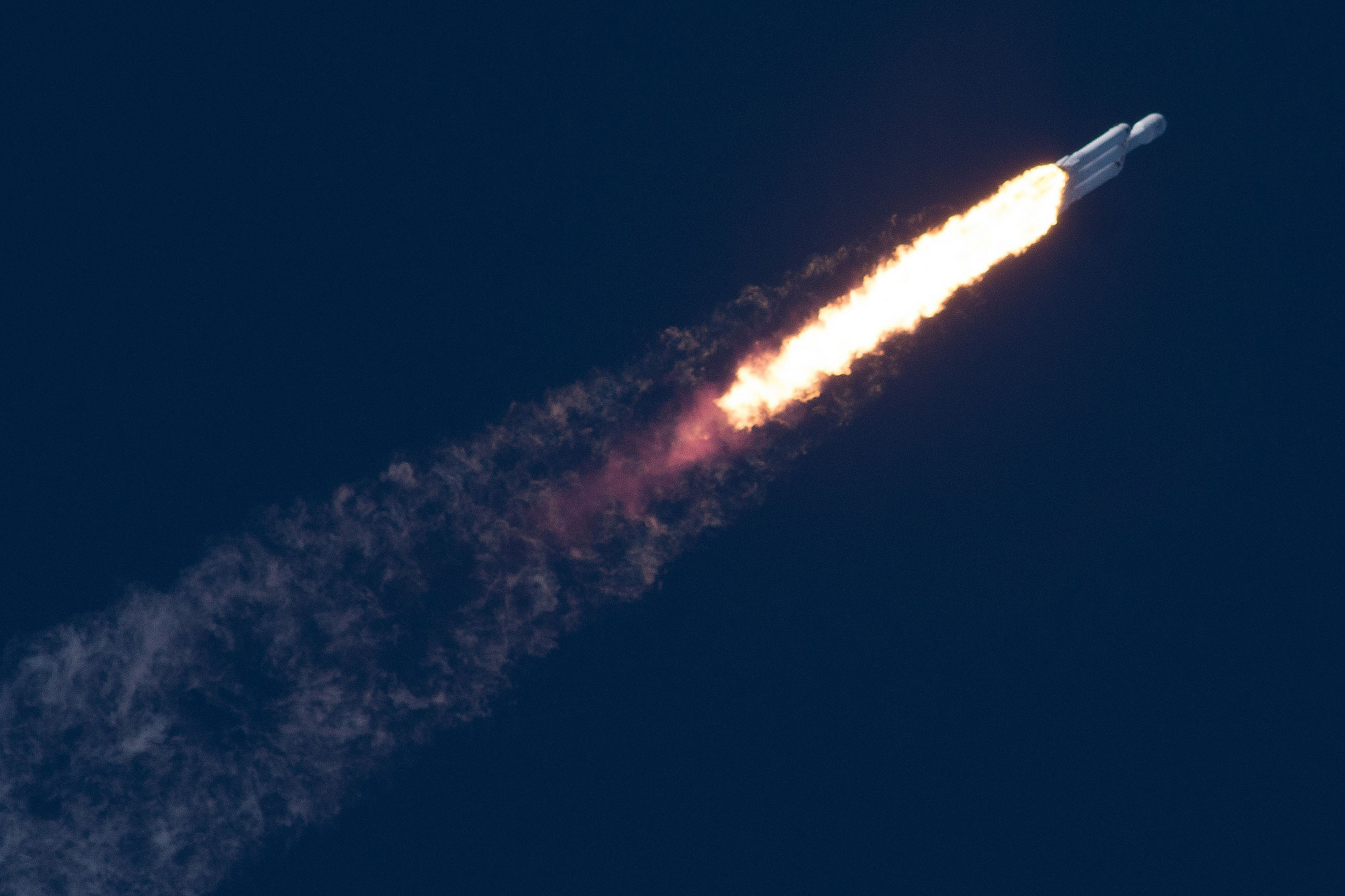
One of the most striking aspects of this week’s launch of the Falcon Heavy rocket is the number of engines the triple-core booster used to reach orbit. Each of the cores had nine Merlin rocket engines, making for a total of 27 engines.
Prior to this launch, no rocket had ever successfully ascended into orbit with more than nine engines—a feat accomplished previously by SpaceX’s Falcon 9 rocket and Rocket Lab’s Electron rocket. (The Russian Soyuz rocket has five engines, each of which has six thrust chambers.)
Launching a rocket with 27 engines, therefore, represents a notable step forward in rocket complexity. It is all the more so, considering the Soviet N-1 rocket. Four times, from 1969 to 1972, the Russians attempted to launch their titanic “Moon rocket,” and it failed spectacularly each time. Its 30 engines were just too many to fire, throttle, and steer at the same time.
Read 7 remaining paragraphs | Comments
Source: Ars Technica – Musk explains why SpaceX prefers clusters of small engines