

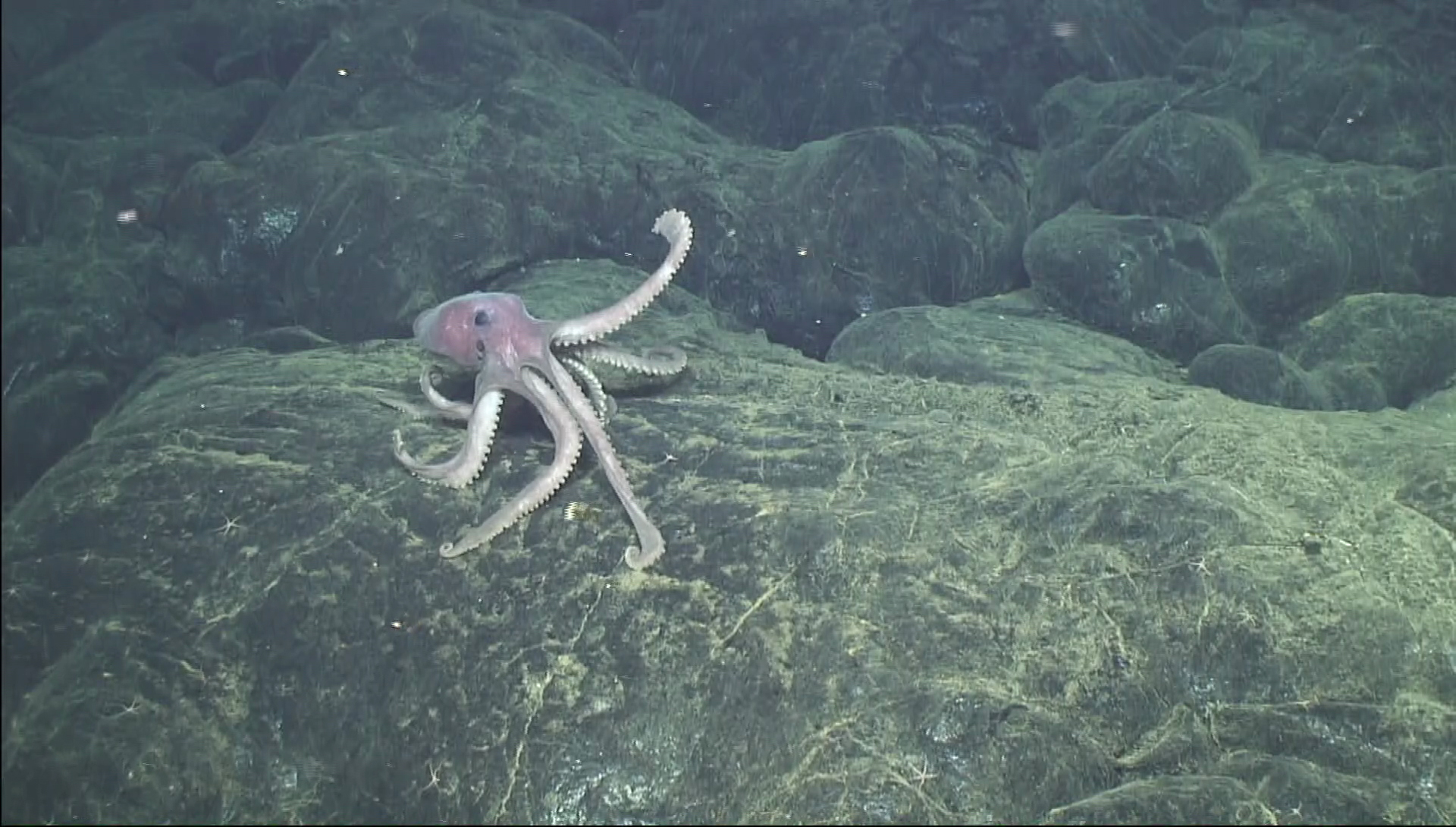
Enlarge (credit: Woods Hole Oceanographic Institution)
The mass extinction at the end of the Cretaceous, which terminated the reign of the dinosaurs, is nothing if not imagination fuel. It’s hard to wrap your head around a cataclysm of such impossible scale, but it’s easy to drown in ideas about how it played out.
The impact of an asteroid off what is today the Yucatán Peninsula, near the town of Chicxulub, seems to be a straightforward entry in the “unusually bad” column. The subsequent global wildfires and soot-blackened skies expands the scale a bit. But the extinction event took place at the same time as the massive Deccan Traps volcanic eruptions in modern day India, which began even before the Chicxulub impact.
A lot of work has looked at the extent to which the Deccan Traps eruptions influenced the extinctions, and many experts have considered whether the impact could have boosted the eruption rate on the other side of the world. But a new study by Joseph Byrnes at the University of Minnesota and Leif Karlstrom at the University of Oregon headed off in a different direction: were other, additional volcanoes affected by the impact?
Read 10 remaining paragraphs | Comments
Source: Ars Technica – End-Cretaceous asteroid impact seems to have juiced seafloor volcanoes