
Skip to primary content

Prime-WoW

My site, my way, no big company can change this

Prime-WoW

Main menu

  • Home
  • Discord
  • Forums
  • Games
    • 7DtD
      • 7DtD Map
      • 7DtD Official Forums
      • 7DtD Wiki
    • Minecraft
      • Survival Map
      • Vanilla Map
      • FTB Map
      • FTB Wiki
      • Download FTB Client
    • NWN
      • NWN Wiki
      • NWN Lexicon
      • NWN Vault
      • NWNX
      • NWN Info
      • Rhun Guide
    • Terraria
      • Terraria Map
    • WoW
      • Prime-WoW Site
      • WoW Armory
  • Unfiltered RSS
    • Bikes
    • Games
      • Kotaku
      • PS4 News
      • VR
    • Nature
      • TreeHugger
      • Survival
    • Technology
      • Hardware
        • Hot Hardware
      • Linux
        • Linux Today
        • LWN.net
        • LXer
        • Phoronix
        • RPi
      • LifeHacker
      • Akihabara News
      • AnandTech
      • Ars Technica
      • Engadget
      • Gear & Gadgets
      • Geekologie
      • Gizmodo
      • [H]ardOCP
      • io9
      • Slashdot
      • TG Daily

Post navigation

← Previous Next →

Life, but not as we know it

Posted on December 1, 2017 by Xordac Prime

Enlarge (credit: Adapted from an image created by Dennis Sun, Mezarque Design)
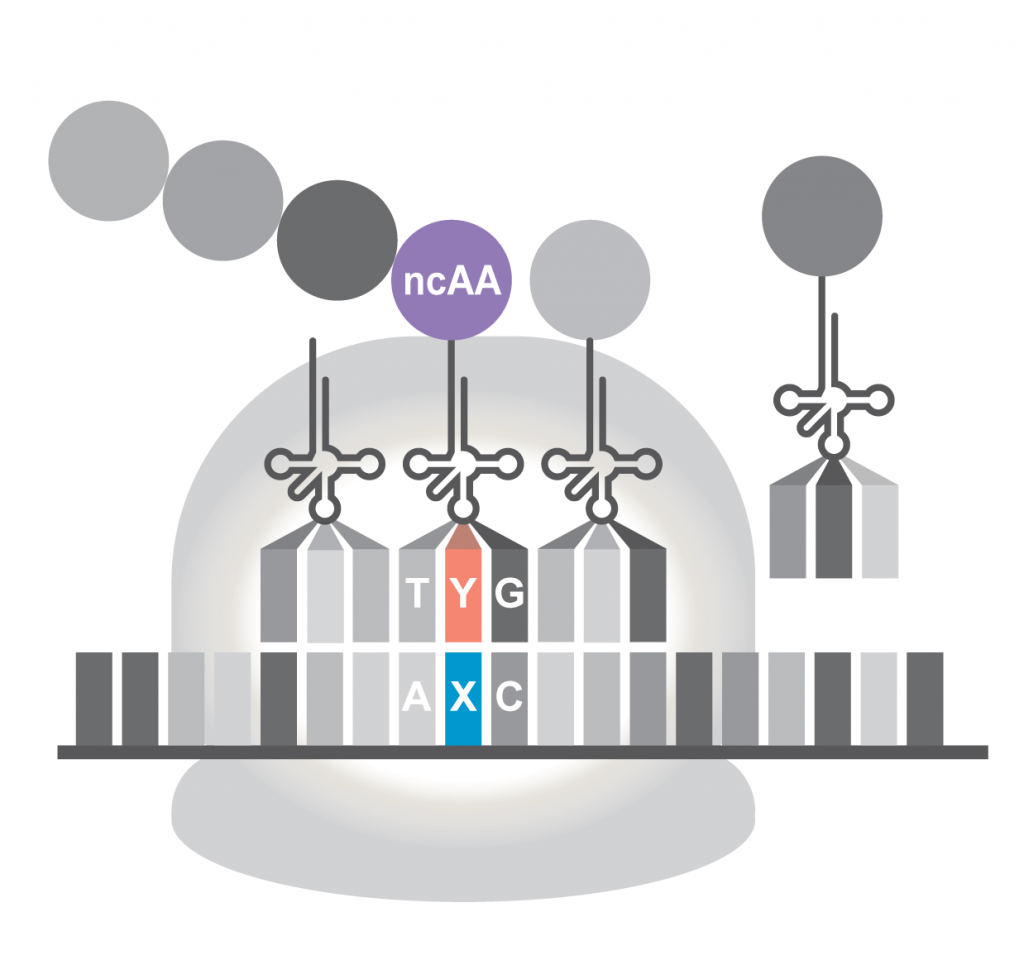
To the best of our ability to tell, everything on Earth shares a few common features. It encodes information in DNA using a set of four bases, A, T, C, and G. Sets of three bases are used to code for a single amino acid, and most organisms use a set of 20 amino acids to build proteins. These features appear everywhere, from plants and animals to bacteria and viruses, suggesting that they appeared in the last common ancestor of life on Earth.

This raises a question that comes up a lot in evolutionary studies: are these features used because they’re in some way efficient, or did we end up stuck with them as a result of some historic accident?

A team of California-based researchers has been building an argument that it’s an accident. And it’s doing so by expanding life beyond the limitations inherited from its common ancestor. After having expanded the genetic alphabet to six letters, the team has now engineered a bacterial strain that uses the extra letters to put an unnatural amino acid into proteins.

Read 17 remaining paragraphs | Comments


Source: Ars Technica – Life, but not as we know it

This entry was posted in Ars Technica, Unfiltered RSS and tagged Ars Technica by Xordac Prime. Bookmark the permalink.
Proudly powered by WordPress