

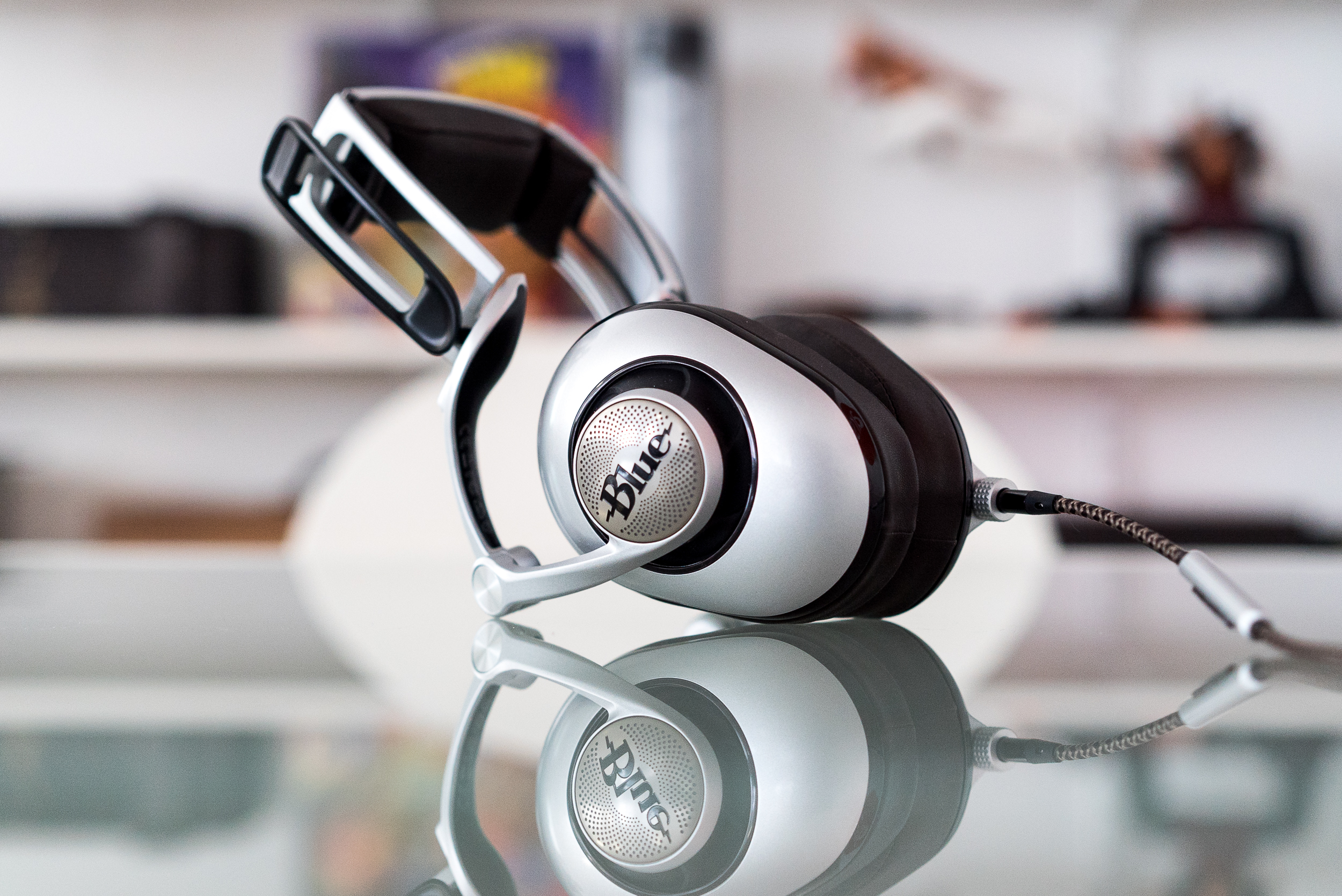
| Specs at a glance: Blue Ella | |
|---|---|
| Driver Type | Planar magnetic |
| Impedance | 50 ohms Passive, 10 ohms Active |
| Frequency response | 20Hz-20kHz |
| Amplifier | Output power: 250mW THD+N: < 1% (94 dB SPL, from 20 Hz to 20 kHz) Frequency response: 20Hz-20kHz SNR: >101 dB Noise: < 20 uV |
| Battery | 1000mAh |
| Weight | 481g (16.97 oz) |
| Size | Outer dimensions (closed): 21cm x 14cm x 12cm Outer dimensions (open): 18cm x 29cm x 12cm |
| Other perks | Soft carry case 1.2-meter audio cable with Apple iPhone/iPad controls and microphone 3 metre audio cable 3.5mm to 1/4” adaptor |
| Price | £675 / $700 |
Planar magnetic headphones, which use a thin film suspended between neodymium magnets to deliver sound quite unlike that of typical dynamic and balanced armature headphones, are traditionally the reserve of the well-heeled audiophile. The sound quality is, according to fans, clearer, sharper, and more detailed and only surpassed by electrostatic headphones, which use electricity instead of magnets to vibrate a thin film to push sound to the ears.
Both technologies are more complex to manufacture than traditional dynamic drivers, and both require more volume to function. The result is that planar magnetic headphones like those from US-based MrSpeakers cost well over £1,000/$1,000, while the headphone amps required to drive them cost hundreds if not thousands of pounds more on top.
Blue, famous for its line of podcast microphones, hopes to make planar magnetic technology less intimidating with its Ella headphones (buy here). At £675/$699, Ella is hardly cheap (and there are sets like the Oppo PM-3 that are cheaper at £350). But they combine the coveted headphone technology with an internal amplifier (250mW) that allows them to be used with everyday devices like smartphones and laptops, as well as with a high-end audio setup.
Read 12 remaining paragraphs | Comments
Source: Ars Technica – Blue Ella review: Planar magnetic tech sounds great, but costs too much