
CBS
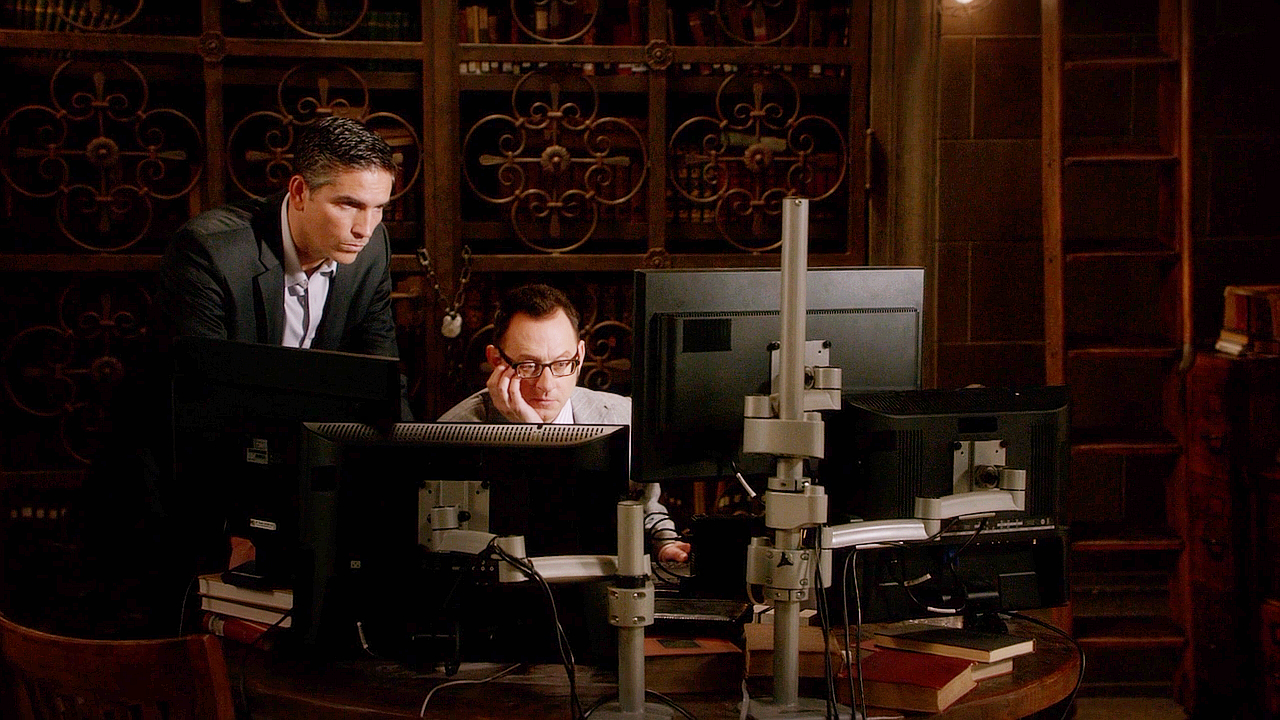
Reese and Finch puzzle out a problem, with help from the Machine.
4 more images in gallery
.related-stories { display: none !important; }
It’s rare for a television series about technology to get anything right about how computers work, let alone how hackers do their jobs. But in a pop culture landscape flooded with shows like CSI: Cyber and Scorpion, the CBS show Person of Interest stood out as smart, relevant, and mostly clueful about how networked devices actually function. Last night marked the final episode in its five-year run, ending a plot arc about the birth of two artificial intelligences, the ethical Machine and the ruthless Samaritan. Audiences were left with a vision of an ambiguous new future, where we can’t just put our powerful new surveillance and machine learning technologies back in the box. We have to figure out how to make them tools for justice, rather than conformity and oppression.
When Person of Interest first started in 2011, it focused mostly on corruption in the NYPD and the nebulous “intelligence community” that trained super-ninja character Reese—and then burned him, badly. Living on the streets, half-mad with PTSD, Reese (Jim Caviezel) is rescued by a mysterious, wealthy hacker named Finch (Michael Emerson). In the darkened stacks of an abandoned library, Finch has set up a high-tech surveillance operation designed to save the lives of “ordinary people” the government “doesn’t care about.” Finch’s only companion, other than Reese, is a mysterious AI he built called the Machine. Locked behind government firewalls, the Machine has one backdoor for communicating with Finch: when its predictive algorithms determine someone is about to experience violence, as a victim or perpetrator, the Machine transmits that person’s social security number to Finch via payphone. During the first season, Finch and Reese team up with NYPD detectives Carter (Taraji Henson) and Fusco (Kevin Chapman) to stop that violence wherever they can. Carter, who is former military, is willing to help them because she still believes in making the world safer. Fusco is such a dirty cop that he’s vulnerable to blackmail. This ragtag gang of idealists and cynics somehow comes together to form one of the most memorable crime-fighting teams in recent TV history. Their secret weapon is always the Machine, whose sensorium is made up of every surveillance device in the country, and whose mind encompasses every form of personal data you could possibly imagine.
The Machine remained a shadowy unknown in those early days, as the team brought down a notorious group of dirty cops known as “HR,” captured New York’s most dangerous criminal mastermind, and tried to prevent the government from killing everyone who knows about the Machine. But then we met Root (Amy Acker), a deadly hacker as brilliant as Finch, whose only goal is to set the Machine free. She doesn’t care how many people she has to kill to do it. Root believes humans are mostly running “bad code,” and that the Machine will prevent us from destroying ourselves and the world. Root also sees the Machine in far more human terms than Finch and Reese ever did; she refers to the Machine as “she,” and describes the Machine as having intense feelings of loss and betrayal because of Finch. Gradually, we come to understand that Finch has built so many safety mechanisms into the Machine that it literally cannot remember who it is from one day to the next. Finch has created a life form, but he’s stunting its growth. Root wants to make sure the Machine is able to become an adult, as it were.
Read 4 remaining paragraphs | Comments
Source: Ars Technica – Person of Interest left us with a fascinating new way of looking at AI