

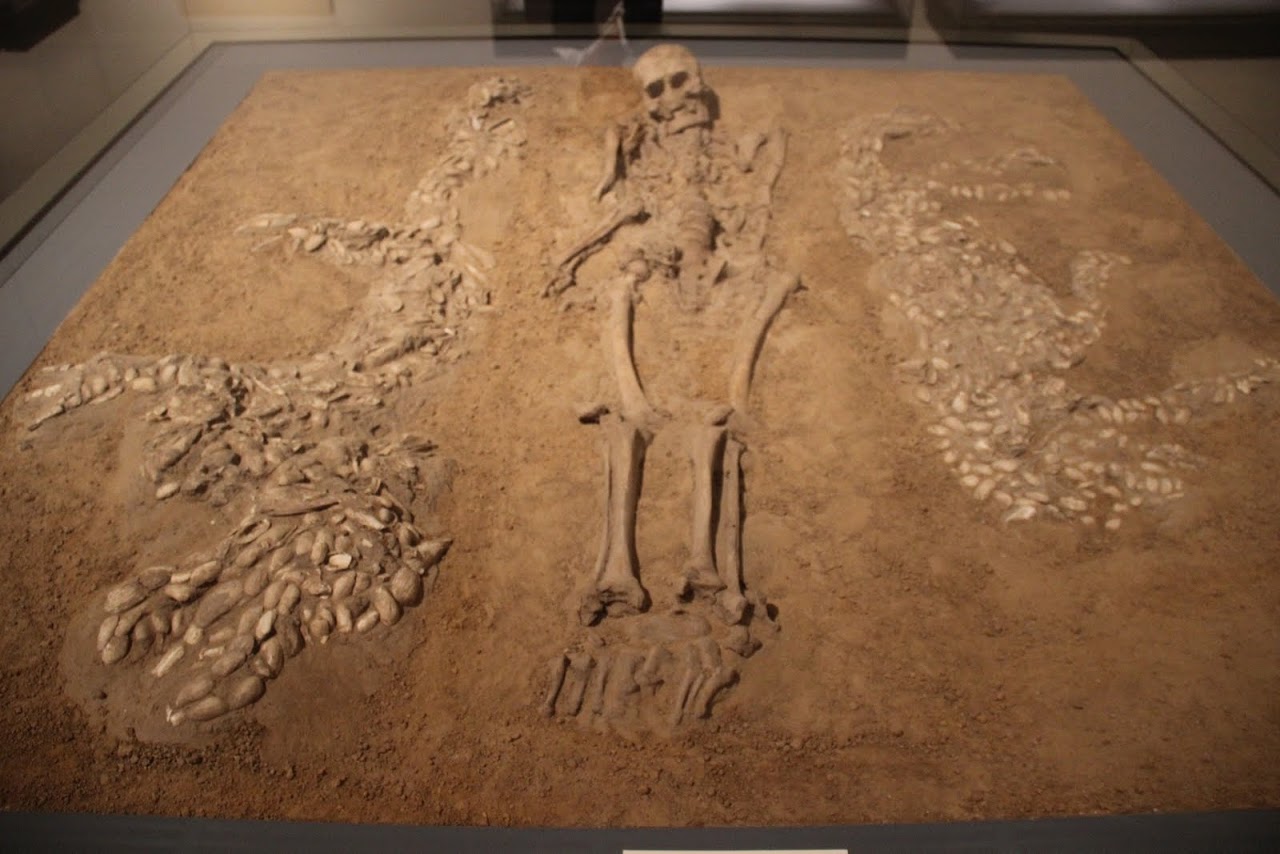
Enlarge / A buried male, and shell mosaics, from the Yangshao culture. (credit: Prof. Gary Lee Todd)
Around 7,000 years ago in China’s Central Plains, the Yangshao culture began to flourish along the Yellow River. It was another example of the same widespread Neolithic culture that was also emerging in Europe around the time, with new developments in pottery and agriculture. In China, it dominated the region for approximately 2,000 years.
Yangshao remains have offered a team of international researchers insight into an interesting question: did gender differences change alongside agricultural practices? They argue that gender inequality emerged along with the new crops among Yangshao. The archaeological data have some interesting signs, but it’s possible that the researchers are overstating their case: the only evidence they have is of inequality in people’s diets, which doesn’t tell us much about the structure of inequality of societies.
Millet cereals were domesticated in the region as early as 10,000 years ago, and were the primary crop of Yangshao cultures. Wheat, barley, and soybeans were introduced to the region after the end of Yangshao, around 4,000 years ago, although archaeological traces of them remain low for centuries. According to historical records, they were thought to be inferior foods, suitable only for protecting the poor against famine. That only changed around 2,000 years ago, when improved technological methods made it easier to refine them.
Read 8 remaining paragraphs | Comments
Source: Ars Technica – Shifting diets in Bronze Age China point to gender inequality