
Enlarge (credit: Babak A. Tafreshi/Wikimedia)
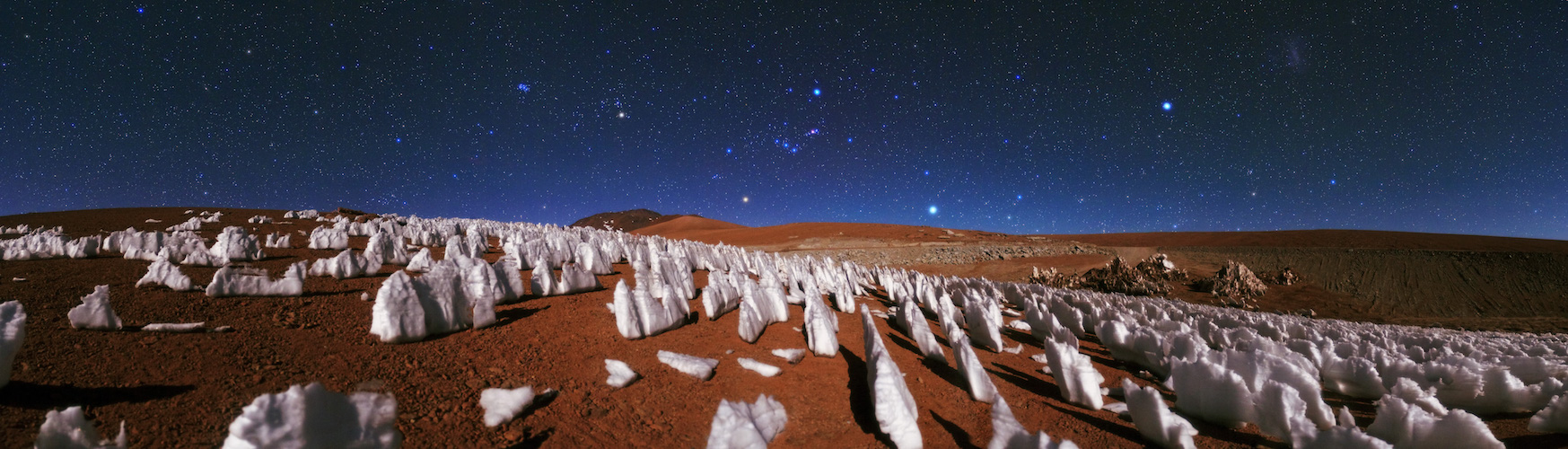
#/media/File:Planetary_Analogue.jpg)
There are times in nature where the way things work at small scales has a remarkable impact that is only apparent when you zoom out. These emergent behaviors or patterns can produce the amazing coordination of a school of fish or the tidy geometry of patterned ground in permafrost. Such things can seem almost impossible at first glance, but it’s been possible to work out the underlying processes.
In some calm, protected patches of Andean snow fields, the snow has seemingly been sculpted into evenly spaced blades, crowds of elegant spires called penitentes. The sculptor here is physics. Feedbacks take slight dimples in the snow surface and exaggerate them until a field of penitentes develops with stable spacing between spires.
Several factors drive this pattern. First, sunlight reflecting off the steep walls of the pentitentes is focused on the low spots. The tops of the thin blades or spires are better at giving up the heat from the sunlight they do absorb, accentuating the contrast. Finally, the air plays a role. Penitentes only form in calm, dry places, where sublimation of snow directly to water vapor dominates. As the thin surface layer of air between the blades or spires warms, its relative humidity falls, enabling more sublimation from the low spots. (The thickness of this air layer is actually what determines the spacing of the penitentes.) Add it all together, and snow is disappearing from the low spots faster than the tips, making the penitentes more and more jagged.
Read 7 remaining paragraphs | Comments
Source: Ars Technica – Pluto’s washboard ridges resemble unusual features in Earth’s snows