

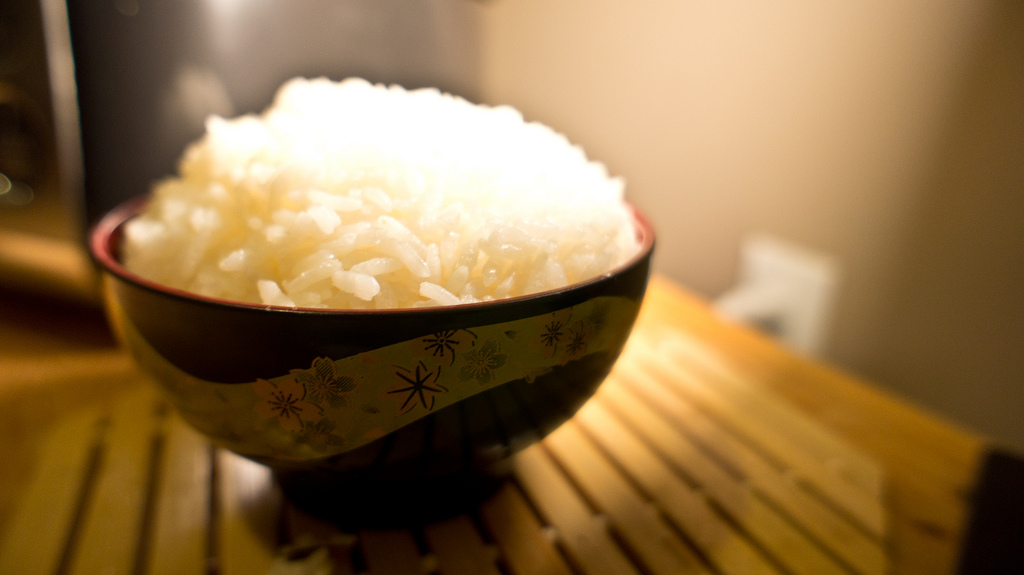
Enlarge / White on rice. (credit: Ruocaled – Flickr.com)
One of the interesting things about working at Ars is that I occasionally discover that scientists are working to solve problems I didn’t even know existed. That was the case this week when I came across a paper about efforts to cut down on the amount of phosphorus that plants put into rice grains.
On the surface, cutting down phosphorous seems absurd. Phosphorus, in the form of the phosphate molecule, is central to life on Earth. It’s part of the backbone of DNA and takes part in countless signaling pathways. Phosphate bonds power pretty much everything our cells do. Why would we want less of it in our food?
It turns out that much of the phosphorus in plant seeds is utterly useless to us. It’s stored in a compact form, the chemical phytate, which is a six-carbon ring with phosphates hanging off each of the carbons. And, despite having been exposed to phytate for countless years, most mammals have never evolved a means of digesting it. Phytate passes through our digestive systems as if it weren’t there. So most of it ends up in sewage or, if the crops are fed to livestock, agricultural waste. Both of which contribute to environmental upsets in our waterways.
Read 10 remaining paragraphs | Comments
Source: Ars Technica – Engineering rice to waste less fertilizer