

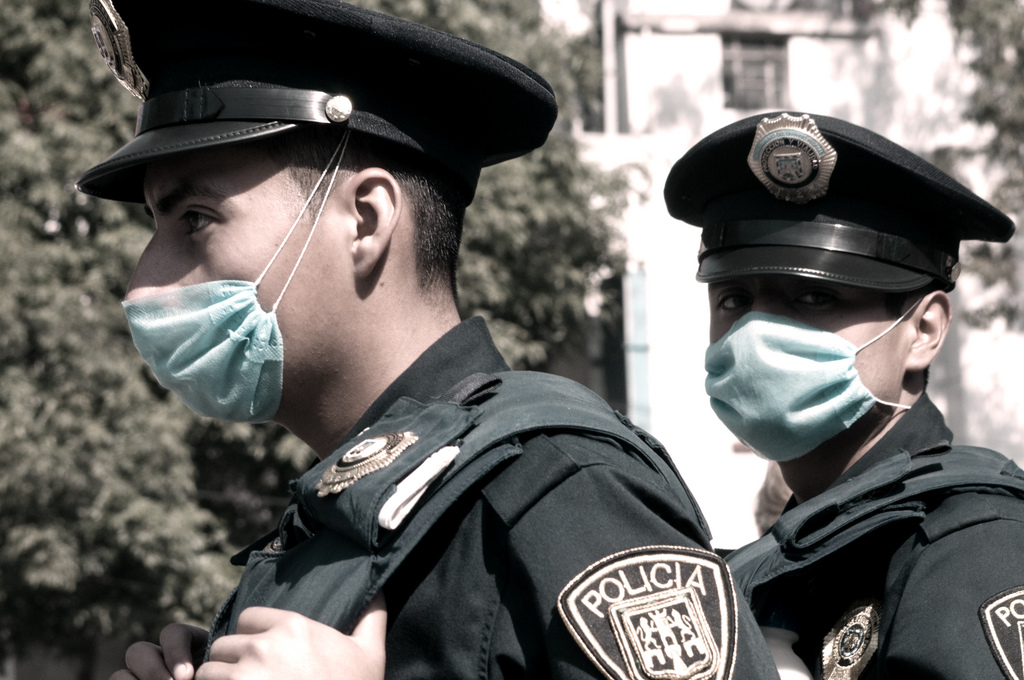
Enlarge (credit: flickr user: sari_dennise)
If an influenza pandemic were to hit us tomorrow, who would need the most help? Obvious answers include children, the elderly, and people who are already ill. We expect them to be at higher risk than healthy adults—but that isn’t always the case.
What about the poor? Depending on who you ask, intuitions vary: some people assume influenza does not discriminate by social class and that everyone is at risk. Others might guess that conditions that go hand-in-hand with poverty (like poor access to healthcare or crowded living quarters) create a higher level of risk. But everyone is guessing, because evidence on this question has been surprisingly difficult to pin down.
While many studies have analyzed the risks of flu on a country or county level, the city-level is where we’d really be able to compare strong gradients in wealth to risks from the pandemic. That’s what a recent paper in Proceedings of the National Academy of Sciences of the United States of America (PNAS) does: it compares census data dating from the 1918 flu pandemic in Chicago to health records from the time. “We had this great data,” says Madhura Rane, one of the authors of the paper, “and we thought it would be interesting to see this association on a small spatial scale.” She and her fellow authors found evidence that poverty made a difference in that pandemic.
Read 8 remaining paragraphs | Comments
Source: Ars Technica – Did 1918 flu pandemic discriminate by social class?