

Enlarge (credit: Flickr user leted)
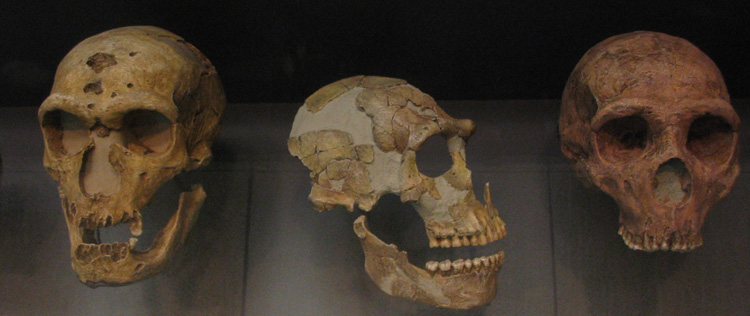
It’s now clear that our ancestors, upon leaving Africa, interbred with the Neanderthals and Denisovans, archaic humans that occupied Europe and Asia. The first offspring of those pairings would have had equal amounts of their two ancestral legacies: one chromosome in each pair would be modern human, the other archaic. But most of that archaic legacy is now gone, down to about two percent from the initial 50. What happened?
People have been considering a number ideas. These range from the simple—a large and growing modern human population simply swamped the archaic genes—to more complex situations such as limited reproductive compatibility between the two genomes. But a new paper suggest something in between the two. Many Neanderthal genes might be slightly deleterious, the research suggests, but the Neanderthal populations weren’t large enough to get rid of them.
It’s difficult to understand the fate of Neanderthal genes, since we don’t have any sense of how well the offspring of these matings did. All indications are that the instances of successful interbreeding were rare (with success here defined as offspring that passed on their genes as well). Since modern humans were expanding into new territories and increasing their population accordingly, it may simply be that the Neanderthal genes were diluted as their carriers continually mated with people who were largely or entirely modern.
Read 7 remaining paragraphs | Comments
Source: Ars Technica – What happened to all the Neanderthal genes?