

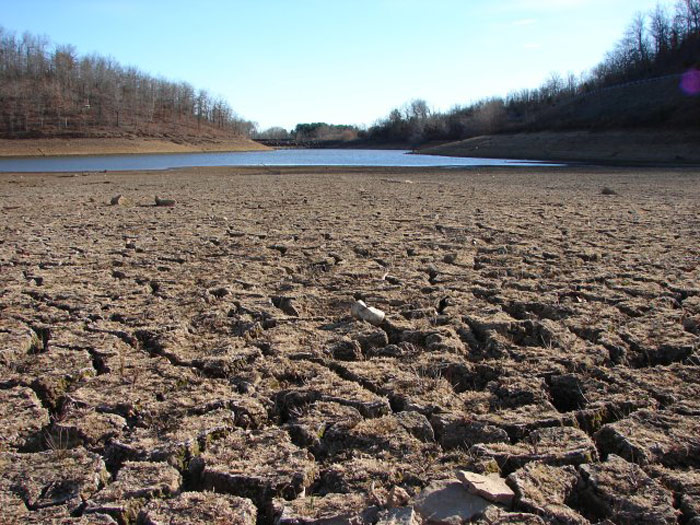
Academics do not agree on the relationship between climate change and armed conflicts. Weather events driven by climate change, like droughts and extreme precipitation, might be societally destabilizing. But attempts to determine whether this connection is happening in the real world have produced ambiguous and sometimes contradictory results.
A new study published in PNAS looks at up-to-date conflict data from 1989-2014 in Asia and Africa, examining the relationship between these events and droughts. The study finds that droughts affect the level of conflict, but only in poor societies that are dependent on agriculture.
Drought can incite conflict because it can cause food scarcity, but is that actually happening today? To probe this relationship, the authors used geo-referenced data on armed conflict events between ethnic groups. The procedure used to link the ethnic groups to conflict behavior included consideration of how localized drought affected groups’ behavior regardless of the physical location of the fighting relative to the drought. In other words, if the group suffered a drought but ended up fighting in a region that received sufficient rain, that still counted. For this analysis, “ethnic group” was defined as discrete groups of humans with a shared culture and language living in the same geographic space.
Read 7 remaining paragraphs | Comments
Source: Ars Technica – Testing the climate-drought-conflict connection