

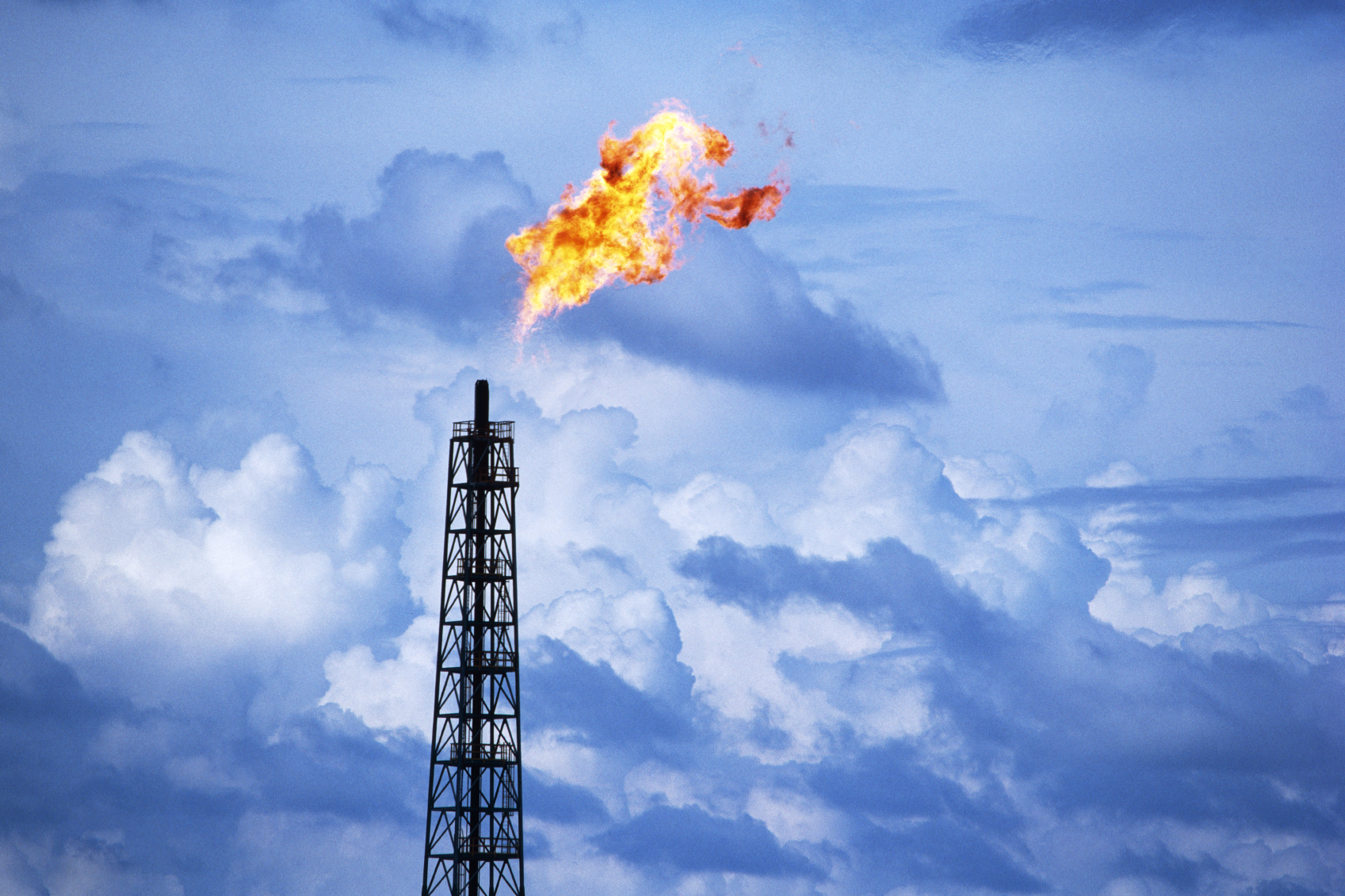
Enlarge / In some cases, stray methane is burned to limit how much escapes into the atmosphere. (credit: Lawrence Berkeley Lab)
Two greenhouse gases, carbon dioxide and methane, contribute the most to global warming. If we’re going to control them, we need to understand where they come from and how they end up in our atmosphere. That has been relatively easy for carbon dioxide, but we still lack a solid understanding of the global atmospheric methane budget.
Recently, a team of researchers has undertaken a new investigation into the global atmospheric methane budget. The researchers found that, contrary to expectations, emissions of methane from fossil fuel production appear to be dropping. But the overall flux of methane is much larger than we’d thought.
Main methane contributors
Until now, the global fossil fuel industry has been thought to contribute 15 to 22 percent of the total methane emissions. This industry includes both the production and use of energy sources including natural gas, oil, and coal. Atmospheric methane also comes from natural sources, both biological and geological. Unfortunately, natural and human-driven sources are often located in the same geographic areas. This presents a problem for anyone trying to piece together the global atmospheric methane budget.
Read 10 remaining paragraphs | Comments
Source: Ars Technica – Fossil fuel methane dropping, but it’s a bigger problem than we thought